
It has been my experience that the best way to consistently make good food is to not overcomplicate it. Keep it simple. Don't over think it. It takes less effort to make simple food delicious and generally it is more enjoyable to eat. Now, what do I mean by simple food? I mean using as few ingredients as possible, and cooking in the simplest way. Strip back all of the unnecessary stuff and focus on the things that matter.
Learn from the Italians
The Italians are experts in this. They focus on the quality of the ingredients and do very little to them. They let the natural flavours of the ingredients stand out. Rather than covering up these natural flavours, they work to complement them.
Think of a margarita pizza. It has four ingredients and is perfection. Dough, crushed tomatoes, fresh basil, and mozzarella. What about carbonara? It has five maybe six ingredients. Simple! The Italians understand that when you start with great ingredients and treat them with respect, you don't need to add much else. This is a big part of what makes the food of Northern Italy so extraordinary.
How Do We Cook Simple Food?
So, how do we do it? How do we cook simple food? The first thing we have to do is change how we think about cooking. It has become part of cultural consciousness to think of cooking as adding more and more ingredients. We are conditioned to think that cooking is about creating something new by combining as many ingredients as possible.
We need to start thinking of it in terms of not creating something new but simply enhancing what's already there. Complement, not cover up.
The Power of Simple Roasted Vegetables
Let's think about vegetables. Most vegetables are best when tossed with a little olive oil, salt, and pepper, maybe an herb or two, and roasted on high heat until they are cooked. There is nothing complicated about that, and there is little to no effort.
This works great for peppers, potatoes, carrots, parsnips, asparagus, onions, leeks, mushrooms, cauliflower, squash, sweet potato, and brussels sprouts if you blanch them first. Obviously, this technique is pretty versatile. And the thing about it is, that even though all of those vegetables are cooked the same way with the same ingredients, they will all taste very different. If you want to explore one vegetable in depth, take a look at my guide to getting to know butternut squash.
Carrots are the best proof. My roasted carrots need oil, salt, a hot oven and nothing more.
Simple Cooking Works for Proteins Too
Vegetables aren't the only foods that can benefit from a little olive oil, salt, and pepper. Fish is fantastic when roasted this way and the addition of a touch of lemon, and some thyme or other fresh herbs will make it a great dish. Chicken can be done the same way as the fish or instead of lemon, a few spices like paprika and cumin can be added.
Yes, before you ask, this works with pork, lamb, beef, turkey, duck, quail, pheasant, emu, llama, or pretty much anything else you can think of. The key is always the same -- make sure you preheat your pan and let the natural flavour of the ingredient be the star.
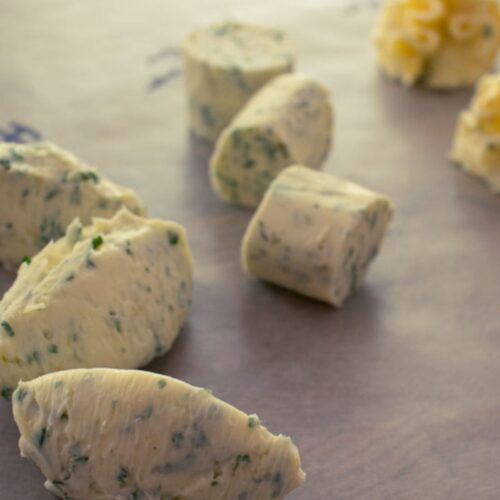
Salmon needs very little help. A low oven and lemon garlic butter, as in this slow roasted salmon, is about as far as I would take it.
Letting the Food Speak for Itself
Really, cooking simple food is just about letting the food speak for itself. It's about using as few ingredients as you can to maximize the amount of flavour. It's about using techniques that limit the amount of time you have to actively be cooking. And really it's about using those techniques that draw more of the natural flavour out of the food.
Simple Techniques Beyond Roasting
Obviously, roasting is not the only technique that lends itself to cooking simply. Steaming, sautéing, stir-frying, poaching -- all of these techniques can be used. Just focus on complementing the main ingredient.
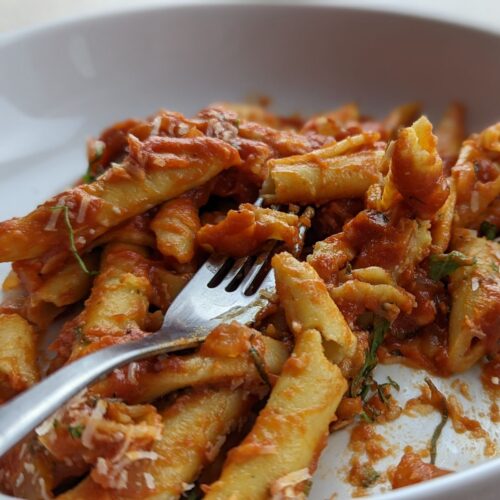
Even with sauces. If I make a meat sauce, doesn't it make sense that it should taste like meat? Why cover up the meat flavour with twenty-seven different ingredients. The best meat sauce I've ever had had less than eight ingredients and two of them were salt and pepper. A good tomato sauce is the perfect example of this -- seven ingredients, nothing more, and it is extraordinary.
Tips for Cooking Simply
If you want to start cooking simpler, more flavourful food, here are some practical things you can do right away:
- Buy better ingredients. When you use fewer ingredients, each one matters more. Spend a little extra on good olive oil, quality salt, and fresh herbs.
- Taste as you go. Simple food relies on proper seasoning. Taste your food at every stage and adjust salt, acid, and fat as needed.
- Master a few techniques. You don't need to know twenty cooking methods. Get really good at roasting, sautéing, and one or two others. That is enough to cook almost anything well.
- Resist the urge to add more. Before you reach for another ingredient, ask yourself: does this dish actually need it? If the answer is no, leave it out.
- Let heat do the work. Proper heat application -- whether that is a screaming hot pan for a sear or a low slow braise -- does more for flavour than any extra ingredient ever will.
The Beauty of Simplicity
The more ingredients we add to our food, the more complicated we make it, the more opportunity there is to mess it up. There is beauty in simplicity. There is beauty in letting the ingredients stand out and speak for themselves. Stop focusing on what needs to be added. Stop adding ingredients just for the sake of adding ingredients.
Enjoy cooking and eating more by focusing on simple food done really well.
Final Thoughts
Some of the best meals I have ever cooked had fewer than ten ingredients. Once you start stripping things back and trusting the quality of what you are working with, you will find that cooking becomes easier, more enjoyable, and the food tastes better than ever. Simplicity is not a shortcut -- it is a skill, and one well worth developing.
4.5