Most homemade scones have one fatal flaw: they're dry.
Like, hockey puck dry. The kind of dry that no amount of butter or jam can fix.
I used to think that was just what scones were. Something you tolerated because of the flavor, not the texture.
Then I tried adding applesauce to the dough and everything clicked.
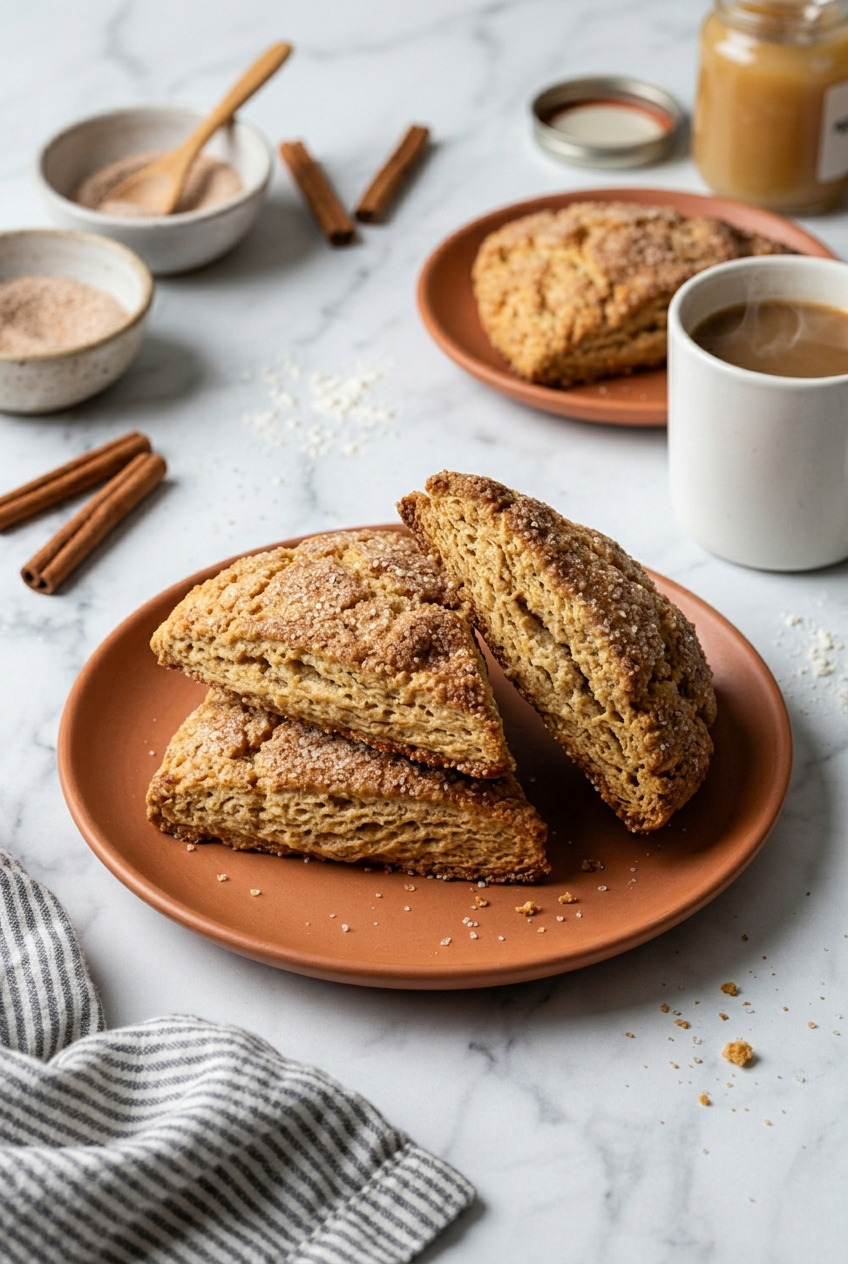
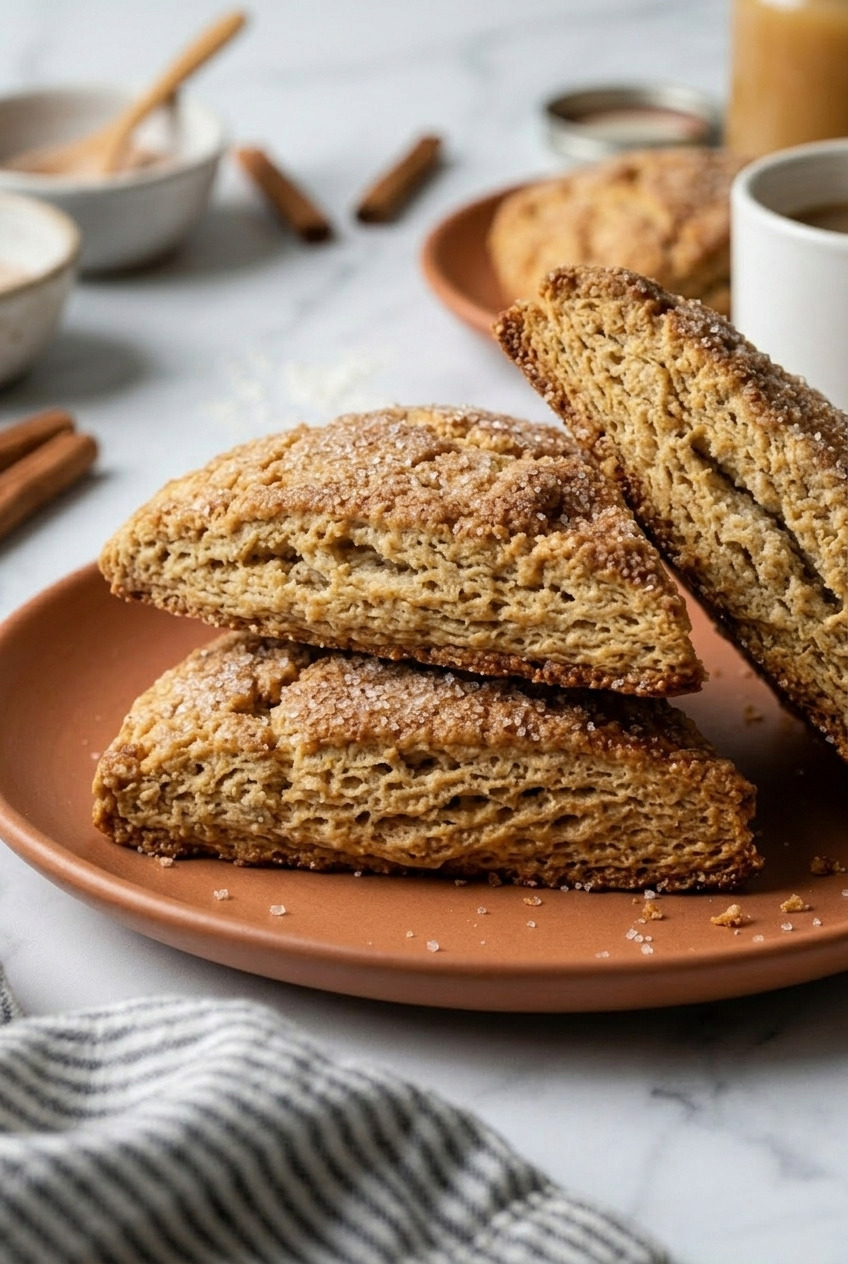
The applesauce adds moisture that butter alone can't match. It keeps the inside soft, tender, and almost cake-like, while the outside gets that crackly cinnamon-sugar crust.
Even the next morning, these scones are still moist. That NEVER happens with regular scone recipes.
The warm spice flavor is incredible too. Cinnamon and allspice plus the subtle apple sweetness from the applesauce gives these an apple-cider quality that makes the whole kitchen smell amazing.
Under forty minutes, one bowl, and you'll have a batch of eight scones that taste like they came from a proper bakery. Not bad for a Sunday morning project.
Why Applesauce Makes Better Scones
Applesauce solves the number-one problem with homemade scones: dryness.
Traditional scones rely almost entirely on cold butter for moisture. But butter's job is creating flaky layers, not keeping things moist. Once those layers bake and cool, the moisture evaporates and you're left with something crumbly and dry.
Applesauce provides a backup moisture system. It's mostly water held in pectin and fiber, and it stays in the scone even after baking.
- Moisture that lasts. Applesauce keeps scones tender not just out of the oven, but the next day too. That's rare for a scone.
- Subtle apple flavor. Milder than fresh apple chunks, it blends seamlessly into the dough and complements warm spices perfectly.
- Less fat needed. The applesauce means you can use a standard amount of butter for flakiness without needing extra for moisture.
- The cider spice pairing. Cinnamon plus allspice plus applesauce creates a flavor that reminds me of warm apple cider. It's cozy and autumnal without being heavy.
Key Ingredients
Flour
All-purpose flour (2 ½ cups) is the standard choice. It gives you a scone with good structure and a tender crumb.
If you want a slightly healthier version, swap up to half the all-purpose for whole wheat pastry flour. It adds a nuttier flavor and more fiber without making the scones dense.
Cold Butter
The butter MUST be cold. This is non-negotiable.
Cold butter in small pieces creates pockets of warmth as it melts in the oven. Those warmth pockets are what give scones their flaky, layered texture.
If the butter is warm or room temperature, it absorbs into the flour instead of creating layers. You'll end up with a dense, biscuit-like scone instead of a tender, flaky one.
Cut ½ cup (1 stick) into small cubes and keep it in the fridge until the moment you need it.
Applesauce
Unsweetened applesauce (½ cup) is the sweet spot.
Too much applesauce and the dough gets sticky and hard to handle. A half cup gives you all the moisture and flavor benefits without making things difficult.
Store-bought, smooth applesauce is ideal. Chunky applesauce won't distribute evenly through the dough.
Eggs
Two large eggs bind everything together and add richness.
For an eggless version, you can add an extra ¼ cup applesauce plus 1 tablespoon ground flaxseed mixed with 3 tablespoons water. The scones will be slightly denser but still good.
Warm Spices
Cinnamon (1 teaspoon) is essential. It's what makes these taste like apple scones instead of plain ones.
I also add ¼ teaspoon allspice. It's a small amount, but it gives the scones a deeper, cidery warmth that cinnamon alone doesn't achieve.
How to Make Applesauce Scones
Mix the Dry Ingredients
In a large bowl, whisk together 2 ½ cups flour, ¼ cup sugar, 1 tablespoon baking powder, 1 teaspoon cinnamon, ¼ teaspoon allspice, and ½ teaspoon salt.
Cut in the Cold Butter
Add ½ cup cold butter cubes to the flour mixture.
Using a pastry cutter (or two knives), cut the butter into the flour until the pieces are pea-sized. Some slightly larger chunks are fine. They'll create those flaky pockets.
Work quickly. You don't want the butter to warm up from your hands.
Add the Wet Ingredients
In a separate bowl, whisk together 2 eggs, ½ cup applesauce, and 1 teaspoon vanilla extract.
Pour the wet ingredients into the dry mixture. Fold with a spatula until a shaggy dough forms. Don't overmix. The dough should be rough and not fully smooth.
Pro tip: If the dough feels too sticky to handle, refrigerate it for 15 minutes before shaping.
Shape and Cut
Turn the dough out onto a lightly floured surface.
Gently press it into a circle about 8 inches across and 1 inch thick. Don't use a rolling pin. Your hands work better here and handle the dough more gently.
Cut the disc into 8 wedges using a sharp knife. Push straight down, don't saw back and forth. A clean cut means a better rise.
Transfer the wedges to a parchment-lined baking sheet with about an inch between them.
Brush with egg wash (1 egg whisked with 1 tablespoon water) and sprinkle generously with cinnamon sugar (2 tablespoons sugar mixed with ¼ teaspoon cinnamon).
Bake
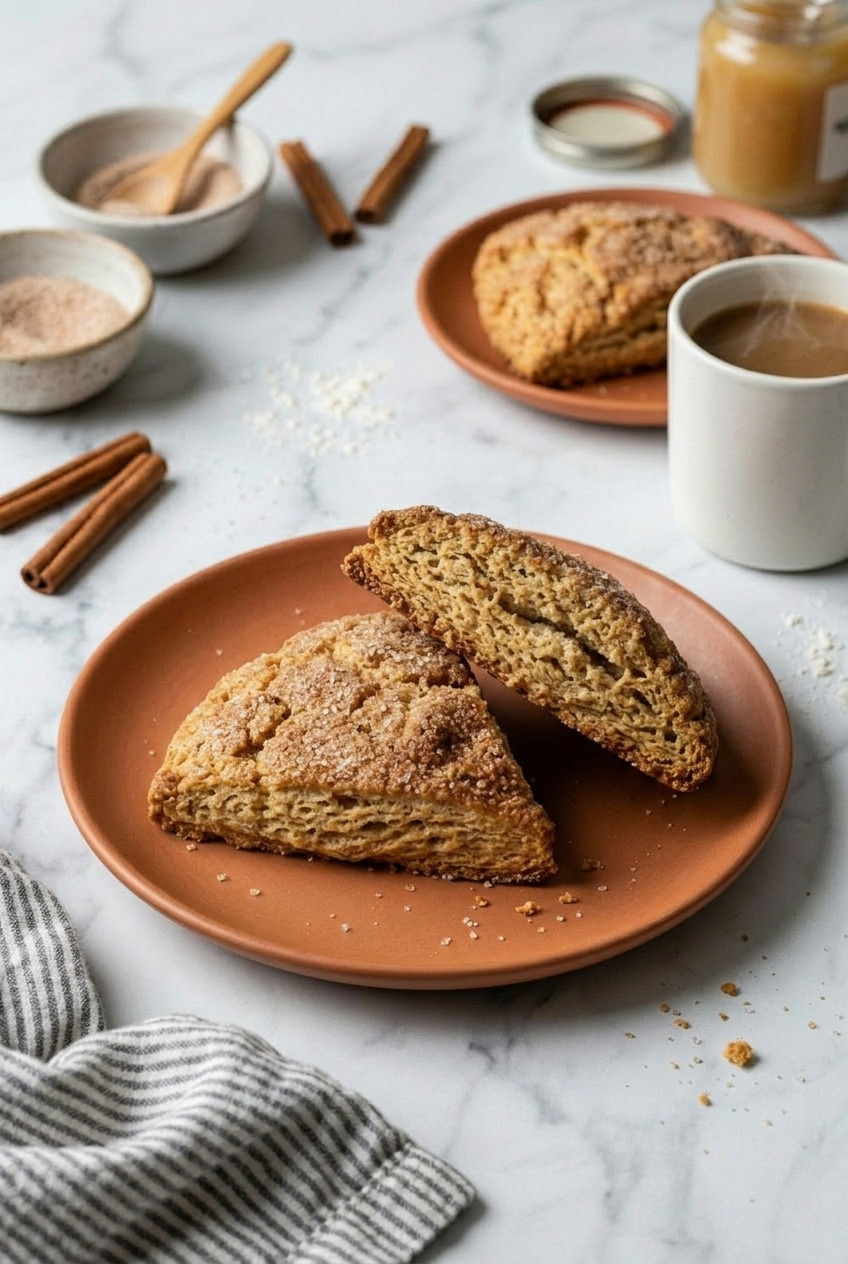
Bake at 375°F for 18-22 minutes until the tops are golden brown and the scones feel firm when you gently press the sides.
Don't overbake. Check at 18 minutes. These should be just golden, not dark brown. They continue to set as they cool.
Let them cool on the pan for 5 minutes, then transfer to a wire rack.
Tips for Tender, Flaky Scones
- Keep the butter cold. If your kitchen is warm, pop the flour-butter mixture into the freezer for 5 minutes before adding the wet ingredients.
- Handle the dough as little as possible. Every extra knead develops gluten, which makes scones tough. Press it together gently. A few dry spots or cracks are totally fine.
- Don't twist the cutter. If you're using a round cutter instead of wedges, push straight down and lift straight up. Twisting seals the edges and prevents a good rise.
- Chill before baking. After shaping, pop the baking sheet in the freezer for 15 minutes. The cold butter re-firms, which means more rise and flakier layers in the oven.
- Check early. Every oven is different. Start checking at 15 minutes. Overbaked scones are dry scones, and that's the whole problem we're trying to avoid.
Topping Options
You've got options, from simple to indulgent.
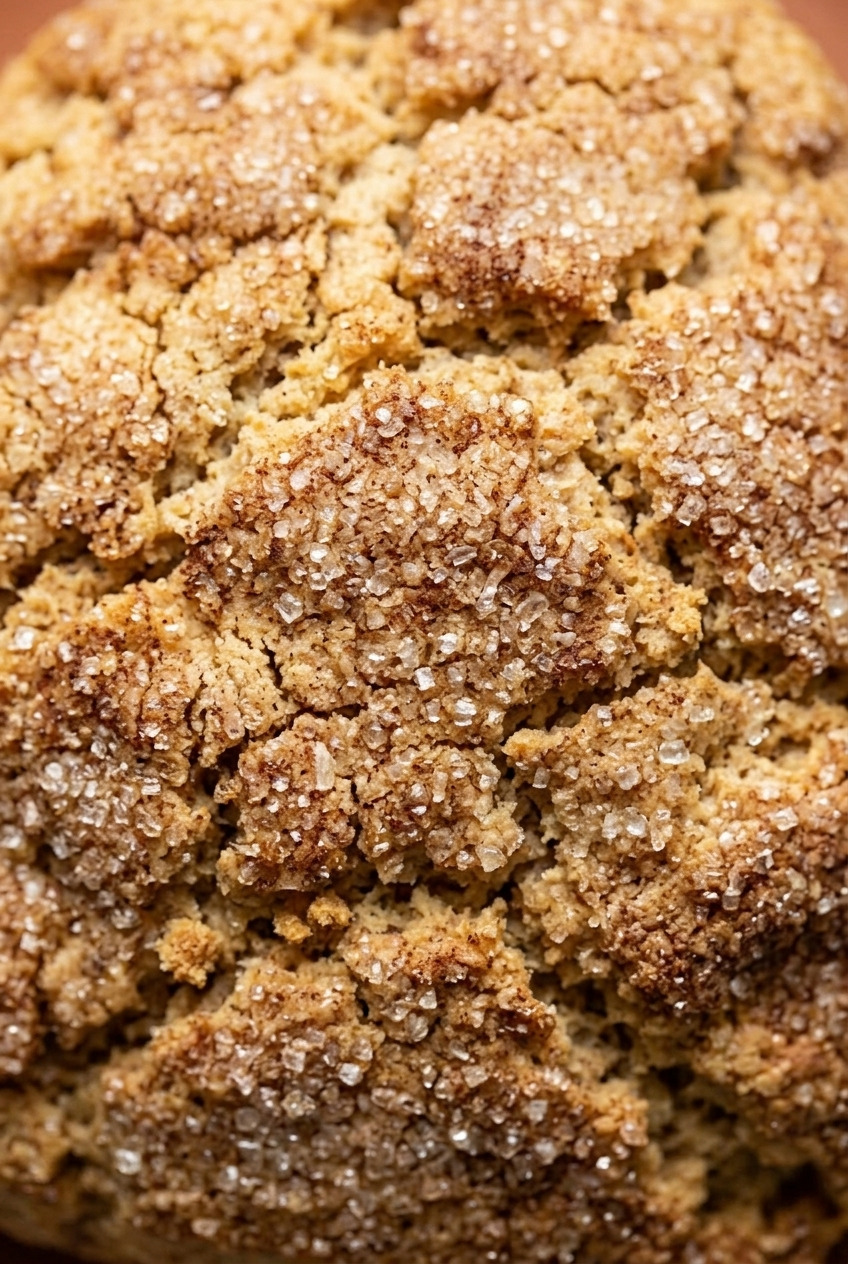
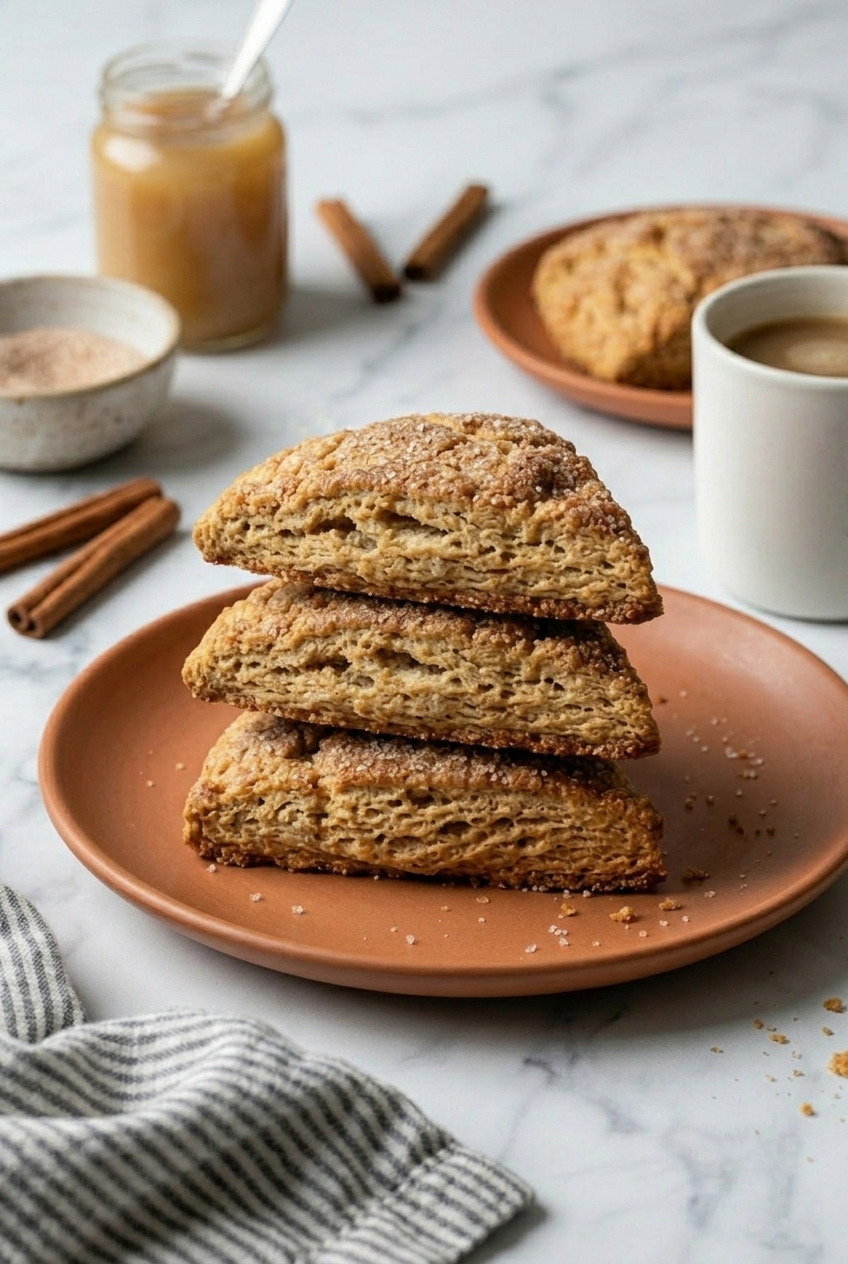
- Cinnamon-sugar sprinkle (before baking). The simplest and my personal favorite. It creates a crackly, sparkly top that adds a little crunch.
- Turbinado sugar (before baking). Coarse raw sugar crystals that stay crunchy through baking. Looks and sounds beautiful when you bite through it.
- Cinnamon powdered sugar glaze (after baking). Whisk 1 cup powdered sugar, ¼ teaspoon cinnamon, and 1-2 tablespoons milk until smooth. Drizzle over the cooled scones. It sets into a pretty white glaze with warm spice flavor.
- Caramel glaze (after baking). For the full bakery treatment. Melt 2 tablespoons butter, add ¼ cup brown sugar, stir until dissolved, then add 2 tablespoons cream and a pinch of salt. Drizzle while warm.
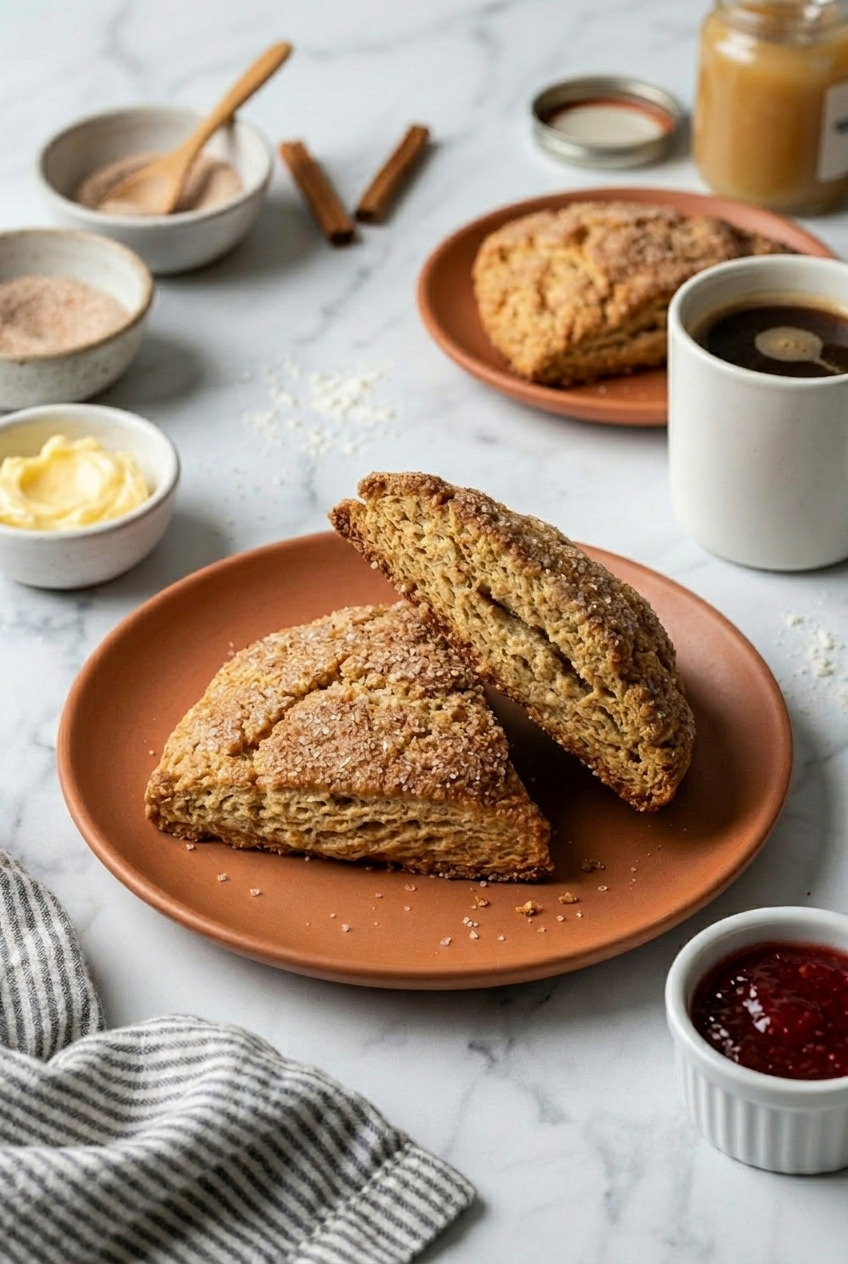
Butter is fine. A spread of this apricot butter is better.
How to Store Applesauce Scones
- Room temperature. Stored in an airtight container, these keep for 2-3 days. The applesauce keeps them moister than typical scones, so they're still good the next morning.
- Freezer (baked scones). Freeze cooled scones on a sheet pan until solid, then transfer to a freezer bag. Keeps for up to 3 months. Reheat in a 350°F oven for 5-7 minutes.
- Freezer (raw dough). Shape and cut the scones, place on a sheet pan, and freeze until solid. Transfer to a freezer bag. Bake from frozen at 375°F, adding 3-5 extra minutes to the bake time. This is my favorite way to have fresh-baked scones on a weekday morning.
- Reheating. A quick warm in the oven (350°F, 5 minutes) brings back that fresh-baked texture. The microwave works too (15-20 seconds) but won't give you the crisp exterior.
These are comfort food in scone form. The cinnamon, the apple, the tender crumb. They hit the spot every time. Give them a try!
My pumpkin scones freeze exactly the same way, so I usually bake a tray of each.
Recipe
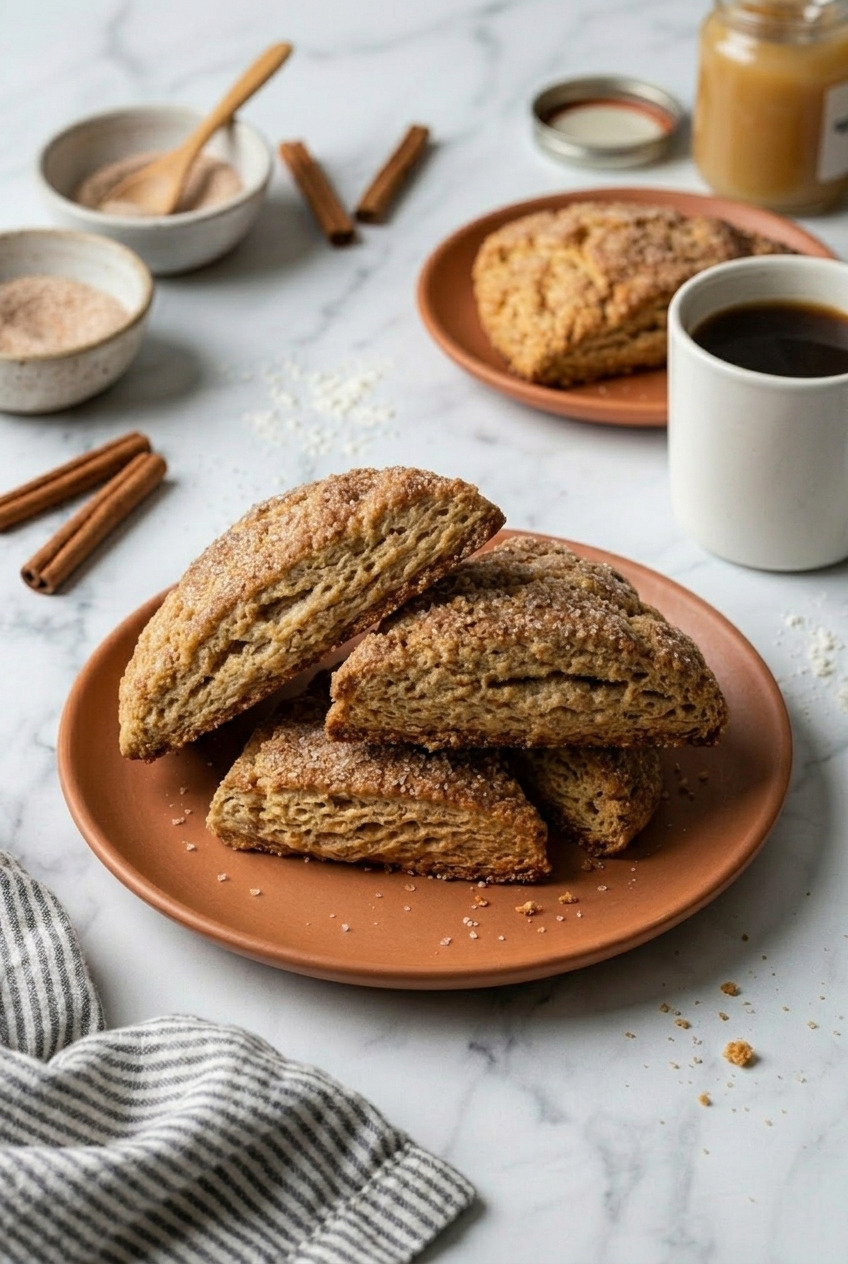
Tender Applesauce Scones with Cinnamon
Ingredients
Scone Dough
- 2 ½ cups all-purpose flour
- ¼ cup granulated sugar
- 1 tablespoon baking powder
- 1 teaspoon ground cinnamon
- ¼ teaspoon ground allspice
- ½ teaspoon salt
- ½ cup cold butter cubed (1 stick)
- 2 large eggs
- ½ cup unsweetened applesauce
- 1 teaspoon vanilla extract
Topping
- 1 egg whisked with 1 tablespoon water for egg wash
- 2 tablespoons granulated sugar mixed with ¼ teaspoon cinnamon
Optional Cinnamon Glaze
- 1 cup powdered sugar
- ¼ teaspoon ground cinnamon
- 1-2 tablespoons milk or cream
Instructions
Make the Dough
- Preheat oven to 375°F. Line a baking sheet with parchment paper.
- In a large bowl, whisk together the flour, sugar, baking powder, cinnamon, allspice, and salt.
- Add the cold butter cubes. Cut into the flour mixture with a pastry cutter until pieces are pea-sized.
- In a separate bowl, whisk together the eggs, applesauce, and vanilla extract.
- Pour the wet ingredients into the dry mixture. Fold with a spatula until a shaggy dough forms. Do not overmix.
Shape and Bake
- Turn dough out onto a lightly floured surface. Gently press into an 8-inch circle, about 1 inch thick.
- Cut into 8 wedges with a sharp knife. Transfer to the prepared baking sheet.
- Brush tops with egg wash and sprinkle generously with cinnamon sugar.
- For best results, chill the baking sheet in the freezer for 15 minutes before baking.
- Bake for 18-22 minutes until golden brown on top and firm to the touch.
- Cool on the pan for 5 minutes, then transfer to a wire rack.
Optional Glaze
- Whisk together powdered sugar, cinnamon, and milk until smooth. Drizzle over cooled scones and let set for 10 minutes.
Notes
- Cold butter is essential: If your kitchen is warm, put the flour-butter mixture in the freezer for 5 minutes before adding wet ingredients.
- Don't overmix: A shaggy, rough dough is what you want. Smooth dough means overdeveloped gluten and tough scones.
- Freeze raw dough: Shape, cut, and freeze the scones on a sheet pan. Bake from frozen, adding 3-5 extra minutes. Perfect for fresh scones on weekday mornings.
- Storage: Airtight container at room temperature for 2-3 days. Freeze baked scones up to 3 months.
- Eggless option: Replace eggs with ¼ cup extra applesauce plus 1 tablespoon ground flaxseed mixed with 3 tablespoons water.