Somebody in my family always whacks a foil-wrapped chocolate orange against the kitchen counter on Christmas morning.
It's usually me.
That dull thud, the segments falling apart inside the foil, the smell of orange and cocoa hitting you before you even unwrap it.
I've found one in my stocking for as long as I can remember, and my wife now makes sure the tradition never skips a year.
A few years back I wanted that exact flavor on our holiday cookie tray.
My first tries tasted like orange cleaning spray, because I leaned on extract and nothing else.
Worse, the cookies spread flat and the powdered sugar melted into a grey film overnight.
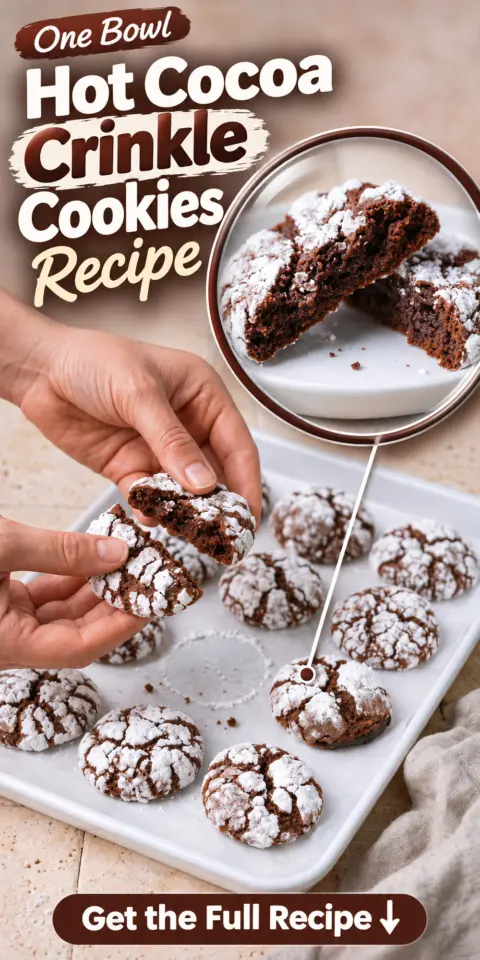
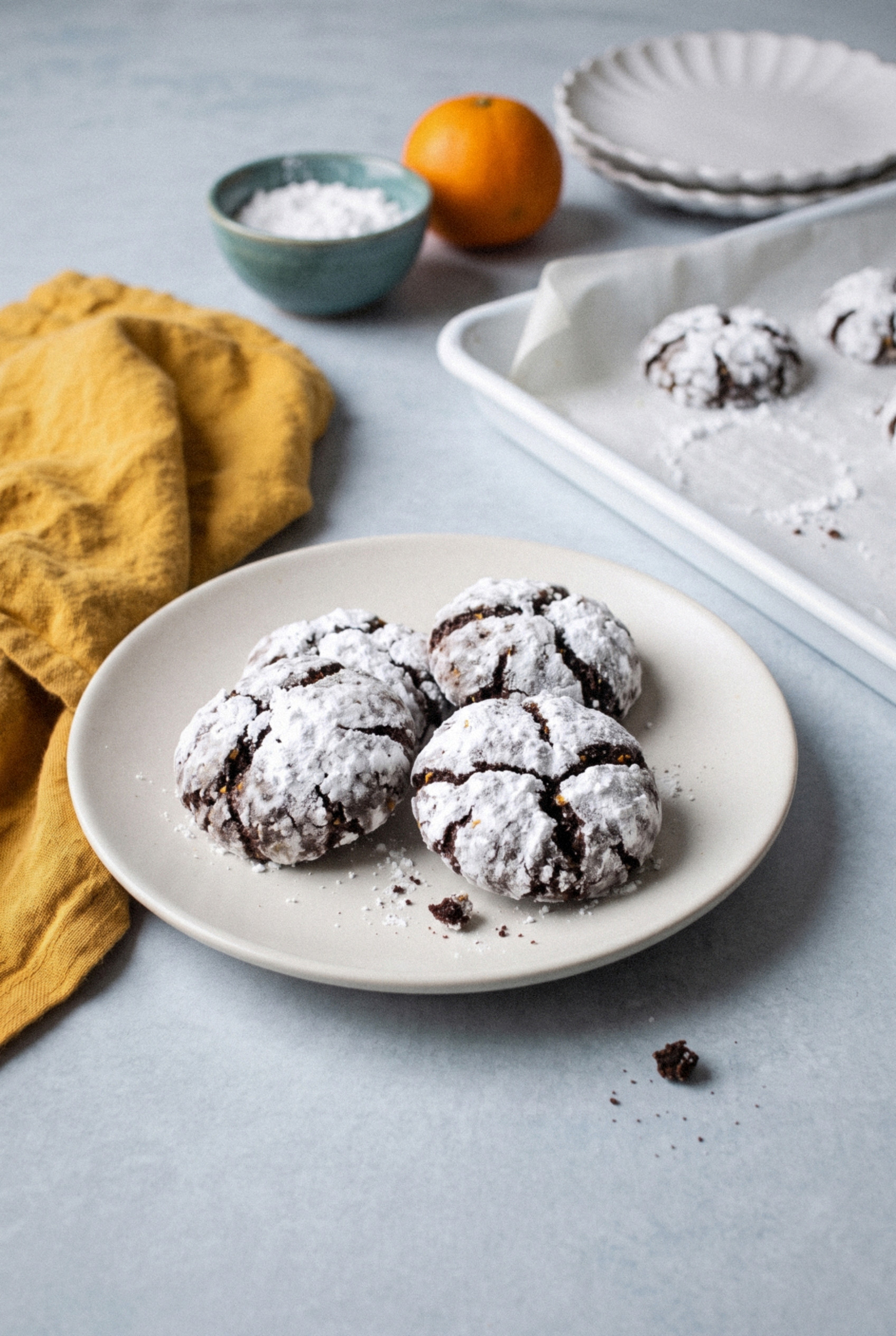
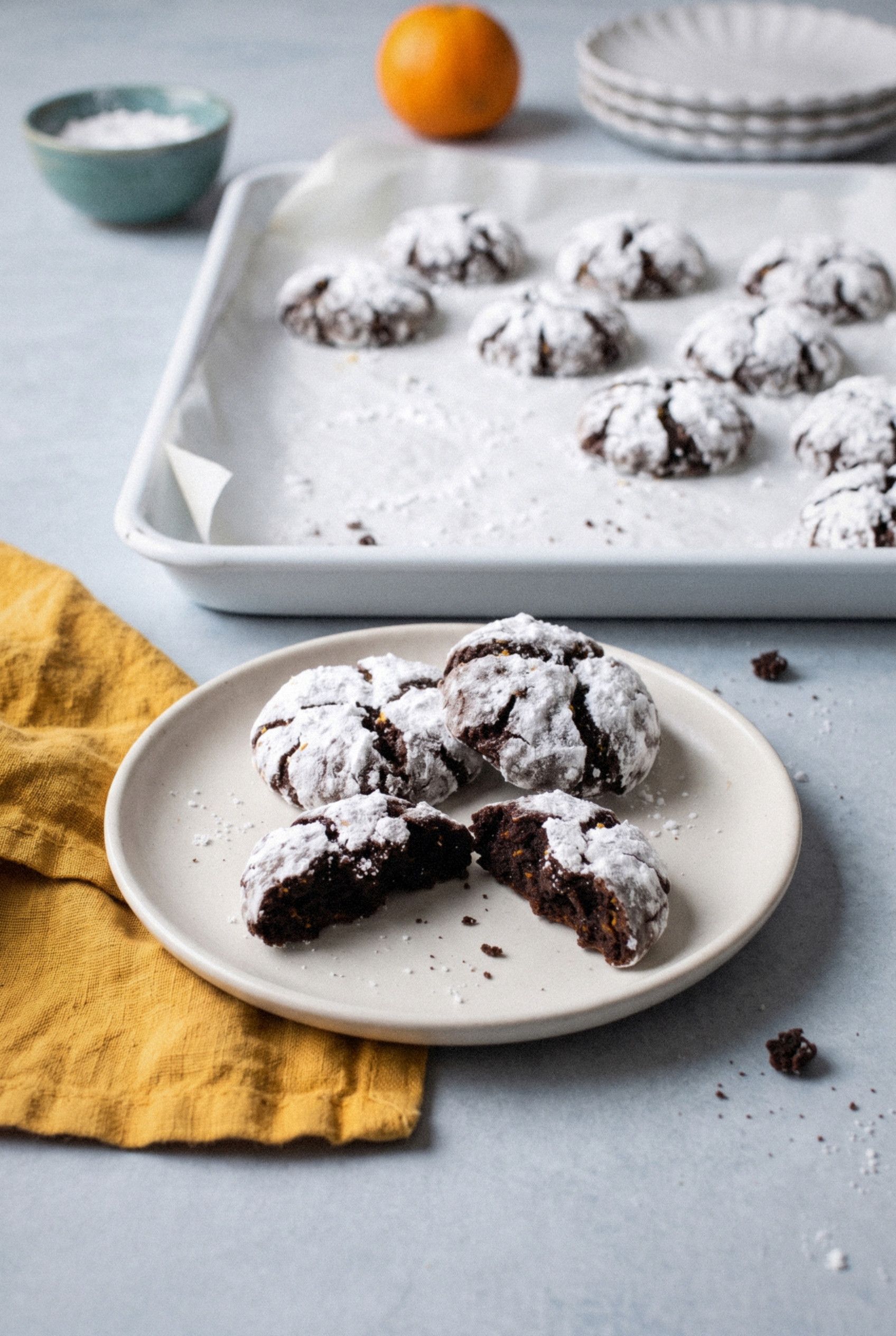
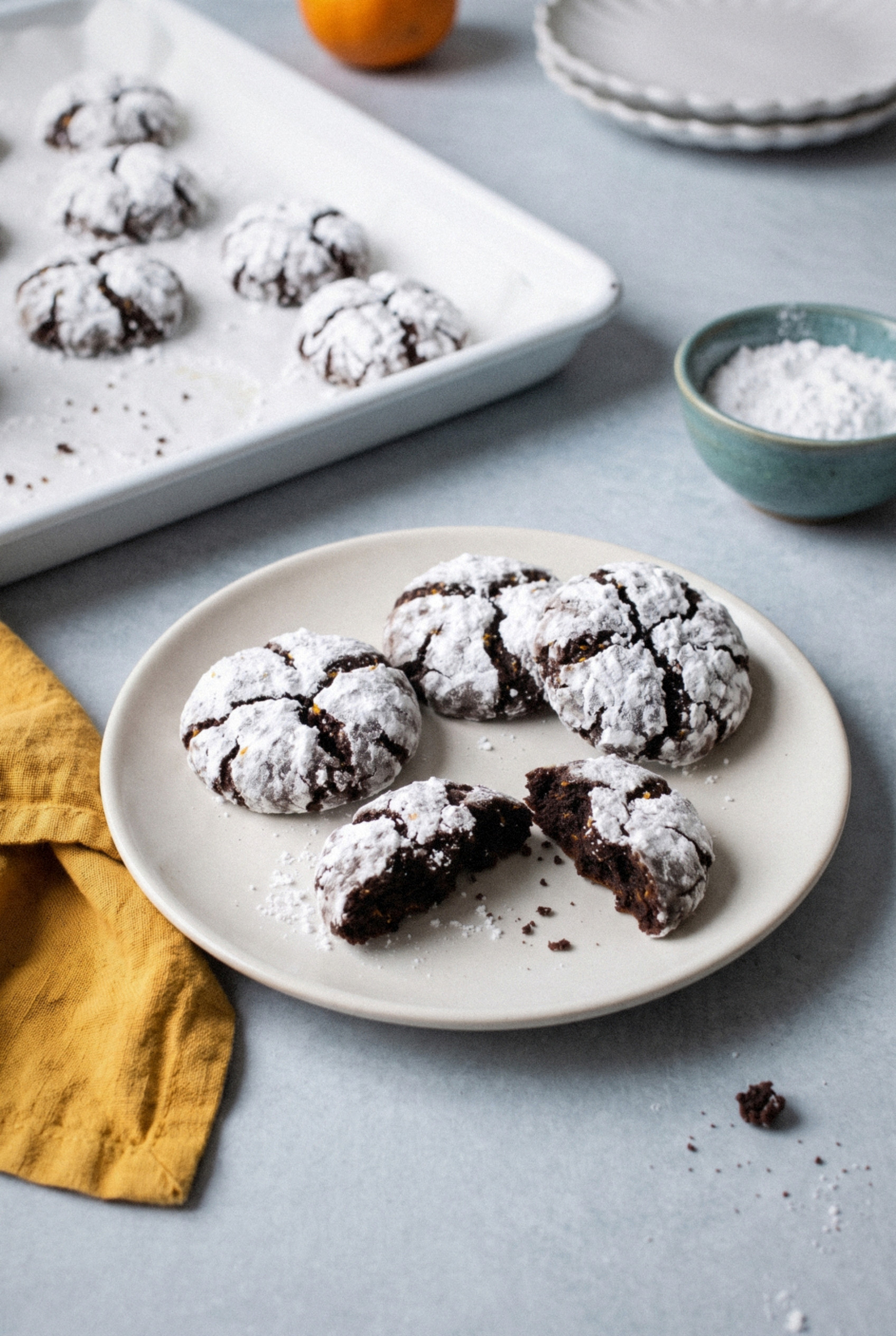
So I kept tinkering until these chocolate orange crinkle cookies came out of the oven looking like the ones in the bakery window.
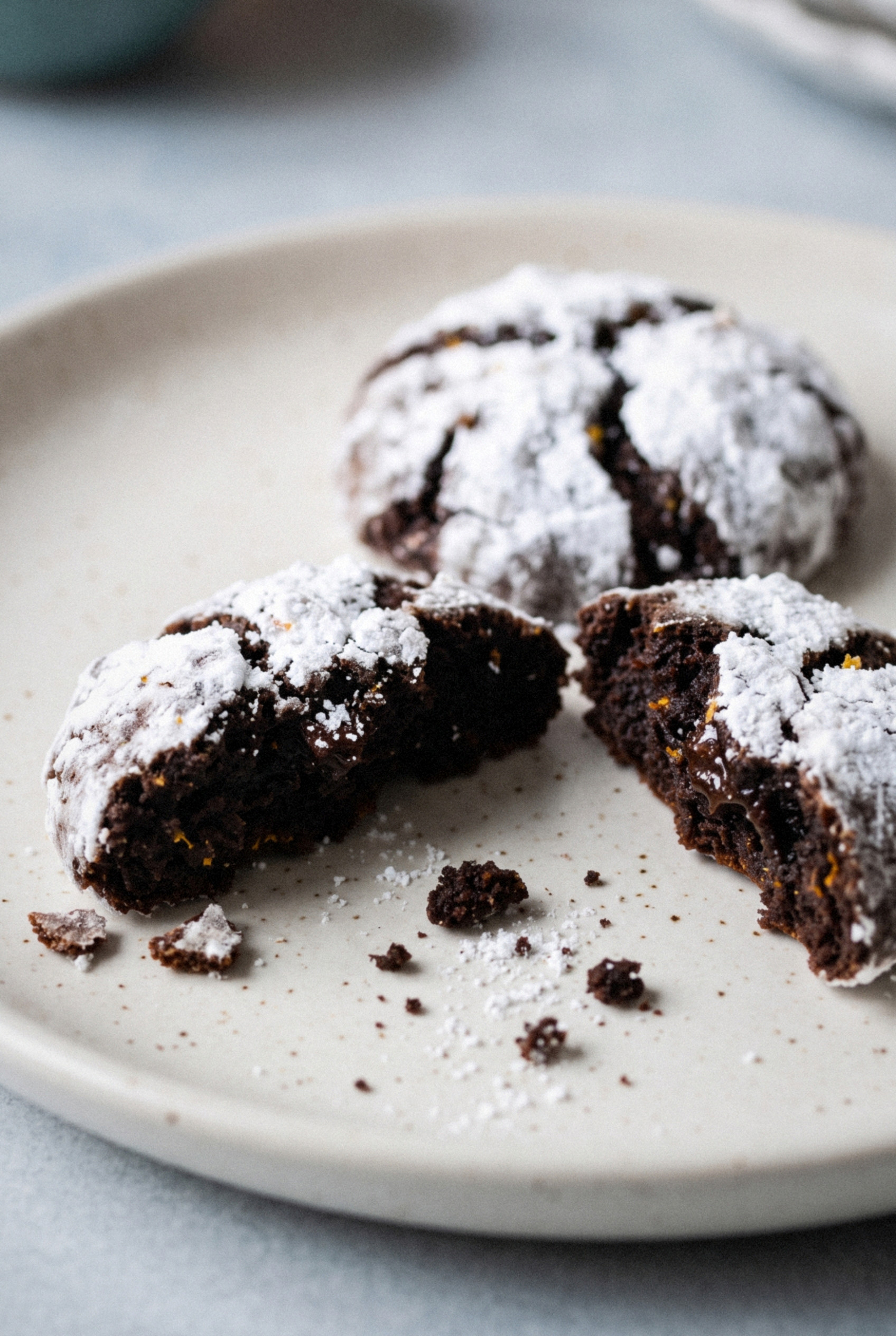
The centres are soft and fudgy, almost like a brownie.
The orange comes from real zest rubbed straight into the sugar, so every bite tastes like that stocking chocolate.
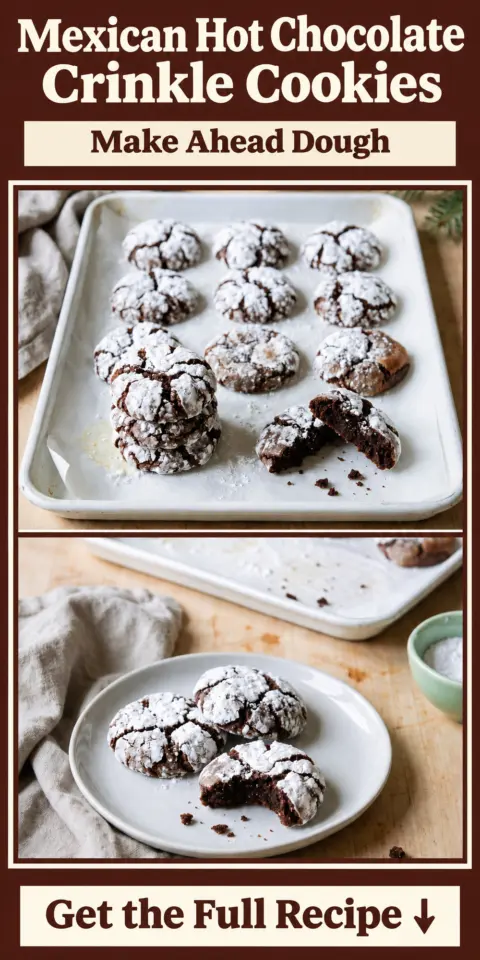
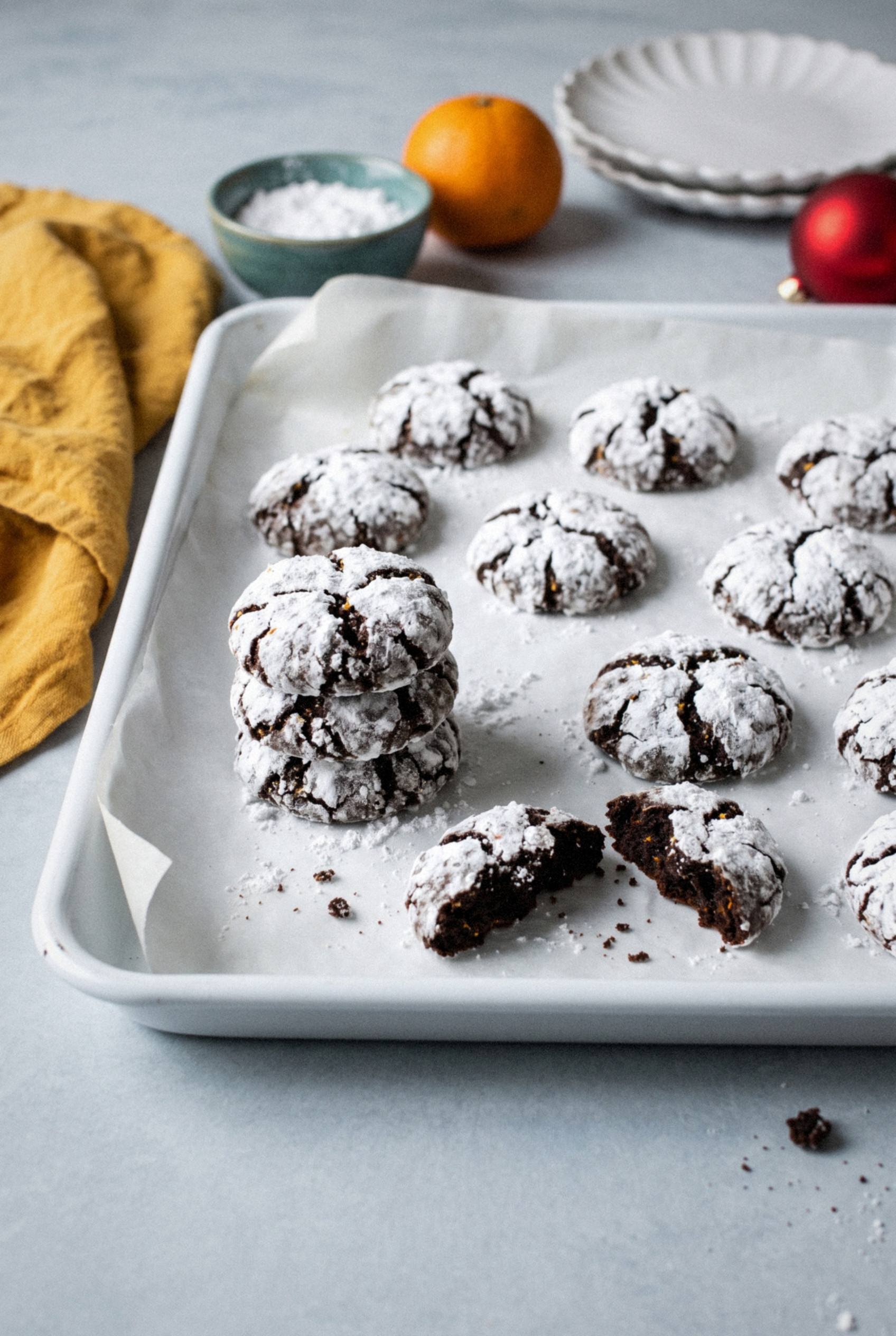
And a quick double roll in two sugars keeps the cracks bright white for days in a cookie tin.
Make them once and you'll see why they're the first thing to disappear off my Christmas tray.
Why These Chocolate Orange Crinkles Work
These cookies fix the three things that usually go wrong with crinkles. Flat shapes, weak orange flavor, and a coating that vanishes by morning.
- A fudgy, brownie-like centre. Mostly oil with a splash of melted butter keeps the middle soft and dense, while the butter adds that rich, bakery flavor.
- Real orange in every bite. Rubbing the zest into the sugar releases the orange oils, so you get bright citrus without a fake extract taste.
- Cracks that stay white. A roll in granulated sugar first, then a thick coat of powdered sugar, keeps the tops snowy even on day four.
- Built for the holiday tray. They hold their shape in a gift tin, freeze beautifully as dough balls, and look festive without any piping or decorating.
- No mixer needed. One bowl and a whisk get the dough together in about 15 minutes.
Crinkle cookies have been on American Christmas trays for generations, usually as plain chocolate.
Adding orange is a very European move, borrowed from the chocolate orange candy that so many of us grew up with. What's not to love?
Ingredients You Need
You probably have almost everything already. The only special thing on the list is a couple of fresh oranges.
- Granulated sugar (1 cup). The base of the dough and the sugar we rub the zest into.
- Light brown sugar (¼ cup). Adds a touch of moisture and chew.
- Orange zest (1 tablespoon). About two medium navel oranges. Grate only the bright orange part, never the bitter white pith.
- Unsweetened cocoa powder (¾ cup). Dutch-process gives the darkest color and the smoothest chocolate flavor.
- Vegetable oil (⅓ cup). Keeps the centres fudgy even after the cookies cool.
- Unsalted butter (2 tablespoons), melted. A small amount for flavor.
- Large eggs (3). Room temperature eggs blend smoothly into the cocoa mixture.
- Vanilla extract (1 teaspoon). Rounds out the chocolate.
- Orange extract (¼ teaspoon), optional. A tiny boost if you want the orange louder.
- All-purpose flour (1 ¾ cups). Spoon it into the cup and level it off.
- Baking powder (1 ½ teaspoons) and salt (½ teaspoon). The lift is what opens up those cracks.
- Granulated sugar (½ cup) and powdered sugar (¾ cup) for rolling. The two-step coating.
Cocoa Powder: Dutch-Process or Natural?
Either works, but they bake up a little differently. Dutch-process cocoa makes a darker, almost black cookie with a mellow flavor that lets the orange shine.
Natural cocoa gives a lighter brown cookie with a sharper chocolate bite. I reach for Dutch-process every time for this recipe.
Orange Zest vs Orange Extract
Zest is non-negotiable here. It carries the fresh, floral orange flavor that extract alone can't copy.
The extract is optional. A quarter teaspoon adds a little punch, but more than that and you're back to cleaning-spray territory. Yes, I learned that the hard way.
If you love a stronger citrus flavor, add a third orange's worth of zest instead of more extract.
Why Oil and Butter
Oil keeps these cookies soft; butter makes them taste like a bakery cookie. All-oil crinkles are fudgy but a little flat in flavor.
All-butter crinkles taste great but firm up into a cakier cookie. Using both gets you the perfect middle ground.
The Two Sugars for Coating
The granulated sugar goes on first as a thin barrier. It soaks up the surface moisture of the dough.
Then the powdered sugar sits on top and stays dry and white instead of melting in.
How to Make Chocolate Orange Crinkle Cookies
The dough comes together fast, then it needs a nap in the fridge. Plan for about 2 hours of chilling before you bake.
Step 1: Rub the Zest into the Sugar
Add the 1 cup of granulated sugar, the ¼ cup of brown sugar, and the orange zest to a large bowl. Rub the zest into the sugar with your fingertips for about 1 minute, until the sugar looks damp and smells strongly of orange.
Pro tip: Don't skip the rubbing. It's the difference between a cookie that tastes like orange and one that just has orange in it.
Step 2: Mix the Dough
Whisk the cocoa powder, oil, and melted butter into the orange sugar until it looks like thick, glossy mud. Whisk in the eggs one at a time, mixing well after each, then stir in the vanilla and orange extract if you're using it.
In a separate bowl, whisk the flour, baking powder, and salt. Fold the dry ingredients into the chocolate mixture with a spatula until no streaks of flour remain. The dough will be very soft, almost like brownie batter.
Step 3: Chill the Dough
Cover the bowl and chill for at least 2 hours, or up to 2 days. The dough firms up enough to roll and holds its dome shape in the oven.
Can you skip the chill? Not if you want cracks.
Warm dough spreads before the outside sets, so the tops just get a few faint lines instead of those deep fissures.
Step 4: Roll in Two Sugars
Heat the oven to 350°F and line two baking sheets with parchment. Put the ½ cup of granulated sugar in one shallow bowl and the ¾ cup of powdered sugar in another.
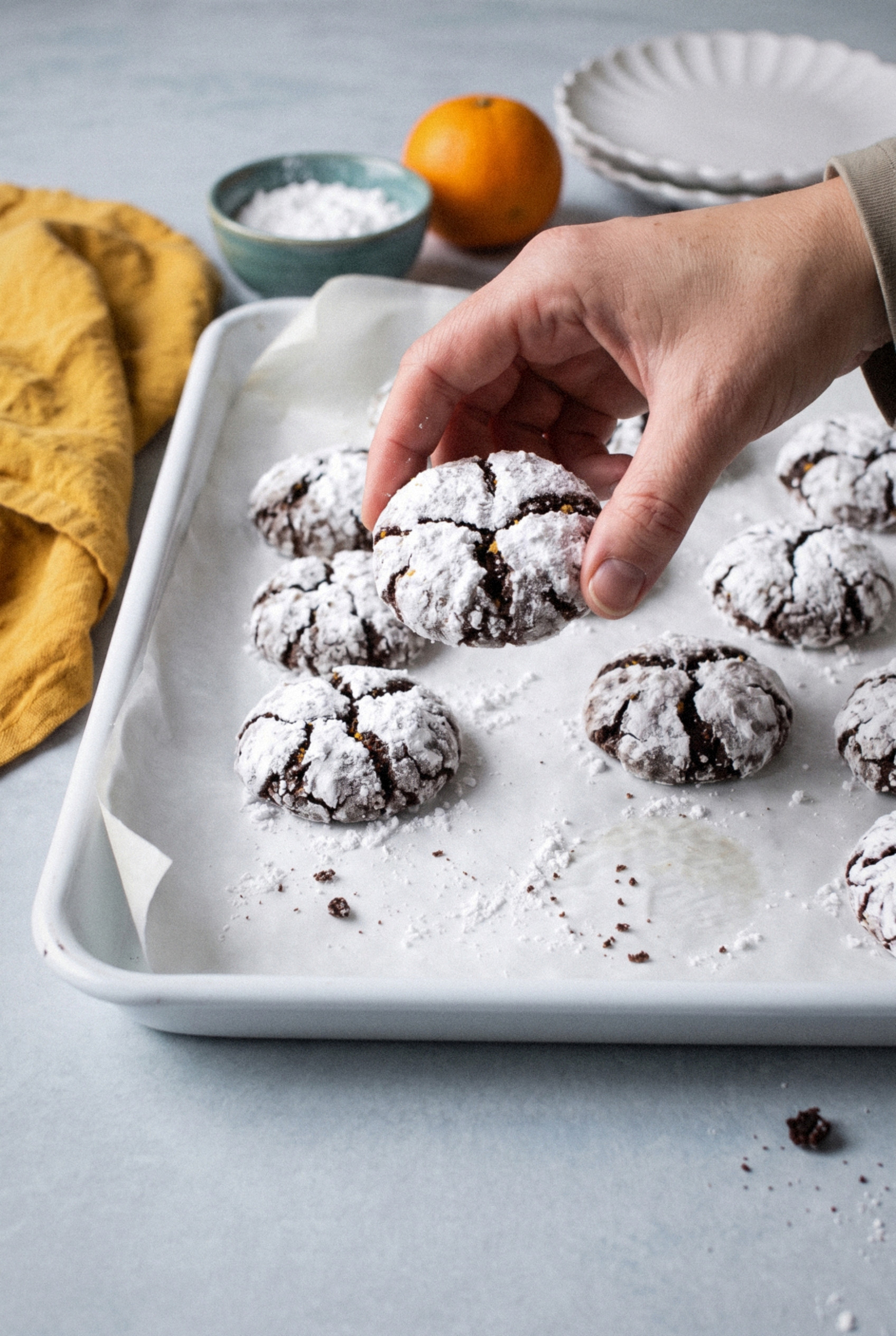
Scoop the dough into 1 tablespoon portions (about 20 grams) and roll each into a smooth ball. Roll it in the granulated sugar, then roll it in the powdered sugar until it's completely buried in white. Space the balls 2 inches apart on the sheets.
Fair warning: Your counter will look like a snowstorm hit it. That's part of the fun!
Step 5: Bake and Cool
Bake one sheet at a time for 10 to 12 minutes, until the edges look set and the cracks have opened wide. The centres should still look slightly soft between the cracks.
Let the cookies cool on the sheet for 5 minutes, then move them to a wire rack. They firm up as they cool and stay fudgy in the middle.
Tips for Deep Cracks and Fudgy Centers
Crinkle cookies are easy, but a few small habits make them look bakery perfect. These are the ones that matter most.
- Keep the dough cold. If your kitchen is warm, return the bowl to the fridge between batches. Cold dough gives the tallest domes.
- Coat it thick. A thin powdered sugar coat dissolves into the dough. You want the ball to look like a snowball, with no chocolate showing.
- Don't flatten the balls. Leave them round. The cracks come from the dough rising up and splitting the sugar shell.
- Pull them early. Overbaked crinkles turn dry and crumbly. Take them out when the centres still look a little underdone.
- Use fresh baking powder. Old baking powder means less lift and fewer cracks. If yours has been open longer than six months, replace it.
- Bake one sheet at a time. The middle rack gives the most even heat, so every cookie cracks the same way.
So what's the secret to crinkle cookies? Cold dough and a thick double coat of sugar.
Variations
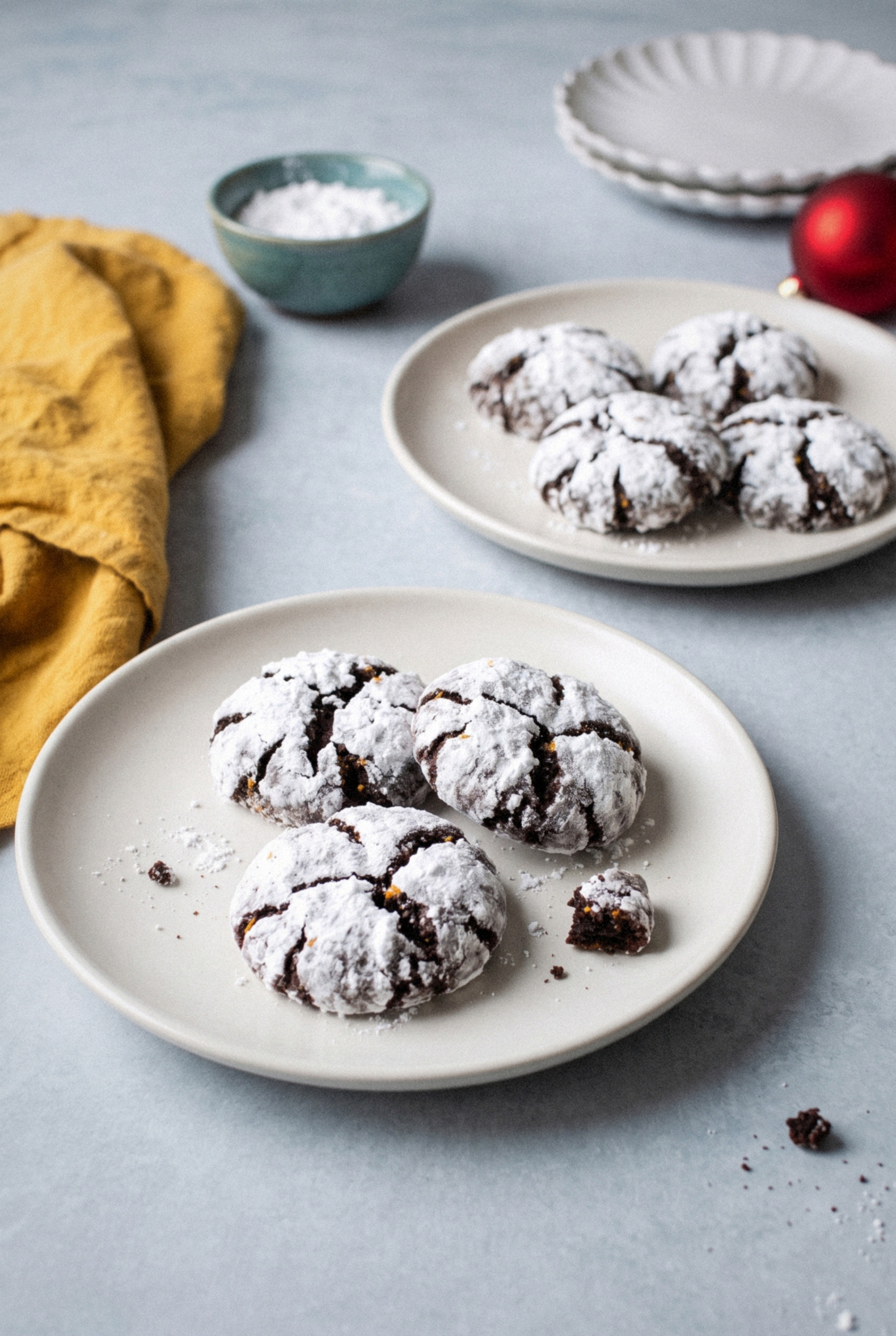
Once you've nailed the base recipe, it's a great way to play. Here are a few versions I've baked for our holiday tray.
- Spiced chocolate orange. Add ½ teaspoon of cinnamon and a pinch of ground cloves to the flour for a warm, mulled flavor.
- Chocolate chunk. Fold ½ cup of chopped dark chocolate into the dough for melty pockets.
- Truffle centre. Press a small piece of dark chocolate into the middle of each dough ball before rolling. It turns into a gooey surprise.
- Espresso boost. Whisk 1 teaspoon of espresso powder into the cocoa to deepen the chocolate flavor.
- Grand Marnier version. Swap the orange extract for 1 tablespoon of orange liqueur for a grown-up cookie tray.
- Gluten-free. Use a cup-for-cup gluten-free flour blend. The cookies come out a touch more delicate, but still crinkle nicely.
Make Ahead, Storage and Gifting
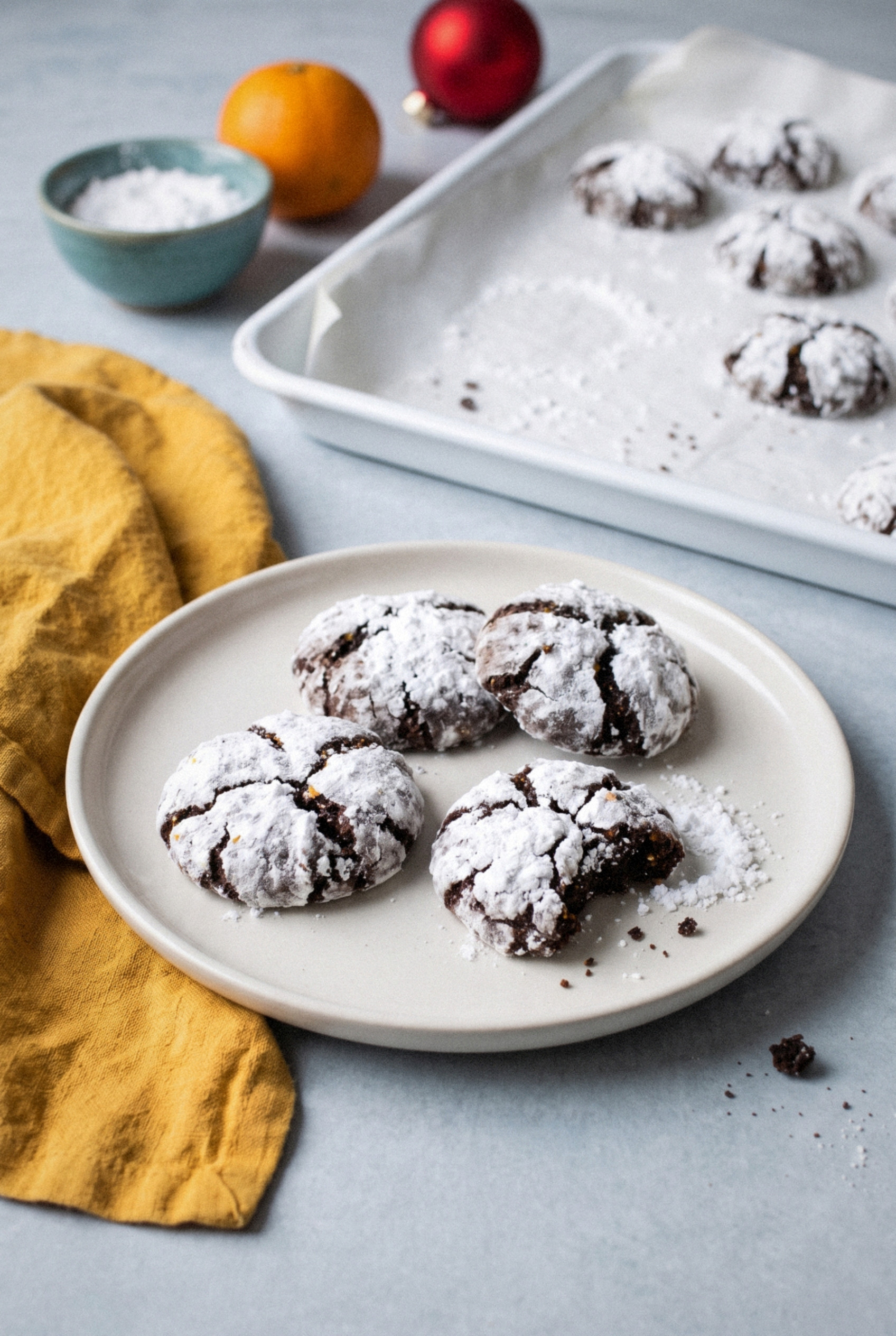
These are some of the best make-ahead Christmas cookies I know. The dough and the baked cookies both freeze well.
- Dough in the fridge. Covered dough keeps for up to 2 days. Let it sit out for 5 minutes if it's too stiff to scoop.
- Frozen dough balls. Roll the dough into balls (no sugar yet) and freeze on a tray, then bag them for up to 3 months. Thaw for 15 minutes, roll in both sugars, and bake as usual.
- Baked cookies at room temperature. Store in an airtight container for up to 5 days.
- Frozen baked cookies. Freeze in a single layer, then stack in a container with parchment for up to 2 months. Give them a light dusting of powdered sugar after thawing.
- Packing gift tins. Put a sheet of parchment between layers and keep these in their own section of the tin. Powdered sugar loves to dust everything nearby.
For a cookie swap, I bake them up to 3 days ahead. They actually taste a little more orangey on day two!
What to Serve With Them
These cookies are rich, so simple pairings work best. A cold glass of milk is the classic for good reason.
- Hot drinks. Black coffee, an espresso, or a mug of hot chocolate hits the spot on a cold December night.
- A holiday cookie tray. Set them next to lighter cookies like sugar cookies, shortbread, or spritz. The dark color looks stunning against pale cookies.
- Dessert plate. Serve two or three alongside a scoop of vanilla ice cream or a few orange segments after a big holiday dinner.
Whether you're filling tins for the neighbors or baking for your own family, these chocolate orange crinkles are a crowd-pleaser. Give them a try!
Recipe
Chocolate Orange Crinkle Cookies
Ingredients
For the Dough
- 1 cup granulated sugar 200g
- ¼ cup light brown sugar packed
- 1 tablespoon orange zest finely grated, from about 2 medium navel oranges
- ¾ cup unsweetened cocoa powder Dutch-process preferred
- ⅓ cup vegetable oil
- 2 tablespoons unsalted butter melted
- 3 large eggs room temperature
- 1 teaspoon vanilla extract
- ¼ teaspoon orange extract optional
- 1 ¾ cups all-purpose flour spooned and leveled, 220g
- 1 ½ teaspoons baking powder
- ½ teaspoon salt
For Rolling
- ½ cup granulated sugar
- ¾ cup powdered sugar
Instructions
Make the Dough
- In a large bowl, rub the granulated sugar, brown sugar and orange zest together with your fingertips for about 1 minute, until fragrant and damp.
- Whisk in the cocoa powder, vegetable oil and melted butter until thick and glossy.
- Whisk in the eggs one at a time, then stir in the vanilla extract and orange extract, if using.
- In a separate bowl, whisk together the flour, baking powder and salt. Fold into the chocolate mixture until no streaks of flour remain.
- Cover and refrigerate the dough for at least 2 hours or up to 2 days.
Shape and Bake
- Heat the oven to 350°F and line two baking sheets with parchment paper. Place the rolling granulated sugar and powdered sugar in two separate shallow bowls.
- Scoop the dough into 1 tablespoon (about 20g) portions and roll into smooth balls.
- Roll each ball in granulated sugar, then roll generously in powdered sugar until fully coated. Place 2 inches apart on the prepared sheets.
- Bake one sheet at a time on the middle rack for 10 to 12 minutes, until the edges are set and the cracks have opened, with the centres still slightly soft.
- Cool on the baking sheet for 5 minutes, then transfer to a wire rack to cool completely.
Notes
- Chill: Do not skip the chill. Warm dough spreads before the cracks can form.
- Coating: The granulated sugar layer keeps the powdered sugar from melting into the dough, so the cracks stay white.
- Make ahead: Freeze uncoated dough balls for up to 3 months. Thaw 15 minutes, roll in both sugars and bake.
- Storage: Keep baked cookies airtight at room temperature for up to 5 days, or freeze for up to 2 months.