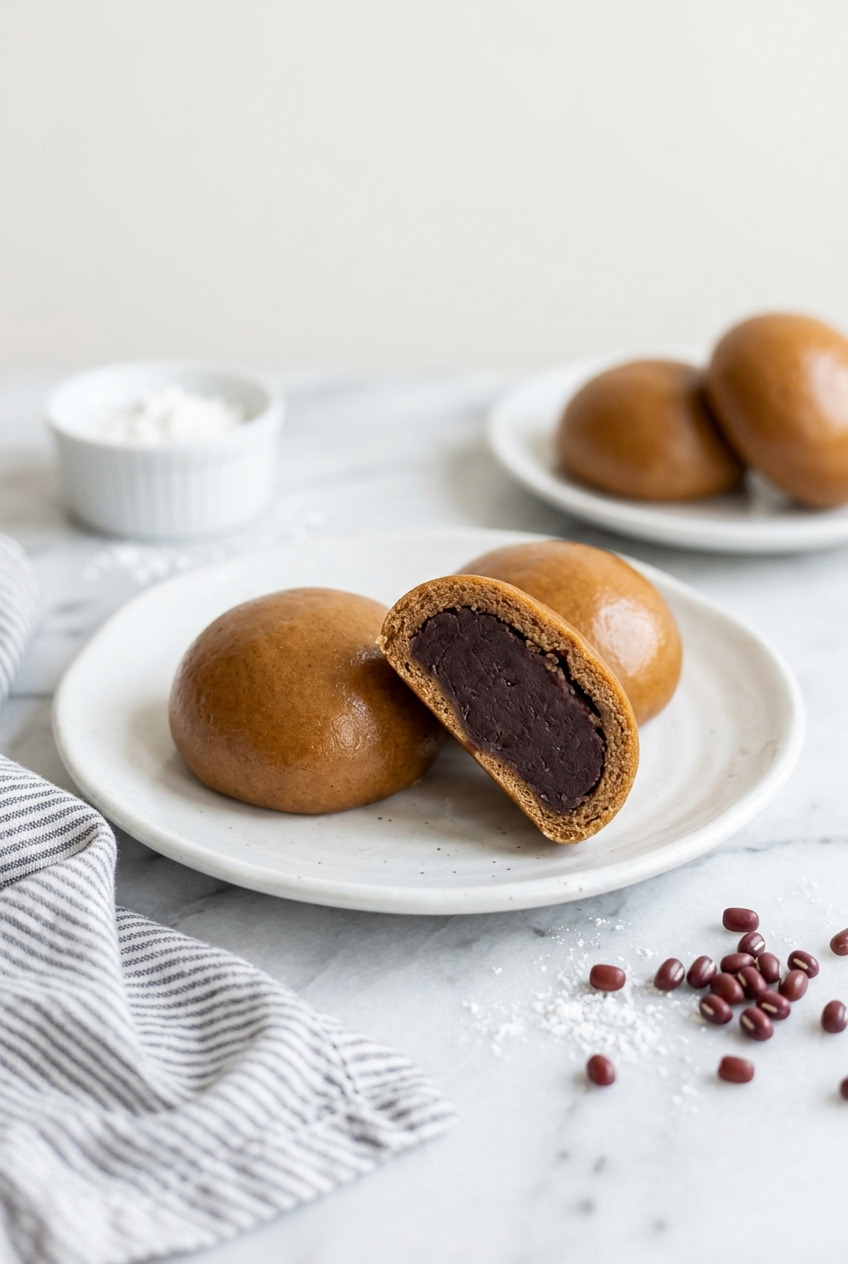
There's something about pulling warm, freshly steamed buns out of a bamboo steamer that makes your whole kitchen smell like a Japanese tea house. Soft wheat dough, barely sweet, giving way to a pocket of rich red bean paste inside.
I fell for manju during a deep rabbit hole into wagashi, traditional Japanese confections. What surprised me most was how simple the dough is. Four main ingredients. No yeast, no proofing, no oven. You mix, wrap, steam, and you're done in about an hour. My kids started calling them "bean pillows," which honestly tracks.
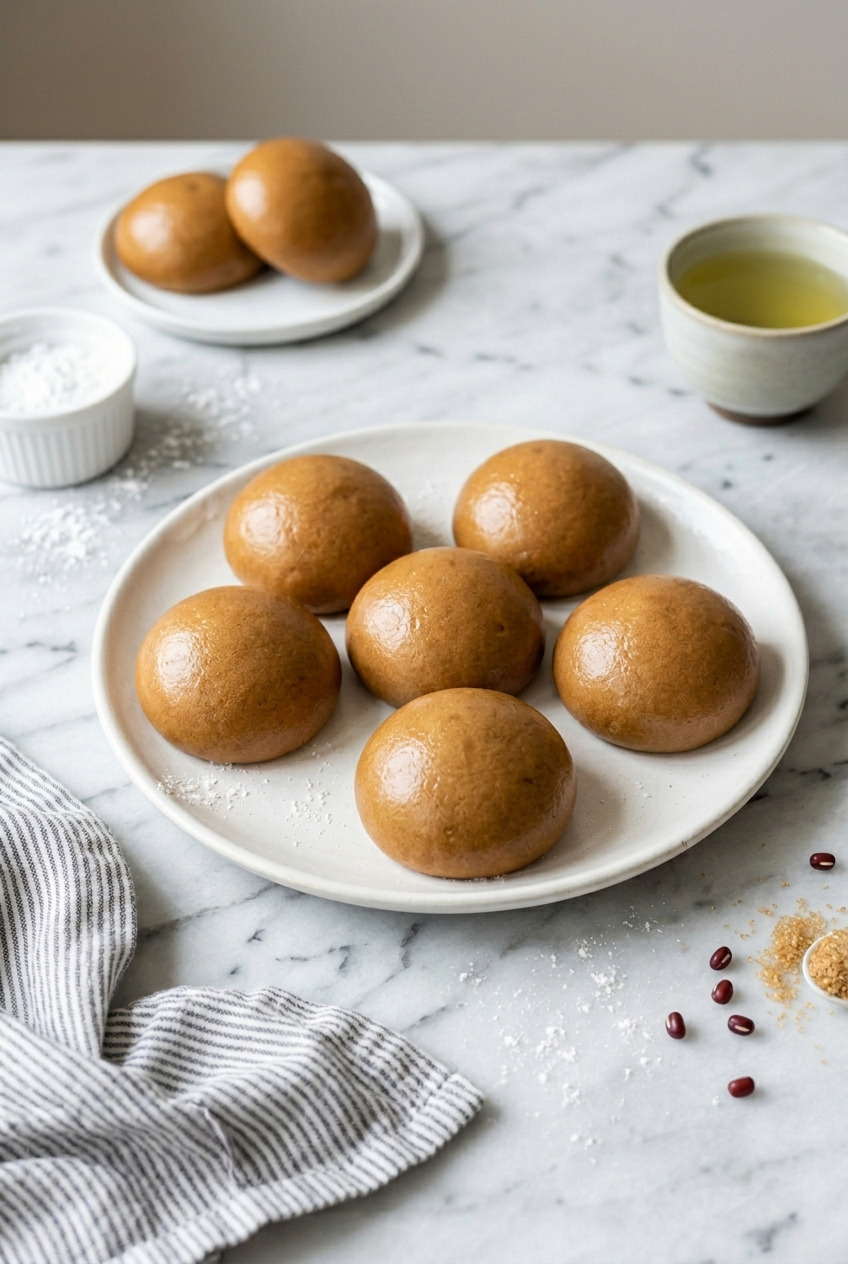
If you've been curious about Japanese sweets but didn't know where to start, this is your recipe. Quick, forgiving, and the kind of thing you'll want to make again the same week.
What is Manju?
Manju is a traditional Japanese confection, or wagashi, made with a soft wheat-flour dough wrapped around a sweet filling. The most classic version uses anko (sweet red bean paste) as the filling, though dozens of regional variations exist across Japan.
The history goes back to 1341, when a Japanese envoy returned from China and brought mantou (饅頭) with him. The Chinese characters are read as "manju" in Japanese. Over the centuries, the savory Chinese steamed bun evolved into the sweet confection we know today.
If you're wondering how manju differs from mochi and daifuku, it comes down to the dough. Manju uses wheat flour, which gives it a soft, bread-like texture. Mochi uses glutinous rice flour (mochiko), which creates that famous stretchy, chewy bite. Daifuku is essentially mochi with a filling inside. Three different textures, three different experiences.
In Japan, manju is everywhere. You'll find them at train stations, temple gift shops, and wagashi stores. They're served alongside green tea, given as gifts on special occasions, and eaten as an afternoon snack. They're simple, comforting, and deeply rooted in Japanese food culture.
Types of Manju
Manju (Wheat Manju / Rikyu Manju)
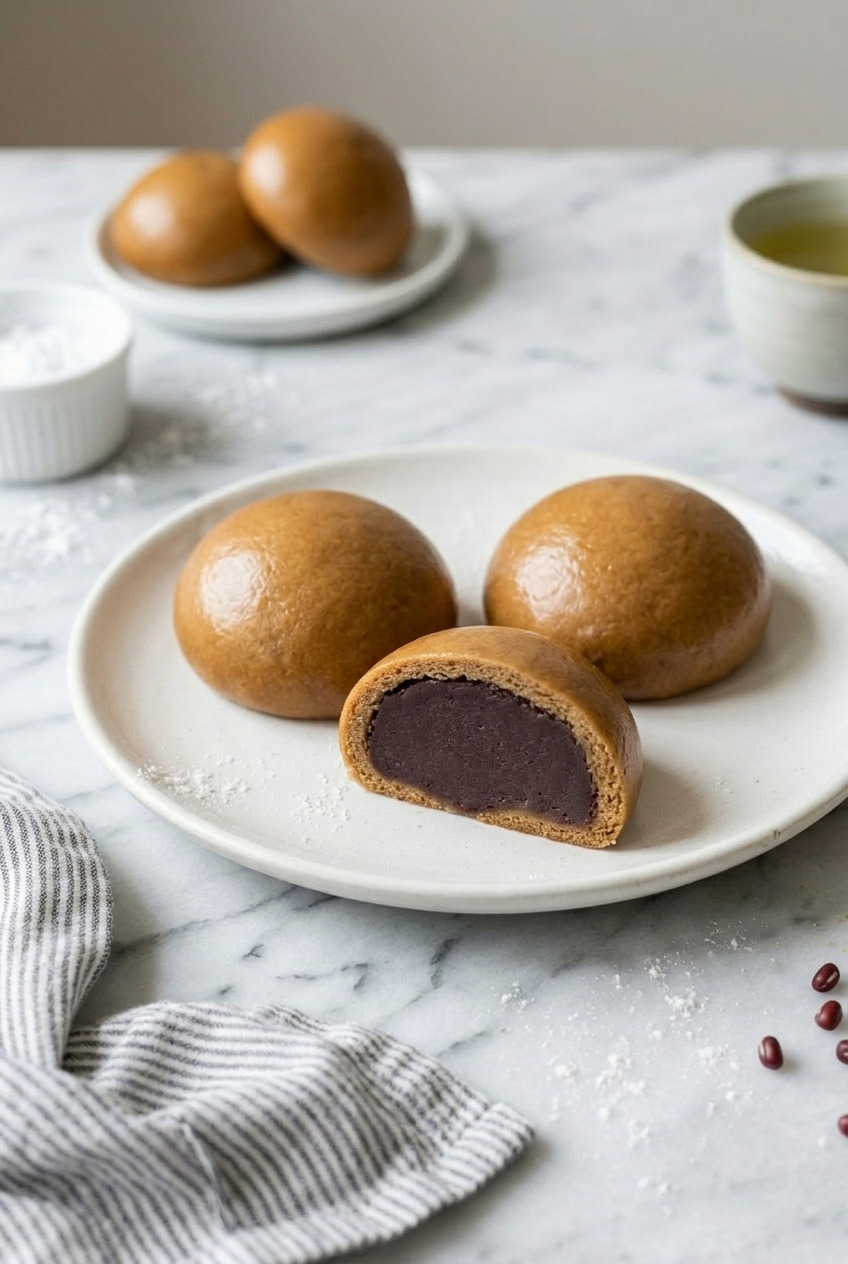
This is the standard version and exactly what this recipe makes. The dough is made with brown sugar and cake flour, then steamed. Also called Cha Manju (茶饅頭) or Kokuto Manju (黒糖饅頭). The brown sugar gives the dough its warm caramel color and gentle sweetness.
Yaki Manju
Yaki means "baked." These manju have a slightly different dough that gets baked instead of steamed, producing a lightly golden, faintly crisp exterior. Momiji Manju (maple leaf shaped) and Kuri Manju (chestnut) are popular examples.
Sake Manju
The dough is fermented with sake kasu (sake lees), which gives it a subtle floral aroma and a slightly tangy flavor. This style is actually the origin of the idea for anpan, the beloved Japanese red bean bread.
Jyouyo Manju
Made with grated yamaimo (mountain yam) and rice flour instead of wheat flour. The texture is more delicate and elegant. Kohaku Manju, the red-and-white manju served at celebrations, is a well-known example.
Miso Manju
The dough is flavored with miso paste, which adds a savory-sweet depth. Minobu Manju from Yamanashi Prefecture is probably the most famous version.
If you like the red bean filling, my daifuku wraps it in soft mochi instead of a baked or steamed dough.
Ingredients for Manju
- Cake flour (1 cup). Cake flour has less protein than all-purpose flour, which means less gluten development and a softer, more pillowy texture. If you don't have cake flour, you can make your own: measure 1 cup of all-purpose flour, remove 2 tablespoons, and replace them with 2 tablespoons of cornstarch. Sift well before using.
- Brown sugar (½ cup, packed). This gives the dough its characteristic caramel color and a mild, warm sweetness. Dark brown sugar works too and will produce a slightly deeper flavor and darker color.
- Baking powder (½ teaspoon). A small amount of leavening makes the dough soft and pillowy after steaming. Without it, the dough would be dense and flat.
- Water (3 tablespoons + ½ teaspoon). The 3 tablespoons dissolve the brown sugar into a syrup. The ½ teaspoon dissolves the baking powder before it gets mixed in.
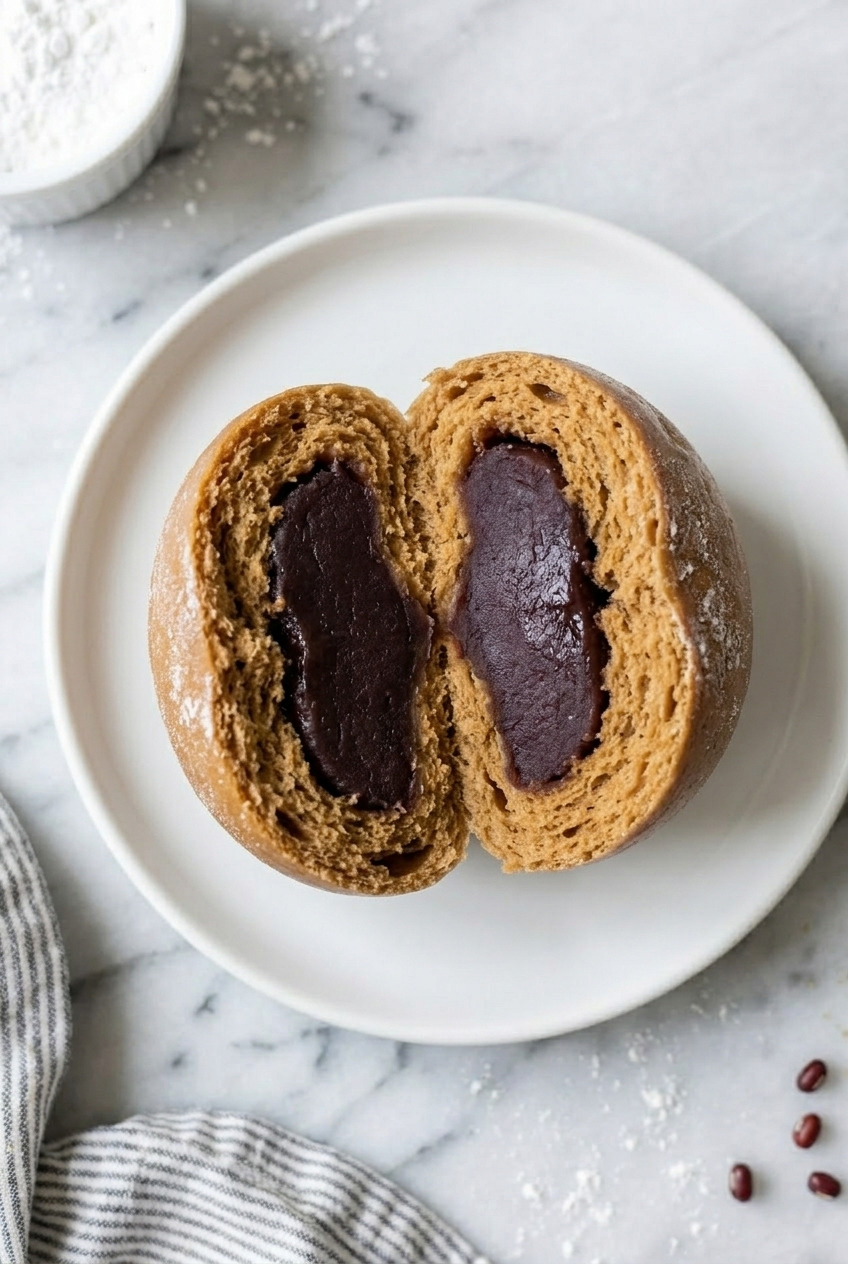
- Sweet red bean paste / anko (8.5 oz / 240g). I recommend koshian (smooth, strained red bean paste) for the most traditional result. Tsubushian (chunky, coarsely mashed) works just as well if you prefer more texture. Store-bought is perfectly fine here and what most Japanese home cooks use.
How to Make Manju (Step by Step)
Step 1: Make the Sugar Syrup
Add 3 tablespoons of water and ½ cup of packed brown sugar to a small saucepan. Whisk over medium-low heat until the sugar dissolves completely.
Transfer to a large bowl and let it cool to lukewarm. This is important. If the syrup is too hot, it will activate the baking powder too early and you'll lose that lift during steaming.
Step 2: Portion the Filling
While the syrup cools, wet your hands slightly and divide the 8.5 oz of anko into 12 equal balls, about 20g (1 scant tablespoon) each.
I like to do this step first so everything is ready when the dough comes together. Line them up on a plate and set aside. Pre-portioning keeps your sizes even and the whole assembly process much faster.
Step 3: Mix the Dough
In a small dish, combine ½ teaspoon baking powder with ½ teaspoon water and stir. Add this to the cooled brown sugar syrup and mix.
Sift 1 cup of cake flour into the bowl. Use a silicone spatula, chopsticks, or your fingers to combine. Pinch the clumps together until a soft dough forms. Do NOT knead it at this point.
Cover with plastic wrap and rest for 15 minutes. This lets the gluten relax so the dough is easier to work with.
Step 4: Knead (Briefly!)
Transfer the dough to a floured surface. Knead gently for 1 to 2 minutes, dusting with flour as needed to get rid of stickiness. The dough should feel pliable and smooth, like the texture of an earlobe (a comparison Japanese bakers actually use).
NEVER over-knead. Overworking the dough develops too much gluten, which makes it tough and dense instead of soft. Just bring it together and stop.
Step 5: Wrap the Manju
Roll the dough into a log and cut into 12 equal pieces. Cover the pieces with a damp towel to prevent drying.
Take one piece, form it into a ball, then flatten it into a disc about 2.5 to 3 inches (6 to 7 cm) in diameter. Here's the key technique: keep the center slightly thicker and the edges thinner. This way, when you wrap the filling, the top of the manju has enough dough coverage and the sealed bottom doesn't end up too thick.
Place one anko ball in the center. Pull the edges up and over the filling, pinching firmly to seal. Place the manju seam-side down on a small square of parchment paper. Rotate it gently on the surface to smooth out the shape.
Cover the finished manju with a damp towel while you wrap the rest.
Step 6: Steam
Set up your steamer. Fill a wok or pot with about 2 inches of water and bring to a rolling boil. If you have cheesecloth, dampen it and lay it over the steamer rack to prevent sticking.
Place the manju in the steamer, leaving about 1 inch of space between each one (they'll expand slightly). Steam over high heat for 10 to 12 minutes. You want lots of steam circulating.
Remove the manju and let them cool on a wire rack or bamboo sieve so air can circulate underneath. While they're still warm, wrap each one individually in plastic wrap to lock in moisture. This step keeps them soft.
Tips for Perfect Manju
- Don't over-knead the dough. This is the number one mistake. Just fold and press until the dough comes together and feels smooth. If it takes more than 2 minutes of kneading, you're doing too much.
- Thinner edges, thicker center. When you flatten the dough disc, resist the urge to make it uniformly thin. A thicker center means the top of your manju has adequate dough coverage. Thin edges mean the pinched seam on the bottom stays neat and not bulky.
- Seal tightly. Pinch the seam firmly and make sure there are no gaps. A loose seal means the filling can leak out during steaming, and you'll end up with sticky, messy buns instead of smooth ones.
- Pre-portion all the filling first. Roll all 12 anko balls before you start wrapping. It keeps the process efficient and your portions even. You don't want to be scooping filling with floury hands mid-assembly.
- Use damp cheesecloth in the steamer. It prevents sticking and helps steam circulate evenly around each bun. No cheesecloth? Parchment paper squares under each manju work fine too.
- Wrap in plastic while still warm. This is how you keep manju soft for hours after steaming. The plastic traps the steam and prevents the surface from drying out and cracking.
Recipe Variations
- Filling swaps. Try shiro-an (white bean paste) for a milder, creamier filling. Sweet potato paste, matcha-flavored anko, chestnut paste, or even custard all work. The brown sugar dough pairs especially well with earthy, nutty fillings.
- Baked manju. Want a lightly golden crust instead of a steamed surface? Brush the shaped manju with egg wash and bake at 325°F (160°C) for 15 to 18 minutes. The texture is firmer and slightly crisp on the outside.
- Matcha dough. Add 1 to 2 teaspoons of matcha powder to the cake flour before sifting. This gives you beautiful green tea manju with a subtle bitter note that balances the sweet anko filling.
- Shaped manju. Traditional wooden molds called kashigata can press decorative patterns into the dough before steaming. Flower shapes and maple leaves are the most classic designs.
Manju and green tea are the classic pair. A coconut matcha latte works too.
How to Store Manju
- Room temperature. Best eaten the same day. Keep them covered or wrapped in plastic to prevent drying. They'll stay soft for several hours if you wrapped them while still warm.
- Refrigerator. Store in an airtight container for up to 3 days. The dough will firm up in the fridge, so re-steam briefly (3 to 4 minutes) before eating to bring back that soft, pillowy texture.
- Freezer. Wrap each manju individually in plastic wrap, then place in a freezer bag. They'll keep for up to 1 month. Thaw at room temperature, then re-steam for 5 minutes to refresh.
- Serving suggestion. Manju are traditionally enjoyed with a cup of hot green tea. Sencha or matcha both work. The slight bitterness of the tea is the perfect counterpoint to the sweet anko filling. I love having these as an afternoon treat with a freshly brewed pot.
Recipe
Manju (Japanese Sweet Bean Buns)
Ingredients
Dough
- ½ cup brown sugar packed
- 3 tablespoons water
- ½ teaspoon baking powder
- ½ teaspoon water for dissolving baking powder
- 1 cup cake flour plus more for dusting
Filling
- 8.5 oz sweet red bean paste (anko) koshian (smooth) recommended; about 240g
Instructions
Make the Sugar Syrup
- Add 3 tablespoons of water and ½ cup of packed brown sugar to a small saucepan. Whisk over medium-low heat until the sugar dissolves completely.
- Transfer to a large bowl and set aside to cool to lukewarm.
Portion the Filling
- Wet your hands slightly and divide the 8.5 oz of sweet red bean paste into 12 equal balls, about 20g (1 scant tablespoon) each. Set aside on a plate.
Mix the Dough
- In a small dish, combine ½ teaspoon baking powder with ½ teaspoon water and stir. Add to the cooled brown sugar syrup and mix.
- Sift 1 cup of cake flour into the bowl. Combine with a silicone spatula, chopsticks, or your fingers until a soft dough forms. Do not knead at this stage.
- Cover with plastic wrap and rest for 15 minutes.
Knead and Shape the Dough
- Transfer the dough to a floured surface and knead gently for 1 to 2 minutes, dusting with flour as needed. The dough should feel pliable and smooth. Do not over-knead.
- Roll the dough into a log and cut into 12 equal pieces. Cover with a damp towel to prevent drying.
Wrap the Manju
- Take one piece of dough, form it into a ball, and flatten into a disc about 2.5 to 3 inches (6 to 7 cm) in diameter. Keep the center slightly thicker and the edges thinner.
- Place one anko ball in the center. Pull the edges up and over the filling, pinching firmly at the top to seal. Place seam-side down on a small square of parchment paper and rotate gently to smooth the shape.
- Cover finished manju with a damp towel. Repeat with the remaining dough and filling.
Steam
- Fill a wok or pot with about 2 inches of water and bring to a rolling boil. Optionally lay damp cheesecloth over the steamer rack.
- Place manju in the steamer with about 1 inch of space between each one. Steam over high heat for 10 to 12 minutes.
- Remove from the steamer and let cool on a wire rack. While still warm, wrap each manju individually in plastic wrap to retain moisture.
Notes
- Cake flour substitute: Measure 1 cup all-purpose flour, remove 2 tablespoons, and add 2 tablespoons cornstarch. Sift well before using.
- Don't over-knead: Just 1 to 2 minutes of gentle kneading. Overworking develops gluten and makes the dough tough.
- Thinner edges, thicker center: When flattening dough discs, keep the center slightly thicker so the top of the manju has adequate coverage after wrapping.
- Seal tightly: Pinch seams firmly to prevent filling from leaking during steaming.
- Storage: Best eaten same day. Refrigerate in an airtight container up to 3 days, or freeze individually wrapped up to 1 month. Re-steam to refresh before serving.
- Filling options: Koshian (smooth) or tsubushian (chunky) red bean paste, white bean paste (shiro-an), sweet potato paste, matcha anko, or chestnut paste.