
Who doesn't love a good stir-fry? They are fairly quick, can be delicious, and are straightforward to put together. I mean the cooking instructions are the name of the dish. How can it go wrong? Well, it can go wrong in lots of ways actually.
Jump to:
When It All Goes Wrong
The vegetables can become soggy. Liquid can pool in the bottom of the wok causing everything to steam and boil rather than stir-fry. The flavours can be bland. The sauce can be too thin or too thick. The meat can be tough. There can be too much or too little of certain ingredients. All of these things are preventable. All of them.
What We Will Cover
Today we are going to look at the principles of stir-frying. We are going to break down the process from start to finish. The goal is that at the end of this, you can approach stir-frying with a new confidence. You won't have to worry about any of those problems that I just mentioned because you will know exactly how to prevent them from ever happening.
Here is what we will cover:
- Ratios of ingredients -- how much meat to vegetables to rice or noodles
- When to add ingredients -- timing and order of operations
- Cooking oils -- which ones to use and how much
- Wok technique -- maintaining heat and using the wok properly
- Sauces and flavourings -- making your own at home
Let's get into it.
Ratios of Ingredients
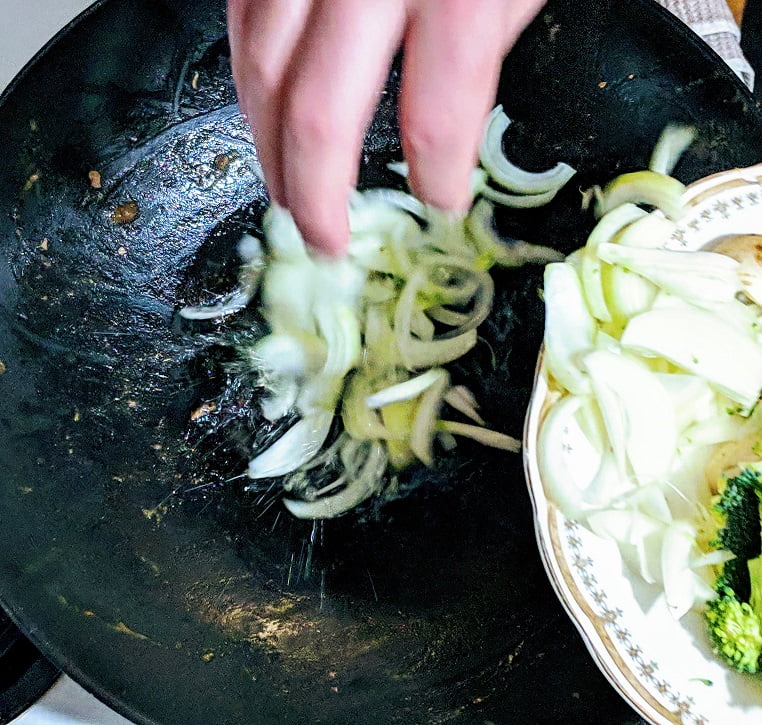
There are three main stir-fry ratios that will help us get an even amount of each ingredient in every bite. For a stir-fry that is just meat and vegetables, we want a ratio of 1:1 or 2:1. The 2:1 can go either way depending on your preference and the dish.
Meat and Vegetable Stir-fry
A beef and broccoli stir-fry should have a ratio of about 1:1. However a sweet and sour pork stir-fry will likely have a ratio of 2:1, meat to vegetables. On the flip side of this a shrimp and vegetable stir-fry may have the same 2:1 ratio, but with more vegetables than shrimp.
The way I usually break it down is like this: if there is a secondary vegetable dish, then I go with a 2:1 meat to vegetable ratio. If there isn't another vegetable dish, I go 1:1. And, if there is another meat dish, I typically will go 2:1, vegetables to meat. For your standard, everyday stir-fry that will be served alone over rice, a 1:1 ratio is what you want.
The 1:1 Ratio
Within that 1:1 ratio there is a lot of room to play on the vegetable side. What I mean is that there is typically only one kind of meat in a stir-fry but often multiple types of vegetables. Let's say you have 1 lb of beef and you want 1 lb of vegetables to balance that out. That 1 lb of vegetables could be purely broccoli. It could also be one third each broccoli, carrot, and onion. Or, it could be half broccoli and a quarter each carrot and onion. It doesn't really matter as long as the total amount of vegetables equals the total amount of meat.
The 1:1:1 Ratio (With Rice or Noodles)
There is a third ratio to keep in mind. This comes into play when we introduce rice or noodles directly into the stir-fry. This ratio is 1:1:1. We generally want around equal parts meat, vegetables, and rice or noodles. That will give us the best mix of everything. Of course, if we want to stretch the stir-fry out a bit more we can up the amount of rice or noodles slightly. This is exactly what I do in my pork fried rice recipe.
Vegetarian Stir-fry Ratios
I think it should be pretty obvious to say that if we have a stir-fry that is purely vegetables we don't have to worry about ratios at all. For a vegetable and rice, or noodle stir-fry a 1:1 ratio is fine. If we introduce tofu, we follow the same ratios we would for a stir-fry with meat, subbing the meat out for the tofu.

When we add our ingredients into our stir-fry is just as important as what ingredients we are adding. If we add certain ingredients too soon or too late it may throw off the cooking times of other ingredients and ruin the whole cooking rhythm. So, let's take a look at when we add what to our stir-fry.
Stir-frying Meat
Raw meat is generally the first thing that goes into the wok. We want to sear it (brown it) to develop flavour. Also, if we add raw meat after vegetables it just won't cook properly.
There is a risk of overcooking meat in a stir-fry. Due to this risk it is common to sear the meat and then remove it from the wok. Once the vegetables are stir-fried the meat is added back in. This does help to ensure that the meat isn't overcooked, but it also adds an extra step.
The other option in preventing the meat from overcooking is only to lightly sear it and then add the vegetables in. This way the meat finishes cooking with the vegetables. It is slightly higher risk in terms of overcooking, but you eliminate that extra step of removing the meat and then adding it back in.
Either process you choose to follow the meat goes in first.
Cooked Meat
I want to clarify that sometimes, as is the case with many North American Chinese food dishes, the meat is deep fried prior to being stir-fried with a few vegetables and the sauce. In this case the meat is the last item to go into the wok. It is only tossed with the sauce and then served.

In a few minutes we are going to get into how to properly use a wok. With that in mind I don't want to go too deep into adding ingredients in stages here. Having said that I do need to mention it. Just know that we will look at it in more depth a little further on.
Keeping Vegetables Crisp
When we stir-fry it is important that we don't cool the wok down too much. The way to prevent this is to add the ingredients in stages. Typically, we would add onions first, followed by firmer vegetables like carrots and celery. We then finish up with softer, wetter vegetables like bean sprouts.
There are two main things to keep in mind here. Maintaining the heat of the wok, and the cooking times of each vegetable. Maintaining the heat of the wok is paramount. It is the most important thing to keep in mind when stir-frying. Secondly is the cooking times of the vegetables and other ingredients. As I said, we will look at wok cooking in a minute, so let's first look at vegetable cooking times.
Vegetable Cooking Times
Something to keep in mind here is that one of the key attributes of a good stir-fry is crisp vegetables. We aren't trying to soften the vegetables in the same way we do when serving them with a roast or pork chops. We want the vegetables to essentially be under-cooked. This is really important.
Let's say that we are cooking a beef and vegetable stir-fry. The ingredients are beef, onion, carrot, celery, broccoli, and bean sprouts. The process for making it would go as follows:
- Heat the wok.
- Add oil.
- Sear beef.
- Add onions and cook for a minute or two.
- Next, carrot and celery and cook for another minute or two.
- Then, cook the broccoli for 2-3 minutes.
- Add bean sprouts and cook for 1-2 minutes.
- Eat.
Notice that we have to give the ingredients time to cook, and the wok time to heat back up. We also have to be mindful not to overcrowd the wok. Overcrowding will cause the wok to cool down too much. Again we will get into this shortly. If we had a big commercial wok sat over a giant flame, we could add the onion, carrot, celery, and broccoli all at the same time. But cooking at home doesn't work the same way.
Cutting the Vegetables
One final thing to keep in mind is that when cutting the vegetables for a stir-fry it is important to make them all around the same size. We want things cut thin and evenly. This will allow everything to be cooked evenly.

Cooking Oils for Stir-frying
There are two types of cooking oils that are generally used for stir-frying. Neutral oils that are used purely for cooking. And oils that are used for flavour.
Neutral Oils
Neutral oils are those that have very little to no flavour. These include canola, sunflower, peanut, safflower, and others. For stir-frying I generally use canola oil as it is what I usually have on hand. It has a high smoke point, as do the other oils I listed which makes them all perfect for using in a stir-fry. Ideally, our wok will be very, very hot so we need to use oils that will stand up to the heat.
Flavoured Oils
There are really only two types of flavoured oil I can think of that we might use to make a stir-fry. Sesame oil and chili oil. Sesame oil is oil made from sesame seeds. It comes either toasted or not toasted and is pretty strong. Generally, if I'm using sesame oil in this application I use the not toasted stuff. I also usually use it along with canola rather than just on its own.
Chili oil is just oil that has been flavoured with chili. Usually it is made of canola oil so it can be used the same way.
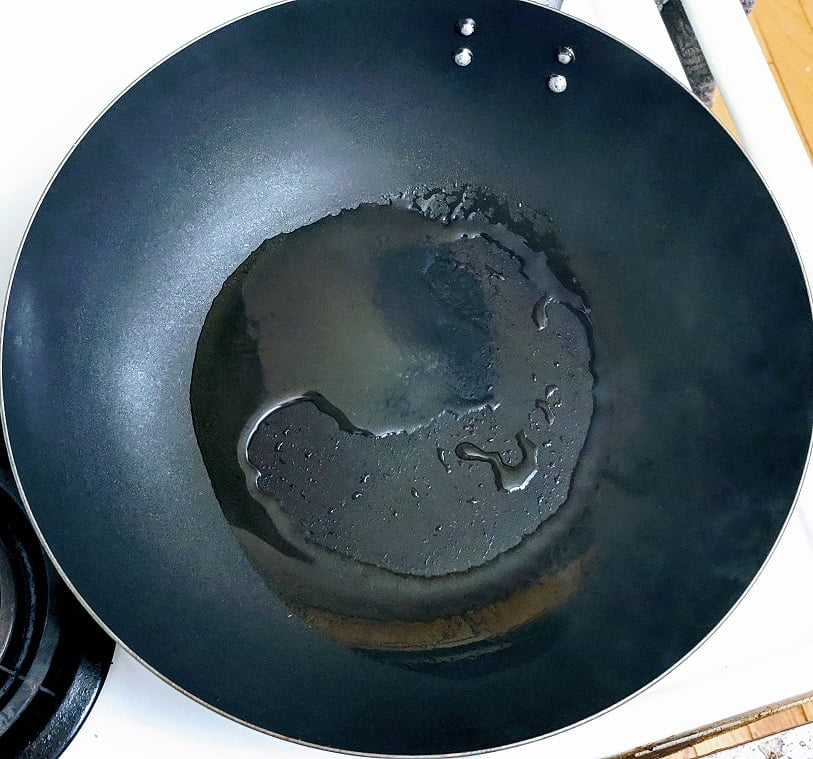
Okay, it is time for us to talk about how to properly use a wok. But first, what is a wok and should you have one?
What Is a Wok?
A wok is a traditional Chinese cooking pan most commonly with a rounded bottom. Today, flat bottom woks are common as well and work best with electric stoves. Both of my woks are flat bottomed. Woks have high sides that allow food to be tossed and caught easily. These high sides are also useful for momentarily removing food items from direct heat while cooking something else.
Should You Have a Wok?
Whether you should have a wok or not really depends on how often you would use it. If you are the kind of person who doesn't really like stir-fries, then you probably don't need or want one. On the flip side of that, if you are the kind of person who would use it once or twice a week, then yes, you should have one.
Woks are a useful and versatile tool. I use mine at least once a week, usually more. They also have all kinds of benefits like that they more evenly heat than regular pans. They require less oil. And because of the high sides they generally make less of a mess.
If you think you would use it then yes you should have a wok. If you don't then you probably shouldn't. It's pretty straightforward.
Using a Wok
Woks are best used over high heat. The whole idea of a stir-fry is that it is done very quickly, in a very hot wok. This high-heat is what keeps vegetables crisp. This is also why we should add our ingredients in stages. Remember to always preheat your pan before adding anything.
Think about it this way. When we stir-fry properly there is generally a lot of steam coming off the wok. This is moisture that is coming out of our ingredients and evaporating when it hits the hot surface of the wok. If the wok isn't hot enough because we didn't heat it properly, or because we overcrowded it, that moisture won't evaporate. It will pool in the bottom of the wok. This will further cool the wok down, causing more liquid to pool. This boils our ingredients and leaves them soggy and gross.
The simple way to prevent this is to make sure the wok is very, very hot before adding any ingredients. Also, add the ingredients in stages, wait until the temperature rises back up and then add your next ingredient or few ingredients.
Using the Sides of the Wok
It is called stir-fry for a reason. Due to the high temperature of the wok foods can burn quickly. That is why we want to keep things moving. We don't typically want to let foods just sit in the bottom of the wok for more than a few seconds.
Use the sides of the wok to push foods up with a spoon or spatula and then turn them back on to the cooking surface. We can also use the sides of the wok to toss foods. This takes a bit of practice but is well worth it. Also, if we notice that the temperature of the wok is starting to lower we can push foods up onto the sides of the wok and let them sit until the temperature returns.

Flavouring
Stir-fry flavourings may include ingredients like ginger, garlic, chili and lemon grass. Other ingredients may also be used like soy sauce, chili sauce, sesame oil, chili oil, hoisin sauce, fish sauce, citrus, vinegar and so on. Really, there isn't much of a limit if any to what can be used to flavour a stir-fry. It really just comes down to the type of stir-fry you are making.
Ingredients like ginger, garlic and chili should be stir-fried with the first or second addition of ingredients into the wok. Liquid ingredients should be added last.
Stir-fry Sauces
When walking through the sauce section of the grocery store it is easy to become overwhelmed. There are hundreds of stir-fry sauces. So many in fact that it must be impossible to make them at home. Luckily, that just isn't true. The vast majority of those stir-fry sauces that we see in the grocery store can be recreated with ingredients you likely already have on hand. For more on building sauces from scratch, have a look at my sauce making guide.
The most common ingredients in those store-bought sauces are soy sauce, sugar, and cornstarch mixed with a bit of water. To this the flavourings are added. Just like with our stir-fry flavourings, they can include just about anything.
A good stir-fry sauce example is orange chicken sauce. The ingredients are pretty straight forward. Soy sauce, sugar, and cornstarch mixed with a bit of water. To this orange juice and zest is added along with a touch of vinegar, garlic, and chili. That's about it. This can be cooked separately and then added to the stir-fry, or quickly cooked right into it.
The point is that even the "complex" stir-fry sauces aren't complex. And, we can easily find a recipe for any type of sauce we want online. This will be cheaper, and better than any store-bought sauce and most will only take seconds to put together.
Final Thoughts
Stir-frying is a great technique to have in your back pocket, and once you understand the basics -- a hot wok, proper ratios, and adding ingredients in stages -- it becomes second nature. I encourage you to try putting these principles into practice with something simple, like my pad thai, and build your confidence from there.
Frequently Asked Questions
The most common reason for a soggy stir-fry is that the wok was not hot enough, or it was overcrowded with too many ingredients at once. When the wok cools down, moisture from the vegetables pools at the bottom and steams the food instead of frying it. The solution is to make sure your wok is screaming hot before you start, and to add ingredients in stages so the temperature stays high.
Yes, you can use a large, heavy-bottomed skillet or frying pan. A wok is ideal because of its high sides and even heat distribution, but a regular pan will work in a pinch. The key is to make sure your pan is very hot and that you do not overcrowd it. You may need to cook in smaller batches than you would with a wok.
A neutral oil with a high smoke point is best for stir-frying. Canola, peanut, sunflower, and safflower oil all work well. You can also add a small amount of sesame oil for flavour, but use it alongside a neutral oil rather than on its own since sesame oil has a lower smoke point.
For a standard stir-fry served over rice, a 1:1 ratio of meat to vegetables works best. If you are adding rice or noodles directly into the stir-fry, aim for a 1:1:1 ratio of meat, vegetables, and starch. You can adjust these ratios depending on whether you have other dishes being served alongside.


Leave a Reply