The smell arrives before anything else does.
Ras el hanout hitting hot oil is a specific event in a kitchen, warm and dusty and a little floral, and it fills the room in about four seconds.
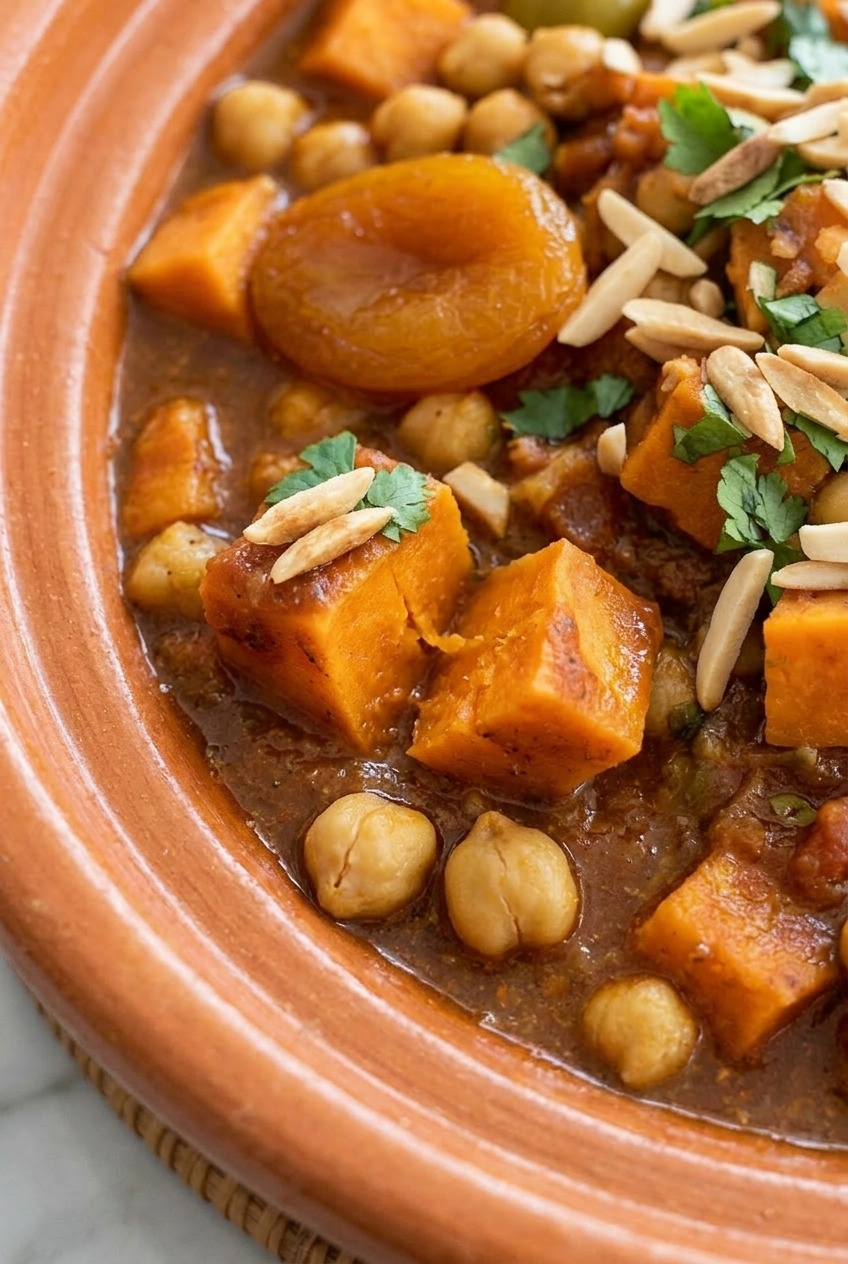
I first ate a proper one of these at a friend's mother's table in Marseille, in an apartment that smelled permanently of cumin and coffee.
She served it out of a heavy clay pot with a conical lid that she had carried back from Fes twenty years earlier.
I remember being suspicious of the apricots.
Then I ate it, and the apricot turned out to be the reason the whole pot works.
It pushes back against the cumin and the chili instead of sweetening them.
I have been making a version of it in a plain Dutch oven ever since, because I do not own a conical clay pot and I am not going to pretend otherwise.
It comes together in one pan in about 55 minutes, most of that unattended.
My wife asks for it whenever the weather turns and we have run out of ideas.
What you get is a thick stew, not a soup, dense enough to sit on a mound of couscous without running off the plate.
Make it once and I promise the fruit stops seeming strange.
What Makes This a Tagine
The word means the pot and the dish at the same time. A tagine is the shallow clay base with the tall cone lid, and it is also whatever you slow-cooked inside it.
That cone is not decorative. Steam rises into it, condenses on the cool upper walls, and runs back down into the food, which lets a stew cook a long time on very little liquid.
The cooking style follows from that. Low heat, a tight seal, aromatics layered early, and time.
What you end up with is a dish where every ingredient has kept its own shape but shares one sauce.
Moroccan cooking leans on that sweet-and-savory tension harder than most, which is why dried fruit, warm spice, and chickpeas show up together so often.
None of that requires the clay. It requires low heat and a lid.
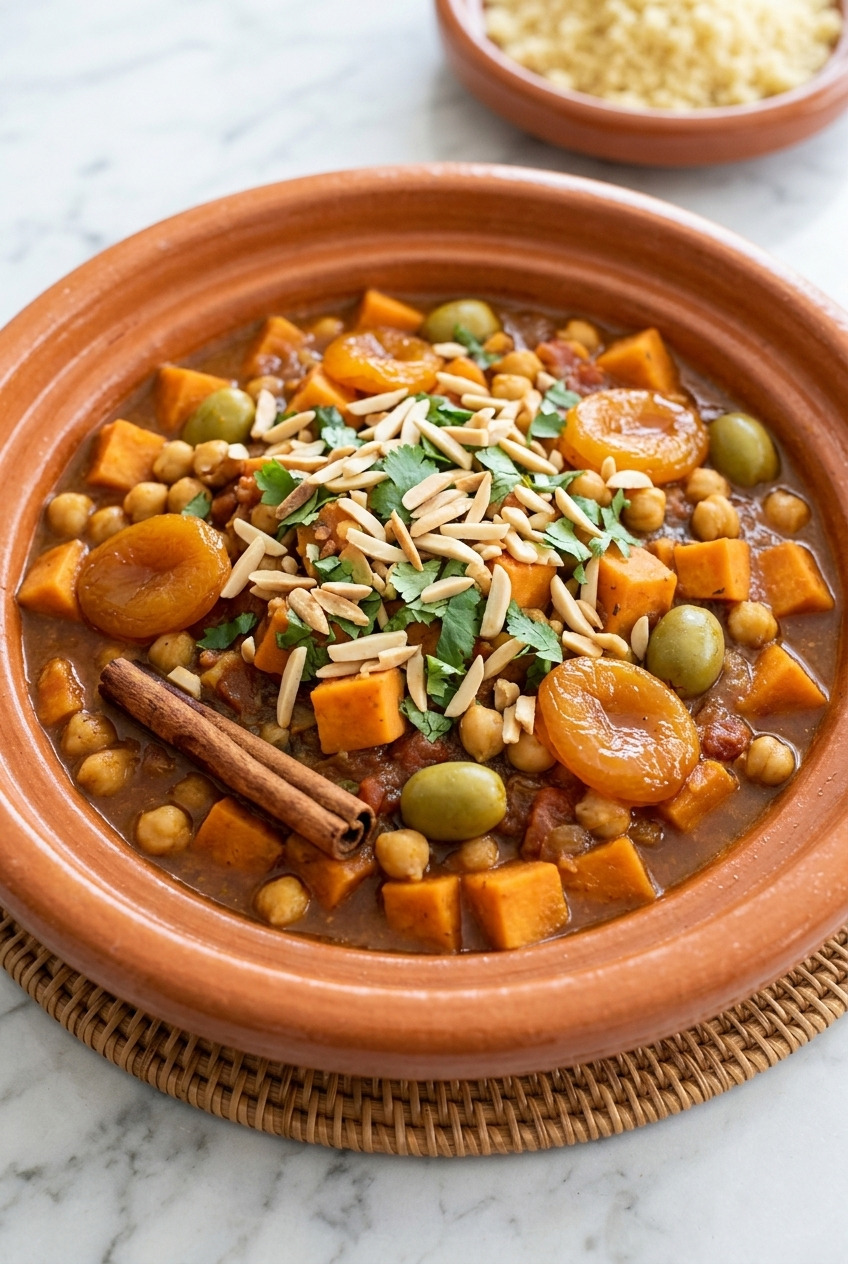
Do You Need a Tagine Pot
No, and I want to be clear about that up front. A heavy pot with a lid gets you 95 percent of the way there.
- Dutch oven. What I use, and what this recipe is written for. Enameled cast iron holds low heat beautifully. Lid on for the covered simmer, off for the reduction.
- Deep skillet with a lid. Works fine. It has more surface area, so check it earlier and expect it to reduce faster.
- An actual tagine. If you own one, use it. Go a notch lower on the heat, add a diffuser if it is unglazed clay, and expect it to need about 10 minutes longer.
- Slow cooker. Bloom the spices in a skillet first, then everything else on low for 5 hours. Add the apricots in the last hour.
Fair warning about clay: a real unglazed tagine needs seasoning before its first use and hates a sudden temperature change. That is a whole project, and it is not required for a Tuesday.
The Spice Base
Ras el hanout is the signature and it is worth buying. The name translates roughly as head of the shop, meaning the best blend a spice merchant makes.
Every merchant's version is different. Most carry cumin, coriander, ginger, cinnamon, black pepper, cardamom, and turmeric, and the good ones add rose petals or nigella.
Cannot find it? Mix 1 teaspoon cumin, ½ teaspoon coriander, ¼ teaspoon each of cinnamon, ginger, allspice, and turmeric, and a pinch of cardamom. It is not identical but it is close enough.
Bloom the spices in the oil. This is the one technique in the recipe I refuse to compromise on.
Ground spices are full of fat-soluble aromatic compounds that stay locked up in water. Thirty seconds in hot oil pulls them out and the difference is not subtle.
The cinnamon stick is separate. It goes in whole with the liquid and perfumes the sauce slowly, in a way ground cinnamon cannot.
Saffron is optional here. A pinch is lovely and it costs what it costs. The pot is excellent without it.
Why Apricots Belong in a Savory Stew
This is the question everyone asks and it deserves a real answer. Dried apricots are not just sugar. They are concentrated acid too.
Drying a fruit removes water and leaves both behind, so an apricot half in a stew acts more like a jammy tomato than like a spoonful of honey.
That acid is what makes the cumin and paprika taste sharper instead of muddier.
Two rules make it work.
- Halve them, do not chop them. Halves stay visible and give you distinct fruity bites instead of a background sweetness spread through everything.
- Add them late. In the last 10 minutes. Added at the start they dissolve into the sauce and take the whole pot with them.
And no honey, no agave, no brown sugar. Several recipes I read add a sweetener on top of the apricots and the sweet potato, and at that point you have made a dessert by accident.
This is a savory main. The fruit is there as a counterweight.
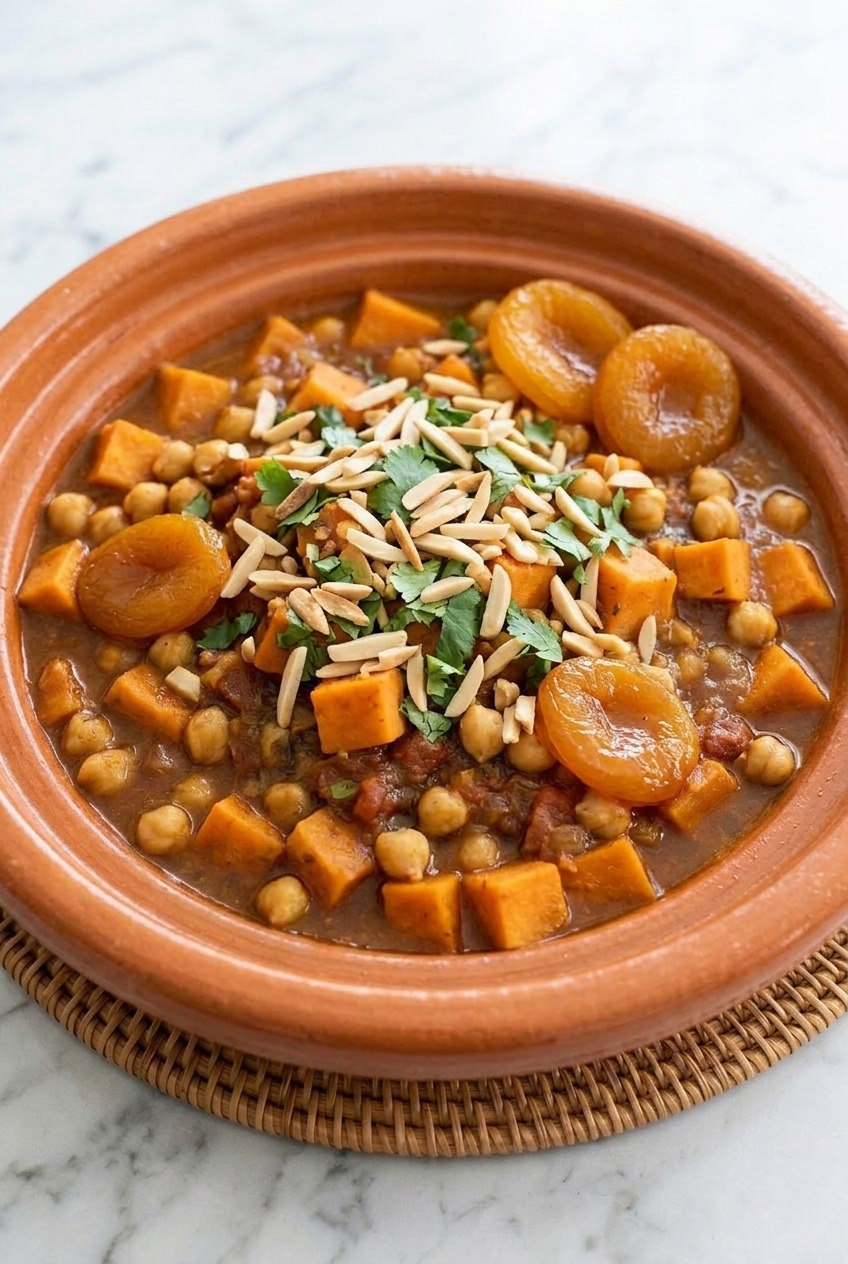
Ingredients You Need
- Olive oil (2 tablespoons). Enough to properly bloom the spices, not just to sweat the onion.
- Yellow onion (1 large, diced). The base. Give it a real 6 to 7 minutes until it goes translucent and sweet.
- Garlic (4 cloves) and fresh ginger (1 tablespoon, minced). Fresh ginger, not powdered. It brings a heat that ground ginger does not have.
- Ras el hanout (2 teaspoons). The blend that makes it taste Moroccan rather than generically spiced.
- Ground cumin (1 ½ teaspoons), coriander (1 teaspoon), smoked paprika (1 teaspoon), turmeric (½ teaspoon), ground cinnamon (½ teaspoon). These reinforce and broaden the blend.
- Cinnamon stick (1). Goes in whole, comes out at the end.
- Diced tomatoes (1 can, 14.5 ounces). Body and acid. The juice counts toward your liquid.
- Vegetable broth (2 cups). Low sodium so you control the salt at the end.
- Chickpeas (1 can, 15 ounces). Rinsed and drained. Canned is completely fine here.
- Sweet potatoes (2 pounds). Peeled and cut into 1 inch cubes. Smaller than that and they disintegrate.
- Dried apricots (¾ cup, halved). Turkish apricots are plumper and less tart. Either kind works.
- Kosher salt (1 ½ teaspoons) and black pepper (½ teaspoon). Salt at the end, once the pot has reduced.
- Lemon juice (2 tablespoons). Off the heat. It wakes the whole pot up.
- Cilantro (⅓ cup) and slivered almonds (⅓ cup, toasted). The finish. The almonds give you the only crunch in the bowl and I never skip them.
How to Make Sweet Potato Tagine
Soften the onion, garlic, and ginger
Oil into the Dutch oven over medium heat, then the diced onion with a pinch of salt.
Cook it 6 to 7 minutes until translucent and just starting to color at the edges.
Then the garlic and ginger for 1 minute, stirring, until you can smell them.
Bloom the spices in the oil
Add the ras el hanout, cumin, coriander, paprika, turmeric, and ground cinnamon directly to the pan.
Stir constantly for 30 to 45 seconds.
The mixture will go dark and paste-like and the smell will change completely. That is the signal.
Do not walk away. Ground spices go from fragrant to burnt in about fifteen seconds and there is no recovering a scorched base.
Add tomatoes, broth, chickpeas, and the cinnamon stick
Pour in the canned tomatoes with their juice and scrape the bottom of the pot clean.
Add the broth, the drained chickpeas, and the cinnamon stick, and bring it up to a simmer.
Add the sweet potato and simmer covered
Now the cubes go in, and the timing is deliberate.
Adding them after the tomatoes means the acid firms their surface slightly, which helps them hold their edges through the simmer.
Lid on, heat low, 20 minutes.
Add the apricots, then reduce uncovered
Stir in the halved apricots, take the lid off, and simmer another 10 to 12 minutes.
This uncovered stretch is what turns a soupy pot into a stew you can spoon over couscous.
The apricots plump and go glossy in exactly that window.
Finish with lemon, cilantro, and toasted almonds
Off the heat. Fish out the cinnamon stick.
Stir in the lemon juice, then salt and pepper to taste.
Cilantro and toasted slivered almonds go over the top at the bowl, not stirred in, so the almonds stay crunchy.
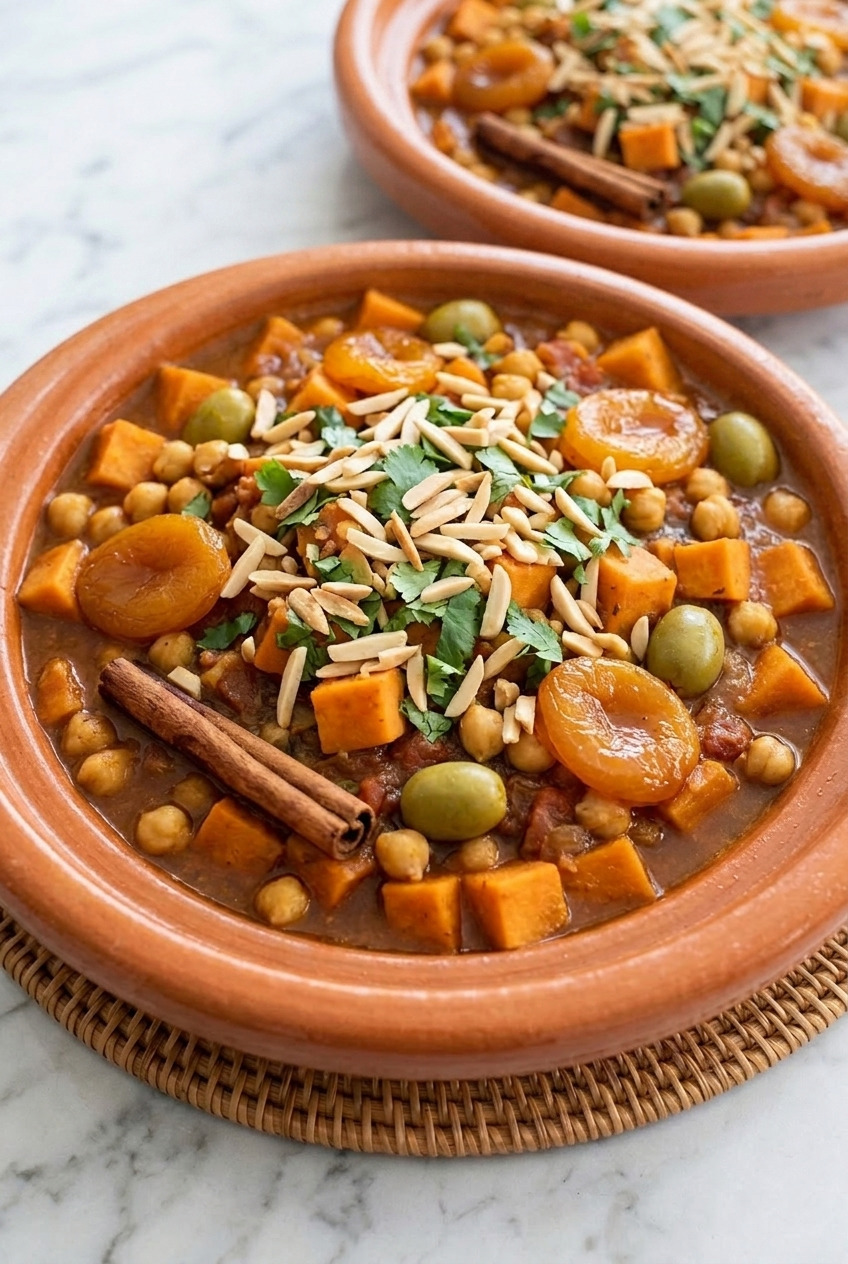
How to Tell When It Is Done
Three signs, and you want all three. Any one on its own can mislead you.
- The sweet potato. A spoon should go through a cube with light pressure, but the cube should still have square edges. Rounded, collapsing edges mean you went five minutes too far.
- The sauce. It should coat the back of a spoon and hold a line when you drag a finger through it. If liquid pools around the vegetables, keep reducing.
- The apricots. Plump, glossy, and slightly swollen. Flat and leathery means they need a few more minutes.
Pro tip: taste for salt only after the reduction is finished. The pot concentrates as it reduces and salting early gets you somewhere you cannot come back from.
What to Serve With It
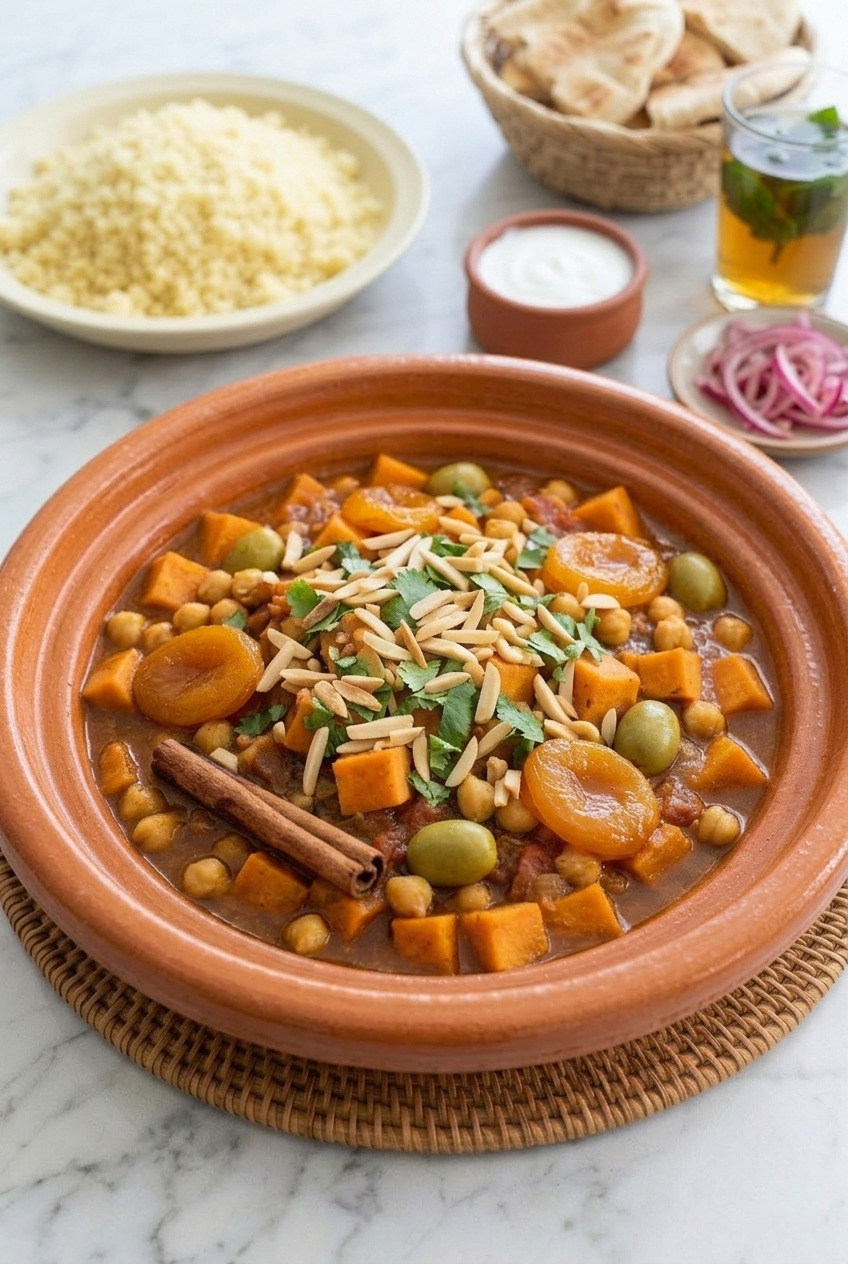
Couscous
The classic partner and the easiest thing in the world.
Equal parts couscous and boiling broth or water by volume, a pinch of salt, lid on, off the heat for 5 minutes.
Then fork it apart thoroughly and stir in a knob of butter. Fluffing is not optional, it is what keeps it from setting into a brick.
Crusty bread or warm flatbread
Moroccan khobz if you can get it, otherwise any sturdy bread with a real crust.
Honestly this might be my preferred version. Tearing bread and dragging it through the sauce is the correct way to eat this.
Something sharp on the side
- Quick pickled red onion. Fifteen minutes in lime juice and salt. The acid cuts straight through the richness.
- A herb salad. Parsley, mint, and cucumber with lemon. Cool and clean against a warm bowl.
- Plain yogurt. A spoonful on top, stirred in as you eat.
Variations
- Half butternut squash. Swap a pound of the sweet potato for cubed butternut. It holds its shape even better.
- Add carrots or green beans. Carrots go in with the sweet potato, green beans in the last 8 minutes.
- Preserved lemon. A tablespoon of chopped rind, added with the apricots, if you want it to taste properly Moroccan.
- Make it with lamb. Brown 1 ½ pounds of cubed shoulder first, set it aside, build the base in the same pot, and give the meat 90 minutes before the sweet potato goes in.
- Real heat. A tablespoon of harissa stirred in with the tomatoes. Traditional Moroccan cooking keeps the heat on the side, but this is your kitchen.
- Dates instead of apricots. Sweeter and less acidic, so cut the amount to half a cup and add an extra squeeze of lemon.
Make Ahead, Storage, and Freezing
- Day two is better. The spices settle and the sauce thickens overnight. I make it deliberately the day before company.
- Refrigerator. 4 days in an airtight container.
- Freezer. 3 months. Cooked sweet potato softens a little on thawing, so cut the cubes on the larger side if you know you are freezing it.
- Reheating. Low heat on the stove with a splash of broth. It thickens hard in the fridge.
- Hold the finish. Add the lemon, cilantro, and almonds fresh at serving, not before storing.
One pot, no special equipment, and a bowl that tastes like it took all afternoon. What is not to love?
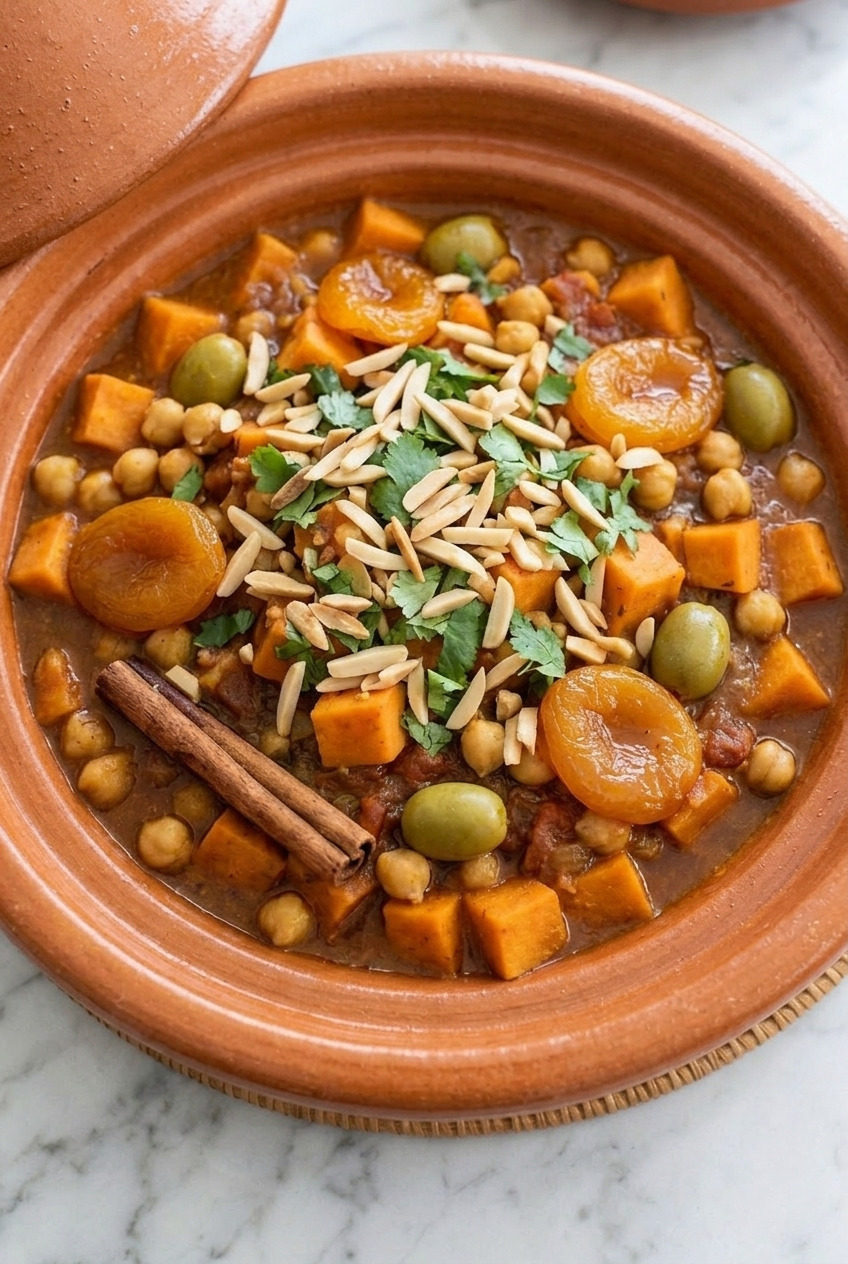
Recipe
Moroccan Sweet Potato Tagine With Chickpeas and Apricots
Ingredients
For the Spice Base
- 2 tablespoons olive oil
- 1 large yellow onion diced
- 4 cloves garlic minced
- 1 tablespoon fresh ginger minced
- 2 teaspoons ras el hanout
- 1 ½ teaspoons ground cumin
- 1 teaspoon ground coriander
- 1 teaspoon smoked paprika
- ½ teaspoon ground turmeric
- ½ teaspoon ground cinnamon
For the Stew
- 1 cinnamon stick
- 1 can diced tomatoes 14.5 ounces, with juice
- 2 cups vegetable broth low sodium
- 1 can chickpeas 15 ounces, drained and rinsed
- 2 pounds sweet potatoes peeled and cut into 1 inch cubes
- ¾ cup dried apricots halved
- 1 ½ teaspoons kosher salt or to taste
- ½ teaspoon black pepper
To Finish
- 2 tablespoons lemon juice
- ⅓ cup fresh cilantro chopped
- ⅓ cup slivered almonds toasted
Instructions
Build the Base
- Heat the olive oil in a Dutch oven over medium heat. Add the diced onion with a pinch of salt and cook 6 to 7 minutes, until translucent and just starting to color.
- Add the garlic and ginger and cook 1 minute, stirring, until fragrant.
- Add the ras el hanout, cumin, coriander, smoked paprika, turmeric, and ground cinnamon. Stir constantly for 30 to 45 seconds until the mixture darkens and turns paste-like. Do not let it scorch.
Simmer
- Pour in the diced tomatoes with their juice and scrape the bottom of the pot clean. Add the broth, chickpeas, and cinnamon stick and bring to a simmer.
- Add the sweet potato cubes, cover, reduce the heat to low, and simmer 20 minutes.
- Stir in the halved apricots, remove the lid, and simmer another 10 to 12 minutes, until the sauce coats the back of a spoon and the sweet potato yields to a spoon but still holds square edges.
Finish
- Take the pot off the heat and remove the cinnamon stick. Stir in the lemon juice, then season with salt and pepper to taste.
- Spoon into bowls and top each with chopped cilantro and toasted slivered almonds. Serve with couscous or warm bread.
Notes
- Bloom the spices: Thirty to forty five seconds in the hot oil before any liquid goes in. This is the single biggest flavor step in the recipe.
- Apricots go in late: Halved, in the last 10 minutes, so they plump instead of dissolving into the sauce.
- Reduce uncovered: The last 10 minutes with the lid off is what makes it a stew rather than a soup.
- No added sweetener: The apricots and the sweet potato carry it. Honey or agave tips this into dessert territory.
- Storage: 4 days refrigerated, 3 months frozen, and genuinely better on day two. Reheat low with a splash of broth and add the lemon, herbs, and almonds fresh.