My old roommate Kwame could feed six people off two burners and never once looked rushed.
He'd start with a knob of ginger, an onion and a scotch bonnet on the board, and I knew something good was half an hour out.
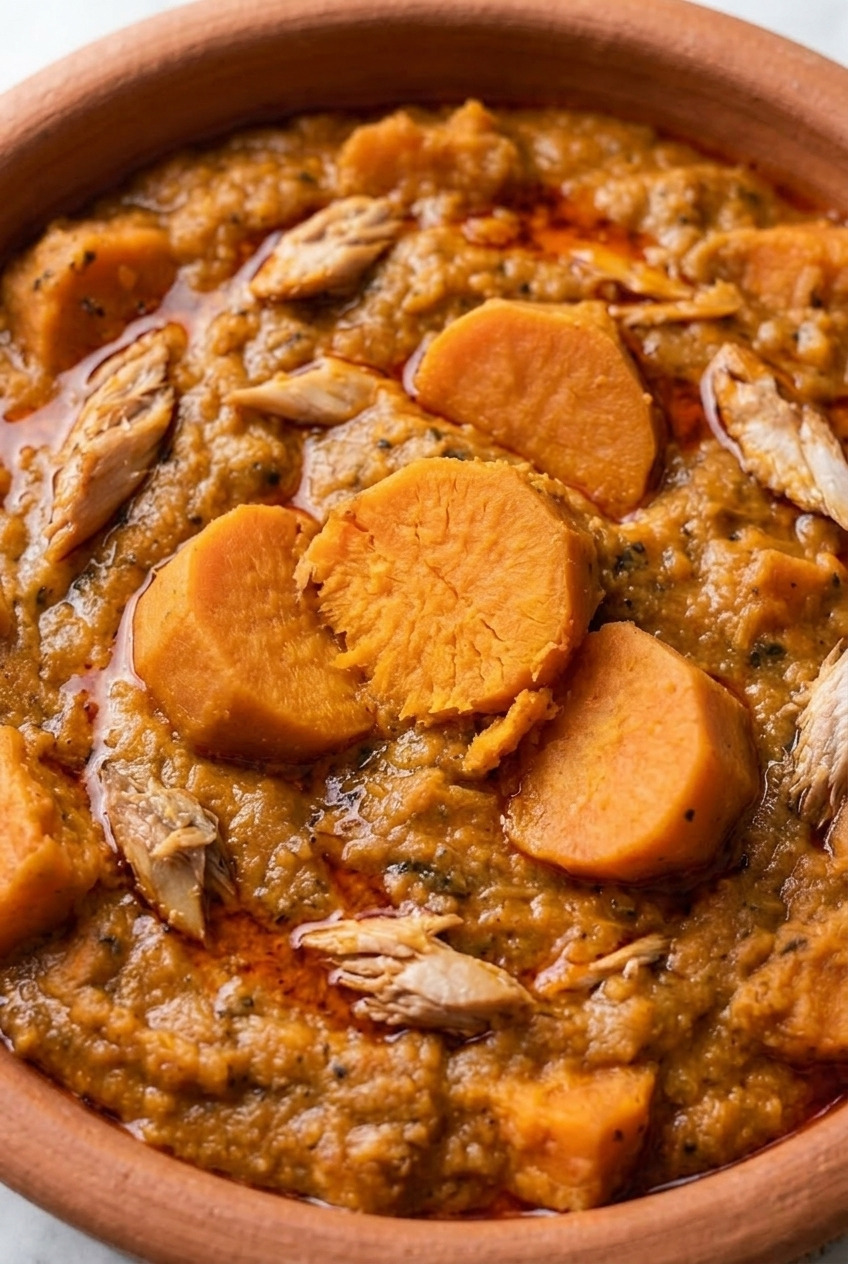
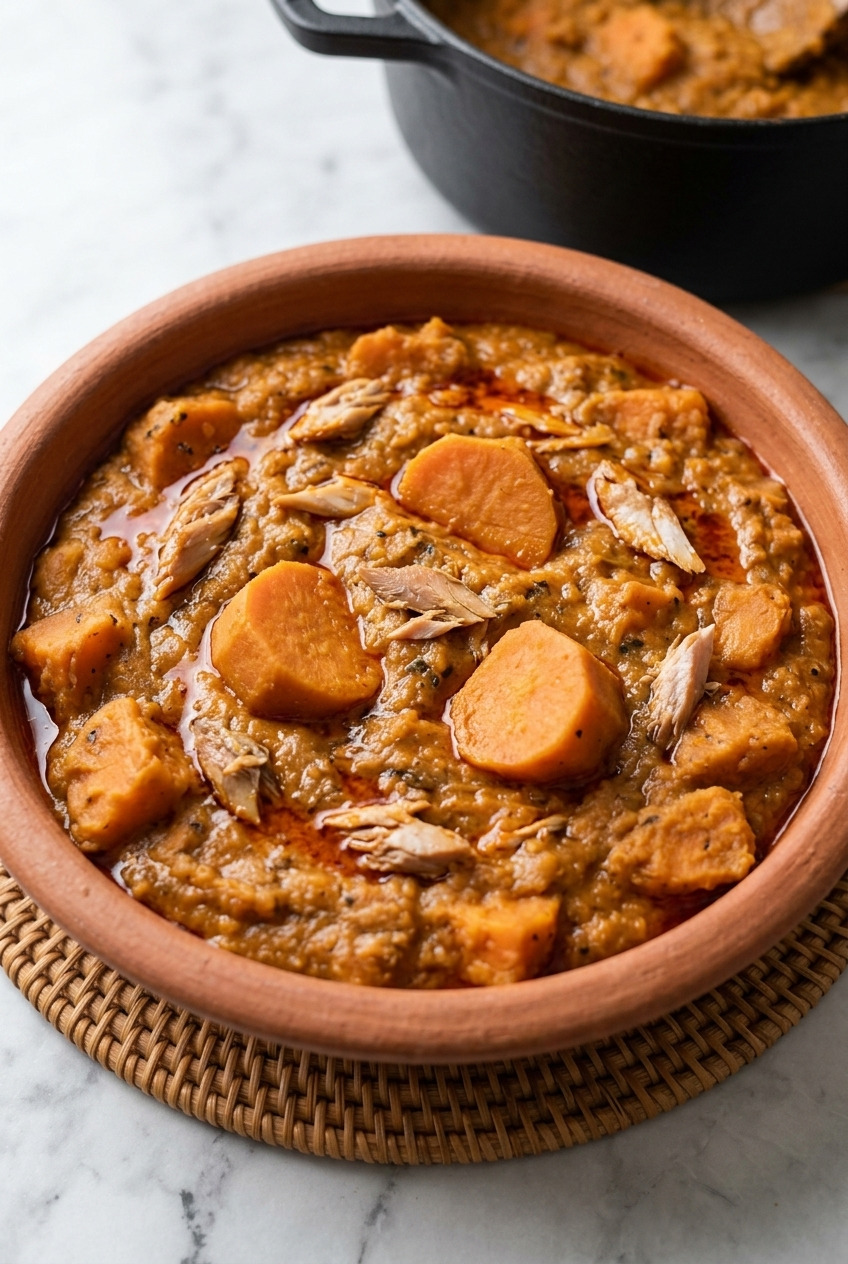
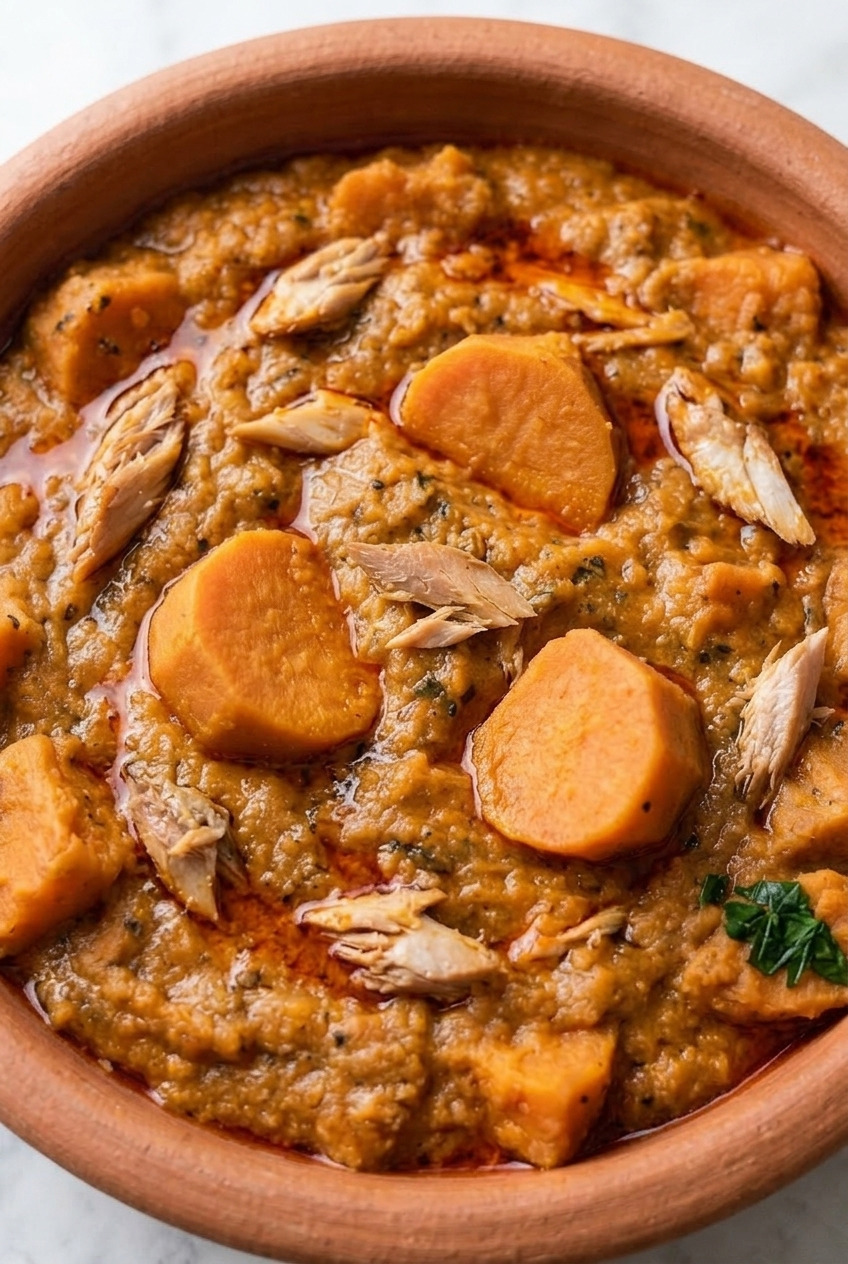
What came out of that pot was soft and orange, faintly sweet underneath a real, honest heat.
I ate three bowls standing up.
He called it mpotompoto.
That night it was yam, cut in thick chunks and simmered until the edges gave way into the liquid.
Yam or cocoyam is the classic, and I want to say that plainly before anything else on this page.
Sweet potato is the variation, not the original.
It is a variation Ghanaian kitchens genuinely cook though, and it's the one that lives in my rotation now.
Sweet potato breaks down much faster than yam, so the whole pot lands in about 45 minutes.
Its sweetness pushes back against the ginger and the pepper instead of hiding from them.
This is savory, by the way.
No sugar, no cinnamon, nothing that would make an American breakfast oatmeal out of it.
Red palm oil does most of the flavor work, and I'll tell you exactly what to do if you can't get your hands on any.
One pot, a blender, and a spoon big enough to mash with.
What Mpotompoto Actually Is
Mpotompoto is a soft Ghanaian one pot pottage, somewhere between a thick soup and a seasoned mash. The name gets used across Ghana for a whole family of dishes built the same way: a starchy root simmered in a heavily seasoned liquid until it partly collapses and thickens the pot itself.
The starch is usually yam or cocoyam.
Plantain shows up too, and so does sweet potato, which is what we're cooking here.
Nigerians make a close cousin and call it yam porridge or yam pottage, and the two dishes argue about tomato quantity more than anything else.
In Ghana it's food for everybody. It's one of the first savory things a small child eats, it's what gets cooked for someone recovering from illness, and it's a perfectly normal Tuesday dinner for adults with a lot more pepper in it.
On the name for sweet potato: in Ghana you'll hear sweet potato called exactly that in English, while yam refers to the true African yam, a large, rough-skinned, starchy tuber with pale flesh. They are not the same plant and they don't behave the same way in a pot. What Americans buy in a can labeled yams is a sweet potato.
Sound like a technicality? It isn't, and it's the whole reason this page exists.
Ingredients You'll Need
The aromatics matter more than the starch here. Get the ginger, pepper and palm oil right and the pot mostly cooks itself.
- Sweet potatoes (2 pounds, orange fleshed). Peeled and cut into 1 ½ inch chunks. Big chunks, on purpose. Cut them small and they dissolve completely before the seasoning has time to settle in.
- Red palm oil (3 tablespoons). This is the authentic fat and it is not interchangeable with anything else. It's deep orange-red, thick at room temperature, and it tastes faintly of carrot and earth. Look for it at any West African or Caribbean grocery, or online, labeled red palm oil or zomi. The substitute, if you truly cannot find it: 3 tablespoons of neutral oil plus 1 teaspoon of sweet paprika for color. It will be good. It will not be the same, and I'd rather tell you that than pretend.
- Onion (1 medium). Roughly chopped, going into the blender. No need to dice neatly.
- Fresh ginger (1 ½ inch piece). Peeled. Ginger is the signature of a Ghanaian pot like this and the amount will look aggressive. Use all of it.
- Scotch bonnet or habanero (1 to 2). Stemmed, seeds in for full heat or out for a warm background burn. Kpakpo shito, the small green Ghanaian pepper, is the traditional choice if your market carries it.
- Tomatoes (2 medium), or tomato paste (2 tablespoons). Fresh gives a lighter pot, paste gives a deeper red. I use paste in winter without guilt.
- Smoked fish (1 cup flaked) or dried shrimp (2 tablespoons). Smoked mackerel or smoked herring is traditional and it's what gives the pot its savory backbone. Pull the flesh off the bone in flakes. Second choice: two mashed anchovy fillets. Third choice: leave it out and add an extra pinch of salt.
- Water or light fish stock (3 cups). Fish stock is the classic base. Water plus the smoked fish gets you most of the way there.
- Salt (1 ½ teaspoons, plus more). Season at the end, once the starch has broken down and you can taste what you actually have.
- Spinach or kontomire (1 small handful, optional). Chopped and stirred in during the last two minutes. Not universal, and very good.
How to Make Mpotompoto
Step 1: Blend the Aromatics
Put the onion, ginger, peppers and tomatoes in a blender and pulse to a rough paste.
Rough is the goal, not smooth.
You want a little texture left so the finished pot has some body to it beyond the sweet potato.
If you're using tomato paste instead of fresh, blend the onion, ginger and pepper with 2 tablespoons of water and stir the paste in later.
Step 2: Bloom the Paste in Palm Oil
Heat the palm oil in a heavy pot over medium heat until it loosens and turns a brighter orange.
Do NOT let it smoke.
Palm oil scorches faster than you'd expect and burnt palm oil tastes like a tire fire, which is a flavor no amount of salt fixes.
Add the blended paste and cook it for 8 to 10 minutes, stirring now and then.
It should darken, tighten, and start pulling away from the sides of the pot.
Rushing this is the number one reason a pot of mpotompoto tastes flat.
Step 3: Simmer the Sweet Potato
Add the sweet potato chunks and turn them through the paste so every piece is coated.
Pour in the water or stock, just enough to come about three quarters of the way up the sweet potato.
Do not cover it completely.
Add the smoked fish now if you're using it, bring the pot to a simmer, then drop the heat and cover.
Cook for 15 to 20 minutes, until a knife slides into a chunk with no resistance.
Fair warning: if you're adapting a yam recipe you found elsewhere, cut every simmer time roughly in half. Yam takes 35 minutes and shrugs it off. Sweet potato is done in 18 and turns to mush at 30.
Step 4: Break It Down
Take the lid off and mash about a third of the sweet potato against the side of the pot with the back of a wooden spoon.
Leave the rest in recognizable pieces.
That's the whole texture of the dish in one move.
The mashed portion thickens the liquid into something that coats the spoon, and the intact chunks give you something to actually chew.
Step 5: Season and Finish
Now taste it, and now salt it.
Stir in the spinach if you're adding it and give it 2 minutes to wilt.
If the pot has tightened too much, loosen it with a splash of hot water.
Let it sit off the heat for 5 minutes before serving, because it thickens as it settles and the pepper mellows into everything.
How Thick It Should Be
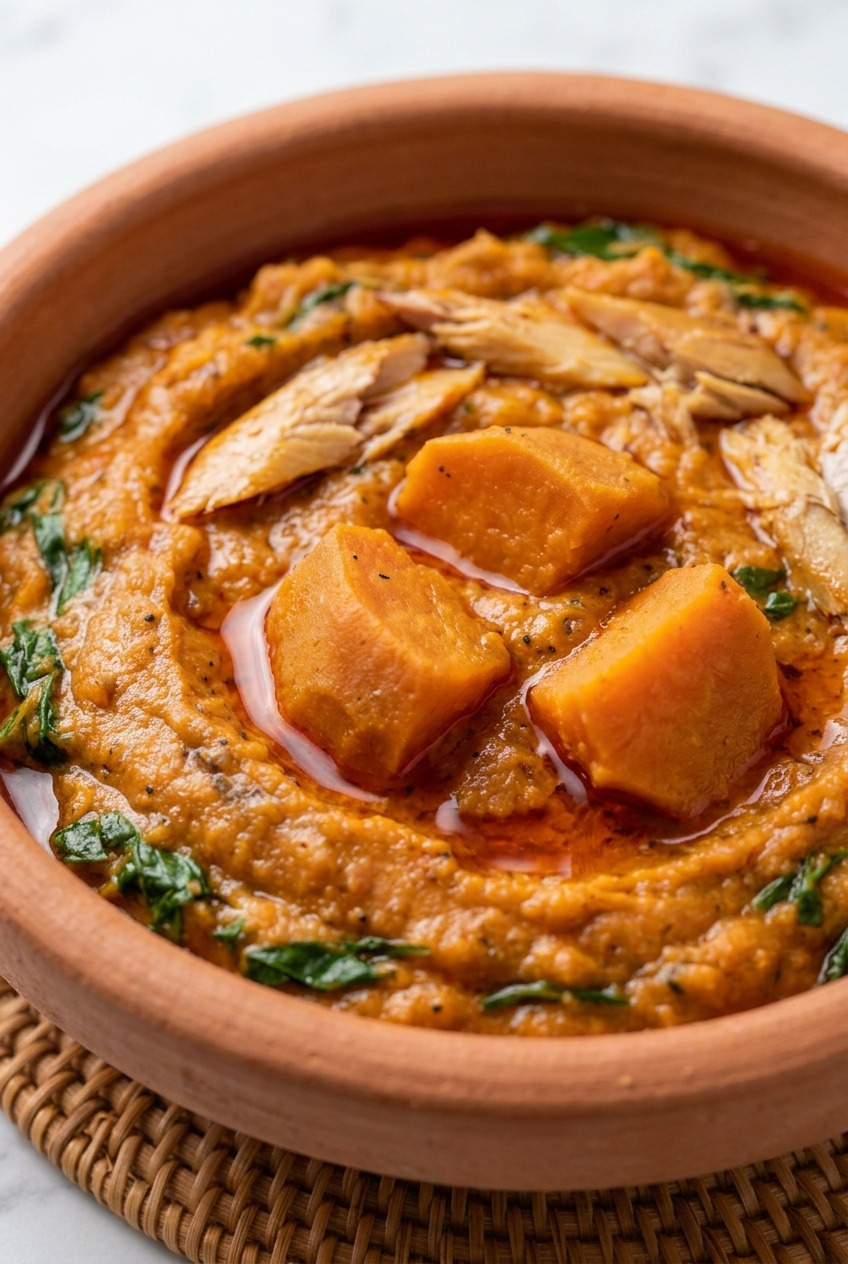
This is the part people get wrong, so let's be specific about it. Mpotompoto is not a smooth puree and it is not a brothy soup. It sits deliberately between the two.
Drag a spoon through the pot and the trail should close slowly, not instantly.
A spoonful should mound slightly rather than run flat.
You should still be able to see and feel individual pieces of sweet potato in a mouthful.
Too thin? Simmer uncovered for 3 or 4 minutes and mash a little more of the sweet potato in.
Too thick? Hot water, a splash at a time. Cold water dulls the whole pot.
One honest note: it firms up considerably in the fridge and reheats looking like a paste. That's normal, not a failure. A few tablespoons of water on the stove brings it straight back.
Tips for the Best Pot
Four things separate a good pot from a great one. None of them cost money.
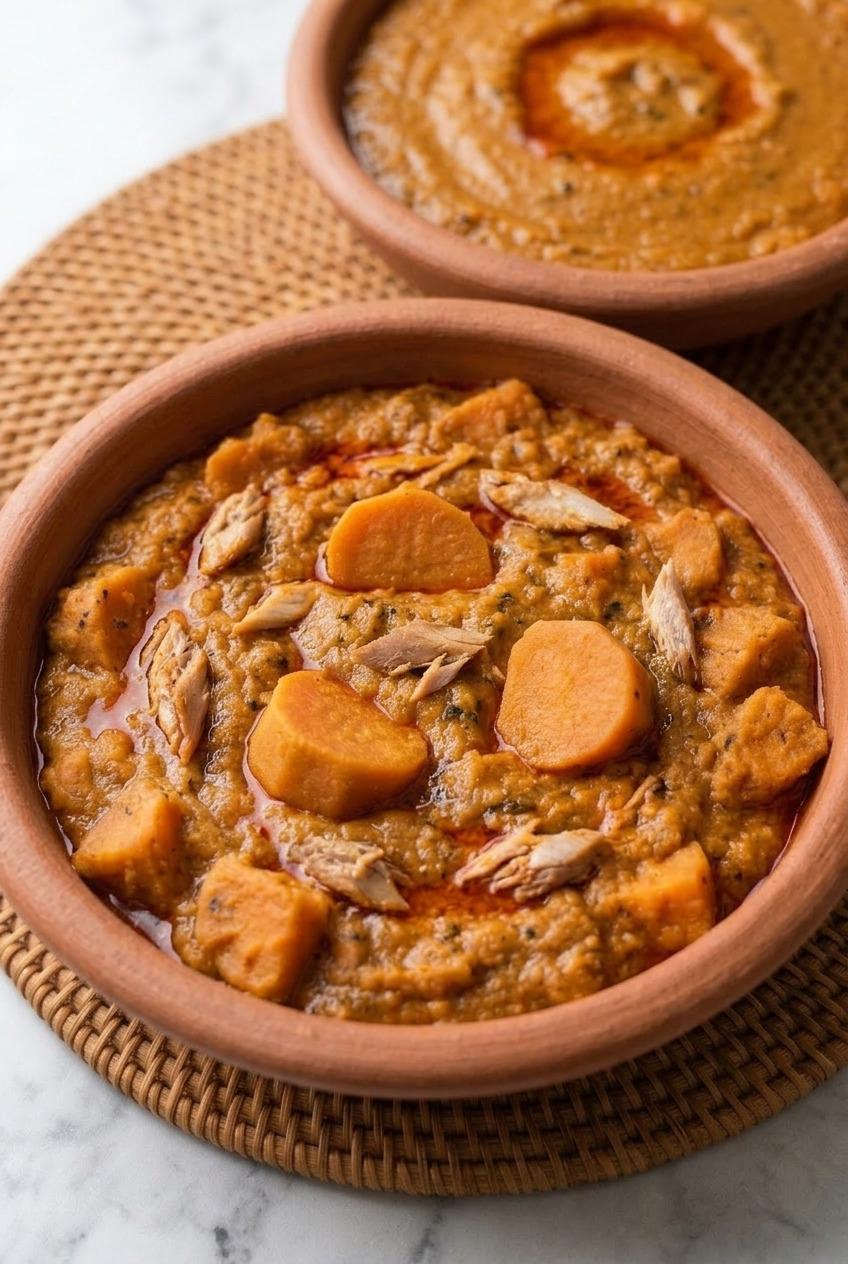
- Cut big, not small. 1 ½ inch chunks. Smaller pieces disappear into the liquid and you lose the contrast that makes the dish worth eating.
- Salt late, always. Smoked fish is salty and it releases that salt slowly into the pot. Season at the end and you'll never oversalt it.
- Respect the palm oil. Medium heat, no higher, and get the paste in before it has a chance to smoke. It goes from perfect to ruined in about 30 seconds.
- Use more ginger than feels reasonable. A 1 ½ inch piece for four servings reads as a lot on paper. In the finished pot it's the thing that keeps all that starch from feeling heavy.
- Don't stir constantly at the end. Every extra stir breaks down another chunk. Once the sweet potato is tender, handle it gently.
Variations
The dish is a template, and Ghanaian cooks treat it like one. Every one of these uses the same method.
- The original, with yam. Swap in 2 pounds of peeled African yam, cut the same size, and simmer 30 to 35 minutes. Drier, starchier, more neutral, and it takes pepper beautifully.
- Cocoyam (taro). The other classic. It goes slippery and silky as it cooks and thickens the pot more than either yam or sweet potato.
- Plantain. Use firm, barely yellow plantain in thick rounds. Sweeter than sweet potato, and it holds its shape better.
- A proper fish stock base. Simmer the smoked fish bones and heads in the 3 cups of water for 20 minutes first, then strain. This is the version I'd cook for company.
- Vegetarian. Skip the fish, add 1 teaspoon of ground prekese or a strip of dried mushroom to the simmer, and lean harder on the ginger.
- Greens in. A generous handful of chopped kontomire (cocoyam leaves), spinach or collards in the last two minutes. It turns a side dish into dinner.
Serving and Storage
A bowl of this is a complete meal, but it plays well with company.
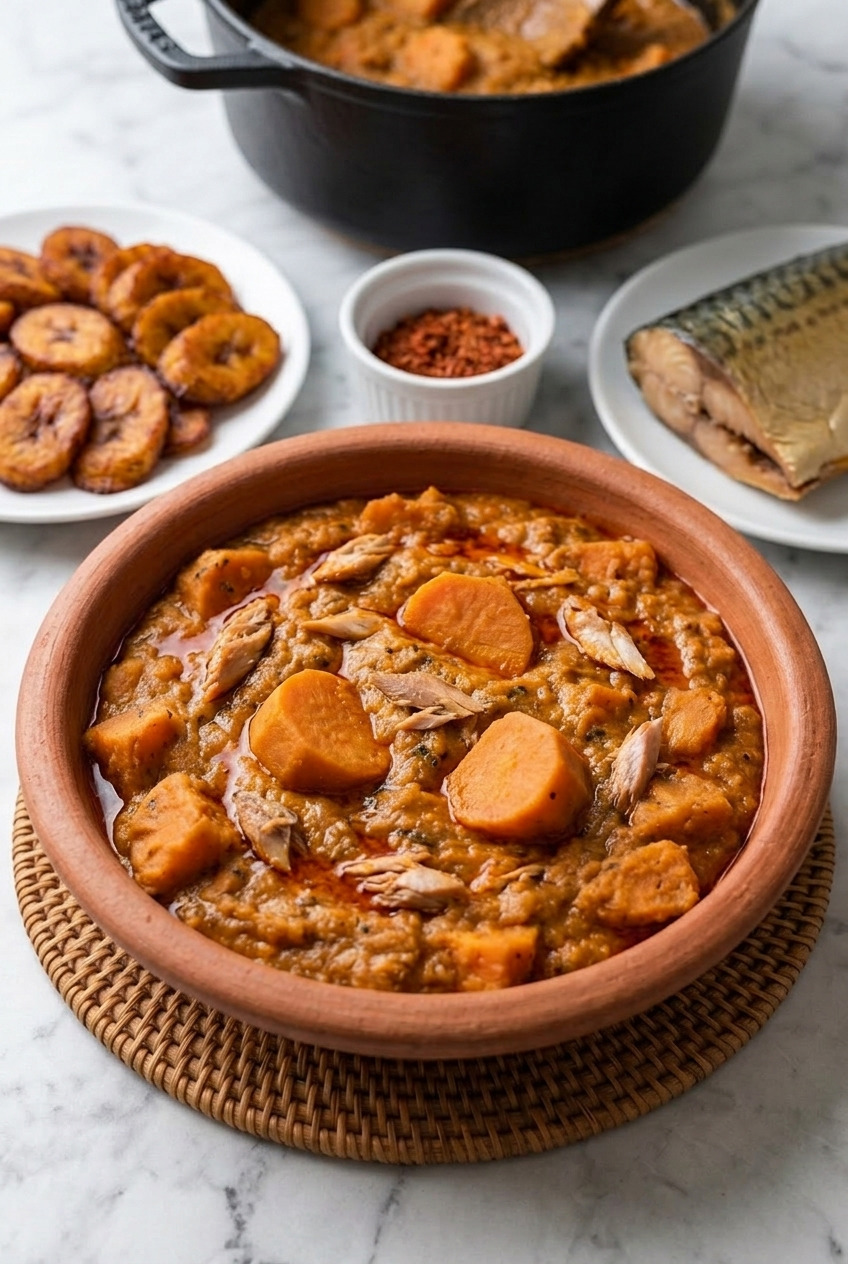
- On its own. A deep bowl, a spoon, and maybe a little extra palm oil drizzled over. That's how it's eaten most of the time.
- With fried plantain. Sweet, soft, slightly crisp at the edges against the pepper. My favorite way to serve it.
- With extra smoked fish. Flaked over the top at the table so it keeps its texture.
- For small children. Mash it fully smooth and leave the pepper out. This is exactly how it gets served to toddlers across Ghana and it's genuinely great baby food.
- Refrigerator. Airtight, up to 4 days. It thickens a lot. Reheat on the stove with 2 to 3 tablespoons of water per bowl and stir gently.
- Freezer. Up to 2 months. The texture softens a little on thawing, so this is better for the fully mashed version than the chunky one.
Cook it once and you'll see why it feeds everybody in the house. Give it a try!
Recipe
Mpotompoto (Ghanaian Sweet Potato Porridge)
Ingredients
Aromatic Base
- 1 medium onion roughly chopped
- 1 ½ inch piece fresh ginger peeled
- 1 to 2 scotch bonnet or habanero peppers stemmed, seeds removed for less heat
- 2 medium tomatoes or 2 tablespoons tomato paste
- 3 tablespoons red palm oil or 3 tablespoons neutral oil plus 1 teaspoon sweet paprika
The Pot
- 2 pounds orange fleshed sweet potatoes peeled, cut into 1 ½ inch chunks
- 3 cups water or light fish stock
- 1 cup flaked smoked mackerel or smoked herring optional but traditional, or 2 tablespoons dried shrimp
- 1 ½ teaspoons salt plus more to taste
- 1 small handful spinach or kontomire optional, chopped
Instructions
Build the Base
- Blend the onion, ginger, peppers and tomatoes to a rough paste. Leave some texture, do not puree smooth. If using tomato paste instead of fresh tomatoes, blend the onion, ginger and pepper with 2 tablespoons of water and add the paste in the next step.
- Heat the red palm oil in a heavy pot over medium heat until it loosens and brightens. Do not let it smoke.
- Add the blended paste and cook 8 to 10 minutes, stirring occasionally, until it darkens, tightens and pulls away from the sides of the pot.
Simmer and Finish
- Add the sweet potato chunks and turn them through the paste until coated. Pour in the water or stock, enough to come three quarters of the way up the sweet potato.
- Add the smoked fish if using. Bring to a simmer, reduce the heat, cover, and cook 15 to 20 minutes, until a knife slides into a chunk with no resistance.
- Uncover and mash about a third of the sweet potato against the side of the pot with a wooden spoon, leaving the rest in recognizable pieces. The mashed portion thickens the liquid.
- Taste and season with salt. Stir in the spinach if using and cook 2 minutes more. Loosen with a splash of hot water if the pot has tightened too far.
- Rest off the heat 5 minutes before serving. It thickens as it settles.
Notes
- The classic starch: Mpotompoto is traditionally made with yam or cocoyam. This is the sweet potato version, which Ghanaian kitchens also cook.
- Cut size: Keep the chunks at 1 ½ inches. Smaller pieces dissolve completely.
- If adapting a yam recipe: halve every simmer time. Sweet potato is tender in 18 minutes and turns to mush by 30.
- Palm oil: medium heat only, and never let it smoke. Burnt palm oil cannot be rescued.
- Salt late: smoked fish releases salt slowly into the pot.
- Texture target: a spoon trail should close slowly. Not a smooth puree, not a brothy soup.
- Storage: fridge up to 4 days, freezer up to 2 months. Reheat with 2 to 3 tablespoons of water per bowl.
- For babies and toddlers: mash smooth and leave out the pepper.