I went to a friend's house expecting a bowl of something sweet and warm with cinnamon in it.
What Tomi put in front of me was dinner.
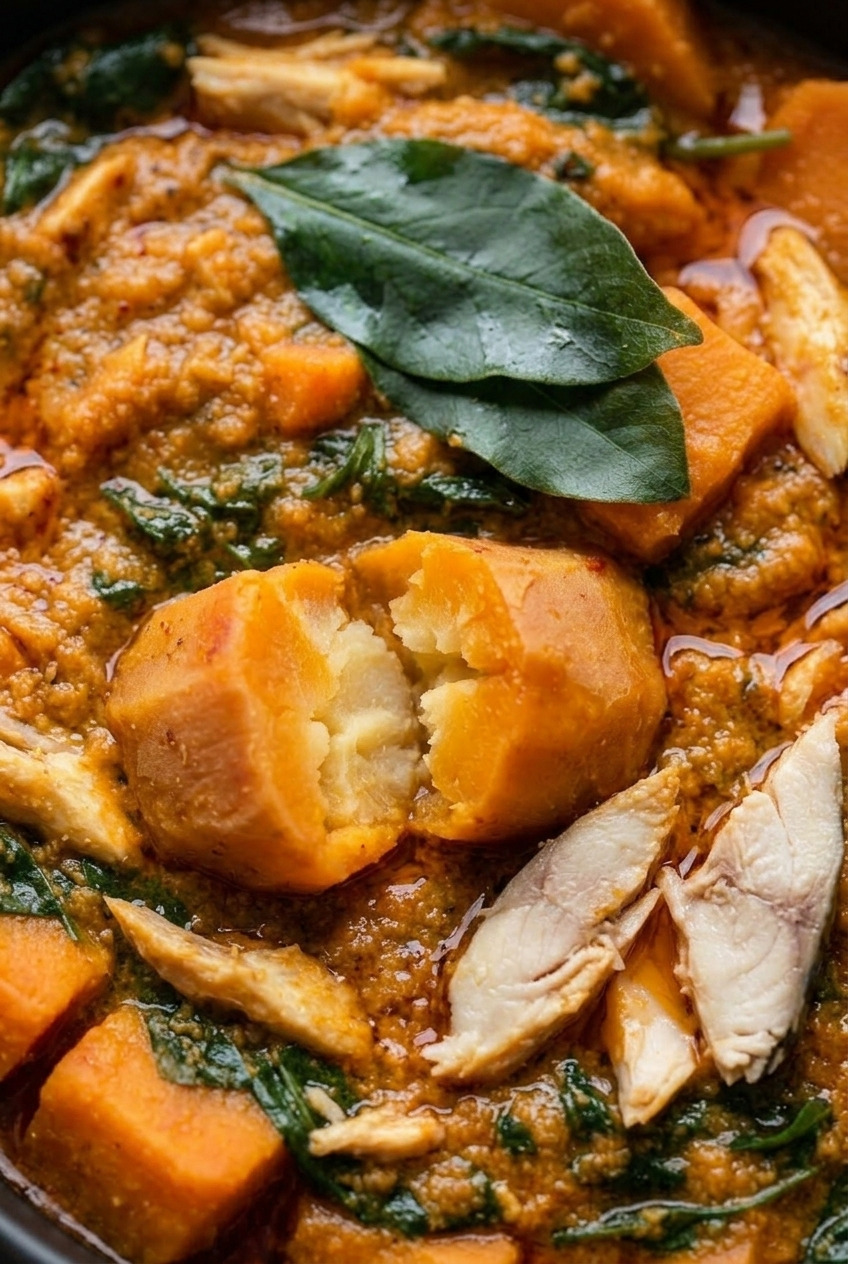
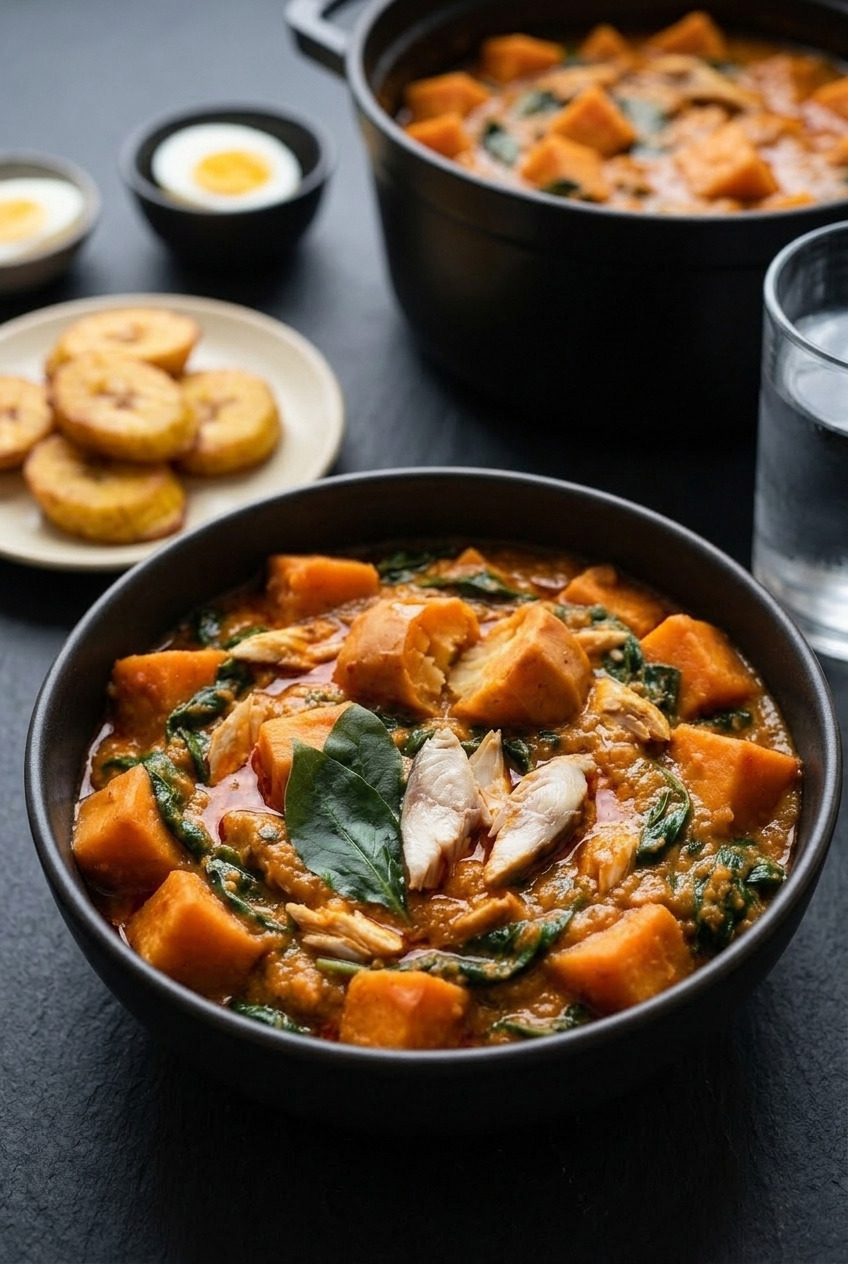
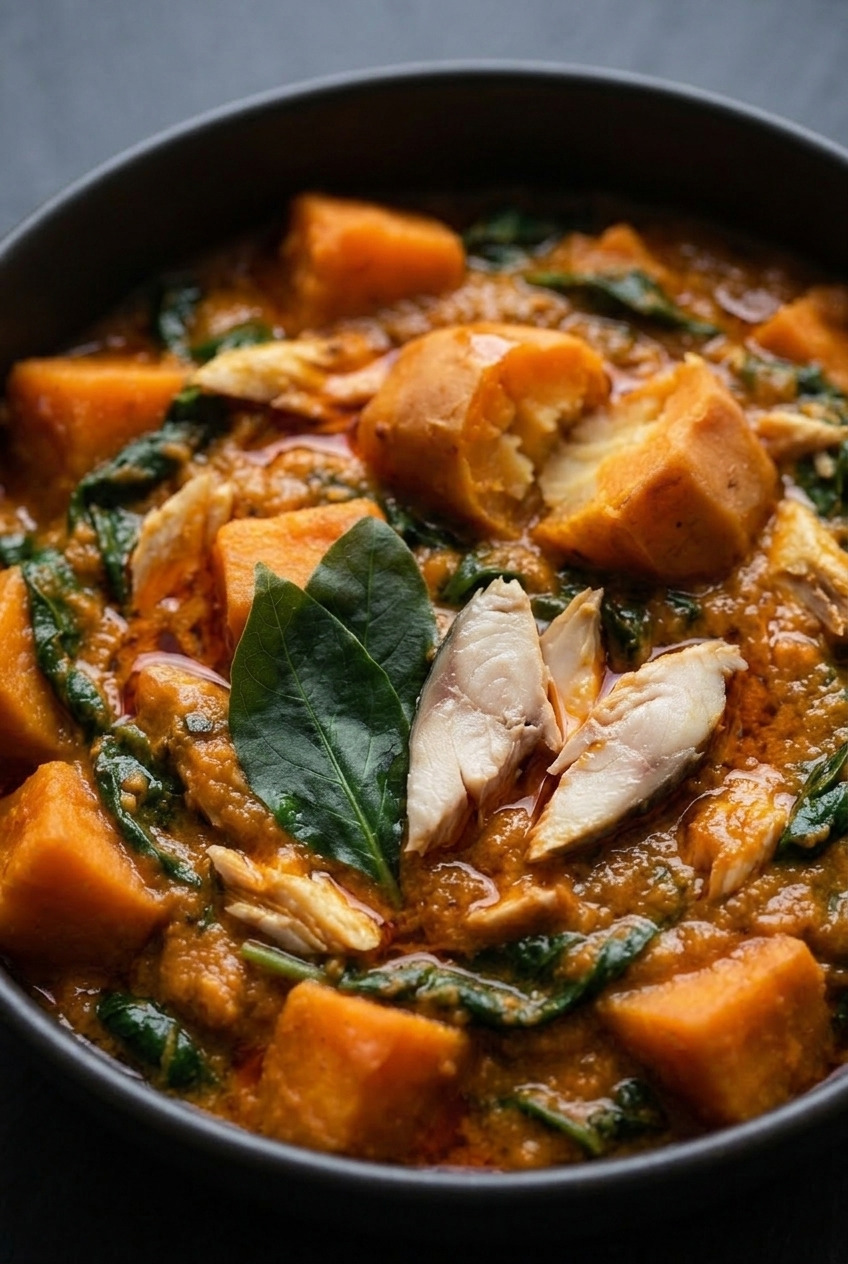
A thick orange pot, deep with red palm oil, smelling of scotch bonnet and smoked fish, with cubes of sweet potato half melted into a sauce that clung to the spoon.
Not a grain of sugar in it.
She laughed at my face and told me that porridge in Nigeria means a savory one-pot stew, the same word Nigerians use for pottage, the same dish family as asaro.
I'd been picturing Jamaican breakfast porridge, which is a lovely thing and a completely different meal.
Since then this pot has become a regular in my kitchen on cold weeknights.
It's one pot, about 45 minutes, and almost entirely hands-off once the base is fried.
My wife asks for it specifically when she's had a long day, which is the highest praise a stew gets around here.
What sold me was the texture.
Some of the potato cubes stay whole, the rest break down and thicken everything around them into a sauce that's almost velvety.
That balance is entirely in your control, and I'll show you exactly where the lever is.
Get the water right and you'll never make a watery, sad version of this.
What Nigerian Sweet Potato Porridge Actually Is
Search this dish and you'll get two completely different meals wearing the same name. Worth clearing up before you shop.
- Porridge here means pottage. In Nigerian English, porridge, pottage and asaro all point at the same idea: a starchy vegetable simmered down in a seasoned, oily, peppery sauce until it thickens itself. Nothing to do with oats.
- It is savory, full stop. Red palm oil, blended peppers, onion, crayfish, smoked fish, seasoning. No cinnamon, no coconut milk, no condensed milk.
- It's a main meal. This is lunch or dinner in a bowl, not a breakfast cereal. It stands on its own with nothing else on the table.
- Asaro is classically yam. The dish that made this style famous is made with white African yam, a big pale starchy tuber. This is the sweet potato pot, cooked the same way, and it's genuinely popular in Nigerian homes because sweet potato is cheaper, faster and sweeter against all that pepper.
- The Jamaican one is a different dish. Jamaican sweet potato porridge is a sweet breakfast made with coconut milk and warm spices. Both are delicious. Only one is this recipe.
Ingredient Notes
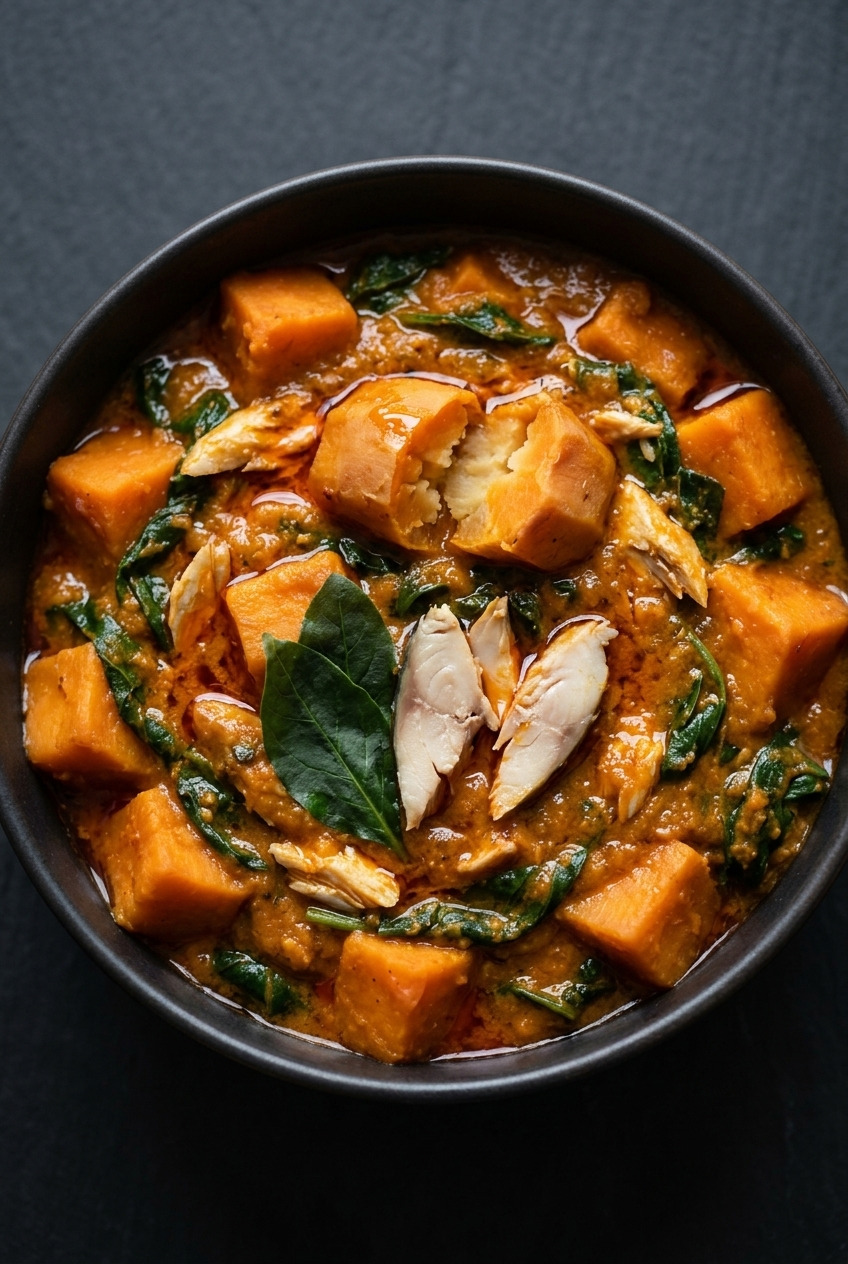
Two things carry this dish, the palm oil and the pepper base. Everything else is seasoning around them.
- Sweet potatoes (2 ½ pounds). Peel and cut them into 1 ½-inch cubes. Bigger cubes hold their shape while the smaller broken bits do the thickening, and that contrast is the whole texture.
- Red palm oil (⅓ cup). The authentic fat, and the reason the pot is that deep orange. It tastes earthy and slightly grassy, nothing like any other oil. Buy it at an African or Caribbean grocery, or online. Neutral oil works and gives you a thinner, paler, distinctly less Nigerian pot. I'd rather you knew that up front.
- Red onion (1 large) and red bell pepper (1). Blended together with the chilli, these are the base of nearly every Nigerian stew.
- Scotch bonnet (1 to 2). Fruity heat that builds. Habanero is the substitute if your store doesn't carry it.
- Tomato paste (3 tablespoons). Body and colour. Fry it properly or it stays raw and tinny.
- Smoked mackerel (8 ounces). Flaked in, skin and bones removed. Dried stockfish soaked overnight is the more traditional choice and takes it to another level. Smoked mackerel is easier and excellent.
- Ground crayfish (2 tablespoons). Dried ground crayfish is a Nigerian staple and gives a savory depth nothing else replicates. African grocery or online.
- Seasoning cube (1), thyme (1 teaspoon), curry powder (1 teaspoon). Standard Nigerian pantry seasoning. Taste before adding salt, because the cube already brings plenty.
- Ugu or spinach (3 cups, chopped). Ugu, fluted pumpkin leaf, is the real thing, sold frozen at African markets. Spinach is the widely available substitute and works fine.
- Stock or water (2 cups). Start low. You can always add more, and you cannot take it out.
How to Make Nigerian Sweet Potato Porridge
One pot, five moves. The base comes first and everything else builds on it.
Step 1: Blend the Pepper Base
Roughly chop the red onion, red bell pepper and scotch bonnet, holding back a quarter of the onion.
Blend them to a coarse paste with no added water.
Dice the reserved onion. It goes in whole for texture.
Step 2: Bleach the Palm Oil and Fry the Base
Heat the ⅓ cup palm oil in a heavy pot over medium heat for about 90 seconds, until it turns from thick red to clear orange and loosens up.
Do not push it to smoking. Bleached does not mean burnt, and burnt palm oil will ruin the pot.
Add the diced onion and cook 3 minutes, then the blended pepper paste.
Fry the paste 8 to 10 minutes, stirring, until it darkens and the raw smell goes.
Stir in the tomato paste, thyme and curry powder and fry another 3 minutes.
Step 3: Add the Potatoes and Fish
Tip in the cubed sweet potatoes, the flaked smoked mackerel, the ground crayfish and the seasoning cube.
Turn everything through the base until every cube is coated orange.
Add only 2 cups of stock or water. It will not cover the potatoes and it is not supposed to.
Cover and simmer on low for 20 to 25 minutes, stirring every five so nothing catches.
Step 4: Mash for Texture
When the cubes are tender, press about a third of them against the side of the pot with your spoon.
Stir that back through and watch the whole thing thicken in front of you.
Pro tip: Mash less for a chunky pot, more for a smooth one. Nigerian cooks argue about this the way Americans argue about mashed potato lumps.
Step 5: Fold in the Greens
Stir in the chopped ugu or spinach, cover, and take the pot off the heat.
Two minutes of residual heat wilts them perfectly.
Taste, add salt if it needs it, and serve hot.
Getting the Texture Right
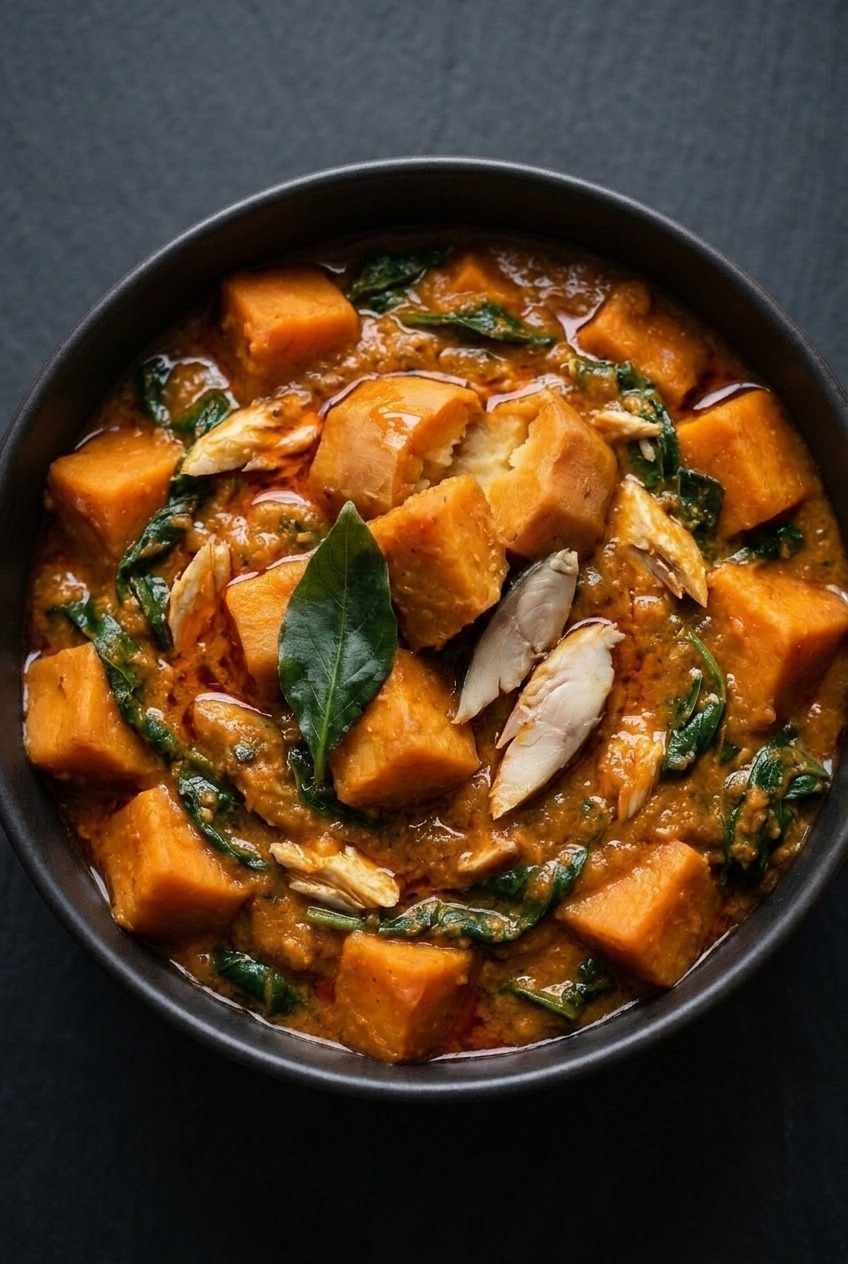
A great pot of pottage is thick enough that a spoon leaves a trail. A watery one is the most common failure and it's almost always the same mistake.
- Start with 2 cups of liquid, NEVER more. Sweet potato releases its own water as it cooks. Covering the cubes at the start guarantees soup.
- Add liquid in splashes. If it tightens too much before the potato is tender, add ¼ cup at a time. That's it.
- Sweet potato is not yam. It's softer and wetter than African yam, so it breaks down faster and needs about 5 minutes less simmering. Check at 20 minutes.
- Cut evenly. Uneven cubes mean some dissolve completely while others are still firm, and you lose the contrast that makes the dish.
- Rescue a watery pot. Uncover it, raise the heat, and mash more of the potato in. It thickens in 5 to 6 minutes.
- It thickens as it sits. Off the heat for ten minutes, the pot firms up noticeably. Aim slightly looser than your target.
Tips and Notes
Small things that make a real difference in this pot.
- Watch the palm oil. Ninety seconds, medium heat, in a well ventilated kitchen. Overheated palm oil turns acrid and there's no coming back from it.
- Salt last. Seasoning cubes and ground crayfish are both salty. Taste at the end, then adjust.
- Control the heat level. Blend one scotch bonnet in for a warm background, two for the real thing. For less heat, drop a whole uncut pepper into the pot and fish it out before serving.
- Fry the pepper base properly. Eight to ten minutes feels long and it is not optional. Underfried pepper base tastes sharp and raw straight through the finished dish.
- Debone the fish carefully. Smoked mackerel has fine bones. Flake it over a plate and take your time.
- Use stock if you have it. Chicken or beef stock instead of water adds depth for zero extra effort.
Variations
Nigerian pottage is a template, not a fixed recipe. These are the versions I go back to.
- Plantain and sweet potato. Swap half the potato for unripe plantain in 1-inch rounds. The plantain stays firm against the soft potato and it's a classic combination.
- The yam version. Use white African yam for proper asaro and add 5 minutes to the simmer.
- With goat meat or beef. Season and boil 1 pound of cubed meat until tender first, then use that broth as your cooking liquid. This turns it into a serious Sunday pot.
- Add a boiled egg. Halved boiled eggs on top of each bowl. Common, filling, very good.
- Meat-free. Skip the fish, double the ground crayfish, and add 8 ounces of sliced mushrooms with the potatoes for savory depth.
- Lighter oil. Use 3 tablespoons of neutral oil plus 1 tablespoon of palm oil for colour if you want to cut the fat without losing the character entirely.
What to Serve With It
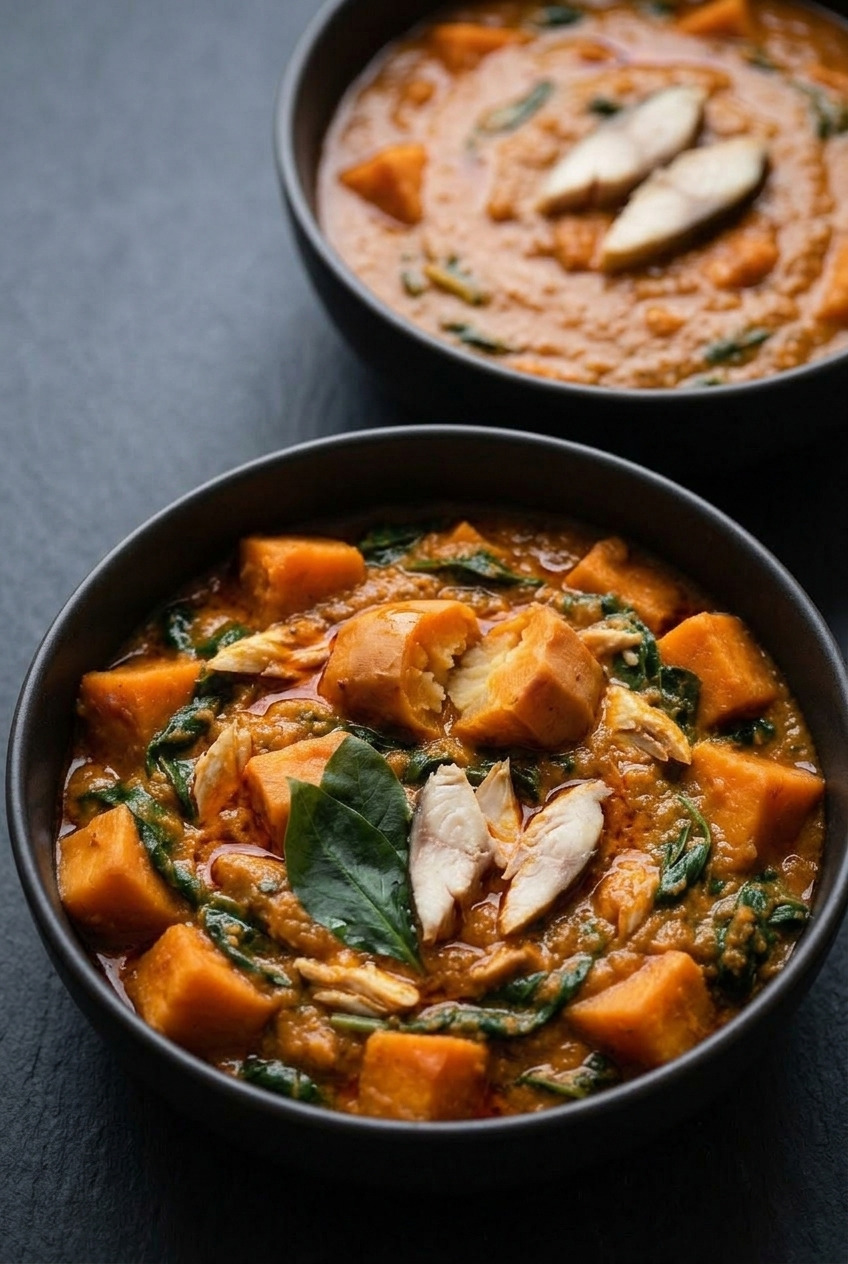
Honestly, nothing. This is a complete one-bowl meal and it's meant to be eaten that way. When I do add something, it's one of these.
- Fried plantain. Ripe dodo on the side. Sweet against peppery is the pairing that never misses.
- A boiled egg. Straightforward and it makes the bowl stretch further.
- Cold drink. Chapman, a soft drink, or just cold water. The scotch bonnet earns it.
- Avocado slices. Cool and creamy against the heat, and common in Nigerian homes.
Storage and Reheating
This is a better-the-next-day dish. The pepper base settles overnight and the flavour deepens.
- Refrigerator. Cool completely, then keep airtight up to 4 days.
- Reheating. Low heat on the stove with a splash of water or stock to loosen it. It sets up firm in the fridge, so expect to add liquid.
- Microwave. Fine for a single bowl. Cover it, stir halfway, and add a spoon of water first.
- Freezer. Up to 2 months. The texture goes slightly softer on thawing, which nobody has ever complained about at my table.
- Greens note. If you plan to freeze the batch, leave the spinach out and add it fresh when you reheat.
Nigerian Sweet Potato Porridge FAQ
How do you make Nigerian potato porridge?
Blend onion, red bell pepper and scotch bonnet into a paste, fry it in bleached red palm oil with tomato paste and seasoning, then add cubed sweet potato, smoked fish and ground crayfish with about 2 cups of stock. Simmer covered 20 to 25 minutes, mash a third of the potato into the sauce to thicken it, and fold in chopped greens off the heat.
Is Nigerian sweet potato porridge sweet or savory?
Savory, and it is not close. It's a peppery one-pot stew eaten for lunch or dinner. The sweet coconut-milk version you'll also find under this name is Jamaican sweet potato porridge, a breakfast dish. Same words, different meal.
What is the difference between porridge, pottage and asaro?
Practically nothing. Nigerians use porridge and pottage interchangeably for a starchy vegetable simmered in a seasoned sauce. Asaro is the Yoruba name for the yam version specifically, and the method is identical to this one.
Can I make it without palm oil?
You can, and you should know what changes. Palm oil gives the dish its orange colour and its earthy, distinctly West African flavour. Neutral oil produces a lighter, paler pot that tastes like a decent pepper stew rather than Nigerian pottage. If you can only find one bottle of palm oil, this is a good dish to spend it on.
Do I have to use dry fish or crayfish?
No, but they're the savory backbone. Ground crayfish especially is hard to replace. If you can't get either, use a well seasoned stock, add 1 tablespoon of fish sauce, and expect a good dish that's missing one layer. Smoked mackerel from a regular supermarket is the easiest authentic-tasting option.
Why did my porridge turn out watery?
Too much liquid at the start. Sweet potato throws off plenty of its own water, so the stock should sit well below the top of the cubes. To fix a watery pot, uncover it, turn the heat up, and mash more of the potato into the sauce. It thickens within 5 to 6 minutes.
Can I use regular potatoes or yam instead?
Both work. Irish potato porridge is a common Nigerian dish in its own right, and it needs about the same simmer time. White African yam makes proper asaro, holds its shape better, and takes roughly 5 minutes longer. Sweet potato cooks fastest and brings a sweetness that plays well against the scotch bonnet.
What are the benefits of eating sweet potato porridge?
It's a genuinely well built meal. Sweet potato brings fiber, vitamin A and slow-release carbohydrate, the greens add iron and folate, and the fish contributes protein and omega-3s. Red palm oil is high in fat, so it's a rich pot rather than a light one, and it's also a source of vitamin E and carotenoids. One bowl covers a lot of ground.
Recipe
Nigerian Sweet Potato Porridge
Ingredients
For the Pepper Base
- 1 large red onion three quarters blended, one quarter diced
- 1 red bell pepper seeded and chopped
- 1-2 scotch bonnet peppers or habanero
- 3 tablespoons tomato paste
For the Porridge
- ⅓ cup red palm oil
- 2 ½ pounds sweet potatoes peeled and cut into 1 ½-inch cubes
- 8 ounces smoked mackerel skin and bones removed, flaked
- 2 tablespoons ground crayfish
- 1 seasoning cube or 1 teaspoon bouillon powder
- 1 teaspoon dried thyme
- 1 teaspoon curry powder
- 2 cups stock or water plus more as needed
- 3 cups chopped ugu or spinach fluted pumpkin leaf, or spinach
- 1 teaspoon salt to taste, added last
Instructions
Build the Base
- Blend three quarters of the red onion with the red bell pepper and scotch bonnet into a coarse paste with no added water. Dice the remaining onion.
- Heat the red palm oil in a heavy pot over medium heat for about 90 seconds, until it turns from thick red to clear orange. Do not let it smoke.
- Add the diced onion and cook 3 minutes, then add the blended pepper paste and fry 8 to 10 minutes, stirring, until it darkens and the raw smell disappears.
- Stir in the tomato paste, thyme and curry powder and fry another 3 minutes.
Simmer the Porridge
- Add the cubed sweet potatoes, flaked smoked mackerel, ground crayfish and seasoning cube, turning everything until the cubes are coated in the base.
- Add only 2 cups of stock or water. The liquid should sit below the top of the potatoes.
- Cover and simmer on low for 20 to 25 minutes, stirring every 5 minutes, until the potatoes are tender. Add liquid a quarter cup at a time only if the pot tightens too much.
Finish
- Press about a third of the potato cubes against the side of the pot and stir them back through to thicken the sauce. Mash less for a chunky pot, more for a smooth one.
- Stir in the chopped ugu or spinach, cover, and take the pot off the heat for 2 minutes to wilt the greens.
- Taste, add salt only if needed, and serve hot.
Notes
- Palm oil: Bleach it 90 seconds at medium heat until it turns clear orange. Burnt palm oil is acrid and cannot be fixed.
- Liquid control: Start with 2 cups and add a quarter cup at a time. Sweet potato releases plenty of its own water.
- Texture: Mash a third of the cubes into the sauce. Less for chunky, more for smooth.
- Salt last: Seasoning cubes and ground crayfish are both salty.
- Substitutes: Habanero for scotch bonnet, spinach for ugu, smoked mackerel for dried stockfish.
- Storage: Airtight in the fridge up to 4 days, or freeze up to 2 months without the greens. Reheat low with a splash of stock.
- Not the sweet one: This is the savory Nigerian pottage, not the Jamaican coconut milk breakfast porridge.