Halfway down the second page, my wife's niece put her hand flat on the book and stopped me.
We were doing the Christmas Eve reading of The Night Before Christmas, and I'd just gotten to the line about visions dancing in the kids' heads.
"What IS a sugar plum?" she asked.
Nine adults sat around that living room. Not one of us knew.
My brother-in-law guessed a candied plum, and my wife guessed a gumdrop.
I said "probably fruitcake" and got booed.
So I spent that week reading old cookbooks and candy histories, and it turns out old fashioned sugar plums are very real.
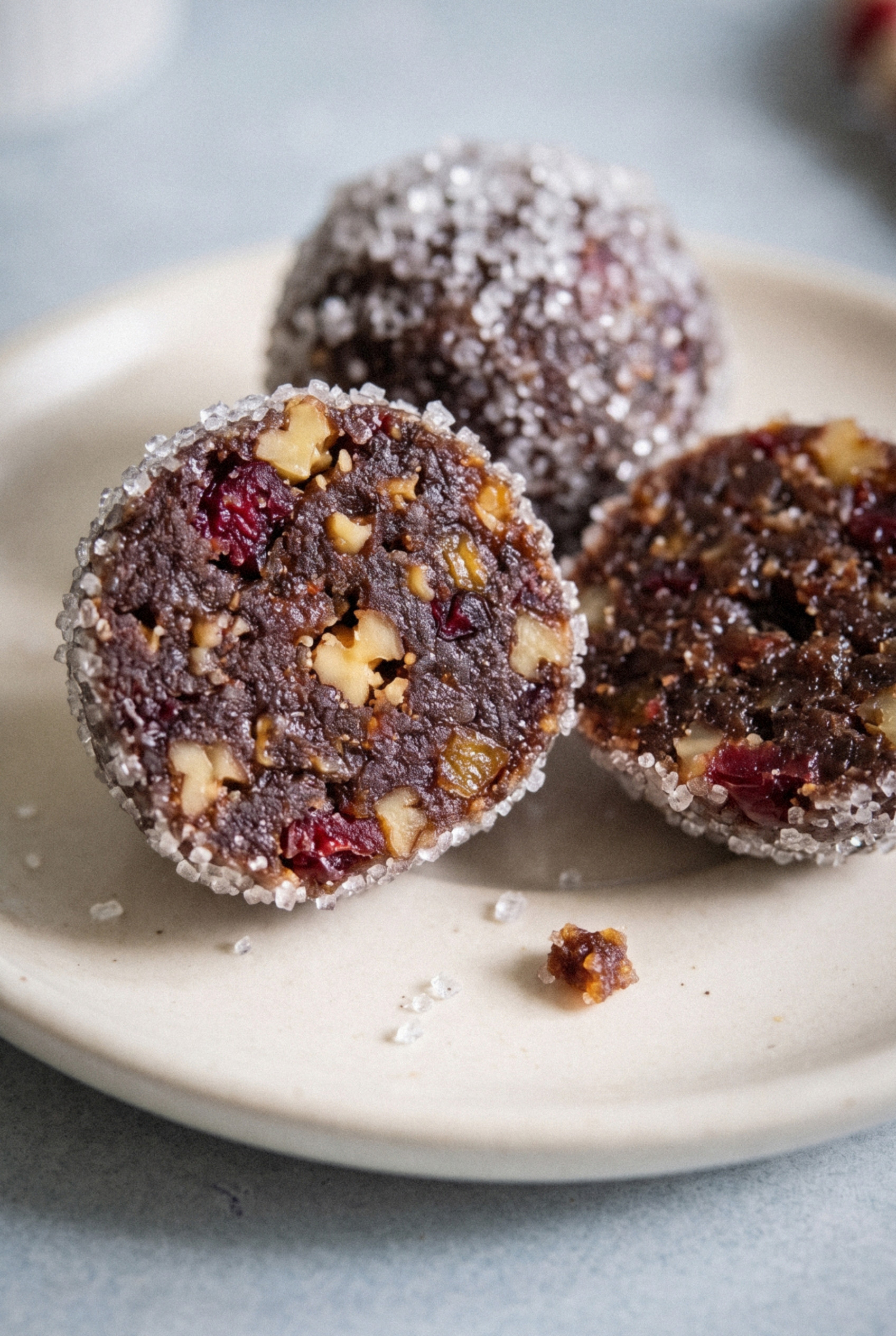
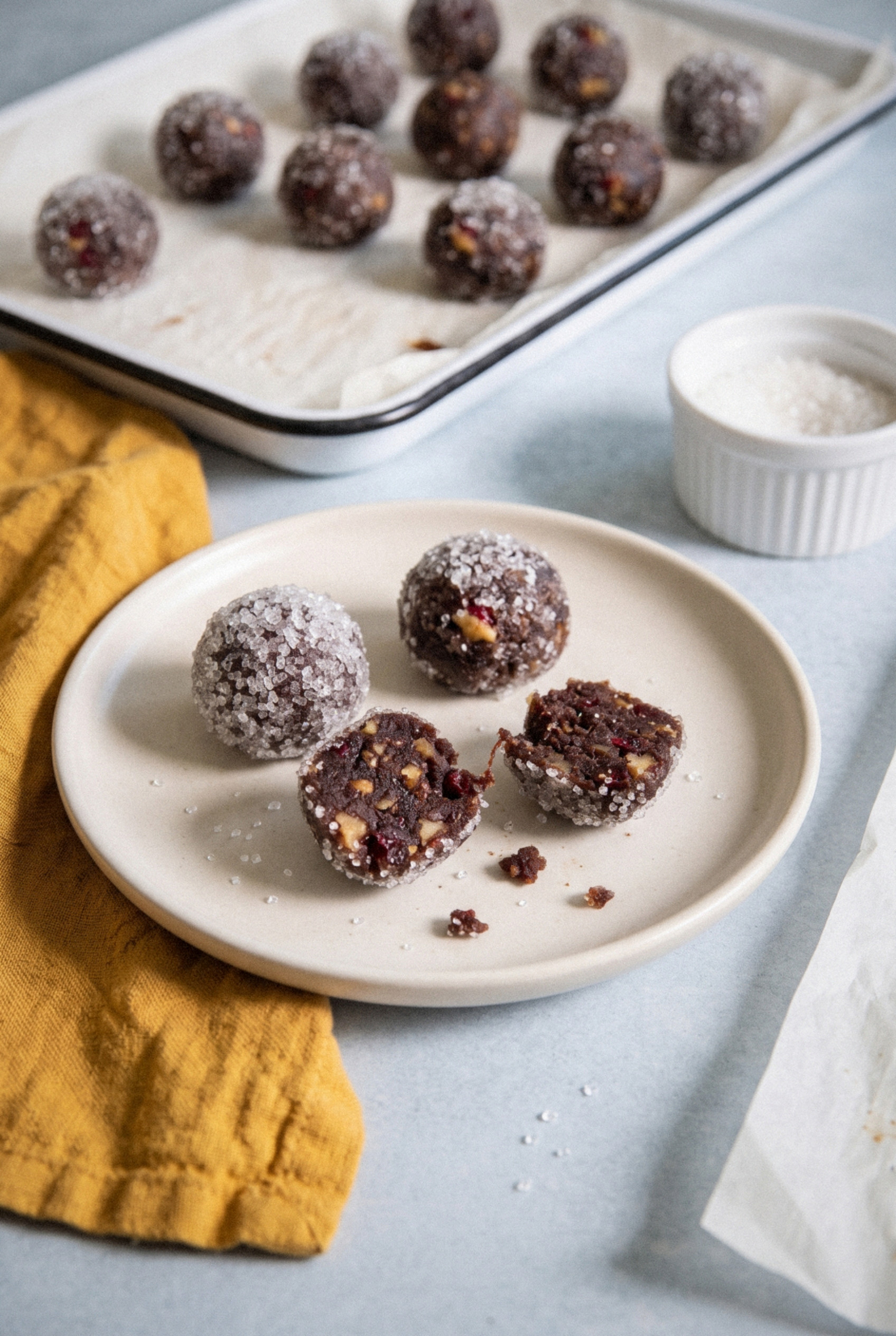
The version people have made since the 1800s is a little ball of prunes, dates, and toasted nuts, warmed up with cinnamon and cloves and rolled in crunchy sugar.
No candy thermometer. No oven, apart from toasting the nuts.
The first batch I made disappeared off the cookie tray before the fudge did, which never happens in our house!
They taste like the very best bites of a fruitcake: chewy, nutty, a little tart from the cranberries, and sparkly on the outside.
You need a food processor and about 25 minutes, and they keep for weeks, so they're a natural for holiday gift tins.
Make a batch this year and you'll finally have an answer when someone asks!
What Are Sugar Plums, Anyway?
The original sugar plum wasn't a plum at all. In the 1600s, a sugar plum was a seed or nut (like an almond, a caraway seed, or a coriander seed) coated in layer after layer of hard boiled sugar.
Confectioners called the process panning. It took days of slow tumbling in a warm pan, and the finished candies came out round-ish and lumpy, a bit like a little plum.
Sugar was expensive, so these were a luxury. In old England, being "full of sugar plums" meant you were rich.
By the 1800s, sugar got cheaper and dried fruit was easy to find. Cooks started chopping prunes, figs, dates, and nuts into a sticky paste, rolling it into balls, and coating them in sugar. That's the version we still make today.
Clement Clarke Moore put sugar plums in his famous poem in 1823, and Tchaikovsky's Sugar Plum Fairy in The Nutcracker sealed the deal. Ever since, they've been the official candy of Christmas daydreams!
Do they actually have plums in them? The good ones do. Prunes are dried plums, and they give the candy its deep, jammy flavor. What's not to love?
Why You'll Love These
- No baking, no thermometer. You toast the nuts for a few minutes and that's the only heat involved.
- Ready in about 25 minutes. Most of that is waiting for the nuts to cool.
- Naturally gluten-free. Almond flour holds everything together, so there's no wheat flour at all.
- Kid-friendly rolling job. Little hands are great at rolling balls through sugar. Expect a few to go missing!
- Keeps for weeks. Make them early in December and pull them out when you need them.
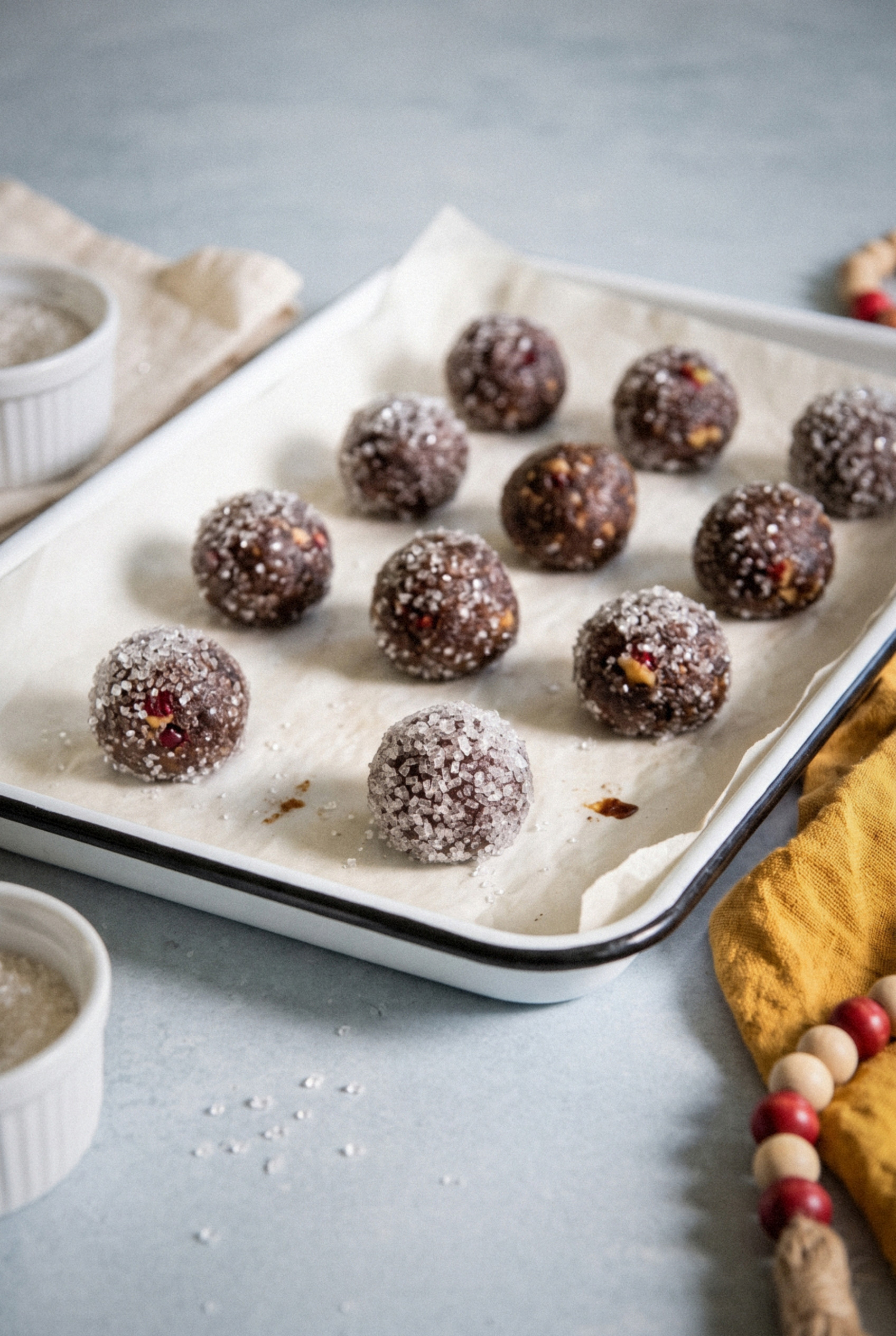
- Made for gift tins. They're sturdy, they don't melt, and they look like little jewels!
Ingredients and Notes
This is mostly dried fruit, nuts, and spice, so quality really counts. Use fruit that's soft and plump, not dried-out and hard.
- Pitted prunes (½ cup, about 3 ounces). The heart of the recipe. They're sweet, jammy, and sticky enough to hold everything together. Don't skip them, I promise they don't taste like "prunes" once they're mixed in!
- Pitted dates (¼ cup, about 5). Extra sweetness and caramel flavor. Dried figs are a great swap.
- Dried cranberries (¼ cup). A little tartness and those bright red flecks inside.
- Walnuts (½ cup). Toasted for a deep, buttery crunch. Pecans or hazelnuts work too.
- Almond flour (¼ cup). Toasted alongside the walnuts. It soaks up moisture and makes the mixture roll cleanly. Hazelnut meal is lovely here too!
- Apricot preserves (2 tablespoons). The glue. Honey or cherry jam also work.
- Orange zest (½ teaspoon). Not in every old recipe, but it brightens all that dark fruit.
- Warm spices. ¼ teaspoon cinnamon, ⅛ teaspoon cardamom, and ⅛ teaspoon cloves. Cloves are strong, so measure them level.
- Fine salt (a pinch). It wakes up the fruit.
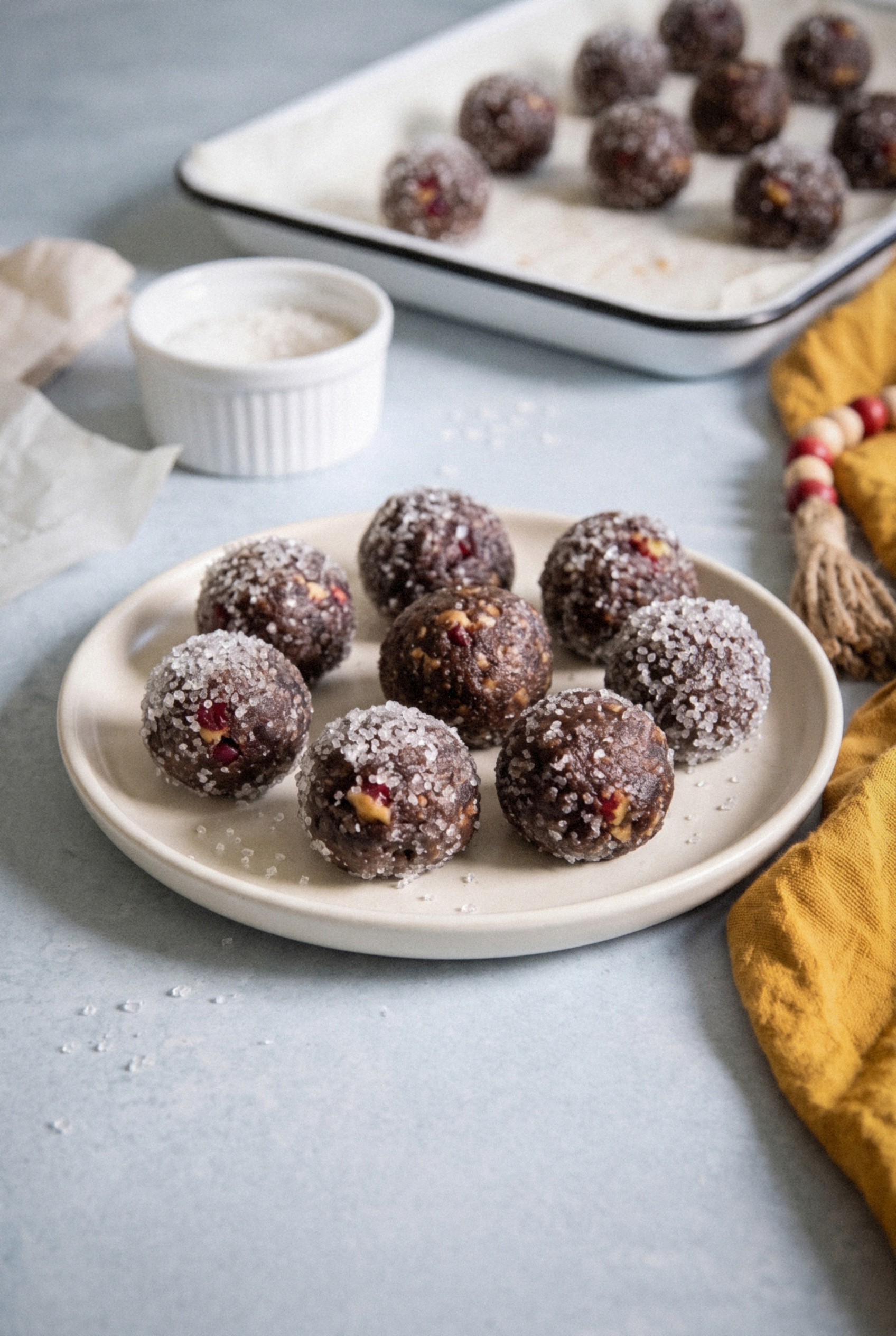
- Coarse sparkling sugar (½ cup). For rolling. The big crystals give that crunchy, glittery outside. Regular granulated sugar works, it just won't sparkle as much.
How to Make Old Fashioned Sugar Plums
The whole method is toast, pulse, roll, and coat. A food processor does most of the work for you.
Step 1: Toast the Nuts
Heat your oven to 350°F. Spread the walnuts on one side of a rimmed baking sheet and the almond flour on the other side in a thin, even layer about ¼ inch deep.
Toast for 7 to 8 minutes, until the walnuts smell nutty and the almond flour turns a light golden tan. Let everything cool completely, about 10 minutes. Warm nuts turn the mixture greasy.
Your kitchen will smell out of this world, by the way!
Step 2: Pulse the Fruit and Nuts
Roughly chop the prunes and dates into a few pieces each. Add them to a food processor with the cranberries and toasted walnuts.
Pulse 15 to 20 times, until everything is chopped into small, even bits about the size of a lentil. Stop before it clumps into one big ball, because you still want some texture.
Pro tip: chopping the fruit first keeps a whole prune from spinning around the blade while everything else turns to paste.
Step 3: Add the Binder and Spices
Add the toasted almond flour, apricot preserves, orange zest, cinnamon, cardamom, cloves, and salt. Pulse another 5 to 8 times, scraping down the sides once, until the mixture looks evenly mixed.
Pinch some between your fingers. It should press together and hold its shape without crumbling. If it falls apart, add another teaspoon of preserves and pulse again.
Step 4: Roll into Balls
Scoop the mixture into 1-tablespoon portions. Roll each one between your palms into a smooth ball about 1 inch across.
Slightly damp hands keep the mixture from sticking to you. Rinse and dry your hands every few balls if they get tacky. You'll end up with about 16 sugar plums.
Step 5: Coat in Sugar
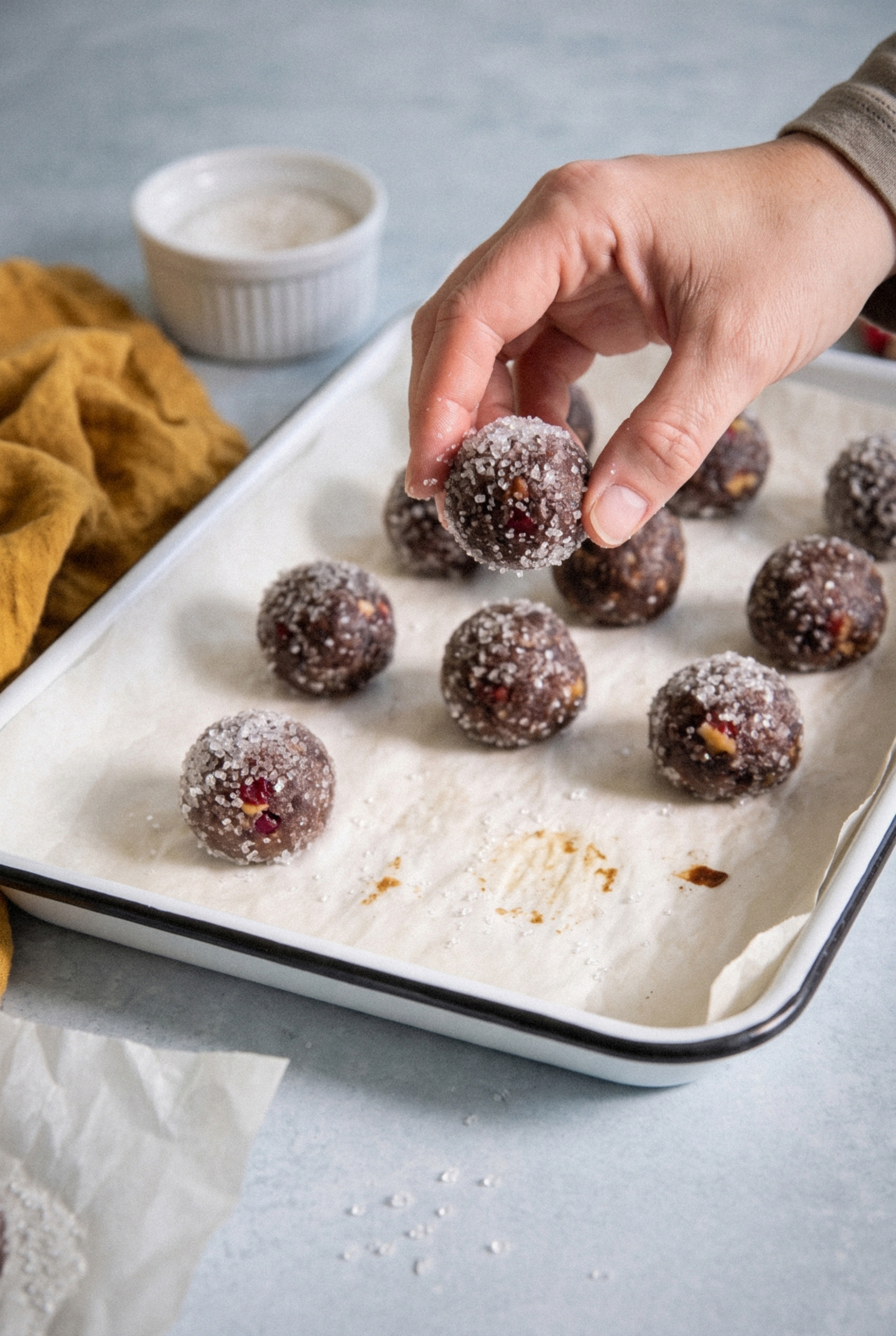
Pour the sparkling sugar into a shallow bowl. Roll each ball through it until it's coated all over, pressing gently so the crystals stick.
If you're serving them today, coat them right away. If you're making them ahead, store them bare and roll them in sugar on the day you serve them. The fruit slowly melts the sugar, so fresh coating stays crunchy and sparkly.
Worth the extra step? Absolutely. That crunch is half the fun!
Expert Tips
Sugar plums are forgiving, but a few small things make them better.
- Use soft dried fruit. Hard, old prunes won't bind. Soak them in hot water for 5 minutes and pat them dry if they feel leathery.
- Too crumbly? Add preserves a teaspoon at a time and pulse again.
- Too sticky? Add another tablespoon of almond flour, or chill the mixture for 15 minutes before rolling.
- Watch the pulse count. Over-processed fruit turns into a smooth paste that tastes flat. A little texture is what you want.
- Measure the cloves. A heavy hand with cloves turns these medicinal fast.
- Toast, don't burn. Almond flour browns quickly in the last minute, so stay close to the oven.
Variations and Coatings
Once you've got the base, you can dress these up a dozen ways. Here are my favorites.
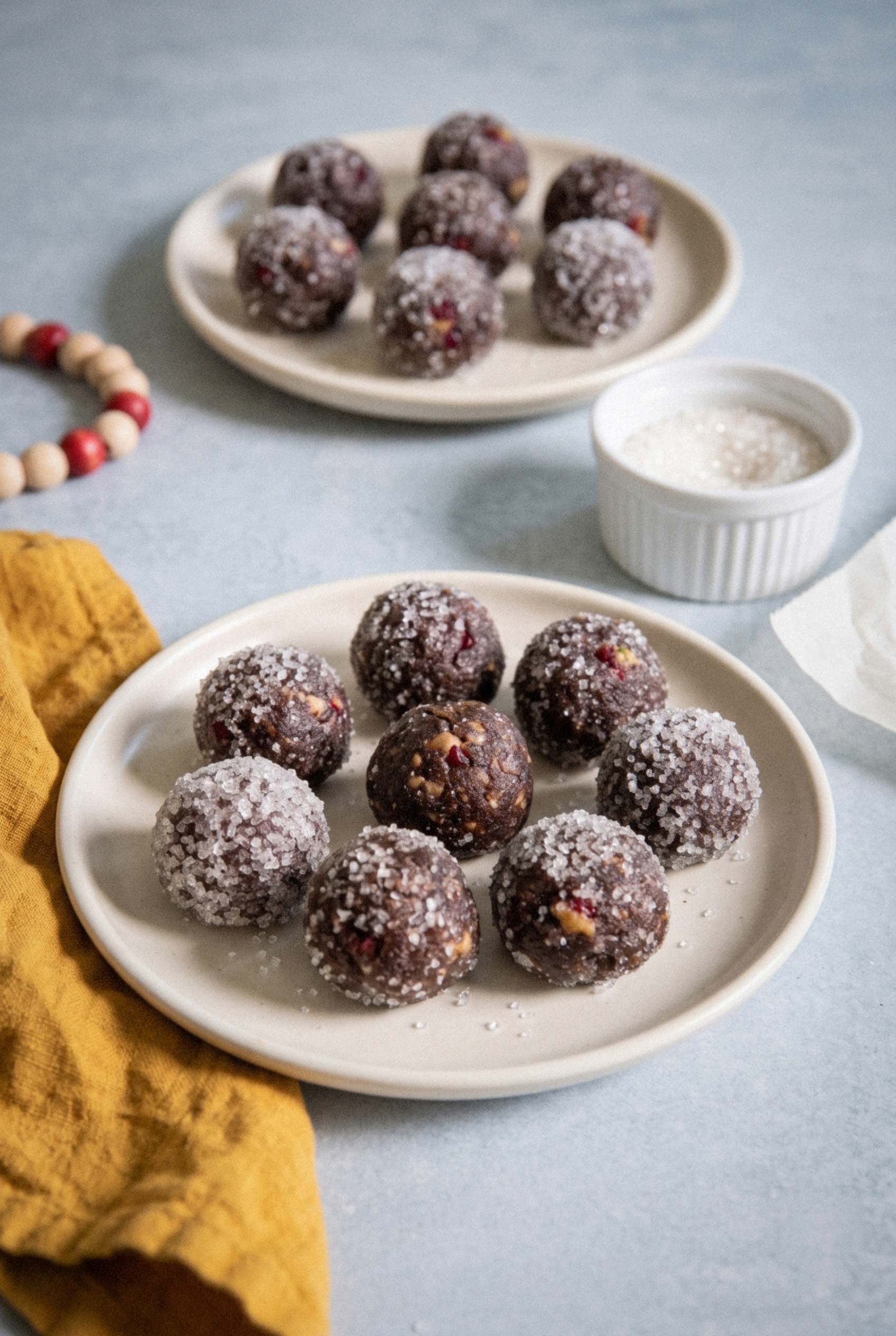
- Plum-shaped. Roll the balls into slight ovals and press a gentle crease down one side with the back of a knife. They look just like tiny plums!
- Powdered sugar. Roll in powdered sugar instead for a snowy look. Do this right before serving, since it dissolves faster.
- Cocoa dusted. Mix 2 tablespoons cocoa with 1 tablespoon powdered sugar for a truffle-like finish.
- Coconut. Roll in finely shredded unsweetened coconut. So pretty on a tray!
- Chocolate-dipped. Skip the sugar and dip the bottoms in melted dark chocolate. My wife's favorite version, hands down!
- Old-world spice. Swap the cloves for ¼ teaspoon crushed anise seed for a licorice note, the way some old European recipes do it.
- Nut-free. Replace the walnuts and almond flour with toasted sunflower seeds and oat flour.
Storing and Gifting
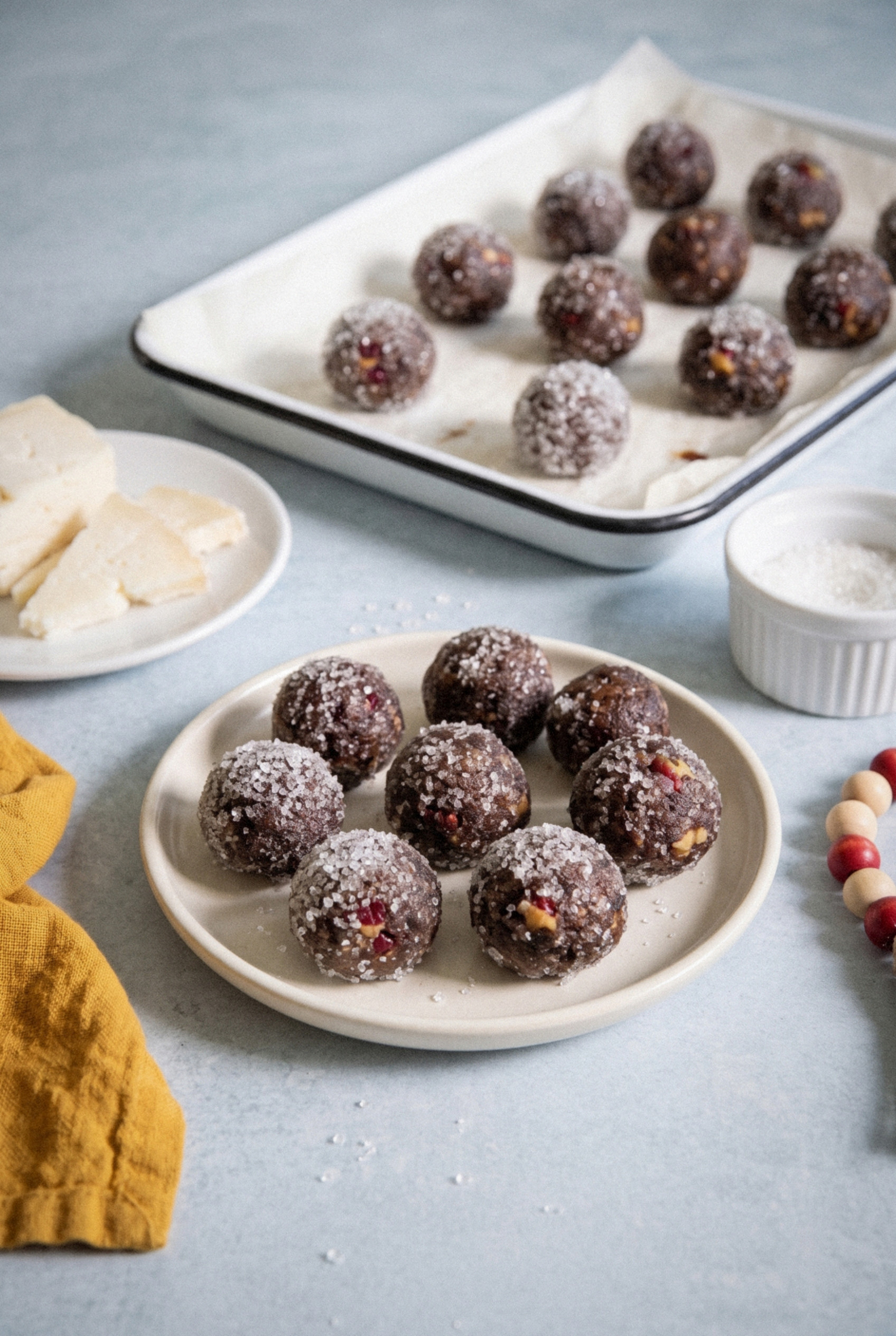
The key to storing sugar plums is waiting on the sugar. Bare balls keep much better than coated ones.
- Room temperature. Keep uncoated balls in a covered container that isn't fully airtight for up to 1 week.
- Fridge. Store them airtight for up to 1 month. Let them sit out for 15 minutes before rolling in sugar.
- Freezer. Freeze uncoated balls for up to 3 months. Thaw in the fridge overnight.
- Gift tins. Set each coated sugar plum in a mini paper candy cup and pack them snugly in one layer. Tuck a little card in with the line from the poem. It's a great way to make someone smile!
Frequently Asked Questions
What was the original sugar plum?
The original sugar plum, from around the 1600s, was a seed or nut coated in many layers of hard sugar through a slow process called panning. The name came from the rough, plum-like shape, not from the fruit. The dried fruit and nut version came later, in the 1800s.
What are sugar plums in The Night Before Christmas?
When Clement Clarke Moore wrote about "visions of sugar-plums" in 1823, he meant sweets in general, the kind of special candy a child would dream about at Christmas. Today the name mostly means these dried fruit and nut balls rolled in sugar.
Do sugar plums actually have plums in them?
Traditional modern recipes do, in the form of prunes, which are dried plums. Fresh plums aren't used, and the name originally referred to the shape rather than the fruit.
Can I make sugar plums without a food processor?
Yes. Chop the fruit and nuts as finely as you can with a sharp knife, then knead everything together in a bowl with your hands. The texture is a little chunkier, and it takes about 15 minutes longer.
Why won't my mixture hold together?
Usually the fruit is too dry or the mixture needs more binder. Add apricot preserves one teaspoon at a time and pulse again. If it's too sticky, add a spoonful of almond flour or chill it for 15 minutes.
How long do sugar plums last, and can I freeze them?
Uncoated, they keep up to 1 week at room temperature, 1 month in the fridge, or 3 months in the freezer. Roll them in sugar just before serving for the best crunch.
How do you eat sugar plums?
Just pop one in your mouth like any other candy. They're perfect on a Christmas cookie tray, next to a cheese board, or with a cup of tea or coffee after dinner.
Who doesn't love a Christmas legend you can actually eat? Give them a try this year!
Recipe
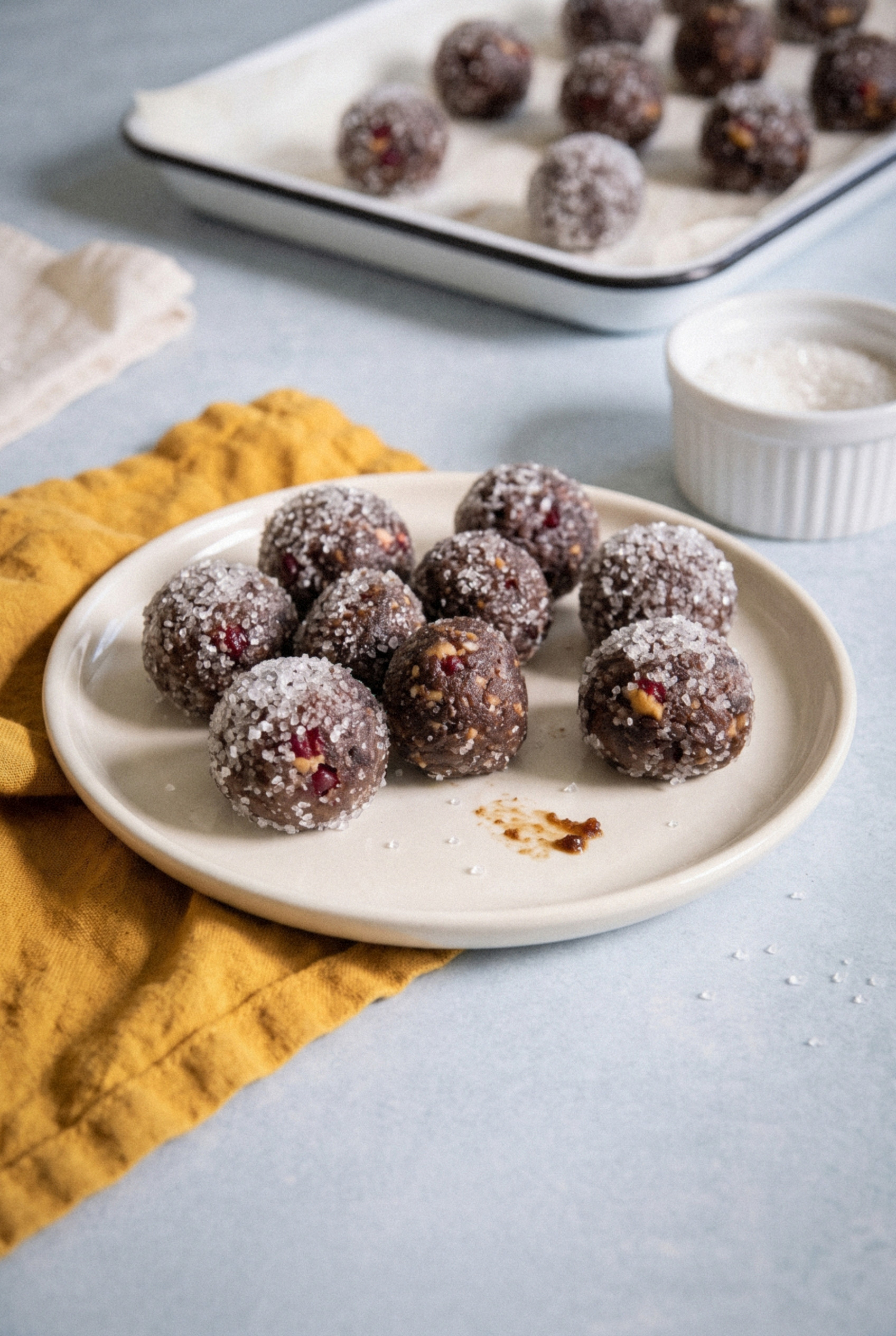
Old Fashioned Sugar Plums
Ingredients
For the Sugar Plums
- ½ cup walnuts
- ¼ cup almond flour or hazelnut meal
- ½ cup pitted prunes about 3 ounces
- ¼ cup pitted dates about 5, or dried figs
- ¼ cup dried cranberries
- 2 tablespoons apricot preserves or honey
- ½ teaspoon orange zest
- ¼ teaspoon ground cinnamon
- ⅛ teaspoon ground cardamom
- ⅛ teaspoon ground cloves
- 1 pinch fine salt
For Coating
- ½ cup coarse sparkling sugar or granulated sugar
Instructions
Toast the Nuts
- Heat the oven to 350°F. Spread the walnuts on one side of a rimmed baking sheet and the almond flour on the other side in a thin layer about ¼ inch deep.
- Toast for 7 to 8 minutes, until fragrant and lightly golden. Cool completely, about 10 minutes.
Make the Mixture
- Roughly chop the prunes and dates. Add them to a food processor with the cranberries and toasted walnuts and pulse 15 to 20 times, until finely and evenly chopped but not formed into a ball.
- Add the toasted almond flour, apricot preserves, orange zest, cinnamon, cardamom, cloves, and salt. Pulse 5 to 8 times, scraping down once, until the mixture holds together when pressed. Add another teaspoon of preserves if it crumbles.
Shape and Coat
- Scoop 1-tablespoon portions and roll each between slightly damp palms into a smooth 1-inch ball.
- Roll each ball in the sparkling sugar until fully coated, pressing gently so the crystals stick. Coat just before serving if making ahead.
Notes
- Make ahead: Store uncoated balls covered at room temperature up to 1 week, airtight in the fridge up to 1 month, or frozen up to 3 months. Roll in sugar on the day you serve them.
- Dry fruit: Soak hard prunes or dates in hot water for 5 minutes and pat dry before using.
- Too sticky: Add 1 tablespoon more almond flour or chill the mixture 15 minutes before rolling.
- No food processor: Finely chop everything by hand and knead together in a bowl.