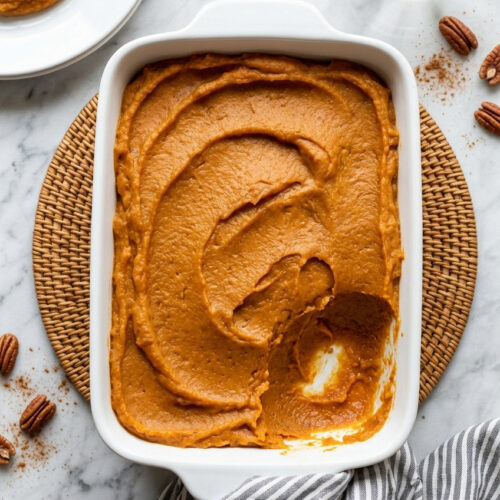
My wife's aunt runs a table in Macon where the sweet potato dish shows up in a shallow white oval baker, and the first year I sat down there I braced myself for the usual.
You know the usual.
Dense, sugary, a raft of scorched marshmallows on top.
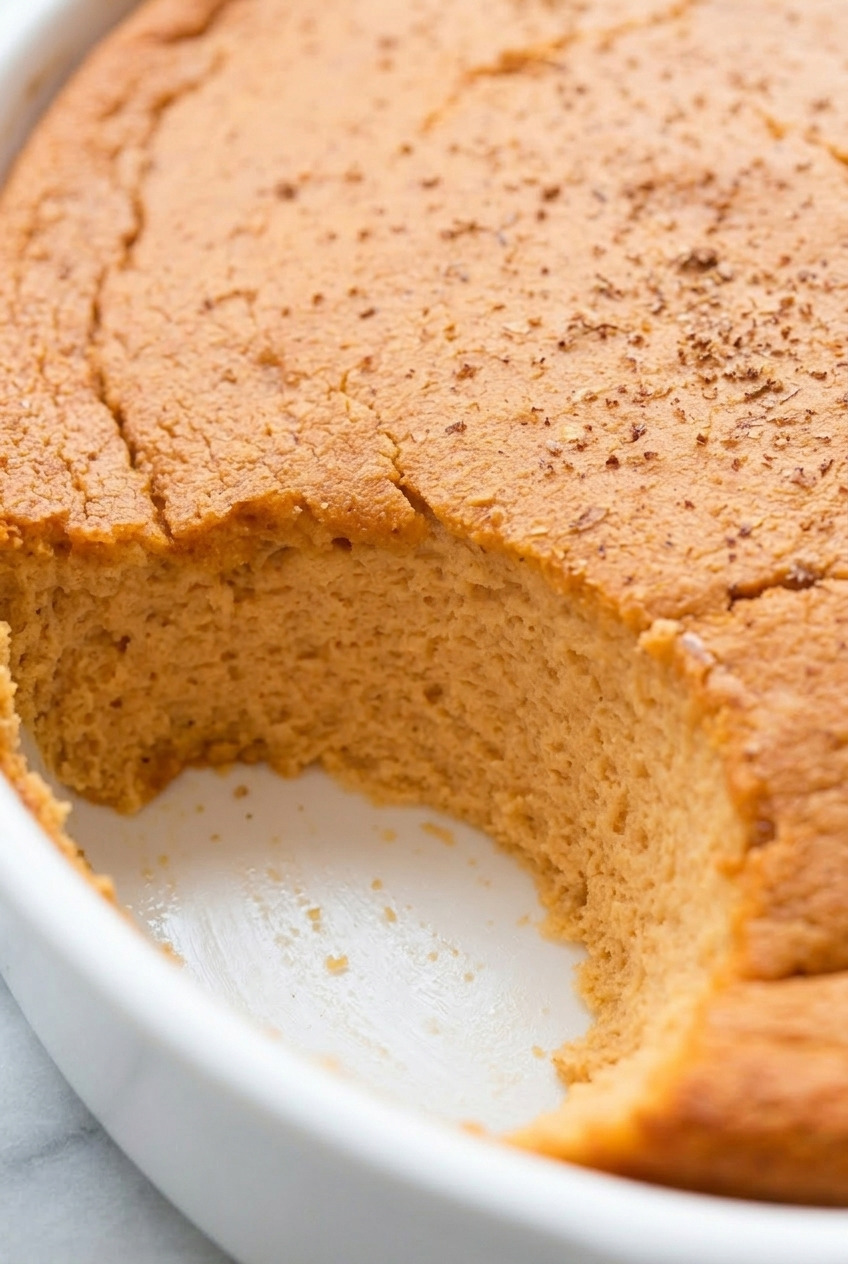
What came out of that dish was closer to a spoonful of cloud.
Light, warm, faintly custardy at the center, and it smelled like vanilla and fresh nutmeg instead of a candy bowl.
I asked her what she'd done differently and she said four words: "I beat the whites."
That was it.
Same mashed sweet potatoes everybody uses, except the eggs got separated and the whipped whites folded in at the end.
I've made it that way every holiday since.
One thing to know before you start, because the name confuses people constantly.
A Southern souffle is not a French souffle.
Nothing towers, nothing collapses, and nobody has to sprint it from the oven to the table.
It's an egg lightened casserole, and that lightness is the entire point.
Mine skips both the marshmallows and the pecan streusel, so you can actually taste the vanilla and the nutmeg.
Make it once and it becomes the sweet potato dish you bring.
What Makes a Southern Sweet Potato Souffle Different
Three different dishes share this name, and readers get burned by the mixup all the time. Sorting them out takes thirty seconds and saves you a lot of confusion at the stove.
- A French souffle. Straight sided dish, a collar, a dramatic rise, and about four minutes of glory before it sinks. Ours does none of that and does not want to.
- A standard sweet potato casserole. Same base ingredients, but whole eggs get beaten straight into the mash. The result is dense and pie like, closer to a sliceable filling than a spoonable side.
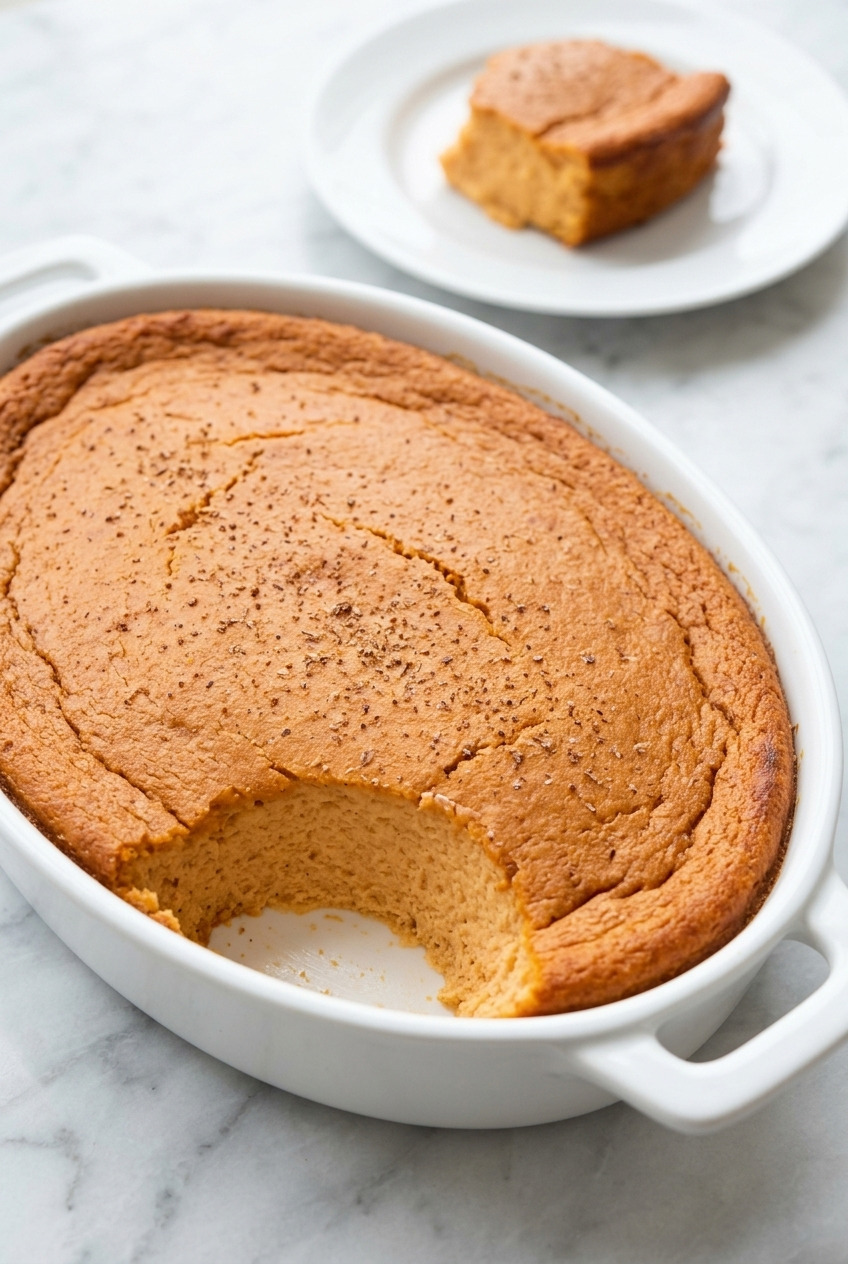
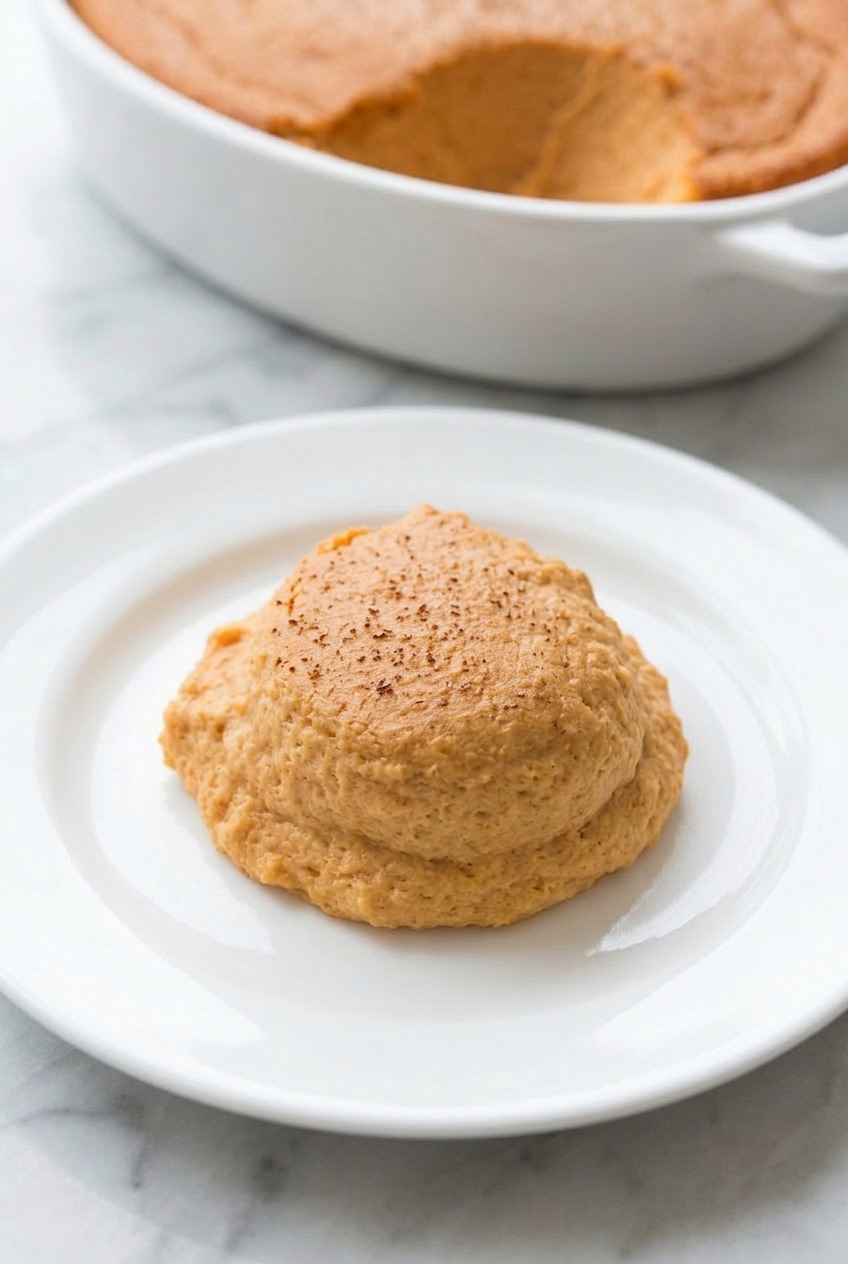
- A Southern souffle. The eggs are separated, the whites are whipped to soft peaks, and they get folded into the warm base. The dish still bakes in a normal shallow baker, but it eats airy and spoonable rather than heavy.
The lift is real and it holds.
Because the base is a thick potato mash rather than a thin sauce, it traps the air the whites brought and keeps it after the dish comes out of the oven.
Will it sink a little as it cools? A bit at the very center, and nobody notices.
One more contrast worth naming: pie filling. Sweet potato pie carries a lot more sugar and a lot less salt. Ours goes the other way, and the salt is what keeps this on the side dish half of the table instead of the dessert half.
Ingredients You Will Need
Nothing here is exotic, and every single item earns its place. The quantities are tuned for texture rather than sweetness, so resist the urge to pour in more sugar.
- Sweet potatoes (3 lb, about 4 medium). Buy them roughly the same size so they finish roasting together. Garnet or jewel varieties give you that deep orange color.
- Large eggs (4), separated. The yolks go into the base for richness and set. The whites get whipped and folded, and they are the whole reason this dish is called what it is.
- Unsalted butter (6 tablespoons), melted. Unsalted, so you control the salt yourself. Melted so it blends into warm mash without cooling it down.
- Light brown sugar (¾ cup, packed). Less than most recipes call for. Roasting already concentrates the potato's own sugar, and molasses in the brown sugar adds depth that white sugar cannot.
- Heavy cream (½ cup). Gives a plusher set than evaporated milk. It also carries the vanilla and nutmeg through the whole dish rather than leaving it on top.
- Vanilla extract (1 tablespoon). Yes, a full tablespoon. The keyword says vanilla and I mean it, and sweet potato swallows a timid amount without a trace.
- Freshly grated nutmeg (¾ teaspoon), plus more for the top. Grate it yourself from a whole nutmeg. This is the one upgrade that changes the dish most and costs the least.
- Ground cinnamon (¼ teaspoon). A whisper only. Too much and it stops tasting like this recipe and starts tasting like every other fall bake.
- Fine salt (1 teaspoon). Sounds like a lot. It is not, and it is what most competitors get wrong.
- Baking powder (1 teaspoon). Insurance for the lift, working alongside the whites rather than instead of them.
- Cream of tartar (⅛ teaspoon), optional. Stabilizes the whipped whites if your kitchen is warm or you are slow at folding.
You will also want softened butter for the baking dish, because a well greased dish gives you clean edges when you spoon it out.
How To Make Sweet Potato Souffle
Step 1: Roast and Mash the Sweet Potatoes
Roast them whole, do not boil them. This is the most important choice in the whole recipe and almost nobody explains why.
Scrub the potatoes, prick each one a few times with a fork, and set them on a foil lined sheet.
Roast at 400°F for 55 to 70 minutes, until a knife slides through the thickest part with zero resistance and the skins have started to weep sugar.
Boiling pumps water into the flesh, and water is the enemy of a light souffle.
Roasting drives water out and caramelizes what stays behind.
Let them cool until you can handle them, then peel the skins away with your fingers. They should come off in sheets.
Mash the flesh well in a large bowl, or push it through a ricer if you own one, and measure out 4 cups.
Pro tip: a ricer gives the smoothest result and takes about ninety seconds. A potato masher works fine. A food processor does not, because it turns sweet potato gluey.
Step 2: Build the Base
Do this while the mash is still warm. Warm mash accepts butter and cream smoothly and gives you a base that folds easily later.
Beat the melted butter and brown sugar into the mash.
Add the heavy cream, the 4 egg yolks, the vanilla, the nutmeg, the cinnamon, the salt, and the baking powder.
Beat with a hand mixer on medium for about a minute, until it looks glossy and slightly paler than it started.
Taste it right now.
This is your last chance to fix the seasoning, and it should taste a touch saltier than you expect, because the whipped whites will dilute it.
Let the base cool to just warm before the whites go anywhere near it. Hot base plus whipped whites equals scrambled bits and a deflated bowl.
Step 3: Whip and Fold the Whites
This is the step that separates a souffle from a casserole, so give it your full attention. It takes four minutes and it decides the entire texture of the dish.
Put the 4 egg whites in a scrupulously clean bowl with the cream of tartar if you are using it.
Any trace of yolk or grease and they will not whip. Glass or metal, never plastic.
Whip on medium high to soft peaks, the stage where a lifted beater pulls up a peak that flops over at the tip.
Stop there. NEVER whip to stiff, glossy peaks for this dish, because stiff whites break into dry clumps that refuse to blend and leave white streaks through the finished bake.
Now the fold, in three moves.
- Sacrifice a third. Stir one third of the whites into the base vigorously and do not be gentle. This loosens the heavy mash so the rest can go in easily.
- Fold in the second third. Rubber spatula, cut down the middle, sweep along the bottom, lift and turn the bowl a quarter turn. Repeat.
- Fold in the last third. Stop the second you no longer see white streaks. A few faint ones are better than an overworked bowl.
Overfolding is the single most common way people flatten this dish.
Underfolding leaves white patches that bake into little meringue spots.
Aim for the moment right between the two.
Step 4: Bake and Check for Doneness
Use a shallow oval baker, roughly 2 quarts and about 2 inches deep. Depth is the enemy here, because a deep dish sets the top long before the middle catches up.
Butter the dish well, right up the sides.
Scrape the mixture in and level the top gently with the back of a spoon. Do not pack it down.
Grate a little extra nutmeg over the surface.
Bake at 350°F for 40 to 45 minutes.
You are looking for three signs together: the top has puffed and cracked lightly, the edges have pulled a hair away from the dish, and the center jiggles as one soft mass rather than sloshing.
A knife inserted an inch from the center should come out with a moist crumb clinging, not wet batter.
Rest it 10 minutes before serving so the custard finishes setting.
Fair warning: do not open the oven door in the first 25 minutes. The rush of cool air will drop the top and it will not come back up.
The Marshmallow Question, Honestly Answered
Two camps have been arguing about sweet potatoes for about seventy years, and you are allowed to pick either one. Mine is neither, and here is the fair version of the argument.
- Marshmallow topped. Nostalgic, sweet, and genuinely fun for kids. The broiled marshmallow crust is a texture in its own right. It also pushes the dish firmly into dessert territory, and it hides whatever is underneath.
- Brown sugar pecan streusel. The grownup choice, and honestly delicious. Butter, brown sugar, flour and toasted pecans give you crunch against the soft base. It is also rich enough that the souffle underneath stops mattering.
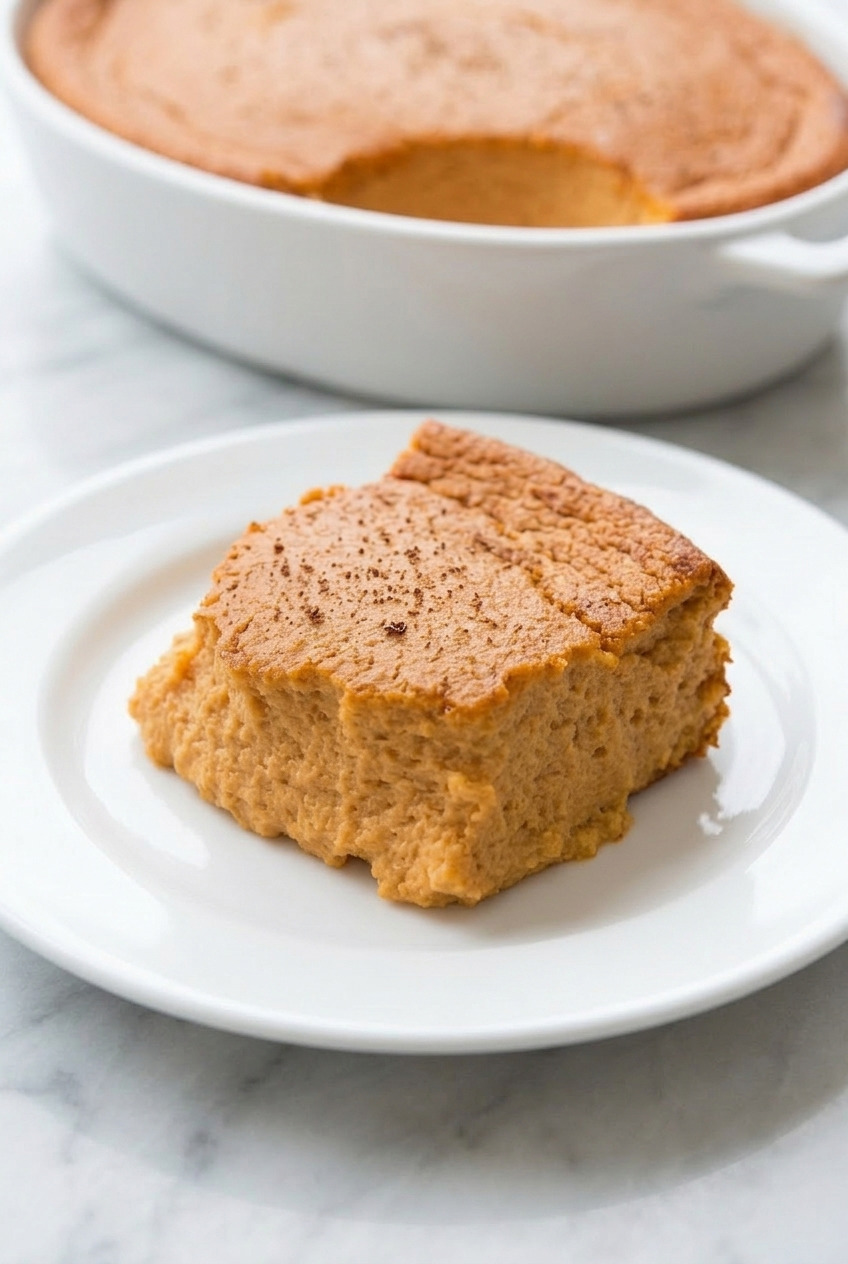
- Bare, the way I make it. Nothing on top but grated nutmeg. If you went to the trouble of whipping whites, a heavy topping just sits on that airy texture and squashes it.
So which should you make?
If the dish is going up against ham and greens as a side, go bare.
If it is closing the meal as dessert, a streusel earns its keep.
If your family has always had marshmallows and you take them away, prepare for a conversation.
Why Nutmeg and Vanilla Work Here
Nutmeg does something specific to sweet potatoes that cinnamon cannot. It reads as rich rather than sweet, and that changes how the whole dish lands.
Sweet potato is a one note ingredient on its own, sugary and a bit flat.
Nutmeg's warm resinous edge cuts straight through that flatness and tricks your palate into reading the dish as creamier than it is.
It also carries the dairy. Nutmeg has lived in cream sauces and custards forever for exactly this reason.
Vanilla plays the other half.
It rounds off the starchy edge and makes the dish taste sweeter without another spoonful of sugar going in.
Grate it fresh. Preground nutmeg loses its volatile oils in a matter of months and ends up tasting like dusty sawdust. A whole nutmeg costs a couple of dollars, keeps for years, and takes ten seconds on a microplane. It is the cheapest upgrade in this article.
Use about ¾ teaspoon in the base and a light grating on top for aroma.
Tips For The Lightest Texture
Every one of these came out of a batch that did not turn out right. Follow them and yours will be fluffier than the version most people grew up on.
- Keep the mash dry. Roast, never boil. If your mash still looks wet, spread it in a pan and let it steam off for five minutes before you build the base.
- Work with warm mash. Cold mash is stiff and fights the fold, which means more strokes and less air.
- Soft peaks, not stiff. Stiff whites do not fold, they break.
- Fold, do not stir. Down, along the bottom, up and over, turn the bowl. Nothing circular.
- Go shallow. A 2 inch deep oval baker cooks evenly. A deep casserole dish gives you a set top and a wet middle.
- Leave the oven door alone. The first 25 minutes are structural.
- Salt to taste before the whites. You cannot fix seasoning after the fold without knocking the air out.
Troubleshooting: Dense, Wet, or Sunken
If it came out wrong, one of these five things happened. Each has a cause you can fix on the next attempt.
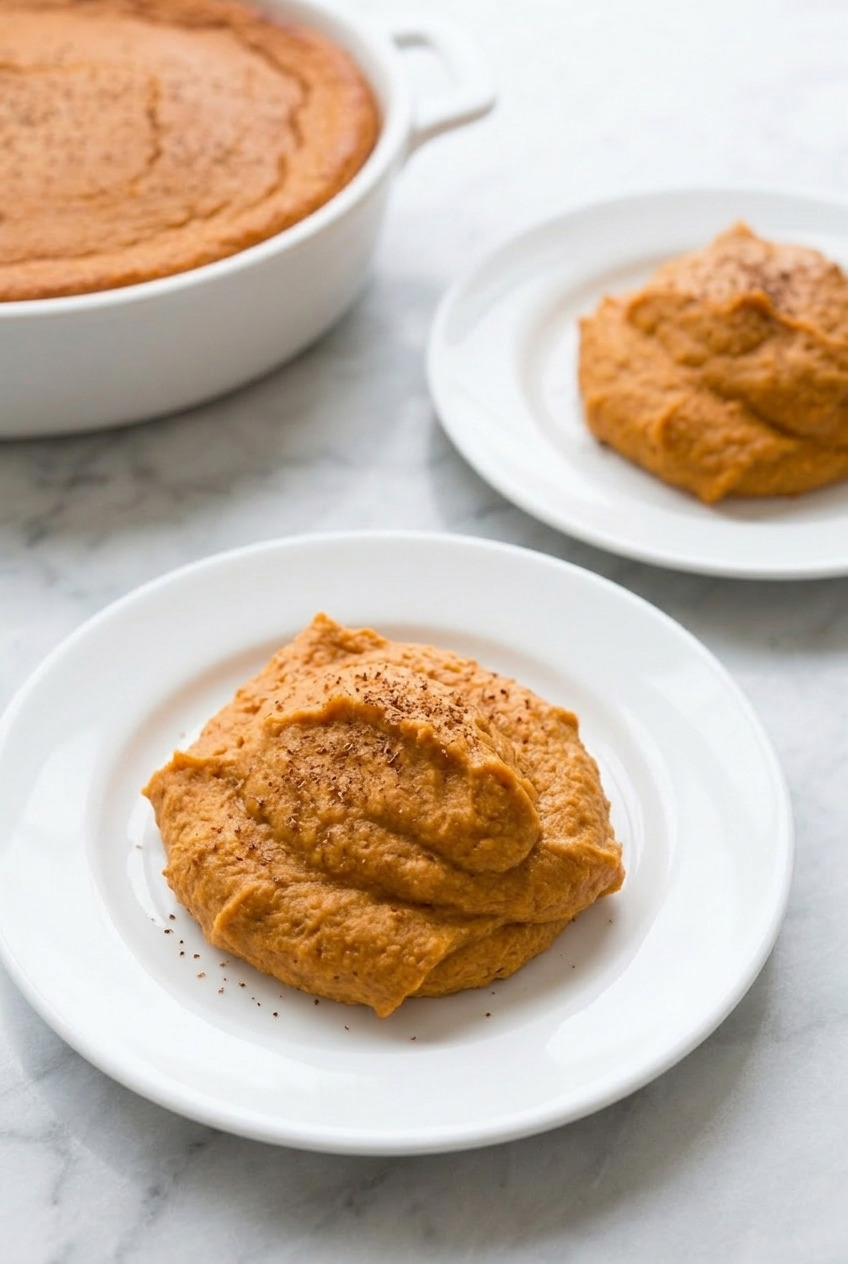
- It baked up dense and heavy. Either the whites were overfolded or they were whipped too stiff to begin with. Stop folding at the first moment the streaks disappear.
- Water pooled at the edges. Boiled potatoes, or potatoes that sat in their own steam after roasting. Roast next time and let them cool uncovered.
- The center never set. Too deep a dish, or pulled from the oven too early. The center should wobble as one piece, not ripple like liquid.
- It sank dramatically. The oven door got opened early, or the base was still hot when the whites went in. Cool the base to just warm.
- White streaks or meringue spots on top. Underfolded. Two or three more gentle folds would have done it.
None of these ruin dinner, by the way.
Even a dense batch tastes good. It just tastes like a casserole, which is what you were trying to improve on.
Make Ahead, Storing, and Reheating
This is a holiday dish, so make ahead matters more than usual. The good news is the base takes to it well, and the whites are a five minute job on the day.
- The base. Build it through Step 2, cover it, and refrigerate up to 2 days. Let it sit out for an hour to come back to room temperature before you fold in fresh whites.
- Do not whip the whites ahead. They start weeping within the hour and there is no saving them.
- Fully baked. It holds at room temperature for about 2 hours and reheats better than you would expect. Cover with foil and warm at 325°F for 20 to 25 minutes.
- Leftovers. Refrigerate covered up to 4 days. It firms up cold and eats almost like a soft pudding, which my wife claims is the best way to have it.
- Freezing. Freeze the baked dish up to 2 months, thaw overnight in the fridge, reheat covered. You lose some of the airiness, so I would rather freeze the roasted mash instead and build fresh.
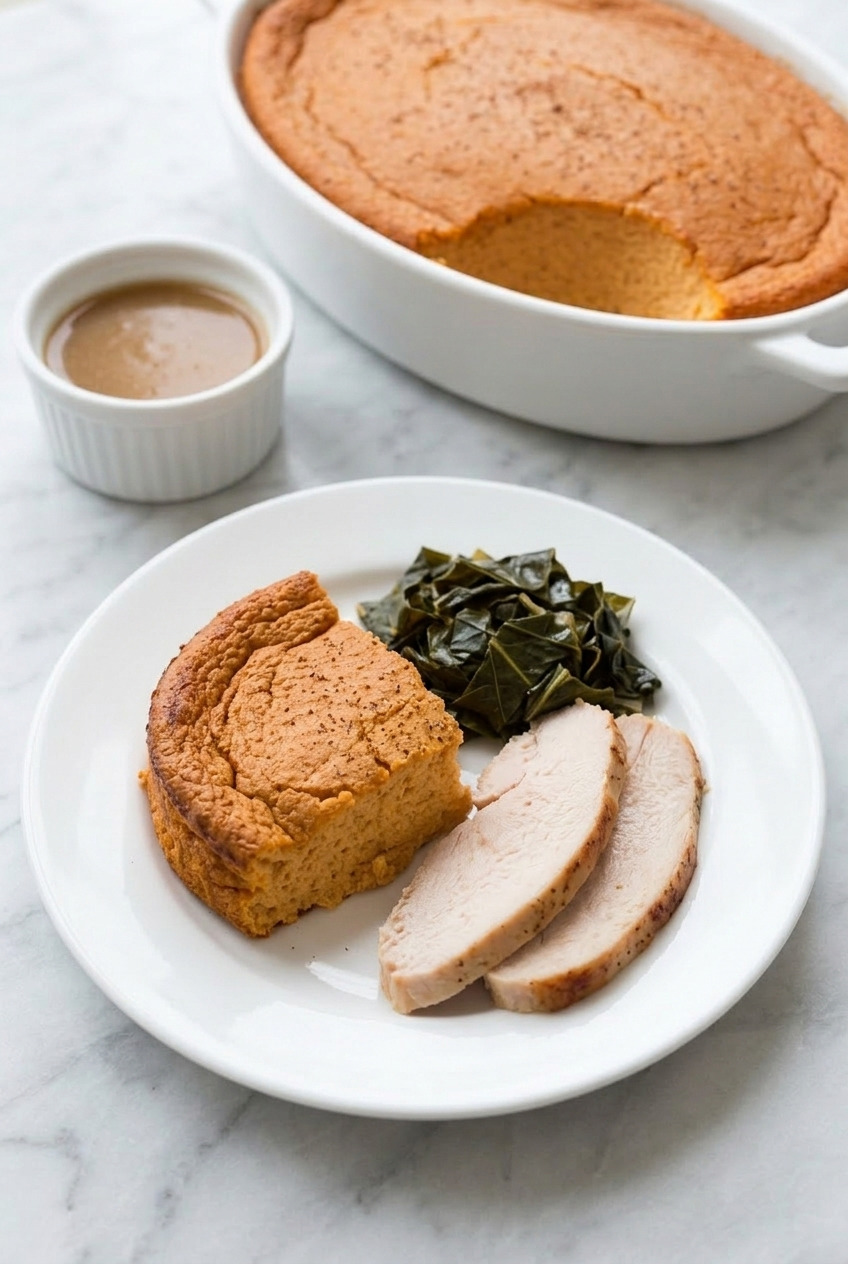
What To Serve With Sweet Potato Souffle
This wants salt and acid next to it, not more sweetness. Anything sugary alongside and the whole plate goes cloying.
- Roast turkey. The classic partner, and the souffle plays the role of both starch and comfort.
- Baked or glazed ham. Salty ham against soft sweet potato is one of the great Southern pairings.
- Roast chicken. Makes this a Sunday dinner rather than a holiday only dish.
- Collard or mustard greens. Bitter and vinegary, exactly the contrast the plate needs.
- A sharp vinegar slaw. Cuts through everything, and I put it on the table every time.
Can it be dessert? Absolutely.
Serve it warm in bowls with a spoonful of lightly whipped cream, and nobody will question it.
That is the beauty of this dish, it works at both ends of the meal.
Give it a try, and pay attention to that fold.
Recipe
Southern Sweet Potato Souffle With Vanilla And Nutmeg
Ingredients
For the Souffle
- 3 lb sweet potatoes about 4 medium, roasted and peeled to yield 4 cups mashed
- 6 tablespoons unsalted butter melted
- ¾ cup light brown sugar packed
- ½ cup heavy cream
- 4 large eggs separated
- 1 tablespoon vanilla extract
- ¾ teaspoon freshly grated nutmeg plus more for the top
- ¼ teaspoon ground cinnamon
- 1 teaspoon fine salt
- 1 teaspoon baking powder
- ⅛ teaspoon cream of tartar optional, for the whites
- 1 tablespoon softened butter for the baking dish
Instructions
Roast and Mash the Sweet Potatoes
- Heat the oven to 400 degrees F. Scrub the sweet potatoes, prick each one several times with a fork, and set them on a foil lined baking sheet.
- Roast for 55 to 70 minutes, until a knife slides through the thickest part with no resistance and the skins have started to weep sugar.
- Cool until you can handle them, then peel the skins away with your fingers. Mash the flesh well in a large bowl or push it through a ricer, and measure out 4 cups. Do not use a food processor, it turns sweet potato gluey.
Build the Base
- While the mash is still warm, beat in the melted butter and the brown sugar.
- Add the heavy cream, egg yolks, vanilla, nutmeg, cinnamon, salt, and baking powder. Beat with a hand mixer on medium for about 1 minute, until glossy and slightly paler.
- Taste and adjust the salt now. It should taste slightly saltier than you expect, because the whipped whites will dilute it. Let the base cool to just warm before adding the whites.
Whip and Fold the Whites
- Put the egg whites and the cream of tartar in a scrupulously clean glass or metal bowl. Whip on medium high to soft peaks, the stage where a lifted beater pulls up a peak that flops at the tip. Do not whip to stiff peaks.
- Stir one third of the whites into the base vigorously to loosen it.
- Fold in the remaining whites in two additions with a rubber spatula, cutting down through the center, sweeping along the bottom, and turning the bowl a quarter turn each time. Stop as soon as the white streaks disappear.
Bake
- Heat the oven to 350 degrees F and butter a shallow 2 quart oval baking dish, about 2 inches deep, right up the sides.
- Scrape the mixture in and level the top gently with the back of a spoon without packing it down. Grate a little extra nutmeg over the surface.
- Bake 40 to 45 minutes, until the top has puffed and cracked lightly, the edges have pulled slightly from the dish, and the center jiggles as one soft mass. Do not open the oven in the first 25 minutes.
- Rest 10 minutes before serving so the custard finishes setting.
Notes
- Roast, never boil: boiled sweet potatoes carry water into the mash and water is what makes a souffle dense and weeping.
- Soft peaks only: stiff whites break into dry clumps instead of folding, and leave white streaks in the bake.
- Go shallow: a 2 inch deep oval baker cooks evenly. A deep casserole dish sets the top before the center cooks.
- Make ahead: the base holds covered in the fridge up to 2 days. Whip and fold fresh whites on the day you bake.
- Fresh nutmeg: grate it from a whole nutmeg. Preground loses its oils within months.