There's a sound sage leaves make when they hit foaming butter, a fast dry crackle that lasts about fifteen seconds.
Then the smell arrives and it fills the whole kitchen.
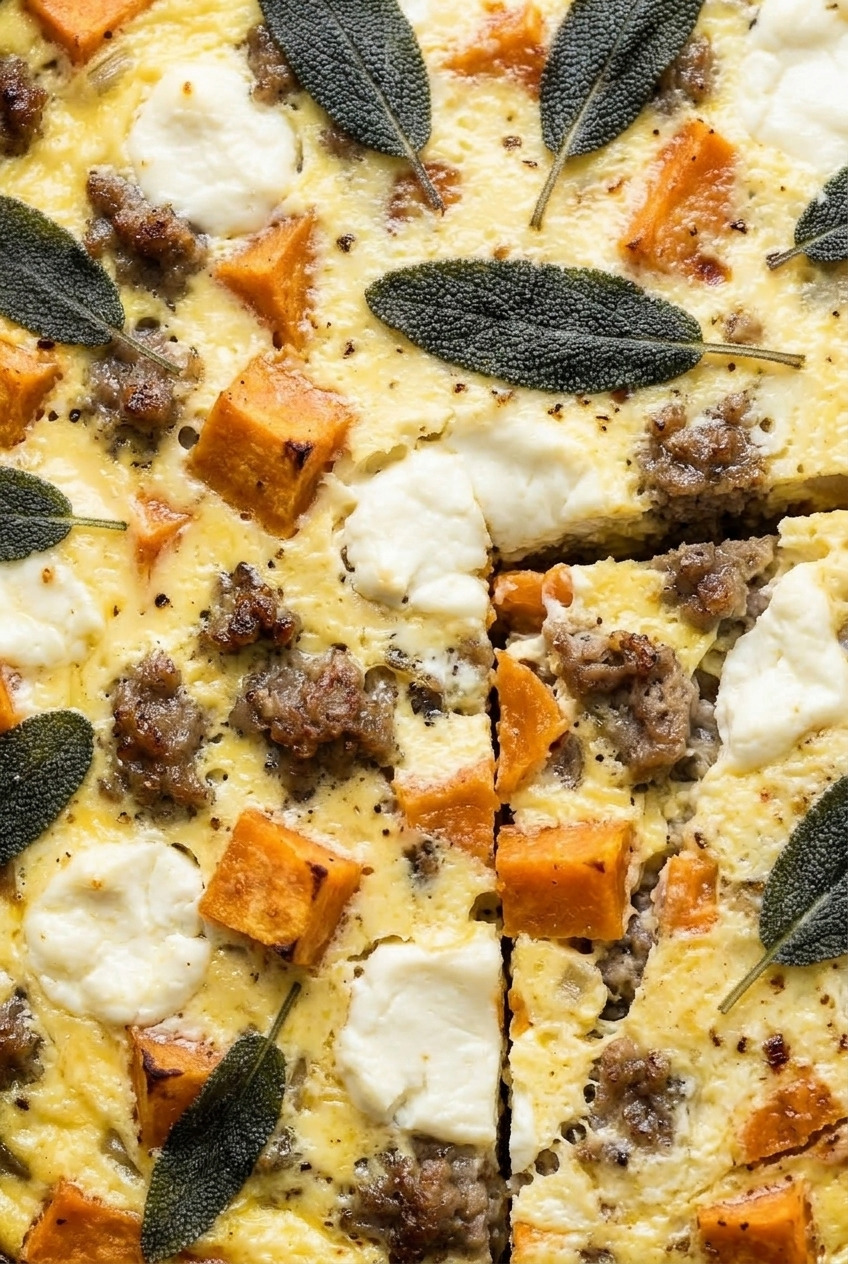
Somewhere between pine and hay and something almost peppery.
I chase that smell about twice a month.
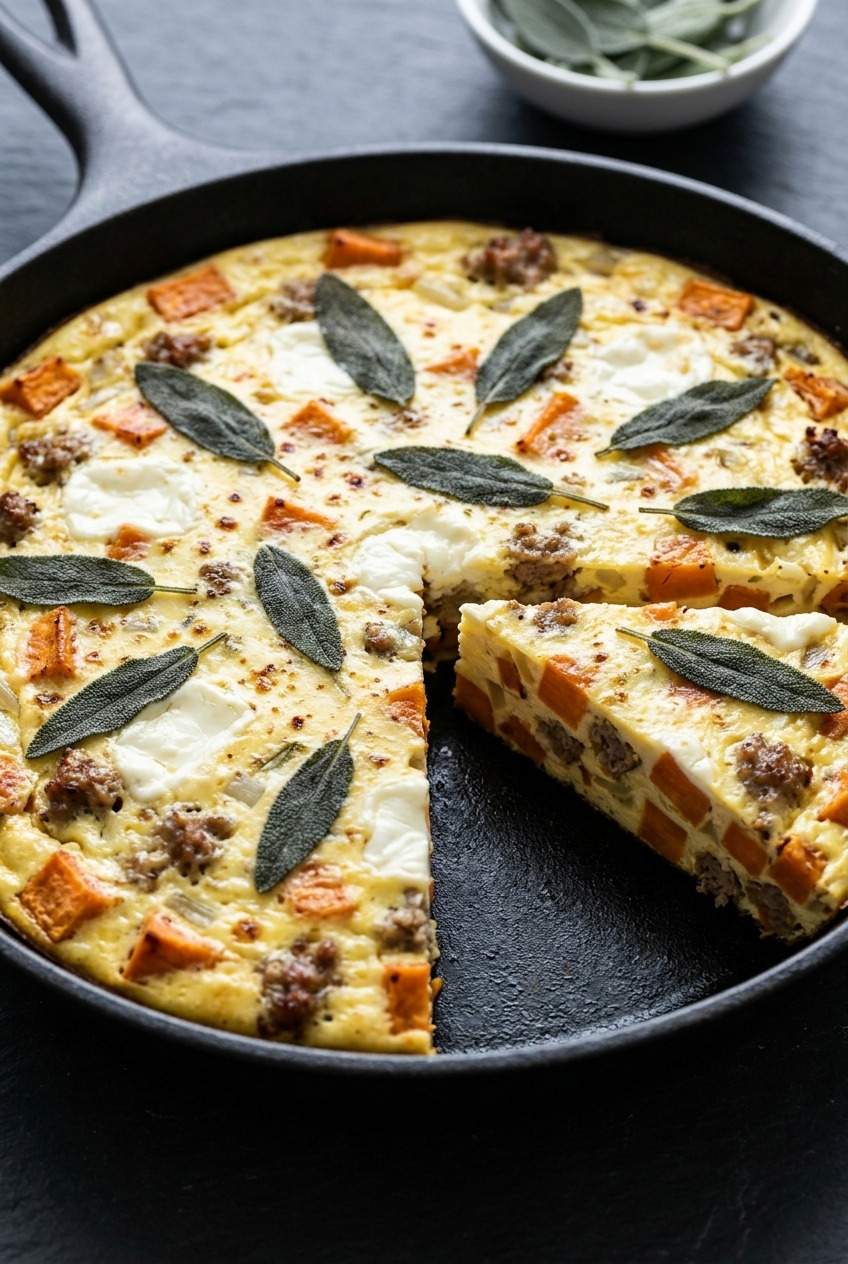
The skillet is a 10 inch cast iron pan my dad handed me when I moved out, and it has done exactly one job in this house on Sunday mornings for eight years.
Sage goes in the butter first and comes out crisp.
Then breakfast sausage, then diced sweet potato browning in all that rendered fat.
Then eight eggs and a few knobs of goat cheese, and the whole pan slides into the oven.
I want to be clear that this is a savory dish.
Sweet potato shows up in a lot of dessert-adjacent recipes, and this is not one of them.
No maple, no brown sugar, no cinnamon anywhere near it.
What you get is earthy, salty, herby, and rich enough to serve at supper.
The skillet goes straight to the table, which means there's no serving dish to wash.
My wife eats the last wedge cold out of the fridge the next morning, standing up, and swears it's better that way.
She might be right.
One Skillet, Start to Finish
The pan is not a detail here, it's the whole method. Cast iron holds heat hard enough to brown the sweet potato properly, goes into a hot oven without a second thought, and comes to the table as the serving dish.
One pan for the sage, the sausage, the potato, the eggs, and the serving.
Sound too easy? It genuinely is.
What Kind of Pan Should I Use for a Frittata?
An oven safe skillet, 10 inches across, with sloped or straight sides.
Cast iron is my first choice because of the heat retention and the browning.
A heavy stainless or carbon steel pan works just as well.
Fair warning: A nonstick pan with a plastic or rubber handle should not go into a 375°F oven. Check your handle before you commit.
Can I Make This in a Baking Dish Instead?
You can, with one adjustment.
Cook the sage, sausage, sweet potato and onion in a regular skillet, then scrape everything into a greased 9 inch square or round baking dish, pour the eggs over, and bake.
Add 5 to 8 minutes to the oven time, since a ceramic dish heats slower than preheated iron.
What you lose is the browned crust the hot pan gives the bottom and edges. That's a real loss, but it's still a very good frittata.
Ingredients You'll Need
Eleven ingredients and no shopping trip for anything strange. Fresh sage is the one thing worth going out of your way for.
- Eggs (8 large). The body of the dish. Eight fills a 10 inch skillet to a good depth without the middle taking forever.
- Heavy cream (⅓ cup). A small amount makes a real difference. It gives you a custardy set instead of a rubbery one.
- Salted butter (2 tablespoons). For crisping the sage, and everything else cooks in that flavored butter.
- Fresh sage (12 whole leaves, plus 1 tablespoon chopped). The whole leaves go crisp and come back on top. The chopped sage goes into the eggs.
- Sweet potato (1 medium, about 12 ounces). Peeled and cut into ½ inch dice. It browns at the edges and stays soft in the middle.
- Bulk breakfast sausage (8 ounces). Savory, fatty, and its rendered fat is what the potato cooks in.
- Yellow onion (1 small). Diced. It goes sweet and soft under the sage.
- Garlic (2 cloves). Minced, added late so it doesn't burn.
- Goat cheese (3 ounces). Dotted over the top in tangy, creamy pockets.
- Fine salt (¾ teaspoon). Into the eggs, not sprinkled on at the end.
- Coarse black pepper (½ teaspoon). Sage and black pepper belong together.
Ingredient Notes and Substitutions
- Cream or milk? Whole milk works as a straight swap. Cream sets softer and richer, milk sets slightly firmer and leaner. Neither will ruin your morning.
- The pork. Bacon, pancetta or crumbled Italian sausage all substitute directly. Cook them first either way, because you want the rendered fat in the pan.
- No meat? Leave it out and cook the potato in 2 extra tablespoons of butter. Add a pinch more salt to make up for what the sausage was carrying.
- Goat cheese vs. feta. Feta is saltier and stays in firmer crumbles. Goat cheese melts into soft pockets. Both are good, they just behave differently.
- Fresh vs. dried sage. Use 1 teaspoon of dried in place of the tablespoon of chopped fresh. Be aware that dried sage will not crisp, so you lose the leaves on top entirely. That's the reason I buy fresh for this one.
How to Make a Sweet Potato and Sage Frittata
The order matters more than anything else in this recipe. Heat the oven to 375°F before you start, because once the eggs go in you're on a clock.
Step 1: Crisp the Sage in Butter
Melt the 2 tablespoons butter in the cast iron skillet over medium heat until it foams.
Lay the 12 whole sage leaves in a single layer and fry them for 20 to 30 seconds per side, until they darken slightly and stop sizzling.
Lift them out to a paper towel. They'll crisp fully as they cool.
Leave every drop of that butter in the pan.
Step 2: Brown the Sausage
Add the 8 ounces of breakfast sausage to the same pan and break it into rough pieces.
Cook 5 to 6 minutes over medium heat, until it's browned and cooked through.
Move it to a plate with a slotted spoon and leave the fat behind.
Step 3: Cook the Sweet Potato and Onion
Add the diced sweet potato and the diced onion to the fat in the pan.
Cook 8 to 10 minutes, stirring every couple of minutes, until the potato is tender all the way through and has browned edges.
Stir in the minced garlic and cook 30 more seconds.
Return the sausage to the pan and spread everything into an even layer.
Step 4: Whisk the Eggs
In a bowl, whisk the 8 eggs with the ⅓ cup cream, the 1 tablespoon chopped sage, the ¾ teaspoon salt, and the ½ teaspoon black pepper.
Whisk just until the yolks and whites are combined and the mixture is uniform.
Stop there. Over-beaten eggs bake up spongy.
Step 5: Pour, Dot, and Set the Edges
Pour the eggs over the filling and give the pan a gentle shake to settle everything.
Dot the 3 ounces of goat cheese across the surface in rough pieces.
Let it cook on the burner over medium-low heat for 3 to 4 minutes, until the outer inch is visibly set.
Step 6: Finish in the Oven
Slide the skillet into the 375°F oven for 12 to 16 minutes.
Pull it when the center still holds the faintest wobble.
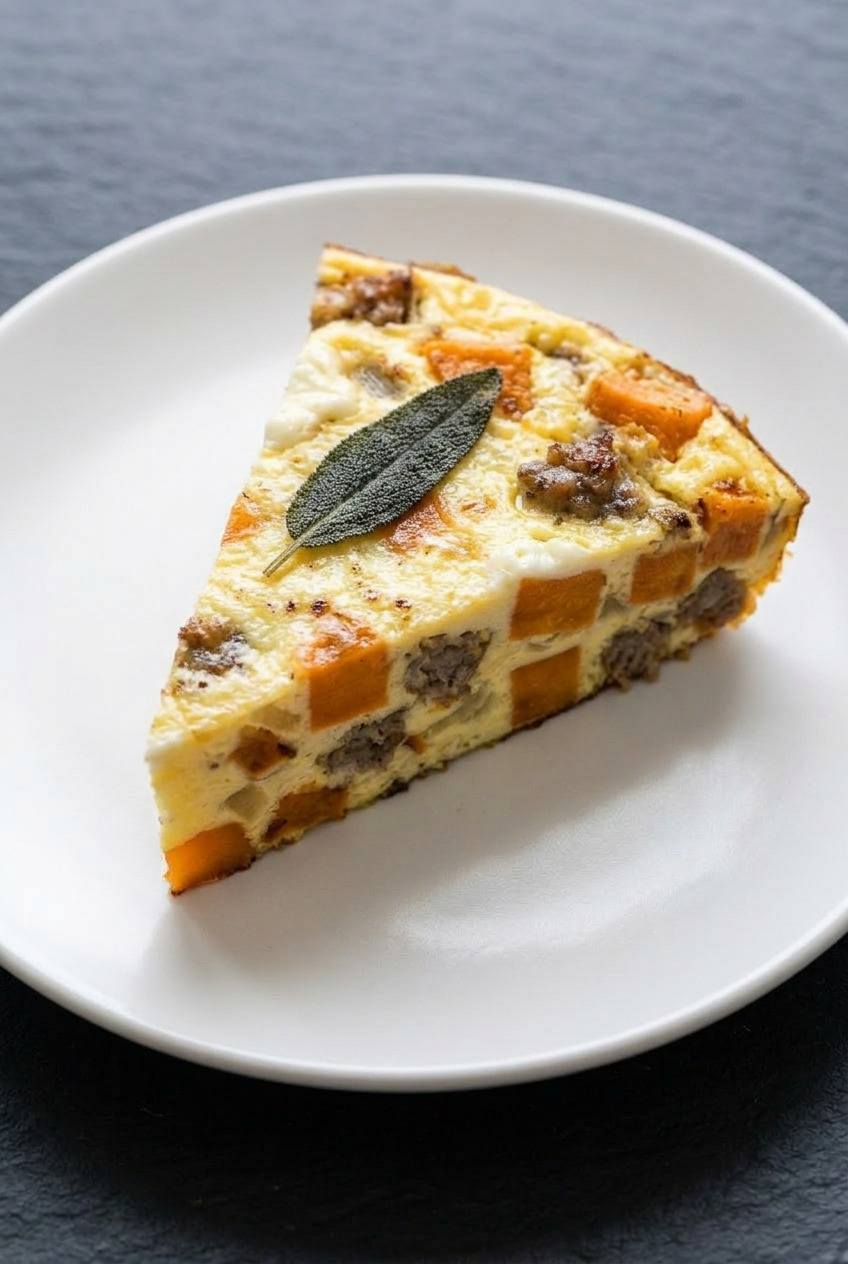
Lay the crisped sage leaves over the top and let it rest 5 minutes before you cut it.
Tips for a Frittata That Sets Instead of Weeping
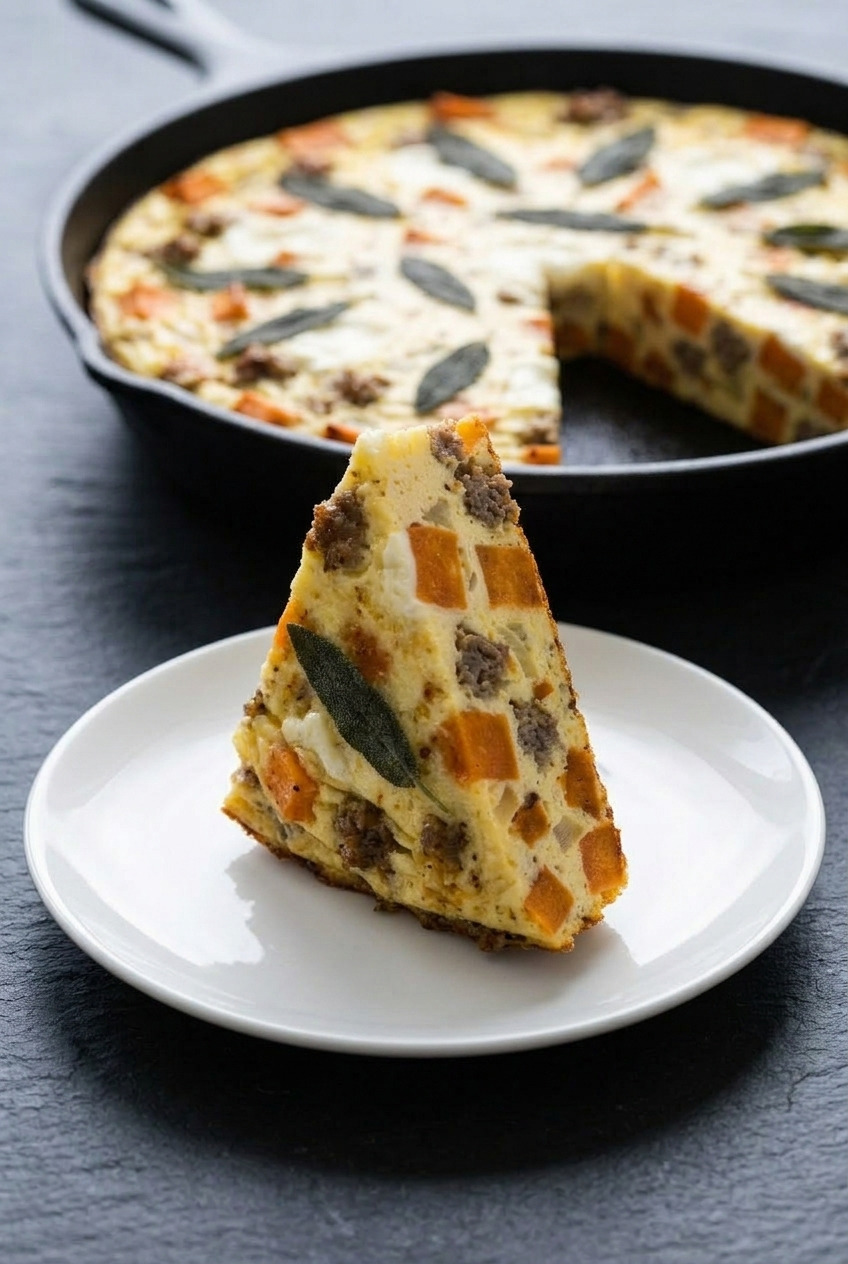
A watery frittata is almost always a timing problem, not a recipe problem. These five things fix it.
- Dice the sweet potato small. ½ inch and no bigger. Larger pieces are still firm in the middle when the eggs are done, and nobody enjoys that.
- Don't overbeat the eggs. You're combining them, not aerating them. Air makes it puff dramatically and then collapse into a spongy layer.
- Pull it early. Cast iron keeps cooking for several minutes off the heat. A center that looks perfectly firm in the oven is already overcooked.
- Salt the eggs, not the top. Salt sprinkled on the finished surface draws moisture out and pools it. Salt whisked into the eggs seasons them properly.
- Rest it 5 minutes. The set finishes and the wedges hold their shape when you lift them out.
How to Serve It
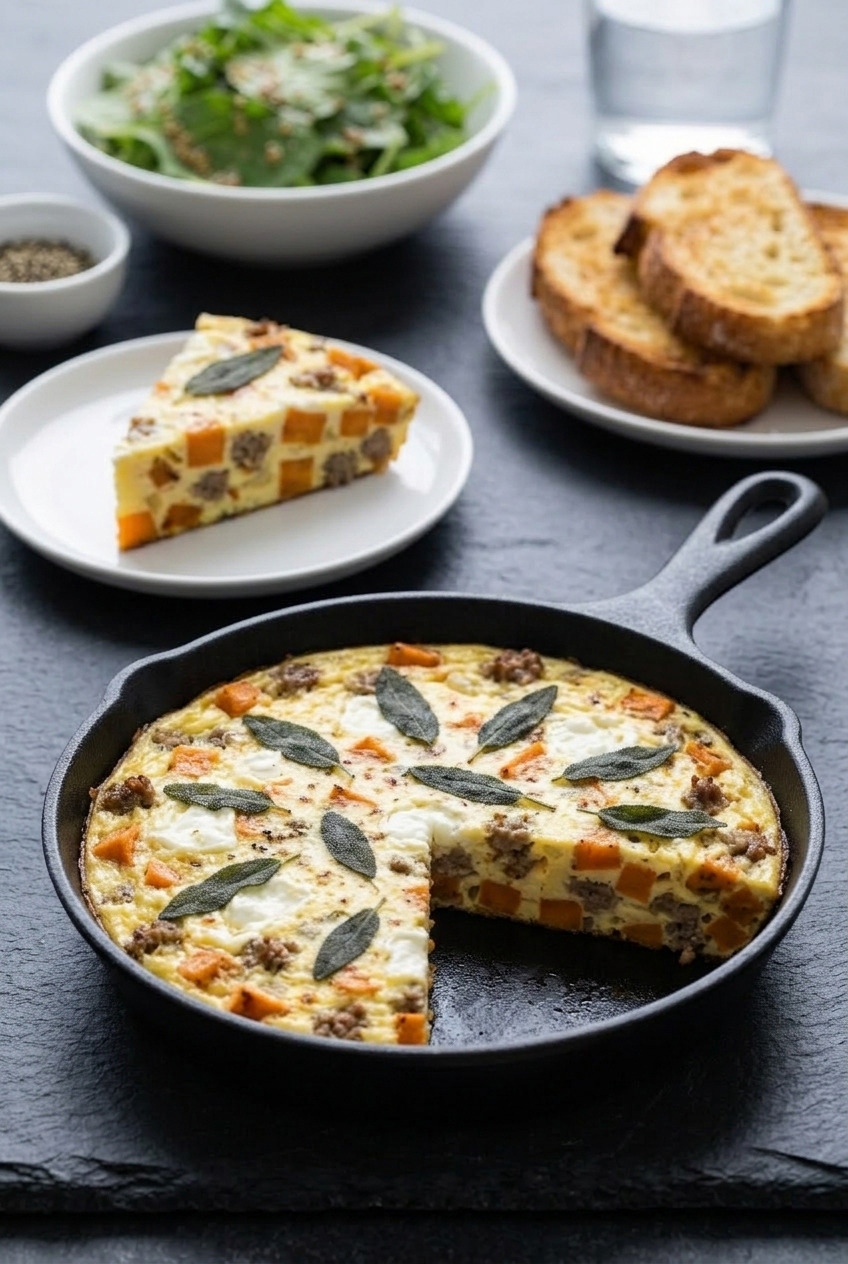
The skillet goes straight to the table and I cut wedges out of it there. Six wedges for a light plate, four if it's the whole meal.
- For brunch. A sharply dressed green salad on the side, lemon and olive oil, nothing creamy. The acid cuts the richness.
- For breakfast. Thick toast and coffee. That's it, that's the plate.
- For supper. Roasted broccoli or a bowl of soup alongside makes it a full meal without much extra work.
- For a crowd. Cut it into 12 small wedges and serve it at room temperature. It holds beautifully on a table for an hour.
Make Ahead, Leftovers and Storage
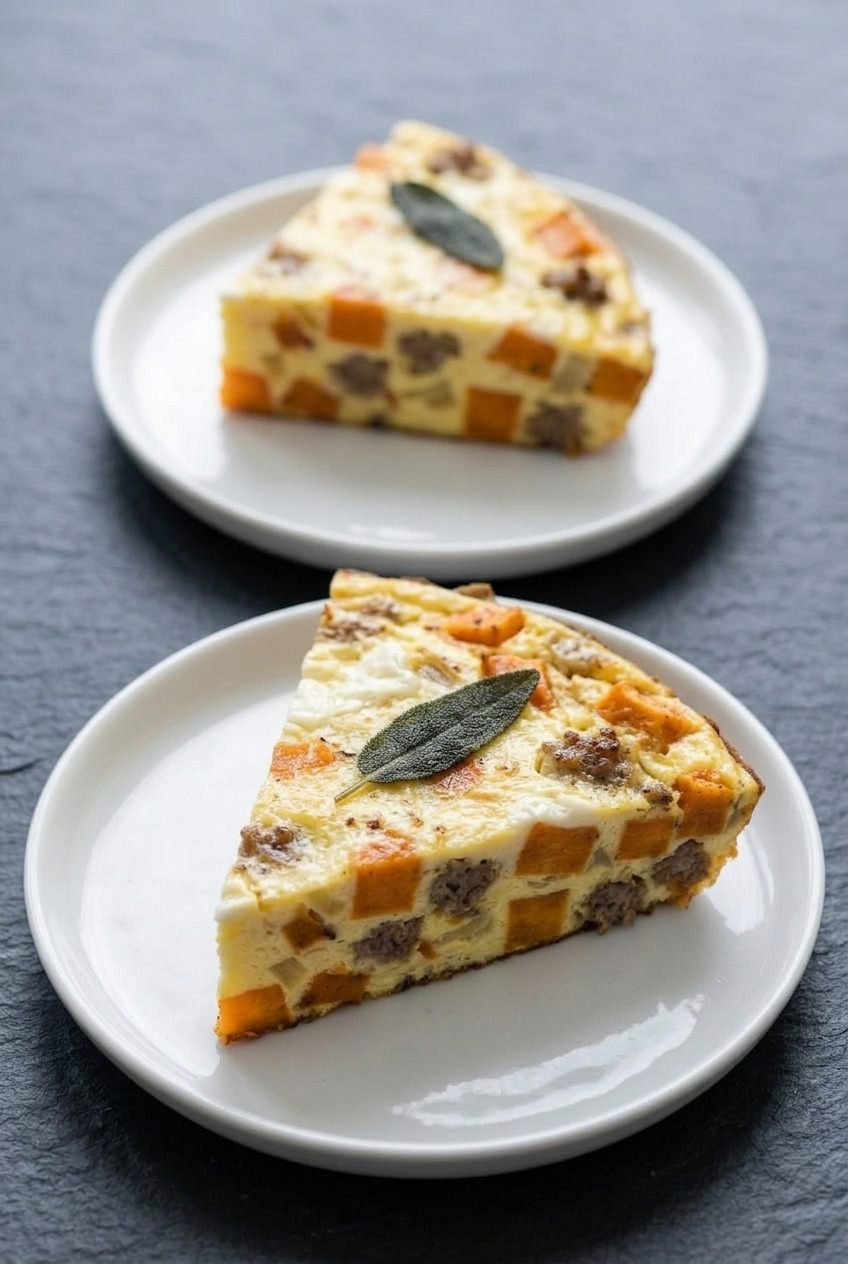
Frittata is one of the great leftovers and almost nobody talks about it.
- Fridge. Covered, up to 4 days. I wrap wedges individually so they're grab-and-go.
- Eat it cold. Straight from the fridge, no reheating. The texture is firm and the sage flavor is somehow stronger on day two.
- Reheating. Gently, always. 300°F for 10 minutes in the oven, or 20 second bursts in the microwave. High heat squeezes the water out of eggs and you'll see it pool on the plate.
- Freezing. Wrapped wedges freeze for 2 months. Be honest with yourself, the texture comes back a little grainy. Fine for a weekday, not for company.
- Prep ahead. Dice the potato and onion the night before and keep them covered in the fridge. That takes the morning down to about 25 minutes.
Variations
The sausage and the herb are the two easiest things to change.
- Add greens. A few big handfuls of spinach or chopped kale wilted in with the sweet potato. Squeeze out any water first.
- Change the herb. Thyme or rosemary in place of the sage. Rosemary is assertive, so use half as much.
- Vegetarian. Skip the sausage, add 2 extra tablespoons of butter, and lean harder on the goat cheese.
- Sharper cheese. Aged white cheddar grated over the top instead of the goat cheese, for something less tangy and more savory.
More Breakfast Recipes
A cast iron skillet and eight eggs cover a lot of mornings in this house. If this one lands for you, the same pan and the same method will take almost any vegetable you have sitting in the drawer.
Make it once and let me know whether you eat the last wedge cold too!
Recipe
Sweet Potato and Sage Frittata
Ingredients
For the Skillet
- 2 tablespoons salted butter
- 12 whole fresh sage leaves
- 8 ounces bulk breakfast sausage
- 1 medium sweet potato about 12 ounces, peeled and cut into ½ inch dice
- 1 small yellow onion diced
- 2 cloves garlic minced
For the Egg Mixture
- 8 large eggs
- ⅓ cup heavy cream
- 1 tablespoon fresh sage finely chopped
- ¾ teaspoon fine salt
- ½ teaspoon coarse black pepper
- 3 ounces goat cheese crumbled
Instructions
Build the Filling
- Heat the oven to 375 degrees F. Melt the butter in a 10 inch cast iron skillet over medium heat until it foams.
- Fry the whole sage leaves in a single layer for 20 to 30 seconds per side, until they darken slightly and stop sizzling. Lift them onto a paper towel and leave all the butter in the pan.
- Add the breakfast sausage, break it into rough pieces, and cook 5 to 6 minutes until browned and cooked through. Move it to a plate with a slotted spoon, leaving the fat in the pan.
- Add the diced sweet potato and onion to the fat. Cook 8 to 10 minutes, stirring every couple of minutes, until the potato is tender through and browned at the edges.
- Stir in the garlic and cook 30 seconds. Return the sausage to the pan and spread everything into an even layer.
Add the Eggs and Bake
- Whisk the eggs with the cream, chopped sage, salt and pepper just until uniform. Do not overbeat them.
- Pour the eggs over the filling, shake the pan gently to settle everything, and dot the goat cheese across the surface.
- Cook on the burner over medium-low heat for 3 to 4 minutes, until the outer inch of egg is visibly set.
- Transfer the skillet to the oven and bake 12 to 16 minutes, until the center holds only the faintest wobble.
- Lay the crisped sage leaves over the top and rest 5 minutes before cutting into wedges.
Notes
- Pan check: The skillet goes into a 375 degree F oven, so make sure the handle is oven safe. A plastic or rubber handle is not.
- Dice small: Half inch pieces of sweet potato cook through in the same time the eggs need.
- Pull it early: Cast iron carries on cooking off the heat. A center that looks fully firm in the oven is overcooked.
- Baking dish version: Cook the filling in any skillet, transfer to a greased 9 inch dish, pour the eggs over and add 5 to 8 minutes of oven time.
- Storage: Keeps 4 days covered in the fridge and is excellent cold. Reheat gently at 300 degrees F for 10 minutes.