Let me be straight with you about what this is.
Spiralized sweet potato is not a rice noodle, and no amount of enthusiasm on my part is going to make it one.
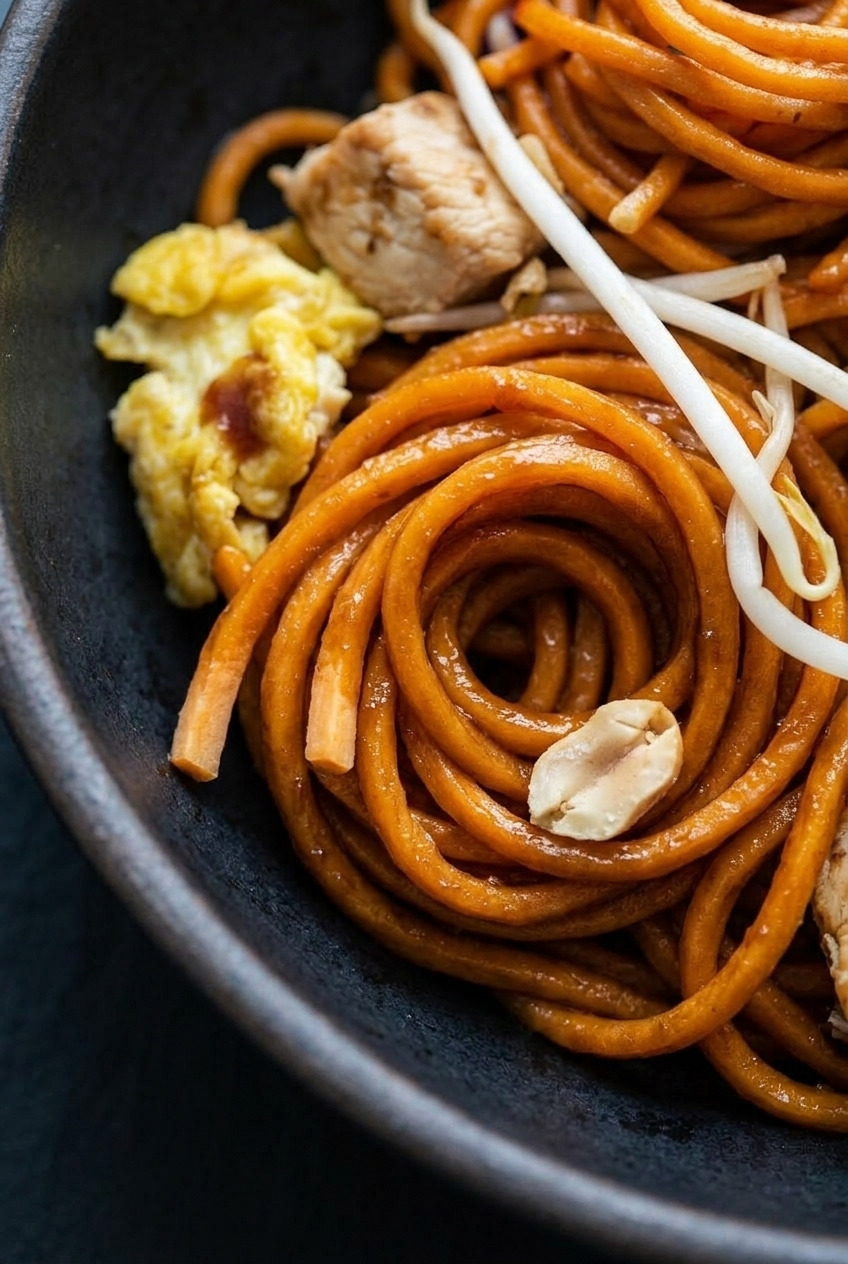
This is an adaptation.
What surprised me is how little that matters once the sauce is right.
Most recipes for this build a peanut or cashew butter sauce, call it pad thai, and move on.
That's satay. It's tasty, but it's a different dish wearing the wrong name.
Real pad thai is sour first, from tamarind, then salty from fish sauce, then sweet from palm sugar, with lime squeezed over at the end.
That four-way balance is the dish.
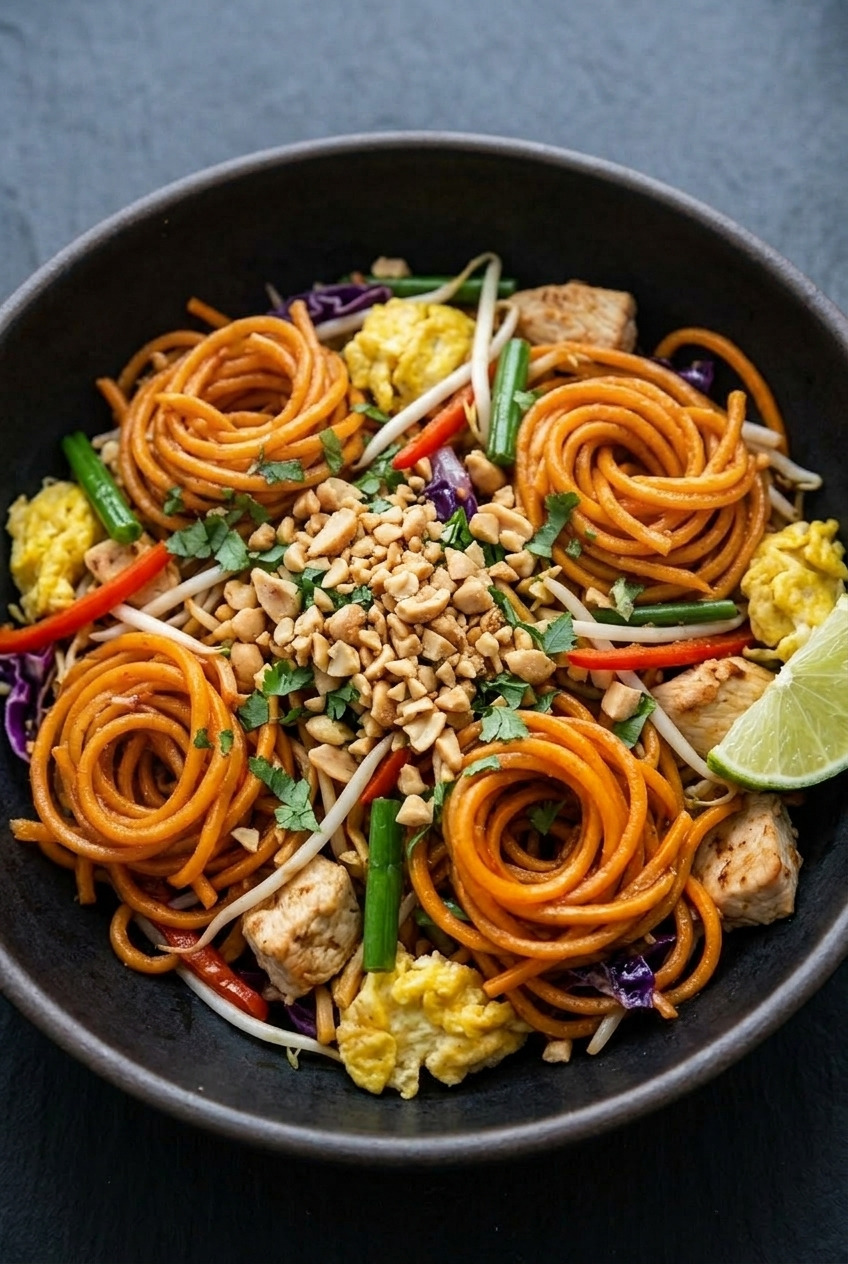
Get it right and your brain reads the plate as pad thai even though the noodles are orange and came out of a spiralizer.
I cook this on weeknights when I want the flavors and don't feel like a bowl of rice noodles.
My wife prefers it to the real thing, which I have decided not to think about too hard.
It's on the table in 35 minutes, it's one pan after the sauce is whisked, and the sweet potato strands actually hold up if you cook them fast and pull them early.
I promise the sauce is worth buying a jar of tamarind for.
What Makes This Pad Thai and Not a Peanut Noodle Bowl
The sauce is the entire identity of this dish. Change it and you have made something else, no matter what shape the noodles are.
Pad thai sauce sits on four points: sour, salty, sweet, hot.
- Tamarind concentrate. The sour. This is the secret ingredient people ask about, and there isn't a substitute that gets you there. It's fruity and tart in a way vinegar and lime cannot copy.
- Fish sauce. The salt, plus a savory depth underneath it. It smells aggressive in the bottle and disappears completely into the finished dish.
- Palm sugar. The sweet, with a faint caramel note. Light brown sugar is a fine stand-in.
- Chili garlic sauce. The heat, and you control how much.
Notice what is not on that list.
Peanut butter belongs in satay sauce and in some noodle salads, and it is genuinely good in both, but it coats and mutes everything it touches. Pad thai should taste sharp and lively, not creamy.
Peanuts still show up here, crushed over the top, where they belong.
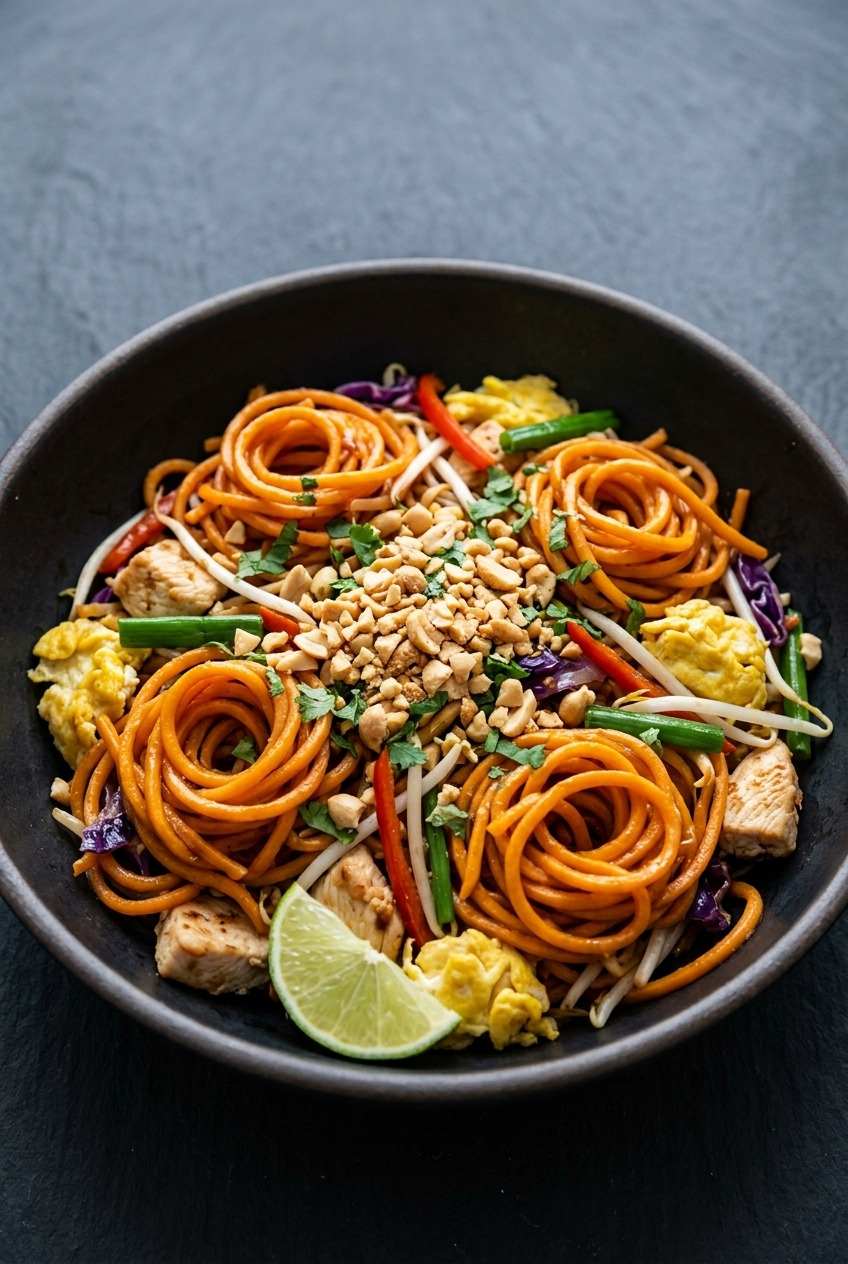
Spiralized Sweet Potato Noodles
Use the thinnest blade on the spiralizer. Thick strands take too long to soften and go from raw to collapsed with almost nothing in between.
Peel the potatoes first.
Sweet potato skin stays chewy and shows up as little dark flecks that read as debris in the bowl.
Cut the strands after spiralizing.
You'll get one continuous ribbon several feet long if you don't, and it wraps around the fork in a single hopeless coil. Run a knife through the pile two or three times so the strands are roughly the length of a real noodle.
Do not soak them. That question comes up constantly, and the answer for fresh spiralized sweet potato is no. Soaking is for dried noodles. Fresh sweet potato is already full of water, and adding more is how you get mush.
If anything, pat the strands dry before they hit the pan.
Are they healthier than rice noodles? They're a vegetable instead of a refined starch, with more fiber and more vitamin A. They're also sweeter and softer, so it's a trade, not an upgrade.
Ingredients
For the Sauce
- Tamarind concentrate (3 tablespoons). Look for the pourable concentrate, not the thick block paste. If all you can find is block paste, use half as much and loosen it with water.
- Fish sauce (3 tablespoons). Non-negotiable. This is the backbone.
- Palm sugar or light brown sugar (3 tablespoons). Palm sugar is softer and rounder. Brown sugar works.
- Lime juice (1 tablespoon). In the sauce, with more wedges at the table.
- Chili garlic sauce (1 to 2 teaspoons). Start low and adjust.
For the Stir Fry
- Sweet potatoes (3 medium, peeled and spiralized). About 6 cups of loose strands, which looks like far too much and cooks down to exactly right.
- Neutral oil (2 tablespoons). Something with a high smoke point. This pan runs hot.
- Boneless chicken breast (1 pound, cut into small pieces). Small pieces cook in three minutes and stay tender.
- Garlic (3 cloves, minced).
- Shallot (1, thinly sliced). Sweeter and gentler than onion.
- Large eggs (2). Scrambled straight in the pan, the classic pad thai move.
- Bean sprouts (1 ½ cups). Added at the very end so they stay crisp and squeaky.
- Green onions (4, cut into 2 inch lengths).
To Serve
- Crushed roasted peanuts (⅓ cup). Crush them coarsely so some pieces stay chunky.
- Fresh cilantro, chopped.
- Lime wedges. One per person, minimum.
Ingredient Notes
Tamarind concentrate versus paste. The concentrate pours like thin syrup and is ready to use. Block paste is dense and full of fibers and seeds, and it needs soaking and straining first. Read the jar before you buy.
Fish sauce. Three tablespoons sounds like a lot. It isn't, in a dish for four. Squid and Red Boat are both reliable, and cheap fish sauce tends to be harsh and one-note.
Chicken. Shrimp is the traditional protein and works perfectly here, added in the last two minutes. Firm tofu also holds up if that's your preference.
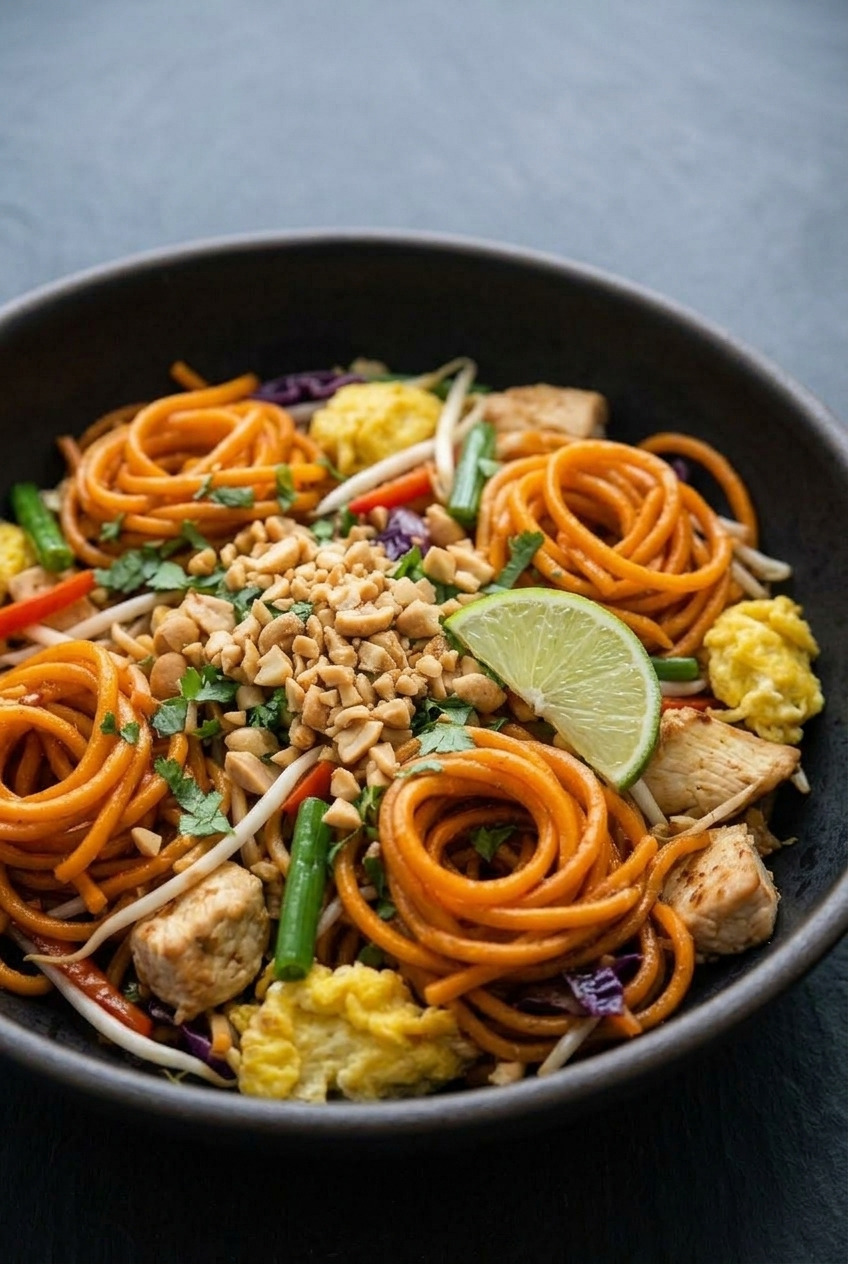
Tips for the Sauce
Whisk the sauce first and taste it before anything hits the pan. Once the noodles are in you have about four minutes of usable time, and that is not when you want to be adjusting seasoning.
It should taste slightly too strong on its own, because six cups of sweet potato are about to dilute it.
- Too sour? Add sugar a teaspoon at a time. Tamarind brands vary wildly in acidity.
- Too salty? Add a tablespoon of water and a squeeze of lime.
- Too sweet or flat? More tamarind, then a splash more fish sauce to keep it in balance.
- Tastes like nothing? It needs salt, which here means fish sauce, not table salt.
Pro tip: make a double batch of sauce and keep the extra in a jar. It holds for 2 weeks in the fridge and turns any stir fry into dinner.
How to Make Sweet Potato Noodle Pad Thai
Have everything cut, spiralized, and lined up next to the stove before you turn on the heat. This cooks faster than you can chop.
Step 1: Whisk the Sauce
Stir the tamarind concentrate, fish sauce, palm sugar, lime juice, and chili garlic sauce together until the sugar dissolves.
Taste and adjust using the guide above.
Step 2: Cook the Chicken
Heat 1 tablespoon of oil in a large skillet or wok over medium-high heat.
Add the chicken in a single layer, season with salt, and leave it for 2 minutes before stirring.
Cook 3 to 4 minutes total, until just cooked through, then move it to a plate.
Step 3: Aromatics and Egg
Add the remaining oil, then the shallot and garlic, and stir for 30 seconds.
Push everything to one side of the pan.
Crack the eggs into the empty side and scramble them roughly with a spatula for 30 seconds, breaking them into large soft curds, then fold them into the aromatics.
Step 4: The Noodles
Add the sweet potato strands and toss with tongs for 2 minutes.
They'll go from stiff to floppy fast.
Step 5: Sauce and Finish
Pour the sauce around the edge of the pan, return the chicken, and toss for 1 to 2 minutes until every strand is coated and glossy.
Kill the heat.
Fold in the bean sprouts and green onions, using the pan's residual heat only, so the sprouts stay crunchy.
Serve straight away with crushed peanuts, cilantro, and a lime wedge on each plate.
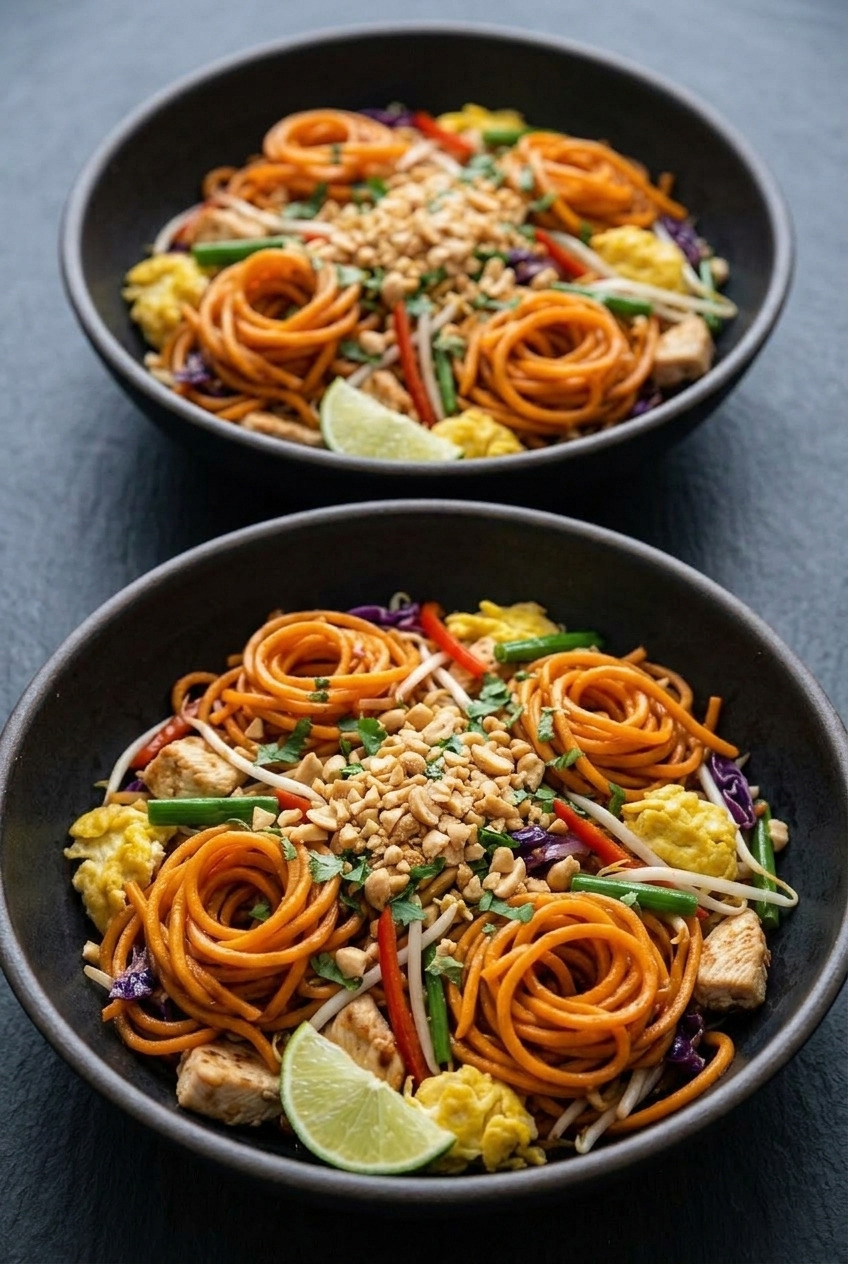
How to Keep the Noodles from Turning to Mush
Sweet potato noodles have about a two minute window and then they are gone.
- Keep the pan hot. A hot pan cooks the surface fast. A moderate pan slowly stews the strands in their own liquid.
- Don't crowd it. Use the widest pan you own. If it's small, cook the noodles in two batches.
- Tongs, not a spoon. Lift and turn the strands. Stirring and pressing breaks them.
- Pull them early. Take them off while they still have a slight bite. They keep softening in the pan and again on the plate.
- Sauce last. The sauce adds liquid, so it goes in at the end and only stays about a minute.
Overshot it anyway? It still tastes great. Call it a stir fry and nobody will complain.
What to Serve With It
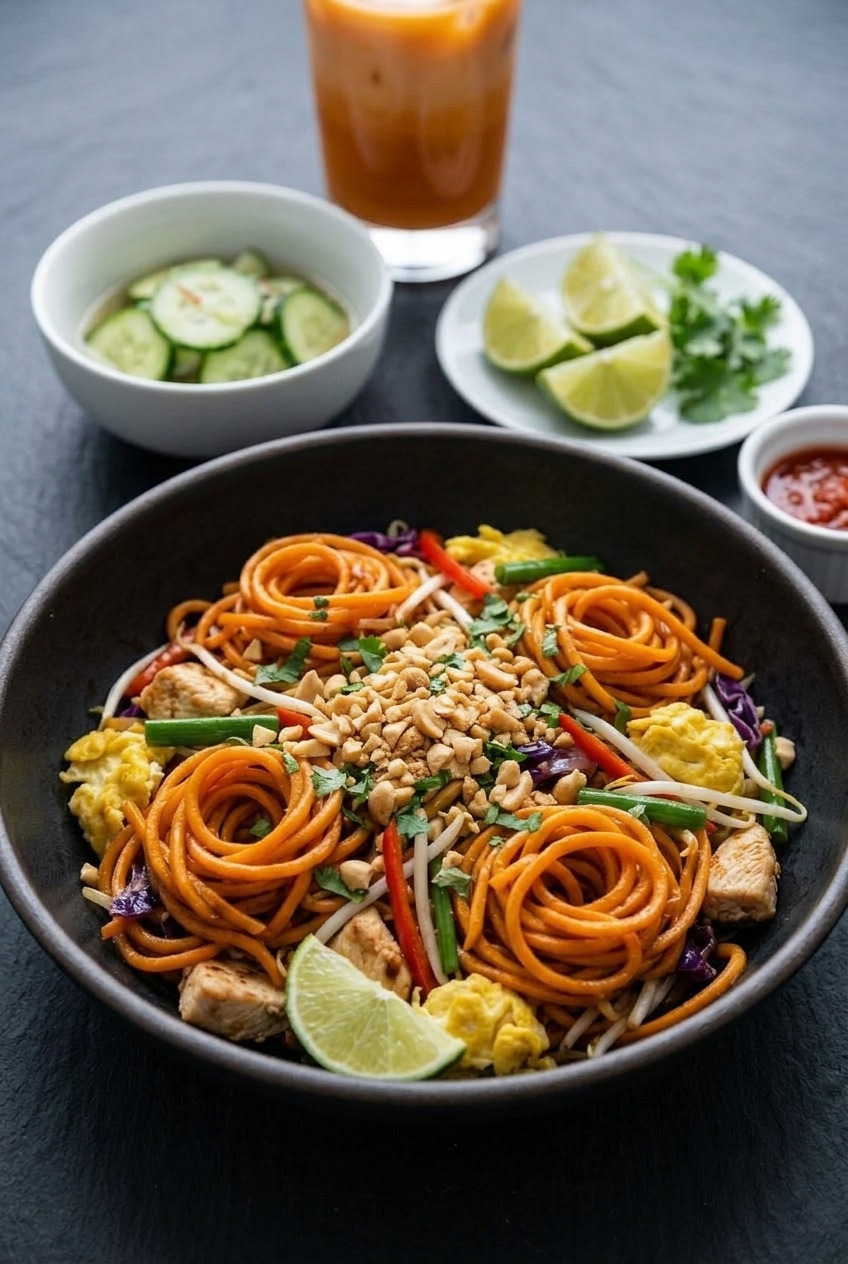
This is a complete plate on its own, with protein, vegetables, and egg all in the pan.
If I'm feeding more people I add a simple cucumber salad with rice vinegar and a pinch of sugar, which is cool and sharp against the sauce.
Thai iced tea is the natural drink and it takes ten minutes.
Storage and Reheating
- Leftovers. Sealed in the fridge for up to 3 days. Be realistic though, the noodles soften overnight and the texture on day two is closer to a hash.
- Reheating. Hot and fast in a skillet, 2 minutes maximum. A microwave steams them limp.
- Freezing. Skip it. Sweet potato strands turn watery after thawing.
- Sauce ahead. The sauce keeps 2 weeks refrigerated, and making it in advance turns this into a twenty minute dinner.
Recipe
Sweet Potato Noodle Pad Thai
Ingredients
For the Sauce
- 3 tablespoons tamarind concentrate pourable, not block paste
- 3 tablespoons fish sauce
- 3 tablespoons palm sugar or light brown sugar
- 1 tablespoon lime juice fresh
- 1 teaspoon chili garlic sauce up to 2 teaspoons, to taste
For the Stir Fry
- 3 medium sweet potatoes peeled and spiralized on the thinnest blade
- 2 tablespoons neutral oil divided
- 1 pound boneless chicken breast cut into small pieces
- 3 cloves garlic minced
- 1 shallot thinly sliced
- 2 large eggs
- 1 ½ cups bean sprouts
- 4 green onions cut into 2 inch lengths
To Serve
- ⅓ cup roasted peanuts coarsely crushed
- ¼ cup fresh cilantro chopped
- 1 lime cut into wedges
Instructions
Prep
- Peel and spiralize the sweet potatoes on the thinnest blade, then run a knife through the pile two or three times so the strands are noodle length. Pat them dry. Do not soak them.
- Whisk the tamarind concentrate, fish sauce, palm sugar, lime juice, and chili garlic sauce until the sugar dissolves. Taste. It should read slightly too strong on its own.
Cook
- Heat 1 tablespoon of oil in a large skillet or wok over medium-high heat. Add the chicken in a single layer, season with salt, and leave it 2 minutes before stirring. Cook 3 to 4 minutes total, then move it to a plate.
- Add the remaining oil, then the shallot and garlic, and stir 30 seconds. Push everything to one side.
- Crack the eggs into the empty side of the pan and scramble roughly for 30 seconds into large soft curds, then fold them into the aromatics.
- Add the sweet potato strands and toss with tongs for 2 minutes, until they turn from stiff to floppy but still have a slight bite.
- Pour the sauce around the edge of the pan, return the chicken, and toss 1 to 2 minutes until every strand is glossy and coated.
Finish
- Turn off the heat and fold in the bean sprouts and green onions so they stay crisp.
- Serve immediately with crushed peanuts, cilantro, and a lime wedge on each plate.
Notes
- This is an adaptation: spiralized sweet potato in place of rice noodles. The tamarind, fish sauce, palm sugar, and lime balance is what makes it read as pad thai.
- No peanut butter: a nut butter sauce makes satay, not pad thai. Peanuts go on top, crushed.
- Do not soak the noodles: fresh spiralized sweet potato is already wet. Pat it dry instead.
- Pull them early: the strands keep softening off the heat, so take them out with a slight bite left.