Sweet potatoes bored me for a long time.
Roast a tray, salt them, eat them next to something else. That was the whole relationship.
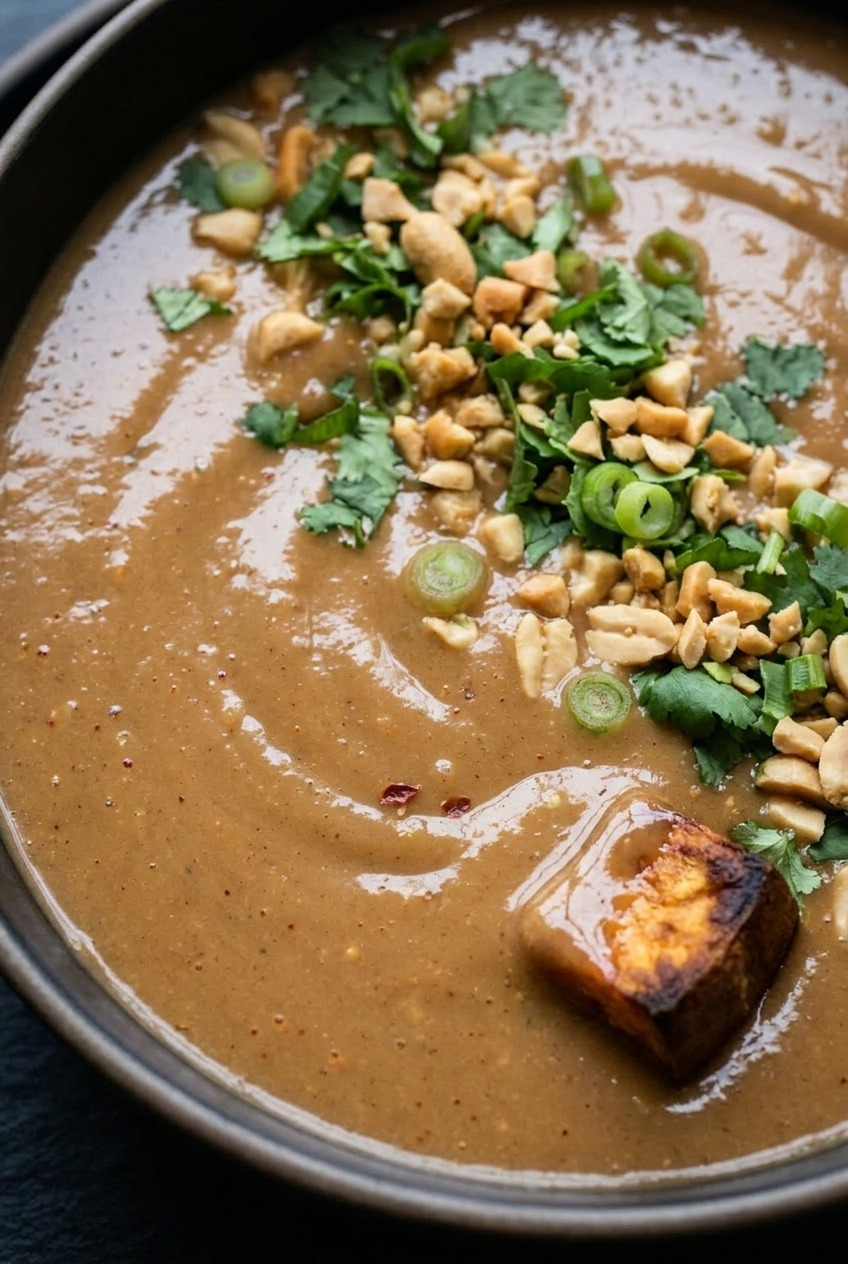
Then a friend handed me a bowl at a potluck with a tan brown sauce spooned over the top, and I stopped talking mid sentence.
Salty. Sharp. Garlicky, with a slow heat underneath.
Against soft, sweet, caramelized sweet potato it was one of those combinations that feels obvious about two seconds after you taste it.
I went home and made the sauce badly four times before I got it.
My problem was water. I dumped it all in at once and ended up with something grainy and stiff that sat on the potatoes like wet cement.
The fix takes thirty seconds and I will walk you through it.
Here is what I want you to understand about this recipe: the sauce is the product.
The roasted sweet potatoes are the best thing to put it on, and they are what we build the meal around, but the jar in your fridge is the real win.
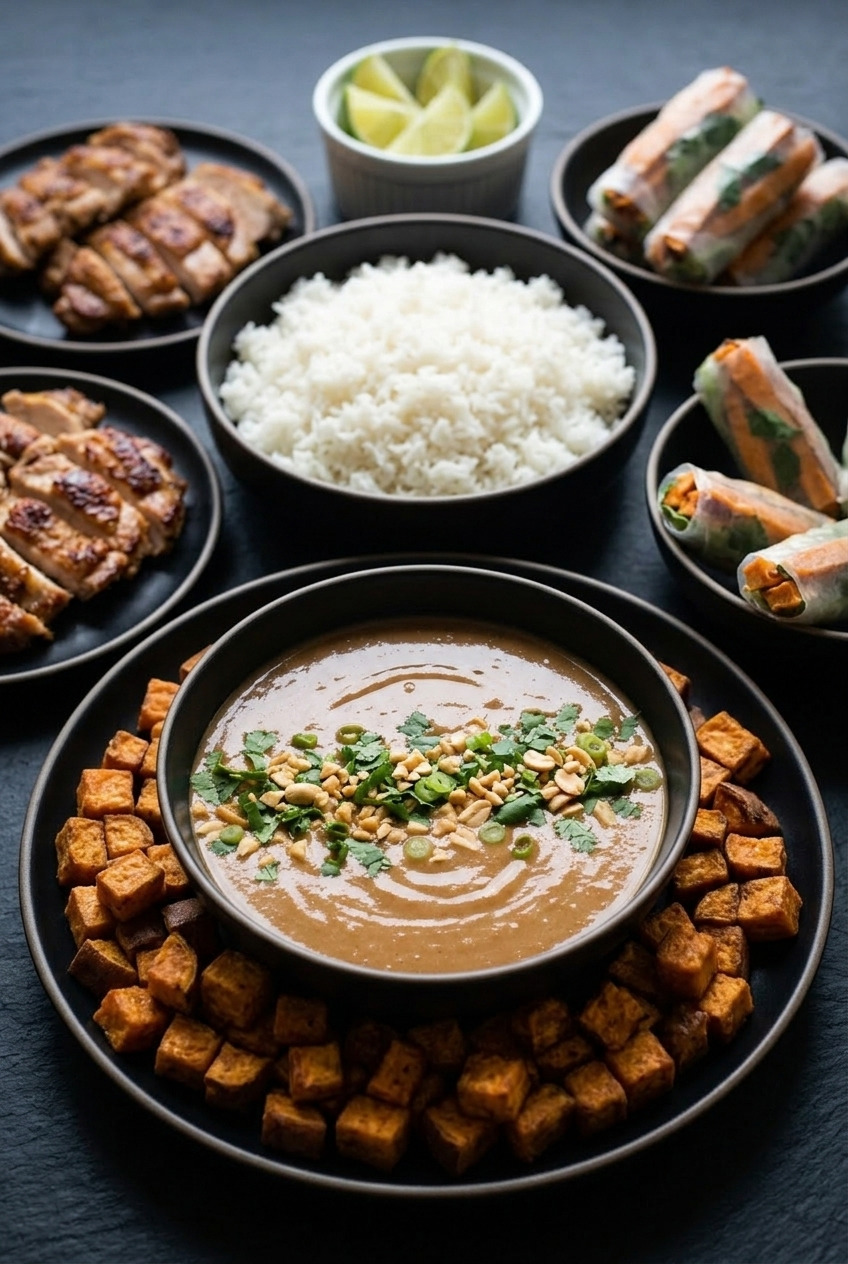
It keeps for a week. It goes on spring rolls, satay, noodles, slaw, grilled chicken, a fried egg over rice.
My wife asks for it by name now, which is how I know it earned its place.
Five minutes of whisking. That is the entire ask.
Why Peanut Sauce and Sweet Potato Work Together
This pairing works because every element is doing a job the other one cannot.
- Sweet against salt. Roasted sweet potato is genuinely sweet, and soy sauce is genuinely salty. Each one makes the other taste stronger.
- Fat against starch. Peanut butter coats. Sweet potato is dry and starchy at the center. The sauce fixes the texture as much as the flavor.
- Acid cutting both. Lime keeps the whole thing from going heavy, which is what happens when you skip it.
- Heat against sweetness. Chili flakes read hotter over something sweet. That contrast is the reason this dish is interesting instead of comforting.
Does peanut sauce actually belong on sweet potatoes? It belongs there more than butter does.
Ingredients You Will Need
The sauce list is eight items and most of them are already in your kitchen.
For the peanut sauce:
- Creamy natural peanut butter (½ cup). Just peanuts and salt. Sweetened supermarket brands make the sauce cloying and you cannot pull it back.
- Soy sauce (3 tablespoons). The salt and the depth.
- Fresh lime juice (3 tablespoons). Bottled lime tastes flat and slightly bitter here.
- Honey (2 tablespoons). Balances the salt and helps the sauce go glossy.
- Fresh ginger (1 tablespoon, grated). Fresh. Ground ginger is a completely different flavor and it will not work.
- Garlic (2 cloves, grated). Raw, so it stays sharp.
- Red pepper flakes (½ teaspoon). Adjust freely.
- Warm water (⅓ cup). The most important ingredient in the list, and the one everybody adds wrong.
For the sweet potatoes:
- Sweet potatoes (2 pounds). Peeled, cut into even 1 inch cubes.
- Neutral oil (2 tablespoons). Avocado or grapeseed. Something that can take 425°F.
- Ground cumin (½ teaspoon) and salt (1 teaspoon). The cumin bridges the sweet potato to the sauce.
To serve:
- Cooked jasmine rice (3 cups). The base.
- Boneless chicken thighs (1 pound), roasted and sliced. Optional but this is how I actually eat it.
- Crushed roasted peanuts, cilantro, sliced green onions, lime wedges. The finish, and the crunch.
Ingredient Notes and Substitutions
- Natural versus sweetened peanut butter. Natural, every time. If sweetened is all you have, cut the honey to 1 teaspoon.
- Crunchy peanut butter. It works, and you lose the smooth glossy texture. I would rather stir crushed peanuts in at the end.
- Lime versus rice vinegar. Rice vinegar is milder and rounder. Apple cider vinegar works in a pinch. Lime is brightest.
- Honey versus maple syrup. Straight swap. Maple is slightly earthier.
- Nut allergy. Sunflower seed butter makes a real version of this sauce. It is a little darker and more savory, and you may want an extra teaspoon of honey.
- Soy sauce. Tamari for gluten free, coconut aminos if you want it milder and sweeter.
How to Make the Peanut Sauce
Step 1: Whisk the Thick Base
Put the peanut butter, soy sauce, lime juice, honey, ginger, garlic and pepper flakes in a bowl.
Whisk hard.
It will tighten into a stiff, ugly paste. That is supposed to happen.
Step 2: Add the Water Slowly
Add the warm water one tablespoon at a time, whisking fully after each addition.
The paste loosens, then goes glossy, then pours.
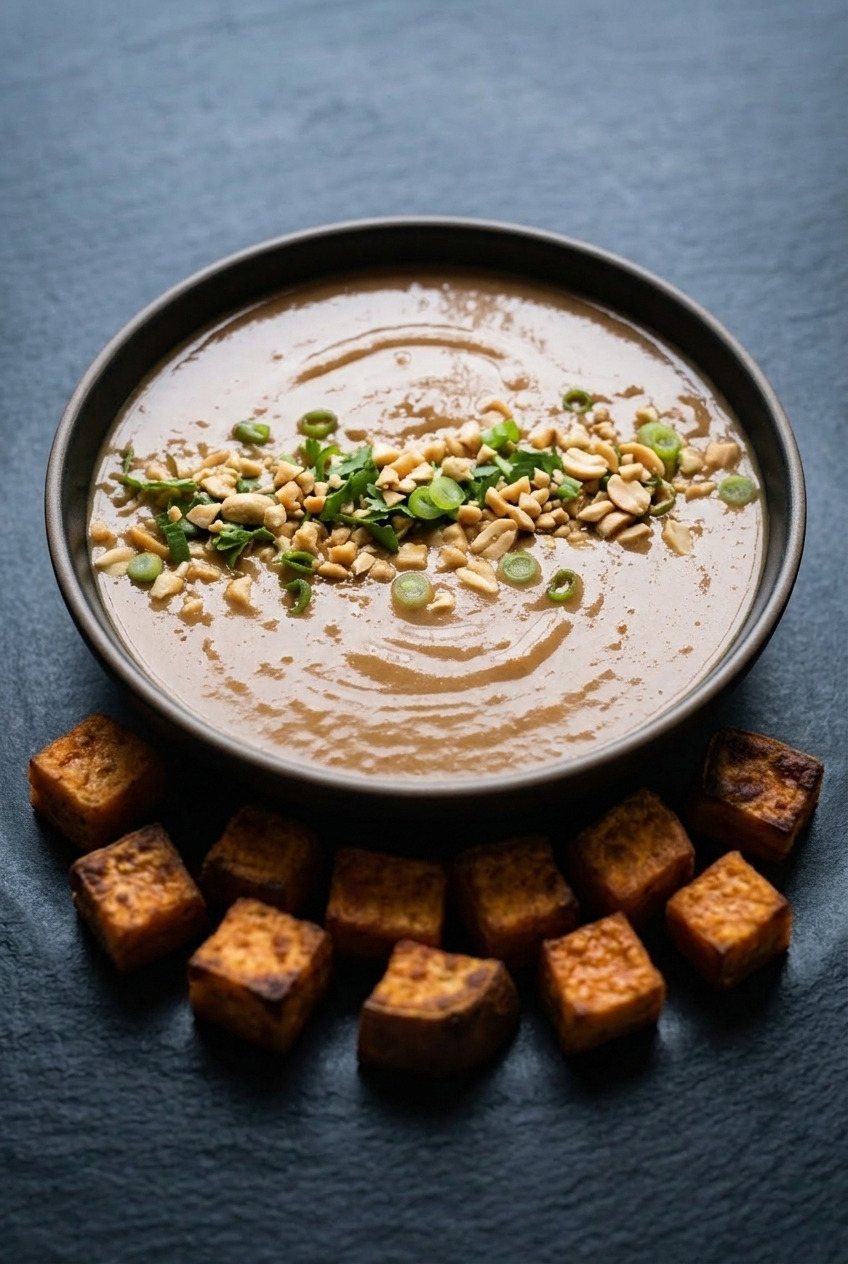
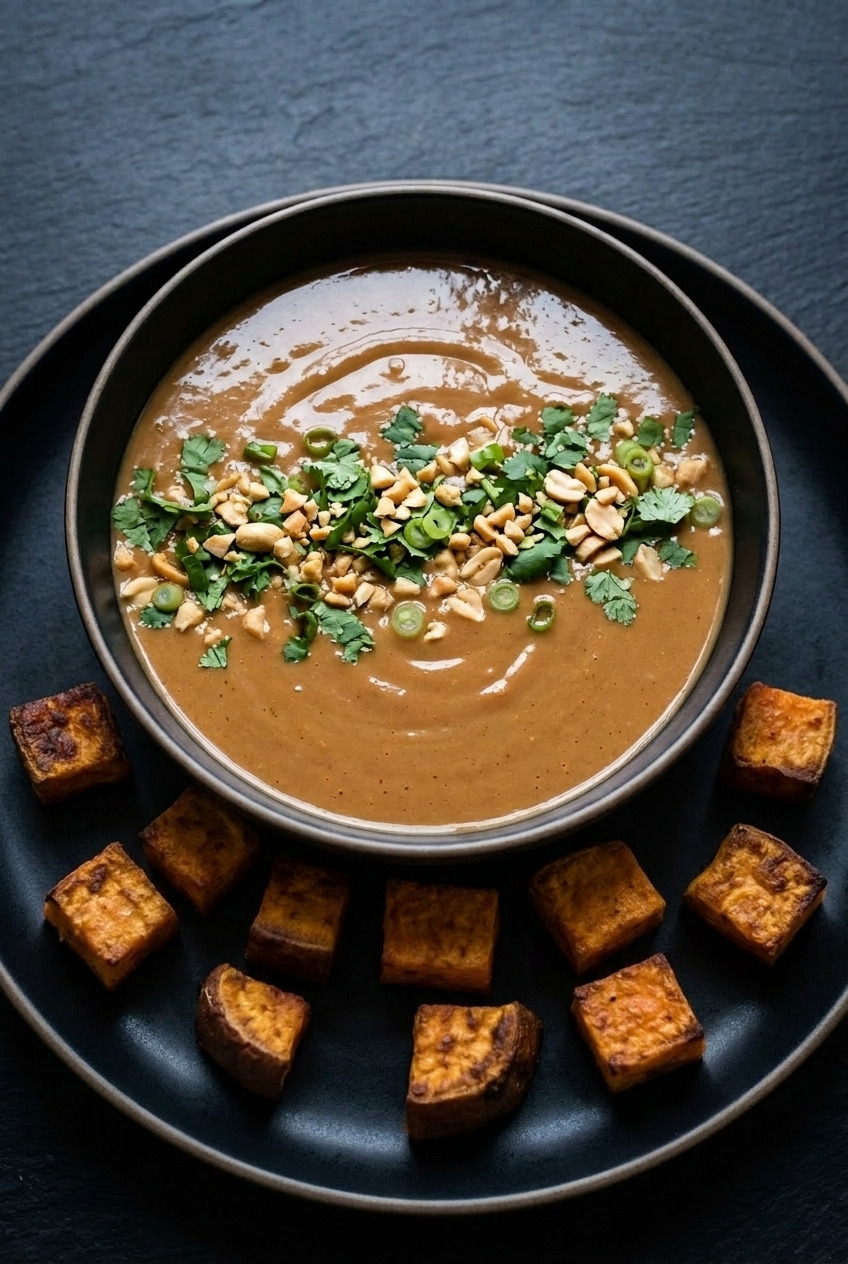
Stop when it falls off the whisk in a smooth ribbon.
Step 3: Taste in Order
Salt first, then acid, then heat.
Fix them in that order and you will not chase your own tail.
Why Your Peanut Sauce Seizes, and How to Fix It
Peanut butter seizes the moment salt and acid hit it. Nobody warns you and it makes you think you ruined dinner.
What is happening is simple. The soy sauce and lime pull water out of the emulsion and the peanut butter grabs onto itself, so a pourable sauce turns into something like putty.
It is not broken. It is waiting for water.
- Use warm water, not cold. Warm water relaxes the fat. Cold water makes the paste seize harder and leaves it grainy.
- Add it a spoonful at a time. Each addition has to fully disappear before the next one goes in. Dumping it all at once gives you lumps floating in dirty water.
- Whisk, do not stir. A fork will not do it. You need to force the emulsion back together.
- If it is already grainy, add 1 more tablespoon of warm water and whisk hard for 30 seconds. It comes back nearly every time.
Sound fussy? It is thirty seconds of arm work and then you are done for a week.
How to Roast the Sweet Potatoes
Caramelized edges are what let the sweet potato stand up to a sauce this strong. Pale, steamed cubes get buried by it.
- Cut evenly. 1 inch cubes, all roughly the same. Small pieces burn while large ones are still raw.
- Toss with oil, salt and cumin. Coat every side.
- Use a hot oven. 425°F. Lower than that and you bake them soft instead of browning them.
- Single layer, room between the pieces. A crowded pan traps steam and steam is the enemy of a brown edge.
- Flip once at the halfway mark. 30 to 35 minutes total, until the edges are deep brown.
Pro tip: use two sheet pans rather than crowding one. It is the single biggest upgrade to any roasted vegetable.
How to Build the Bowl
Step 1: Rice First
A generous scoop of warm jasmine rice in the bottom of each bowl.
Step 2: Sweet Potatoes and Protein
Spoon the hot roasted sweet potato cubes over the rice, then add the sliced roasted chicken if you are using it.
Step 3: Sauce
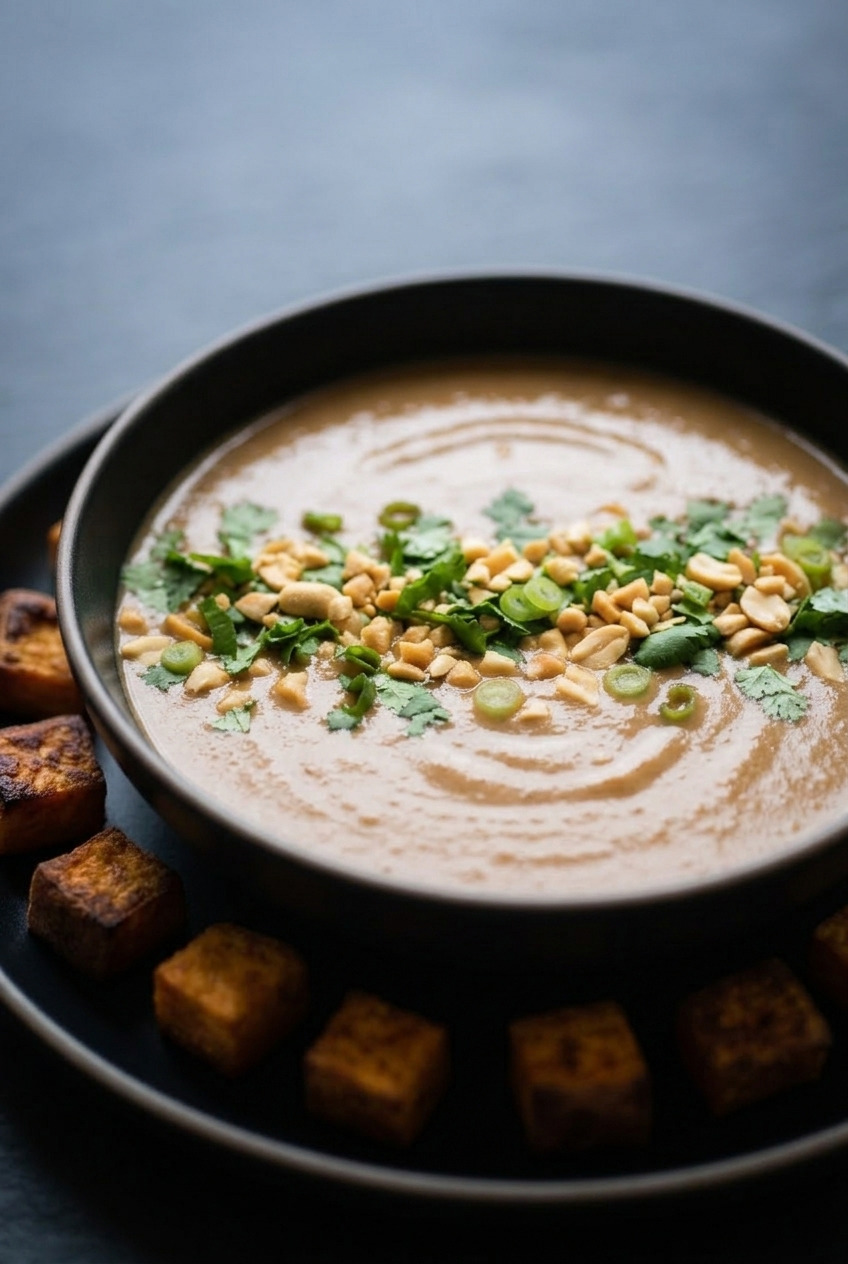
Drizzle the room temperature peanut sauce over the top.
Hot vegetables, cool sauce. That temperature gap is the best part of the whole bowl.
Step 4: Garnish Last
Crushed peanuts, cilantro, green onions, a lime wedge on the side.
Garnish goes on after the sauce so it stays crisp instead of dissolving into it.
Other Ways to Use the Sauce
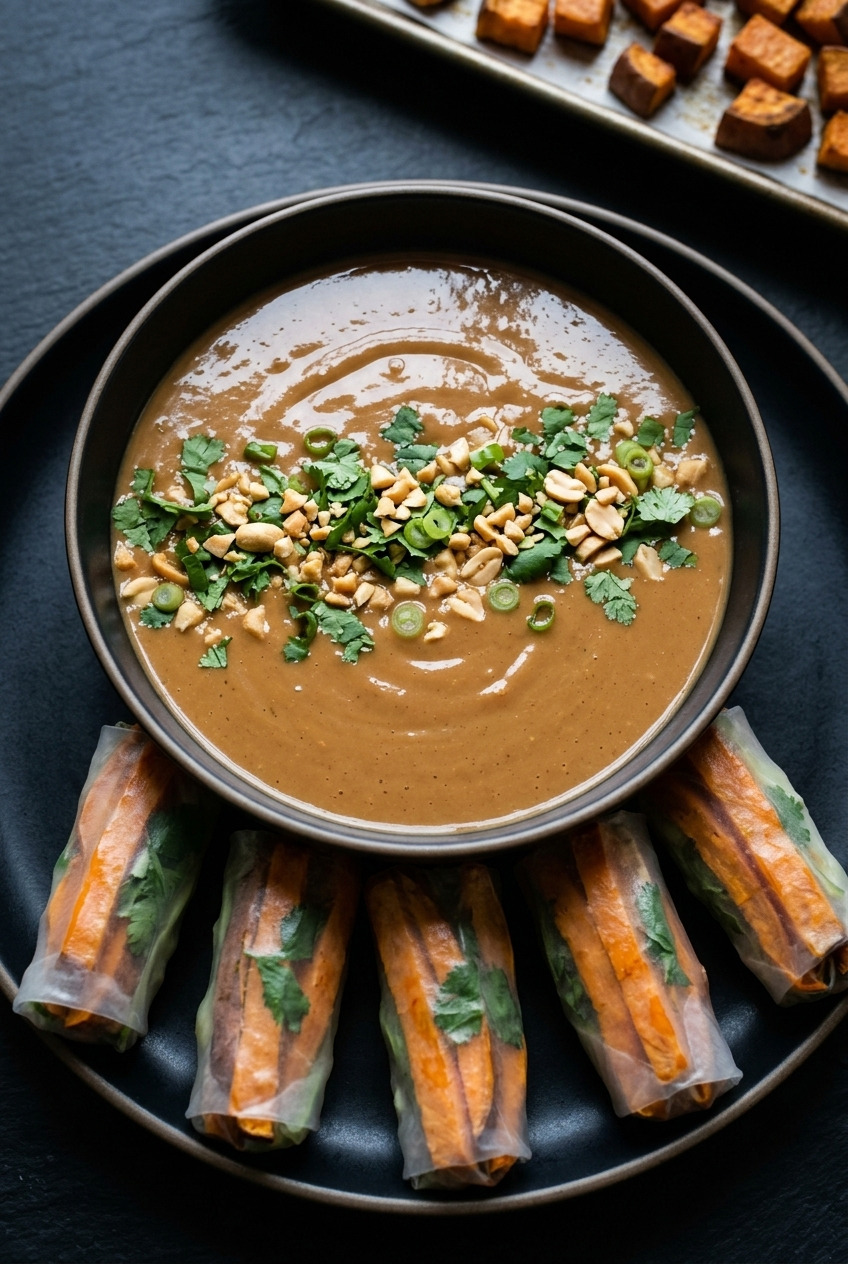
- Spring rolls. The classic. Serve it in a small bowl alongside.
- Chicken satay. Grilled skewers, sauce for dipping. This is what peanut sauce was born for.
- Cold noodles. Thin it with 2 extra tablespoons of water and toss it with rice noodles and cucumber.
- Slaw dressing. Loosen it and pour it over shredded cabbage and carrot.
- Grilled chicken or pork. Spooned over at the table.
- Rice and a fried egg. My personal Tuesday night dinner and I stand by it.
Make Ahead and Storage
- The sauce. Refrigerated in a jar, 1 week. It thickens hard when cold, so let it sit out for 15 minutes and whisk in warm water a teaspoon at a time.
- The sweet potatoes. 4 days in the fridge. Reheat on a sheet pan at 400°F for 10 minutes so the edges crisp again.
- The microwave. It turns roasted sweet potato into mush. I would rather eat them cold.
- Meal prep. Rice, potatoes and protein in the container, sauce in a separate small container, garnish in a third. Assemble at lunch.
- Freezing. The sauce freezes for 2 months and needs a hard whisk after thawing.
Recipe
Glossy Sweet Potato Peanut Sauce
Ingredients
For the Peanut Sauce
- ½ cup creamy natural peanut butter unsweetened
- 3 tablespoons soy sauce
- 3 tablespoons fresh lime juice
- 2 tablespoons honey
- 1 tablespoon fresh ginger grated
- 2 cloves garlic grated
- ½ teaspoon red pepper flakes
- ⅓ cup warm water plus more as needed
For the Sweet Potatoes
- 2 pounds sweet potatoes peeled and cut into 1 inch cubes
- 2 tablespoons neutral oil
- ½ teaspoon ground cumin
- 1 teaspoon salt
To Serve
- 3 cups cooked jasmine rice warm
- 1 pound boneless chicken thighs roasted and sliced, optional
- ⅓ cup roasted peanuts crushed
- ⅓ cup cilantro leaves
- 2 green onions thinly sliced
- lime wedges for serving
Instructions
Roast the Sweet Potatoes
- Heat the oven to 425F. Toss the sweet potato cubes with the oil, cumin and salt until every side is coated.
- Spread them across two sheet pans in a single layer with room between the pieces. Roast 30 to 35 minutes, flipping once at the halfway mark, until the edges are deep brown.
Make the Peanut Sauce
- Whisk the peanut butter, soy sauce, lime juice, honey, ginger, garlic and red pepper flakes together in a bowl. The mixture will tighten into a stiff paste, which is expected.
- Add the warm water one tablespoon at a time, whisking hard until each addition disappears completely. Stop when the sauce is glossy and falls off the whisk in a smooth ribbon.
- Taste and adjust for salt first, then acid, then heat.
Build the Bowls
- Divide the warm rice between four bowls. Spoon the hot roasted sweet potatoes over the rice, adding sliced roasted chicken if using.
- Drizzle the room temperature peanut sauce over the top, then finish with crushed peanuts, cilantro and green onions. Serve with lime wedges.
Notes
- Seized sauce is normal: Salt and acid tighten peanut butter into a paste. Warm water added one spoonful at a time brings it back glossy.
- Warm water only: Cold water makes the sauce grainy and it is much harder to recover.
- Use two pans: Crowding one sheet pan steams the sweet potatoes instead of browning the edges.
- Storage: The sauce keeps 1 week refrigerated and thickens when cold. Loosen with warm water a teaspoon at a time.
- Nut allergy: Sunflower seed butter works, with an extra teaspoon of honey.