Saturday mornings in my kitchen smell like rosemary hitting a hot oven.
That is not a metaphor, it is just what happens around nine o'clock most weekends.
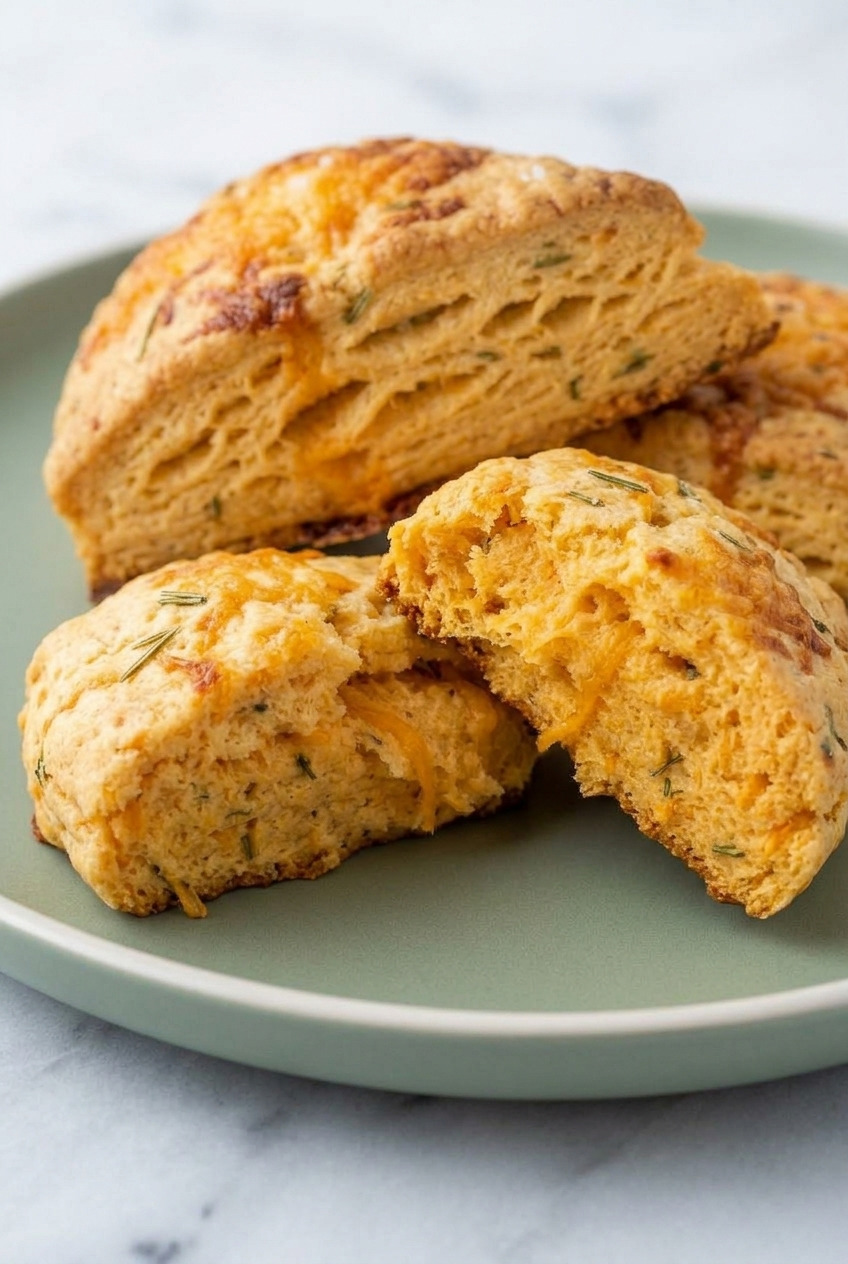
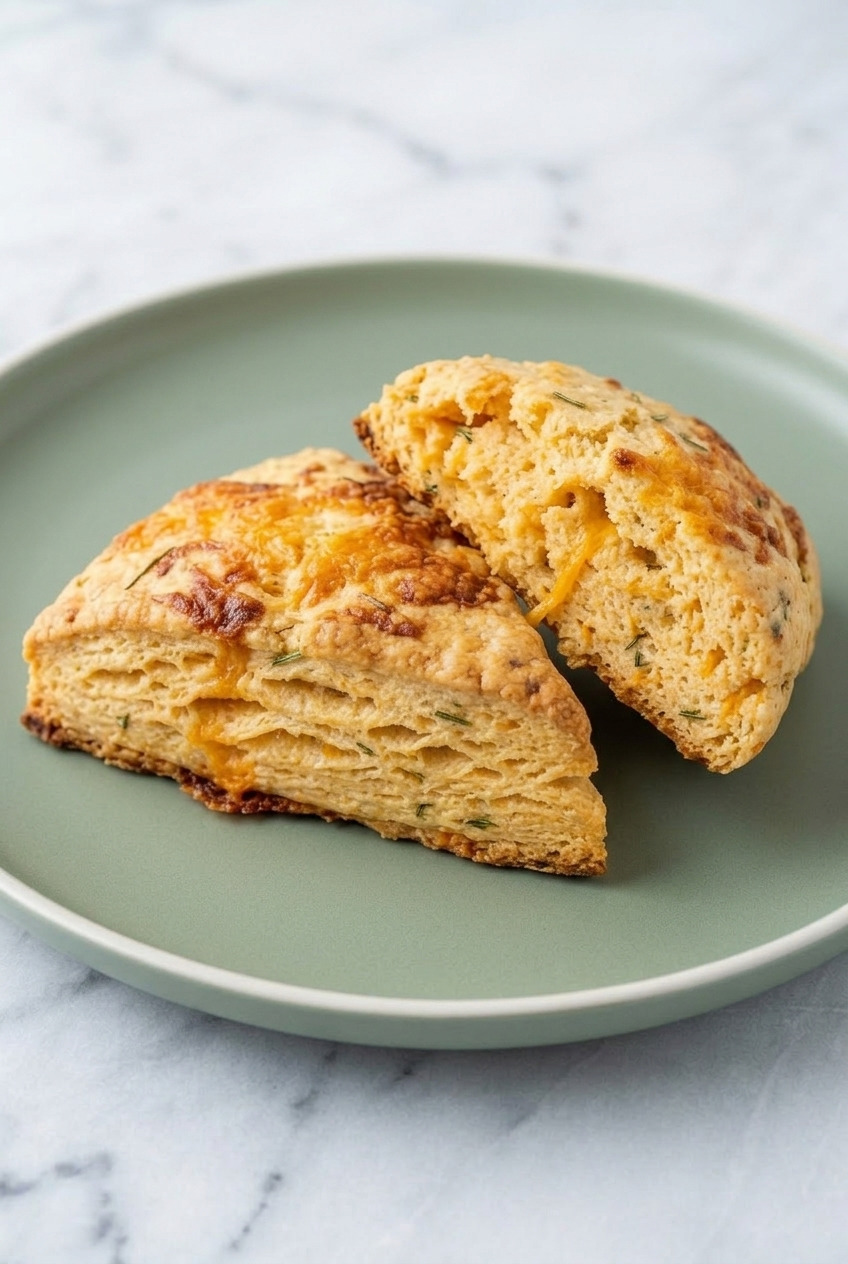
The cheddar on top of these goes past golden into properly browned, and the edges crisp up where it has run down the sides.
My wife has a habit of eating two before they are cool enough to be pleasant.
I should say straight away that these are savory.
There is no sugar in the dough at all, not a spoonful, and that surprises people who see sweet potato in the name and expect something closer to a pumpkin scone.
The potato is here for its earthy sweetness and its color, and the aged cheddar and rosemary pull hard in the other direction.
It took me a while to get the texture right.
Two things fixed it, and neither one is complicated.
I roast the sweet potato instead of boiling it, which keeps the dough dry enough to stay flaky.
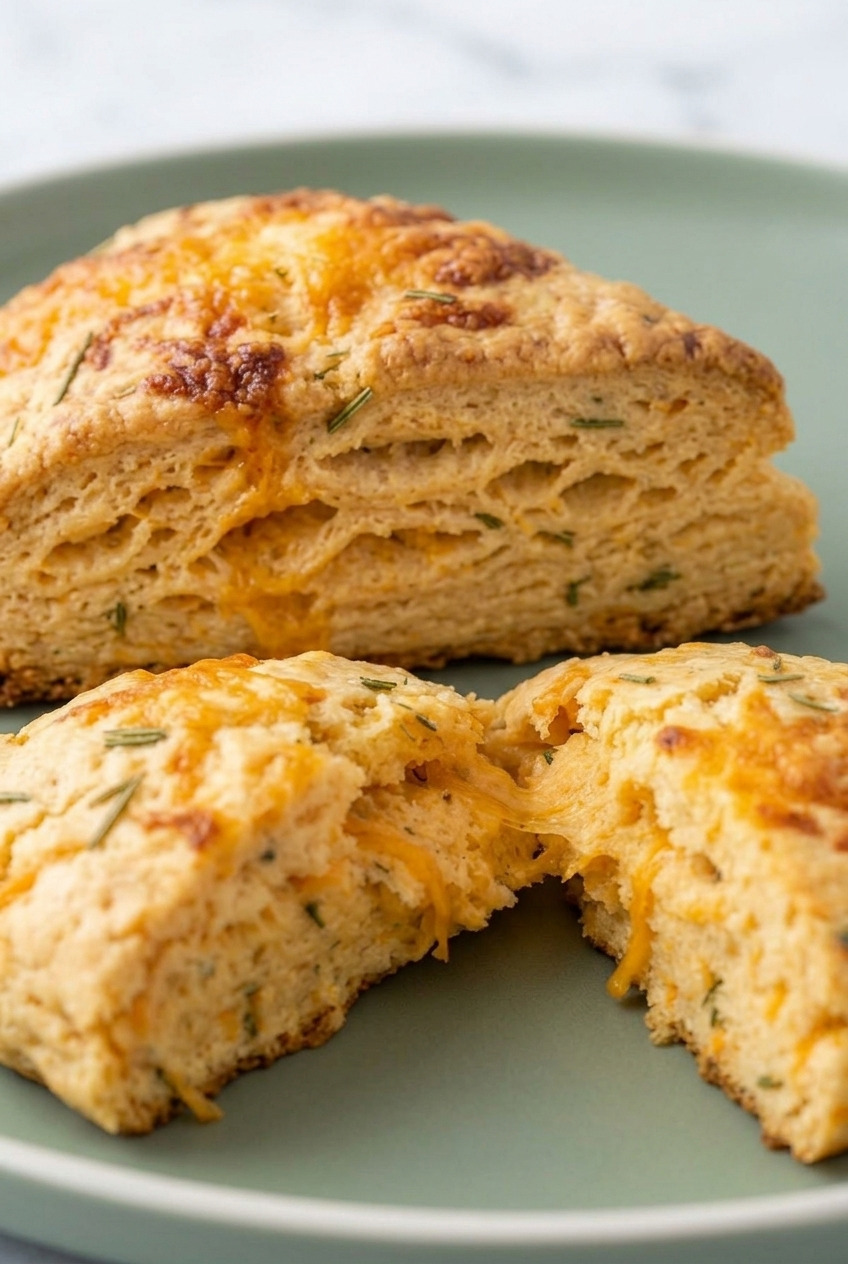
And I fold the dough over on itself twice before cutting, which costs about thirty seconds and gives you layers you can actually pull apart with your fingers.
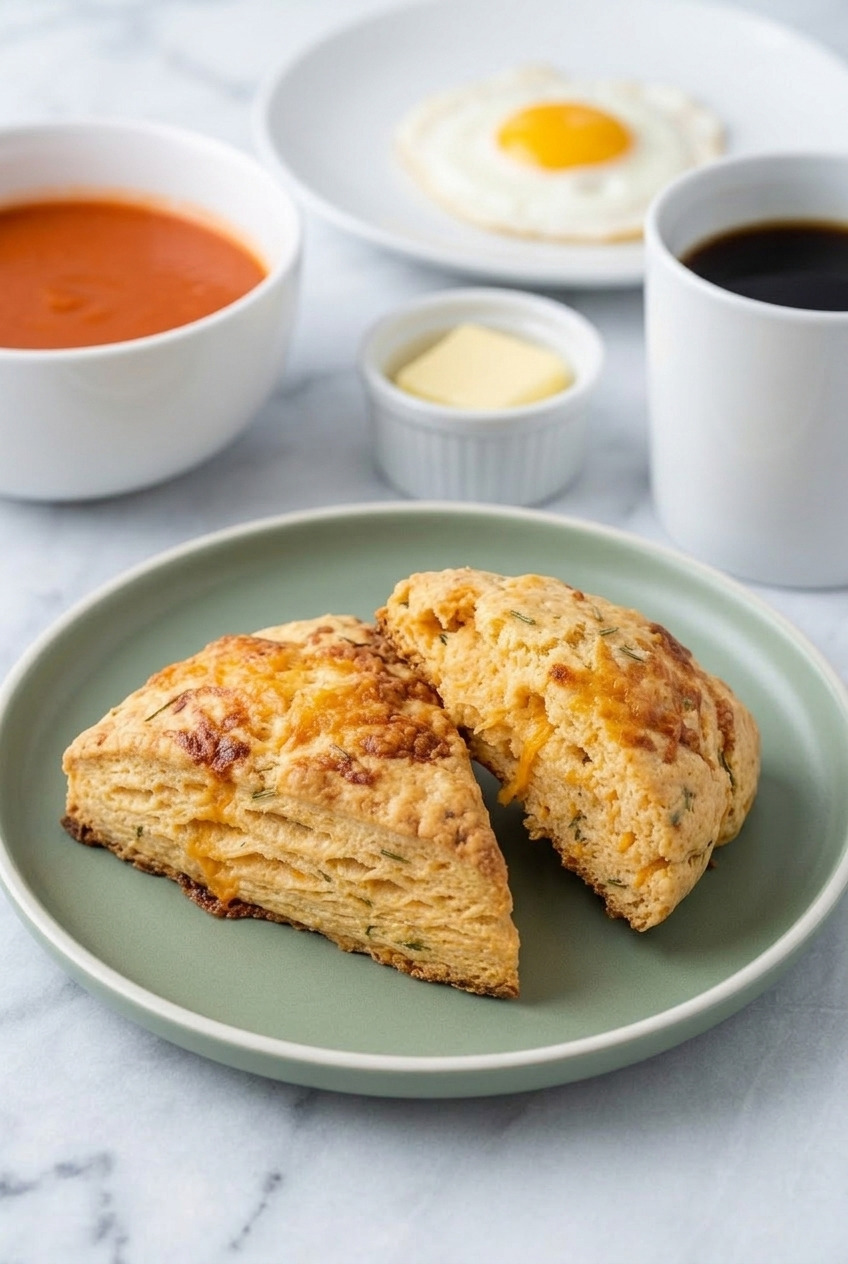
They go with soup, with a fried egg, with nothing at all but salted butter.
Make a batch once and Saturday mornings change a little.
Why Sweet Potato, Sharp Cheddar and Rosemary Work Together
This trio works because each piece pushes against the other two. Sweet potato is earthy and mildly sweet, aged cheddar is salty and sharply acidic, and rosemary brings a resinous, almost piney note that cuts through both.
Take any one of them out and the other two get boring fast.
The cheddar matters more than people expect.
A mild cheddar simply disappears into the dough. You want something aged at least a year, sharp enough that you would notice it on a cracker by itself.
Rosemary is the one to go easy on. 1 tablespoon finely chopped is plenty for eight scones, and much more than that turns medicinal.
Why This Recipe Works
- Genuinely savory. Zero sugar, plenty of salt and black pepper, and a full 1 ¼ cups of aged cheddar.
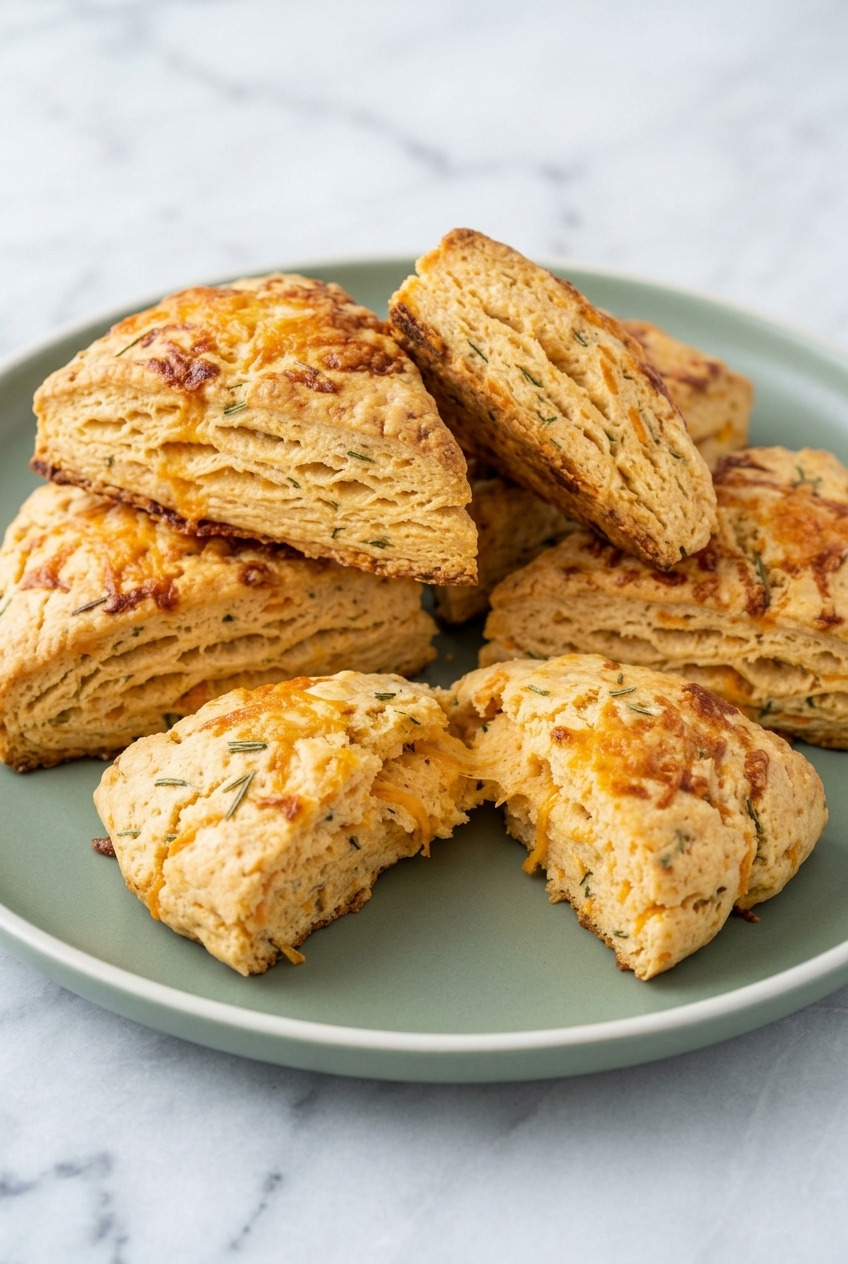
- Visible flaky layers. Two folds before cutting, which almost no scone recipe bothers with.
- A dry dough that behaves. Roasted mash instead of boiled means the flour is not fighting excess water.
- One bowl and a board. No mixer, no pastry cutter, just a box grater.
- Freezes unbaked. Cut wedges go straight from the freezer into a hot oven.
Ingredients You'll Need
- All-purpose flour (2 ½ cups). Standard plain flour. Bread flour makes them tough here.
- Baking powder (1 tablespoon) and baking soda (½ teaspoon). Both, because the buttermilk needs the soda and the lift needs the powder.
- Fine salt (1 ¼ teaspoons) and black pepper (½ teaspoon). More salt than a sweet scone would take, and the pepper is not optional. It sharpens the cheddar.
- Frozen unsalted butter (8 tablespoons, grated). Grated on the large holes of a box grater straight from the freezer. Grating distributes it faster and with far less warming than cubing does.
- Aged sharp cheddar (1 ¼ cups, grated). Hold back ¼ cup for the tops. That reserved handful is what gives you those crisp browned edges.
- Fresh rosemary (1 tablespoon, finely chopped). Fresh, and chopped fine. Whole needles are unpleasant to bite into.
- Cold mashed roasted sweet potato (¾ cup). Roasted, cooled, and thick.
- Cold buttermilk (½ cup) and 1 large egg. Both straight from the fridge. Everything in this dough stays cold.
- For the tops. A little extra buttermilk for brushing and flaky salt for finishing.
Roast the Sweet Potato, Do Not Boil It
Prick one medium sweet potato and roast it whole at 400°F for 45 to 55 minutes, right on the oven rack.
Split it, let it steam off, scoop and mash. You need ¾ cup.
Then chill the mash completely, at least an hour, or make it the day before.
The mash should be thick enough to hold a peak on a spoon.
Here is the problem with boiling: boiled sweet potato absorbs water, and that water has to go somewhere. It thins the dough, which means you cut the buttermilk, which means the flour never hydrates properly and the scones bake up crumbly and dry in the middle.
Roasting drives water off and concentrates the flavor at the same time. It solves both problems in one step.
If your mash still looks loose, spread it on a plate and refrigerate it uncovered for twenty minutes.
How to Make Sweet Potato Cheddar Scones
Step 1: Grate the Frozen Butter Into the Flour
Whisk the flour, baking powder, baking soda, salt and pepper together in a large bowl.
Grate the frozen butter directly into the bowl on the large holes of a box grater.
Toss it through the flour with your fingertips as you go, so the shreds stay separate.
Do not rub it in. You want visible pieces of butter, and those pieces are what turn into steam and lift the layers apart.
Step 2: Add the Cheddar and Rosemary
Toss in 1 cup of the grated cheddar and all of the rosemary.
Keep the last ¼ cup of cheese aside for the tops.
Coating the cheese in flour first keeps it from clumping into one greasy pocket during the bake.
Step 3: Mix in the Cold Mash and Buttermilk
Whisk the cold sweet potato mash, buttermilk and egg together until smooth, then pour it into the flour.
Stir with a fork until it comes together in a shaggy, uneven mass.
There should still be a few dry patches. That is fine and it is what you want.
Overmixed dough here means tough scones, and there is no fixing it afterward.
Step 4: Fold the Dough Twice
Tip the dough onto a floured counter and press it into a rough rectangle about 1 inch thick.
Fold it in half like a book, press it back down to 1 inch, and fold it in half again.
That is it. Two folds.
Each fold doubles the sheets of butter running through the dough, and in the oven each of those sheets becomes steam that pushes the layers apart.
Pro tip: work fast and use a bench scraper rather than your hands where you can. Warm hands melt the butter and melted butter gives you a crumbly scone instead of a flaky one.
Step 5: Cut and Chill
Pat the folded dough into a round about 8 inches across and 1 ¼ inches thick, then cut it into 8 wedges with a sharp knife.
Press straight down. Never drag or twist the blade, because that seals the cut edges and stops them rising.
Space the wedges on a parchment lined sheet and put the whole tray in the freezer for 15 minutes.
Sound like a fussy extra step? It is the difference between a scone that rises and a scone that spreads.
Step 6: Bake
Brush the tops with buttermilk, press on the reserved cheddar, and sprinkle with flaky salt.
Bake at 425°F for 20 to 24 minutes, until they are risen, deep golden, and the cheese on top has browned at the edges.
Eat them warm, within the hour if you can manage it.
How to Get Real Flaky Layers
- Everything cold. Frozen butter, cold buttermilk, chilled mash, and a cold tray going into the oven.
- Minimum handling. Every extra squeeze develops gluten and melts butter. Neither one helps you.
- The two folds. Thirty seconds of work, and the single most visible improvement you can make.
- A clean cut. Straight down with a sharp knife, no twisting.
- The 15 minute chill. Cold butter hitting a hot oven is what creates the steam that separates the layers.
Common Mistakes
- Warm butter. If you can no longer see distinct shreds in the flour, it has gone too far. Chill the bowl for ten minutes and carry on.
- A wet mash. Boiled potato, or roasted potato used while still warm. Both slacken the dough.
- Overworking. Stop mixing while the dough still looks unfinished.
- Twisting the knife. It seals the layers shut along the cut edge and the scone rises lopsided.
- Skipping the chill. This is the number one reason scones spread flat instead of rising tall.
- Mild cheddar. It vanishes. Buy something aged and sharp.
Variations
- Bacon. Four slices cooked crisp and crumbled, tossed in with the cheddar.
- Caramelized onion. ½ cup, cooked down slow and cooled completely before it goes in.
- Gruyere instead of cheddar. Nuttier and less sharp. Works beautifully with the rosemary.
- Thyme instead of rosemary. Softer and more floral. Use 2 teaspoons, since thyme is gentler.
- A little heat. ¼ teaspoon of cayenne or a pinch of red pepper flakes with the dry ingredients.
What to Serve Them With
Soup is the obvious partner and it is obvious for a reason. Tomato, butternut squash, or a simple lentil soup all work.
Split one open and lay a fried egg inside for a very good weekend breakfast.
They are also excellent alongside cured ham or a wedge of pate on a board.
And plain, warm, with cold salted butter melting into the split. That is how I eat the first one every time.
Make Ahead, Storing and Freezing
- Freeze them unbaked. Cut the wedges, freeze them solid on a tray, then bag them for up to 2 months.
- Bake from frozen. Straight into the 425°F oven with about 3 extra minutes. No thawing.
- Overnight. Cut wedges keep covered in the fridge for 12 hours, which makes them a real breakfast option.
- Baked scones. Best on day one. They keep 2 days in an airtight container at room temperature.
- Reheating. Five minutes in a 350°F oven brings the edges back. The microwave makes them heavy.
Frequently Asked Questions
Are these scones sweet or savory?
Fully savory. There is no sugar in the dough at all. The sweet potato brings a mild earthy sweetness, and the aged cheddar, black pepper and salt keep it firmly on the savory side.
Can I use dried rosemary instead of fresh?
Yes, but cut it back to 1 teaspoon and crumble it between your fingers first. Dried rosemary is much more concentrated and it can turn the whole batch medicinal.
Why did my scones spread flat instead of rising?
The butter got warm. Freeze the cut wedges for 15 minutes before baking and make sure the oven is fully up to 425°F. Cold dough in a hot oven is what makes them rise.
Should the sweet potato be roasted or boiled?
Roasted. Boiling adds water to a dough that needs to stay dry, and a wet dough will not hold its layers. Roast it, mash it, and chill it before it goes anywhere near the flour.
What cheese works best if I do not have sharp cheddar?
Gruyere is the best substitute, followed by aged gouda or a firm pecorino. The only real rule is that it needs enough character to stand up to the potato. Mild cheeses get lost.
Can I make the dough ahead or freeze the scones unbaked?
Both. Cut wedges keep in the fridge overnight, or freeze them solid and bake straight from frozen with 3 extra minutes. Freezing unbaked gives a better result than freezing baked scones.
What do you serve savory scones with?
Soup, a fried egg, cured ham, or just cold salted butter. They also make a very good side for a bowl of chili.
Recipe
Sweet Potato Scones With Sharp Cheddar and Rosemary
Ingredients
For the Scones
- 2 ½ cups all-purpose flour
- 1 tablespoon baking powder
- ½ teaspoon baking soda
- 1 ¼ teaspoons fine salt
- ½ teaspoon black pepper
- 8 tablespoons unsalted butter frozen, grated on a box grater
- 1 ¼ cups aged sharp cheddar grated, ¼ cup reserved for the tops
- 1 tablespoon fresh rosemary finely chopped
- ¾ cup mashed roasted sweet potato cold, about 1 medium
- ½ cup buttermilk cold, plus more for brushing
- 1 large egg cold
- 1 teaspoon flaky salt for the tops
Instructions
Roast the Sweet Potato
- Prick one medium sweet potato and roast it whole on the oven rack at 400 degrees F for 45 to 55 minutes. Split it, let it steam off, scoop and mash the flesh. You need ¾ cup, thick enough to hold a peak.
- Chill the mash completely, at least 1 hour or overnight. Do not boil the potato, the extra water will slacken the dough.
Make the Dough
- Heat the oven to 425 degrees F. Whisk the flour, baking powder, baking soda, salt and black pepper in a large bowl.
- Grate the frozen butter into the bowl on the large holes of a box grater, tossing it through the flour as you go so the shreds stay separate and visible. Do not rub it in.
- Toss in 1 cup of the cheddar and all of the rosemary, keeping ¼ cup of cheese back for the tops.
- Whisk the cold mash, buttermilk and egg together, pour it in, and stir with a fork just until a shaggy dough forms. A few dry patches are fine.
Fold, Cut and Bake
- Tip the dough onto a floured counter, press it into a rough rectangle 1 inch thick, fold it in half, press it back to 1 inch, and fold it in half again.
- Pat it into a round about 8 inches across and 1 ¼ inches thick and cut it into 8 wedges, pressing straight down without twisting the knife.
- Space the wedges on a parchment lined sheet and freeze the tray for 15 minutes.
- Brush the tops with buttermilk, press on the reserved cheddar, sprinkle with flaky salt, and bake 20 to 24 minutes until risen, deep golden, and browned at the cheese edges.
Notes
- Roast, never boil: boiled sweet potato carries water into a dough that has to stay dry to hold its layers.
- Grate frozen butter: it distributes faster and stays colder than cubed butter, and visible butter shreds are what create the layers.
- Two folds: thirty seconds of work and the single most visible improvement to the texture.
- Chill before baking: 15 minutes in the freezer is what stops the scones spreading flat.
- Aged cheddar only: mild cheddar disappears into the dough entirely.
- Freeze unbaked and bake straight from frozen with 3 extra minutes.