
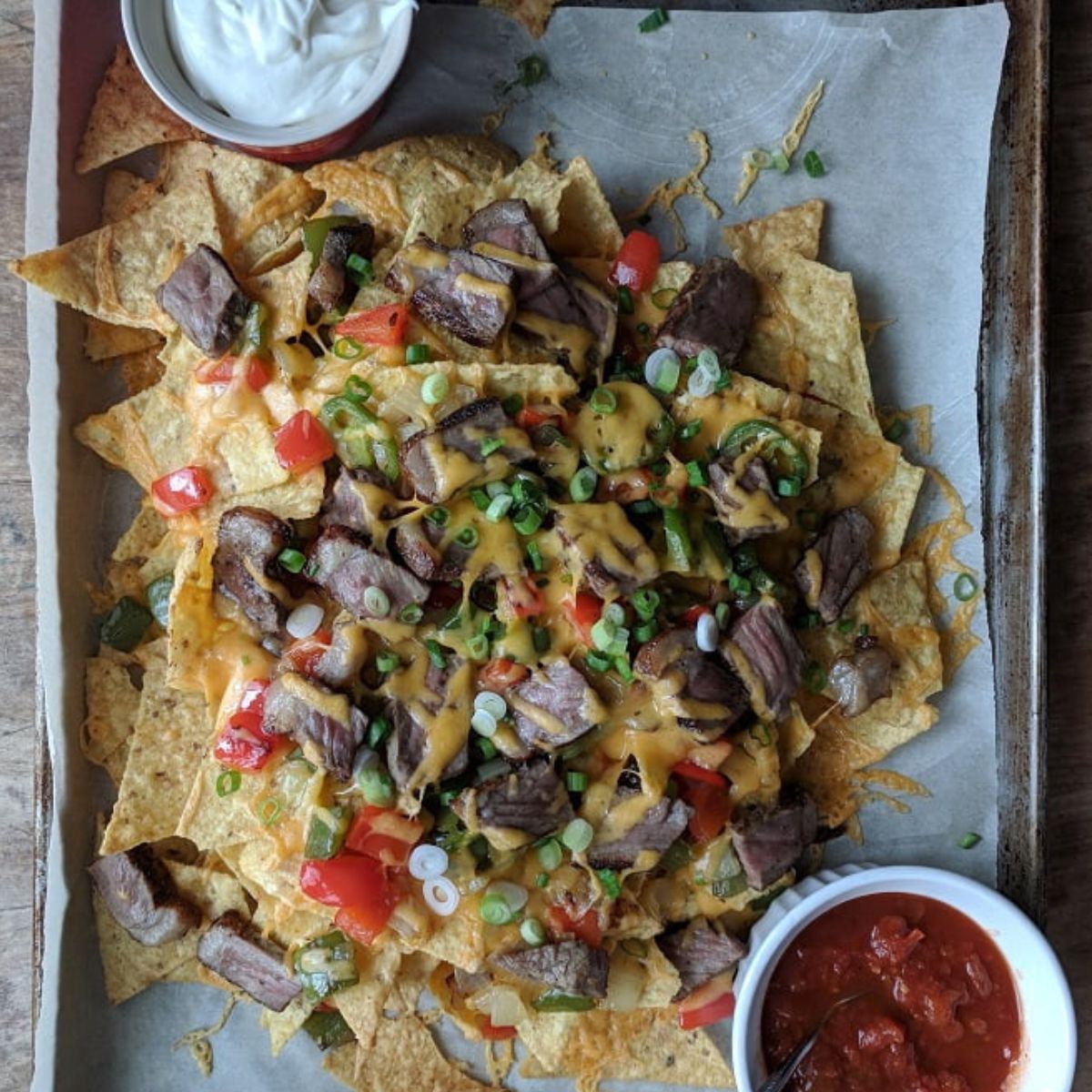
Who doesn't love a good plate of nachos? Melted cheese, crispy chips, bell peppers, and green onions, what more could you want? Whether it's game day, you're having a movie night, or you just have a wicked bad craving, this is the post for you. Well, today we are going to take a look at how you can make great nachos at home whenever you want.
Jump to:
Making truly great nachos is about more than just dumping cheese on chips and throwing them in the oven. It comes down to choosing the right chips, using the right amount of cheese, and properly preparing your toppings. If you get those fundamentals right, you will have delicious nachos every single time. Let's break it down step by step.
Step 1 - The Nachos

It should come as no surprise that great nachos start with great tortilla chips. With poor quality chips, you can only make poor quality nachos. What then is it that makes a tortilla chip good or bad?
First and foremost take a look at the bag. Are most of the chips intact or are half of them broken and crumbled in the bottom of the bag? If they are broken that obviously isn't a very good sign. Other than that it is more a trial and error type of situation. I will say that bags labelled as restaurant-style or restaurant quality will generally have thicker and stronger chips than regular bags.
One final point I will make about the chips is that you don't have to buy the most expensive bag you can find. You don't want to cheap out either. Buying the cheapest bag will probably lead to sad nachos.
Step 2 - The Cheese

Types of Cheese
There are a million different kinds of cheese you could choose for your nachos. But what one do you really want? Do you want to go crazy and put some nice swiss cheese on there or blue cheese? Or do you want to keep it simple? Cheddar? Mozza? Maybe a three-cheese mixture with cheddar, mozza, and Monterey jack? How can you choose?
For my money, I'm a fan of either just cheddar, preferably a mild cheddar, or a three-cheese mixture. If you want to use a three-cheese mixture it is definitely better to buy the cheese whole, grate and mix it yourself. There are a few reasons for this. First of all, you can control the ratios of the different types of cheese. Secondly, pre-grated and mixed cheeses usually have anti-caking agents mixed in, and you just don't really know what you're getting. If you're interested in learning more about how different cheeses melt and behave, check out my post on cheese fondue.
How Much Cheese
As for how much cheese to use, don't go too crazy. It's actually better to go a little lighter than you might expect. Too much cheese can lead to soggy chips due to the oils being released as the cheese melts. Ideally, a thin, even coating of cheese is best. This will give you maximum flavour without causing the chips to go soggy.
Step 3 - Vegetables

Most commonly the vegetables that appear on nachos are bell peppers, onions, tomato, green onion, and pickled jalapeno. I am completely fine with all of these except the tomatoes. Generally, nachos are going to be served with salsa which is made of tomatoes. So, putting tomatoes on nachos is redundant. Also, like adding too much cheese, tomatoes will cause the chips to go soggy.
As for the other vegetables like the bell peppers and onions, there is one small thing that you can do that will drastically improve the quality of your nachos. What could that be? Pre-cook the vegetables. It seems pretty obvious, right? Almost no one does it. This is one of those simple food principles that makes a massive difference.
To take your nachos from okay to great you just need about 3-5 minutes to heat up a frying pan with a touch of oil and sauté the peppers and onions just until they start to soften. Then spoon the vegetables over the nachos and bake them like you normally would.
For the jalapenos, pickled is definitely the most common way to go. However, don't discount the impact a few slices of fresh jalapeno can have on your nachos. These can honestly be pre-cooked with the other vegetables or put on raw and cooked only as long as it takes to melt the cheese. For pickled jalapenos drain as much of the liquid off as you can before putting them on your chips.
Step 4 - Meat?

Meat or no meat? I prefer steak on my nachos, some people like ground beef, chicken, or even pork. Really, this all comes down to personal preference. Of course, I do have a couple of tips if you are planning on putting meat on your nachos.
First of all, and this should go without saying, cook the meat before putting it on your nachos. Having said that, when it comes to steak I will often cook the whole steak to rare, let it rest, slice it thin, and put that on the nachos. This way by the time the cheese has melted the steak is cooked, but not overcooked. If you want to learn more about cooking steak properly, take a look at my steak tacos post for some solid technique. As for other meats, just make sure they are hot when they go on the nachos. If you are using leftover chicken or pulled pork, you don't want it to come straight out of the fridge and on to the nachos. It just won't heat up enough.
One final point is that small pieces of meat are better than big pieces when it comes to nachos. A lot of small pieces evenly spread makes for a much better eating experience than a handful of large pieces on ¼ of the chips.
Step 5 - Layers?


To layer or not to layer? Both layered and non-layered nachos have their benefits and their downsides. Let's look at them both.
Layered
Layered nachos obviously provide multiple layers of cheesy goodness. However, there is a downside in that it takes a lot longer to bake layered nachos unless you bake it in stages. Whether you bake in stages or not you risk overcooking the chips in order to get all the cheese melted.
Layered nachos should be baked on 350 degrees F for about 15-20 minutes in order to melt the cheese all the way through.
Single Layered
Single layered nachos, in my opinion, are far superior to multi-layered nachos. All the chips are more evenly coated with cheese and the other toppings. They take less time to bake. And there is no risk of coming upon a pocket of unmelted cheese.
Single layered nachos should be baked on 400 degrees F for 12-15 minutes.
Step 6 - Sauces On or Off?

Unless you are a psychopath, leave the sauces off. Okay, okay, that may be a bit judgmental, but why would you put the sauces on your nachos when you know it is only going to make the chips soggy? Always serve sauces on the side. Keep your salsa, sour cream, and guacamole in their own bowls and dip as you go. Your chips will stay crispy and everyone at the table can choose exactly how much sauce they want.
Wrapping Up
Great nachos really come down to a few key decisions: quality chips, the right amount of cheese, pre-cooked vegetables, and keeping the sauces on the side. I've been making nachos this way for years and they never disappoint, whether it's a party or a quiet night on the couch.


Leave a Reply