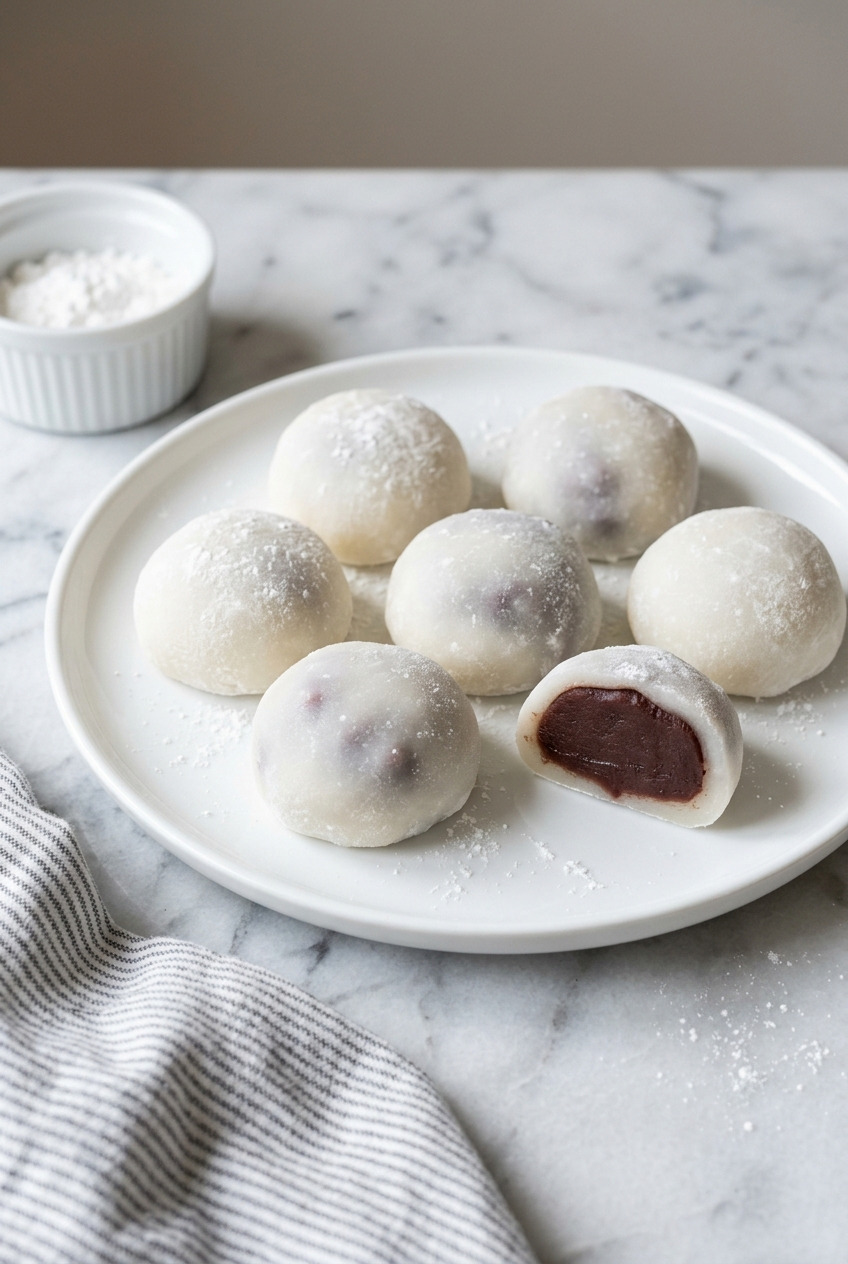
Daifuku (Japanese Stuffed Mochi)
Soft, chewy mochi stuffed with sweet red bean paste. Made with just 5 ingredients in about 30 minutes using a microwave or stovetop steamer.
Servings 10 pieces
Ingredients
For the Mochi
- 120 g shiratamako (glutinous rice flour) or mochiko; do not use regular rice flour
- 50 g sugar granulated or caster
- 150 ml water room temperature
For the Filling and Dusting
- 200 g sweet red bean paste (anko) koshian (smooth) or tsubuan (chunky)
- ½ cup potato starch or cornstarch for dusting
Instructions
Prepare the Filling
- Scoop about 1 tablespoon (20 g) of red bean paste and roll it into a ball. Repeat to make 10 balls.
- Place the anko balls on a parchment-lined plate and refrigerate while you prepare the mochi.
Make the Mochi Dough (Microwave)
- In a microwave-safe bowl, whisk together the glutinous rice flour and sugar. Add the water and stir until smooth.
- Loosely cover the bowl with plastic wrap. Microwave on high for 1 minute.
- Remove and stir with a wet spatula. Cover loosely and microwave for 1 more minute.
- Stir again, cover, and microwave for a final 30 seconds. The mochi should change from bright white to slightly translucent and cream-colored. If white patches remain, microwave in 20-second intervals until translucent.
Make the Mochi Dough (Stovetop Alternative)
- Whisk together the flour, sugar, and water in a heat-safe bowl. Set up a steamer and wrap the lid with a clean kitchen towel to prevent condensation from dripping in.
- Place the bowl in the steamer basket, cover, and steam for 15 minutes. Stir with a wet spatula halfway through. The mochi is done when it turns translucent.
Shape and Fill
- Generously dust your work surface with potato starch or cornstarch. Use a wet spatula to transfer the hot mochi onto the starch. Sprinkle more starch on top and let cool for 2 to 3 minutes.
- Dust your hands with starch and divide the mochi into 10 equal pieces using a starch-dusted knife or bench scraper.
- Flatten one piece into a 3-inch (8 cm) disc in your palm, keeping the center slightly thicker than the edges.
- Place a chilled anko ball in the center. Pull the mochi edges up and around the filling, stretching gently, then pinch all edges together at the top to seal.
- Place seam side down on a starch-dusted surface. Repeat with remaining pieces.
Notes
- Flour choice: Shiratamako produces a softer, stretchier mochi. Mochiko works but gives a slightly firmer texture. Regular rice flour will not work.
- Keep everything dusted: Mochi is extremely sticky. Dust your hands, surface, knife, and finished daifuku generously with starch.
- Work while warm: Shape the mochi while it is still warm and pliable. If it stiffens, microwave for 10 seconds to soften.
- Color change = done: The mochi is cooked when it shifts from bright white to translucent cream. Undercooked mochi will taste grainy.
- Storage: Best eaten same day. Room temperature in airtight container up to 24 hours. Refrigerate up to 2 days (wrap container in a towel). Freeze up to 1 month coated in extra starch.