Butter goes quiet right before it browns, and then the whole kitchen starts to smell like toffee and toasted nuts.
That smell is the first step of these Brown Butter Cinnamon Crinkle Cookies, and it's my favorite five minutes of December baking.
Last Christmas my wife wandered in from the living room, sniffed the air, and asked if I was making caramel.
Nope. Just butter in a pan.
Then I added the cinnamon, and she pulled up a stool to wait.
These cookies started as my answer to a tin full of chocolate crinkles.
I love those, but I wanted something warmer sitting next to them on the cookie tray.
What came out of the oven tasted like a snickerdoodle that grew up and learned about toffee.
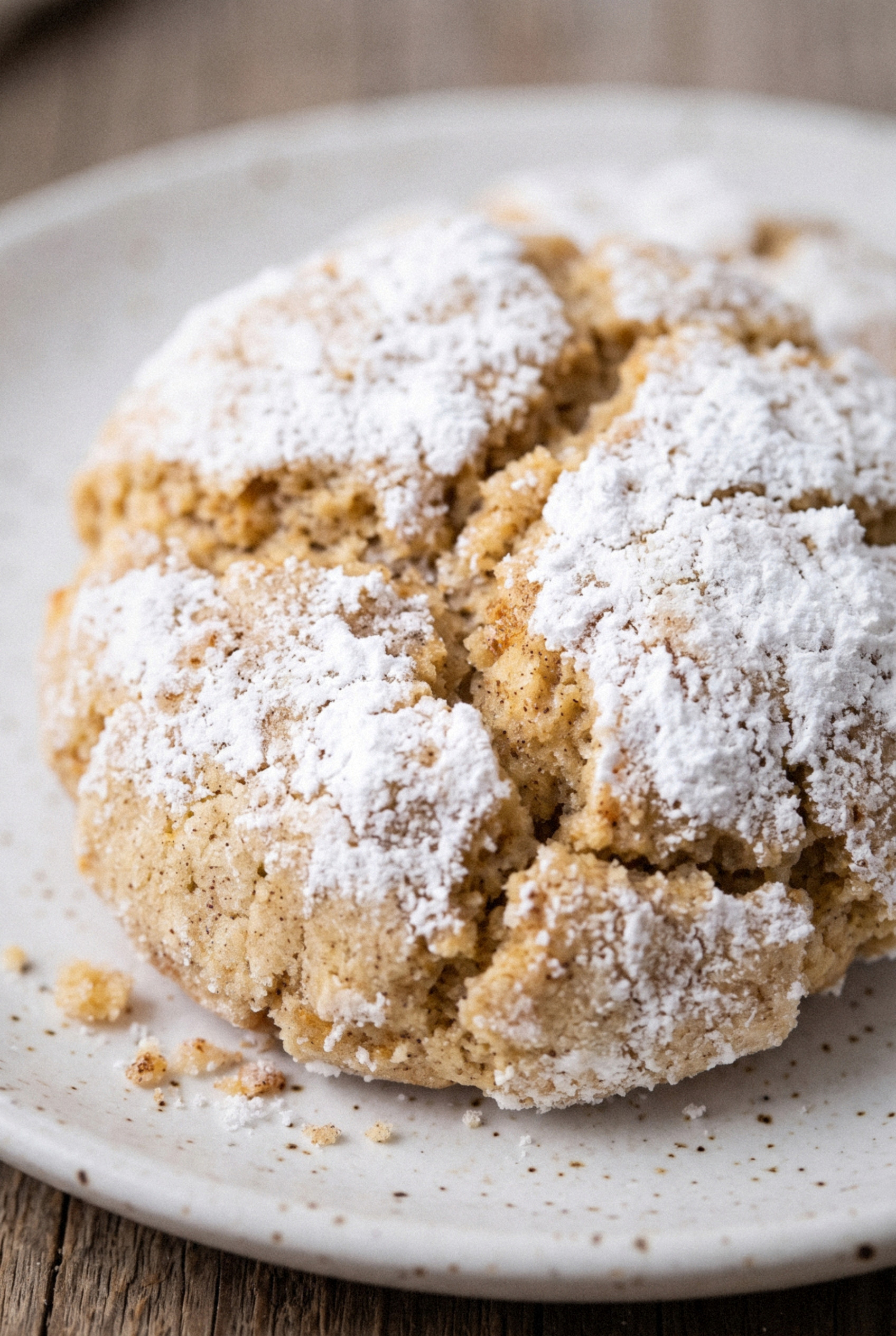
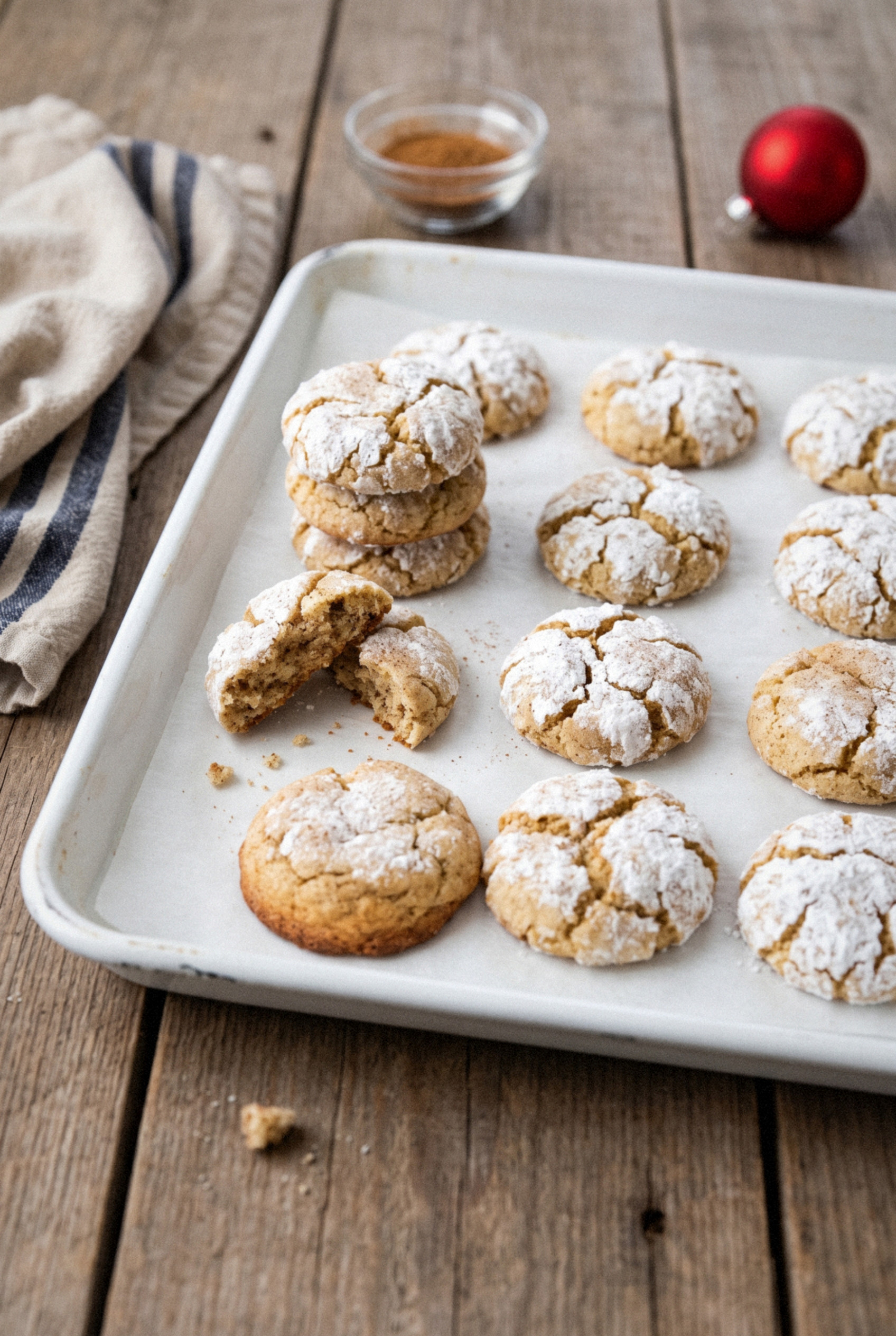
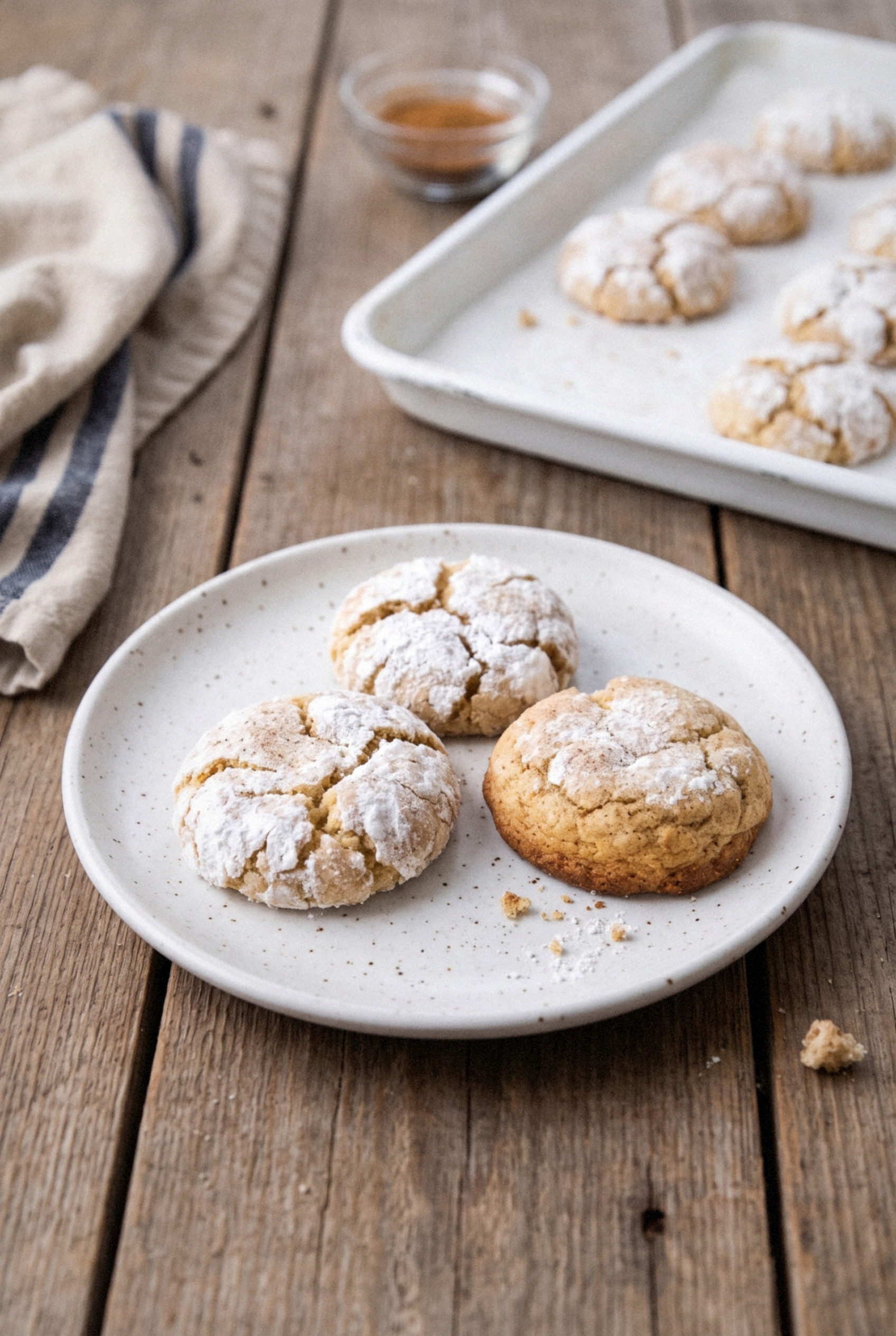
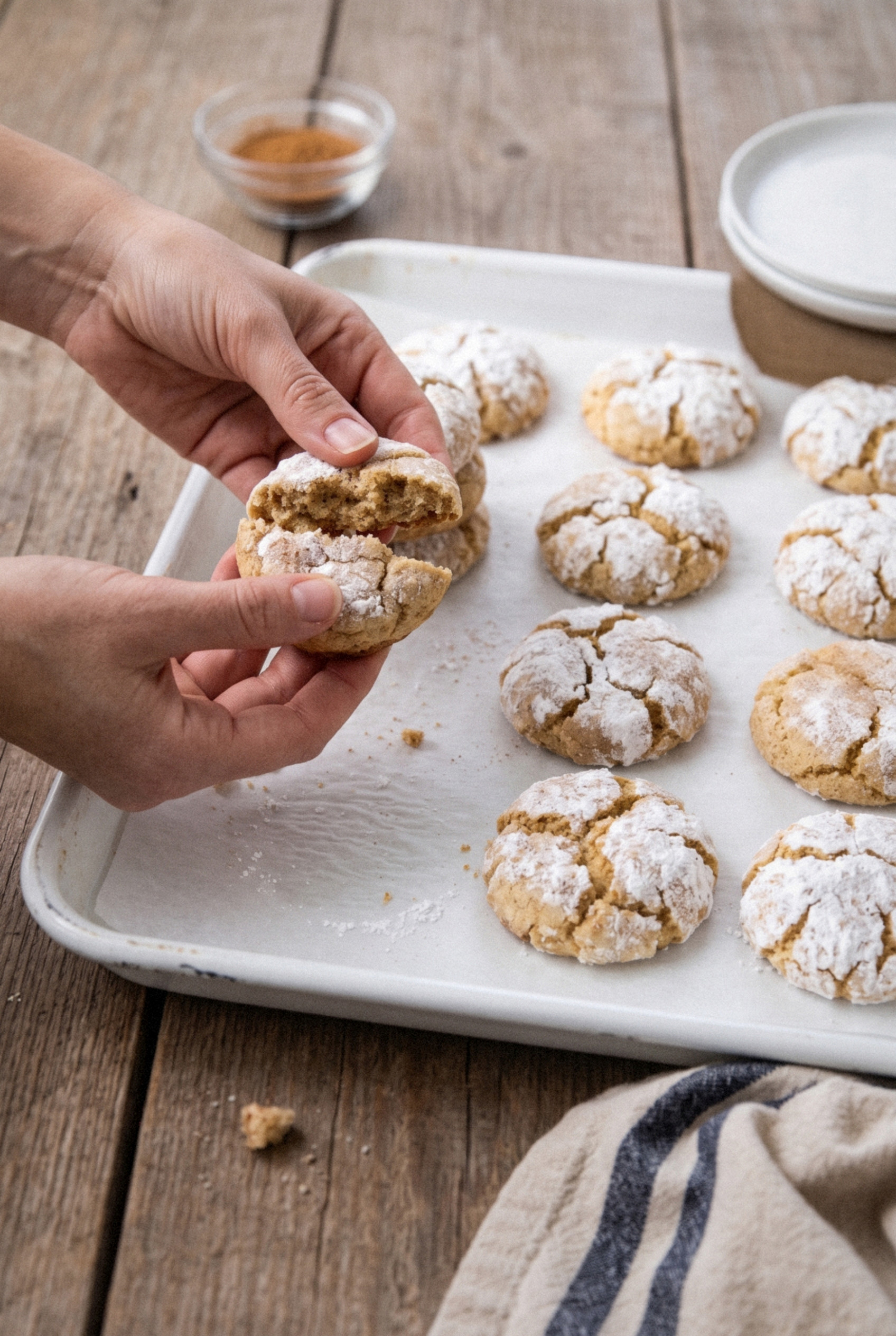
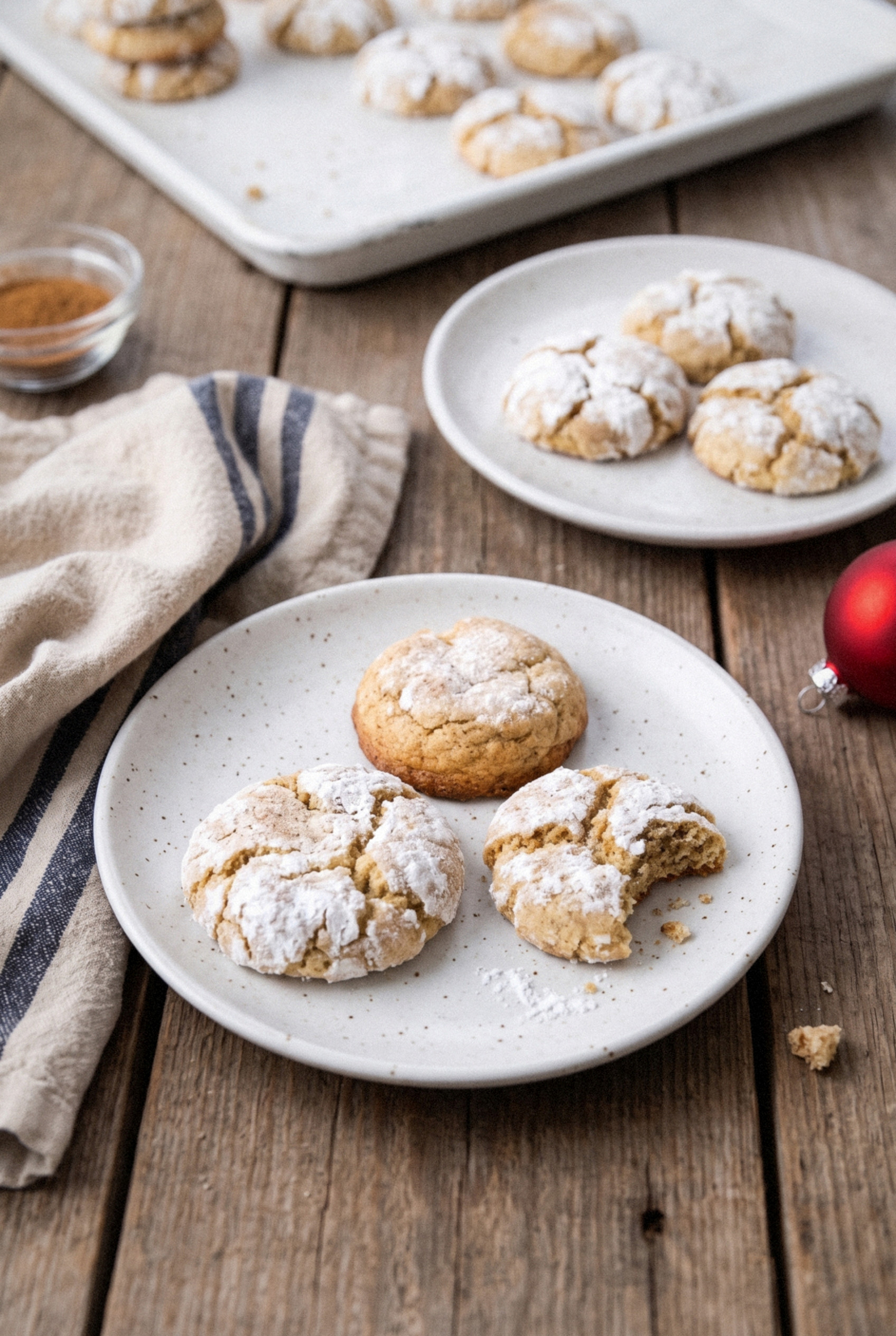
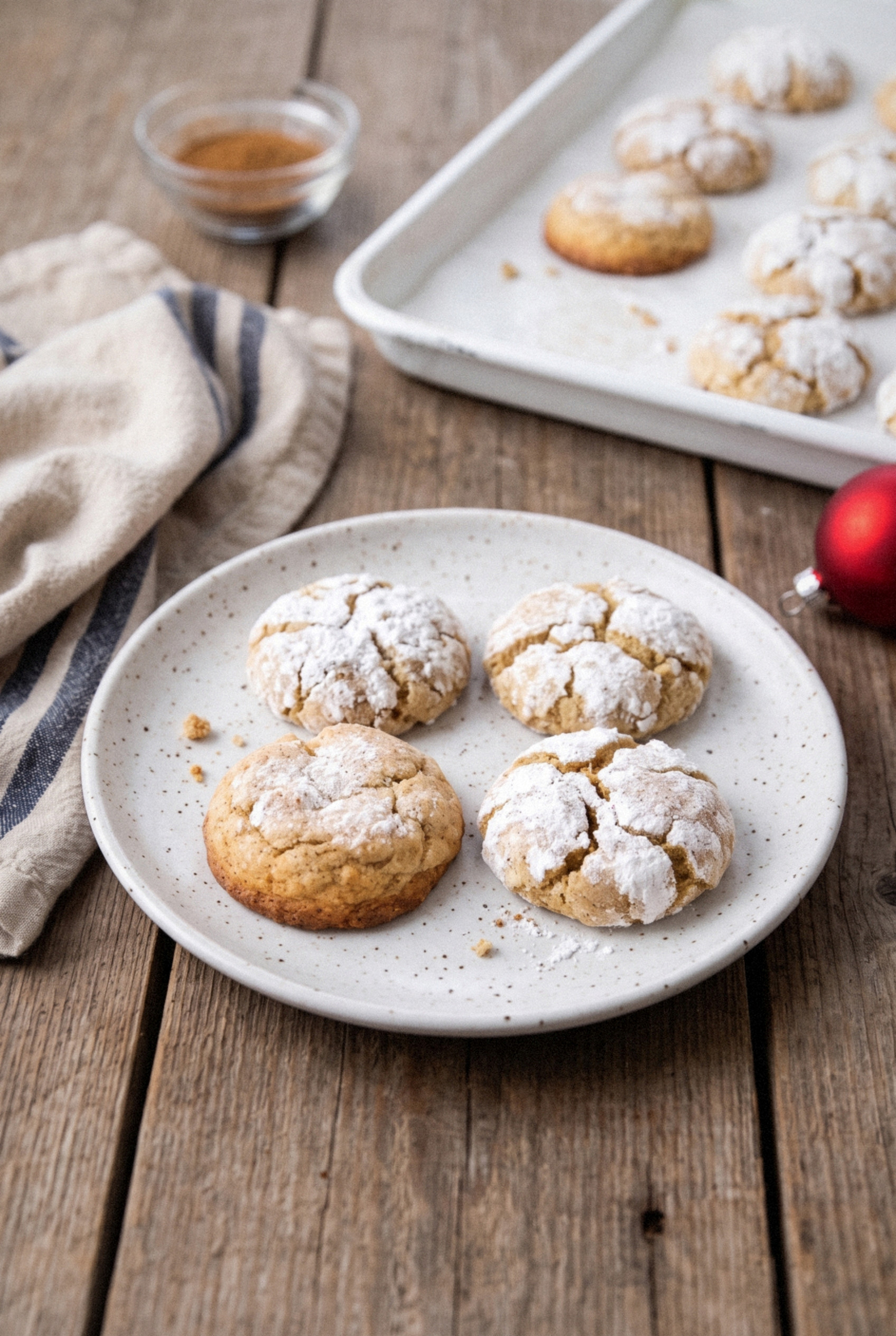
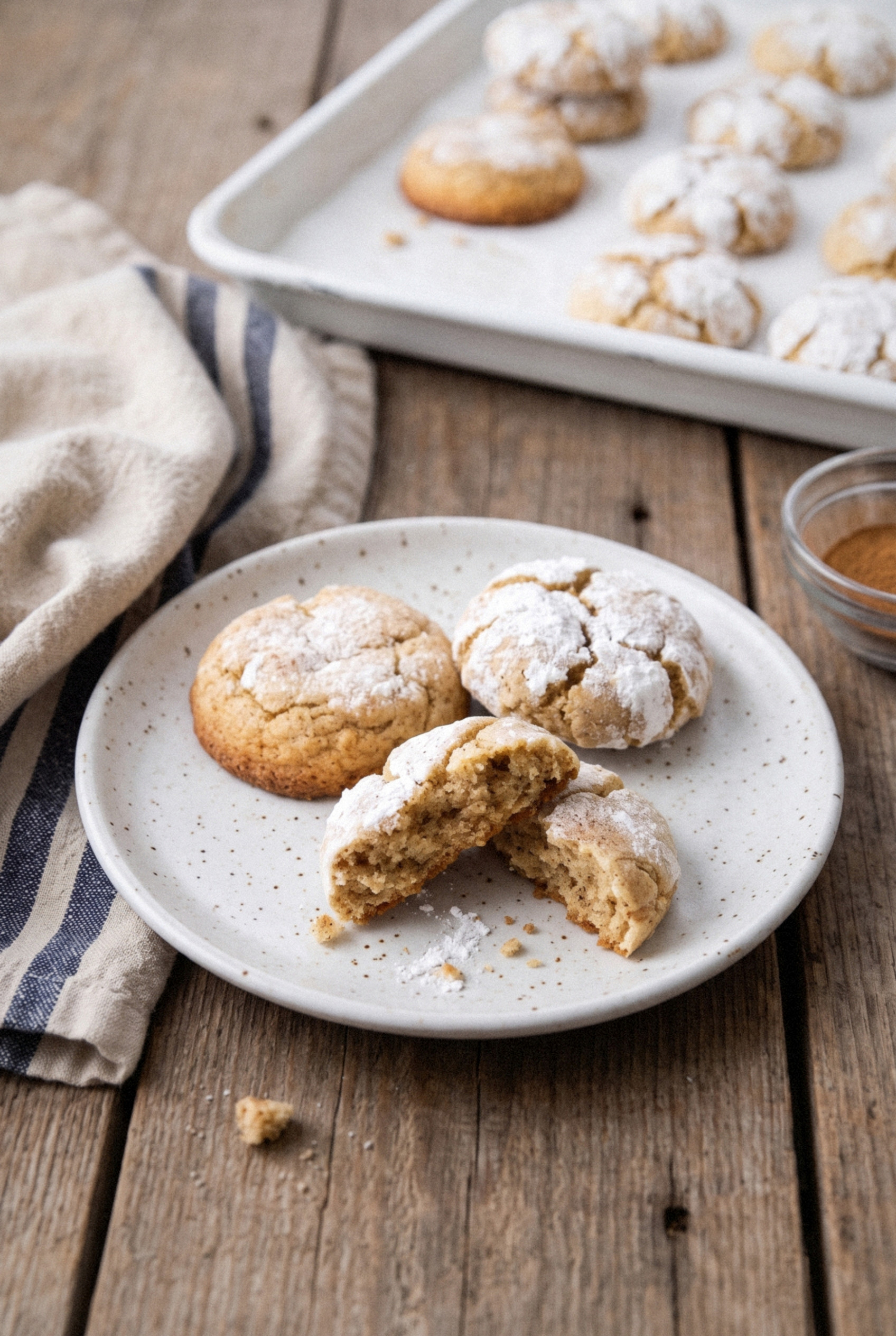
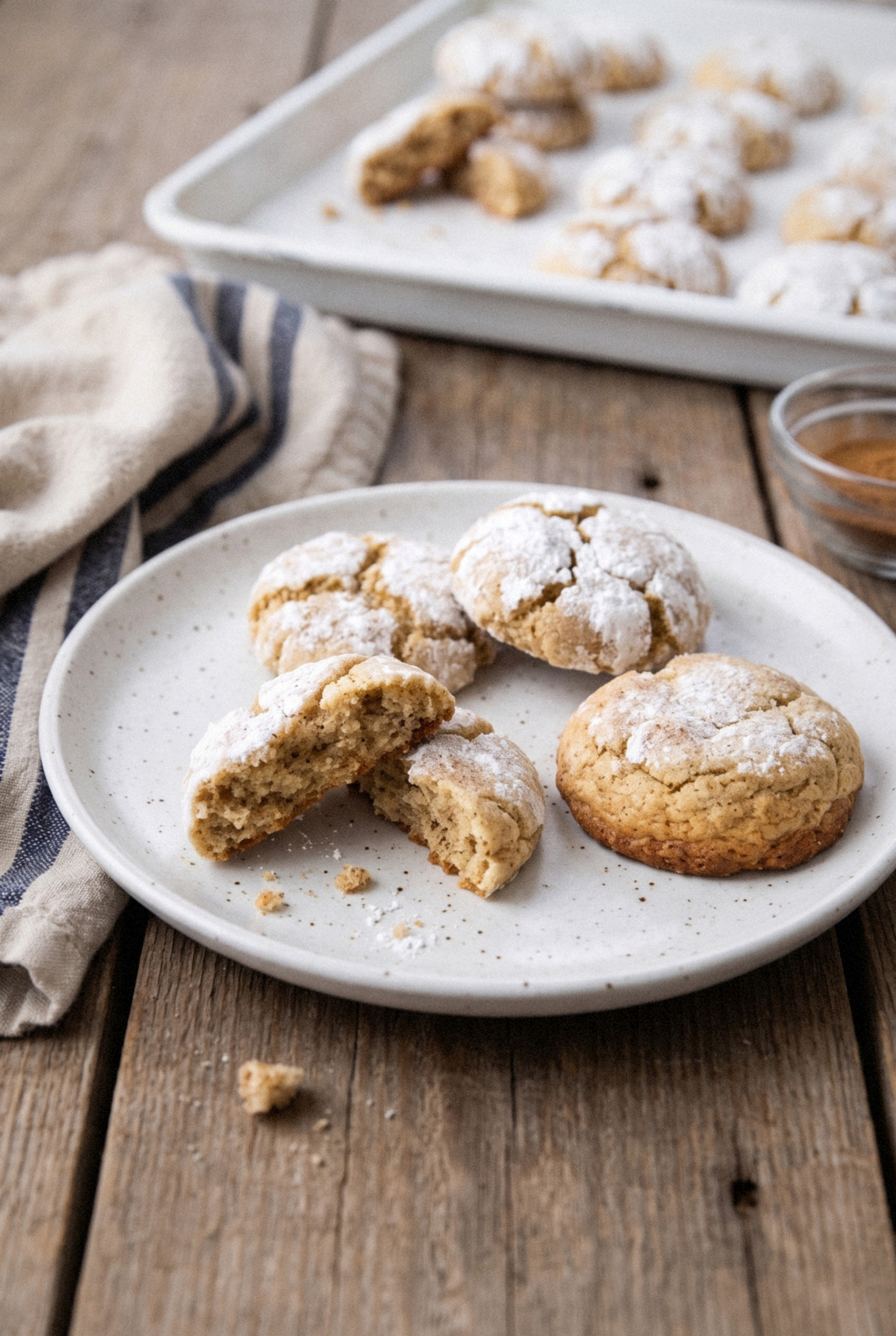
They're crisp and crackled on the outside, soft and chewy on the inside, with snowy white cracks over a golden cinnamon cookie.
Now I bake a double batch every year, and they're the first cookie people ask me about.
You only need a saucepan, a bowl, and a few pantry staples.
The dough even waits in the fridge for a few days while you get through the rest of your holiday list.
Make them once and the smell alone will have you hooked.
Why These Are a Must-Make Christmas Cookie
They bring something different to a holiday cookie tray full of chocolate and sprinkles. Warm, nutty, and spiced, they taste like the season without trying too hard.
- Toffee-like flavor. Browned butter gives every bite a deep, nutty richness that plain melted butter can't match.
- Warm cinnamon in every layer. There's cinnamon in the dough and in the sugar coat, so the spice comes through from the first crunch.
- The perfect texture. Crisp and crackly on the outside, soft and chewy in the middle.
- Simple ingredients. Butter, sugar, eggs, flour, and cinnamon. No mixer required.
- Holiday-schedule friendly. The dough chills for up to three days and the dough balls freeze, so you can bake them whenever the cookie tins need filling.
Who doesn't love a cookie that makes the whole house smell amazing?
What Are Crinkle Cookies?
Crinkle cookies are soft dough balls rolled in powdered sugar before baking. As they puff and spread in the oven, the sugary outside dries and splits into a cracked, snowy pattern.
They've been a fixture of American Christmas baking for generations, usually in chocolate.
The dark cookie peeking through the white sugar looks like snow on the ground, which is exactly why they show up on so many holiday platters.
This version swaps the cocoa for browned butter and cinnamon.
The cracks show a golden, spiced cookie underneath instead of a dark one, and the flavor leans cozy instead of fudgy. It's a lovely change of pace!
Why Brown the Butter?
Browning butter toasts the milk solids, and that's where all the flavor comes from. As the butter cooks, the water boils off and the little white bits sink to the bottom and turn a deep golden brown.
Those toasted bits taste like caramel, hazelnuts, and toffee all at once.
Is brown butter better than softened butter in cookies? For this one, absolutely.
Softened butter gives you a clean, sweet cookie. Brown butter gives you depth, and it plays so well with cinnamon that the two taste like they were made for each other.
Melted butter also makes a denser, chewier dough than creamed butter, which is the texture I want here.
One thing to know: browning drives off a couple tablespoons of water. I add 1 tablespoon of milk back into the cooled butter so the dough stays soft and the cookies don't bake up dry.
How to Brown Butter Without Burning It
Cut the butter into pieces and melt it in a light-colored saucepan over medium heat. A light pan lets you actually see the color change, which matters a lot.
The butter will foam and crackle loudly for a few minutes. Keep swirling or stirring.
When the crackling quiets down and the foam turns tan, watch closely. You'll see amber butter with toasty brown specks on the bottom of the pan, and it'll smell nutty. This takes about 5 to 7 minutes total.
Pour it into a heatproof bowl right away, scraping in every brown speck. Leave it in the hot pan and it can go from brown to burnt in under a minute.
Ingredients You Need
This dough uses everyday baking basics plus a good amount of cinnamon. Here's what each one brings.
- Unsalted butter (10 tablespoons). The base of the whole cookie, browned until nutty. Salted butter works too. It foams a bit more, and you can cut the added salt to ¼ teaspoon.
- Milk (1 tablespoon). Replaces some of the water lost during browning. Any milk works.
- Granulated sugar (1 cup). Gives structure and those crisp, crackled edges.
- Light brown sugar (¼ cup, packed). Adds moisture and a hint of molasses that leans into the toffee flavor.
- Eggs (2 large). Bind the dough and give it a soft, chewy center.
- Vanilla extract (2 teaspoons). Rounds out the brown butter. Use pure vanilla if you have it.
- All-purpose flour (2 ⅓ cups). Spoon it into the cup and level it off. Packed flour makes stiff, cakey cookies that won't crack well.
- Baking powder (1 teaspoon). Gives the lift that splits the sugar coat into deep cracks.
- Ground cinnamon (1 ¼ teaspoons in the dough). Warm and cozy without overpowering the brown butter.
- Kosher salt (½ teaspoon). Balances the sweetness and sharpens the nutty flavor.
- Cinnamon sugar (¼ cup granulated sugar + 1 teaspoon cinnamon). The first coat. It adds spice to the outside and helps the powdered sugar stay white.
- Powdered sugar (½ cup). The thick white coat that turns into the crinkle pattern.
How to Make Brown Butter Cinnamon Crinkle Cookies
This is a one-bowl, no-mixer dough with a chill in the middle. Most of the time is hands-off, so it's a breeze to fit into a busy holiday week.
Step 1: Brown and Cool the Butter
Brown the butter in a light-colored saucepan over medium heat until it's amber and smells nutty, about 5 to 7 minutes. Pour it into a large heatproof mixing bowl, scraping in all the brown bits, then stir in the 1 tablespoon of milk.
Let it cool for 15 to 20 minutes, until it's warm but no longer hot to the touch. Hot butter will scramble the eggs, so don't rush this part.
Step 2: Mix the Dough
In a separate bowl, whisk the flour, baking powder, cinnamon, and kosher salt together. Add the granulated sugar and brown sugar to the cooled butter and whisk until smooth and glossy, about 1 minute.
Whisk in the eggs one at a time, then the vanilla. Switch to a spatula and stir in the flour mixture in two or three additions, just until no dry streaks remain.
The dough will be soft and a little sticky. That's normal.
Step 3: Chill
Cover the bowl and refrigerate the dough for at least 1 hour, or up to 3 days. Chilled dough rolls into neat balls and spreads more slowly, which gives you taller cookies with deeper cracks.
If the dough has chilled overnight and feels too firm to scoop, let it sit on the counter for about 15 minutes.
Step 4: Roll in Cinnamon Sugar, Then Powdered Sugar
Heat the oven to 350°F and line two baking sheets with parchment paper. Stir the ¼ cup of granulated sugar and 1 teaspoon of cinnamon together in one shallow bowl, and put the powdered sugar in another.
Scoop the dough into 1 ½-tablespoon portions and roll each into a smooth ball. Roll each ball in the cinnamon sugar first, then roll it in the powdered sugar until it's thickly coated and completely white. Don't shake off the extra.
Pro tip: Only coat as many balls as fit on one sheet. If coated dough sits around, the powdered sugar soaks in and the crinkles fade.
Step 5: Bake and Cool
Arrange the balls 2 inches apart, about 16 per sheet. Bake one sheet at a time for 10 to 12 minutes, until the cookies have spread, the cracks have opened, and the edges are set but the centers still look slightly soft.
Let them rest on the baking sheet for 3 to 5 minutes, then move them to a wire rack to cool. Oh my, try to wait before grabbing one!
Getting Deep White Crinkles
The secret to crinkle cookies is a dry, thick sugar coat on a chilled dough ball. When the cookie puffs in the oven, that dry shell can't stretch, so it cracks.
- Chill the dough. Cold dough spreads slowly, so the outside sets and splits before the cookie goes flat.
- Use the double roll. The cinnamon sugar soaks up surface moisture so the powdered sugar stays bright and white.
- Coat generously. A thin dusting melts into the dough. You want a thick, snowy shell.
- Never flatten the balls. Round balls crack evenly. Flattened ones bake up smooth.
- Check your baking powder. Old leavening means less puff and shallow cracks. A spoonful in hot water should fizz right away.
Cookies came out smooth anyway? Your oven probably runs cool, or the dough got too warm before baking.
Tips for the Best Batch
A few small habits make these turn out right every time. I learned most of these the hard way.
- Cool the butter properly. Warm is fine. Hot cooks the eggs and makes a greasy dough.
- Measure the flour carefully. Spoon and level, or weigh it at 290 grams. Too much flour makes dry, puffy cookies.
- Use a cookie scoop. Even balls bake evenly, and they look so much nicer in a gift tin.
- Bake one sheet at a time. The middle rack gives the most even heat.
- Cool your baking sheets between batches. A hot sheet starts melting the dough before it hits the oven.
- Pull them early. They keep cooking on the hot sheet. Overbaked crinkles go crunchy all the way through.
- Re-dust for gifting. Dip the tops of cooled cookies in a little fresh powdered sugar for an extra-snowy look.
Variations
The brown butter base is super easy to play with. These are a few of my favorite spins.
- Brown butter pecan. Stir ½ cup of finely chopped toasted pecans into the dough. The nutty flavor doubles down on the brown butter.
- Chai spice. Add ½ teaspoon ground ginger, ¼ teaspoon cardamom, and a pinch of cloves with the cinnamon.
- Maple. Swap 1 teaspoon of the vanilla for maple extract. It's out of this world with brown butter.
- Orange cinnamon. Rub the zest of one orange into the granulated sugar before mixing.
- White chocolate drizzle. Drizzle melted white chocolate over the cooled cookies for a fancier holiday tray.
- Nutmeg. Add ¼ teaspoon of freshly grated nutmeg for an eggnog-style warmth.
Make-Ahead for Christmas Baking
This dough is made for a busy December. I usually mix it on a weeknight and bake on the weekend.
- Refrigerate the dough. Keep it tightly covered in the fridge for up to 3 days. The brown butter flavor actually gets a little deeper as it rests.
- Freeze the dough balls. Scoop and roll the balls, but skip both sugar coats. Freeze them on a tray until firm, then move them to a freezer bag for up to 3 months.
- Bake from frozen. Let frozen balls sit at room temperature for 15 minutes, roll them in cinnamon sugar and powdered sugar, then bake, adding 1 to 2 minutes.
- Cookie exchange timing. Bake them one or two days before the exchange so they're at their softest and the coating is still bright.
Storing and Freezing
These keep well, which makes them a great cookie for gift tins. Here's how to store them.
- Room temperature. Store in an airtight container for up to 5 days, with parchment between layers so the coating stays put.
- Keep them soft. Tuck a slice of sandwich bread into the container. The cookies pull moisture from it and stay chewy.
- Freeze baked cookies. Freeze in a single layer, then pack in a freezer container for up to 2 months. Thaw at room temperature.
- Refresh the coating. A quick dip in fresh powdered sugar after thawing brings back the snowy look.
- Gift tins. Pack them snugly in layers with parchment. They hold their shape well and travel to cookie exchanges with no trouble.
Pair them with a glass of cold milk, a mug of hot cocoa, or a scoop of vanilla ice cream. Give them a try this Christmas. I promise they'll become a tradition!
Recipe
Brown Butter Cinnamon Crinkle Cookies
Ingredients
For the Cookie Dough
- 10 tablespoons unsalted butter cut into pieces
- 1 tablespoon milk
- 1 cup granulated sugar
- ¼ cup light brown sugar packed
- 2 large eggs room temperature
- 2 teaspoons vanilla extract
- 2 ⅓ cups all-purpose flour spooned and leveled, 290 g
- 1 teaspoon baking powder
- 1 ¼ teaspoons ground cinnamon
- ½ teaspoon kosher salt
For Rolling
- ¼ cup granulated sugar
- 1 teaspoon ground cinnamon
- ½ cup powdered sugar
Instructions
Brown the Butter
- Melt the butter in a light-colored saucepan over medium heat. Keep stirring or swirling as it foams, until the butter turns amber with brown specks on the bottom and smells nutty, about 5 to 7 minutes.
- Pour the butter and all the brown bits into a large heatproof bowl. Stir in the milk and let cool for 15 to 20 minutes, until warm but not hot.
Make the Dough
- Whisk the flour, baking powder, cinnamon and kosher salt together in a separate bowl.
- Whisk the granulated sugar and brown sugar into the cooled butter until smooth, about 1 minute. Whisk in the eggs one at a time, then the vanilla.
- Stir in the flour mixture in two or three additions, just until no dry streaks remain.
- Cover and refrigerate the dough for at least 1 hour, or up to 3 days.
Roll and Bake
- Heat the oven to 350°F and line two baking sheets with parchment paper. Stir the ¼ cup granulated sugar and 1 teaspoon cinnamon together in a shallow bowl. Put the powdered sugar in a second shallow bowl.
- Scoop the dough into 1 ½-tablespoon portions and roll into smooth balls. Roll each ball in the cinnamon sugar, then thickly in the powdered sugar.
- Place 2 inches apart, about 16 per sheet. Bake one sheet at a time for 10 to 12 minutes, until the cracks have opened and the edges are set but the centers still look slightly soft.
- Cool on the baking sheet for 3 to 5 minutes, then transfer to a wire rack to cool completely.
Notes
- Brown butter: Use a light-colored pan so you can see the color change, and pour the butter out of the hot pan as soon as it turns amber.
- Salted butter: If using salted butter, reduce the kosher salt to ¼ teaspoon.
- Make ahead: Refrigerate the dough for up to 3 days, or freeze uncoated dough balls for up to 3 months. Let frozen balls sit 15 minutes, coat, and bake 1 to 2 minutes longer.
- Storage: Keep baked cookies airtight at room temperature for up to 5 days, or freeze for up to 2 months.