In late October the bakeries in my old neighborhood put marigolds in the window and the whole block starts smelling like burnt sugar.
That smell is piloncillo.
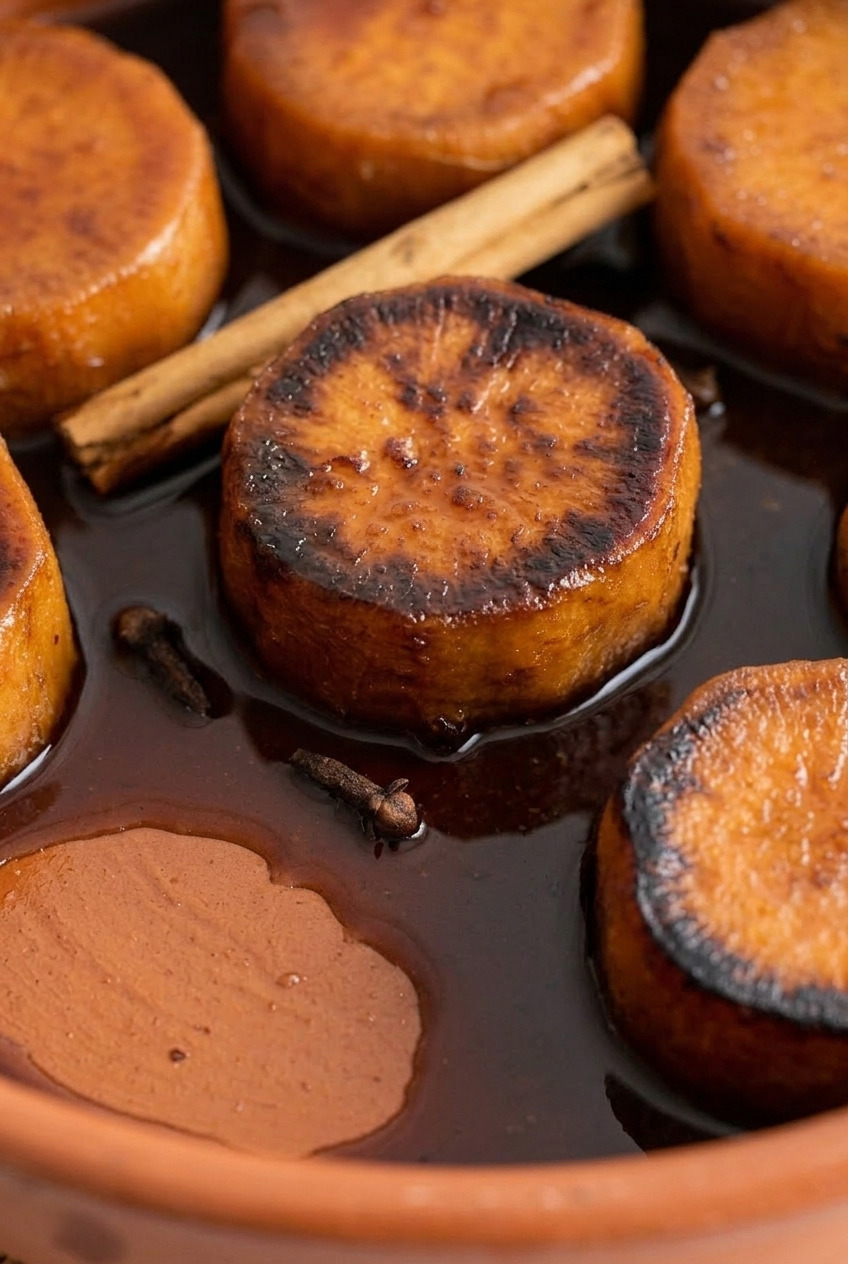
Unrefined cane sugar, sold in hard brown cones, melting down in somebody's pot with a cinnamon stick and a couple of cloves.
I learned what it was going into by asking a woman at the counter what she was cooking, and she pointed at a tray of sweet potato pieces sitting in something dark and glossy.
Camote enmielado. Sweet potato in honey syrup, more or less, except there's no honey in it at all.
It's one of the sweets that goes on the ofrenda for Dia de los Muertos on the first and second of November, and it's what the family eats afterward.
I make it every fall now, usually on a Sunday when the oven is off and I want the house to smell like something.
My wife thinks the syrup is the whole point and eats it with a spoon.
She's not entirely wrong!
Piloncillo doesn't taste like brown sugar. It's smokier, a little mineral, faintly like rum and molasses had an argument.
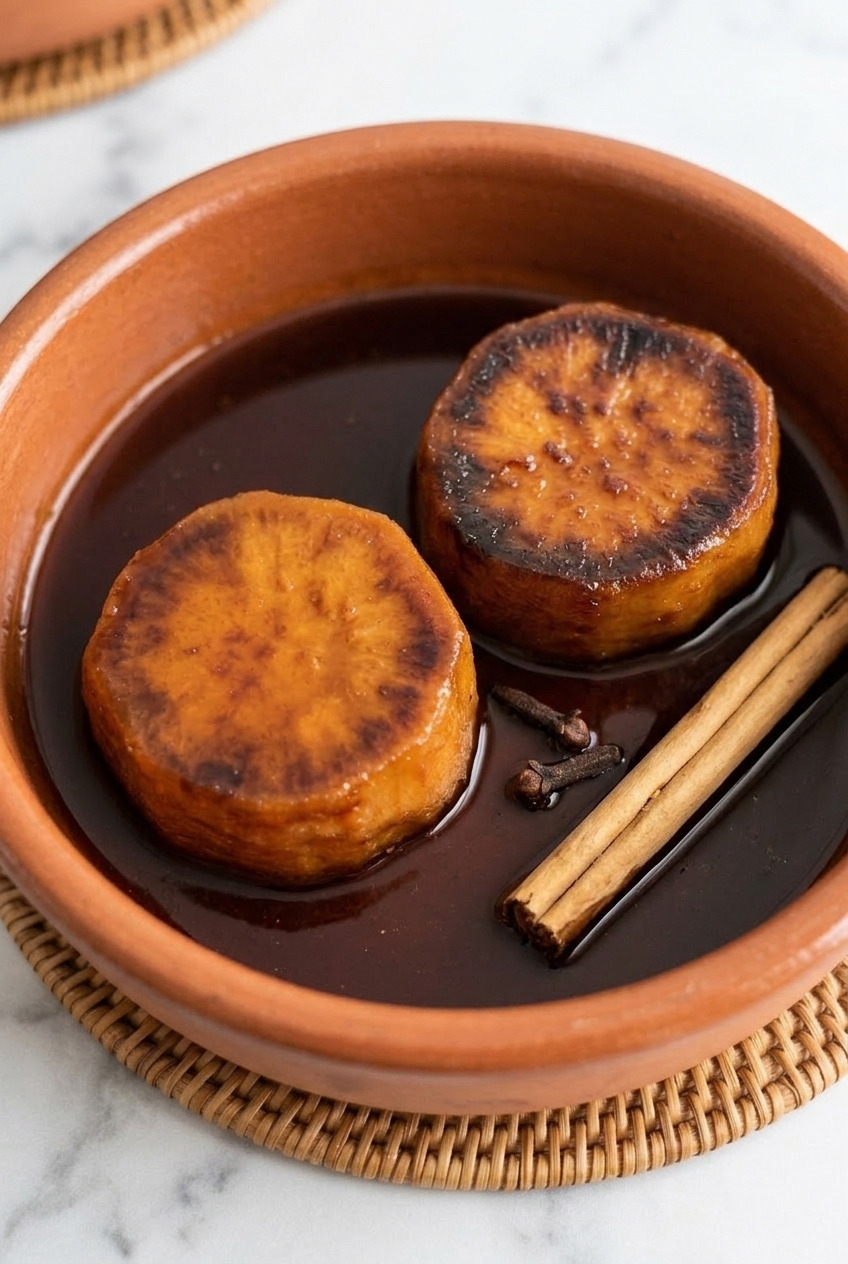
Cooked down around thick pieces of camote for an hour, it turns them dark and shiny and almost candied at the edges.
Five ingredients. One pot. The stove does everything.
What Is Camote Enmielado?
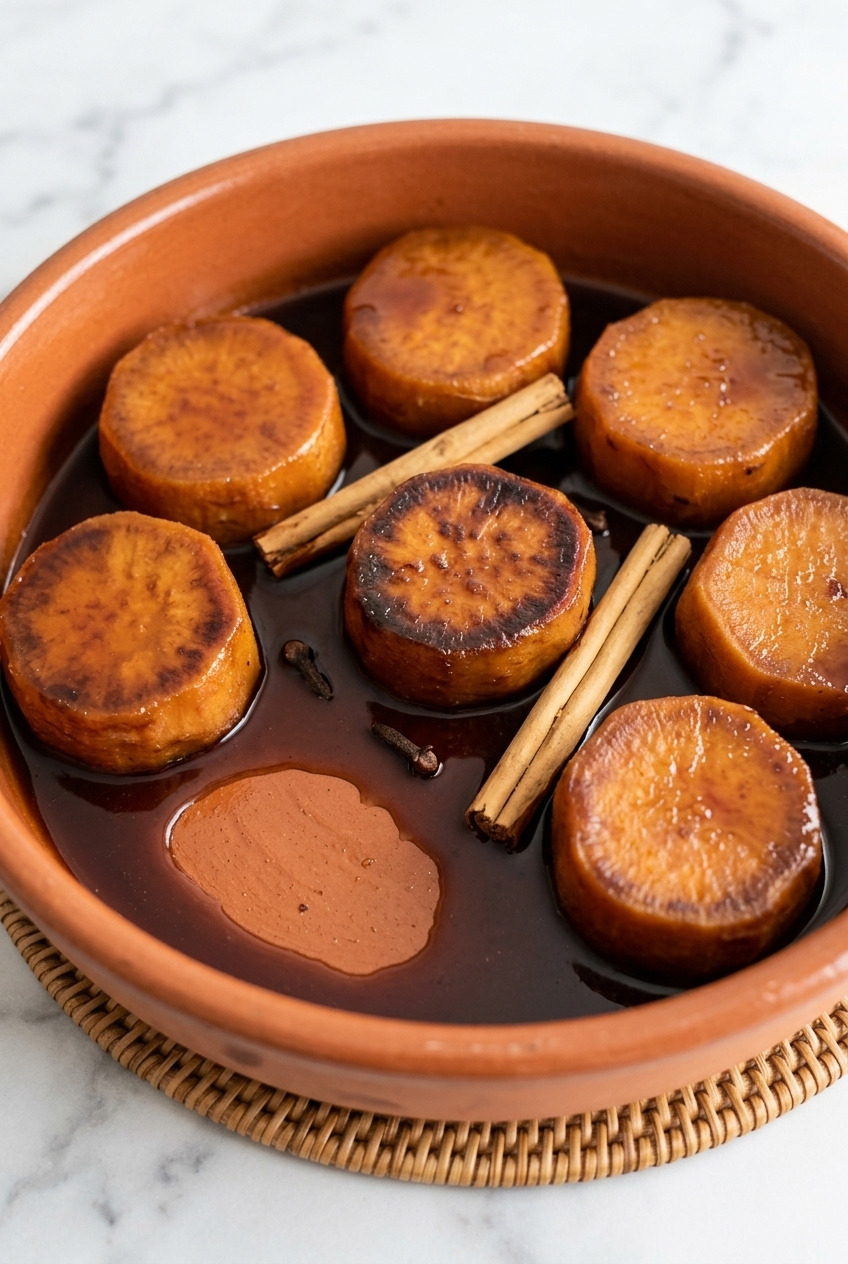
Camote enmielado is sweet potato simmered in piloncillo syrup until it's tender and glazed. Camote is simply the Mexican Spanish word for sweet potato, and enmielado means honeyed, which describes the syrup rather than the ingredients.
It's a dessert or a sweet snack. Not a Thanksgiving side, and there is no marshmallow anywhere near it.
You'll see it under a few names, and they're all close cousins:
- Camote en dulce. The same dish, different name, depending on the region and the cook.
- Camote en tacha. Cooked with cal, or slaked lime, which firms the flesh so it stays glassy and candied. Same idea, extra step.
- Calabaza en tacha. The pumpkin version, made the same way and eaten at the same time of year.
What all of them share is the syrup: unrefined cane sugar, whole spices, water, and time.
When Mexicans Make It
This is autumn food, and specifically Day of the Dead food. Dia de Muertos falls on November 1 and 2, and camote enmielado is one of the sweets set out on the ofrenda alongside pan de muerto and candied pumpkin.
The rest of the season it's street food.
Mexican cities have camoteros, vendors pushing carts with a wood-fired oven built into them. The steam escaping the oven runs through a whistle, so you hear the cart coming from three blocks away before you see it.
That whistle is one of the most recognizable sounds in Mexico City at night.
Worth knowing before you make it? I think so. It changes how the dish tastes.
What Is Piloncillo?
Piloncillo is whole cane sugar, boiled down and poured into cone molds. Nothing is stripped out of it, so it keeps all the molasses and minerals that refining removes.
It's sold as hard brown cones, usually 8 ounces each, in the Latin aisle or at any Mexican grocery. You may also see it as panela or piloncillo en cono.
- Breaking it down. The cones are rock hard. Whack one in a zip-top bag with a rolling pin, or grate it on a box grater. You do not need to be precise, it's all going into water.
- The substitute. 1 ¼ cups packed dark brown sugar plus 1 tablespoon molasses gets you close. Close, not equal. Piloncillo has a smoky edge brown sugar just doesn't.
- Storage. Wrapped tight at room temperature, a cone keeps more or less forever.
Ingredients You Will Need
The ingredient list is short enough to memorize. Every one of them is doing real work.
- Sweet potatoes (2 pounds). Peeled and cut into 1 ½ inch thick rounds or wedges. Thick is not a suggestion, thin pieces collapse into the syrup.
- Piloncillo (one 8-ounce cone). Broken into pieces. This is the entire flavor of the dish, so use the real thing if you can get it.
- Mexican cinnamon sticks (2). Ask for canela. True Ceylon cinnamon is pale, papery, and soft enough to crumble in your fingers. The hard dark cassia sticks in most supermarkets are a different spice and they taste harsher here.
- Whole cloves (2). Two. That's it. Cloves take over fast.
- Star anise (1, optional). Pushes the syrup toward licorice. Some families always use it, some never do.
- Orange peel (2 strips, optional). Not in most published recipes, very common in home kitchens. It lifts the whole pot.
- Water (2 cups). Just enough to barely cover the pieces.
- Fine sea salt (¼ teaspoon). A small amount, and it sharpens the syrup instead of making it salty.
How to Make Camote Enmielado
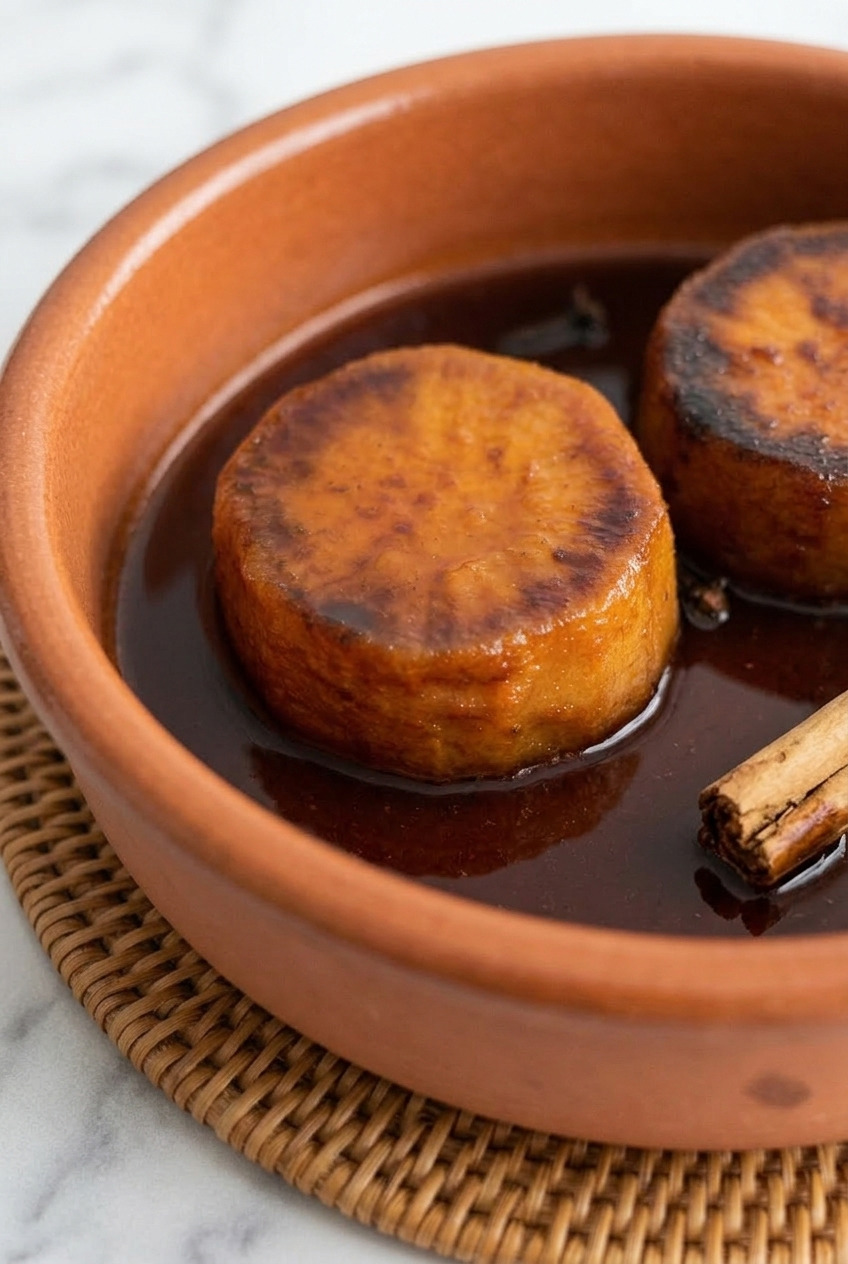
Make the syrup first, then let the camote cook in it. The whole thing is one pot and about an hour of mostly unattended simmering.
Step 1: Cut the Camote Thick
Peel the sweet potatoes and cut them into 1 ½ inch rounds, or wedges if they're fat.
Keep the pieces roughly the same size so they finish together.
Traditional note: plenty of Mexican cooks leave the skin on, especially the street version. It holds the pieces together beautifully. I peel because I like the syrup touching the flesh directly, but either is right.
Step 2: Melt the Piloncillo Into a Miel
Put the broken piloncillo, 2 cups of water, the canela, cloves, star anise, orange peel and salt in a wide heavy pot.
Bring it to a simmer over medium heat and stir now and then until every piece of the cone has dissolved, about 8 to 10 minutes.
Don't add the camote before this is done. Undissolved chunks of piloncillo will sit on the bottom and scorch.
Step 3: Add the Camote in a Single Layer
Lay the pieces into the syrup in one layer, cut side down where you can.
The liquid should come most of the way up the pieces without covering them. Add a splash of water if it doesn't.
Step 4: Simmer Uncovered About an Hour
Keep it at a low, lazy simmer, uncovered, for 50 to 70 minutes.
Uncovered is the point. A lid traps steam and you'll finish with tender camote sitting in sweet water instead of syrup.
Don't stir. Tilt and swirl the pot instead, or spoon syrup over the tops every fifteen minutes or so. A spoon dragged through this pot breaks the pieces.
It's done when a knife goes into a piece with no resistance and the syrup coats the back of a spoon in a slow ribbon.
Step 5: Rest and Glaze
Take the pot off the heat and spoon the syrup over the pieces a few more times.
Let it sit 20 minutes. The camote drinks in syrup as it cools and the surface goes glossy.
Fish out the cinnamon sticks, cloves, star anise and orange peel before serving.
Tips for Thick Syrup and Whole Pieces
- Wide pot, single layer. Stacked pieces steam each other and break. Use the widest pot you own.
- LOW simmer, always. A hard boil is what turns this into sweet mush. You want lazy bubbles at the edges.
- Never stir with a spoon. Swirl the pot or baste the tops. That's the whole trick to intact pieces.
- The ribbon test. Dip a spoon and lift it. Finished syrup runs off in a slow, connected ribbon and leaves a film on the metal.
- Thin syrup? Lift the camote out with a slotted spoon and boil the liquid down on its own for 5 to 8 minutes, then pour it back over.
- Do not overshoot. Piloncillo syrup reduced too far sets like hard candy once it cools. If it stiffens in the pan, stir in a tablespoon or two of hot water.
Variations
- Skin on. The street version. Scrub well, cut thick, cook the same. The skins keep everything in one piece.
- Star anise instead of clove. Softer and more perfumed. Use one whole star and skip the cloves entirely.
- Add guava or tejocote. A few halved guavas or a handful of tejocotes in the last 20 minutes gives the syrup a tart fruit backbone.
- Camote en tacha. Soak the cut pieces in lime water (cal) for a few hours first, rinse well, then cook. The flesh turns firm and almost translucent.
- Purple sweet potato. Gorgeous against the dark syrup, and it holds its shape even better than orange.
- A splash of orange juice. Replace a quarter cup of the water with fresh orange juice for a brighter pot.
How to Serve It
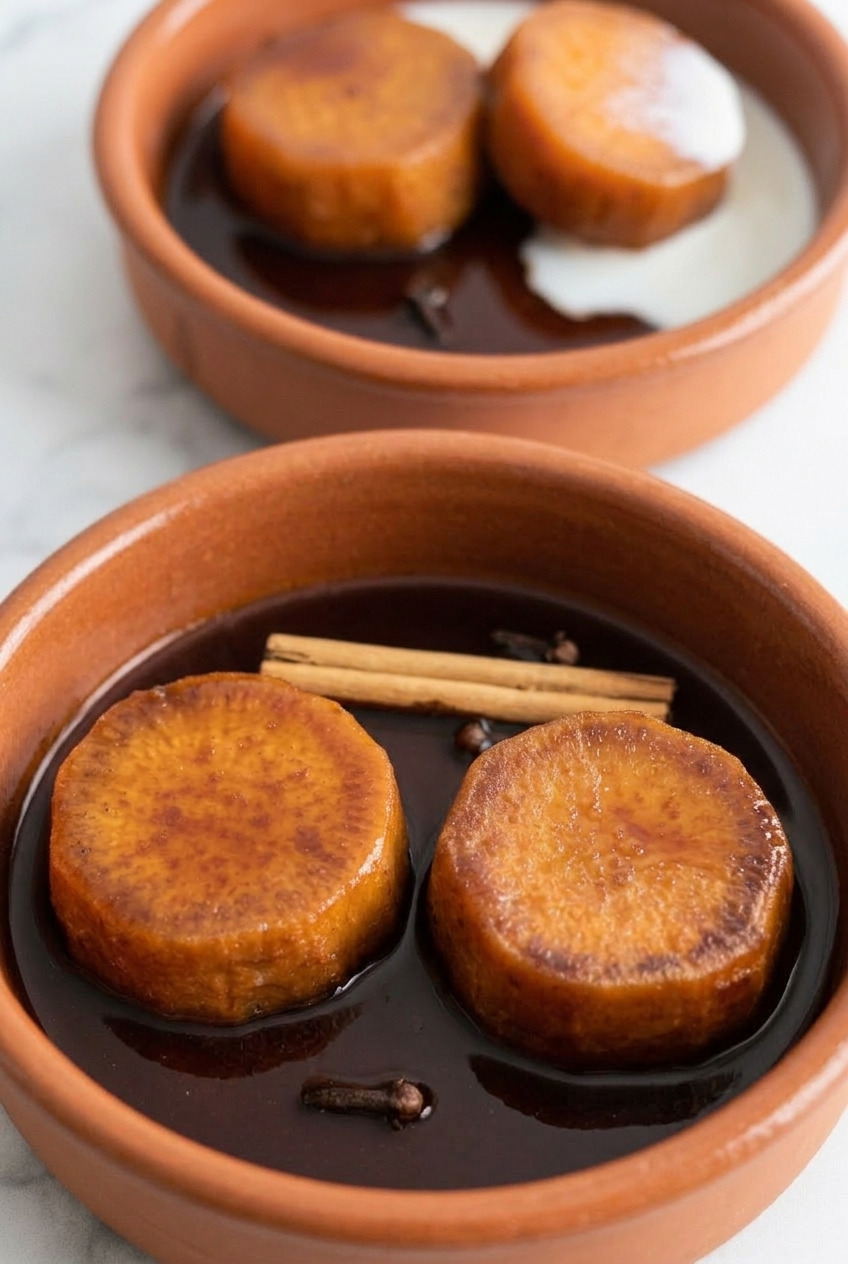
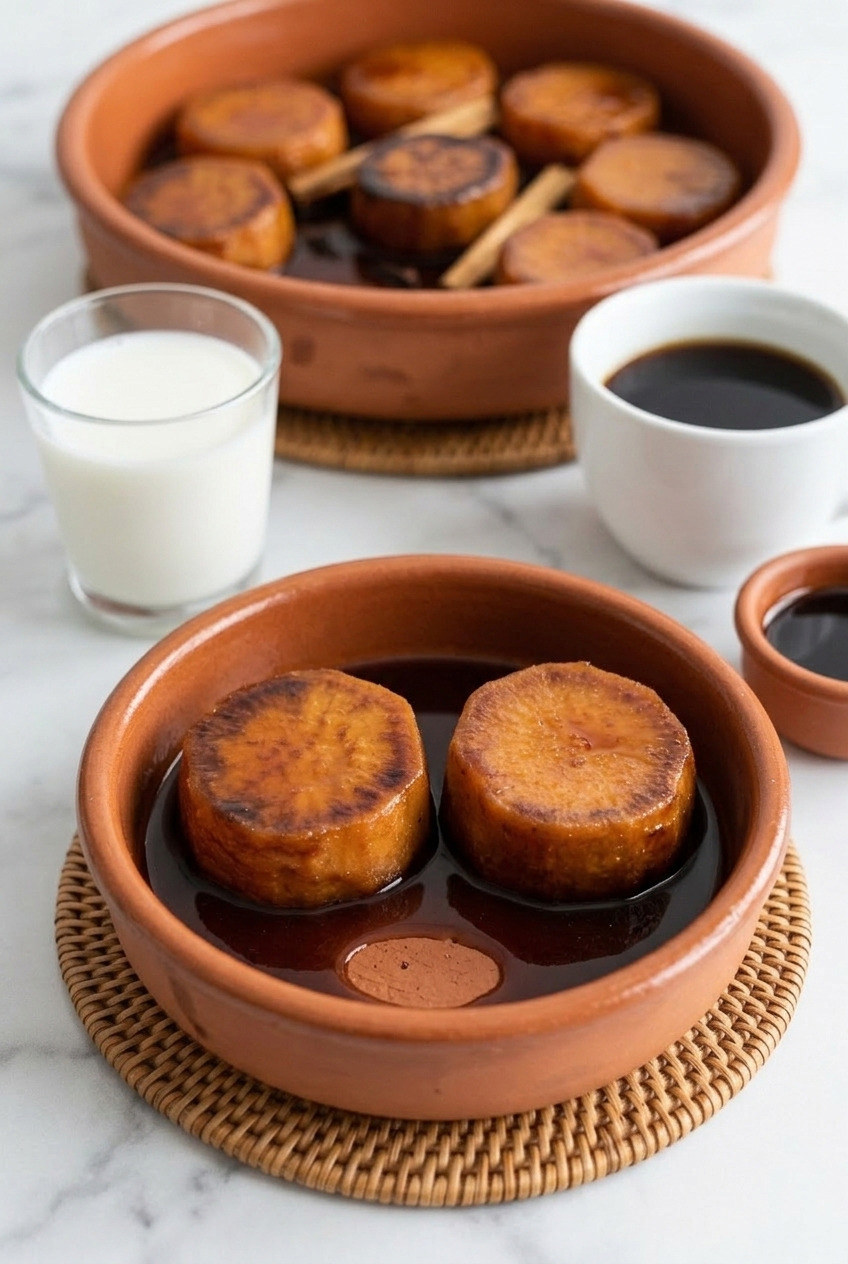
Warm, in a shallow bowl, with plenty of syrup spooned over. That's the default and it's hard to improve on.
- With cold milk. Pour cold whole milk around the pieces so it pools under them. This is how a lot of Mexican families eat it and the contrast is the entire pleasure.
- Over vanilla ice cream. Warm camote, cold ice cream, syrup running everywhere.
- With cafe de olla. Coffee brewed with piloncillo and canela, the same flavors in a cup.
- Room temperature. On the ofrenda it sits out, and it's honestly just as good a few hours later.
- Spooned over thick yogurt. Not traditional at all. Excellent for breakfast.
Another Latin sweet potato dessert worth your stove: my boniatillo, a Cuban custard.
Storage and Leftover Syrup
- The camote. Store it in its syrup, airtight, in the fridge for 5 days. It gets darker and better on day two.
- Reheating. Covered skillet over low heat with a splash of water, or 30 seconds in the microwave. Don't let it boil again.
- Leftover syrup. Do not throw this out. Stir it into coffee, brush it on pancakes, pour it over ice cream, or use it to sweeten a pot of oatmeal.
- Freezing. It works, though the texture softens. Freeze in syrup for up to 2 months and thaw in the fridge.
If burnt sugar is your thing, you already understand flan. This dulce de leche flan is the next thing I'd make.
Frequently Asked Questions
What are camotes enmielados?
Thick pieces of sweet potato simmered slowly in a syrup of piloncillo, cinnamon and clove until they're tender and glazed. It's a traditional Mexican dessert, strongly associated with Day of the Dead and the autumn season.
Are camote and sweet potato the same thing?
Yes. Camote is the Mexican Spanish word for sweet potato, from the Nahuatl camotli. Mexican markets often carry white and purple varieties, and any of them work in this recipe.
What can I use instead of piloncillo?
1 ¼ cups packed dark brown sugar plus 1 tablespoon molasses. It's a good stand-in. Piloncillo has a smoky, mineral depth you won't fully match, so use the cone if there's a Mexican grocery near you.
Can I use ground cinnamon instead of a stick?
You can, but the syrup turns cloudy and slightly gritty. If it's your only option, use 1 teaspoon and accept a murkier pot. Whole canela sticks are worth buying.
Should I cover the pot?
No. Uncovered is how the liquid reduces into syrup. A lid gives you tender camote floating in thin sweet water.
Why is my syrup thin, or why did it turn hard?
Thin means it needs more time uncovered. Lift the camote out and boil the syrup down separately, then pour it back. Hard and candy-like means it went too far, so stir in a spoonful or two of hot water off the heat.
How do I keep the pieces from falling apart?
Cut them at least 1 ½ inches thick, keep the pot at a low simmer, arrange them in a single layer, and never stir with a spoon. Swirl the pot or baste the tops instead.
Recipe
Camote Enmielado (Mexican Sweet Potatoes in Piloncillo Syrup)
Ingredients
For the Camote
- 2 pounds sweet potatoes (camote) peeled, cut into 1 ½-inch rounds or wedges
For the Piloncillo Syrup
- 8 ounces piloncillo cone broken into pieces, or 1 ¼ cups packed dark brown sugar plus 1 tablespoon molasses
- 2 cups water
- 2 sticks Mexican cinnamon (canela)
- 2 whole cloves
- 1 whole star anise optional
- 2 strips orange peel optional
- ¼ teaspoon fine sea salt
To Serve (Optional)
- cold whole milk or vanilla ice cream
Instructions
Prep the Camote
- Peel the sweet potatoes and cut them into 1 ½-inch thick rounds or wedges, keeping the pieces roughly the same size. Thick pieces are important, thin ones fall apart in the syrup.
Make the Piloncillo Syrup
- Combine the broken piloncillo, water, cinnamon sticks, cloves, star anise, orange peel and salt in a wide heavy pot.
- Bring to a simmer over medium heat and stir occasionally until the piloncillo has completely dissolved, 8 to 10 minutes.
Simmer and Glaze
- Lay the camote pieces into the syrup in a single layer. The liquid should come most of the way up the pieces without covering them. Add a splash of water if needed.
- Simmer uncovered over low heat for 50 to 70 minutes. Do not stir with a spoon: swirl the pot or spoon syrup over the tops every 15 minutes.
- The camote is done when a knife slides in with no resistance and the syrup coats the back of a spoon in a slow ribbon.
- Remove from the heat, baste the pieces a few more times, and rest 20 minutes so they absorb syrup and turn glossy.
- Remove the cinnamon sticks, cloves, star anise and orange peel. Serve warm in shallow bowls with the syrup spooned over, with cold milk poured around if you like.
Notes
- Piloncillo substitute: 1 ¼ cups packed dark brown sugar plus 1 tablespoon molasses.
- Use canela, not cassia. Mexican cinnamon is pale and soft, and it tastes far better here than hard supermarket cinnamon sticks.
- Cook uncovered. A lid stops the syrup from reducing and leaves you with thin sweet water.
- Thin syrup: Lift the camote out and boil the liquid down 5 to 8 minutes on its own, then pour it back over.
- Too thick: Piloncillo syrup sets hard when overcooked. Stir in a tablespoon or two of hot water off the heat.
- Storage: Keep it in its syrup, airtight, up to 5 days refrigerated. The leftover syrup is excellent in coffee or over ice cream.