The truck comes through in November with a loudspeaker on the roof.
It plays a recorded voice calling out a single long syllable, over and over, moving slowly down the street.
The first time I heard it I thought something was wrong.
Then my host family's daughter grabbed her coat and ran.
She came back with two sweet potatoes wrapped in newspaper, both of them almost too hot to hold.
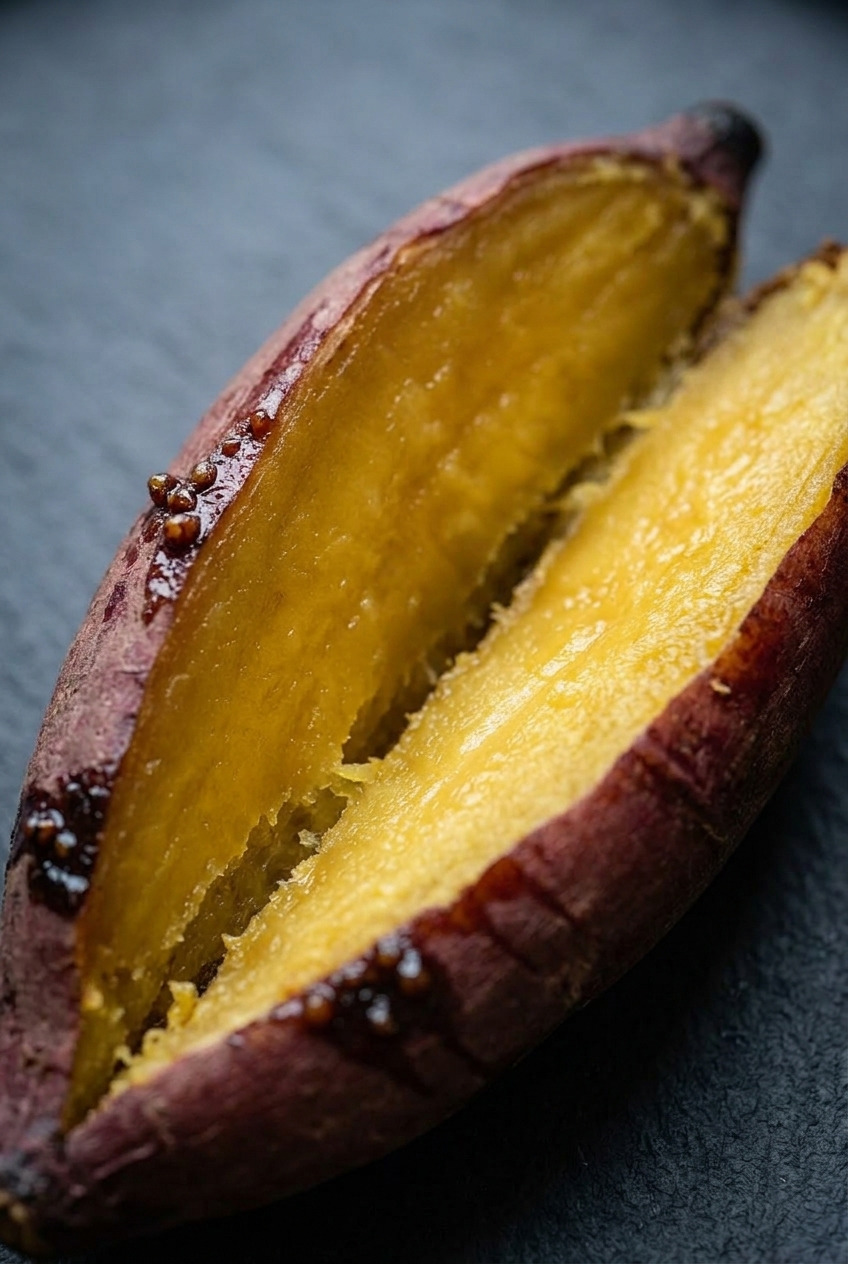
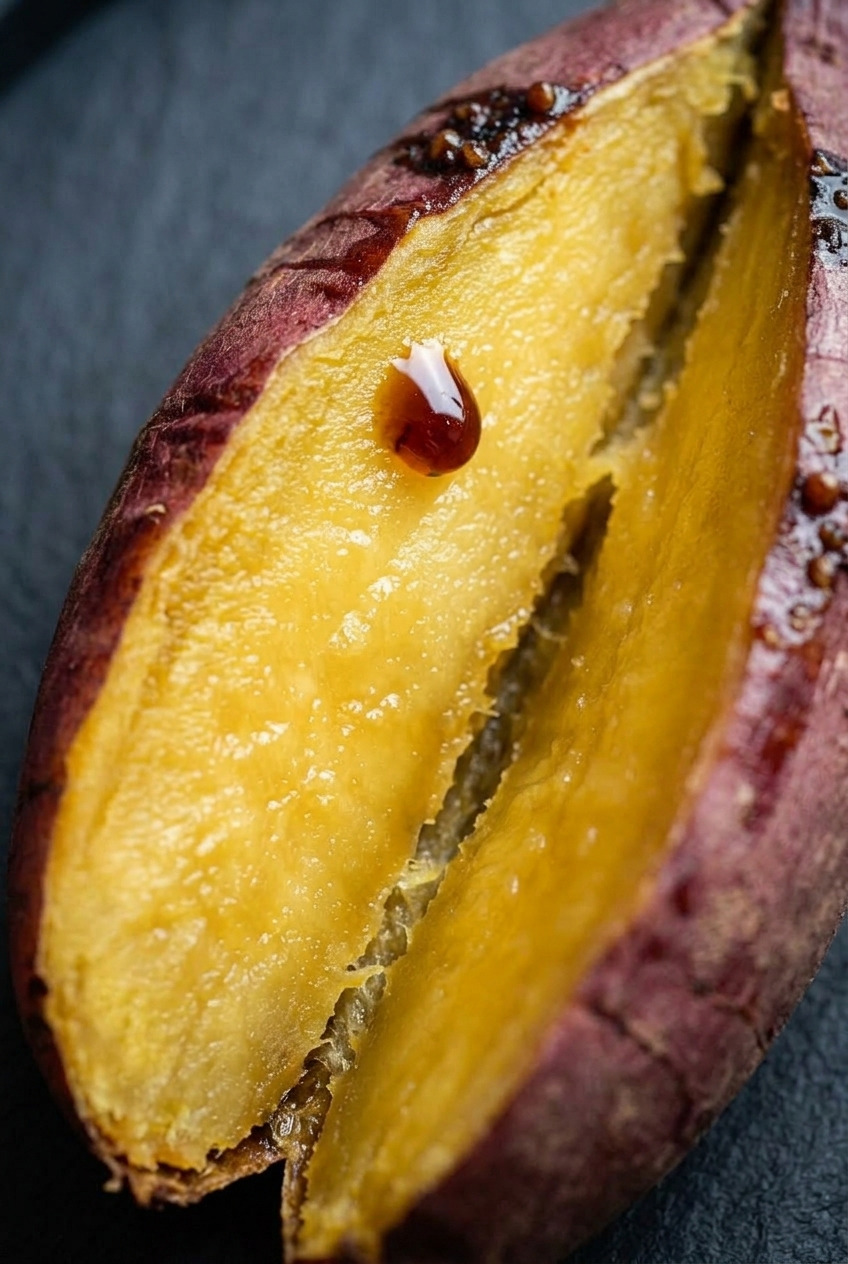
We split them at the counter and the inside was the color of a marigold and about as sweet as a caramel.
No butter, no sugar, no salt.
Just the potato, roasted in a bed of hot stones in the back of a truck.
I chased that for a long time in my own oven and kept missing.
What I was missing was patience.
A hot oven gives you a roasted sweet potato, which is perfectly nice.
A slow oven gives you yaki imo, which is a different food.
The whole trick is holding the potato at a low temperature long enough for an enzyme inside it to convert its starch into sugar before it finishes cooking.
That takes about 90 minutes and no attention whatsoever.
My wife now asks for these by name on cold Sundays.
One ingredient, one sheet pan, and the best thing you will make all winter.
What Yaki Imo Is
Yaki imo is Japanese winter street food, and it's exactly what the name says. Yaki means grilled or roasted, imo means potato, and the dish is a whole sweet potato slowly roasted until the flesh turns jammy and sweet.
Traditionally it's cooked in an ishiyaki imo truck, a small vehicle carrying a roasting drum full of hot pebbles.
The stones hold a steady, moderate heat and surround the potato completely, which is exactly the environment we're copying in an oven.
You buy one, they wrap it in paper, and you eat it walking.
It's a snack rather than a side dish, sold from late autumn through the winter.
The whole tradition rests on one thing: at the right temperature, a sweet potato makes its own sugar.
The Sweet Potato Matters More Than the Recipe
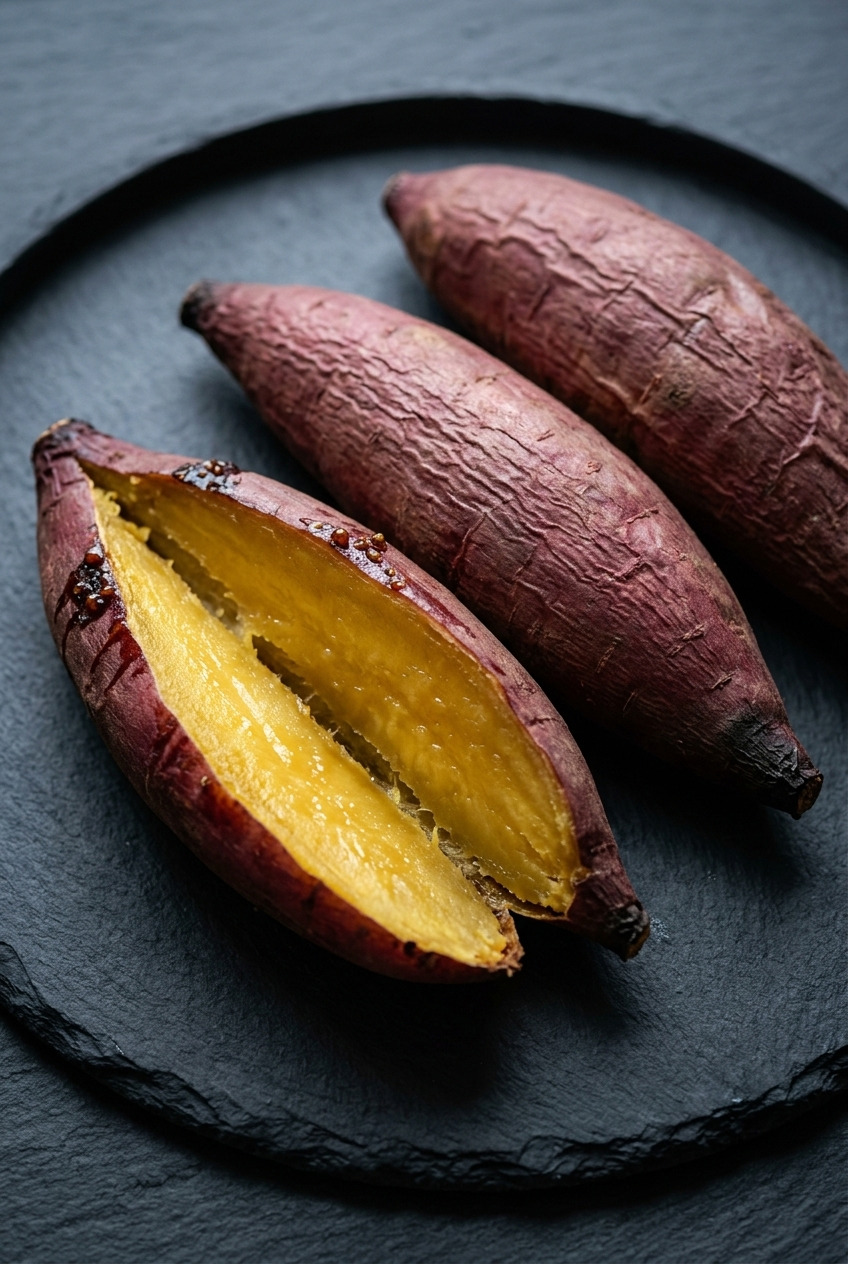
There is only one ingredient, so this choice is the entire recipe. Japanese varieties have purple or reddish skin and pale yellow flesh that roasts into something dense and chestnut-like.
- Beni haruka. The current favorite in Japan and the sweetest of the common varieties. If your store has it, buy it.
- Beni azuma. The old classic. Slightly firmer and a bit less sweet, with a wonderful dry chestnut texture.
- Silk sweet. Widely sold in US Asian groceries and very reliable. Smooth, sweet, and less fibrous.
- Murasaki. Purple skin, white flesh, drier and nuttier. Excellent, just less dramatic in color.
Can you use an American orange sweet potato? Yes, and it will roast beautifully. It will also be wetter and softer, closer to a baked yam than to yaki imo, because the flesh has more moisture and less starch to convert. It's a good dish. It's a different dish, and it's worth knowing that going in.
Look for a potato that feels heavy for its size with unbroken skin and no soft spots. Around 10 to 12 ounces each is ideal, because bigger ones take much longer without getting any better.
Where to Buy Japanese Sweet Potatoes
Japanese and Korean groceries are the surest bet. Look for them loose in the produce section, usually labeled by variety.
Large Asian supermarkets like H Mart and Mitsuwa carry them all winter.
A growing number of regular US supermarkets stock silk sweet or murasaki under a generic "Japanese sweet potato" sign.
Pro tip: Buy them a week before you plan to roast them and keep them somewhere cool and dark, never in the fridge. Sweet potatoes get sweeter in storage as the starch slowly breaks down, and refrigeration ruins the texture permanently.
Why Low and Slow Makes Them Sweet
Sweet potatoes contain an enzyme that turns starch into maltose. That enzyme works fastest in a fairly narrow band, roughly between 150°F and 170°F inside the potato.
The longer the flesh sits in that band, the more sugar it makes.
A 425°F oven blasts the potato past that window in a few minutes, so the flesh cooks through with barely any conversion happening.
You get a soft, mild, starchy potato.
A 300°F oven climbs slowly, holds the flesh in the enzyme band for most of an hour, and comes out tasting sweet enough that people assume you added something.
That's the whole science, and it's why every real yaki imo recipe insists on time over temperature.
How to Make Yaki Imo in the Oven
Step 1: Wash and Dry
Scrub the potatoes under cold water and dry them completely.
Leave the skins on and don't oil them, because the skin is meant to wrinkle and blister.
Don't prick them either, since the low heat means there's nothing to burst.
Step 2: Cold Oven, Low Heat
Put the potatoes on a foil-lined sheet pan and place them in a cold oven, then set it to 300°F.
Starting cold adds even more slow climb through the enzyme band.
Give them room so air moves around each one.
Step 3: Roast for 80 to 120 Minutes
Roast for 80 to 120 minutes depending on size.
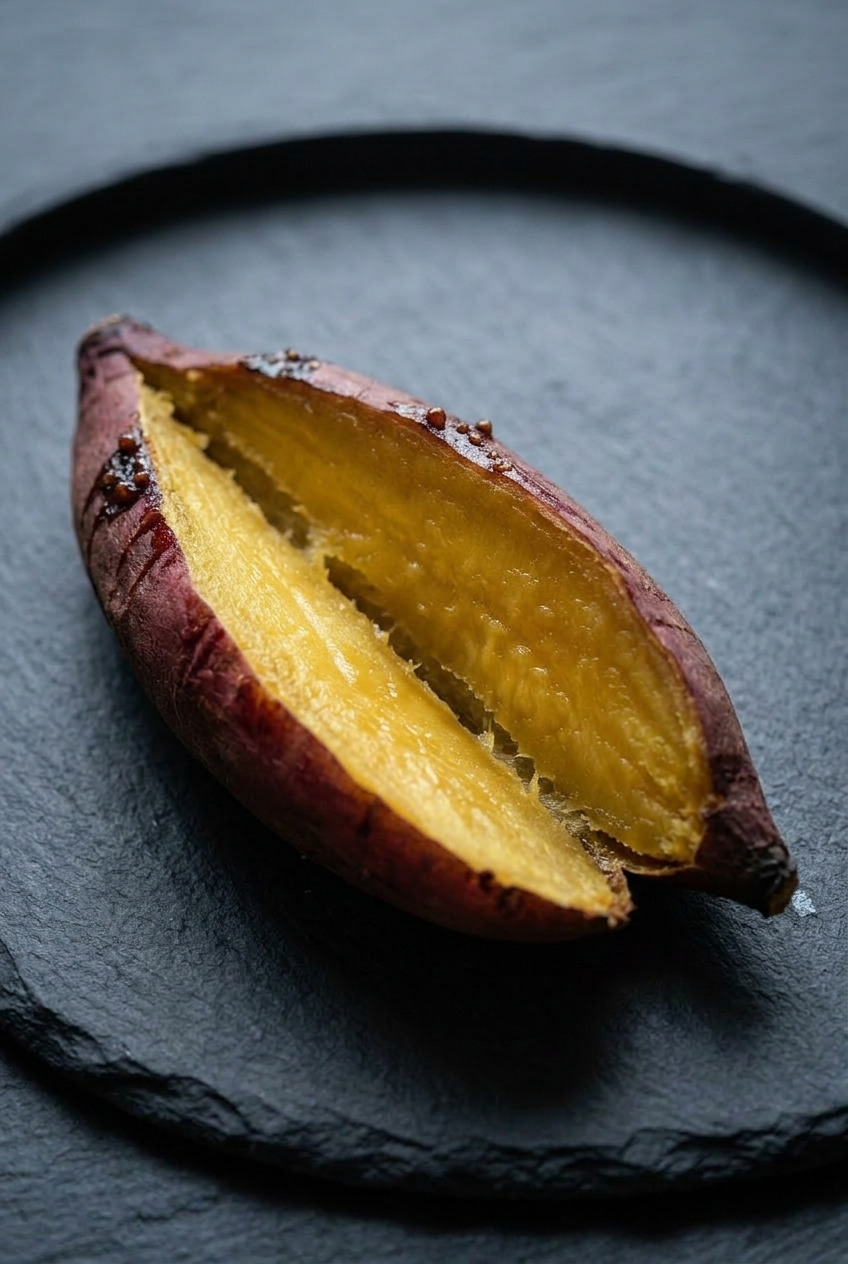
Around the hour mark you'll see dark syrup start to bubble out of the ends and any splits in the skin, and the kitchen will smell like caramel.
That syrup is the sugar you've been making, and it's the sign you're on track.
Step 4: Rest, Then Split
Let them rest on the pan for 10 minutes.
Split each one lengthwise with your thumbs and eat it straight from the skin.
The flesh should be deep golden, glossy, and dense enough to hold its shape when you scoop it.
Foil Wrapped or Bare
Go bare. I've done both side by side more than once, and bare is closer to the truck version every time.
Bare skin dries as it roasts, wrinkles, and blisters in a few spots.
Moisture escapes, so the flesh concentrates and the flavor gets more intense.
Foil traps the steam and effectively bakes the potato in its own moisture.
The result is softer and more evenly cooked all the way through, which some people prefer, but it's wetter and milder.
Wrap them in foil only if your oven runs hot and dry and you're finding the skins scorch before the middle is done.
Other Methods
- Donabe with pebbles. The closest home version of the real thing. A clay donabe filled with roasting pebbles, potatoes nestled in, lid on, over low heat for about an hour. If you own one, use it.
- Toaster oven. Works well for one or two, same low temperature, same long time.
- Stovetop in a heavy pot. Lid on, lowest possible flame, turned every twenty minutes. About an hour and it's surprisingly good.
- Air fryer. 300°F for 50 to 60 minutes. Faster and decent, though the skin ends up drier and tougher than it should be.
- Microwave. It cooks a sweet potato in eight minutes and it will not be yaki imo. The enzyme never gets its time. I'm not going to pretend otherwise.
How to Tell When It's Done
- Syrup at the ends. Dark, sticky, caramelized drips on the pan around each potato.
- A skewer goes straight through. No resistance at all, from skin to skin.
- It gives when squeezed. Use a towel and press gently. It should feel soft the whole length, not firm in the middle.
- The skin has pulled in. It wrinkles and loosens slightly from the flesh underneath.
How to Eat Yaki Imo
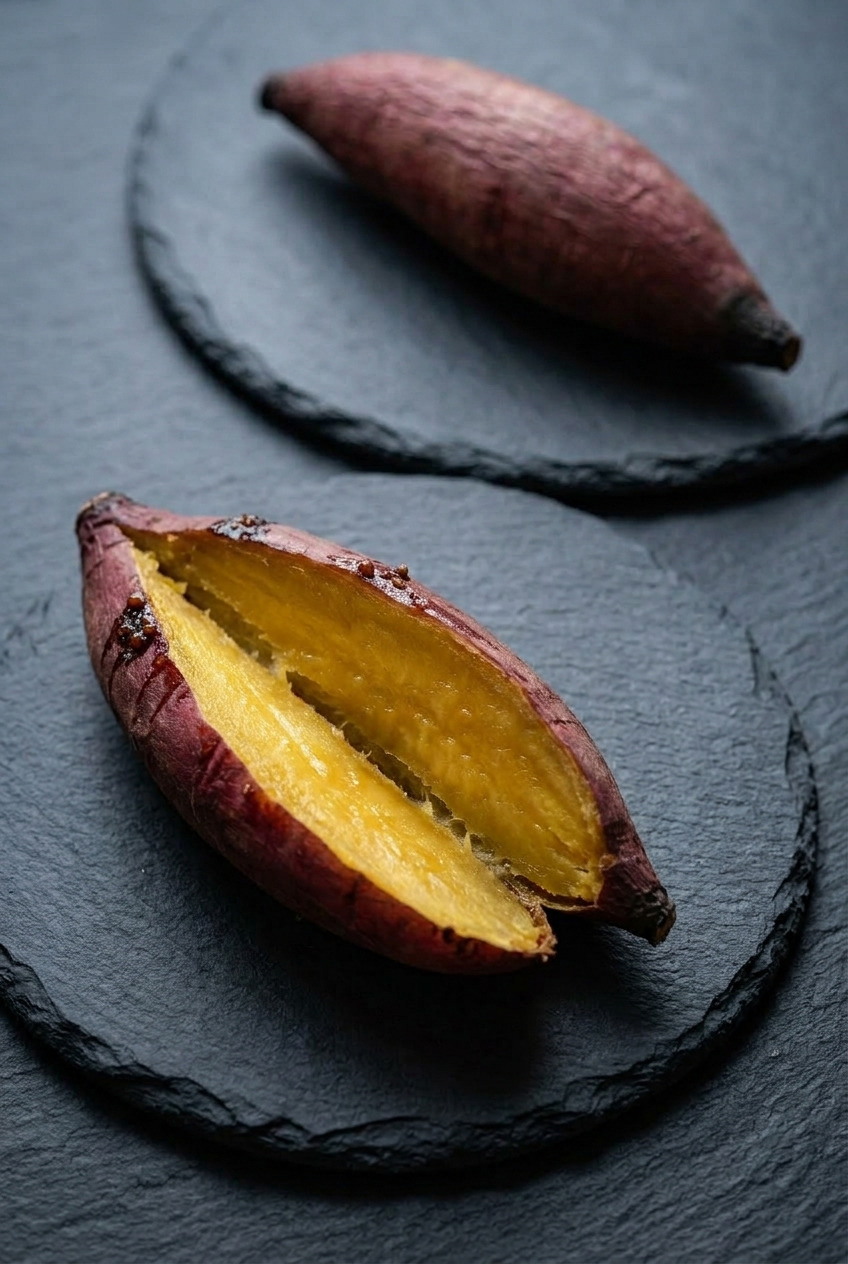
Hot, split down the middle, straight from the skin. That's it, and that's how it's sold.
No butter, no brown sugar, no marshmallows, no cinnamon.
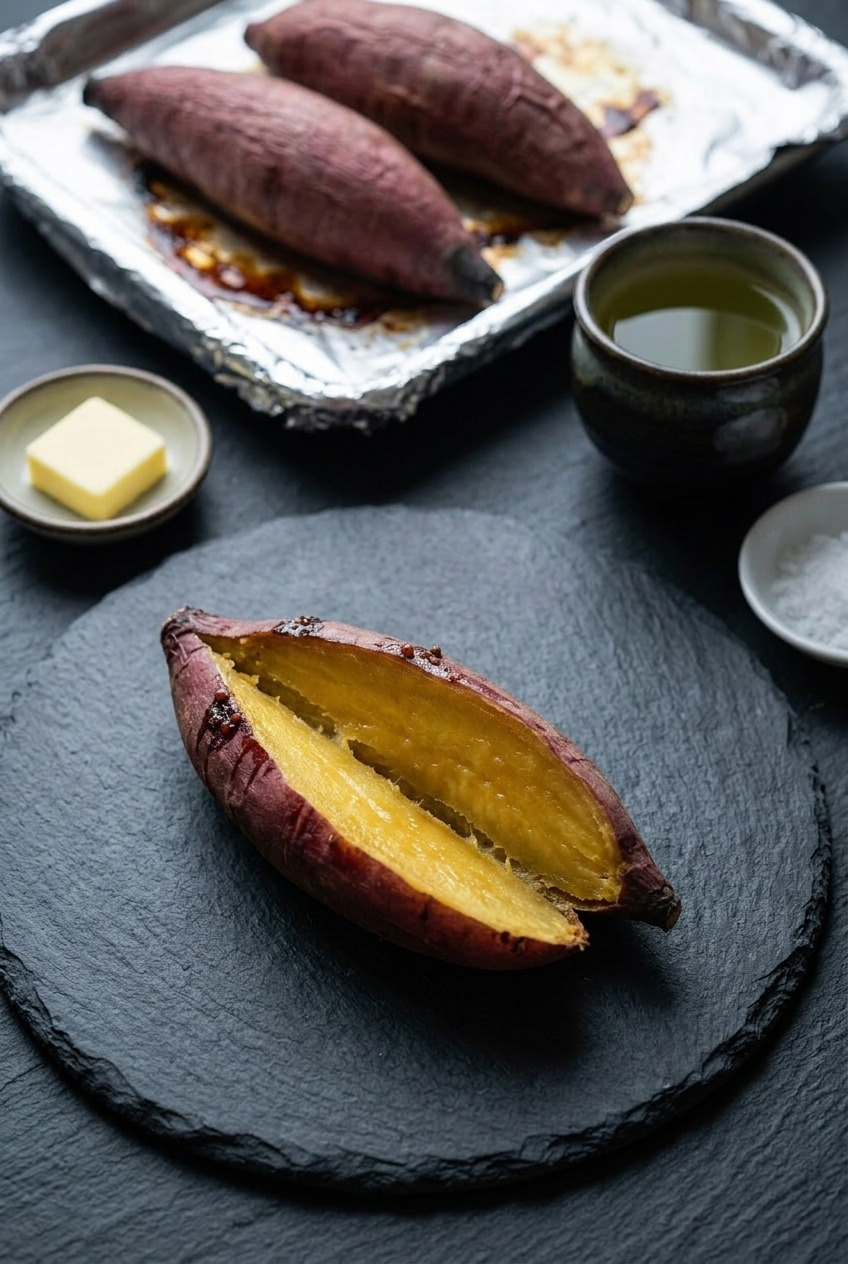
Adding butter and flaky salt is an American liberty and I take it about half the time, so I'm not going to lecture you.
Just eat the first one plain so you know what you actually made.
It's a snack more than a side, though it's excellent next to grilled fish or a bowl of miso soup.
Cold Yaki Imo Is a Real Thing
Chill one overnight and eat it cold the next day. This is a genuine Japanese preference, not a leftovers workaround, and there are shops that sell them chilled on purpose.
Cold, the flesh firms up into something dense and smooth that eats almost like a custard.
The sweetness reads differently too, cleaner and less caramelly.
Wrap it whole and refrigerate it, then eat it cold with a spoon.
What's not to love about a dessert that requires no work the second day?
Storing and Reheating
- Refrigerated. Wrapped whole, up to 4 days. Excellent cold, as above.
- Frozen. Wrapped individually up to 2 months. Thaw in the fridge overnight.
- Reheating. A 300°F oven for 15 minutes, or split side down in a dry pan over medium heat until the cut face caramelizes.
Frequently Asked Questions
What is yaki imo?
A whole Japanese sweet potato roasted slowly until the flesh turns deep golden and jammy sweet. It's winter street food in Japan, traditionally cooked in a truck carrying a drum of hot stones and sold wrapped in paper.
Which variety should I use, and where do I buy it?
Beni haruka is the sweetest and the current favorite, with beni azuma and silk sweet close behind. Japanese, Korean, and large Asian groceries carry them all winter, and some regular supermarkets now stock them under a generic Japanese sweet potato label.
Can I use an American orange sweet potato?
Yes, and it roasts well with the same method. It'll be wetter and softer than the real thing because the flesh holds more moisture, so expect a baked sweet potato rather than the dense chestnut texture of yaki imo.
Should I wrap them in foil?
I don't. Bare skin wrinkles and blisters, moisture escapes, and the flesh concentrates. Foil gives you a softer, moister, milder potato, which is a fine result but not the street version.
Why is my sweet potato not sweet?
Almost always because the oven was too hot. At 425°F the flesh races past the temperature band where the enzyme converts starch to sugar. Drop to 300°F and give it 90 minutes.
How long does it really take?
80 to 120 minutes at 300°F, depending on size. A 10 ounce potato lands around 90 minutes. There's no way to rush it and still call it yaki imo.
Can I make it in an air fryer or a microwave?
An air fryer at 300°F for 50 to 60 minutes does a respectable job, though the skin gets tough. The microwave cooks the potato but skips the sugar conversion entirely, so it comes out mild and starchy.
Is cold yaki imo actually good?
It's genuinely great, and it's a real preference in Japan rather than a way to use up leftovers. Chilled overnight, the flesh firms into something close to a dense custard.
Recipe
Yaki Imo (Japanese Roasted Sweet Potatoes)
Ingredients
For the Yaki Imo
- 4 Japanese sweet potatoes 10 to 12 ounces each, beni haruka, beni azuma, or silk sweet
- flaky salt to serve, optional
- unsalted butter to serve, optional and not traditional
Instructions
Roast the Sweet Potatoes
- Scrub the sweet potatoes under cold water and dry them completely. Leave the skins on, do not oil them, and do not prick them.
- Set the potatoes on a foil-lined sheet pan with space around each one, place the pan in a COLD oven, then set the oven to 300F. Starting cold gives a slower climb through the temperature band where starch converts to sugar.
- Roast 80 to 120 minutes depending on size, about 90 minutes for a 10 ounce potato. Around the hour mark dark syrup will bubble from the ends and splits in the skin.
- Test for doneness: a skewer slides through with no resistance, the potato gives softly along its whole length when squeezed through a towel, and the skin has wrinkled and loosened.
- Rest 10 minutes on the pan, then split each potato lengthwise and eat the flesh straight from the skin, plain or with flaky salt and butter.
Notes
- Low oven, long roast: the enzyme that turns starch into sugar works between about 150F and 170F inside the potato, so a hot oven gives you a starchy potato instead of a sweet one.
- Roast bare, not in foil: bare skin wrinkles and blisters and the flesh concentrates; foil steams it soft and mild.
- Buy them early: a week in a cool dark place makes them sweeter. Never refrigerate raw sweet potatoes.
- Cold yaki imo: chilled overnight the flesh firms into something close to a dense custard, and it is a real Japanese preference.
- Storage: 4 days refrigerated wrapped whole, 2 months frozen.