The bowl came to the table looking like almost nothing.
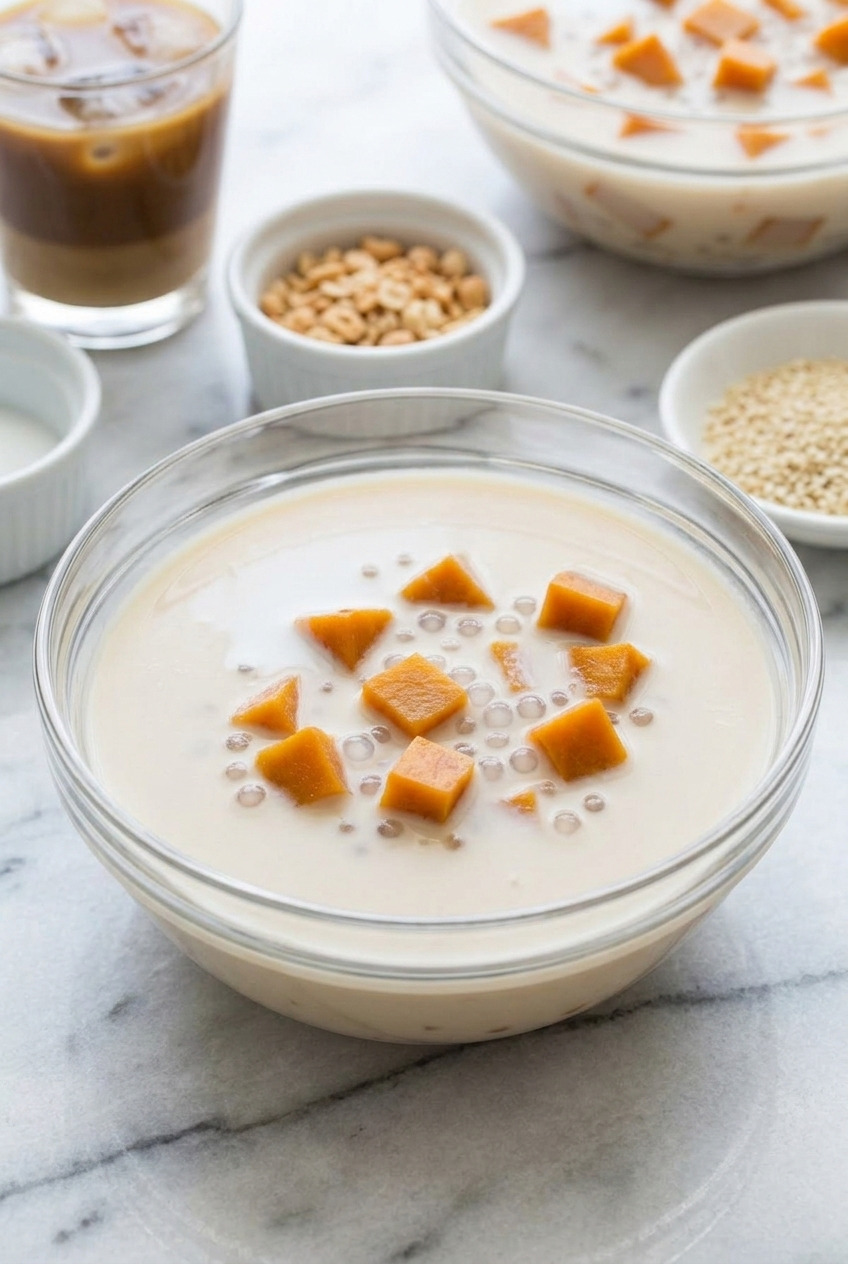
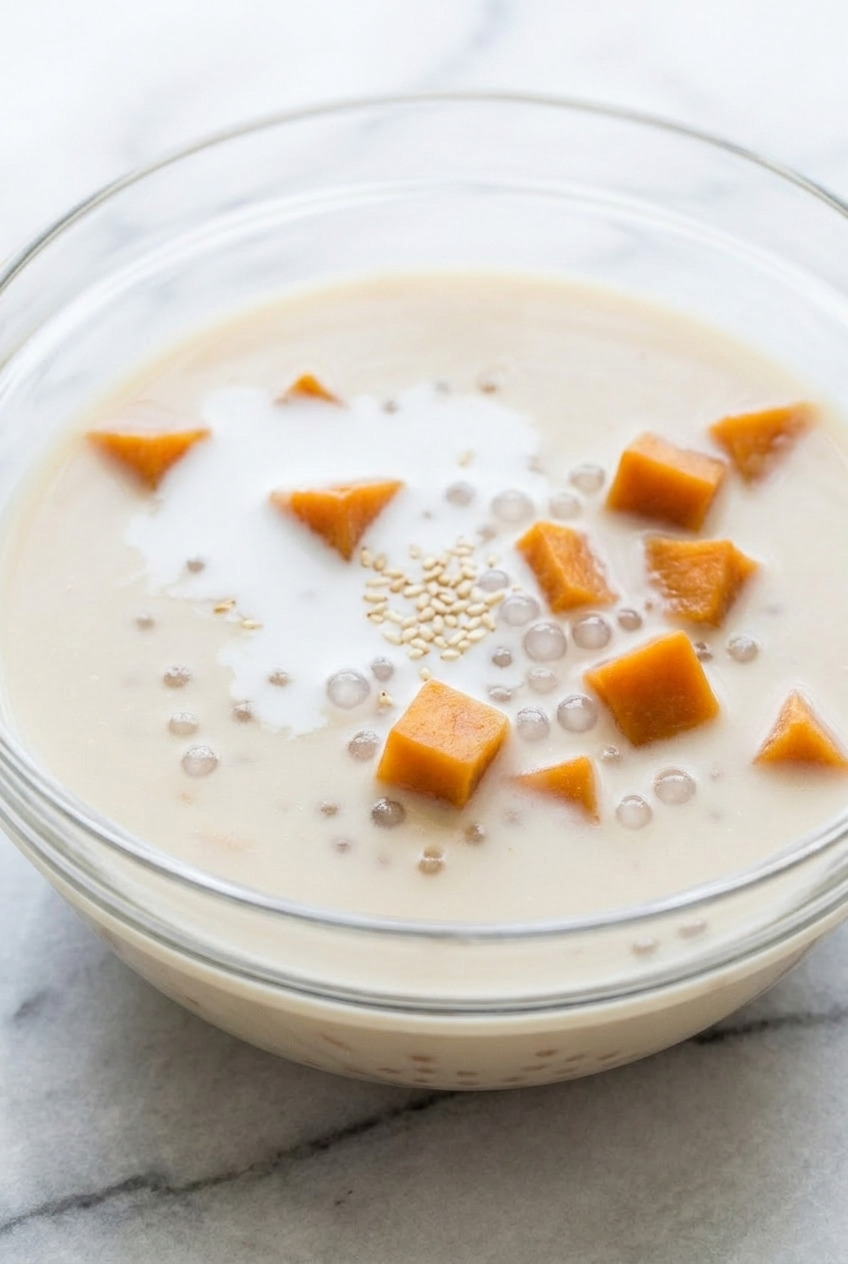
Thin pale liquid, a few cubes of orange sweet potato sitting near the bottom, and a scatter of little clear pearls suspended in between.
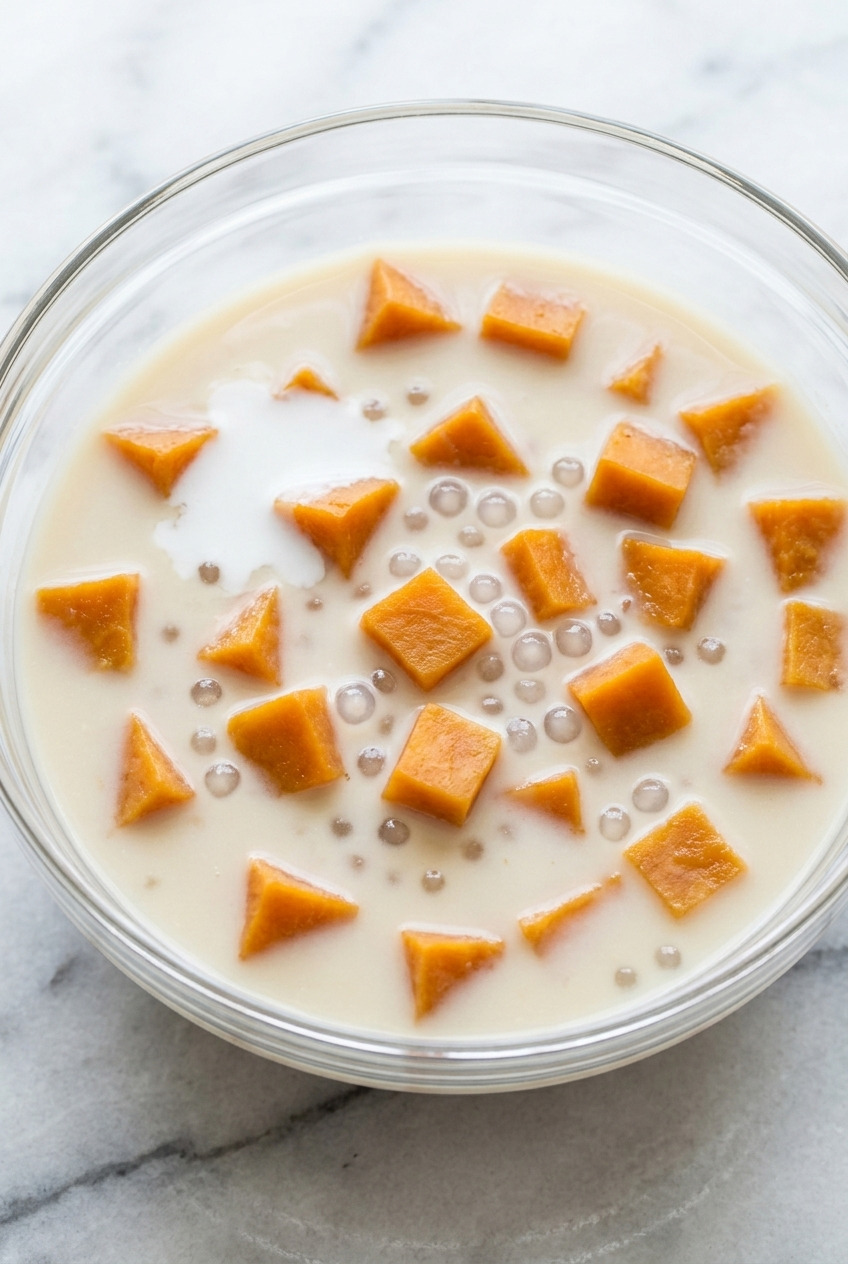
I remember thinking the kitchen had forgotten to finish it.
Then I tasted it and understood that this is a soup you drink.
Barely sweet, salty at the edge from the coconut milk, warm ginger somewhere underneath, and the sweet potato so soft it gives up the second it hits your tongue.
That was a Vietnamese dessert shop in a strip mall with about six tables and a laminated menu of forty different chè.
Chè is the whole family of Vietnamese sweet soups, and once you learn the word you start seeing it everywhere.
I've been making the sweet potato one at home for years now because it's the simplest of them and, I'd argue, the most comforting.
My wife requests it cold in August over crushed ice.
I want it hot in February with extra ginger.
Both of us are right!
One thing to get in your head before you start: this is not a pudding.
It should pour off a spoon like thin cream, and if yours holds its shape you've cooked it too far.
Under an hour, one pot for the soup and a small one for the pearls.
What Is Chè?
Chè is the Vietnamese word for a whole category of sweet soups, puddings and drinks. It covers dozens of different things, hot and cold, thin and thick, served in bowls, glasses and plastic cups from carts.
Khoai lang just means sweet potato. So chè khoai lang is, quite literally, sweet potato chè.
A few of its siblings, so you can spot them on a menu:
- Chè bà ba. Richer and more crowded, with cassava, taro and sago all in the same coconut broth.
- Chè chuối. Banana in coconut milk with tapioca, usually thicker.
- Chè đậu xanh. Mung bean, often served warm.
- Chè ba màu. The three-color one in a tall glass over ice, the version most Americans meet first.
Chè khoai lang is the plainest of the bunch. Sweet potato, coconut, a little sugar, a few pearls. That's the appeal.
What You Will Need
Everything here is either at a regular grocery store or at a Vietnamese one. I'll give you the authentic version first and the swap second.
For the soup:
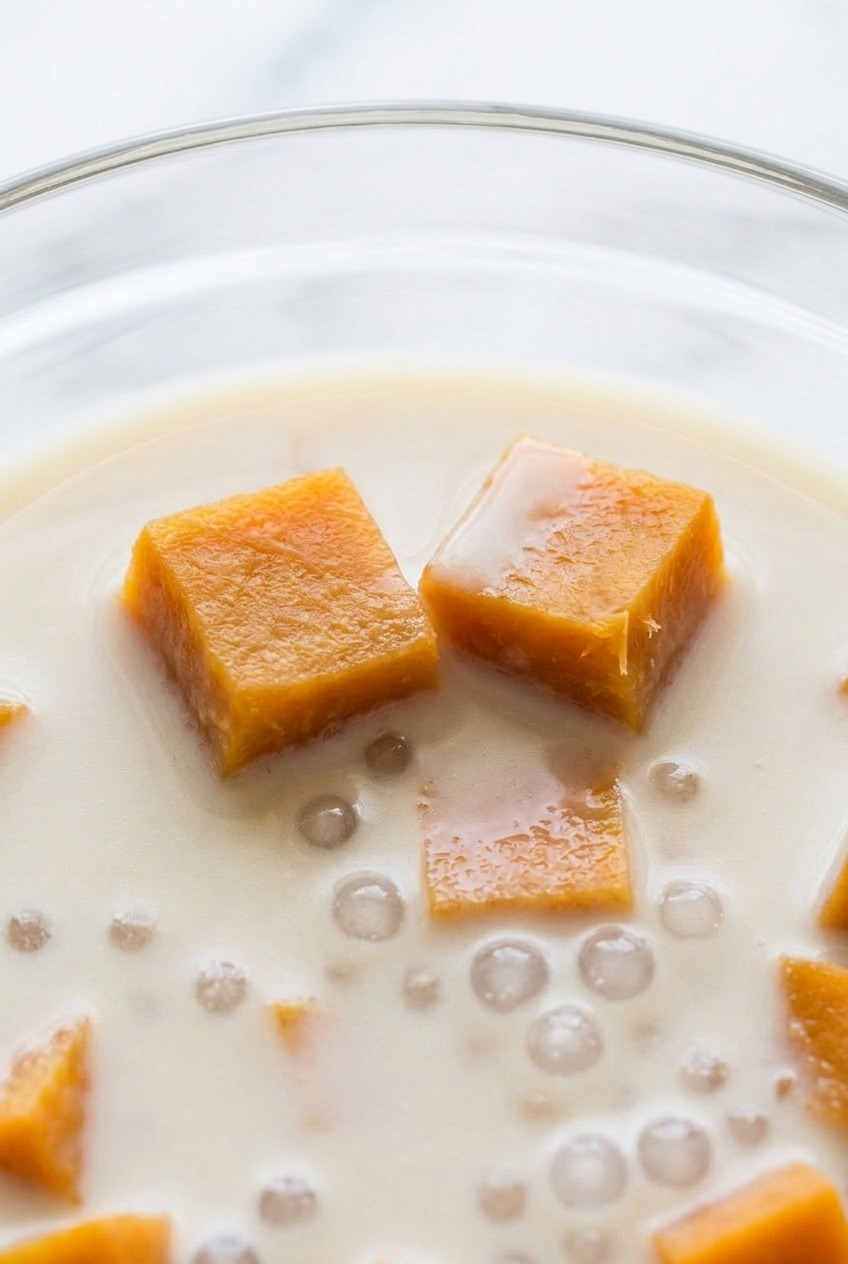
- Sweet potato (1 ½ pounds). Peeled and cut into ¾ inch cubes. Vietnamese khoai lang often has purple skin and pale yellow flesh and is drier and less sweet. An American orange sweet potato is completely fine and gives a brighter bowl.
- Rock sugar (3 ounces). Đường phèn, sold in chunks. It's cleaner and less cloying than granulated and it's what most Vietnamese cooks reach for. Substitute: ½ cup granulated sugar.
- Pandan leaves (2, knotted). Frozen pandan is in every Southeast Asian grocery. It smells like vanilla and cut grass and it is the difference between good and memorable. Substitute: ½ teaspoon pandan extract, added at the end.
- Fresh ginger (4 thin slices). Warmth in the background. Essential if you're serving this hot, optional if you're serving it cold.
- Water (4 cups) and fine sea salt (¼ teaspoon).
For the coconut broth:
- Full fat coconut milk (one 13.5-ounce can). Full fat. Light coconut milk makes a thin, sad bowl and there's nothing else here to carry it.
- Sugar (2 tablespoons) and fine sea salt (¼ teaspoon). The salt in the coconut side is what makes the whole thing taste Vietnamese instead of just sweet.
For the pearls and finish:
- Small tapioca pearls (⅓ cup). Bột báng, the tiny ones, not boba. Sago works too and behaves almost identically.
- Toasted sesame seeds or crushed roasted peanuts. A small spoonful on top. Texture, and it looks like something.
- Crushed ice, if you're going cold.
How to Make Chè Khoai Lang
Three short jobs that overlap. Pearls in one pot, sweet potato in another, coconut warmed separately, then everything meets at the end.
Step 1: Cook the Tapioca Pearls Separately
Bring a small pot of water to a boil, at least 4 cups for a third of a cup of pearls.
Add the pearls, stir once so they don't stick to the bottom, and boil 8 to 12 minutes until they're nearly clear with a tiny white dot left in the center.
Turn off the heat, cover, and let them sit 5 minutes until the dot disappears.
Drain, rinse under cold water, and hold them in a bowl with a splash of cool water.
Step 2: Simmer the Sweet Potato
Put the cubed sweet potato in a pot with the 4 cups of water, the rock sugar, the knotted pandan leaves, the ginger slices and the salt.
Bring it to a boil, then drop to a gentle simmer for 12 to 18 minutes.
You're done when a cube gives way easily to a spoon but still looks like a cube.
Don't stir much. The cubes are fragile once they're tender and a busy spoon turns them into cloudy mush.
Step 3: Warm the Coconut Milk
In a separate small pot, warm the coconut milk with the 2 tablespoons of sugar and ¼ teaspoon salt over low heat, stirring until the sugar dissolves.
Take it off the heat as soon as it steams.
NEVER let coconut milk boil hard. It splits, and you get a greasy layer floating on top that won't come back together.
Step 4: Combine and Rest
Pour the warm coconut milk into the sweet potato pot and stir gently, once.
Fish out the pandan knots and the ginger slices.
Add the drained pearls and give it one more gentle stir.
Let it stand 5 to 10 minutes off the heat. The cubes drink in the coconut broth during that rest and the flavor pulls together.
Taste it. It should be gently sweet, not dessert-sweet, with the salt clearly present.
Why the Pearls Go in Their Own Pot
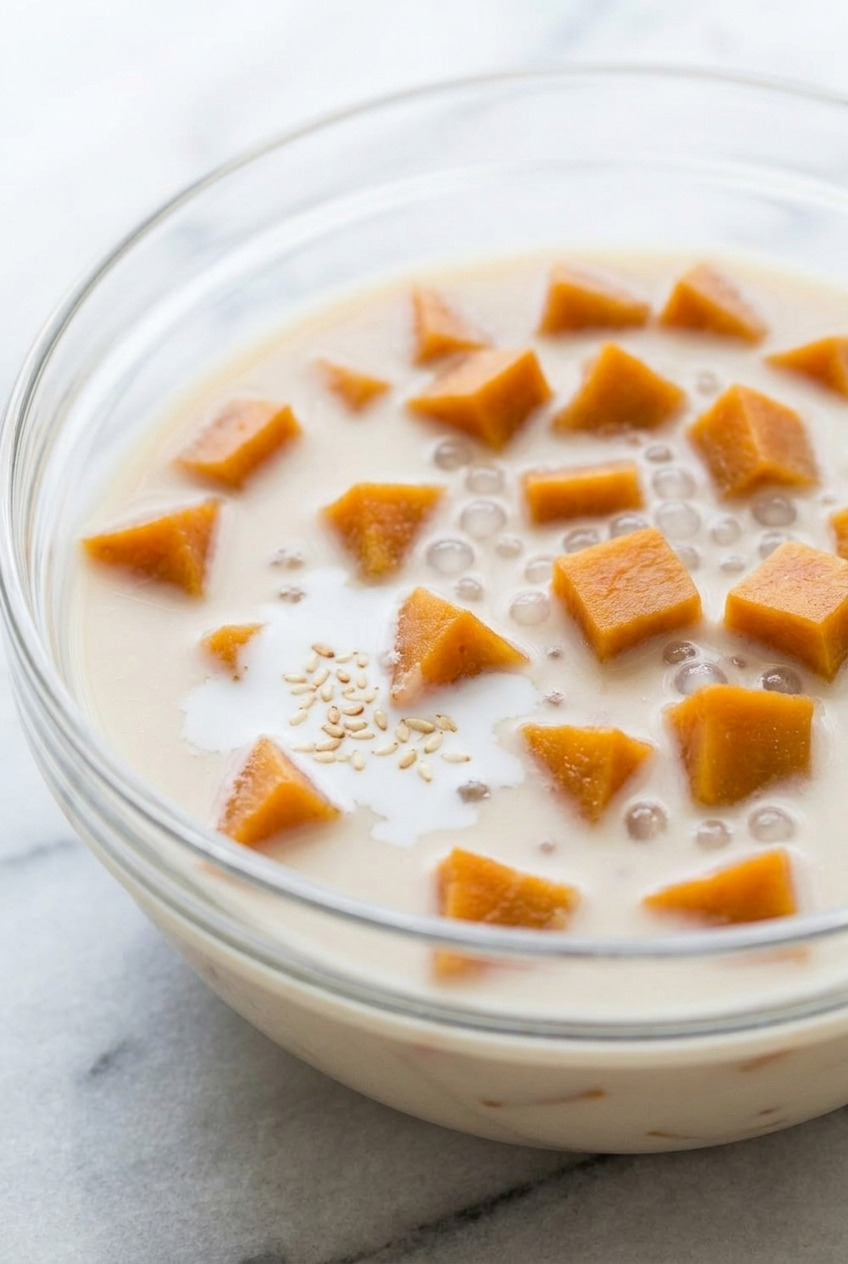
Because tapioca sheds starch, and that starch has to go somewhere. Cook the pearls in the soup and it goes straight into your coconut broth.
The result is a cloudy, gluey bowl that thickens as it sits and never tastes clean again.
Boil them in plenty of plain water, rinse them cold, and hold them until you assemble. It costs you one extra small pot.
Worth it? Every single time.
Getting the Consistency Right
The finished chè should pour. Lift a spoonful and it runs off in a stream, roughly the body of half-and-half.
- Too thick. Loosen it with hot water or a splash of coconut milk, a tablespoon at a time. It always thickens on standing, so expect to do this with leftovers.
- Too thin. Mash three or four of the sweet potato cubes against the side of the pot. That's all the body it needs, and it's what Vietnamese cooks do instead of adding starch.
- Don't reduce it. Simmering the finished soup to thicken it breaks the coconut milk and overcooks the cubes.
- Skip the slurry. Some recipes add a tapioca starch slurry. That belongs in the thicker chè, not this one.
Serve It Hot or Cold
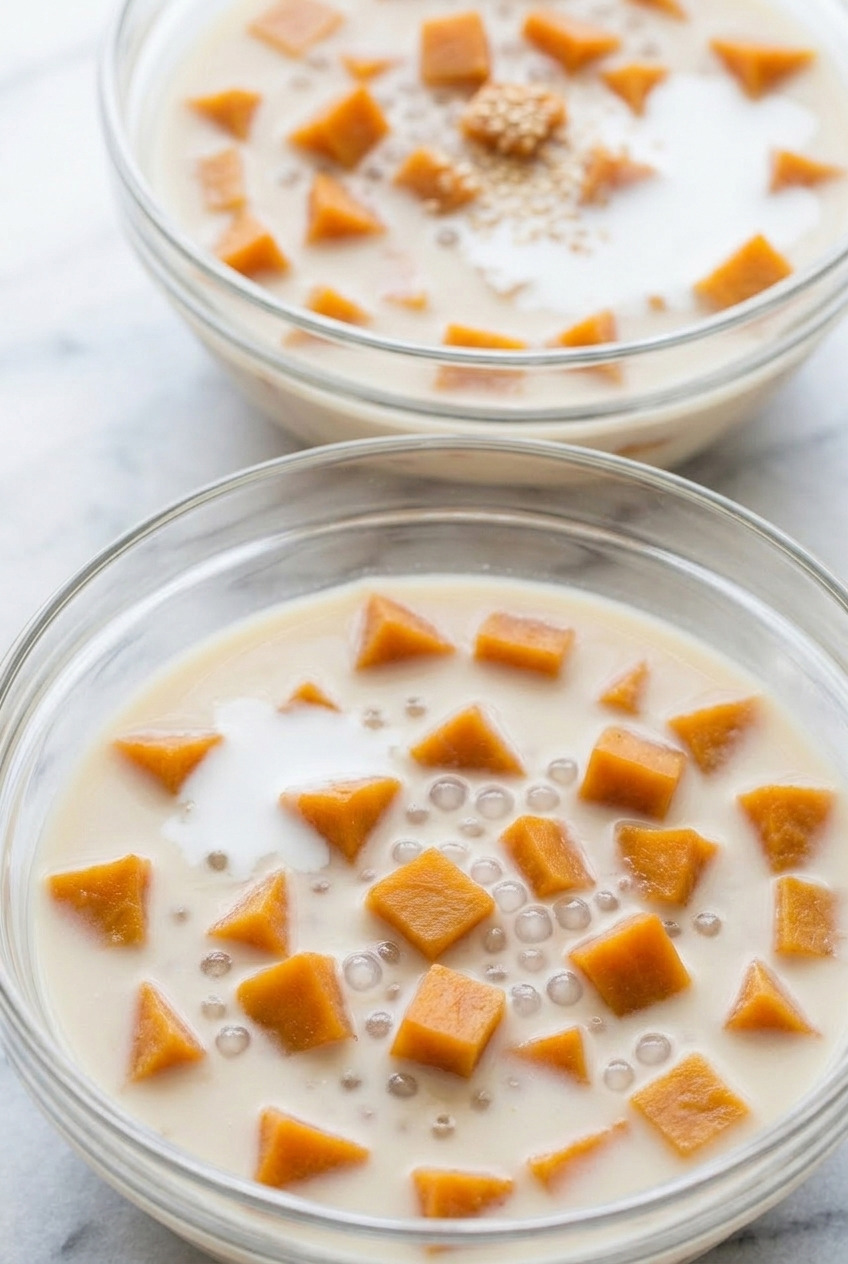
Both are traditional, and the season decides. This is one of the rare desserts that genuinely works either way.
- Hot. Straight from the pot into a bowl, in cool weather, with the ginger left in a little longer. Comfort food, full stop.
- Cold. Chill it at least 3 hours, then serve in a glass over crushed ice. Loosen it with a splash of coconut milk first, since cold thickens it.
- The coconut cream spoon. Hold back 2 tablespoons of the coconut milk, thicken it with a pinch of salt, and spoon it on top so it sits in a white pool.
- The finish. Toasted white sesame or crushed roasted peanuts. A little crunch against all that softness.
If coconut desserts are your weakness, coconut black rice pudding is another one worth a pot.
Variations
- With mung bean. Chè khoai lang đậu xanh. Add ⅓ cup of soaked split mung beans with the sweet potato. Very common, and it makes the bowl more filling.
- Two colors. Half orange sweet potato, half purple. Same cooking time, much better looking bowl.
- Ginger forward. Double the ginger and leave it in for a winter version that actually warms you up.
- With banana. Add sliced ripe banana in the last 5 minutes, which edges it toward chè chuối.
- Chewy sweet potato balls. Steam and mash the sweet potato, knead it with tapioca flour, roll into small balls and boil them. Richer, chewier, and a different dish worth knowing.
- Sago instead of tapioca. Same method, same timing, slightly softer pearls.
Stay in the same kitchen for dinner first: my Vietnamese shrimp and sweet potato fritters.
Storage
- The soup. Airtight in the fridge for 3 days. The flavor is arguably better on day two.
- The pearls. Keep them separate if you can manage it. They firm up and go a little chalky in the cold, which is the one flaw in leftovers.
- Reheating. Low heat, stirring gently, with a splash of water or coconut milk to bring it back to a pourable consistency. Don't boil it.
- Freezing. Not a good idea. The coconut milk separates and the sweet potato turns grainy.
Recipe
Che Khoai Lang (Vietnamese Sweet Potato Coconut Sweet Soup)
Ingredients
For the Soup
- 1 ½ pounds sweet potato (khoai lang) peeled, cut into ¾-inch cubes
- 4 cups water
- 3 ounces Vietnamese rock sugar (duong phen) or ½ cup granulated sugar
- 2 leaves pandan knotted, or ½ teaspoon pandan extract
- 4 thin slices fresh ginger
- ¼ teaspoon fine sea salt
For the Coconut Broth
- 13.5 ounces full fat coconut milk one can
- 2 tablespoons sugar
- ¼ teaspoon fine sea salt
For the Pearls and Finish
- ⅓ cup small tapioca pearls (bot bang) or sago
- 2 tablespoons toasted white sesame seeds or crushed roasted peanuts
- crushed ice if serving cold
Instructions
Cook the Tapioca Pearls
- Bring at least 4 cups of water to a boil in a small pot. Add the tapioca pearls and stir once so they do not stick.
- Boil 8 to 12 minutes until the pearls are nearly clear with a small white dot in the center. Turn off the heat, cover and rest 5 minutes until the dot disappears.
- Drain, rinse under cold water, and hold in a bowl with a splash of cool water until you assemble.
Simmer the Sweet Potato
- Combine the cubed sweet potato, water, rock sugar, knotted pandan leaves, ginger slices and salt in a pot.
- Bring to a boil, then reduce to a gentle simmer for 12 to 18 minutes, until a cube gives way easily to a spoon but still holds its shape. Stir as little as possible.
Warm the Coconut and Combine
- In a separate small pot, warm the coconut milk with the sugar and salt over low heat until the sugar dissolves. Remove it as soon as it steams and never let it boil hard.
- Pour the warm coconut milk into the sweet potato pot and stir gently once. Remove the pandan knots and ginger slices.
- Add the drained tapioca pearls and stir gently. Let the pot stand off the heat 5 to 10 minutes so the sweet potato absorbs the coconut broth.
- Serve warm in bowls, or chill at least 3 hours and serve over crushed ice. Finish each portion with toasted sesame seeds or crushed peanuts.
Notes
- Cook the pearls in their own pot. Tapioca cooked in the soup sheds starch and turns the coconut broth cloudy and gluey.
- Use full fat coconut milk. Light coconut milk leaves the soup thin and flat.
- This is a drinkable soup, not a pudding. It should pour off a spoon like thin cream.
- Too thick: loosen with hot water or coconut milk a tablespoon at a time. Too thin: mash three or four sweet potato cubes against the side of the pot.
- Substitutions: granulated sugar for rock sugar, pandan extract for fresh leaves, sago for tapioca pearls.
- Storage: 3 days refrigerated. It thickens when cold, so loosen it before serving. Do not freeze.