Salted caramel has owned the holiday cookie tray at my house for about six Christmases running.
Caramel squares, caramel thumbprints, caramel drizzled over anything that sat still long enough.
Then last December my neighbor Carol tasted a test batch of something else and asked for the recipe before she'd finished chewing.
She wasn't being polite. She went back for three more.
That something else was butterscotch.
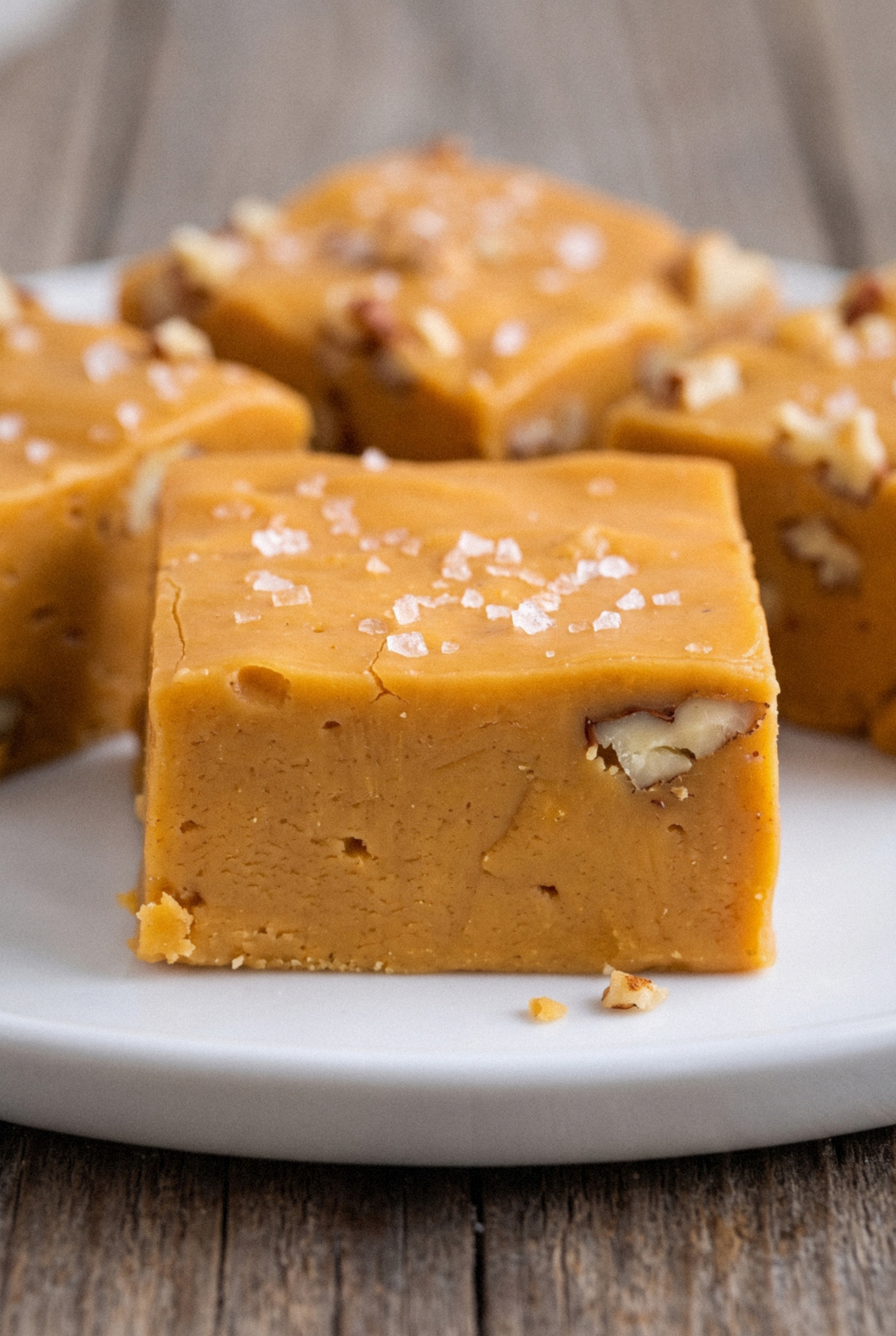
This salted butterscotch fudge has the brown sugar and butter depth that caramel only hints at, and a pinch of flaky salt on top keeps it from tipping into too sweet.
I've made it every week since Thanksgiving, mostly because my wife keeps handing squares to the mail carrier.
Well, I'll admit I didn't see that coming.
Best of all, you don't need a candy thermometer.
Everything melts together in one saucepan in about 10 minutes over low heat.
You stir, you pour, you salt the top, and the fridge does the rest.
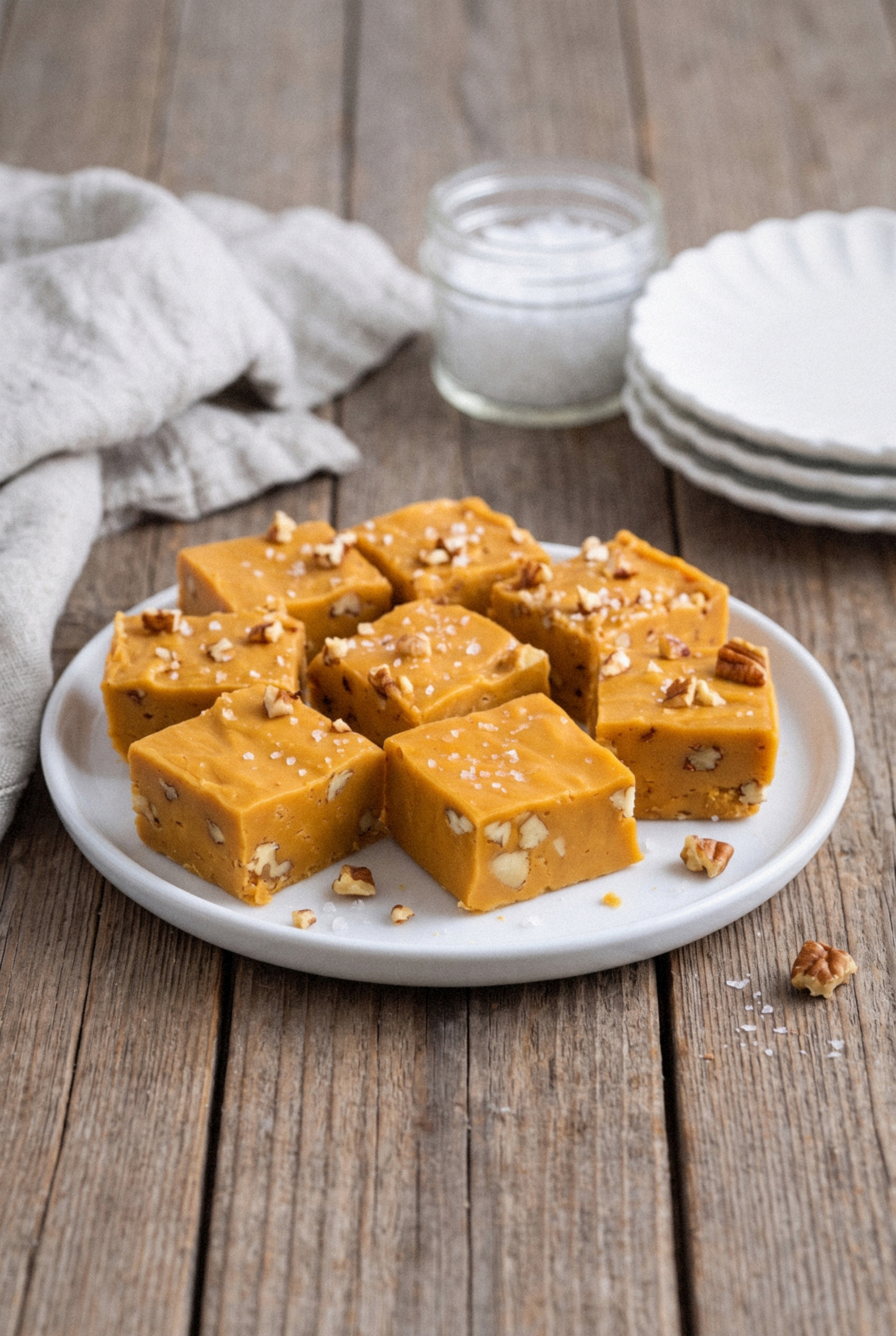
A couple of hours later, it cuts into clean, firm squares that hold their edges in a Christmas gift tin.
Make one pan and you'll see why caramel got bumped.
Ingredients for Salted Butterscotch Fudge
You only need eight ingredients, and two of them are salt. Every one has a job, so here's what each brings to the pan.
- Butterscotch chips (2 ½ cups, about 15 ounces). This is your flavor and most of your structure. I use Nestlé Toll House butterscotch morsels because they melt smooth and glossy. Some store brands melt thicker and a little waxy, so if yours look stiff, keep the heat low and give them extra time.
- White chocolate chips (½ cup). My firm-set insurance. Butterscotch chips on their own can set a little soft, and a handful of white chocolate gives the squares sharper edges without changing the flavor.
- Sweetened condensed milk (one 14-ounce can). Full-fat only. This is what makes the recipe thermometer-free, because the sugar is already cooked down for you. Do NOT grab evaporated milk by mistake. They sit right next to each other on the shelf.
- Unsalted butter (2 tablespoons). Adds a glossy, rounder finish and real dairy richness. It also helps the chips melt more evenly.
- Vanilla extract (1 ½ teaspoons). Pure vanilla, please. It softens the sweetness and makes the butterscotch taste more like itself.
- Fine sea salt (¼ teaspoon). Stirred in so every bite is seasoned, not just the top.
- Toasted pecans (¾ cup, chopped). Optional, but I love the crunch. Toasting is non-negotiable if you add them, since raw pecans taste flat next to butterscotch.
- Flaky sea salt (1 to 1 ½ teaspoons). For the top. Maldon is my go-to. The big flakes give you that little crackle before the fudge melts on your tongue.
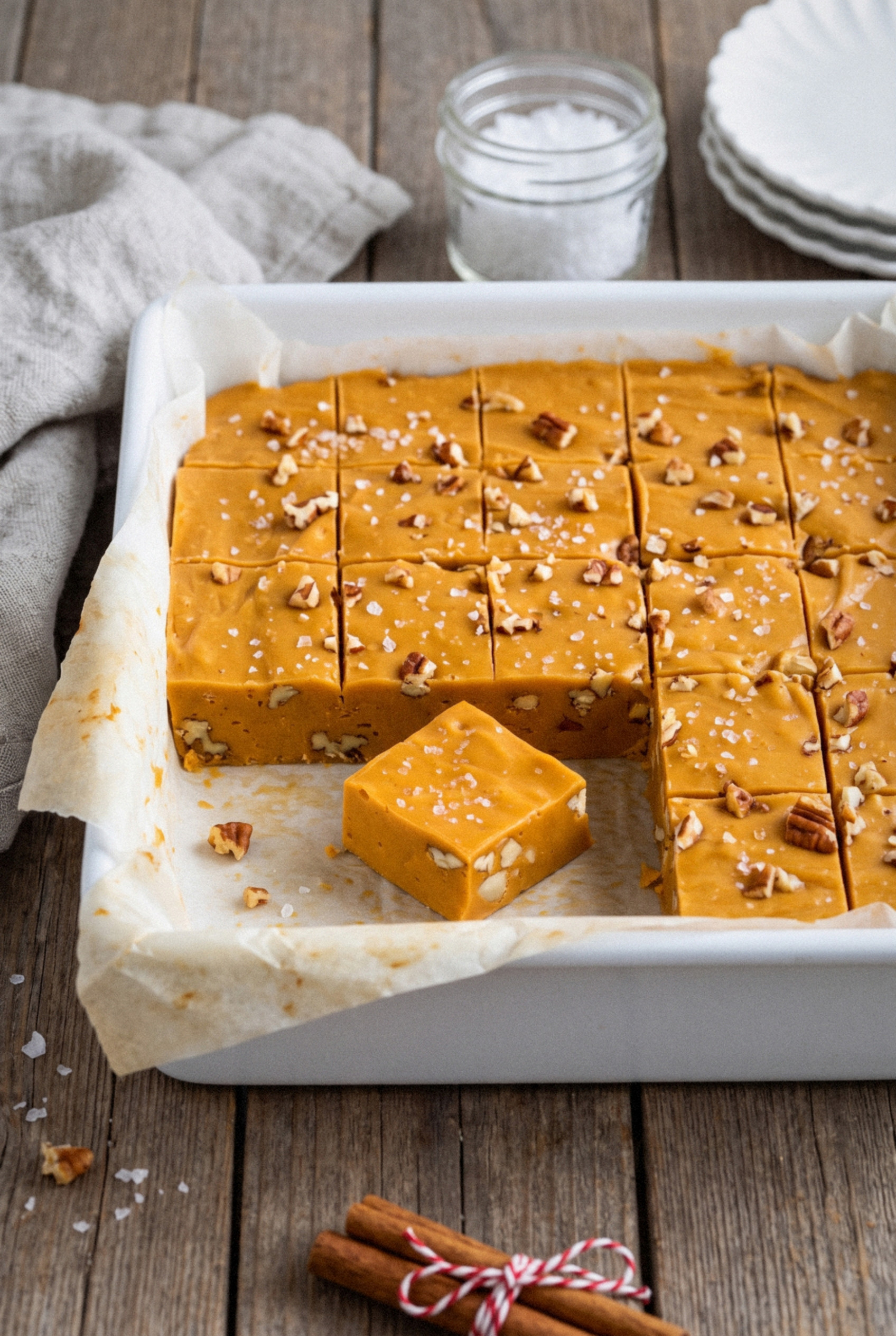
Equipment
Nothing fancy here, which is a big part of the appeal. You probably own all of it already.
- 8x8-inch square pan. Gives you fudge about ¾ inch thick. A 9x9 pan works too, it just makes thinner squares.
- Parchment paper. Cut two strips that cross in the pan and hang over the sides. Those handles let you lift the whole slab out in one piece.
- Heavy-bottomed saucepan. A thin pan scorches condensed milk fast. Heavier means more even heat.
- Silicone spatula. It scrapes the corners of the pan so nothing sits still long enough to burn.
- Long, sharp knife. For clean cuts. A chef's knife beats a paring knife every time.
How to Make Salted Butterscotch Fudge
The whole method is low heat, constant stirring, and patience while it chills. Here's how it goes, step by step.
Step 1: Prep the Pan
Line your 8x8 pan with two crossed strips of parchment, leaving a couple of inches hanging over each side. Rub a tiny bit of butter on the pan first and the parchment will stick in place instead of sliding around.
If you're adding pecans, toast them now. Spread them on a baking sheet and bake at 350°F for 7 to 9 minutes, until they smell nutty and look a shade darker. Let them cool, then chop.
Pro tip: Get the pan ready before you turn on the stove. Once the fudge is melted, you need to pour it fast.
Step 2: Melt Low and Slow
Add the butterscotch chips, white chocolate chips, sweetened condensed milk, and butter to your saucepan. Set it over low heat and start stirring.
Keep the spatula moving, scraping the bottom and corners, for 8 to 10 minutes. The chips will look lumpy at first, then loosen, then turn into one thick, glossy mixture. Pull the pan off the heat the moment it's smooth.
Don't walk away. Butterscotch chips scorch faster than chocolate chips, and once they seize, there's no bringing them back.
Step 3: Add the Salt, Vanilla, and Pecans
Off the heat, stir in the vanilla and the ¼ teaspoon fine sea salt. The mixture will loosen slightly and smell amazing.
Fold in about two-thirds of the chopped pecans, saving the rest for the top. Work quickly, since the fudge starts to firm up as it cools.
Step 4: Spread, Salt, and Chill
Scrape the fudge into the lined pan and smooth it into the corners with your spatula. Scatter the remaining pecans over the top.
Now sprinkle the flaky salt evenly over the surface and press it in gently with your palm or the back of the spatula. The fudge is still warm and tacky, so the salt sticks right where you put it.
Let the pan sit on the counter for 30 minutes, then move it to the fridge for 2 to 3 hours, until it's firm all the way through.
Step 5: Cut Clean Squares
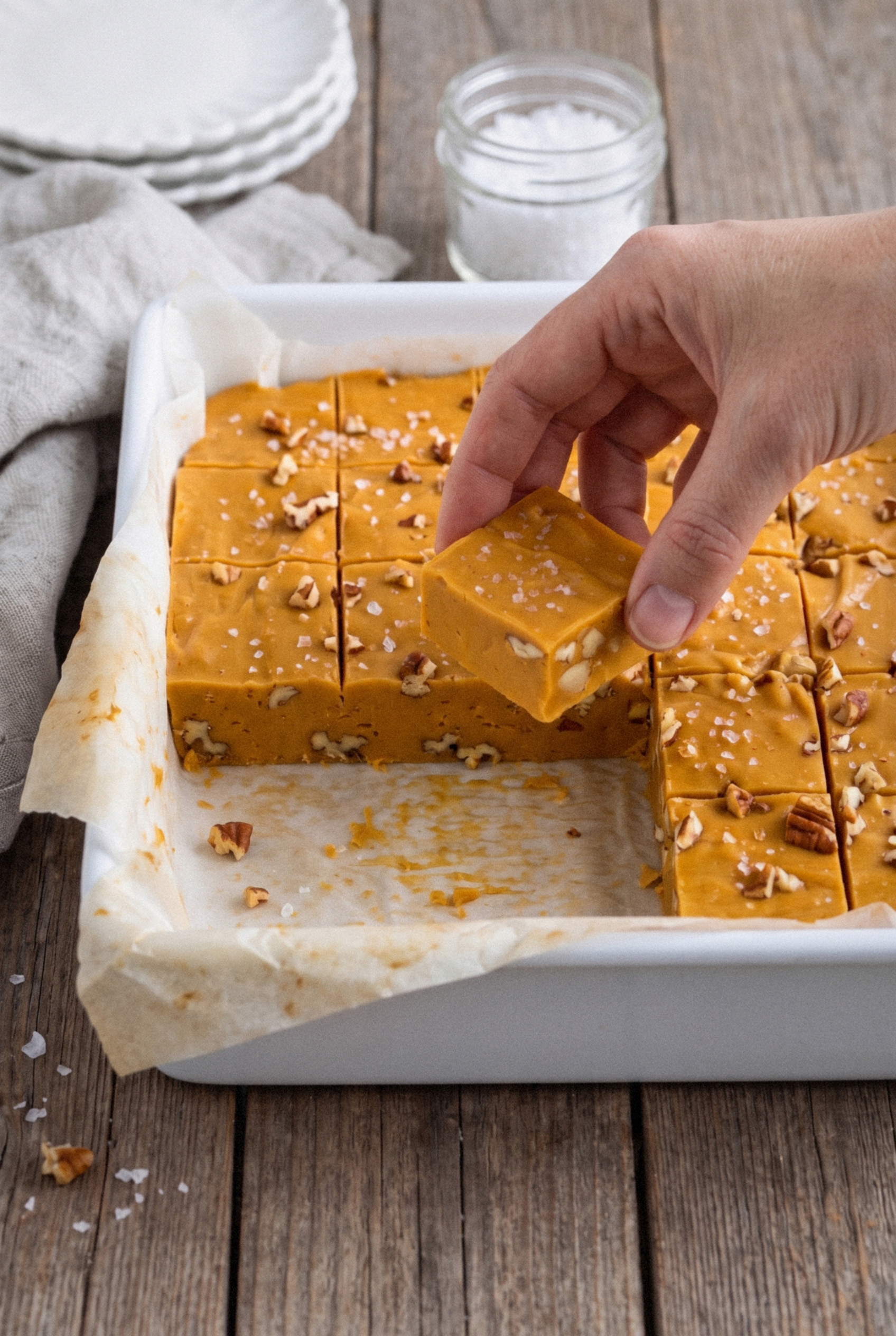
Lift the slab out by the parchment handles and set it on a cutting board. Let it sit for 5 to 10 minutes so the knife glides instead of cracking the edges.
Run your knife under hot water, wipe it dry, and make one firm cut straight down. Wipe and reheat the blade between every cut. Six rows by six rows gives you 36 squares, each a bit over an inch.
Messy edges? Trim them off and call them the cook's share.
Tips for Smooth, Firm Fudge
Most fudge problems come down to heat. These are the little things that keep every batch smooth.
- Keep the heat low. Medium heat feels faster, but it's how you get grainy, oily fudge. Low and steady wins.
- Stir the whole time. Condensed milk sinks and catches on the bottom of the pan. Constant scraping stops that.
- Measure the chips. Too few chips and the fudge stays soft. Two and a half cups, packed level, is the sweet spot.
- Keep the white chocolate. If you skip it, expect softer squares that need to live in the fridge.
- Salt while it's warm. Wait 20 minutes and the flakes just roll off the top.
- Cut it slightly chilled. Straight-from-the-fridge fudge can crack. A few minutes on the counter makes cleaner cuts.
Why Two Kinds of Salt
I know two salts sounds fussy, but each one does something different. The fine salt dissolves into the fudge and seasons it from the inside, so the butterscotch tastes deeper and less sugary.
The flaky salt stays crunchy on top. You get a little crunch, then melt, and that contrast is what makes people reach for a second square.
Use only flaky salt, and the middle of each square tastes flat. Use only fine salt, and you lose the texture. Together, they're out of this world.
Fair warning: don't swap table salt in for the flakes. It's too fine and too sharp, and a pinch too much makes the whole square taste salty.
A Little Butterscotch History
Butterscotch is older than most people guess. The widely told story credits a confectioner named Samuel Parkinson in Doncaster, England, around 1817.
Nobody's completely sure where the name comes from. One theory says "scotch" is a twist on "scorch," which makes sense for something cooked from butter and brown sugar.
That brown sugar is the big difference from caramel, which starts with plain white sugar. It's why butterscotch tastes warmer, with a hint of molasses. Butterscotch chips bottle that flavor for you, so this fudge gets the old-fashioned taste without the candy-making.
Substitutions and Variations
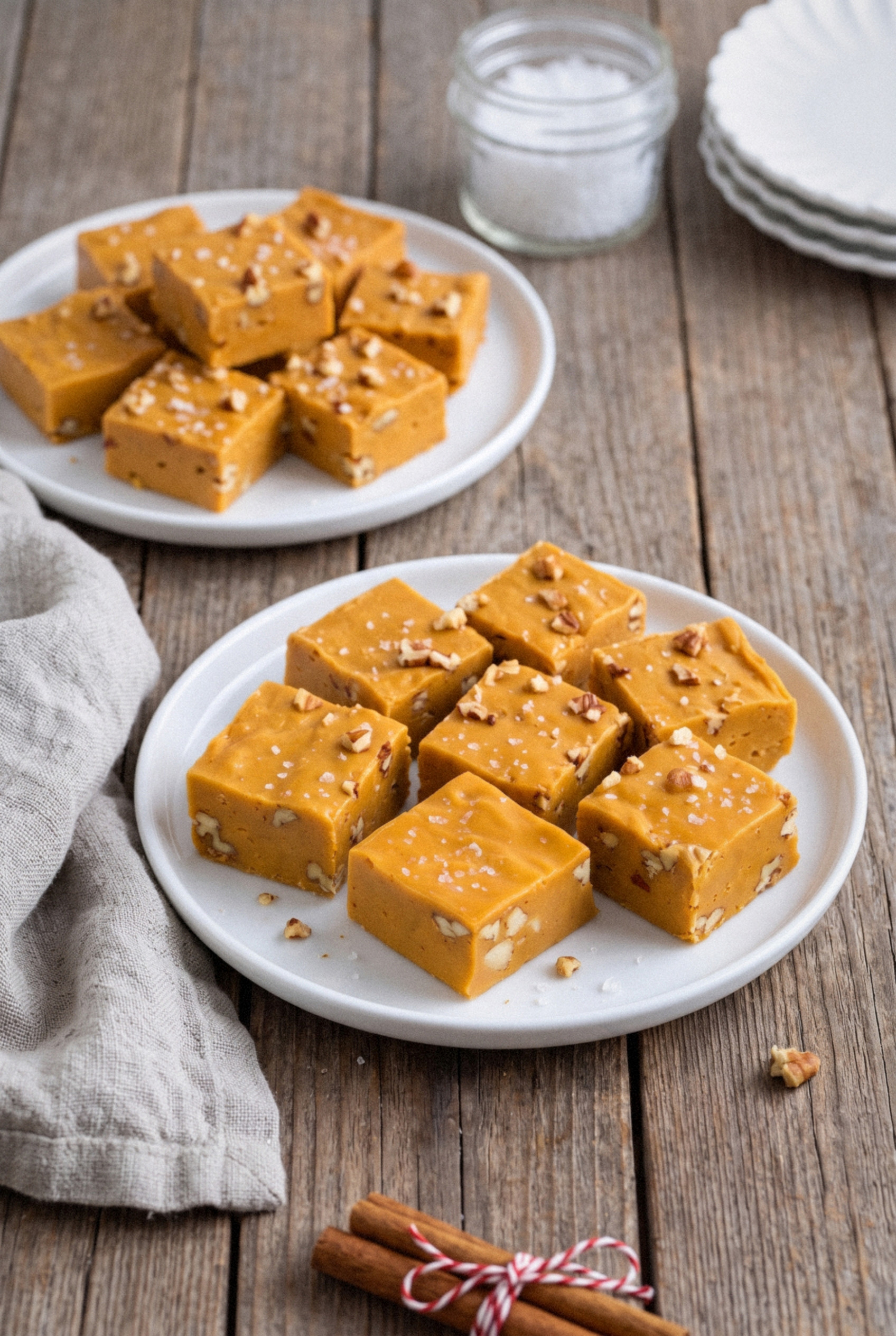
Once you have the base down, it's a breeze to change up. Here are my favorite swaps.
- Different nuts. Walnuts are classic with butterscotch. Toasted almonds or hazelnuts work too. Or skip nuts entirely for a nut-free tin.
- Chocolate swirl. Melt ⅓ cup semisweet chips, dollop it over the fudge in the pan, and drag a knife through it a few times.
- Bourbon pecan. Stir in 1 tablespoon bourbon with the vanilla. It tastes like a pecan pie in candy form.
- Pretzel crunch. Press broken pretzel pieces into the top along with the flaky salt for even more salty-sweet.
- Peanut butter butterscotch. Swap the white chocolate for ½ cup peanut butter chips. Super easy and a total crowd-pleaser.
- Warm spice. A pinch of cinnamon or cardamom makes it taste even more like Christmas.
Make-Ahead Timeline for Christmas
This is one of the easiest holiday treats to make ahead. Honestly, it tastes better on day two once the flavors settle.
- Up to 1 week ahead. Make, cut, and store airtight at cool room temperature.
- Up to 2 weeks ahead. Store in the fridge, layered between wax paper.
- Up to 3 months ahead. Freeze the uncut slab or the squares, wrapped tightly. Perfect if you start baking in November.
- The day before gifting. Pack your tins so everything's ready to hand out.
Gifting and Storage
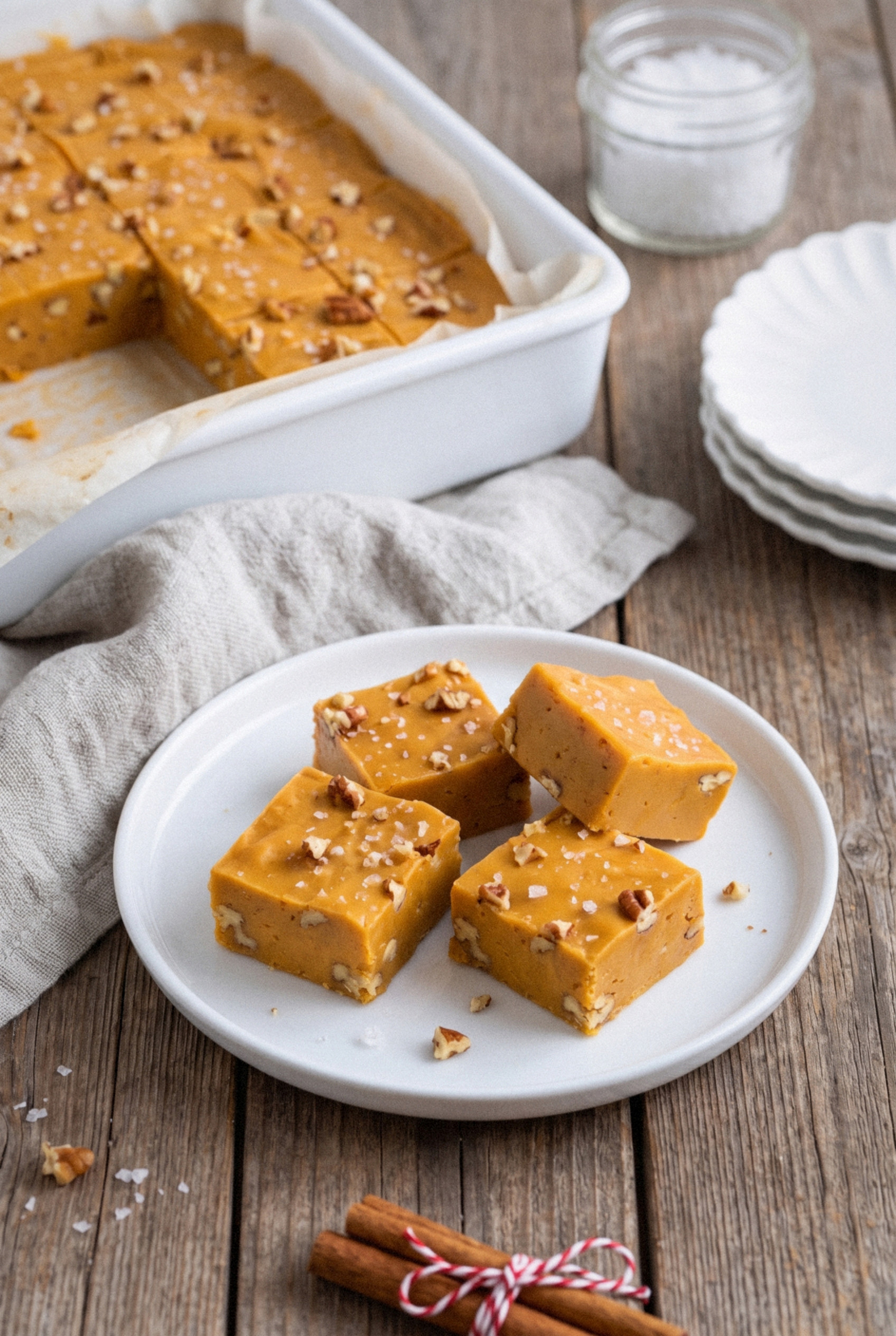
This fudge travels well, which makes it perfect for Christmas tins. A few tricks keep it looking its best.
- Room temperature. Airtight container, cool spot, up to 1 week. This is where it has the best texture.
- Refrigerator. Up to 2 weeks. Let squares sit out for 15 minutes before serving so they soften slightly.
- Freezer. Wrap tightly in plastic, then a freezer bag, for up to 3 months. Thaw overnight in the fridge.
- Paper candy cups. Set each square in its own little cup inside the tin. They look bakery-neat and won't stick together.
- Layer with wax paper. If you stack, separate layers so the salt doesn't scrape off.
- Keep it apart from soft cookies. Fudge can pull moisture from cookies, so give it its own section of the tin.
- Re-salt for long storage. Flaky salt slowly dissolves in the fridge. For fudge made weeks ahead, add a fresh pinch on top a day before gifting.
What to Serve With Salted Butterscotch Fudge
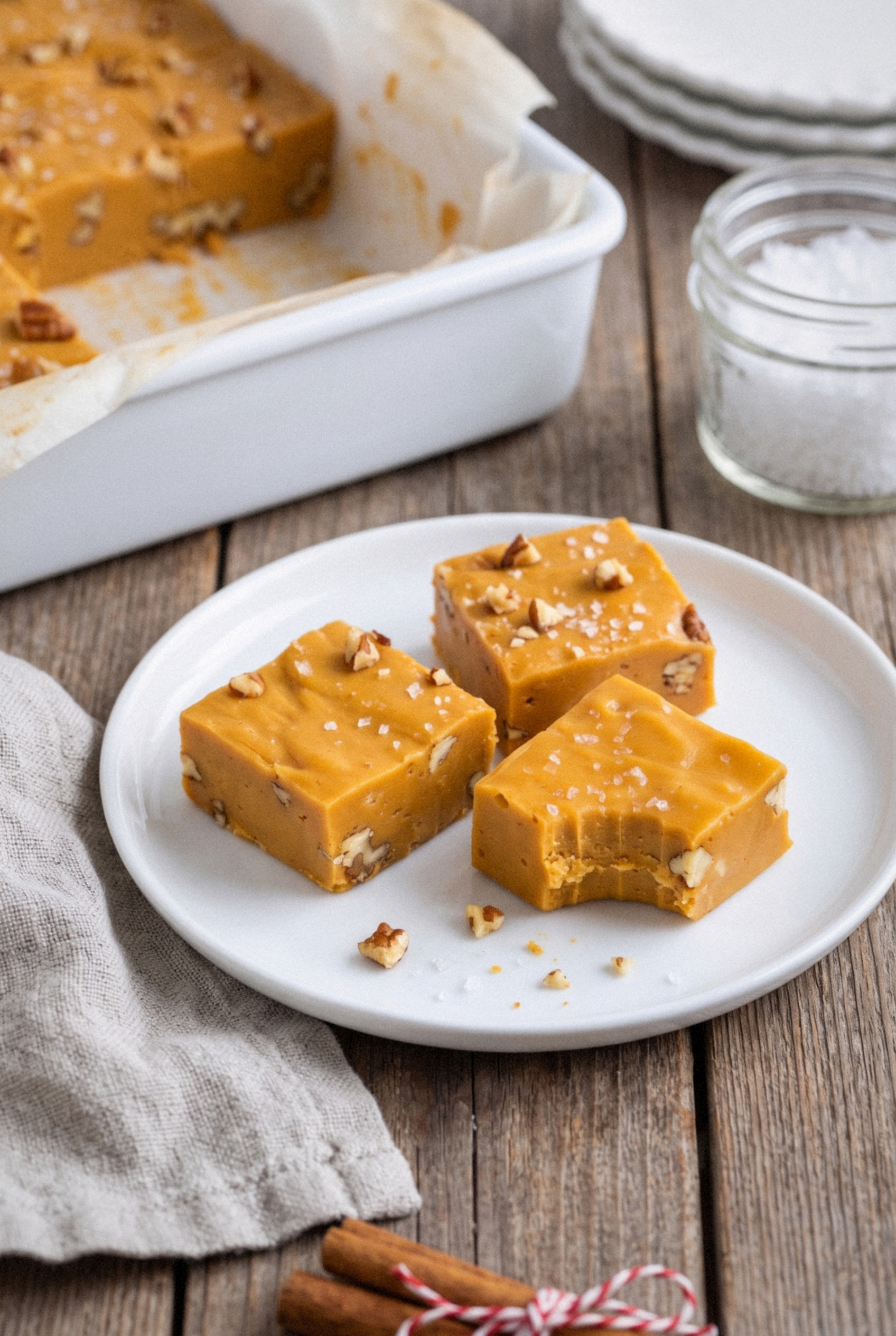
On its own, it's the perfect little after-dinner bite. But it pairs perfectly with a few holiday favorites.
- Hot coffee or hot cocoa. The bitterness balances the sweetness beautifully.
- A Christmas cookie tray. Set it next to gingerbread, sugar cookies, and something chocolate for color and contrast.
- Vanilla ice cream. Chop a couple of squares and scatter them on top. You're in for a treat.
Frequently Asked Questions
Why didn't my butterscotch fudge set?
The usual cause is low-fat or fat-free condensed milk, or too few chips. Use a full-fat 14-ounce can and measure 2 ½ cups of chips. Chilling longer usually firms up a slightly soft batch.
Why did my fudge turn grainy or oily?
The heat was too high. Butterscotch chips separate when they get too hot, leaving oily streaks and a sandy texture. Keep the burner on low and stir constantly.
Can I use evaporated milk instead of sweetened condensed milk?
Not in this recipe. Evaporated milk has no sugar, so the fudge won't set without boiling and a thermometer. Sweetened condensed milk is what makes this version so easy.
What's the difference between butterscotch and caramel?
Caramel starts with white sugar, while butterscotch starts with brown sugar and butter. That gives butterscotch a warmer, more molasses-like flavor.
Can I freeze salted butterscotch fudge?
Yes. Wrap it tightly and freeze for up to 3 months. Thaw in the fridge overnight, then add a fresh pinch of flaky salt if the original flakes have melted away.
How far ahead can I make it for Christmas gifts?
Up to a week at room temperature, two weeks in the fridge, or three months in the freezer. I like making it about five days before I hand out tins.
Recipe
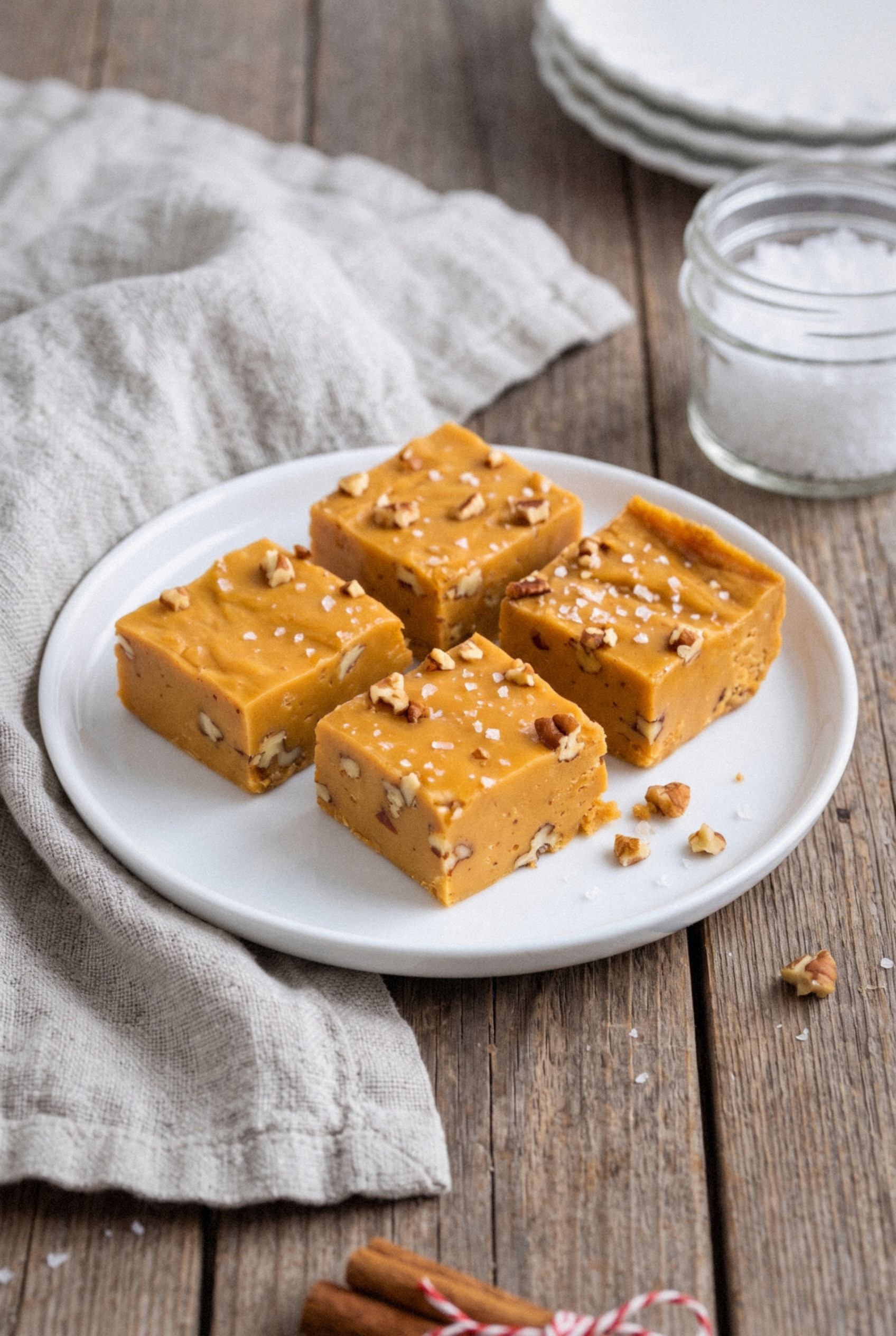
Salted Butterscotch Fudge
Ingredients
For the Fudge
- 2 ½ cups butterscotch chips about 15 ounces
- ½ cup white chocolate chips
- 14 ounce sweetened condensed milk 1 can, full-fat
- 2 tablespoons unsalted butter
- 1 ½ teaspoons pure vanilla extract
- ¼ teaspoon fine sea salt
- ¾ cup pecans toasted and chopped, optional
For the Topping
- 1 to 1 ½ teaspoons flaky sea salt such as Maldon
Instructions
Prep
- Lightly butter an 8x8-inch pan and line it with two crossed strips of parchment paper, leaving an overhang on all sides.
- If using pecans, toast them on a baking sheet at 350°F for 7 to 9 minutes until fragrant. Cool and chop.
Make the Fudge
- Combine the butterscotch chips, white chocolate chips, sweetened condensed milk, and butter in a heavy-bottomed saucepan over low heat.
- Stir constantly, scraping the bottom and corners, for 8 to 10 minutes until completely melted and smooth. Remove from the heat right away.
- Stir in the vanilla and fine sea salt. Fold in about two-thirds of the pecans.
Set and Cut
- Spread the fudge evenly in the prepared pan. Scatter the remaining pecans on top, then sprinkle with flaky sea salt and press it in gently.
- Let stand at room temperature for 30 minutes, then refrigerate for 2 to 3 hours until firm.
- Lift the fudge out using the parchment. Let it sit 5 to 10 minutes, then cut into 36 squares with a hot, dry knife, wiping the blade between cuts.
Notes
- Condensed milk: Use full-fat sweetened condensed milk. Evaporated milk or fat-free condensed milk will not set properly.
- Low heat: High heat makes butterscotch chips seize and turn grainy or oily.
- Salt timing: Add the flaky salt while the fudge is warm so it sticks.
- Storage: Airtight at cool room temperature up to 1 week, refrigerated up to 2 weeks, or frozen up to 3 months.