The first question people ask is always the same.
What's in it?
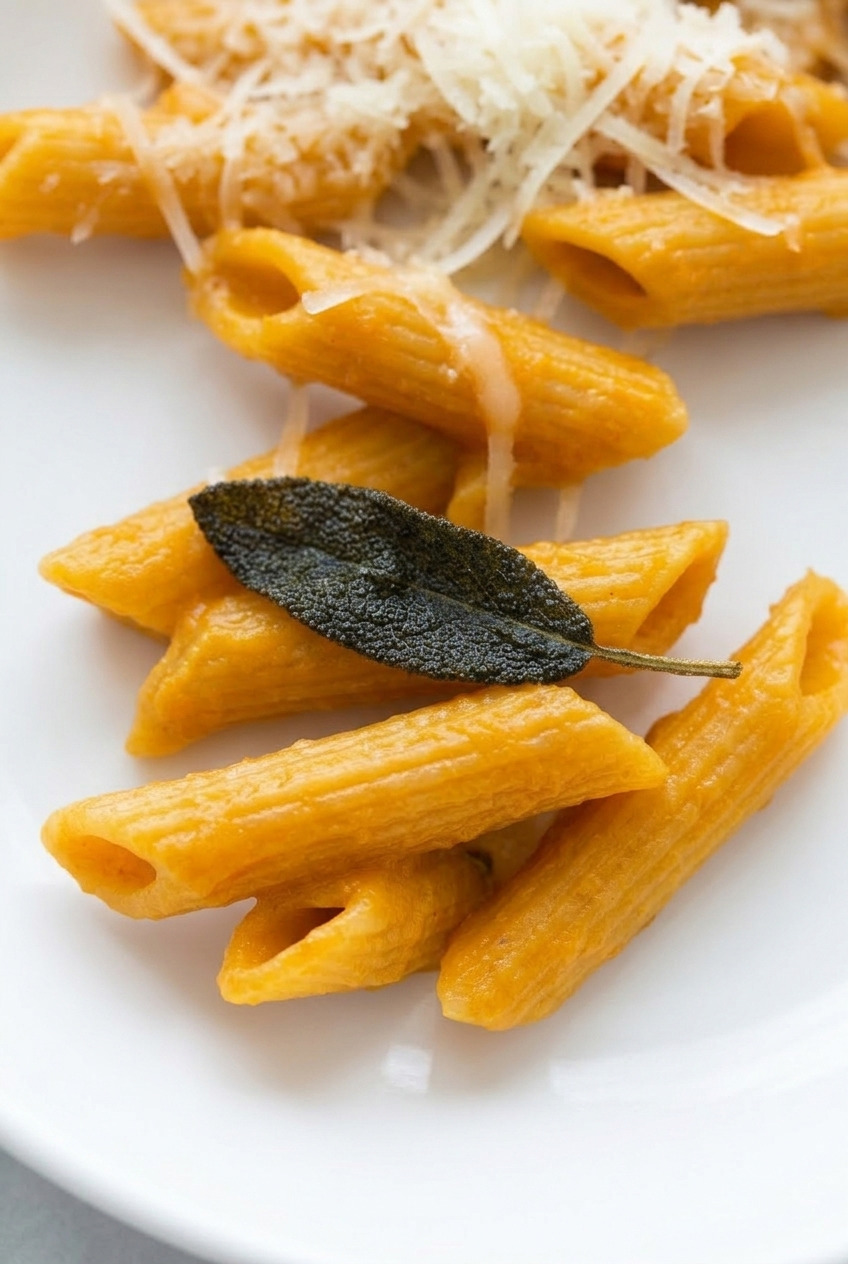
They see a bowl of penne coated in something orange and silky and they guess squash, or a tomato cream sauce, or a jar of something I doctored.
It's one roasted sweet potato and a blender.
That's genuinely the trick.
Roasted until the edges go dark and sweet, then blended completely smooth with a little cream, some Parmesan and the starchy water the pasta cooked in.
What comes out is a sauce, not a mash.
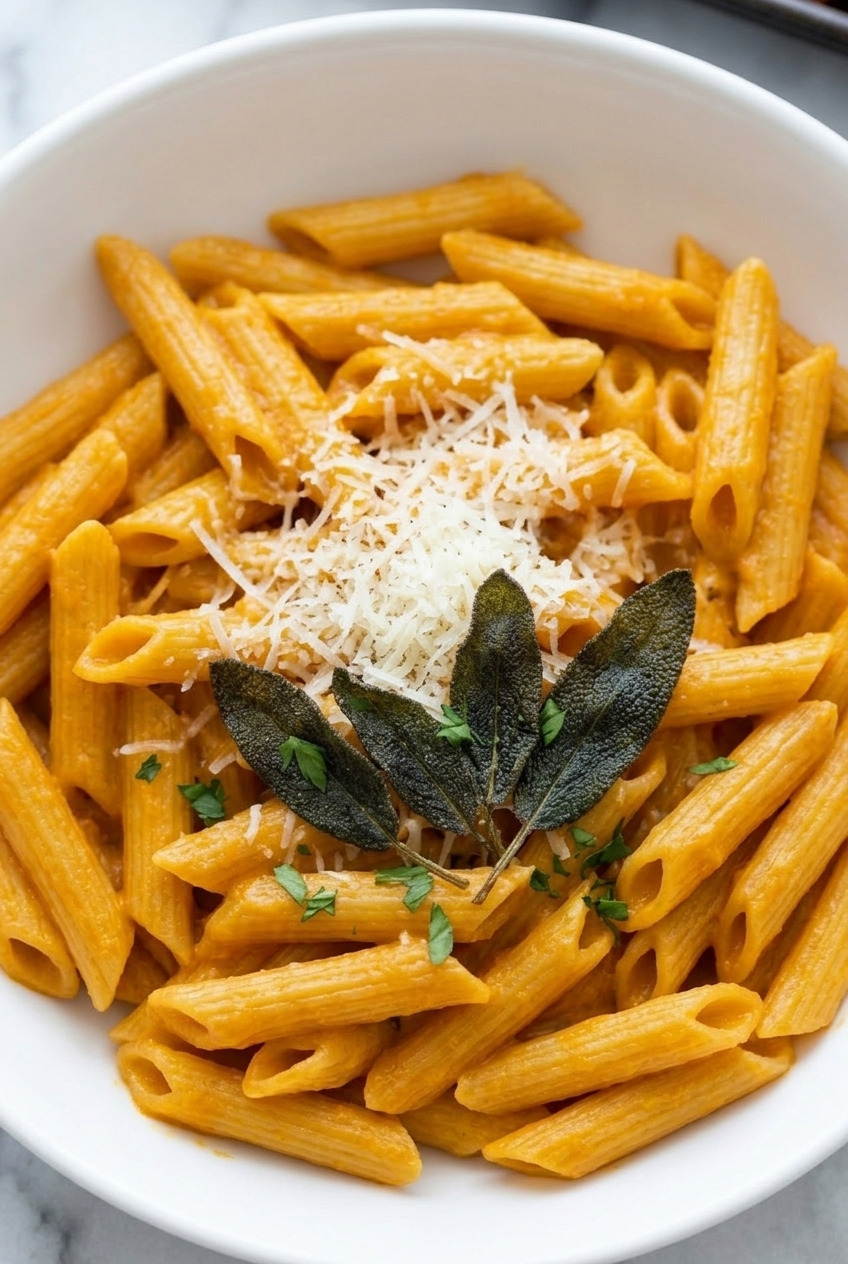
It pours in a ribbon and it clings to every ridge on the pasta instead of sliding to the bottom of the bowl.
There are no chunks floating in it and there's no tomato anywhere near it.
I started making this on a night when I had one sad sweet potato and no plan, and now it's in the rotation from October through February.
My wife calls it the orange pasta and she's stopped pretending she doesn't want the leftovers.
Brown butter and sage go in at the end, which is the pairing that makes it taste like a restaurant plate instead of a health experiment.
It's on the table in 50 minutes, and most of that is the oven doing the work while the pasta boils.
Make it once and you'll understand why nobody ever guesses right!
A Blended Puree, Not Chunks in a Sauce
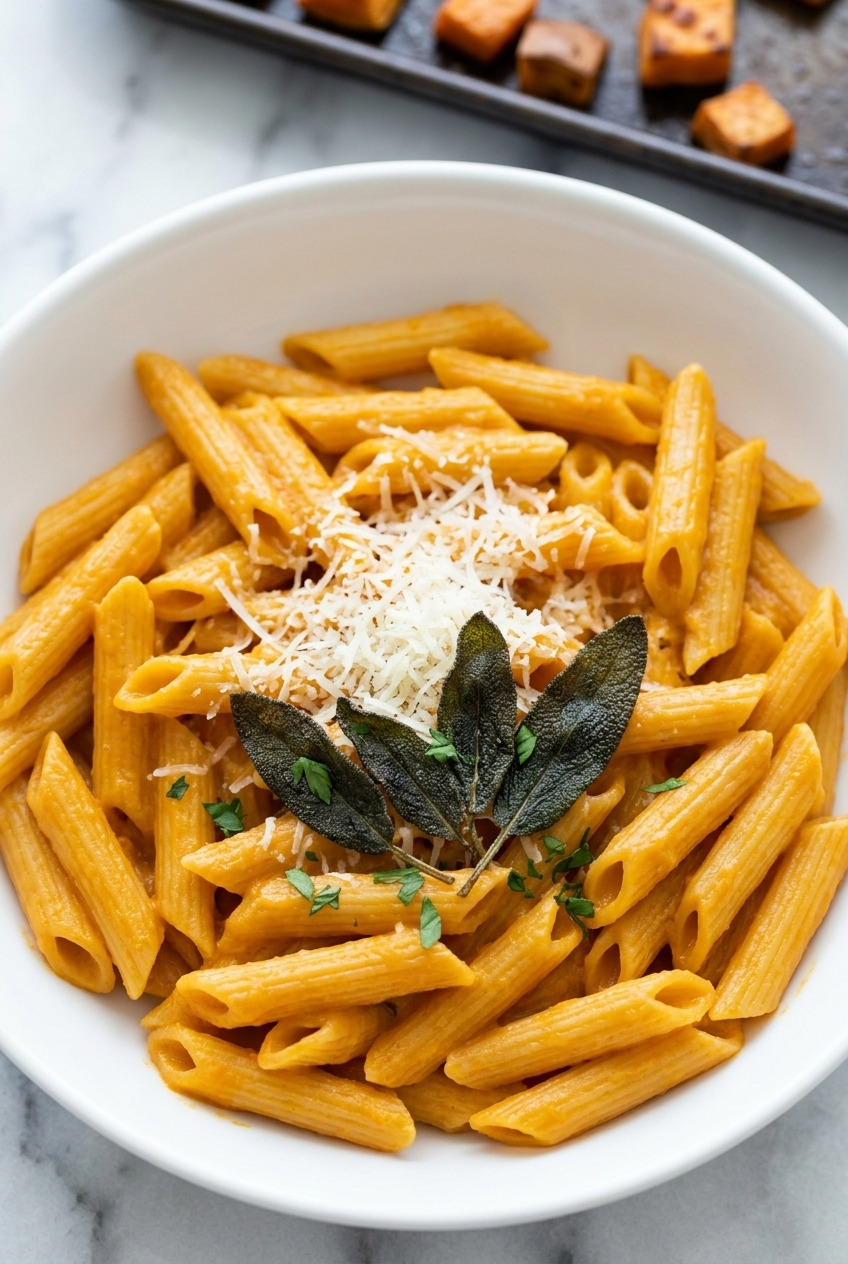
The sweet potato is blended completely smooth into the sauce. It is not roasted into cubes and tossed through the pasta.
The finished dish has no visible pieces of sweet potato in it.
What you see is penne coated in a smooth orange sauce, and that's it.
Worth spelling out, because there are two very different dishes sharing this name.
- This recipe. Roasted sweet potato blended into a silky puree that coats every tube.
- The other one. Roasted sweet potato cubes stirred through pasta with a separate sauce poured over them.
Both are good. Only one of them is this.
And there's no tomato in it, which is worth saying because the color fools people.
Why You'll Love This Sauce
- Five main ingredients. Sweet potato, garlic, cream, Parmesan, sage. Everything else is seasoning.
- It comes together while the pasta boils. The roast is hands off and the blend takes a minute.
- Pasta water does the creamy work. You need far less cream than you'd expect, and I'll explain why below.
- The sauce freezes. Make a double batch of sauce and you've bought yourself a weeknight.
- It's a real dinner without meat. Filling on its own, and easy to add a protein to.
Ingredients You Need
- Sweet potatoes (1 ½ pounds). Peeled and cut into 1 inch cubes. Even cubes brown evenly, and browning is most of the flavor here.
- Garlic (4 cloves, unpeeled). Roasted right alongside the potato, so it goes sweet and mellow instead of sharp.
- Olive oil (2 tablespoons). For the roast.
- Penne (12 ounces). Tubes with ridges. See the section on why below.
- Unsalted butter (3 tablespoons) and fresh sage (8 leaves). Browned together. This is the flavor that makes the dish, and dried sage is not a substitute.
- Heavy cream (½ cup). Less than you'd think, because the pasta water is doing half this job.
- Parmesan (½ cup grated). Salt, savoriness, and a little body.
- Lemon juice (1 tablespoon). Non-negotiable. Sweet potato and cream both need acid or the sauce tastes heavy and one-note.
- Nutmeg (⅛ teaspoon, freshly grated). A background warmth. You should not be able to identify it.
- Salt (1 ¼ teaspoons) and black pepper (½ teaspoon). Plus a well-salted pot for the pasta.
Roast, Don't Boil
Boiled sweet potato makes a flat, watery sauce. Roasted sweet potato makes a sweet one with real depth, and the difference is not subtle.
Toss the cubes with oil, salt and pepper and spread them in a single layer on a sheet pan.
425°F for 25 to 30 minutes, until the edges are properly browned and the corners have gone dark.
Crowd the pan and they steam instead of browning, which puts you right back at the boiled version.
Those browned edges are where the flavor lives in a sauce with this few ingredients.
Pasta Water Is the Whole Trick
A sweet potato puree is a paste until you thin it properly. Water alone makes it thin and dull. Starchy pasta water makes it into a sauce.
Reserve 1 ½ cups before you drain, and salt your pasta pot well so that water is seasoned.
Add it to the blended puree a quarter cup at a time.
You're looking for two signs.
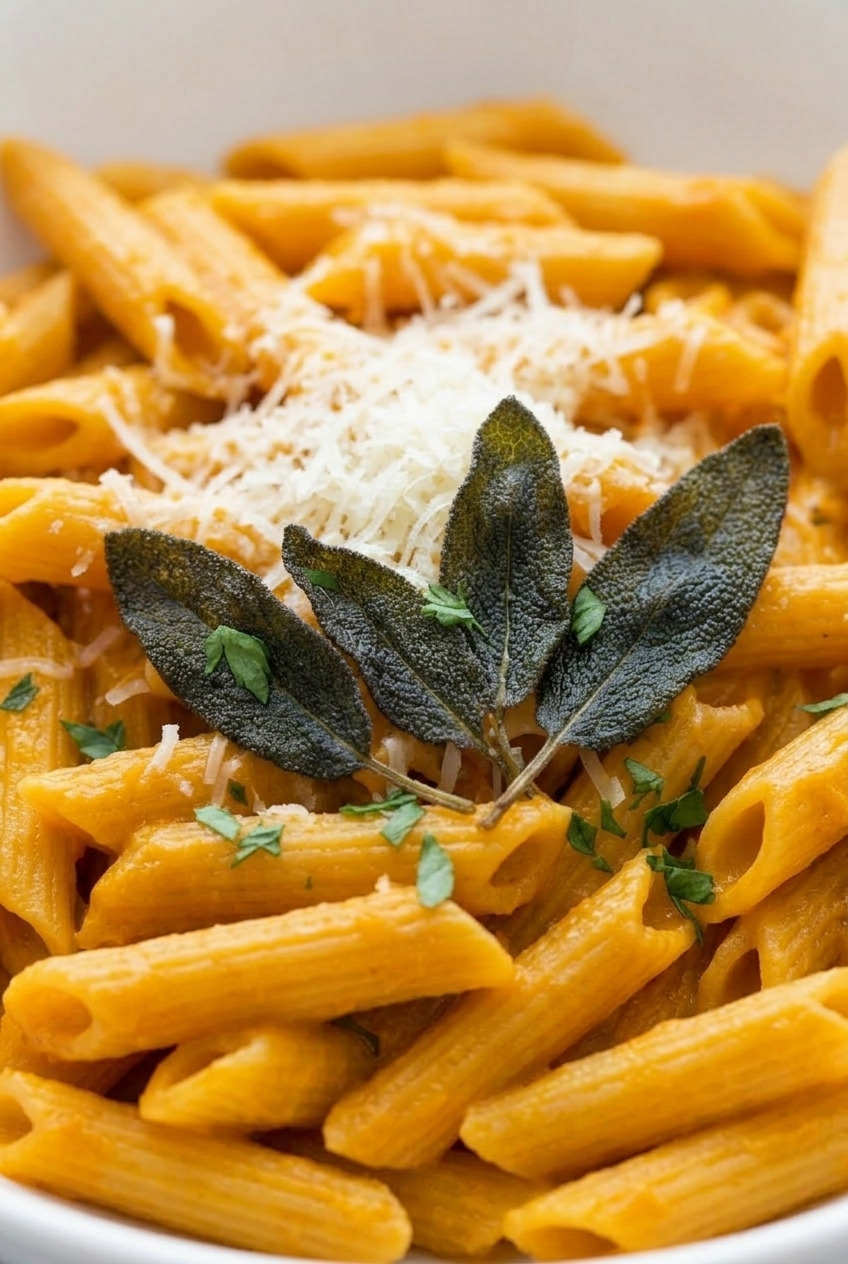
The sauce falls off a tilted spoon in a ribbon rather than a blob.
And when you tilt the pan, it slides and leaves a thin coating behind instead of sitting there.
The dissolved starch in that water is what lets the sauce grip the pasta, and it's the honest answer to what makes a pasta sauce creamy.
How to Make Creamy Roasted Sweet Potato Pasta Sauce
Step 1: Roast the Sweet Potato and Garlic
Toss the cubes with the olive oil, salt and pepper, add the unpeeled garlic cloves, and roast at 425°F for 25 to 30 minutes.
Squeeze the garlic out of its skins once it's cool enough to handle.
Step 2: Boil the Penne and Save the Water
Cook the penne in well-salted water to al dente, usually a minute less than the box says.
Reserve 1 ½ cups of the water before draining. Write it on your hand if you have to, everybody forgets this once.
Step 3: Brown the Butter and Sage
Melt the 3 tablespoons of butter in a wide skillet over medium heat and add the sage leaves.
Cook 3 to 4 minutes until the butter smells nutty and the milk solids go golden brown.
Pull the leaves out and set them aside, they crisp as they cool.
Step 4: Blend the Sauce Smooth
Put the roasted sweet potato, the roasted garlic, the brown butter, the cream, the Parmesan, the lemon juice and the nutmeg in a blender.
Blend just until smooth and STOP.
Thirty to forty seconds is plenty. Over-blending starchy vegetables makes them gluey.
Step 5: Loosen It With Pasta Water
Pour the puree into the skillet over low heat and whisk in the reserved pasta water a quarter cup at a time.
Stop when it ribbons off the spoon and coats the pan.
You'll usually use about 1 cup, sometimes a little more.
Step 6: Toss and Finish
Add the drained penne to the pan and toss over low heat for 1 to 2 minutes so every tube gets coated inside and out.
Taste and adjust the salt and lemon.
Crumble the crisp sage over the top, add chopped parsley and more Parmesan, and serve right away.
Why Your Sauce Turned Pasty
- Not enough pasta water. The most common one. The sauce should look slightly looser in the pan than you want it on the plate, because the pasta drinks some of it.
- Over-blending. Long, hard blending breaks the starch down into glue. Blend to smooth, then stop.
- It sat too long. A puree sauce tightens fast off the heat. Toss it with the pasta while it's hot and serve it immediately.
All three are fixable at the table with another splash of hot water and a quick toss.
Why Penne Works Better Than Long Pasta
A thick puree needs a shape that can hold it. Penne fills from the inside and the ridges carry the sauce on the outside, so you get sauce in every bite.
Long strands clump together under a sauce this heavy.
Rigatoni and medium shells work just as well.
Spaghetti and linguine are the ones I'd skip here, and I say that as someone who tried.
If you're on a pasta kick, I rounded up a few great pasta dishes worth keeping in rotation.
Add a Protein
- Italian sausage. Brown ½ pound of crumbled sausage in the skillet first and build the sauce in the same pan. My favorite version.
- Rotisserie chicken. 2 cups shredded, folded in with the pasta.
- Pancetta. 4 ounces, crisped and scattered over the top of each bowl.
- White beans. 1 can, rinsed and warmed through, for a meatless version with more staying power.
When I want protein without extra work, I drop in a few lemon garlic cottage cheese meatballs. The lemon lifts the whole sauce.
Make It Dairy Free
The sauce takes to it well. Swap the cream for ½ cup full-fat coconut milk or a cashew cream, and use olive oil in place of the butter for the sage.
Drop the Parmesan and add 2 tablespoons of nutritional yeast plus an extra squeeze of lemon.
You lose a little savoriness and gain a slightly rounder sauce. It's a fair trade.
Storing, Reheating and Freezing
- Sauce on its own. Airtight in the fridge up to 5 days. This is the way to store it if you have the choice.
- Tossed pasta. Up to 3 days. It tightens overnight, which is normal.
- Reheating. Low heat with a splash of water or milk, stirring until it loosens back up. Never a hard boil.
- Freezing the sauce. Up to 3 months. Thaw overnight and whisk it hard as it warms, it separates a little and comes right back.
What to Serve With It
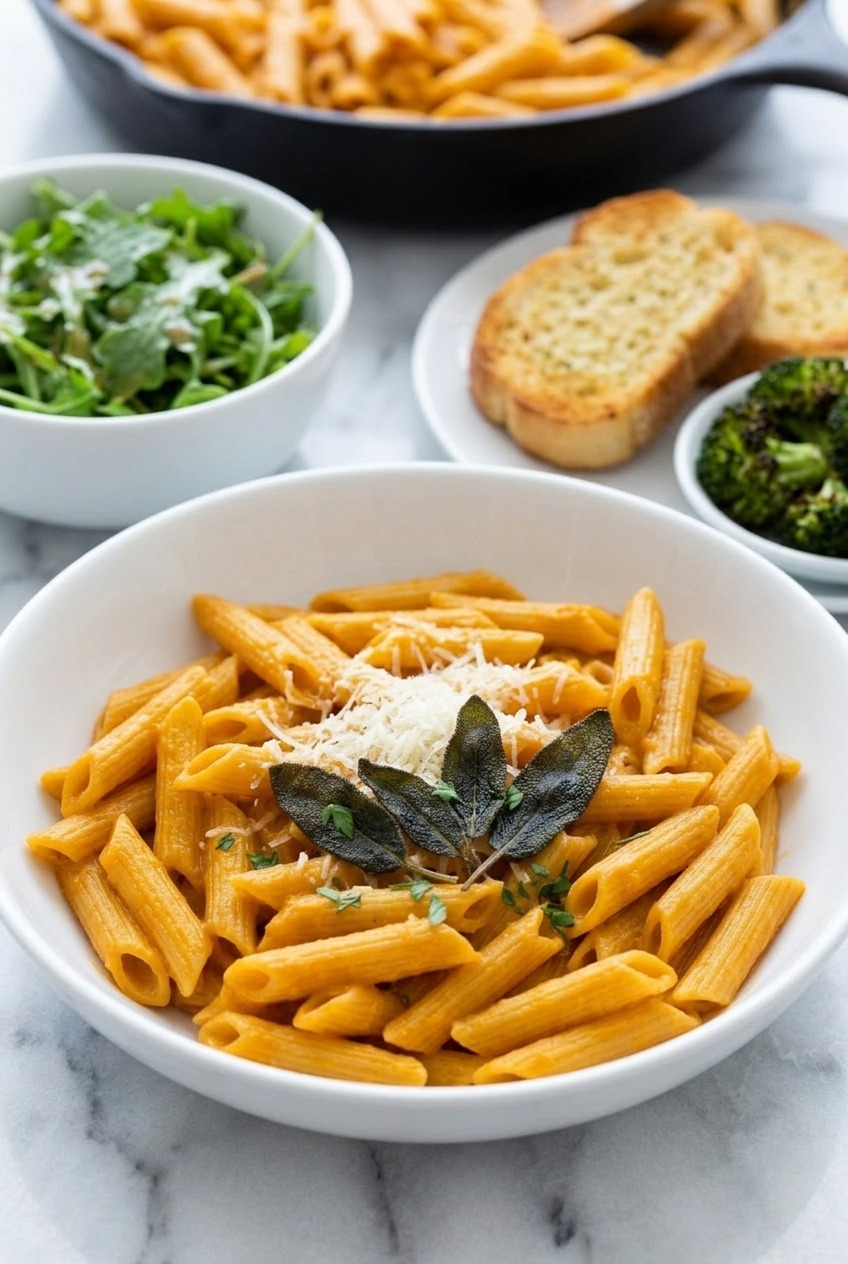
- A sharp green salad. Arugula, lemon, olive oil. The bitterness is exactly what this rich bowl wants next to it.
- Garlic bread. For the sauce left in the bowl.
- Roasted broccoli or brussels sprouts. They can share the oven with the sweet potato.
- A dry white wine. Something crisp, not oaky.
Give it a try the next time one sweet potato is all you've got.
Nobody will guess what's in the bowl!
Something sharp on the side balances the sweetness. A peppery arugula salad with goat cheese does the job.
Recipe
Creamy Roasted Sweet Potato Pasta Sauce With Penne
Ingredients
For the Sauce
- 1 ½ pounds sweet potatoes peeled and cut into 1 inch cubes
- 4 cloves garlic unpeeled, roasted alongside
- 2 tablespoons olive oil
- 3 tablespoons unsalted butter
- 8 leaves fresh sage dried sage is not a substitute
- ½ cup heavy cream
- ½ cup grated Parmesan plus more to serve
- 1 tablespoon fresh lemon juice
- ⅛ teaspoon freshly grated nutmeg
- 1 ¼ teaspoons salt
- ½ teaspoon black pepper
For the Pasta
- 12 ounces penne or rigatoni or medium shells
- 1 ½ cups reserved pasta water salted, reserved before draining
- 2 tablespoons chopped fresh parsley to finish
Instructions
Roast and Blend
- Heat the oven to 425F. Toss the sweet potato cubes with the olive oil, salt and pepper and spread them in a single layer on a sheet pan with the unpeeled garlic cloves. Roast 25 to 30 minutes, until the edges are properly browned.
- Squeeze the roasted garlic out of its skins once it is cool enough to handle.
- Melt the butter in a wide skillet over medium heat with the sage leaves and cook 3 to 4 minutes, until the butter smells nutty and the milk solids turn golden brown. Lift out the sage leaves and set them aside to crisp.
- Blend the roasted sweet potato, roasted garlic, brown butter, cream, Parmesan, lemon juice and nutmeg just until smooth, about 30 to 40 seconds, then stop. Over-blending makes the sauce gluey.
Cook the Pasta and Finish
- Cook the penne in well-salted water to al dente, about a minute less than the package says. Reserve 1 ½ cups of the cooking water before draining.
- Pour the puree into the skillet over low heat and whisk in the reserved pasta water a quarter cup at a time, usually about 1 cup, until the sauce falls off a spoon in a ribbon and coats the pan when tilted.
- Add the drained penne and toss over low heat 1 to 2 minutes so every tube is coated inside and out. Taste and adjust the salt and lemon.
- Crumble the crisp sage over the top, add the chopped parsley and more Parmesan, and serve right away.
Notes
- Blended, not chunky: the sweet potato is pureed completely into the sauce. There are no visible cubes in the finished dish and no tomato in the recipe.
- Roast, do not boil: boiled sweet potato gives a flat watery sauce. The browned edges are where the flavor comes from.
- Pasta water is the trick: reserve 1 ½ cups of salted water and add it a quarter cup at a time until the sauce ribbons off a spoon.
- Do not over-blend: 30 to 40 seconds. Long blending turns starchy vegetables gluey.
- Shape matters: penne, rigatoni or shells hold a thick puree. Long strands clump.
- Storage: sauce alone keeps 5 days refrigerated and freezes 3 months. Reheat low with a splash of water.