The first time I had real dakos, I was sitting at a tiny taverna table on Crete with my knees practically touching the sea wall.
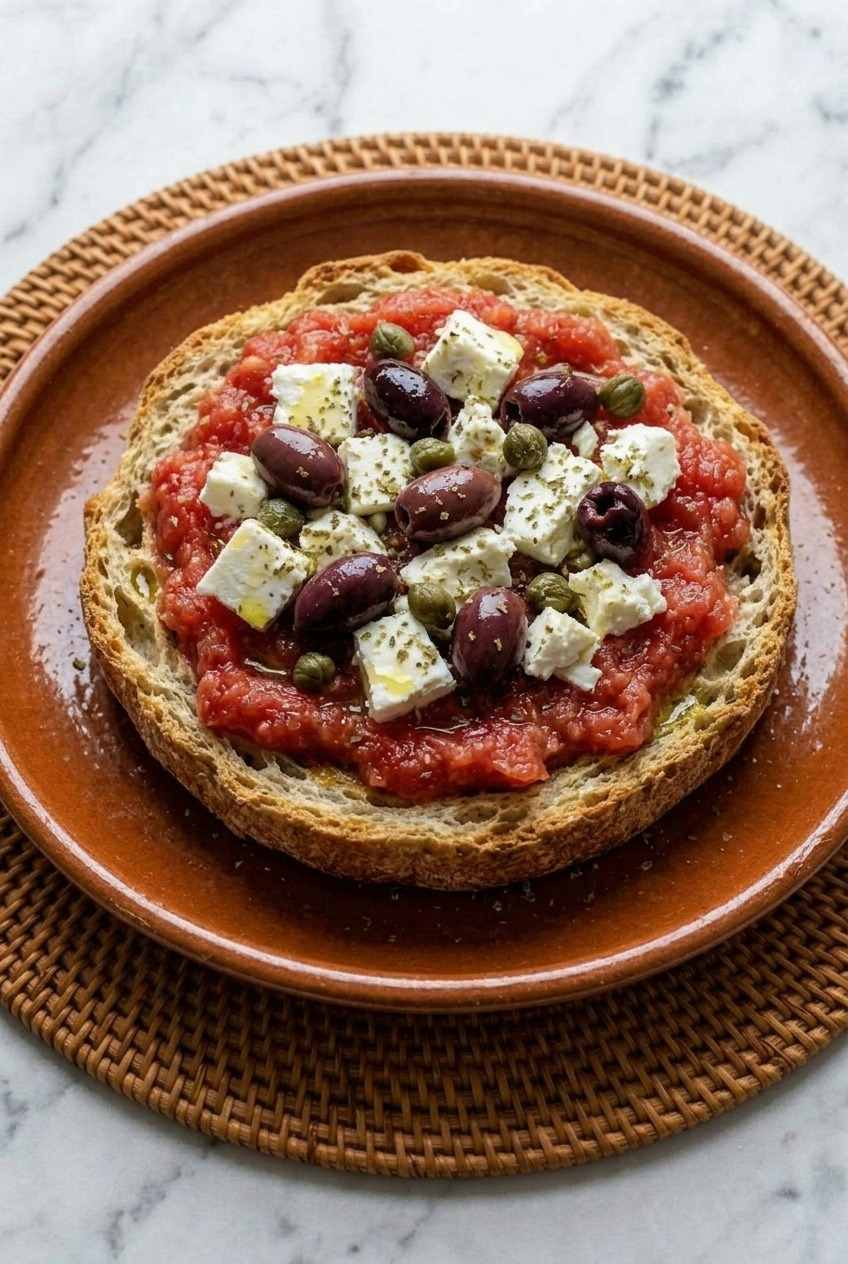
The waiter set down what looked like a hard, round disk of bread piled with grated tomato.
I'll admit I was skeptical.
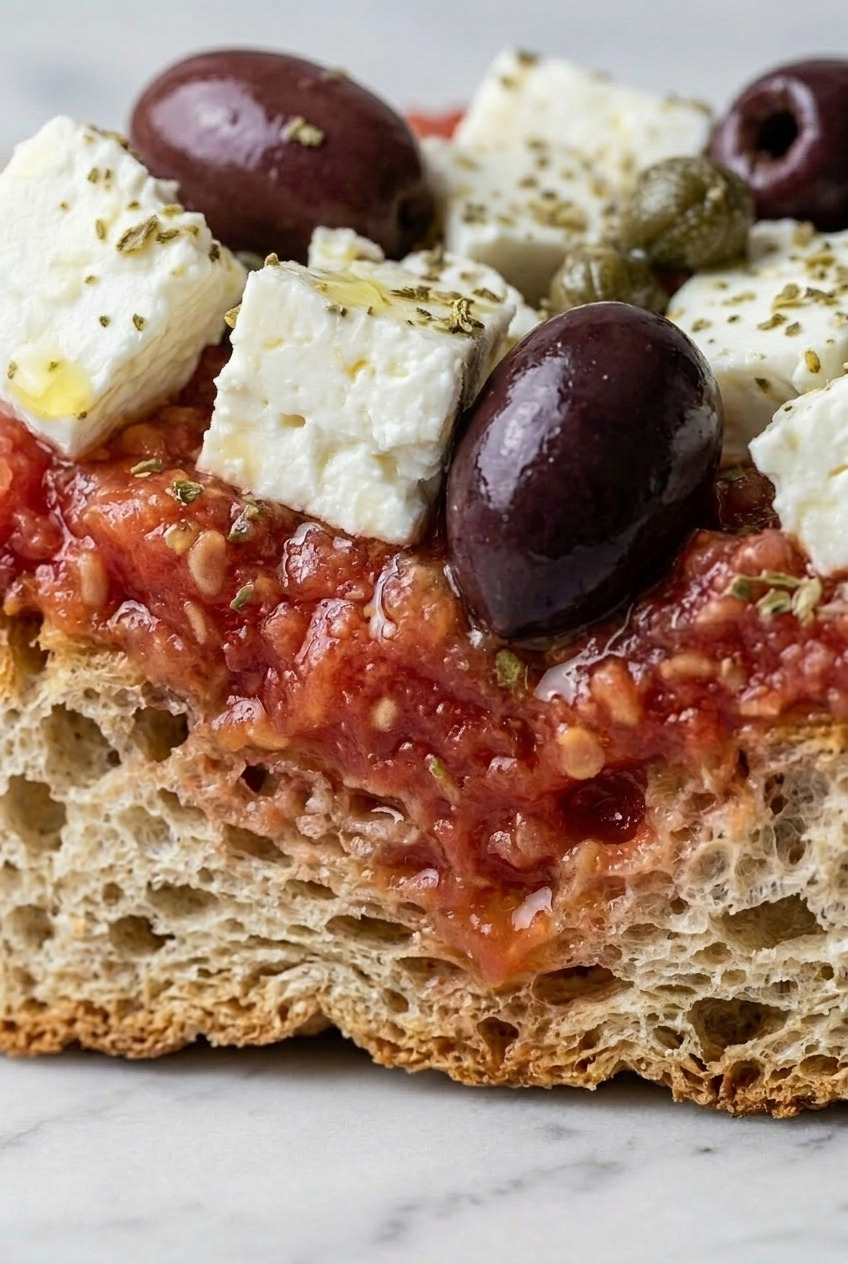
Then I took a bite, and the rusk gave way with this soft-but-still-toothsome crunch, all soaked through with sweet tomato and grassy olive oil.
I stopped talking mid-sentence. It was that good.
What gets me about dakos is how little it asks of you. There is no cooking, no oven, no fussing.
You grate a ripe tomato, you wet a barley rusk, you pile, crumble, drizzle, and sprinkle. Ten minutes, start to finish.
The catch is that simple food has nowhere to hide. You need a genuinely ripe tomato, a good Greek olive oil, and a rusk softened just right so it is tender without turning to mush.
I make this almost weekly all summer, and my wife has started requesting it for breakfast, which tells you everything. Get those three things right and you have a true taste of Crete on your plate.
What Is Dakos?
Dakos is the iconic meze of Crete, and honestly one of the smartest peasant dishes I know.
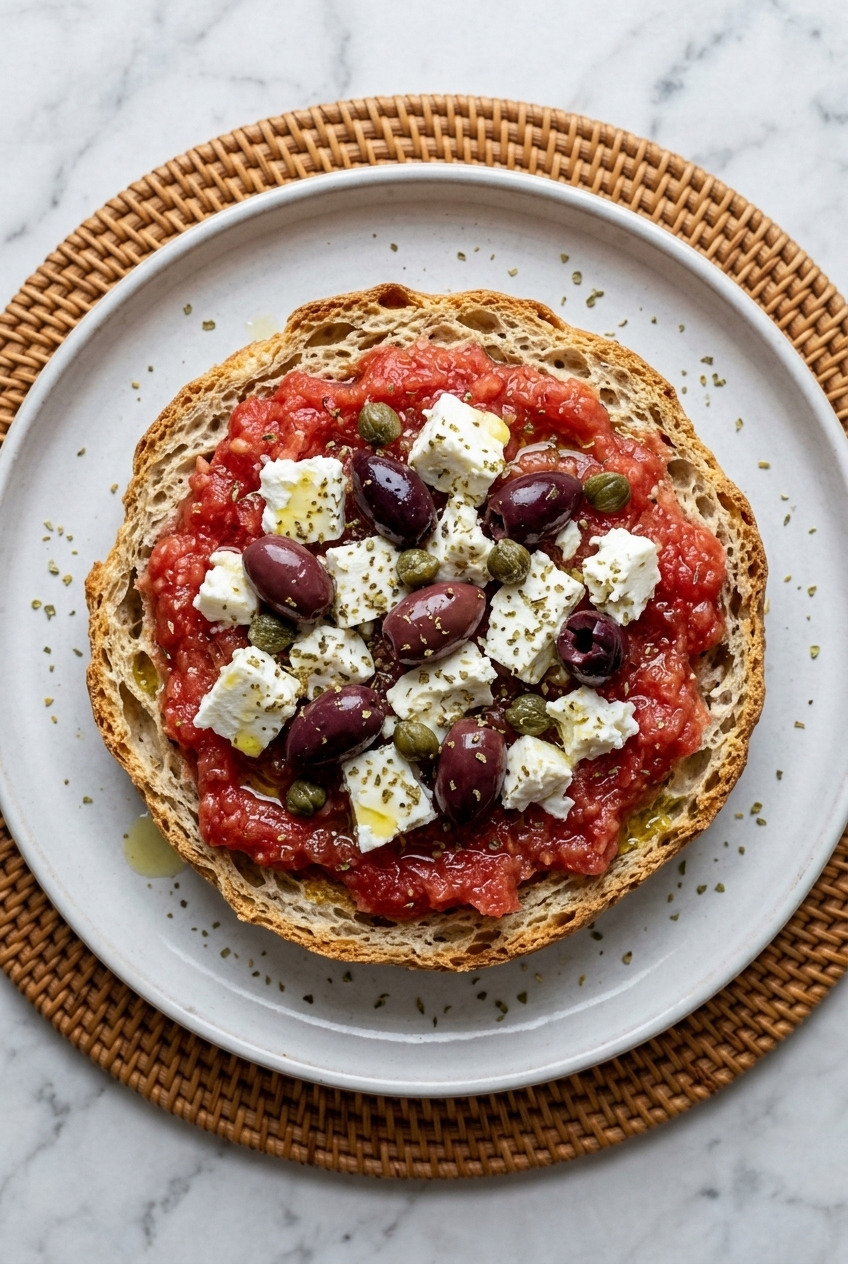
At its heart it is a hard barley rusk topped with grated tomato, crumbled cheese, olives, oregano, and a generous pour of olive oil. You'll also see it spelled ntakos, and in some villages it's affectionately called koukouvagia, which means "little owl."
It started as cucina povera, a way for farmers and shepherds to eat well from a dry, shelf-stable bread softened with whatever ripe tomatoes the garden gave them.
You can serve it as a light lunch, a snack, or as part of a meze spread alongside other small plates. I lean toward serving it as a proper little meal when tomatoes are at their peak.
Pronunciation help: say it DAH-kos. Quick, no fuss, just like the dish.
What Are Barley Rusks (Paximadia)?
The barley rusk is the soul of this dish, so it's worth knowing what you're working with.
Paximadia are twice-baked breads, traditionally made with barley flour, that are dried until they're rock hard.
That hardness was the whole point. A baked-once-and-dried rusk could sit in a Cretan pantry for months without spoiling, ready to be revived with a splash of water and a ripe tomato.
The round dako rusk is the classic shape for this dish, a sturdy disk with a craggy, open crumb that drinks up tomato juice and olive oil beautifully.
If you've never had one, picture a dense, savory barley biscotti that is meant to be softened, not crunched dry.
Ingredients You'll Need
This is a short list, which means every single item carries weight. Buy the best you can find for each one.
- Barley rusks (paximadia). The round Cretan dako is traditional. Look for them at Greek or Mediterranean groceries, or online.
- Ripe tomatoes. This is non-negotiable. A pale winter tomato will give you a sad, watery dakos. Use the ripest, most fragrant tomatoes you can find.
- Extra virgin olive oil. Use a good fruity Greek one if you can. It's a finishing oil here, so the flavor really shows.
- Feta cheese. Crumbled feta is the common choice and it's lovely. For the most traditional Cretan version, use mizithra or xynomyzithra instead.
- Kalamata olives. Pitted, whole or roughly chopped. They bring the briny backbone.
- Capers. Optional, but I love a few. Use them alongside the olives or in place of some.
- Dried oregano. Greek oregano is the signature finishing herb. Crumble it between your fingers as you sprinkle.
- Flaky sea salt. Go light. Between the cheese, olives, and capers, there's already a lot of salt at play.
How to Make Dakos
There's no cooking here, just smart assembly. The whole thing comes together in the time it takes to grate a tomato.
Step 1: Grate the Tomatoes
Cut each tomato in half through the equator and remove the white core at the stem.
Grate the cut side on the large holes of a box grater into a bowl, keeping all the juices, until all you're left holding is the flat skin.
Stir in a pinch of salt and let it sit while you prep the rusk.
Step 2: Soften the Rusk
Hold each barley rusk under cold running water for just a second or two, or dip it briefly into a bowl of water.
Set it on a serving plate and drizzle the top with a little olive oil. The grated tomato will finish the softening, so don't overdo the water.
Step 3: Mound the Tomato
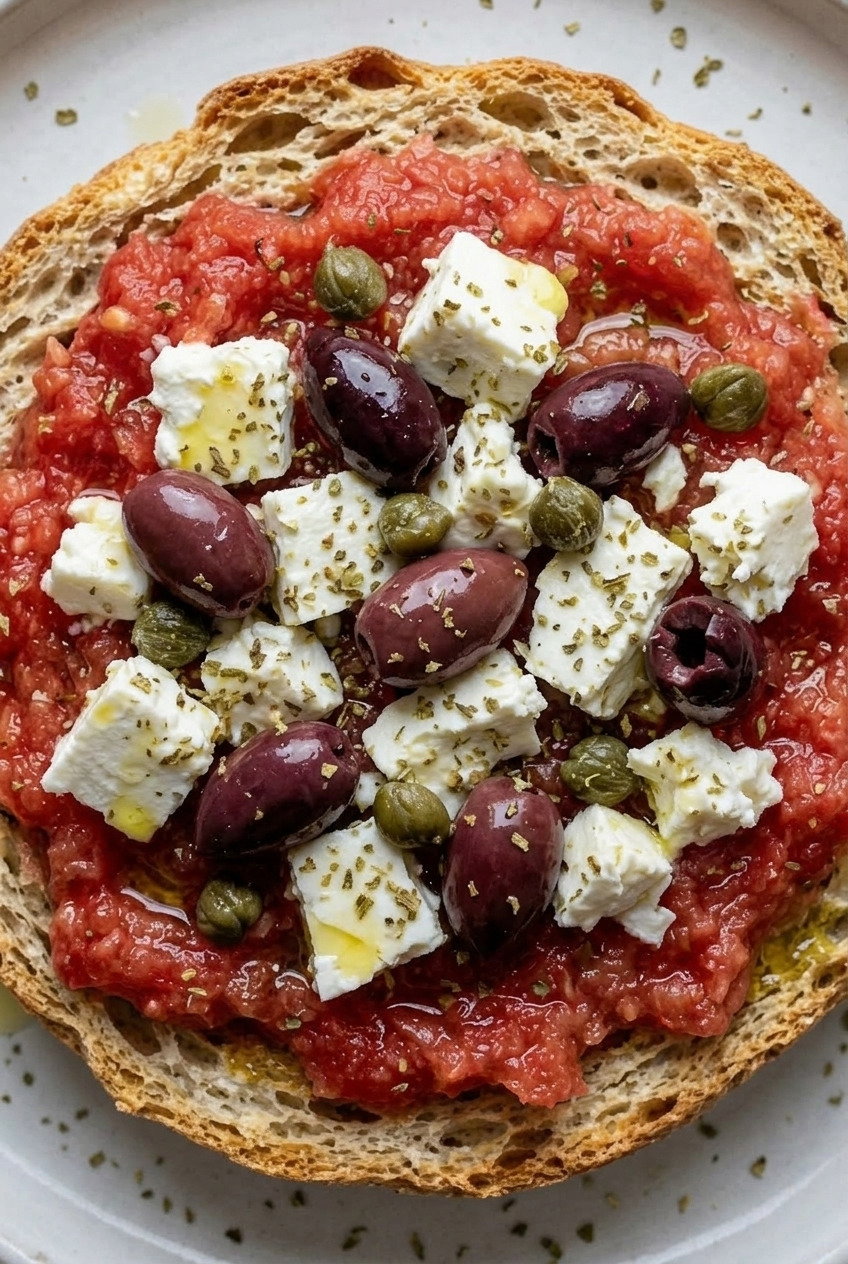
Spoon the grated tomato and all its juices over the top of the rusk, letting it soak in.
Keep it open-faced, with the topping piled on top of the flat rusk. This is not a sandwich and the rusk stays whole.
Step 4: Top and Finish
Crumble the feta or mizithra over the tomato.
Scatter the olives and capers, sprinkle generously with dried oregano, and finish with the rest of the olive oil and a touch of flaky salt if needed.
Serve right away, while the rusk still has a little bite.
Tips for the Best Dakos
Get the rusk timing right and everything else falls into place.
- Don't drown the rusk. A quick one-to-two second dip is plenty. The tomato juices do most of the softening, and a soggy base is the one way to ruin this dish.
- Wait for tomato season. This is a summer dish for a reason. Peak tomatoes are the difference between fine and unforgettable.
- Go easy on added salt. Taste before you reach for the salt. The cheese, olives, and capers carry a lot of it already.
- Use real finishing oil. A peppery, fruity extra virgin olive oil makes this sing. It's not the place for a bland neutral oil.
Substitutions and Variations
Dakos is forgiving once you respect the basics. Here's how I bend the rules.
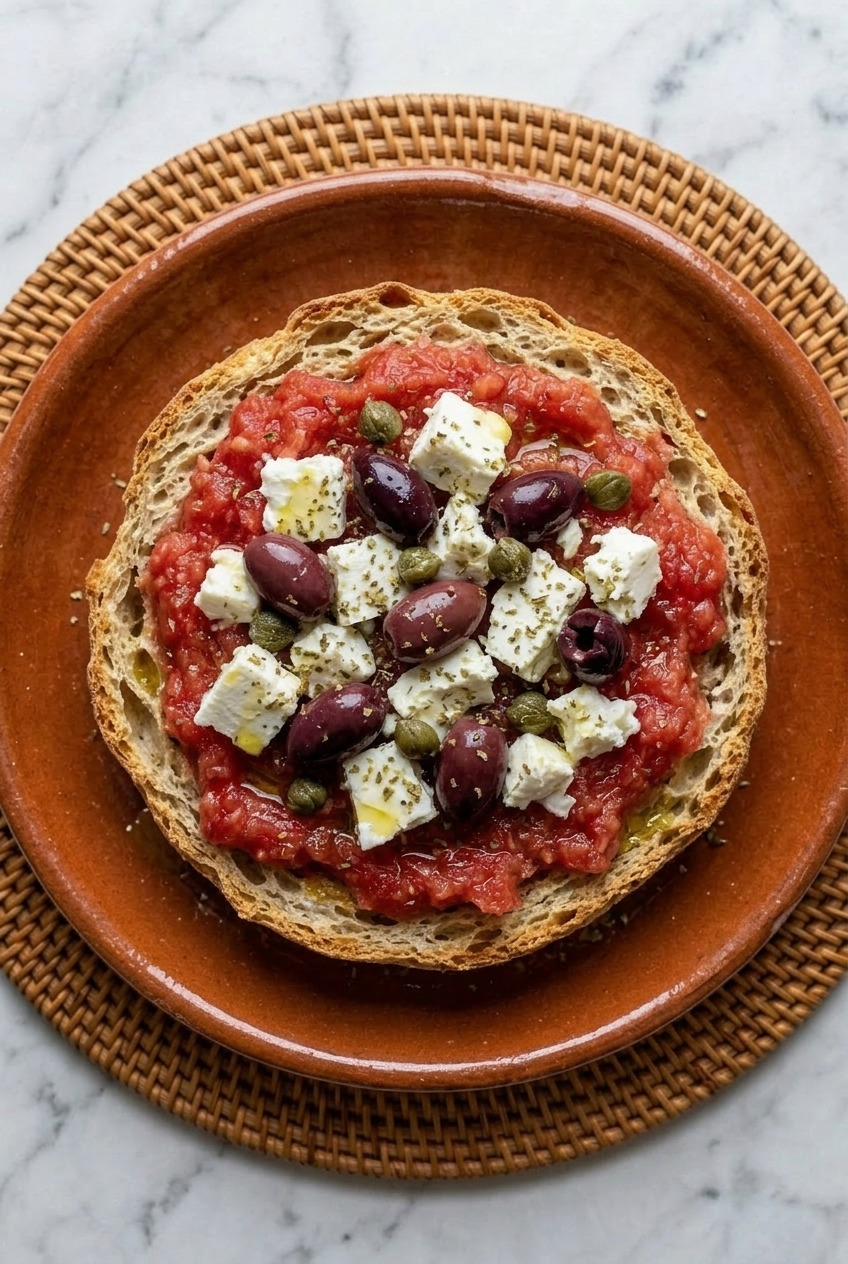
- No rusks? A thick slice of toasted whole-grain or rustic sourdough, well dried in the oven, is a reasonable stand-in. It won't be quite the same, but it works.
- Cheese swap. Mizithra or xynomyzithra is the most traditional Cretan choice. Crumbled feta is the easy, delicious default.
- Add aromatics. Some cooks add a little finely chopped red onion or a few cucumber pieces. Good additions, though not strictly classic.
- Carob rusk. If you can find a Cretan carob rusk, try it. It has a gentle, almost chocolatey depth under the tomato.
No rusks? Toasted bread and good tomatoes get you close to this burrata bruschetta, which is a fine dinner by itself.
How to Serve and Store
Dakos is happiest the moment it's assembled.
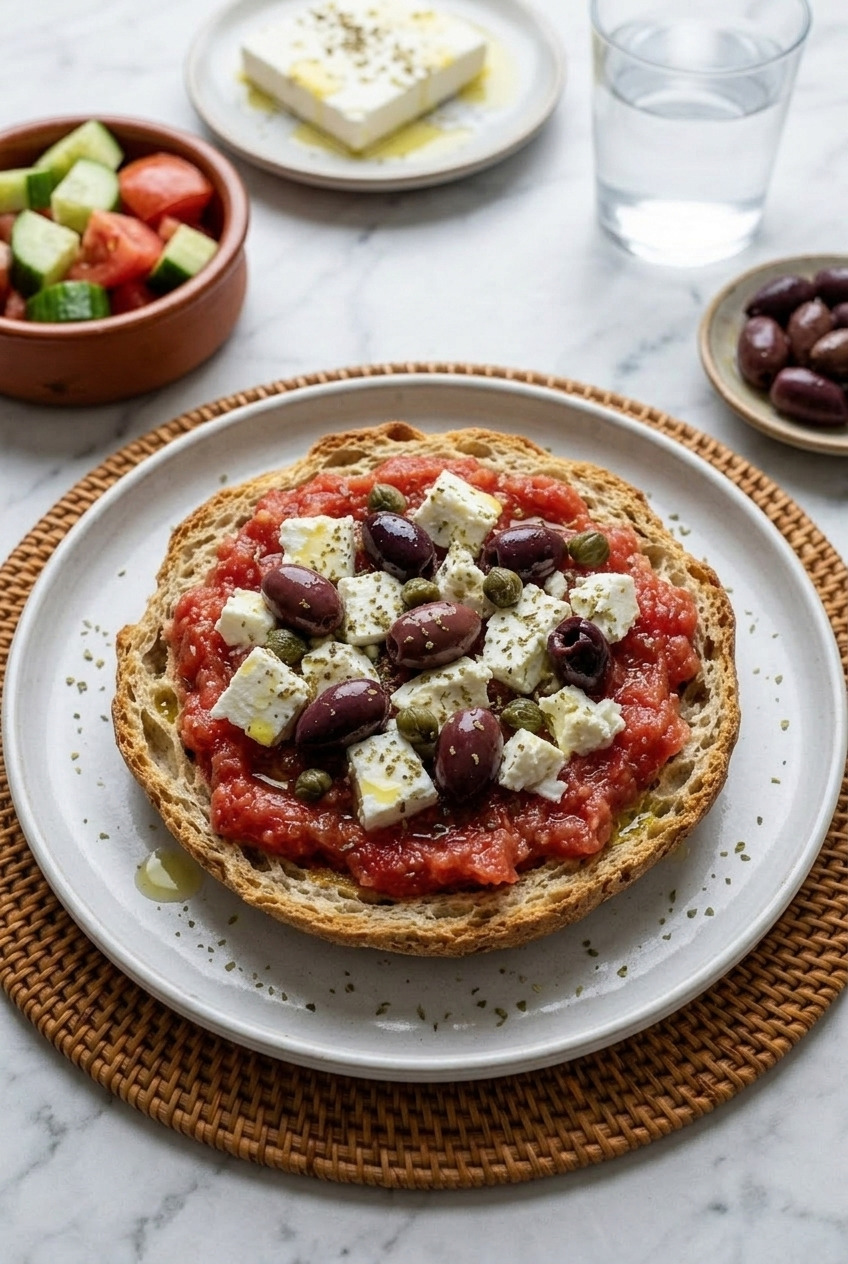
Serve it as a light lunch on its own, or set it out as part of a meze spread with other small plates and a glass of something cold.
The one thing I won't do is assemble it ahead. A pre-built dakos sitting in the fridge turns into a soggy disappointment, and I learned that the hard way.
Make-ahead tip: you can grate the tomato and crumble the cheese earlier in the day and keep them separate in the fridge. Assemble only when you're ready to eat.
For a Cretan-style spread, add my Greek octopus salad and some cold white wine.
Frequently Asked Questions
What is dakos and how do you pronounce it?
Dakos is a traditional Cretan dish of a barley rusk topped with grated tomato, cheese, olives, and oregano. It's pronounced DAH-kos, and you'll also see it spelled ntakos.
What's the best way to soften barley rusks without making them soggy?
Dip or run the rusk under cold water for just one to two seconds, then let the grated tomato and its juices finish the job on the plate. Avoid soaking, which turns the base to mush.
Do I peel the tomatoes or leave the skin on?
You don't peel them. Grating on a box grater leaves the flat skin behind in your hand, so all the pulp and juice end up on the rusk and the skin is naturally discarded.
What can I use if I can't find Cretan barley rusks?
A thick slice of rustic sourdough or whole-grain bread, dried hard in the oven, is the closest substitute. It changes the texture a little but still gives you that tomato-soaked crunch.
Feta or mizithra: which cheese is traditional?
Mizithra or xynomyzithra is the most traditional Cretan cheese for dakos. Crumbled feta is the more widely available choice and tastes wonderful, so use whichever you can find.
Can I make dakos ahead of time?
Not fully. You can grate the tomato and crumble the cheese in advance and store them separately, but only assemble right before serving so the rusk keeps its texture.