Most salads punish you for planning ahead.
You pack one on Sunday, full of good intentions, and by Tuesday the greens have wilted into a sad green puddle at the bottom of the container.
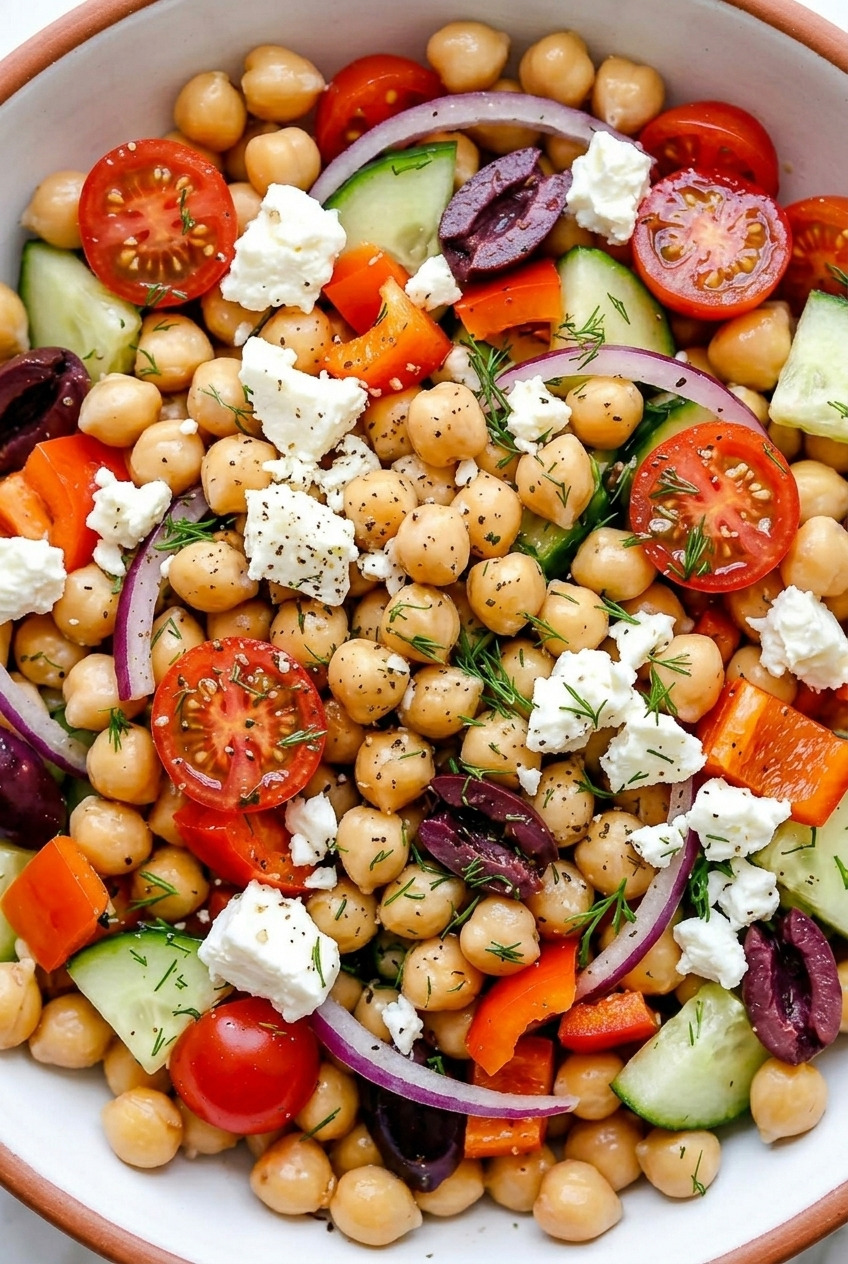
This one does the opposite.
I started making it the year I got serious about meal-prep lunches, mostly because I was tired of throwing out slimy spinach by Wednesday.
Swapping leafy greens for chickpeas changed everything.
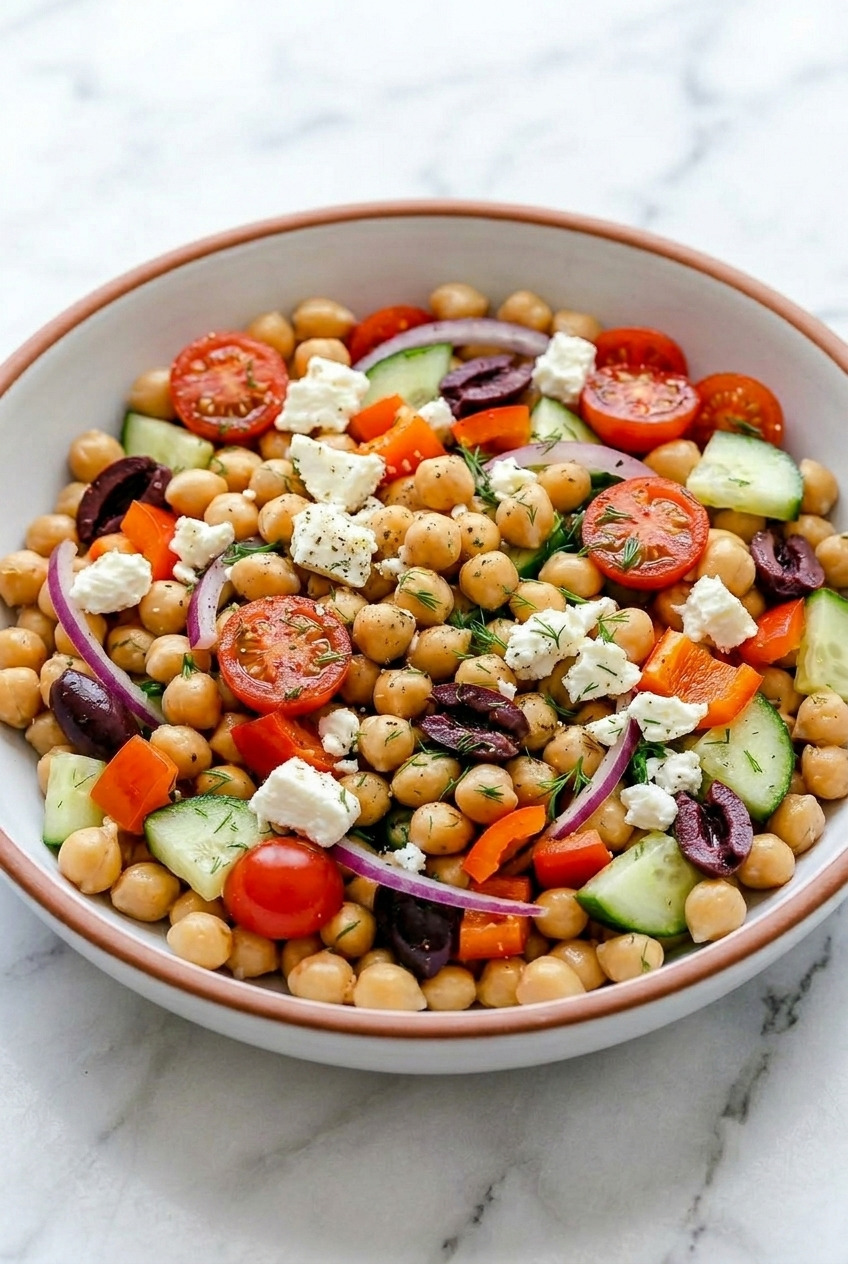
The chickpeas soak up the dressing, the cucumber and tomatoes stay crisp, and the whole thing tastes better on day three than it does the moment you make it.
I pack four containers every Sunday night and I genuinely look forward to lunch now, which is not a sentence I ever expected to write about salad.
The trick I learned along the way is to marinate the chickpeas in the dressing first, a move I picked up from making it over and over.
Twenty minutes is all it takes for them to go from bland canned beans to something tangy and craveable.
It's fresh, it's filling, and there's no cooking involved. I promise you'll want this in your lunch rotation.
Why You'll Love This No-Lettuce Greek Chickpea Salad
This is the rare salad that gets better as the week goes on. Here's why it earns a permanent spot in my fridge.
- No wilting, ever. There are no leafy greens to turn to mush, so it holds up for days instead of hours.
- Meal-prep friendly. Make it Sunday, eat it through Thursday, and it actually improves as the chickpeas marinate.
- One bowl, no cooking. You chop, you whisk, you toss. That's the whole job.
- Protein-packed. Two cans of chickpeas mean this keeps you full until dinner, no 3pm crash.
- Naturally vegetarian and gluten-free. It fits a lot of diets without any swaps.
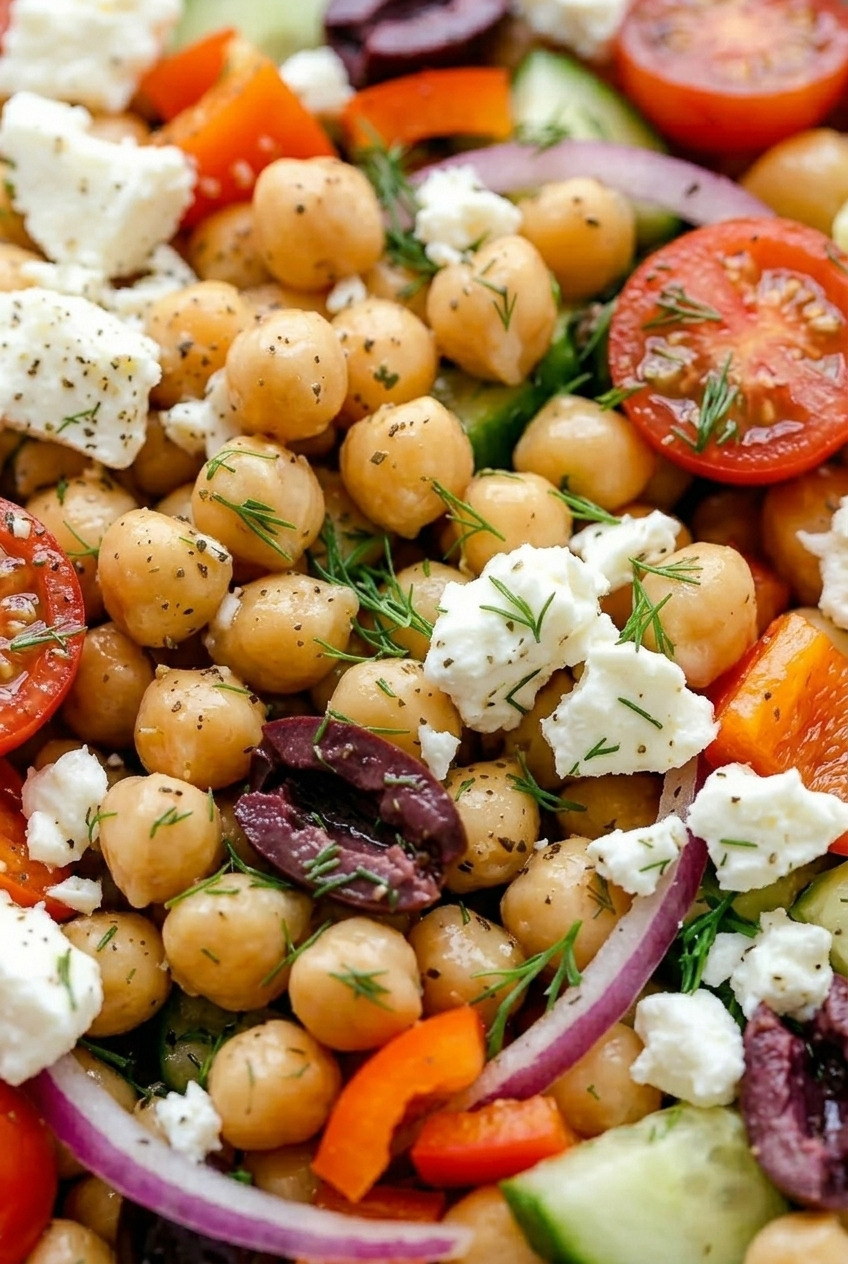
Ingredients You'll Need
Everything here is fridge and pantry friendly. Here's what goes in and why each one matters.
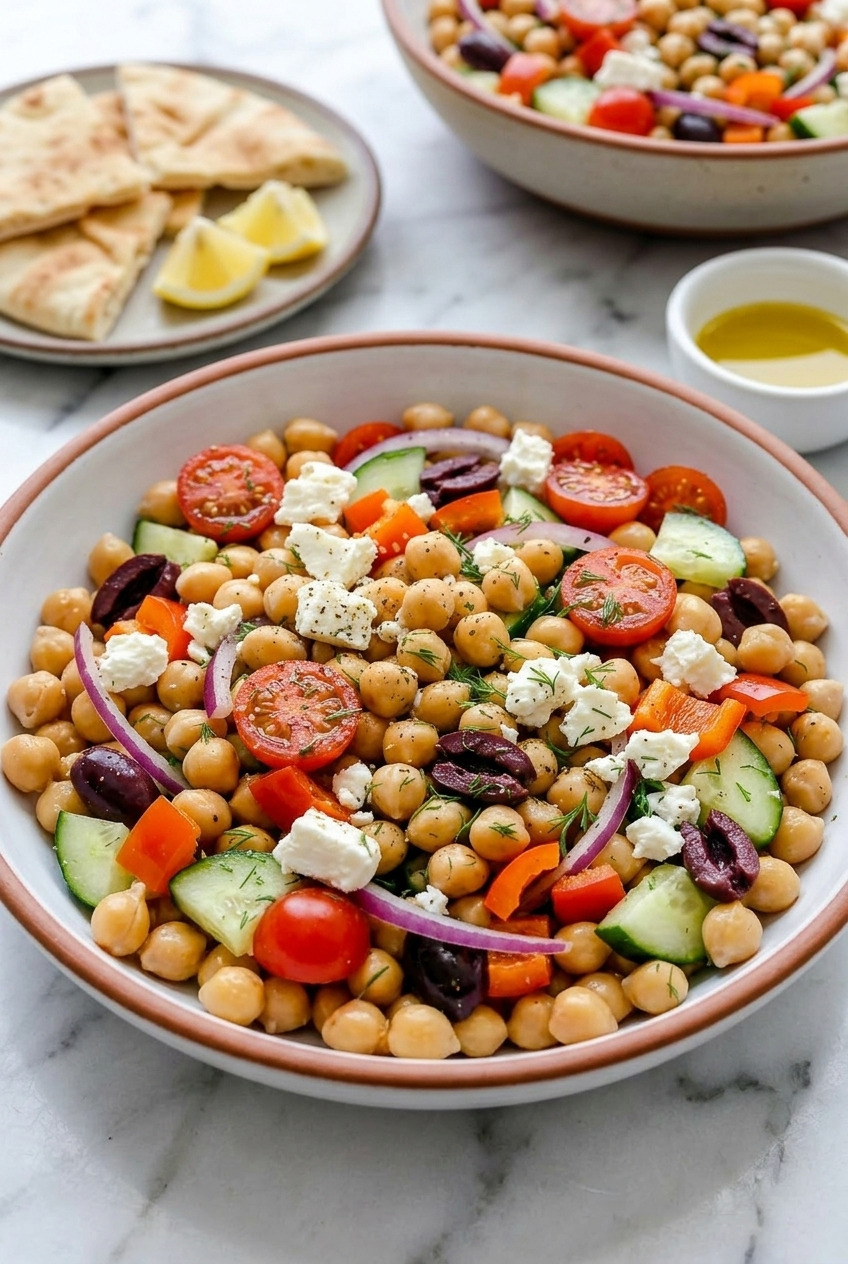
- Chickpeas (2 cans, 15 oz each). The heart of the whole thing. Rinse and drain them well so they soak up the dressing instead of canning liquid.
- Cherry tomatoes (2 cups). Halved, for little bursts of sweetness. Grape tomatoes work too.
- English cucumber (1). Quartered and sliced. I like English cucumbers because the skin is thin and they hold their crunch.
- Red bell pepper (1). Chopped, for color and a sweet snap.
- Kalamata olives (½ cup). Pitted and halved. They bring that briny, salty punch a Greek salad lives on.
- Red onion (⅓ cup). Slivered thin. Soak it in cold water for ten minutes if you want to mellow the bite.
- Feta cheese (6 oz). Crumbled or cubed. Buy a block in brine and crumble it yourself, it's creamier than the pre-crumbled stuff.
- Fresh dill or parsley (¼ cup). Chopped. Dill leans bright and grassy, parsley is more neutral. Your call.
For the dressing, you'll need a few simple things:
- Extra virgin olive oil (⅓ cup). Use a good one here since you'll taste it.
- Red wine vinegar (3 tablespoons). The tangy backbone.
- Fresh lemon juice (1 tablespoon). A little extra brightness on top of the vinegar.
- Garlic (2 cloves). Minced fine.
- Dried oregano (1 teaspoon). The non-negotiable Greek herb.
- Dijon mustard (½ teaspoon). It helps the dressing emulsify and cling to the chickpeas.
- Kosher salt and black pepper. About ¾ teaspoon salt and ½ teaspoon pepper, then adjust.
The Greek Dressing (and the Marinate Trick)
The dressing is where this salad earns its flavor. It's the classic Greek combo: olive oil, vinegar, garlic, and oregano.
I whisk it together in the bottom of the bowl before anything else goes in.
Then comes the part that makes the difference.
I add the drained chickpeas straight into the dressing and let them sit for 20 minutes.
Canned chickpeas on their own are pretty bland.
Give them twenty minutes in that tangy dressing and they turn into the tastiest thing in the bowl.
Worth the extra step? Every single time.
Pro tip: if you're prepping for the week, the chickpeas keep marinating in the fridge, which is exactly why this salad peaks around day two or three.
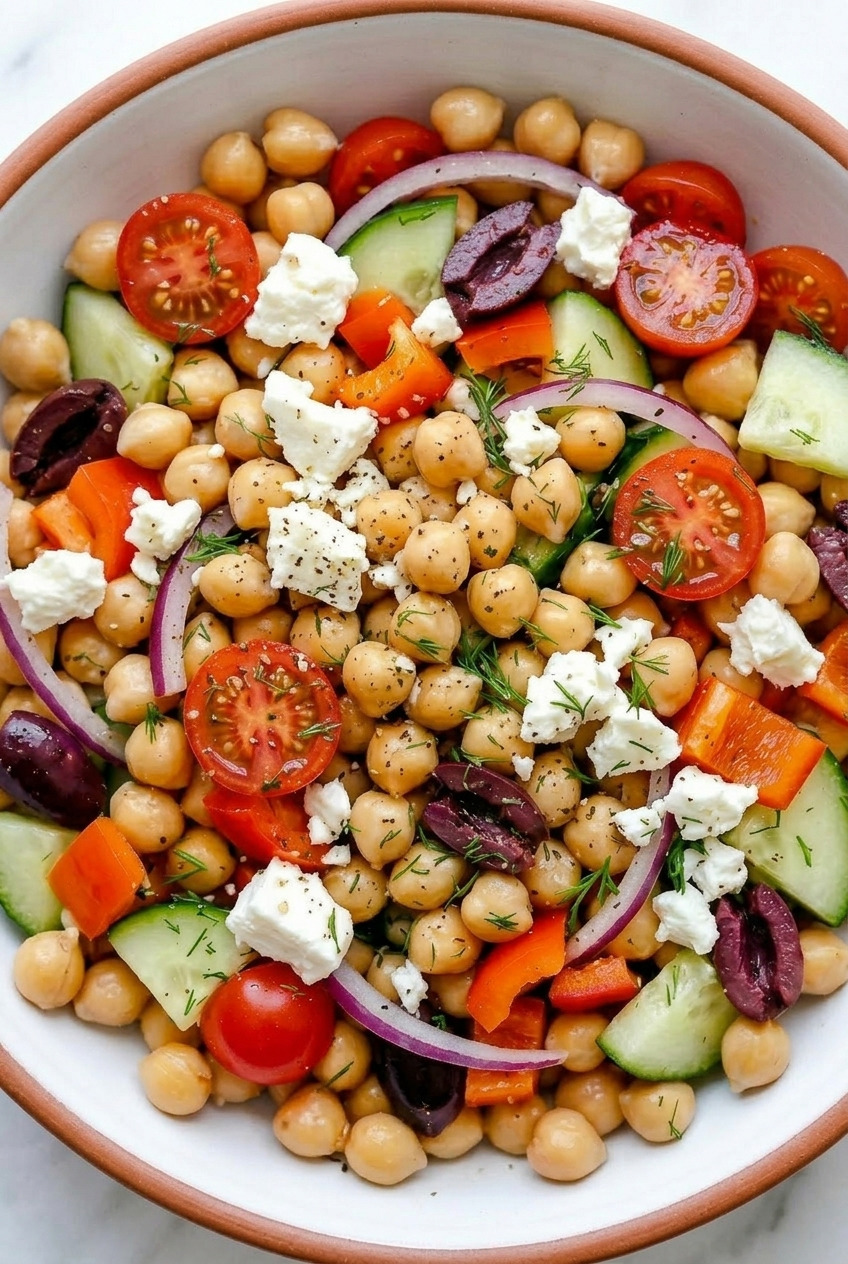
How to Make Greek Chickpea Salad
Step 1: Whisk the Dressing
In a large bowl, whisk the olive oil, red wine vinegar, lemon juice, garlic, oregano, Dijon, salt, and pepper until it looks creamy and combined.
Step 2: Marinate the Chickpeas
Add the rinsed and drained chickpeas to the dressing and stir to coat. Let them sit for 20 minutes while you chop everything else.
Step 3: Chop the Veggies
Halve the tomatoes, quarter and slice the cucumber, chop the bell pepper, sliver the red onion, and halve the olives.
Step 4: Combine
Add all the chopped veggies and olives to the bowl with the marinated chickpeas. Toss everything together so the dressing coats it all.
Step 5: Add the Feta Last
Fold in the feta and fresh herbs gently at the end so the cheese stays in nice pieces instead of breaking down.
Taste and adjust the salt, then dig in or pack it up. That's it!
Tips for Meal-Prep Success
A few small moves make this salad last all week. These are the ones I've learned the hard way.
- Soak the onion. Ten minutes in cold water tames the sharp raw bite, which can build up over a few days in the fridge.
- Add feta and cucumber fresh for long preps. If you're prepping for five days, stir the chickpeas and dressing now and add cucumber and feta the morning you eat it. They stay crisper that way.
- Dress to taste before serving. The chickpeas drink up dressing over time, so a small extra splash of olive oil and vinegar on day three perks it right back up.
- Use a block of feta. It holds its shape better than pre-crumbled and won't dissolve into the dressing.
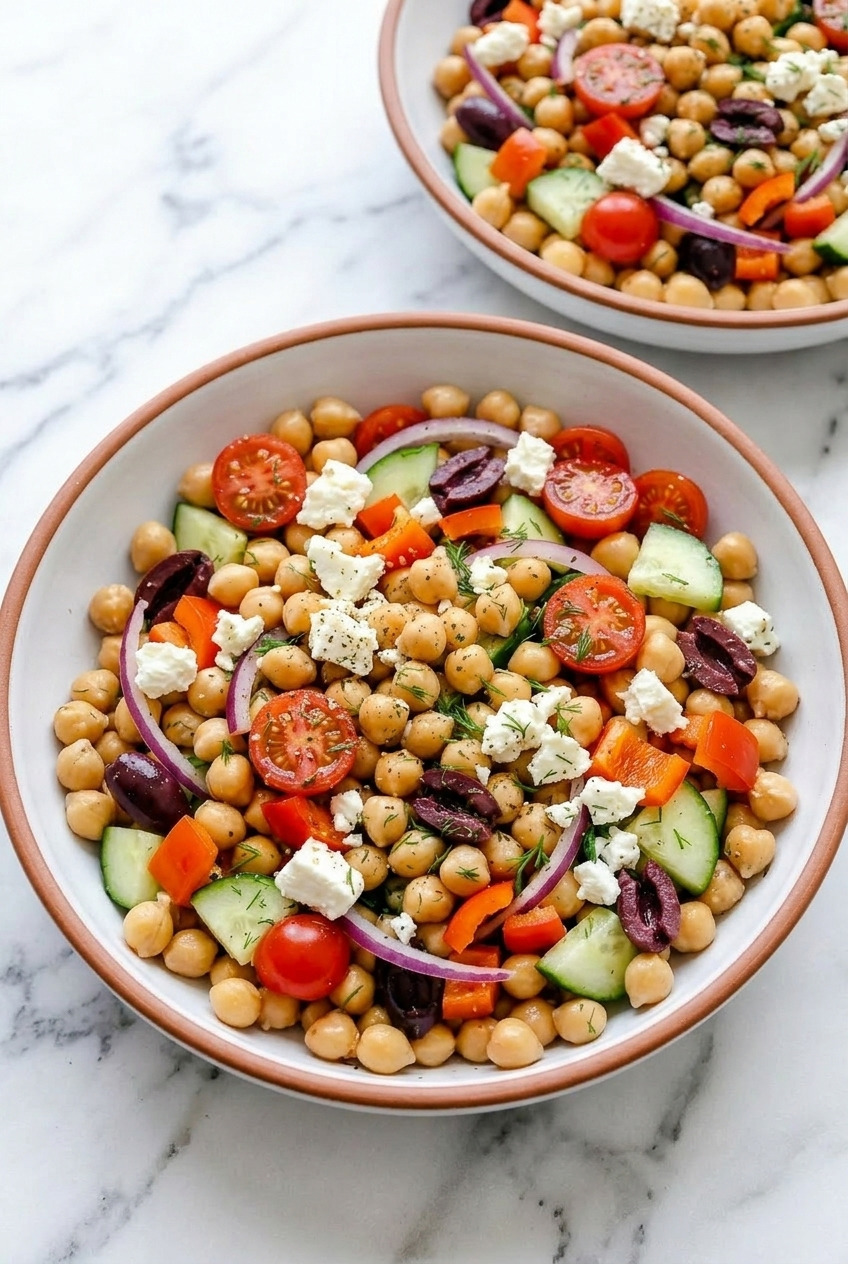
Storage and Make-Ahead
This salad is built for the fridge. Here's how to keep it at its best.
- Refrigerator. Store in an airtight container for up to 5 days. The flavor peaks around day two or three.
- Make-ahead dressing. Whisk the dressing up to a week in advance and keep it in a jar in the fridge. Shake before using.
- Freezer. Skip it. The cucumber and tomatoes turn watery once thawed, so this is a fresh-only situation.
What to Serve With It
This works as a light meal or a side. Here's how I like to round it out.
- With warm pita or crusty bread. Perfect for scooping up the dressing left in the bowl.
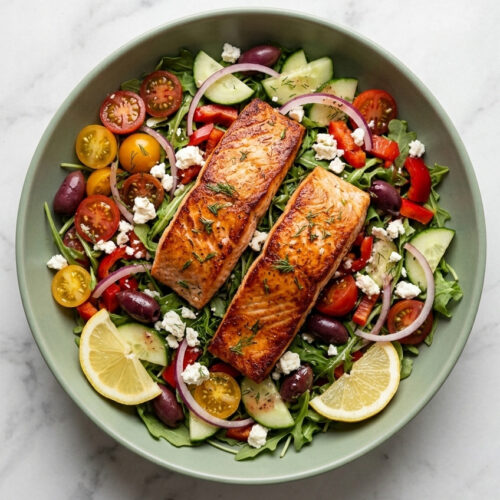
- Alongside grilled proteins. It plays beautifully next to grilled chicken, salmon, or shrimp.
- As a potluck side. It travels well and doesn't need to stay hot or cold-perfect, so it's a low-stress dish to bring.
Serve it with this Lebanese falafel for a meatless dinner.
Variations and Add-Ins
The base recipe is endlessly flexible. Here are my favorite ways to switch it up.
- Make it a full meal. Stir in a cup of cooked quinoa or some grilled chicken to bulk it up into dinner.
- Add more Mediterranean flavor. A handful of chopped artichoke hearts or roasted red peppers fits right in.
- Go dairy-free. Swap the feta for a plant-based feta or just leave it out and add an extra splash of vinegar for tang.
- Switch the herbs. Fresh mint alongside the dill takes it in a brighter, cooler direction.
Toss it over baby spinach and you have most of my Greek spinach salad.