The first time I had the real thing, I was sitting at a little taverna a few steps from the water on a Greek island.
The plate that landed in front of me looked nothing like the chopped, lettuce-heavy bowl I'd been calling Greek salad for years.
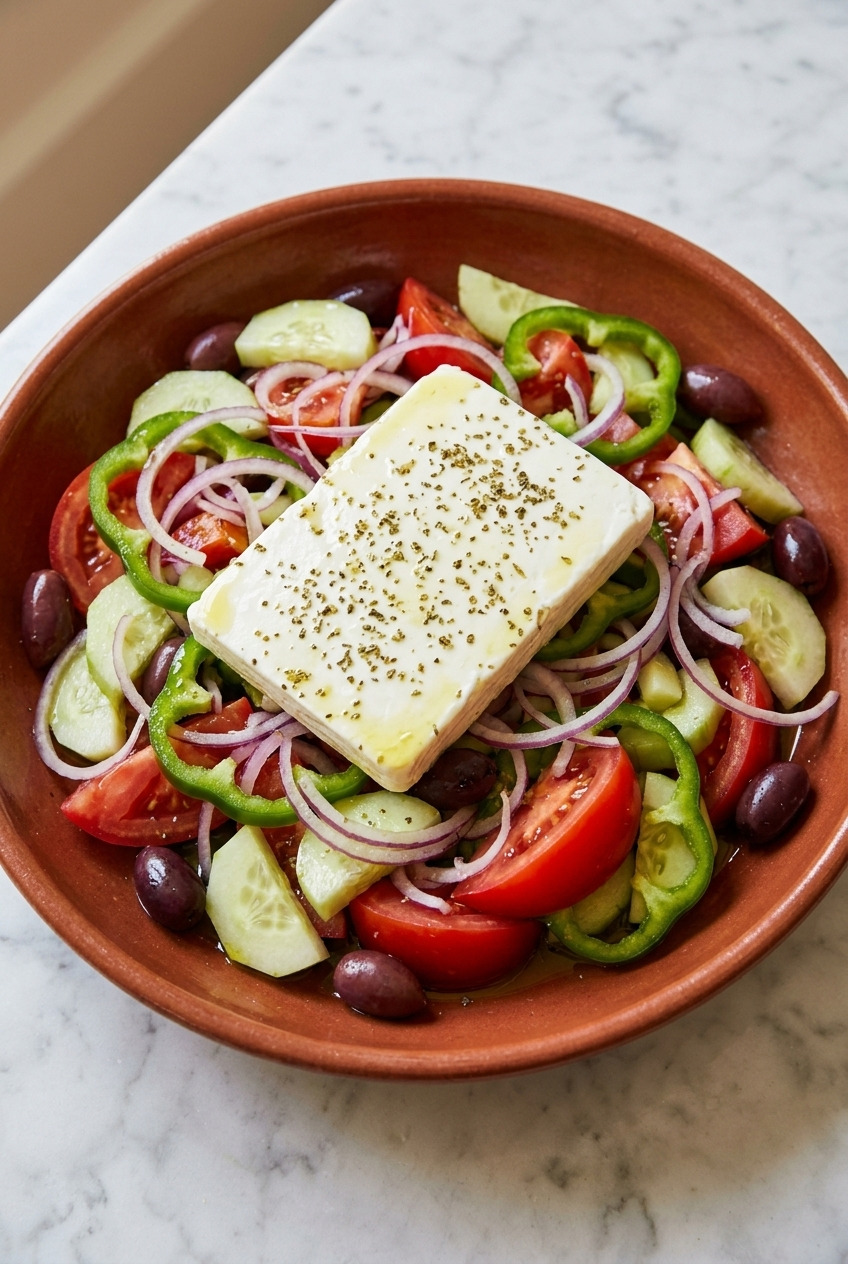
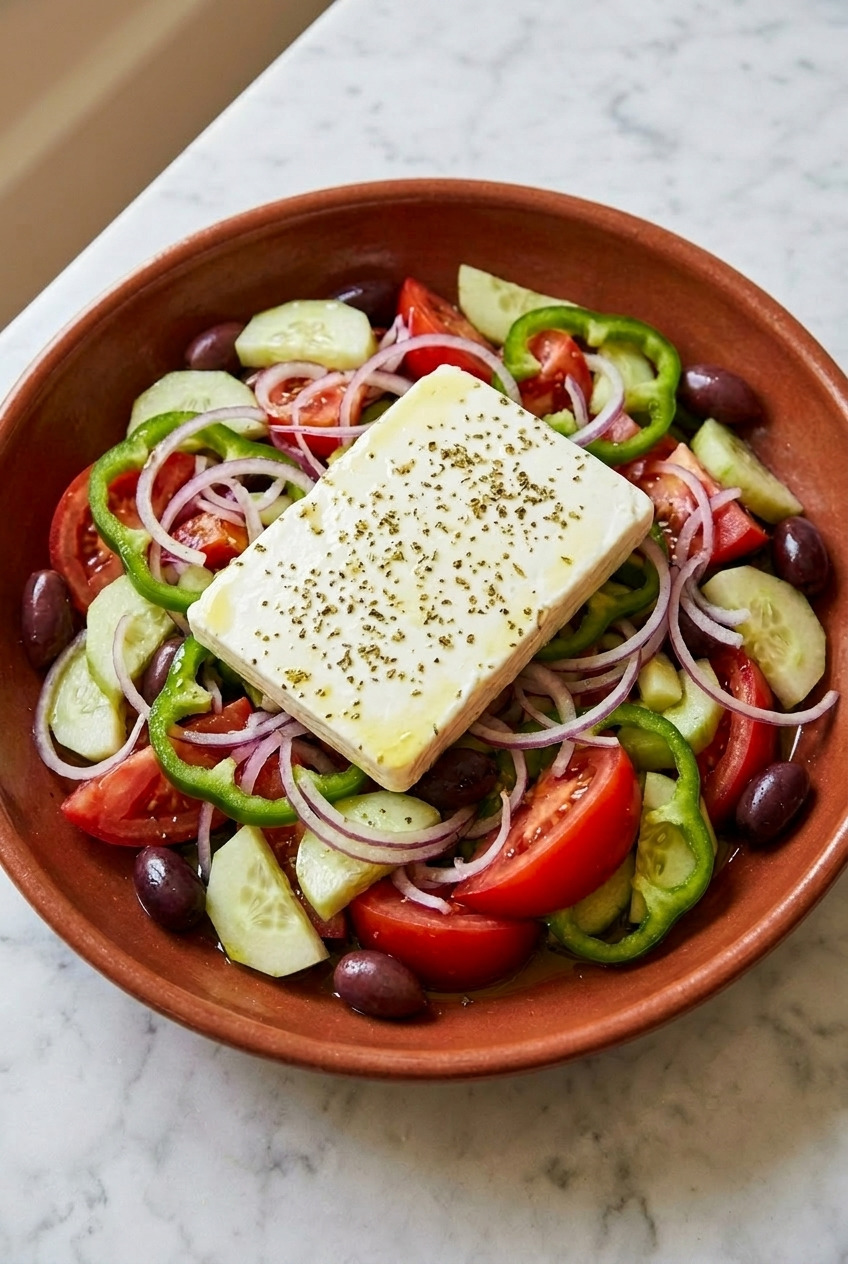
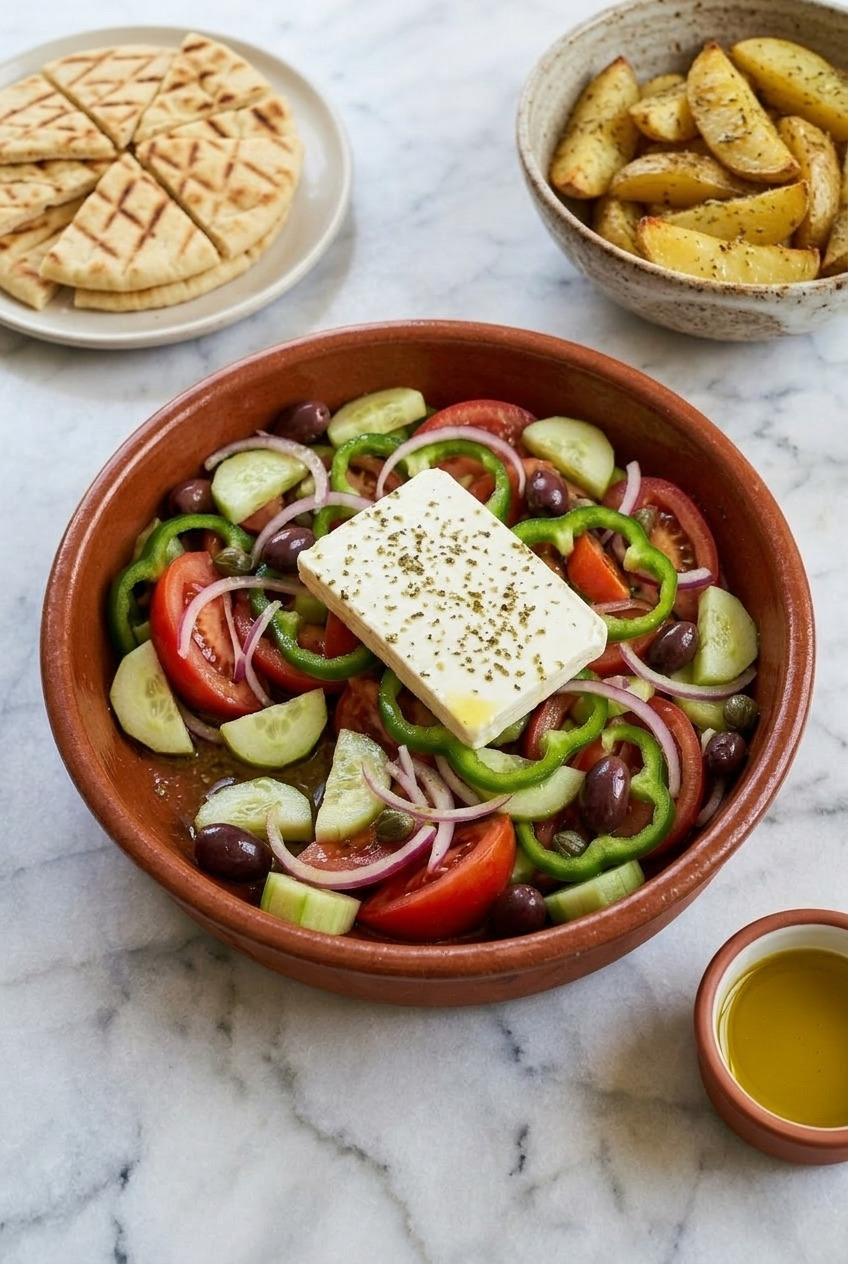
Big wedges of tomato. Thick rings of green pepper. Whole olives with the pits still in.
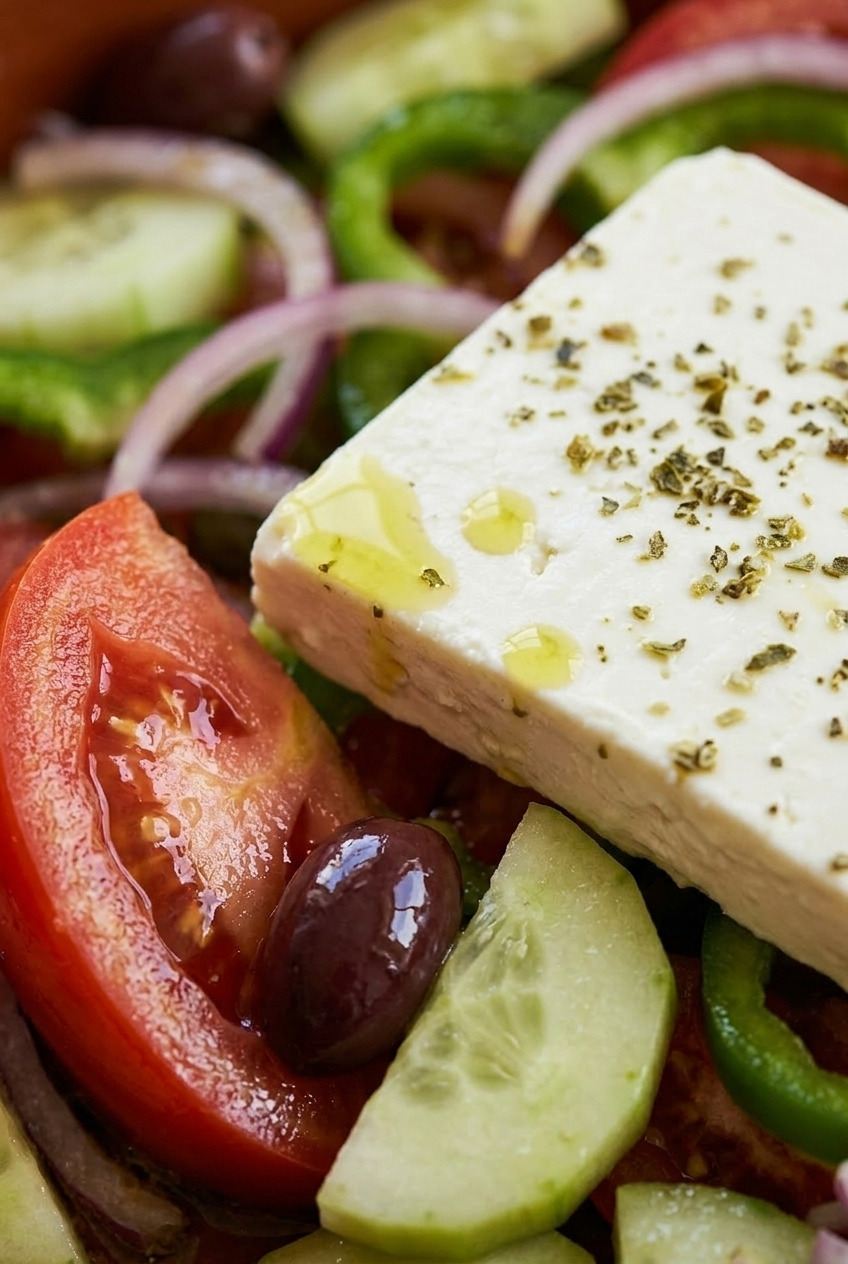
And right on top, one solid slab of feta dusted with oregano.
No lettuce anywhere in sight.
I remember thinking the whole thing looked almost too simple to be that good.
Then I took a bite, and I got it.
This is horiatiki, the village salad, and it's been my summer go-to ever since I came home and figured out how to make it.
I make it at least once a week from June through September, whenever the tomatoes on my counter are actually worth eating.
My wife can polish off half the bowl with a hunk of crusty bread before I've even sat down.
The whole thing comes together in about 15 minutes, no cooking, no whisking if you don't feel like it.
Good tomatoes, good olive oil, and a real slab of feta do all the work.
Make it once the proper way and I promise the lettuce version is dead to you.
What Is a Traditional Greek Salad (Horiatiki)?
Horiatiki means "village salad," and it's about as honest as food gets. It's the salad you'll find on every taverna menu and home table across Greece.
The defining rule? No lettuce. Not a single leaf.
Instead you get chunky raw vegetables, briny kalamata olives, and one thick slab of feta laid right on top.
The feta is never crumbled in the traditional version. It sits whole, so you break off pieces as you eat.
There's no fussy dressing either. Just good olive oil, a splash of red wine vinegar, and a heavy pinch of dried oregano.
That's the whole thing. Simple, rustic, and built entirely on the quality of what goes in it.
Ingredients You'll Need
The ingredient list is short, so quality matters more than anything here. This is not the dish to use pale winter tomatoes.
- Tomatoes (4 large, ripe). The heart of the whole salad. Use the ripest, most flavorful ones you can find and cut them into thick wedges.
- English cucumber (1). No need to peel or seed it. Cut it into thick half-moons so it stays crisp and chunky.
- Green bell pepper (1). Green specifically, sliced into rings. It adds a slightly bitter crunch that balances the sweet tomatoes.
- Red onion (½). Thinly sliced. A quick soak in cold water tames the sharp bite if you're sensitive to raw onion.
- Kalamata olives (1 cup). Whole, not sliced. Olives with the pits in have a firmer texture and deeper flavor, just warn your guests.
- Feta cheese (8 oz block). Buy a BLOCK, never the pre-crumbled stuff. Feta packed in brine is creamier and tastes the way it should.
- Dried oregano (1 ½ teaspoons). This is one time dried beats fresh. It carries that signature Greek flavor across the whole plate.
- Extra-virgin olive oil (¼ cup). Use a good one, ideally Greek. It's the largest part of the dressing, so you'll taste it.
- Red wine vinegar (2 tablespoons). A splash for brightness. Some Greeks skip it entirely since the tomatoes release their own juices.
- Sea salt and black pepper. To taste. Salt is what coaxes the juice out of the tomatoes.
The Simple Greek Salad Dressing
Calling this a dressing almost feels like a stretch. In a real Greek kitchen, nobody is whisking up a vinaigrette in a jar.
You just pour good olive oil and a splash of red wine vinegar straight over the salad.
Then a heavy pinch of dried oregano, a little salt, and some black pepper.
That's it. The tomatoes do the rest, releasing their juices to mingle with the oil into something you'll want to mop up with bread.
Prefer a more even coating? You can whisk the oil, vinegar, oregano, salt, and pepper together first. It works, but the pour-over way is how it's done in the village.
If you want a jar ready for the week, my Greek salad dressing is the bottled version.
How to Make Traditional Greek Salad
Step 1: Salt the Tomatoes
Cut the tomatoes into thick wedges and toss them with a pinch of salt.
Let them sit for 10 to 15 minutes while you prep everything else.
This little step pulls out their juices and deepens the flavor. It's the closest thing this salad has to a secret.
Step 2: Prep the Vegetables
Slice the cucumber into thick half-moons and the green pepper into rings.
Thinly slice the red onion. If raw onion is too strong for you, soak the slices in cold water for 10 minutes, then drain.
Step 3: Build the Salad
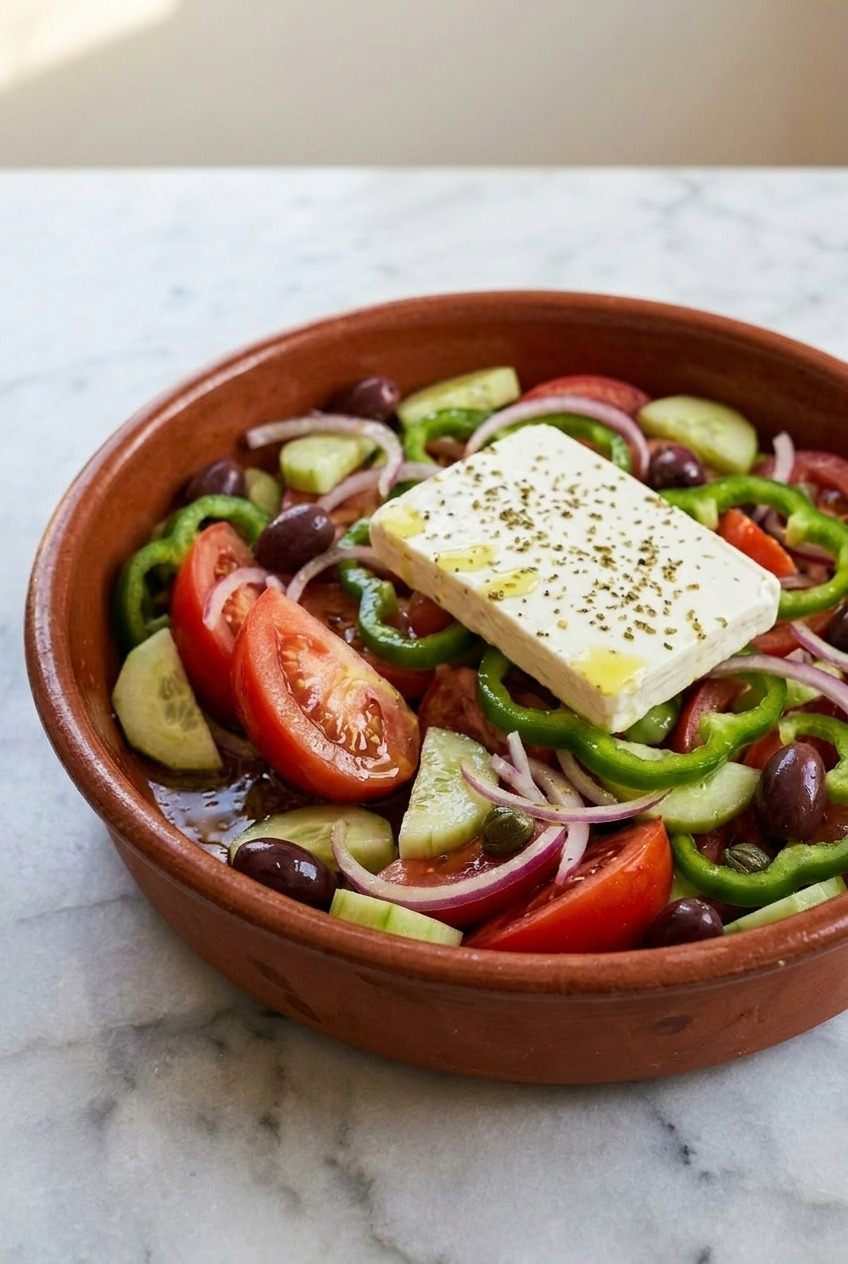
Add the tomatoes, cucumber, green pepper, onion, and whole olives to a wide shallow bowl.
Give everything a gentle toss so the vegetables mingle.
Step 4: Top With the Feta Slab
Lay the whole block of feta right on top of the vegetables. Do not crumble it.
This is the move that makes it look and taste authentic.
Step 5: Finish and Serve
Drizzle the olive oil and red wine vinegar over everything, including the feta.
Sprinkle a generous pinch of dried oregano over the top, then season with salt and pepper.
Serve right away with crusty bread. Yum!
Tips for the Best Greek Salad
This salad lives and dies by its ingredients, so a few small choices make a big difference.
- Use peak-season tomatoes. A Greek salad in February with mealy tomatoes is just sad. Wait for summer and the freshest ones you can find.
- Buy block feta in brine. It's creamier and far less crumbly than the dry pre-packaged kind. This is non-negotiable for me.
- Serve it at room temperature. Cold straight from the fridge mutes all the flavor. Let it sit out for a few minutes before serving.
- Don't over-dress it. A drizzle is plenty. The salt and tomato juices create most of the liquid on their own.
- Cut everything chunky. Big wedges and thick slices are the traditional look and they hold up better than tiny diced pieces.
Variations
The classic needs nothing, but a few regional touches are fair game. Just know these stray from the strict village version.
- Add capers. A spoonful of rinsed capers shows up in some tavernas for an extra briny pop.
- Serve over rusks. Spoon the salad and its juices over Greek barley rusks for a Cretan-style dakos spin.
- Toss in fresh herbs. A few mint or parsley leaves add a bright, fresh finish.
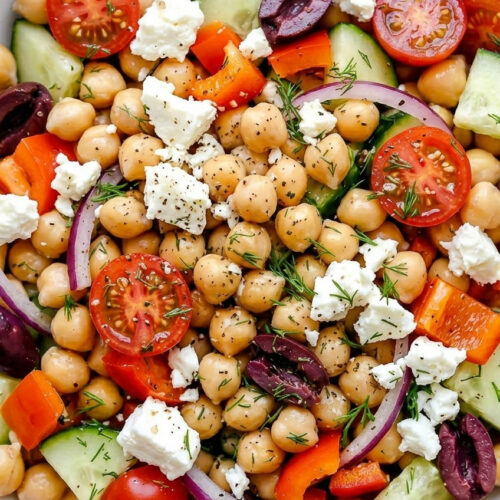
- Make it a meal. Stir in cooked chickpeas for a heartier, protein-packed lunch.
What to Serve With Greek Salad
This salad plays beautifully with almost anything off the grill.
- Grilled souvlaki or chicken. The bright, briny salad cuts right through smoky grilled meat.
- Grilled fish or shrimp. A natural Mediterranean pairing that feels like a seaside dinner.
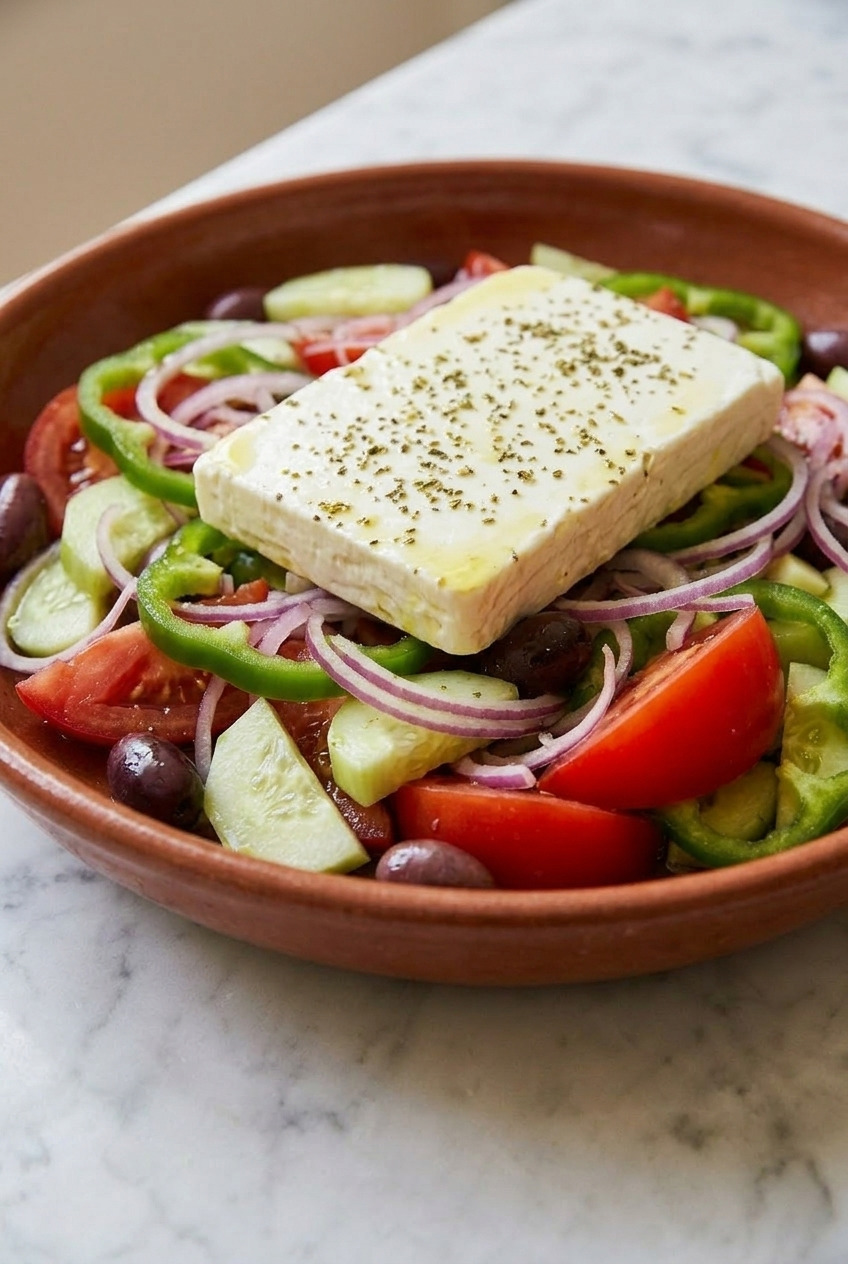
- Crusty bread. An absolute must for soaking up the olive oil and tomato juices at the bottom of the bowl.
- Lemon potatoes or pita. Round out a full Greek spread and you've got a feast.
Honestly, with enough bread, I'll happily eat a big bowl of this as a light meal all on its own.
For a proper Greek dinner, it sits next to this Greek lamb phyllo pie.
How to Store Leftovers
Greek salad is at its best the moment it's made, but leftovers still work.
- Dressed salad. Keeps in an airtight container in the fridge for up to 2 days, though the vegetables soften over time.
- Make-ahead prep. Chop the vegetables and store them undressed, then add the oil, vinegar, and feta right before serving.
- The feta. Store any extra feta block in its brine so it stays creamy and fresh.
Frequently Asked Questions
What makes a Greek salad "traditional" (horiatiki)?
A traditional horiatiki has chunky raw vegetables, whole kalamata olives, and a slab of feta on top, dressed simply with olive oil, vinegar, and oregano. Crucially, it has no lettuce.
Why is there no lettuce in an authentic Greek salad?
The village salad was built around ripe garden vegetables, not greens. Lettuce was added later by some restaurants as a cheaper filler, but it isn't part of the real thing.
Should the feta be crumbled or left as a slab?
Left as a slab. The traditional way is to lay a whole block on top and let everyone break off pieces as they eat. Crumbling is a modern shortcut.
What is the best dressing for a Greek salad?
The simplest one. Just extra-virgin olive oil, a splash of red wine vinegar, dried oregano, salt, and pepper poured right over the top. No fancy vinaigrette needed.
Can I make Greek salad ahead of time?
You can prep the vegetables a few hours ahead and store them undressed. Add the oil, vinegar, and feta just before serving so nothing goes soggy.
How do I store leftover Greek salad?
Keep it in an airtight container in the fridge for up to 2 days. The vegetables will soften, so it's always best eaten fresh.
What can I serve with Greek salad?
It pairs perfectly with grilled souvlaki, chicken, fish, or shrimp, plus plenty of crusty bread and lemon potatoes for a full Greek spread.