The bowl I carry into every cookout is the one that gets better the longer it sits in the cooler.
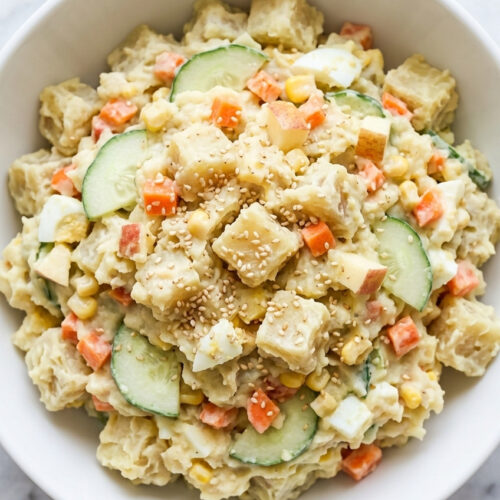
People always reach for the wobbly potato salad first.
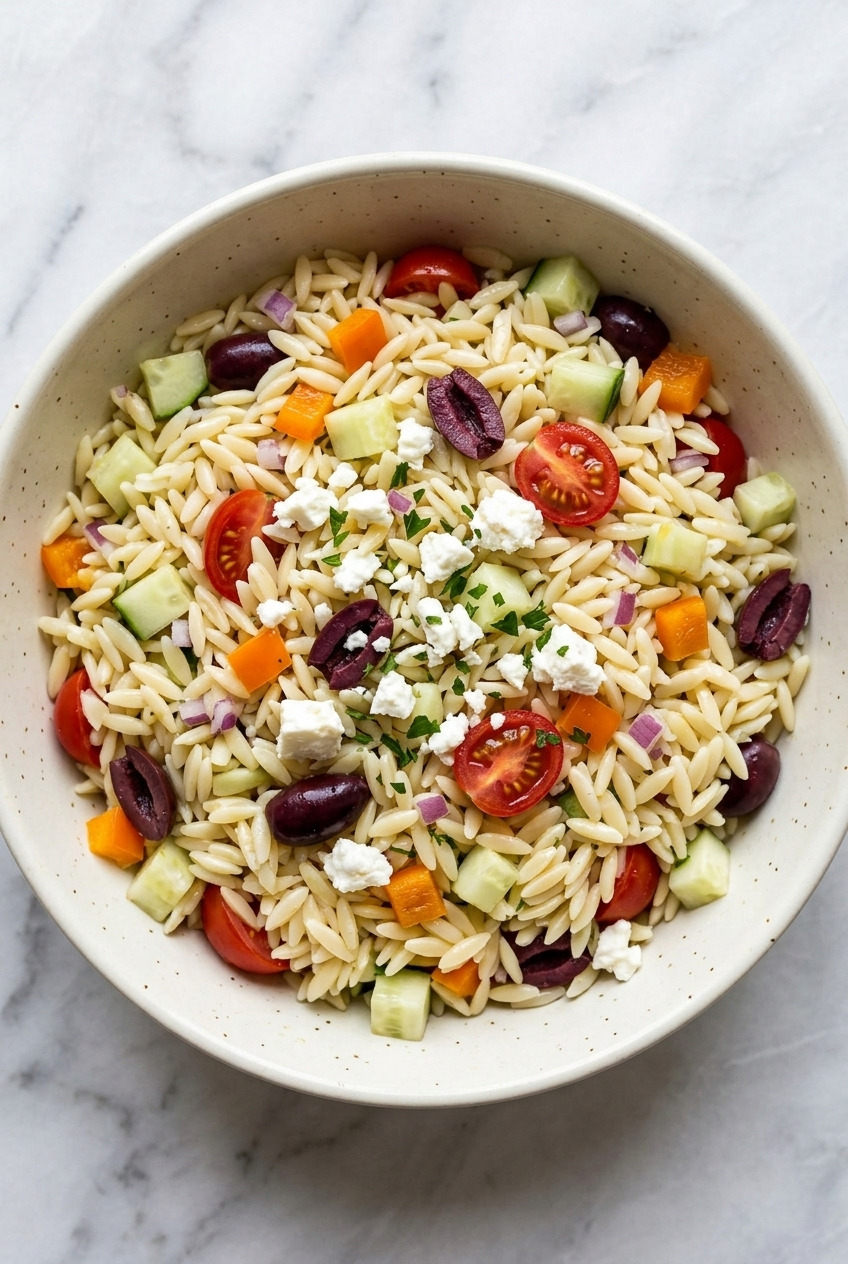
By the time they circle back, this one has quietly stolen the show.
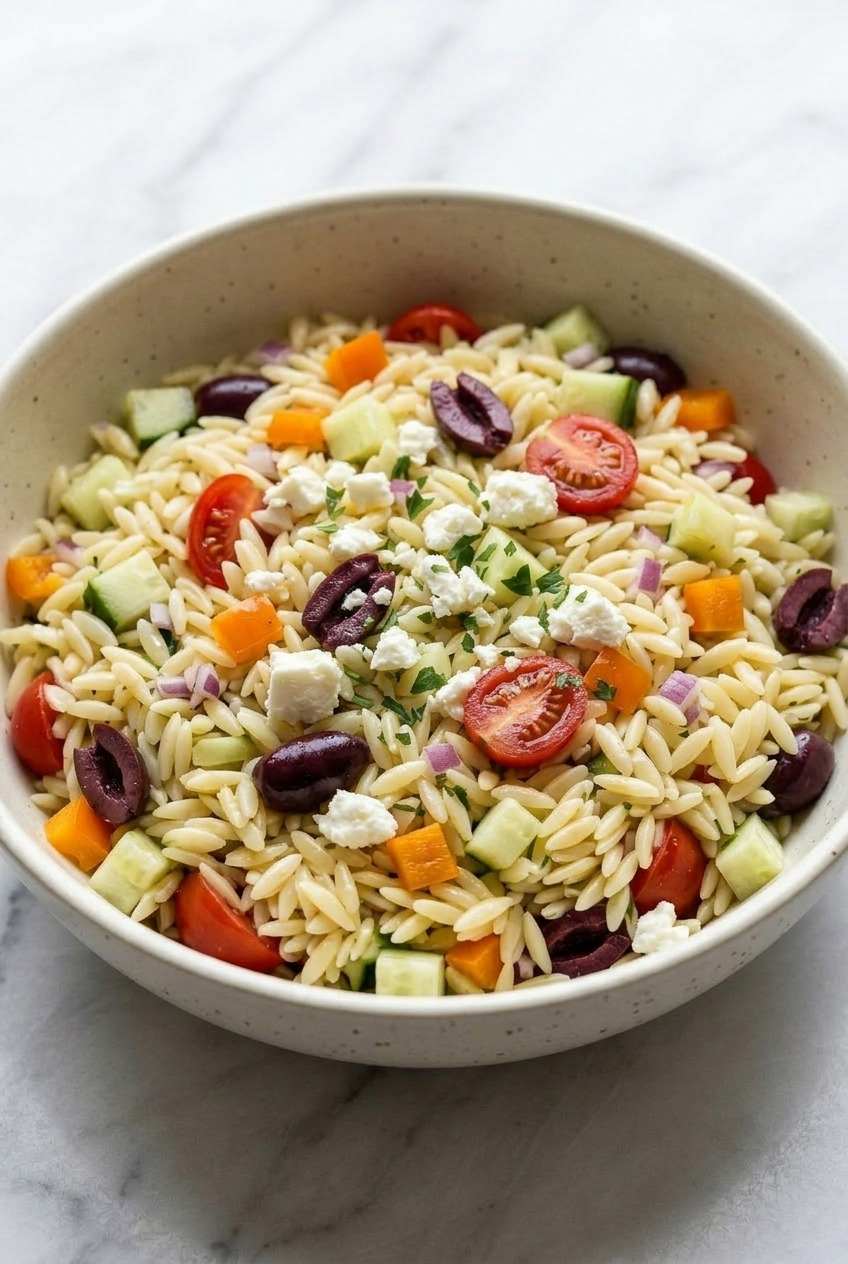
Tender orzo soaks up a bright lemon-oregano dressing while it waits, so every spoonful carries flavor instead of leaning on it.
I started bringing it to a neighbor's Sunday grill nights a couple summers ago.
Now I get a text the day before asking if I'm making "the little pasta one" again.
What I love is the contrast in a single bite.
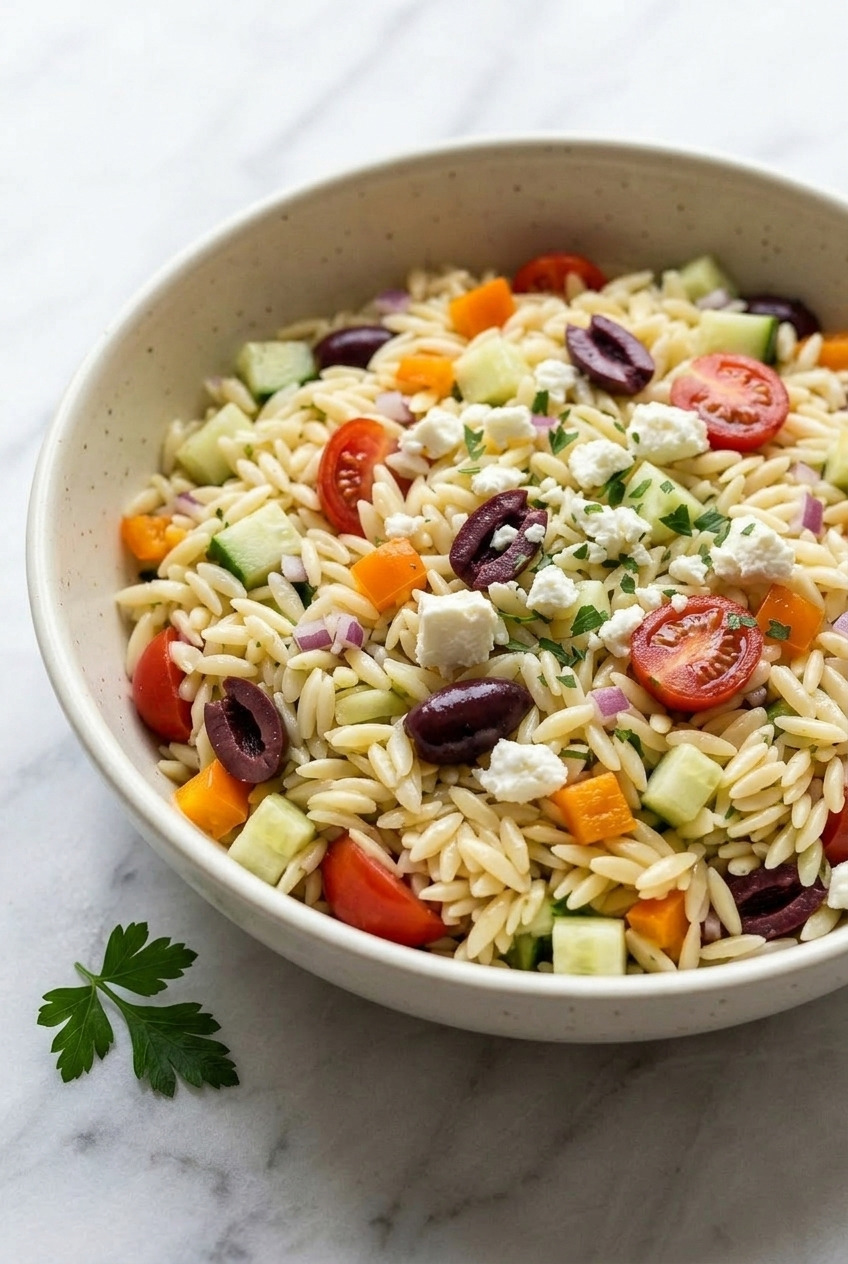
Cool cucumber, juicy tomato, salty feta, and briny kalamata against soft, lemony orzo.
It's the kind of salad you can toss together in the morning and forget about until the burgers come off the grill.
No mayo, nothing to curdle, nothing to go sad and watery in the sun.
It travels like a champ and tastes even better on day two.
Make it once and it earns a permanent spot in your summer rotation. I promise.
Why This Greek Orzo Salad Works
This is the rare pasta salad that improves as it sits. Most sides peak the second you make them, then fade. This one builds flavor in the fridge.
- No mayo, no worry. The base is a lemon-oregano vinaigrette, so it holds up in the heat without turning into a food-safety gamble at the picnic table.
- Every spoonful is balanced. When you dice the veggies down to orzo size, you get cucumber, tomato, olive, and feta in every single bite.
- It feeds a crowd. A pound of orzo stretches to 8 generous servings, which makes it a budget-friendly way to fill a big bowl.
- Make-ahead friendly. Toss it in the morning, chill it, and it's ready when you are.
That combo is pretty hard to beat.
What Is Orzo?
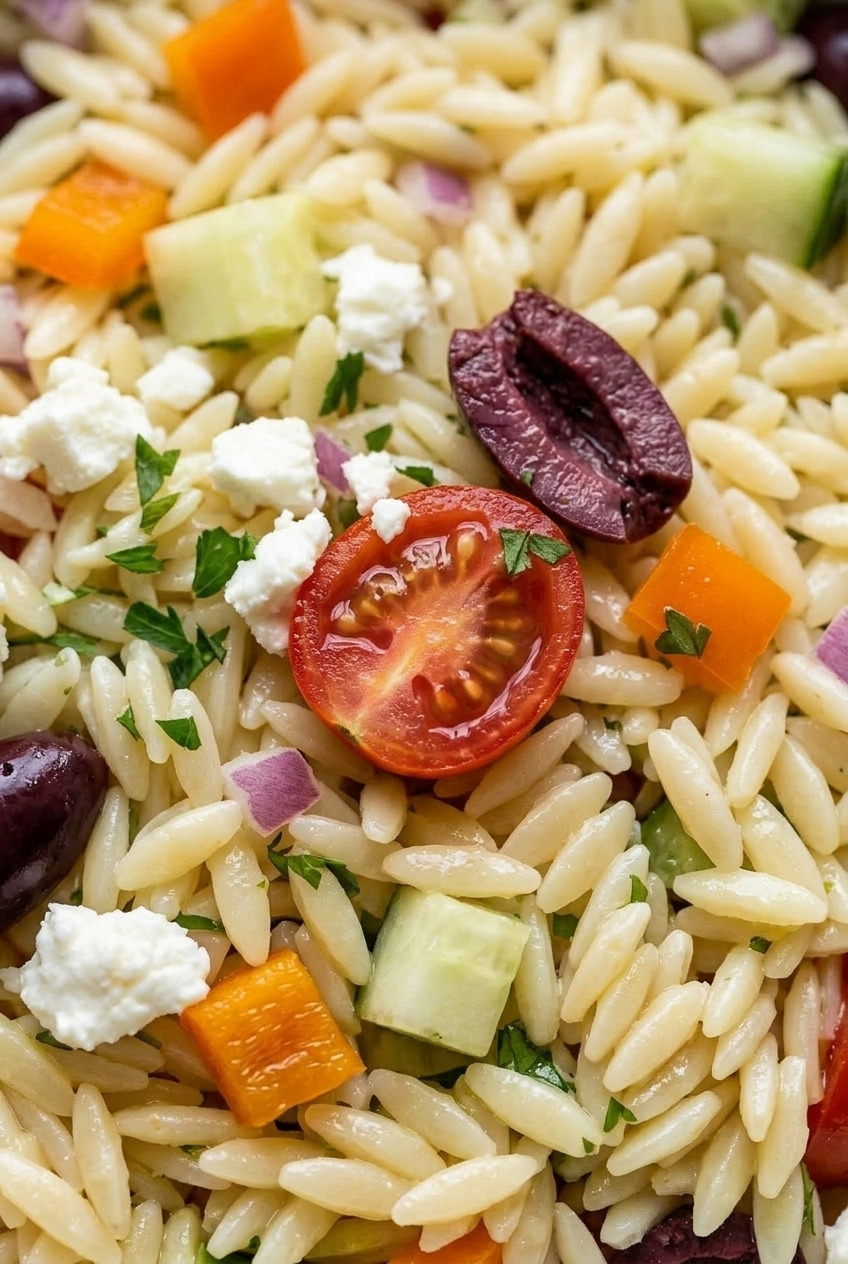
Orzo is a small, rice-shaped pasta, not a grain. It looks like fat grains of rice but it's made from durum wheat, same as most dried pasta.
You might see it labeled risoni in some shops, or kritharaki on Greek menus.
Its shape is exactly why it's perfect here.
The little grains nestle in with finely diced vegetables so nothing slides off your fork.
Sound too fussy? It isn't. Orzo cooks in under 10 minutes, same as any pasta.
Ingredients You'll Need
Everything here is easy to find at a regular grocery store. See the recipe card below for exact amounts.
- Orzo pasta (1 lb). The base of the whole salad. Regular or gluten-free orzo both work, and ditalini makes a fine swap in a pinch.
- English cucumber (1). I reach for English cucumbers because the skin is thin and the seeds are tiny, so there's no peeling and no watery mess.
- Grape or cherry tomatoes (1 pint). Halved. They stay firmer and sweeter than big slicing tomatoes once they sit in dressing.
- Bell pepper (1). Orange or red for color and a little crunch. Dice it small.
- Red onion (⅓ cup). Finely diced for a sharp, fresh bite. A quick cold-water soak tames it if raw onion isn't your thing.
- Kalamata olives (½ cup). Pitted and halved. This is where that signature briny Greek flavor comes from, so don't skip them.
- Feta cheese (6 oz). Buy a block packed in brine and crumble it yourself. The pre-crumbled tubs are drier and chalkier, and the difference is real.
- Fresh parsley (¼ cup). Chopped, for a hit of green freshness at the end. Fresh dill or oregano work too.
For the dressing, you'll need good olive oil:
- Extra-virgin olive oil (⅓ cup). The backbone of the vinaigrette, so use one you'd happily taste off a spoon.
- Fresh lemon juice (3 tbsp). Bottled won't cut it here. You want that bright, real citrus.
- Red wine vinegar (1 tbsp). A small splash for depth behind the lemon.
- Garlic (1 clove). Grated fine so it melts into the dressing instead of biting you.
- Dried oregano (1 tsp). The classic Greek note. Crush it between your fingers as you add it to wake up the flavor.
- Kosher salt and black pepper. To taste, and you'll want to re-taste after chilling.
How to Make Greek Orzo Salad
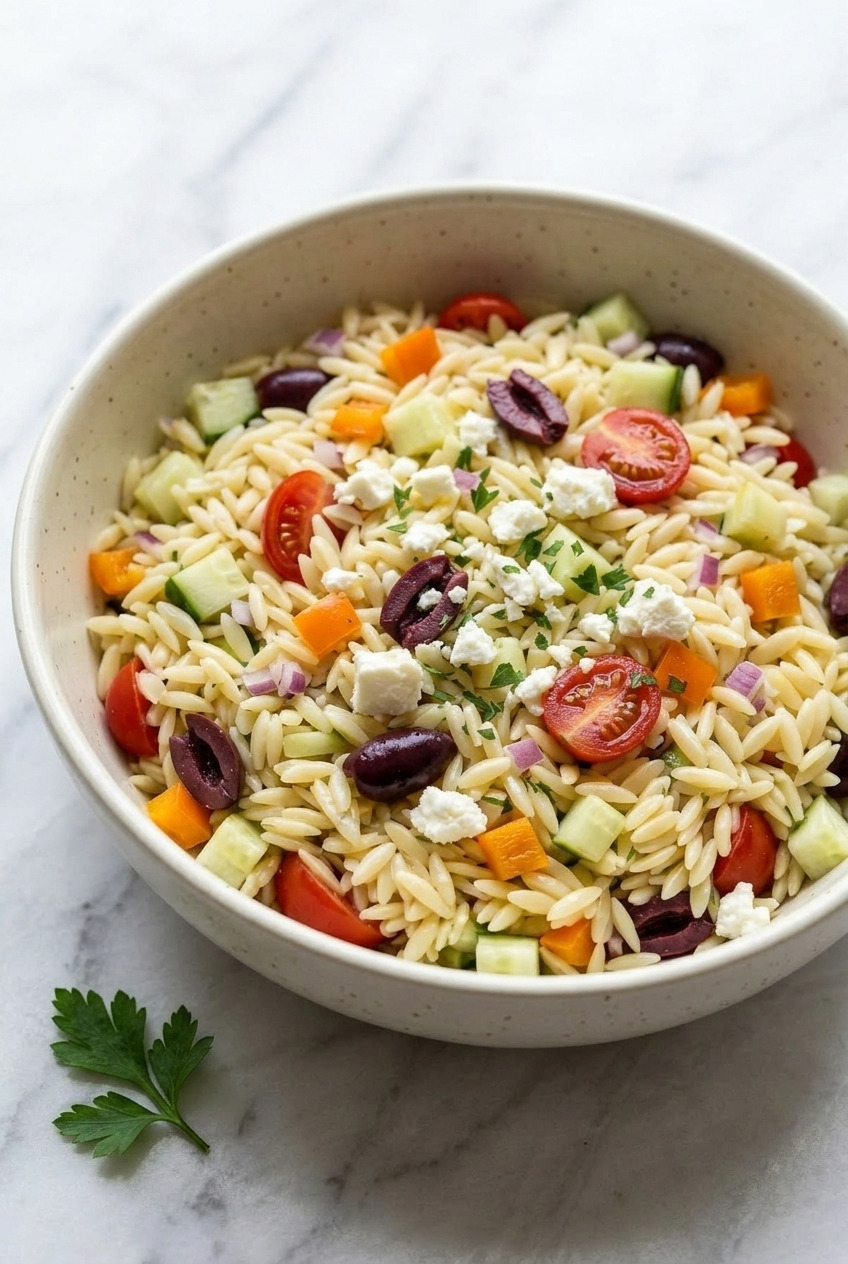
This comes together in four easy moves. Once the orzo is cooked and cooled, you're basically just chopping and tossing.
Step 1: Cook and Cool the Orzo
Bring a large pot of well-salted water to a rolling boil.
Add the orzo and cook to al dente, usually 8 to 9 minutes, stirring now and then so it doesn't clump.
Drain it, rinse under cold water to stop the cooking, and drain again well.
Toss the cooled orzo with a small drizzle of olive oil so the grains stay separate.
Step 2: Whisk the Lemon-Oregano Vinaigrette
In a small bowl or jar, combine the olive oil, lemon juice, red wine vinegar, grated garlic, oregano, salt, and pepper.
Whisk or shake until it looks creamy and unified.
Give it a taste. It should taste bright and a touch sharp, since the orzo will mellow it out.
Step 3: Chop Everything Orzo-Size
Here's my one rule for a great orzo salad: dice the cucumber, tomatoes, pepper, and onion small, roughly the size of the orzo itself.
Halve the kalamata olives.
Uniform pieces mean a little of everything in every spoonful, which is the whole point.
Step 4: Toss It All Together
In a large bowl, combine the orzo with the cucumber, tomatoes, pepper, onion, and olives.
Pour the dressing over and toss to coat.
Fold in the feta and parsley last so the cheese stays in distinct, salty pieces.
Let it rest at least 15 minutes before serving so the flavors settle in.
Tips for the Best Orzo Salad
A few small habits make the difference between good and crave-worthy. None of them are hard.
- Don't overcook the orzo. Mushy orzo turns the whole salad gluey. Pull it at al dente, because it keeps softening as it cools.
- Oil the orzo while warm. A teaspoon of oil right after draining keeps the grains loose instead of clumping into a sticky ball.
- Soak the onion. If raw red onion is too sharp for you, soak the diced pieces in cold water for 5 minutes, then drain. Mellow bite, no harshness.
- Season after chilling. Cold dulls salt and acid. Always taste again right before serving and add a pinch of salt or squeeze of lemon if it tastes flat.
- Add feta last. Folding it in at the end keeps the crumbles intact instead of smearing them through the salad.
Worth the extra few minutes? Every time.
Make-Ahead and Storage
This salad was basically built for making ahead. The trick is knowing when to dress it.
- Serving the same day? Dress it right away and let it chill at least 1 hour. The orzo drinks up the vinaigrette and the flavor deepens.
- Serving tomorrow? Combine everything but hold back about a third of the dressing and the feta. Toss them in just before serving so nothing goes soggy.
- Storage. Keeps in an airtight container in the fridge for up to 4 days.
- Bring it back to life. If it looks dry after a day or two, drizzle on a little more olive oil and lemon and toss. Good as new.
I genuinely think it tastes best on day two.
What to Serve With It
This orzo salad plays nice with just about anything off the grill. It's a side dish workhorse.
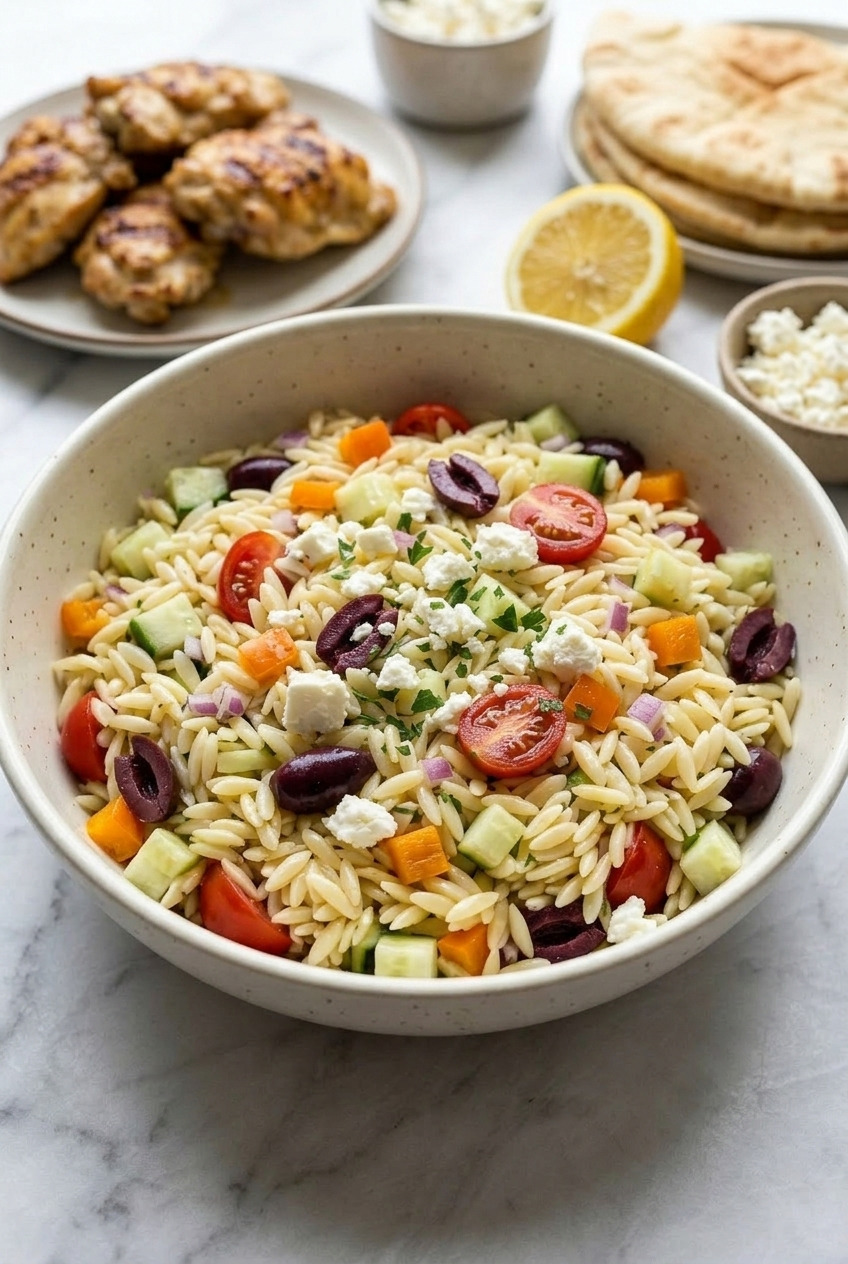
- Grilled proteins. Chicken, lamb, shrimp, or a flaky white fish all pair perfectly with those bright Greek flavors.
- A Mediterranean spread. Set it alongside hummus, warm pita, and a chopped salad for an easy mezze-style table.
- Picnic and potluck staples. It holds its own next to burgers, corn on the cob, and watermelon at any backyard cookout.
Who doesn't love a side that does all the work the night before?
It is a good side for this grilled apricot chicken.
Variations
The base recipe is a starting point, not a rulebook. Here's how I switch it up.
- Make it a main. Stir in a drained can of chickpeas or some grilled chicken to turn this side into a full lunch.
- Go gluten-free. Swap in gluten-free orzo, which cooks up nearly identical. Watch it closely so it doesn't overcook.
- Make it dairy-free. Leave out the feta or use a dairy-free feta-style crumble. A splash of extra olive brine adds back that salty depth.
- Add more green. A handful of baby spinach or arugula folded in at the end bulks it up nicely.
- Switch the herbs. Fresh dill or mint instead of parsley takes the flavor in a slightly different, lovely direction.
You really can't go wrong with this one.
Out of orzo? My Greek pasta salad does the same job with bigger pasta.