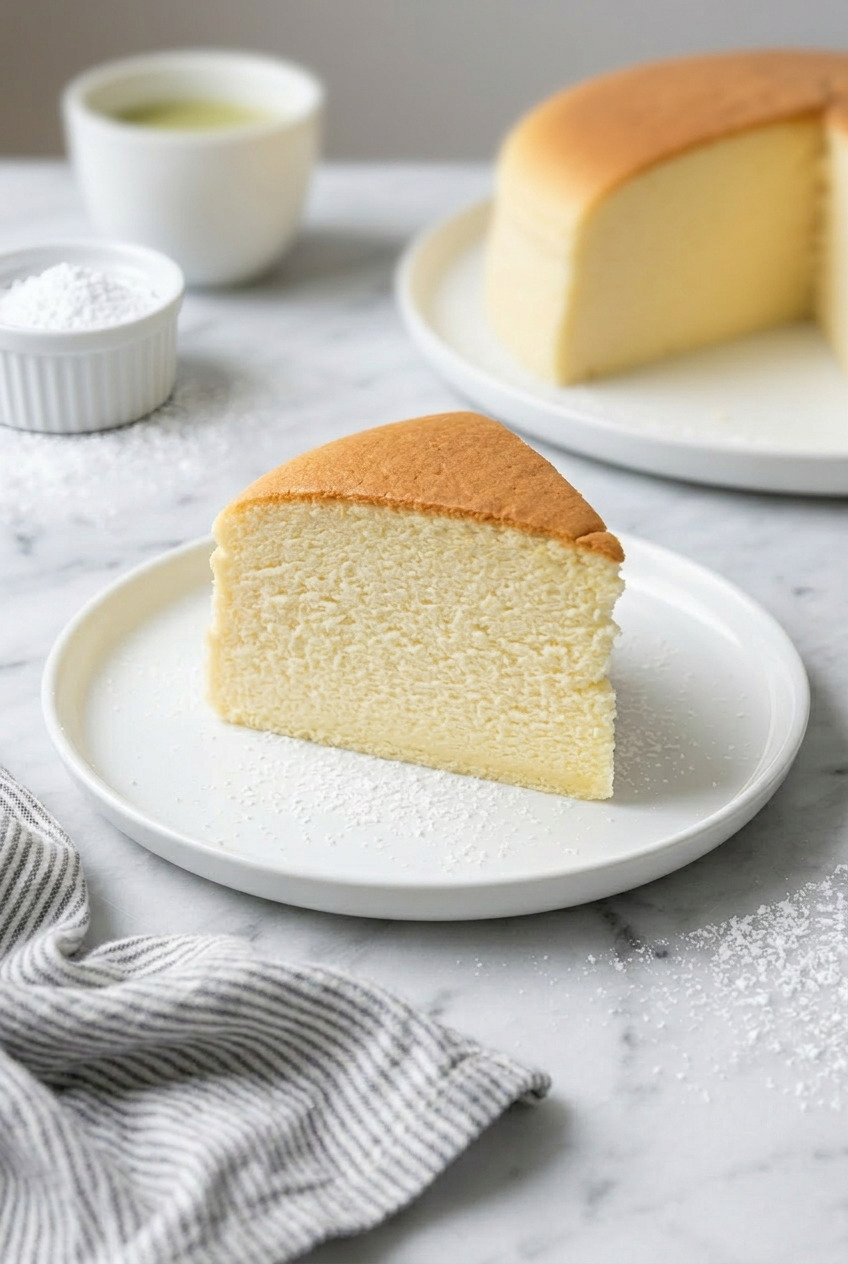
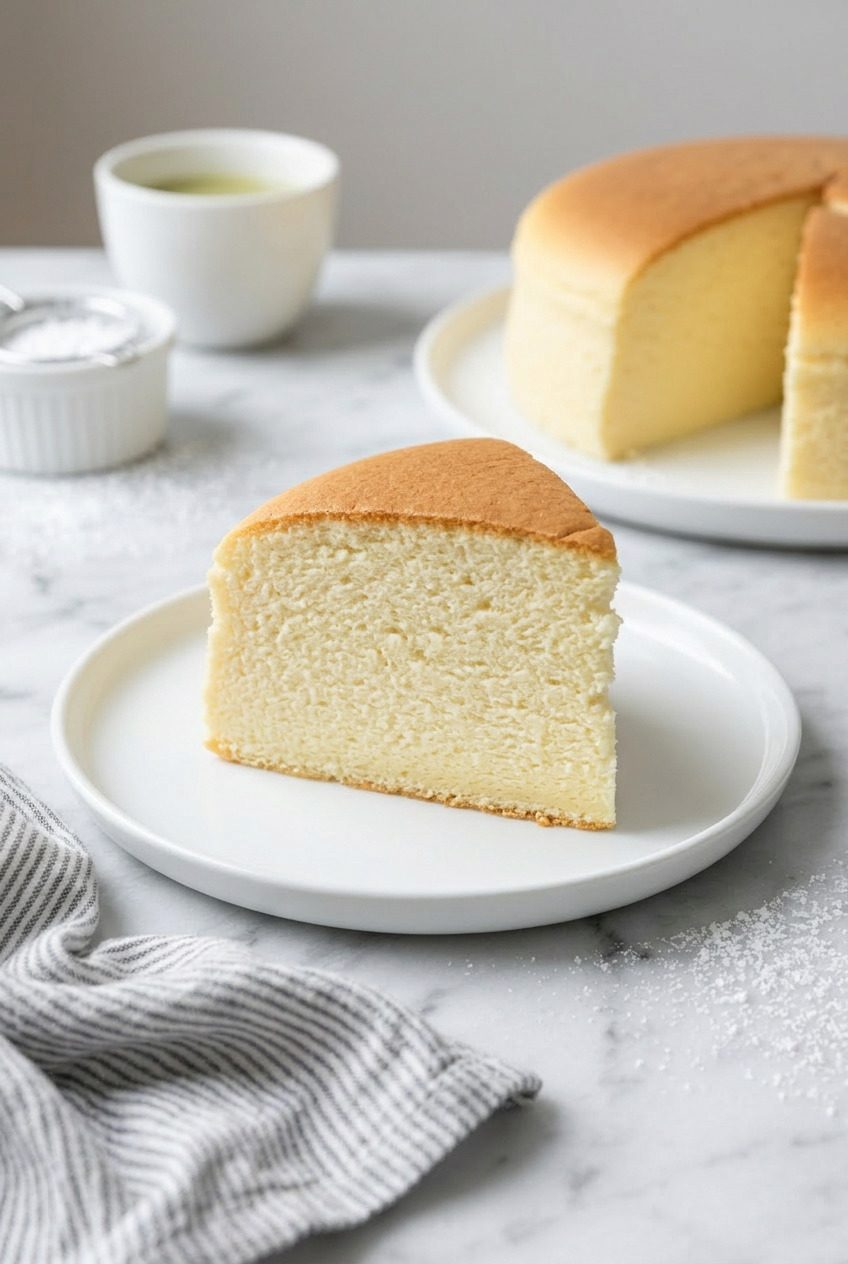
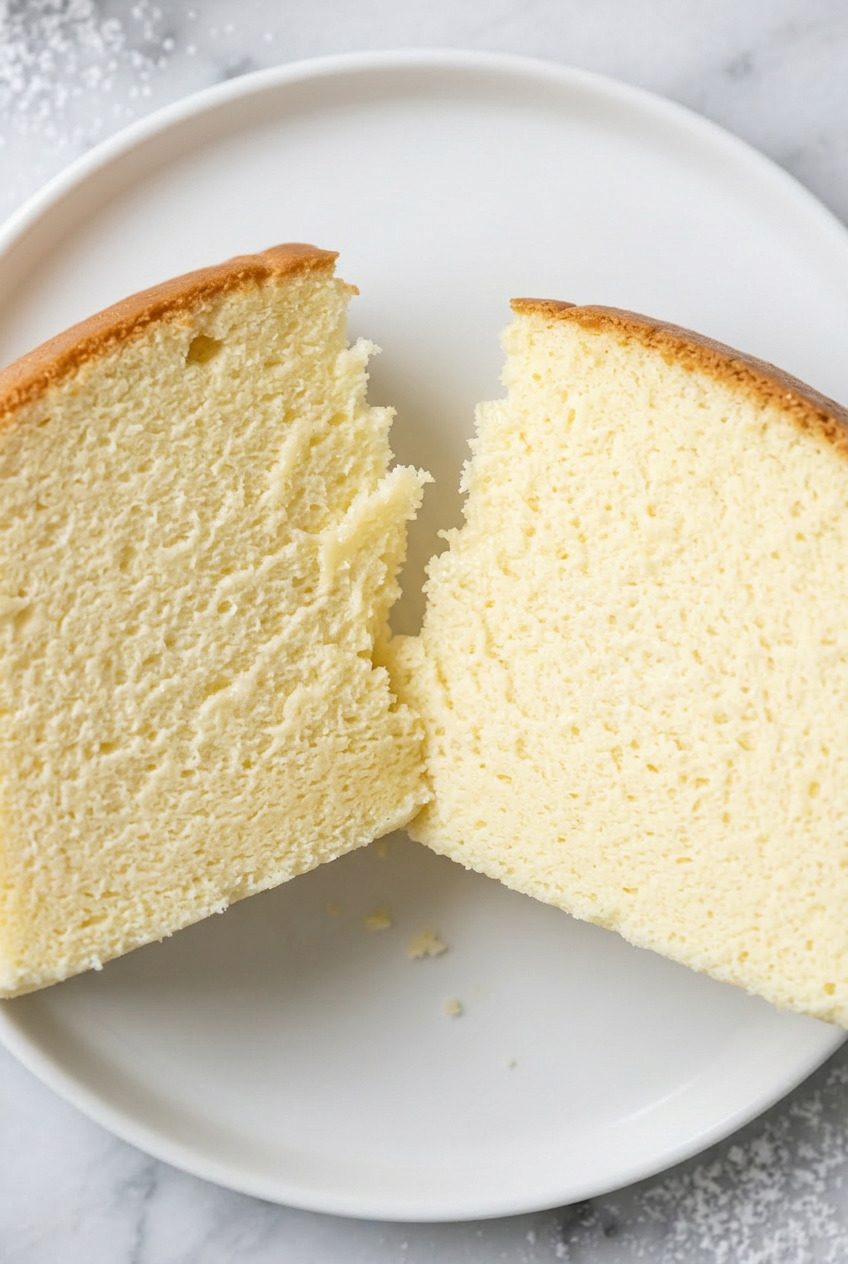
Regular cheesecake sits in your stomach like a brick. Japanese cheesecake bounces when you set it on the plate. Same name, completely different experience. It's airy, cottony, barely sweet, and lighter than any cake you've ever eaten.
The secret is a meringue folded into the cream cheese batter, then baked low and slow in a water bath. It sounds technical but it's really just three steps: make the batter, whip the whites, fold and bake.
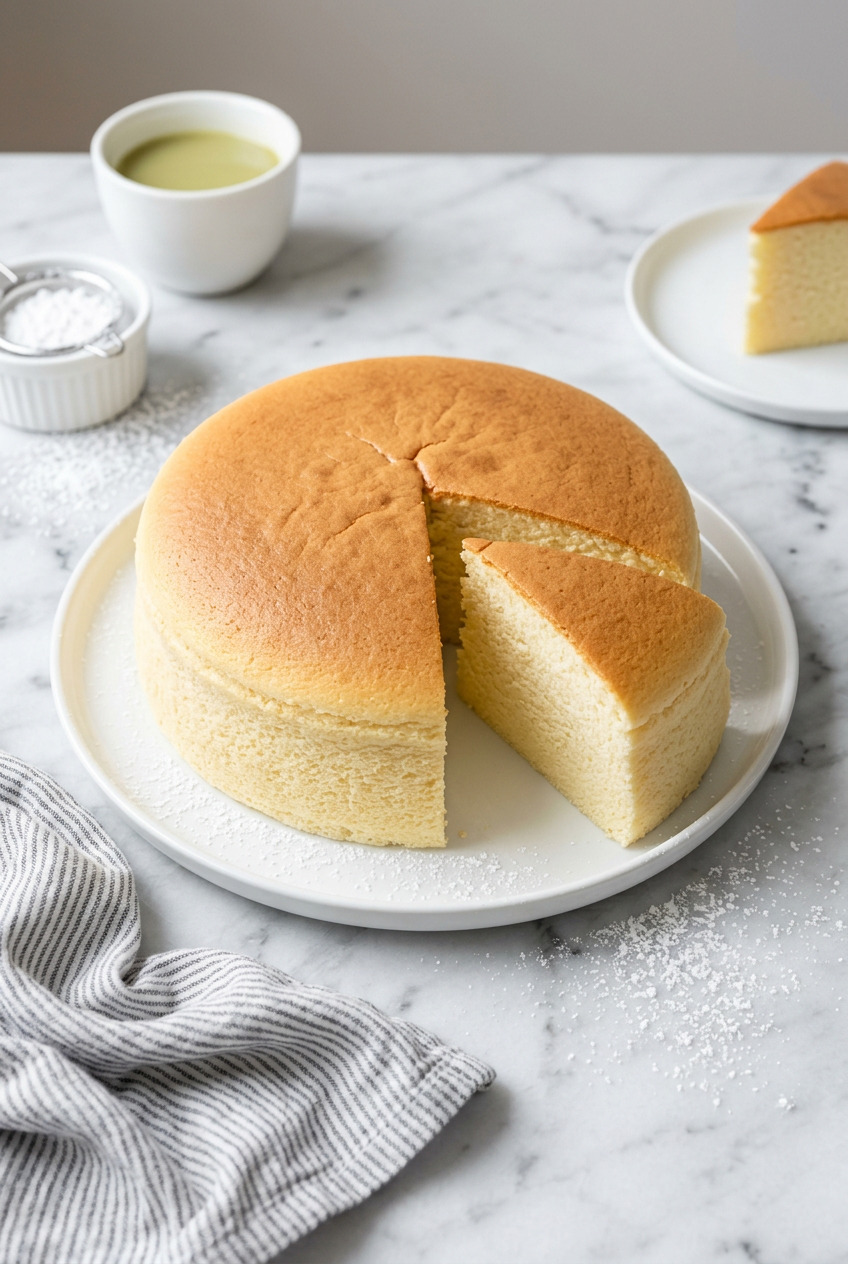
My wife ate three slices the first time and said she didn't feel heavy at all. That's the whole point.
What Is Japanese Cheesecake?
Japanese cheesecake goes by a few names: cotton cheesecake, soufflé cheesecake, or sufure chiizukeeki in Japanese. It's a hybrid between a traditional Western cheesecake and a sponge cake, and it sits in a category entirely its own.
The secret is whipped egg whites. Instead of relying on cream cheese and eggs alone (like a New York-style cheesecake), Japanese cheesecake folds a fluffy meringue into the cream cheese batter. That meringue is the reason it's so airy, so jiggly, and so dramatically different from anything you'd find at a typical American bakery.
There's no graham cracker crust. No heavy sour cream layer. Just a cotton-soft, gently sweet cake with a delicate cream cheese tang that practically dissolves on your palate. It's lighter than a traditional cheesecake, less sweet than a sponge cake, and somehow more satisfying than both. If you want to explore the broader world of traditional Japanese desserts, this recipe is a great entry point.
The difference between Japanese cheesecake and regular cheesecake really comes down to texture. A New York cheesecake is dense and creamy, built to be rich. A Japanese cheesecake is feathery, almost mousse-like, and relies on the meringue and a water bath to achieve that signature bounce.
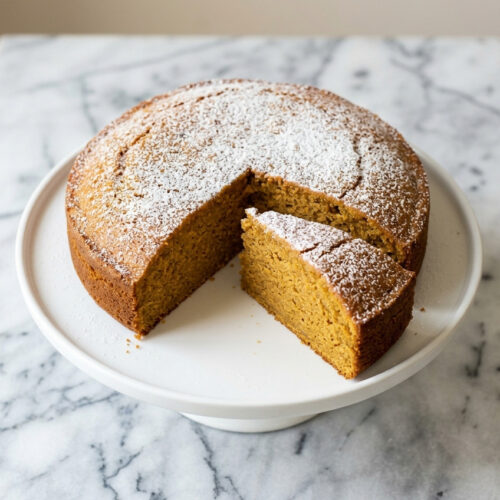
It is the opposite of my pumpkin Basque burnt cheesecake, which is dark on top and custardy in the middle.
Japanese Cheesecake Ingredients
Every ingredient in this recipe plays a specific role. Japanese cheesecake is a technique-driven dessert, so understanding your ingredients makes a real difference.
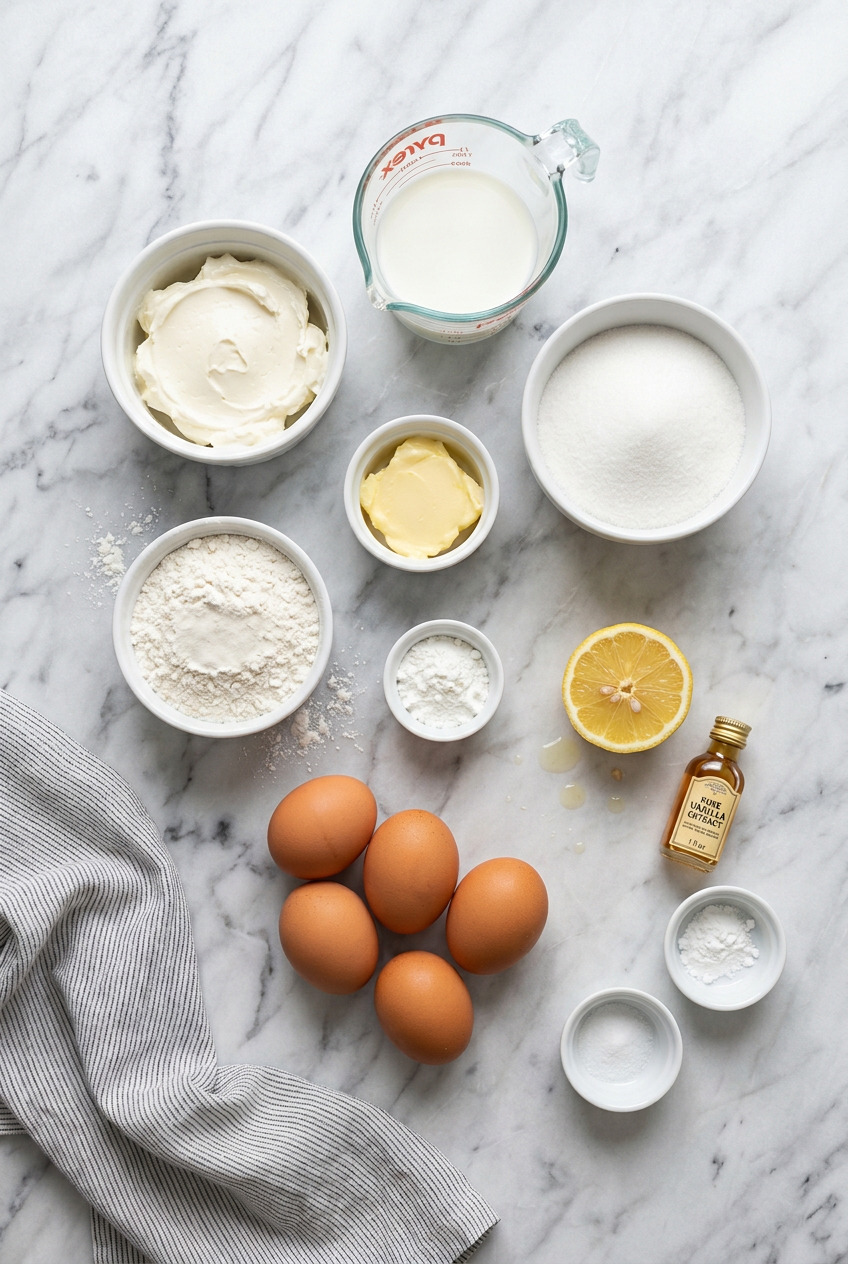
- Cream cheese (8 oz / 225g). Full-fat, room temperature. This is your flavor base. It needs to be completely smooth when melted, so pull it out of the fridge at least 1 hour before you start. Philadelphia or any full-fat block cream cheese works perfectly.
- Unsalted butter (3 tablespoon / 45g). Adds richness and moisture to the batter. Melted with the cream cheese to form a smooth, pourable base.
- Whole milk (½ cup / 120ml). Room temperature. This thins the batter to the right consistency so it folds easily with the meringue. You can swap in crème fraîche for extra tang.
- Large eggs (6). Room temperature is critical. The yolks enrich the cream cheese batter. The whites get whipped into meringue for all that lift and bounce. Cold eggs will deflate your meringue, so plan ahead.
- Granulated sugar (¾ cup / 150g, divided). Split between the batter and the meringue. Superfine sugar dissolves faster if you have it, but regular granulated works fine. ⅓ cup (65g) goes into the batter, the rest into the meringue.
- Cake flour (½ cup / 60g). Sifted after measuring. Cake flour has a lower protein content than all-purpose, which gives you a softer, more tender crumb. You can substitute all-purpose flour, but the texture will be slightly denser.
- Cornstarch (2 tablespoon / 16g). Sifted with the flour. This further lowers the protein content and contributes to that cotton-soft texture that gives this cheesecake its name.
- Lemon juice (1 tbsp). Fresh-squeezed. Adds brightness and cuts through the richness of the cream cheese. A small addition that makes a big difference.
- Vanilla extract (1 tsp). Not traditional in Japan, but it adds a warmth that Western palates love. Skip it if you want a more authentic flavor profile.
- Cream of tartar (¼ tsp). Stabilizes the meringue so it holds its structure while you fold. If you don't have it, substitute ½ teaspoon lemon juice or white vinegar.
- Salt (¼ tsp). A tiny amount that makes every other flavor pop.
How to Make Japanese Cheesecake
This is a technique recipe, so read through the steps once before you start. Everything moves faster when you know what's coming next.
Step 1: Prepare the Cream Cheese Batter
Set up a double boiler: place a heatproof bowl over a pot of gently simmering water. Add the cream cheese and butter to the bowl. Stir with a whisk as they melt together until completely smooth. You want zero lumps here. Every lump in this stage shows up in the finished cake.
Remove the bowl from the heat. Whisk in the egg yolks one at a time, making sure each is fully incorporated before adding the next. Then whisk in ⅓ cup (65g) sugar, the milk, lemon juice, and vanilla extract.
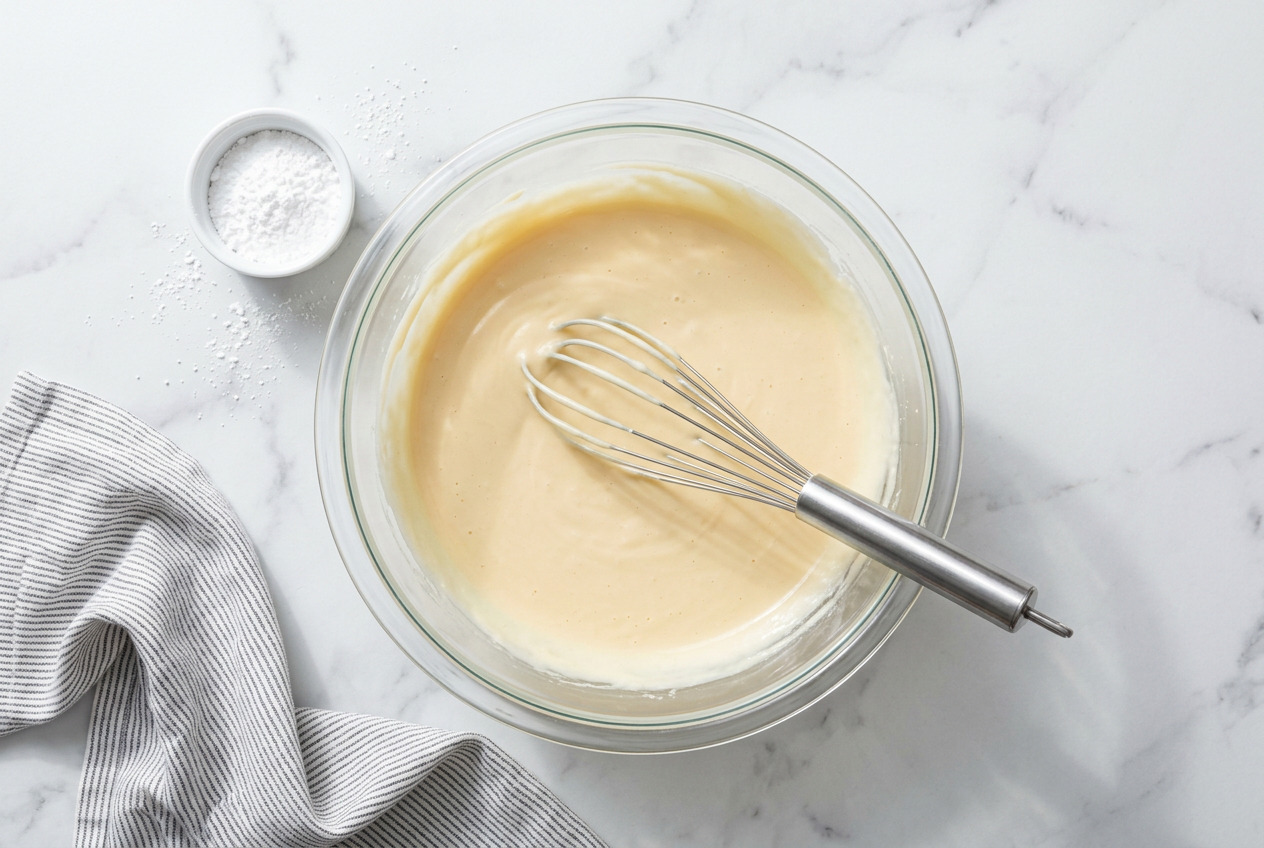
Sift the cake flour, cornstarch, and salt directly into the batter. Fold gently with a spatula until just combined. The batter should be smooth, creamy, and pourable. Set it aside while you make the meringue.
Step 2: Make the Meringue
In a large, clean, completely dry bowl, add the 6 egg whites. Beat on medium speed with a hand mixer or stand mixer until frothy, about 1 minute.
Add the cream of tartar. Continue beating on medium speed.
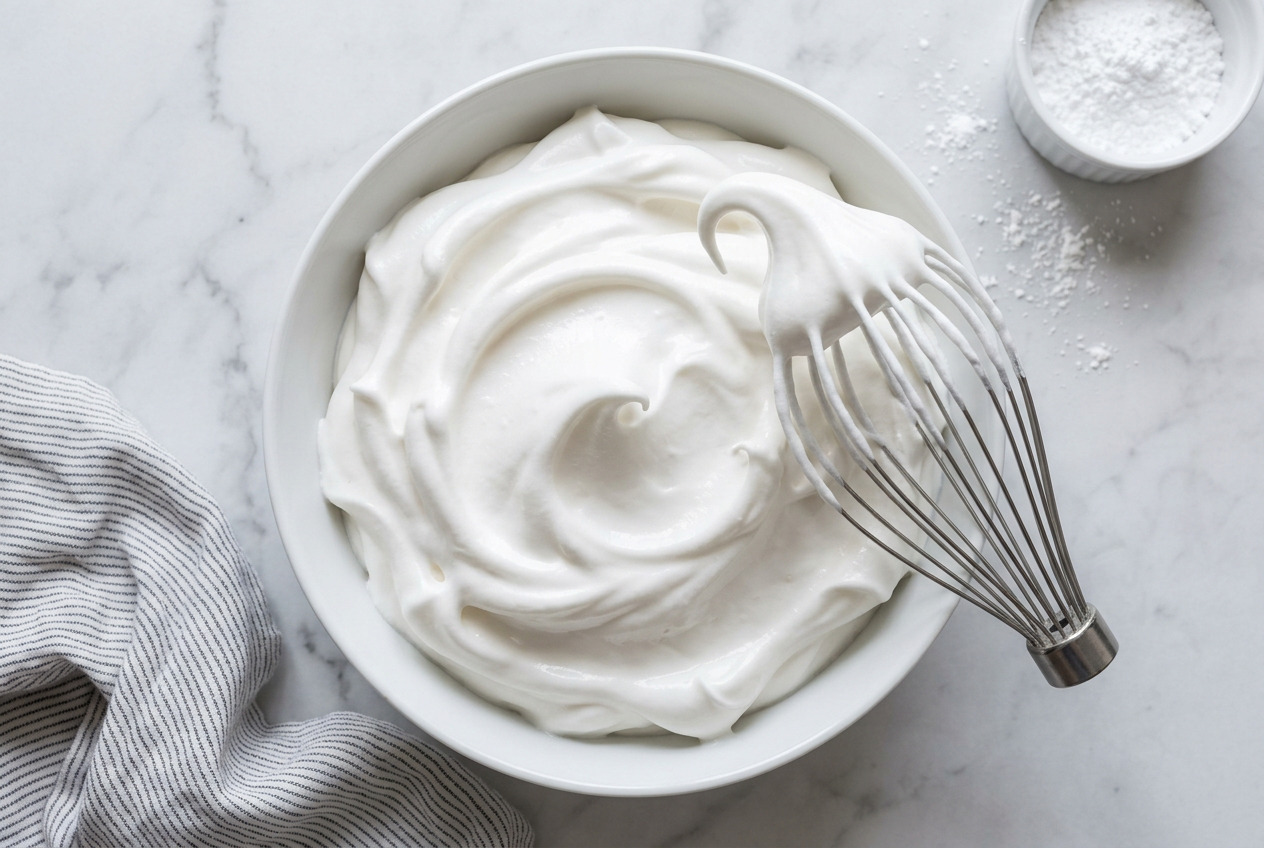
Gradually add the remaining sugar (about 85g) while the mixer runs, one tablespoon at a time. Increase speed to medium-high and beat until you reach firm soft peaks. The meringue should hold its shape, but the tip should curl over gently when you lift the whisk. It should look glossy and voluminous.
Do NOT beat to stiff peaks. Over-beaten meringue is harder to fold, creates an uneven texture, and is the number one cause of cracking. Soft peaks give you a more tender, forgiving cake.
Step 3: Fold the Batter Together
Scoop about ⅓ of the meringue into the cream cheese batter. Whisk it in to lighten the batter. This sacrificial third makes it easier to fold in the rest without deflating everything.
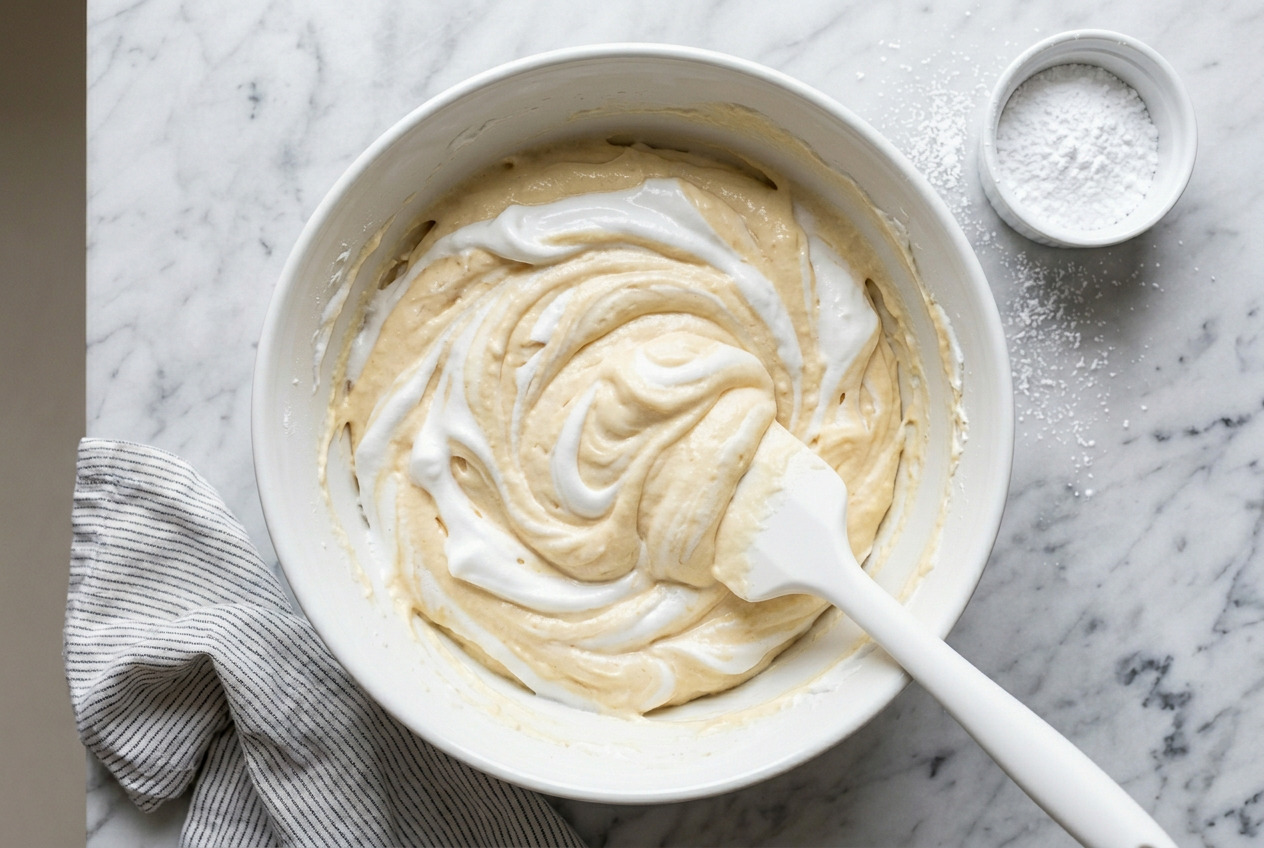
Pour the lightened batter into the remaining meringue. Using a spatula, fold gently: cut down through the center, sweep across the bottom of the bowl, and fold over the top. Rotate the bowl a quarter turn and repeat.
Stop the moment no white streaks remain. Over-folding deflates the meringue and the cake won't rise. Under-folding leaves pockets of egg white that bake into a layered texture. The batter should be light, airy, and uniformly pale yellow.
Step 4: Bake in a Water Bath
Preheat your oven to 400°F (200°C).
Line an 8-inch (20 cm) round cake pan (at least 3 inches deep) with parchment paper on the bottom and sides. Lightly grease the parchment. Wrap the outside of the pan in two layers of aluminum foil to prevent water from seeping in.
Pour the batter into the prepared pan. Give it a gentle tap on the counter to release any large air bubbles.
Place the cake pan inside a larger roasting pan. Set both in the oven, then carefully pour hot water into the roasting pan until it reaches about 1 inch up the sides of the cake pan. The water bath provides steam and gentle, even heat, which is what gives the cheesecake its moist, crack-free surface.
Bake at 400°F (200°C) for 15 minutes. The cake should rise noticeably.
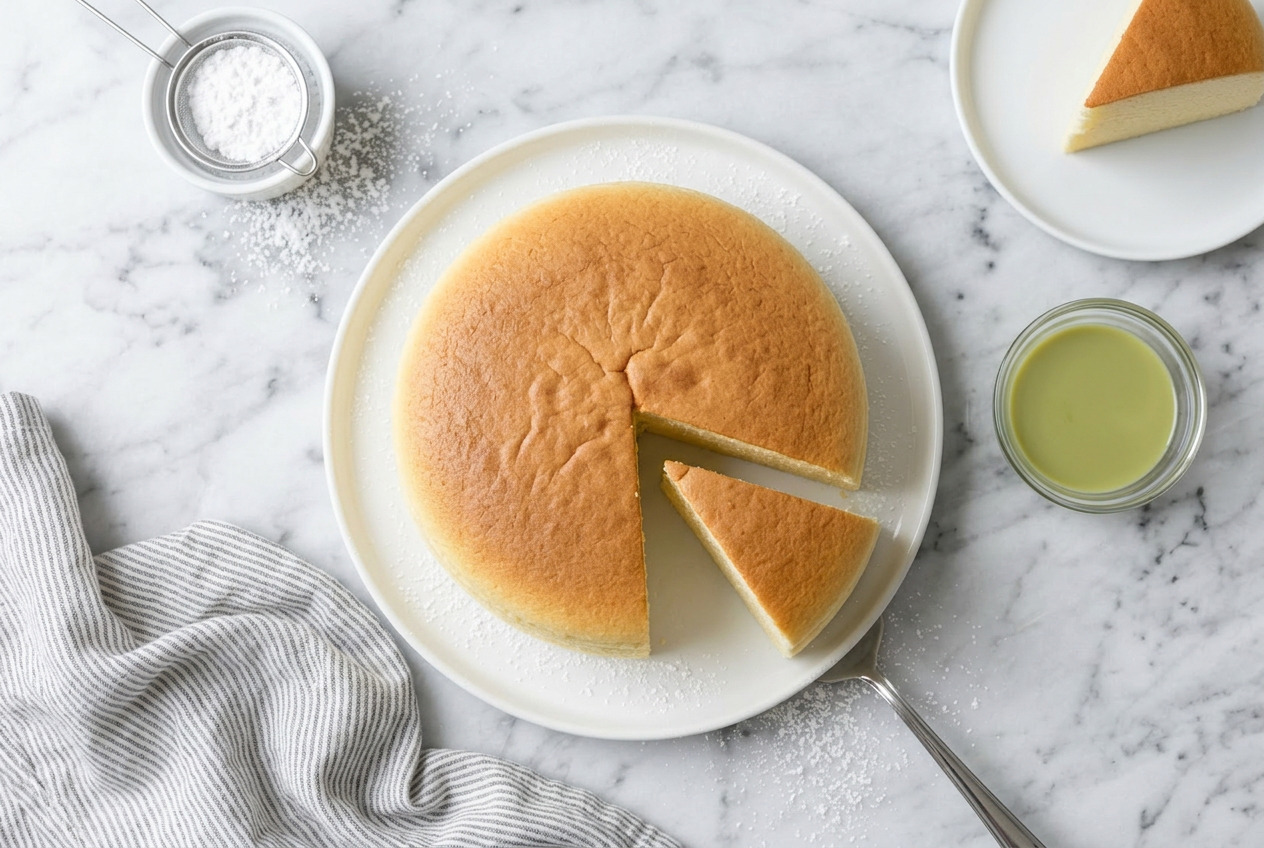
Reduce the temperature to 300°F (150°C) and continue baking for 40 to 50 minutes. The top should be golden brown and the center should be set but still have a slight jiggle when you gently shake the pan.
Step 5: Cool Gradually
This is the step that separates a cracked cheesecake from a perfect one. Do not rush it.
Minutes 0 to 20: Turn off the oven. Keep the door closed. The residual heat continues cooking the center gently.
Minutes 20 to 50: Crack the oven door open about 2 inches (prop it with a wooden spoon). This lets the temperature drop gradually without shocking the cake.
After 50 minutes: Remove the cheesecake from the oven and the water bath. Let it cool on a wire rack to room temperature, about 1 hour.
Once fully cooled, refrigerate for at least 2 hours before serving. The texture firms up slightly in the fridge and becomes silky and mousse-like. I actually prefer it cold.
To unmold, run a thin knife or offset spatula around the edges, then gently lift using the parchment paper overhang.
Tips for the Perfect Japanese Cheesecake (No Cracks, No Collapse)
Japanese cheesecake has a reputation for being finicky. It doesn't have to be. These tips address every common failure point.
- Room temperature ingredients. Cream cheese and eggs must be room temperature. Cold cream cheese creates lumps that won't smooth out. Cold egg whites don't whip to full volume.
- Beat meringue to soft peaks, not stiff. This is the single most important technique decision. Soft peaks fold more easily, produce a more tender cake, and are far less likely to crack. Stiff peaks give a taller rise but crack more often.
- Don't over-fold. Stop as soon as white streaks disappear. Every extra fold deflates the meringue. A few tiny white wisps are better than a deflated batter.
- Always use a water bath. The steam provides gentle, even heat and keeps the surface moist. Without it, the top dries out and cracks. Wrap your pan in foil to keep water out of the batter.
- Two-temperature bake. Start at 400°F to get the initial rise, then drop to 300°F to bake through gently. One constant temperature either under-rises or over-browns.
- Cool in the oven. Never pull a Japanese cheesecake straight from a hot oven to a cool kitchen. The temperature shock causes cracking and dramatic shrinkage. The gradual cooling method takes patience, but it's non-negotiable.
- Some shrinkage is normal. The cake will settle about ½ inch as it cools. That's completely expected and does not mean it failed. If it collapses more than that, the meringue was likely over-beaten or the batter was over-folded.
- Line the pan with parchment. Grease the bottom, line with parchment, then line the sides with a tall strip of parchment. This helps the cake release cleanly without tearing.
Japanese Cheesecake Flavor Variations
The base recipe is a perfect canvas. Once you've nailed the technique, try one of these twists.
- Matcha Japanese cheesecake. Add 2 tablespoon matcha powder to the egg yolk batter. Sift it with the flour and cornstarch for even distribution. The earthy bitterness of matcha against the creamy, sweet base is something special.
- Chocolate Japanese cheesecake. Add 2 tablespoon cocoa powder to the egg yolk batter. Use Dutch-process cocoa for a deeper, richer flavor.
- Black sesame Japanese cheesecake. Stir 2 tablespoon black sesame paste (not tahini) into the cream cheese base. Nutty, toasty, and striking to look at.
- Biscoff swirl. Melt 3 tablespoon Biscoff spread and swirl it into the batter just before pouring into the pan. Don't mix it in fully. You want visible ribbons of caramelized cookie butter.
- Yogurt or crème fraîche swap. Replace the milk with an equal amount of plain yogurt or crème fraîche. This adds a pleasant tang and a slightly richer body.
- Citrus twist. Add the zest of one orange, or 1 tablespoon yuzu juice, or 1 tablespoon passion fruit puree for a bright, tropical spin.
For a different kind of light, fluffy slice, this white chocolate ricotta cheesecake is worth a try.
How to Store Japanese Cheesecake
- Refrigerator. Wrap in plastic wrap or store in an airtight container. Keeps 3 to 4 days. Serve chilled or let it sit at room temperature for 20 minutes before serving to soften slightly.
- Freezer. Wrap tightly in plastic wrap, then aluminum foil. Freeze for up to 3 months. Thaw overnight in the refrigerator. The texture holds up surprisingly well.
- Room temperature. Fine for a few hours while serving, but store leftovers in the fridge. Japanese cheesecake is honestly excellent cold. The texture firms up into something silky and almost mousse-like.
- Always cover it. The delicate surface dries out quickly when left exposed. A simple layer of plastic wrap does the job.
Recipe
Japanese Cheesecake (Cotton Cheesecake)
Ingredients
Cream Cheese Batter
- 8 oz cream cheese full-fat, room temperature (225g)
- 3 tablespoon unsalted butter room temperature (45g)
- 6 large egg yolks room temperature
- ⅓ cup granulated sugar 65g
- ½ cup whole milk room temperature (120ml)
- 1 tablespoon lemon juice fresh-squeezed
- 1 teaspoon vanilla extract optional
- ½ cup cake flour sifted (60g)
- 2 tablespoon cornstarch 16g
- ¼ teaspoon salt
Meringue
- 6 large egg whites room temperature
- ¼ teaspoon cream of tartar or ½ teaspoon lemon juice
- ⅓ cup granulated sugar plus 2 tablespoon (85g)
Instructions
Prepare the Cream Cheese Batter
- Set up a double boiler: place a heatproof bowl over a pot of gently simmering water. Add the cream cheese and butter. Whisk until completely smooth with no lumps.
- Remove the bowl from heat. Whisk in the egg yolks one at a time, then whisk in ⅓ cup sugar, milk, lemon juice, and vanilla extract.
- Sift the cake flour, cornstarch, and salt directly into the batter. Fold gently with a spatula until just combined. The batter should be smooth and pourable. Set aside.
Make the Meringue
- In a large, clean, dry bowl, beat the egg whites on medium speed until frothy, about 1 minute. Add the cream of tartar.
- Gradually add the remaining sugar (about 85g) one tablespoon at a time while beating. Increase to medium-high speed and beat until firm soft peaks form. The meringue should hold its shape but the tip curls over gently when the whisk is lifted. Do not beat to stiff peaks.
Fold and Bake
- Scoop about ⅓ of the meringue into the cream cheese batter. Whisk it in to lighten the batter.
- Pour the lightened batter into the remaining meringue. Fold gently with a spatula: cut down through the center, sweep across the bottom, fold over the top. Stop as soon as no white streaks remain.
- Preheat oven to 400°F (200°C). Line an 8-inch round cake pan (at least 3 inches deep) with parchment paper on the bottom and sides. Lightly grease. Wrap the outside in two layers of foil.
- Pour the batter into the pan. Tap gently to release air bubbles. Place inside a larger roasting pan. Pour hot water into the roasting pan until it reaches 1 inch up the sides of the cake pan.
- Bake at 400°F (200°C) for 15 minutes. Reduce to 300°F (150°C) and bake 40 to 50 minutes more until the top is golden and the center has a slight jiggle.
Cool and Serve
- Turn off the oven and keep the door closed for 20 minutes. Then crack the door open about 2 inches (prop with a wooden spoon) and leave for 30 more minutes.
- Remove from oven and water bath. Cool on a wire rack to room temperature, about 1 hour.
- Refrigerate for at least 2 hours before serving. Run a thin knife around the edges and lift out using the parchment paper overhang. Slice and serve chilled or at room temperature.
Notes
- Soft peaks, not stiff: Over-beaten meringue is the top cause of cracking. Stop when the tip curls over gently.
- Room temperature everything: Cold cream cheese creates lumps. Cold eggs won't whip properly. Pull ingredients out at least 1 hour ahead.
- Water bath is essential: Wrap your pan in foil to keep water out. The steam provides gentle heat and prevents cracking.
- Some shrinkage is normal: Expect the cake to settle about ½ inch as it cools. This is not a failure.
- Cake flour substitute: Use all-purpose flour if needed, but the texture will be slightly denser.
- Cream of tartar substitute: Use ½ teaspoon lemon juice or white vinegar.
- Storage: Refrigerate wrapped for 3-4 days. Freeze wrapped in plastic and foil for up to 3 months.