My first plate of sweet potato noodles went in the trash.
I'd dumped a heap of strands into a hot pan, walked away for six minutes, and come back to an orange puddle.
It tasted like baby food with basil in it.
So I did what most people do and decided vegetable noodles were a scam.
Then a friend served me a bowl of them at a summer dinner, tossed with a very sharp, very garlicky pesto, and I went back for a second helping.
What changed my mind wasn't the technique.
It was realizing the dish isn't trying to be spaghetti.
Sweet potato is sweet and a little earthy, and pesto is salty, grassy and loud with garlic.
Those two things want each other, the same way sweet potato wants sage and brown butter.
Once I stopped waiting for it to taste like pasta, it turned into one of my favorite fast dinners.
My wife asks for it on nights when neither of us wants to think, because the whole thing runs about 25 minutes and one skillet.
The strands stay soft and a little yielding. They never have bite, and that's fine.
Two things make or break it: the 3 mm blade, and knowing exactly when to pull the pan.
I'll give you both, and you won't repeat my orange puddle.
Why Sweet Potato and Pesto Work Together
This is a flavor pairing, not a diet substitution. That distinction matters, because it changes what you're aiming for.
Sweet potato brings sugar and a faint mineral earthiness.
Pesto brings salt, fat, raw garlic heat, and the peppery snap of fresh basil.
Salt against sweet is the oldest trick there is.
It's the same logic behind sweet potato with feta, or with sage and brown butter, or with a hard aged cheese.
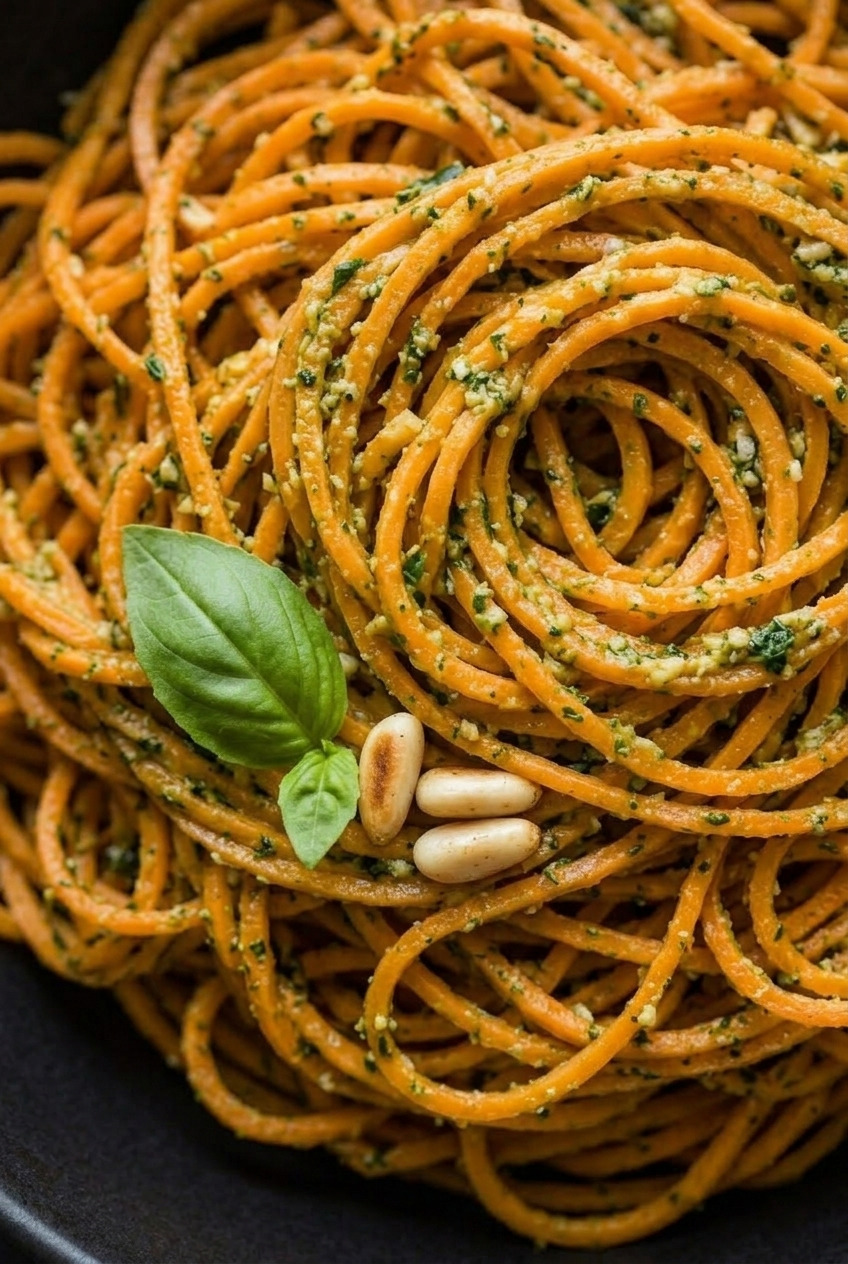
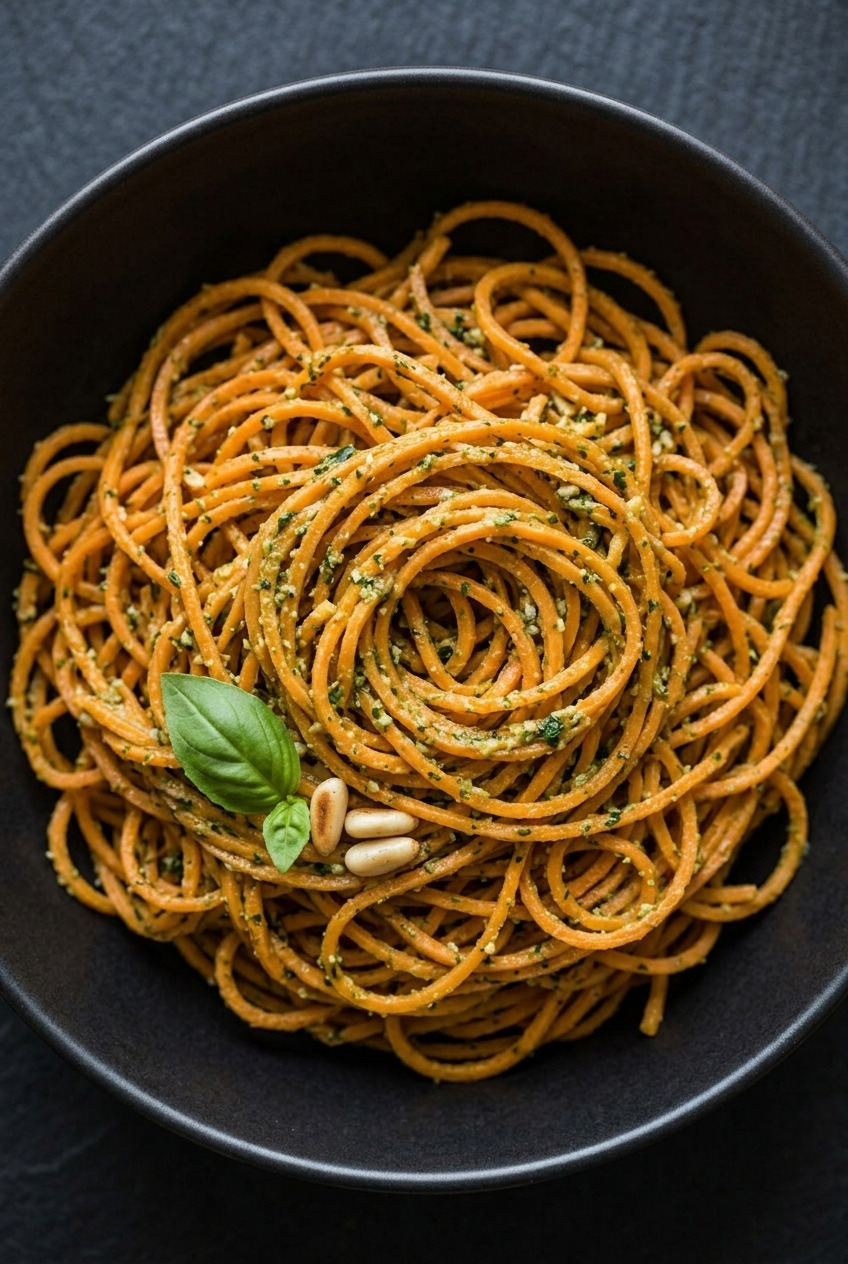
Fair warning: these strands do not have the bite of dried pasta and they never will. They're soft, glossy, and forgiving, closer to a warm tangle of roasted vegetable than to spaghetti. Go in wanting that and you'll love it.
How to Make the Pesto
Real pesto takes about five minutes and it's twice as good as the tub. The tub version is muddy and oily, and against a sweet vegetable it just disappears.
- Fresh basil (2 cups, packed). Leaves only. Stems turn it bitter and stringy.
- Pine nuts (⅓ cup). Toast them dry in a skillet for 4 minutes until they smell nutty. This is the cheapest flavor in the recipe and skipping it costs you real depth.
- Garlic (2 cloves). Raw. It should be assertive.
- Parmesan (½ cup, grated). Grate it yourself off a wedge. The pre-shredded stuff is coated in anti-caking powder and it never melts in.
- Olive oil (½ cup). Good stuff, since it's uncooked and you'll taste it.
- Lemon juice (2 teaspoons). Keeps the color bright and cuts the sweetness of the potato.
The Order Matters
Pulse the basil, garlic, nuts and cheese into a coarse paste FIRST, with no oil in the bowl.
Then stream the oil in with the motor running.
Do it the other way around and you get an oil slick with green flecks in it instead of a paste that clings.
Pro tip: season it saltier than tastes right on a spoon. Sweet potato soaks up salt like nothing else and a perfectly balanced pesto goes flat the second it hits the pan.
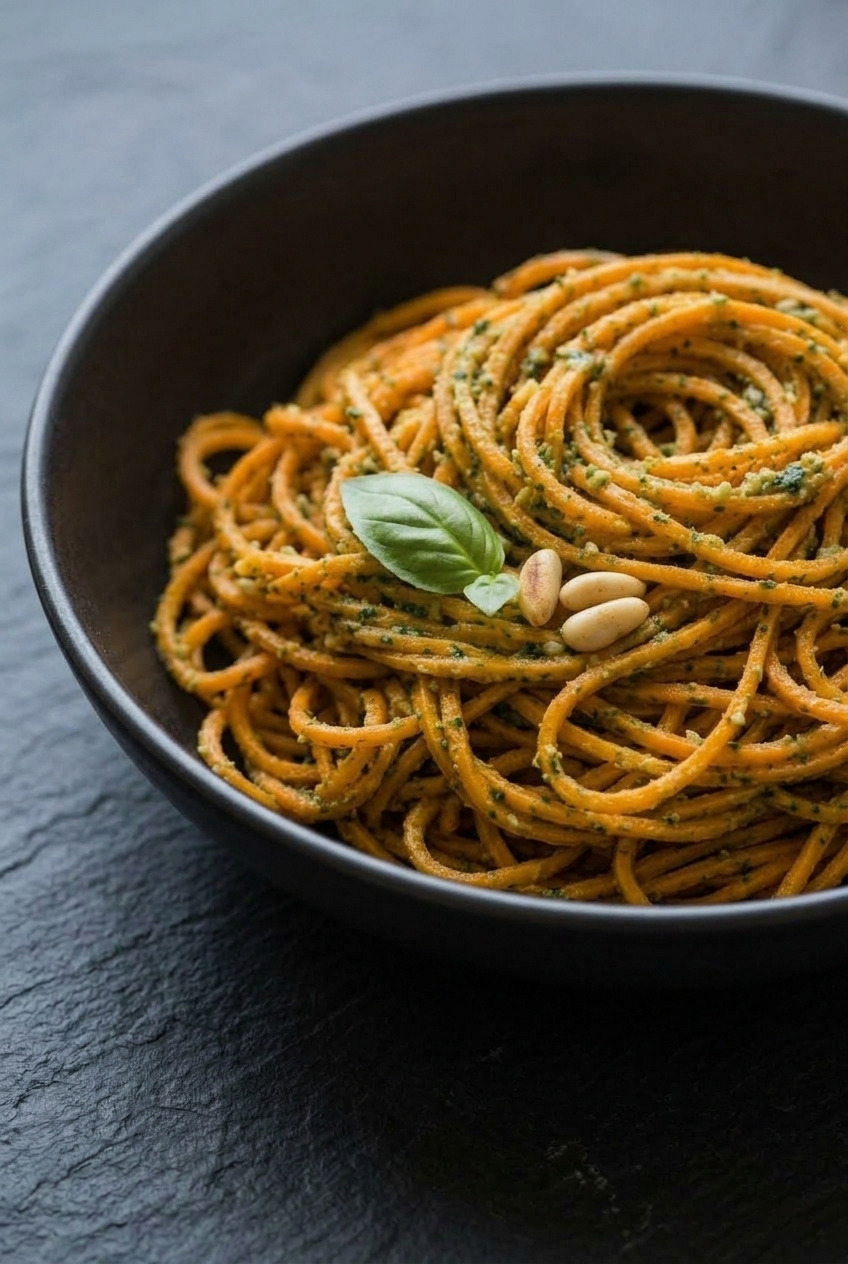
Spiralizing a Sweet Potato Without a Fight
Sweet potato is the hardest vegetable most spiralizers ever meet. It's dense, it's waxy, and it fights back.
- Use the 3 mm blade. On most machines it's marked C or called the spaghetti blade. It gives strands that cook through evenly in the time you have.
- Skip the thick blade. A 6 mm strand goes soft on the outside long before the middle is cooked, which is exactly the mush people complain about.
- Peel it. Sweet potato skin does not soften in a five minute saute and you'll find it in every bite.
- Trim both ends flat. The potato needs to sit square against the blade or it wobbles and shreds.
- Halve it crosswise. A short piece takes half the force of a long one.
The Tangle Problem
Left alone, the blade will hand you one continuous strand about a yard long.
Snip it with kitchen shears every three or four rotations.
Then toss the pile with your fingers so the strands separate before they go anywhere near heat.
A tangled clump cooks from the outside in and the inside of it steams into paste.
Store bought works. The pre-spiralized packs at the grocery store are drier than fresh cut, so pull them a full minute earlier.
How to Cook the Noodles
Here is where every version of this dish falls apart, so read this part twice. The method is a covered steam followed by an uncovered finish.
Step 1: Steam Them Covered
Heat 1 tablespoon of olive oil in your widest skillet over medium heat.
Add the strands with 2 tablespoons of water and put the lid on.
4 minutes. Don't stir, don't peek.
Step 2: Finish Uncovered
Lid off, then toss with tongs for 2 to 3 minutes so the water cooks away.
The strands will loosen and go glossy.
Step 3: Know When to Stop
Lift one strand out with the tongs and look at it.
Done means it bends in a slow arc and still holds its own shape.
Overdone means it drapes limp off the tongs like a wet shoelace, and that's about 60 seconds past the mark.
Pull the pan off the heat, THEN fold in the pesto.
Adding pesto over live heat dulls the basil from bright green to army green in under a minute.
Do not crowd the pan. Two crowded pounds steam themselves into a puddle no matter how careful you are. Use a 12 inch skillet, or cook it in two rounds.
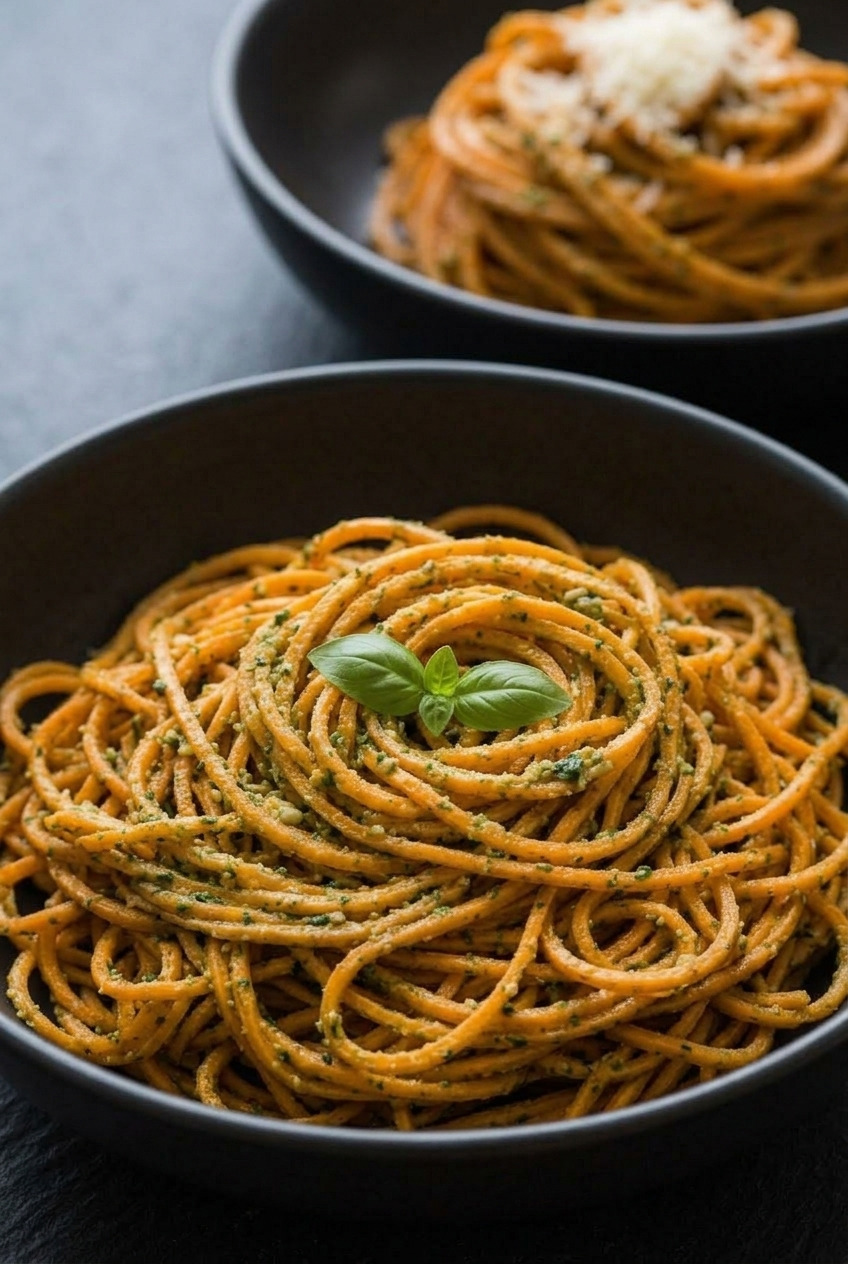
What to Add
- Chicken thigh. Seared, sliced, and laid over the top. Boneless thigh stays juicy where breast dries out against a soft noodle.
- Shrimp. 2 minutes a side in the same pan first, set aside, then returned at the end.
- Cherry tomatoes. Halved and stirred in during the last minute so they warm without collapsing.
- White beans. A drained can, rinsed, warmed through with the noodles for a meatless plate with some substance.
- Toasted pine nuts. Hold a spoonful back from the pesto and sprinkle them over the finished bowl for texture.
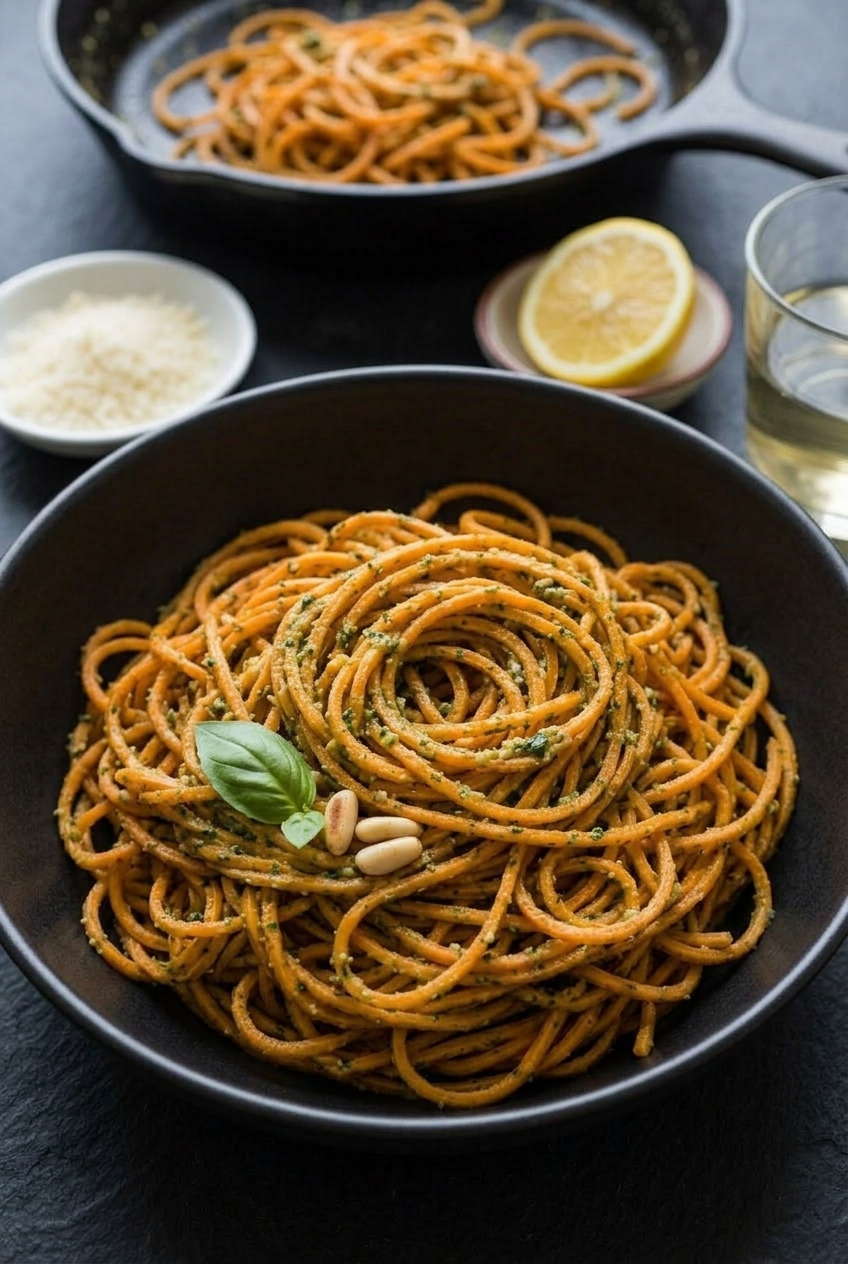
Storage and Make Ahead
- The pesto. 5 days refrigerated under a thin film of olive oil, which keeps the top from browning. It also freezes for 3 months in an ice cube tray.
- Raw spiralized strands. 2 days in a sealed bag in the fridge. They'll darken slightly at the cut edges and it doesn't matter.
- Dressed noodles. They don't keep. The salt in the pesto pulls water out of the potato overnight and you get a soupy container.
- The move. Make the pesto ahead, spiralize ahead, and cook the noodles to order in seven minutes flat.
Do that and this goes from a sad diet dinner to something I genuinely look forward to. What's not to love?
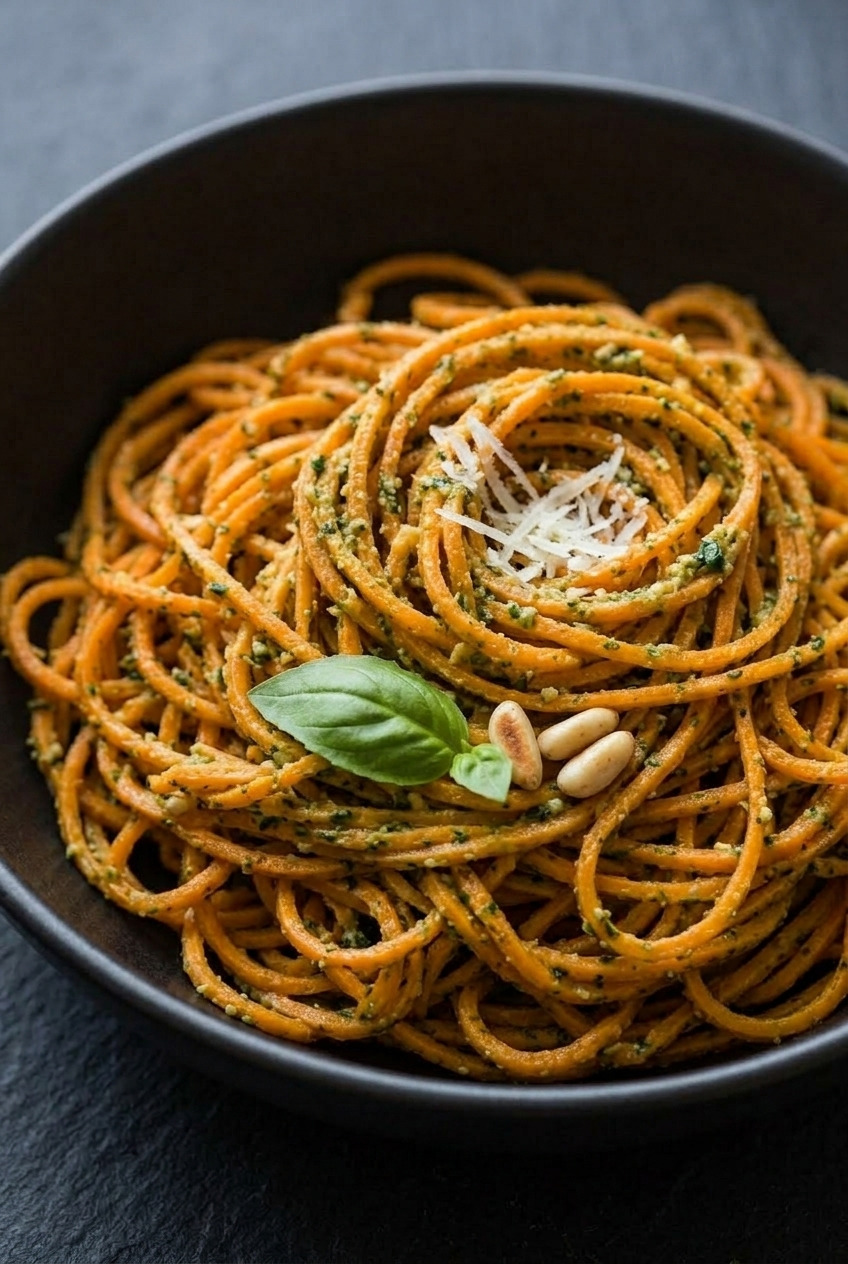
Recipe
Spiralized Sweet Potato Noodles with Pesto
Ingredients
For the Pesto
- 2 cups fresh basil leaves packed, stems removed
- ⅓ cup pine nuts toasted
- 2 cloves garlic
- ½ cup Parmesan finely grated from a wedge
- ½ cup extra virgin olive oil
- 2 teaspoons lemon juice
- ½ teaspoon kosher salt plus more to taste
For the Noodles
- 1 ½ pounds sweet potatoes peeled and spiralized on the 3 mm blade
- 1 tablespoon olive oil
- 2 tablespoons water
- ¼ teaspoon kosher salt
- black pepper to taste
Instructions
Make the Pesto
- Toast the pine nuts in a dry skillet over medium heat for about 4 minutes, shaking often, until they smell nutty and take on color. Let them cool.
- Pulse the basil, garlic, cooled pine nuts and Parmesan in a food processor into a coarse paste, with no oil in the bowl yet.
- With the motor running, stream in the olive oil until you have a thick paste rather than a loose slick. Add the lemon juice and salt, and season it a touch saltier than tastes right on a spoon.
Spiralize and Cook the Noodles
- Peel the sweet potatoes, slice both ends flat, and cut long ones in half crosswise. Spiralize on the 3 mm blade, snipping the ribbon with kitchen shears every three or four rotations, then toss the pile loose with your fingers.
- Heat the olive oil in a 12 inch skillet over medium heat. Add the noodles with the water and the salt, cover, and steam for 4 minutes without stirring.
- Uncover and toss with tongs for 2 to 3 minutes until the water has cooked away and the strands look glossy. A finished strand bends in a slow arc and still holds its shape. If it drapes limp, it has gone about a minute too far.
- Take the pan off the heat, then fold in the pesto so the basil stays green. Add black pepper, taste for salt, and serve right away.
Notes
- Blade choice: the 3 mm blade, usually marked C. A 6 mm strand softens outside before the center cooks, which is the mush people complain about.
- Peel it: sweet potato skin does not soften in a short saute.
- Do not crowd the pan: a crowded skillet steams the strands into a puddle. Use a 12 inch pan or cook in two batches.
- Pesto off the heat: folding pesto in over live heat dulls the basil to army green.
- Store bought spiralized packs are drier than fresh cut, so pull them a minute earlier.
- Storage: pesto keeps 5 days refrigerated under a film of oil, or 3 months frozen. Raw strands keep 2 days. Dressed noodles do not keep, so cook them to order.