Every Japanese bakery I walked into one October had the same tray in the case.
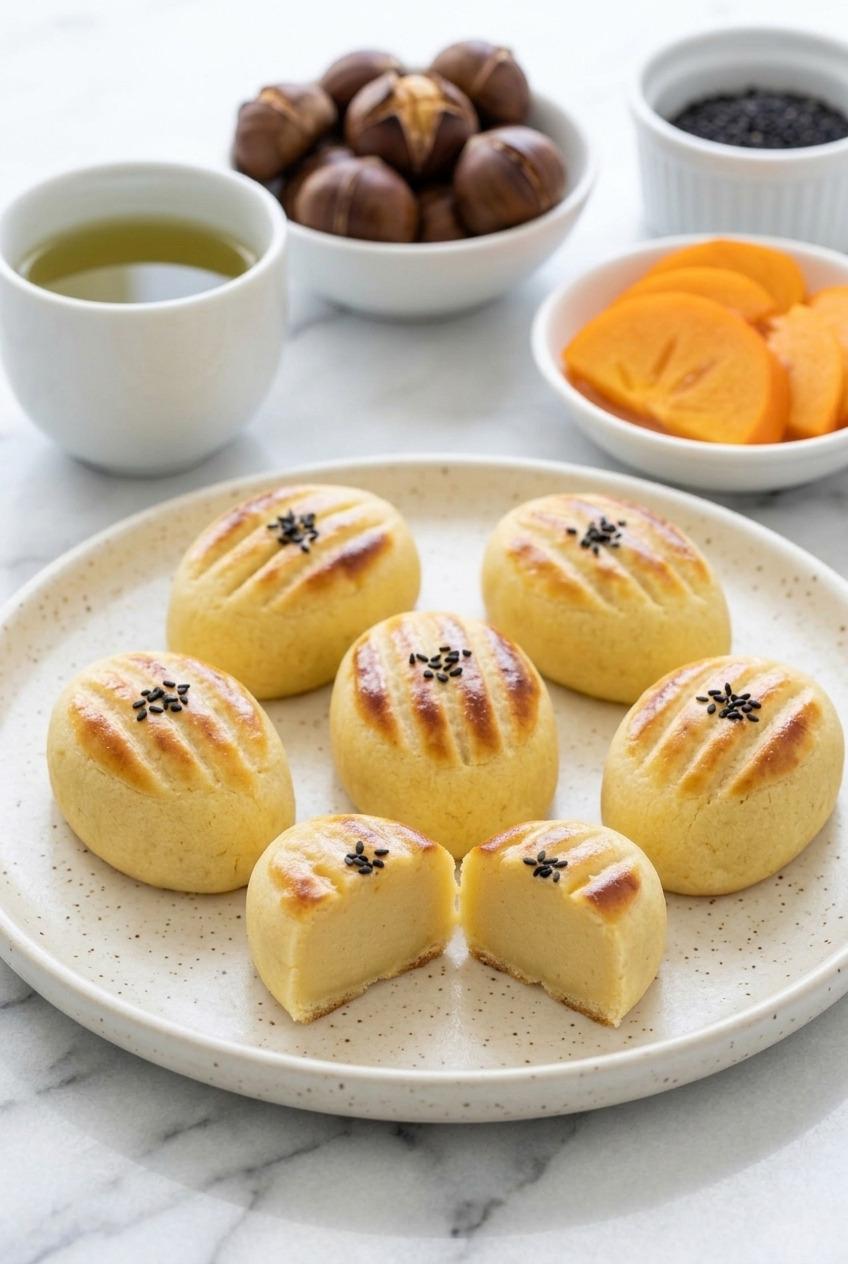
Small golden ovals, tops browned in patches, a few black sesame seeds on each one.
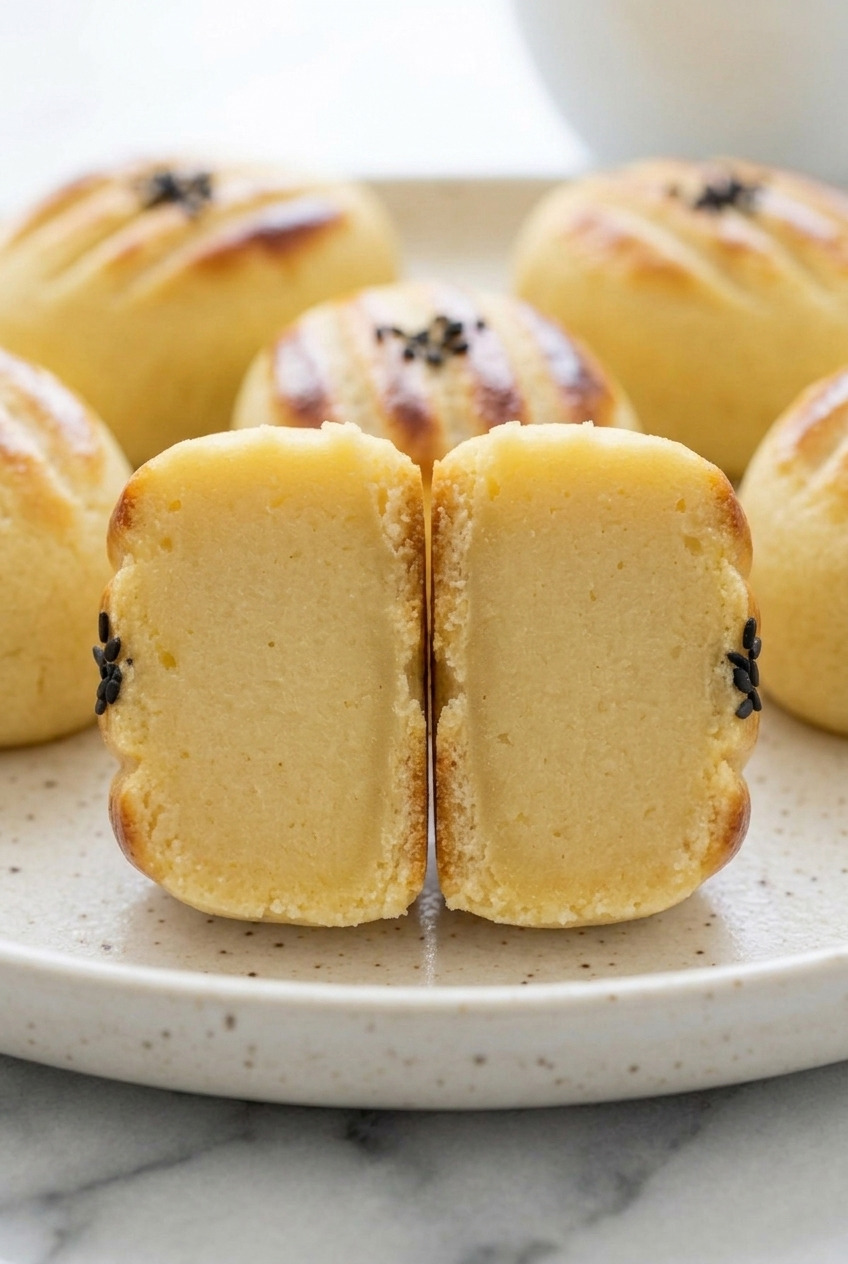
They sat next to the chestnut cakes and the mont blanc, and they cost almost nothing.
The name on the label was written in katakana and it read, phonetically, suiito poteto.
Which is just the English words sweet potato, borrowed into Japanese, and then used as the name of a completely Japanese confection.
I found that delightful and slightly confusing, in the way a lot of Japanese baking is.
Here is what they actually are.
Baked satsumaimo, pressed through a sieve until it is silk, beaten with butter, cream, sugar, and an egg yolk, shaped by hand, brushed with more yolk, and baked again until the tops go dark gold.
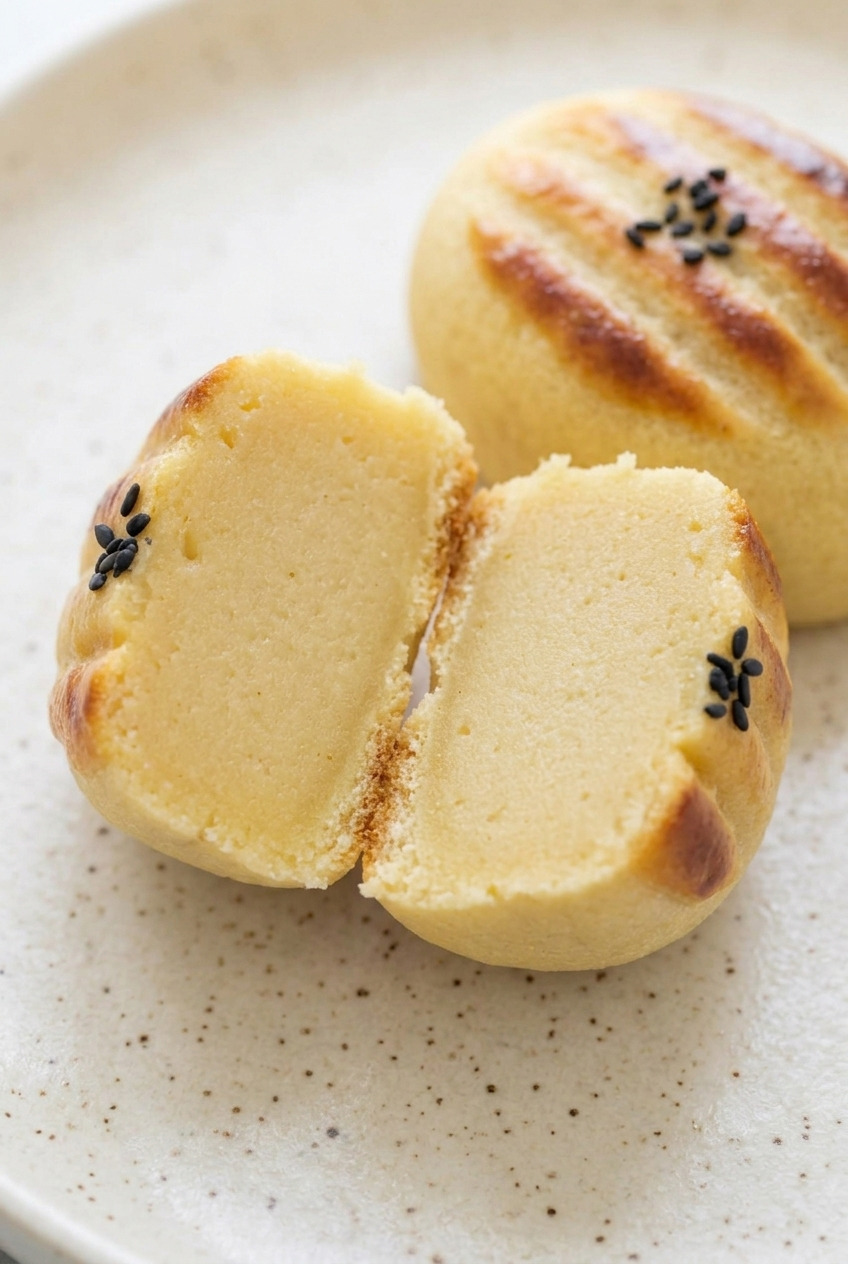
No flour. No leavening. Despite the word cakes, the texture is closer to a firm custard than to anything you would slice.
Autumn in Japan runs on sweet potato, chestnut, and kabocha, and this is the one I make at home.
My wife eats one straight off the cooling rack every time, which is a mistake, because they are better once they cool.
An hour, mostly oven time, for eight little cakes.
What Is Suiito Poteto?
It is a baked sweet potato confection, not a cake in the western sense. No flour, no baking powder, nothing to rise.
The whole thing is mashed sweet potato enriched with butter, cream, sugar, and egg yolk, then shaped and baked a second time.
The name is wasei eigo, Japanese made English. English words, Japanese meaning, and the meaning here is specific: this exact bakery item, not a sweet potato generally.
You will see it written as suiito poteto, suito poteto, or in Japanese as スイートポテト.
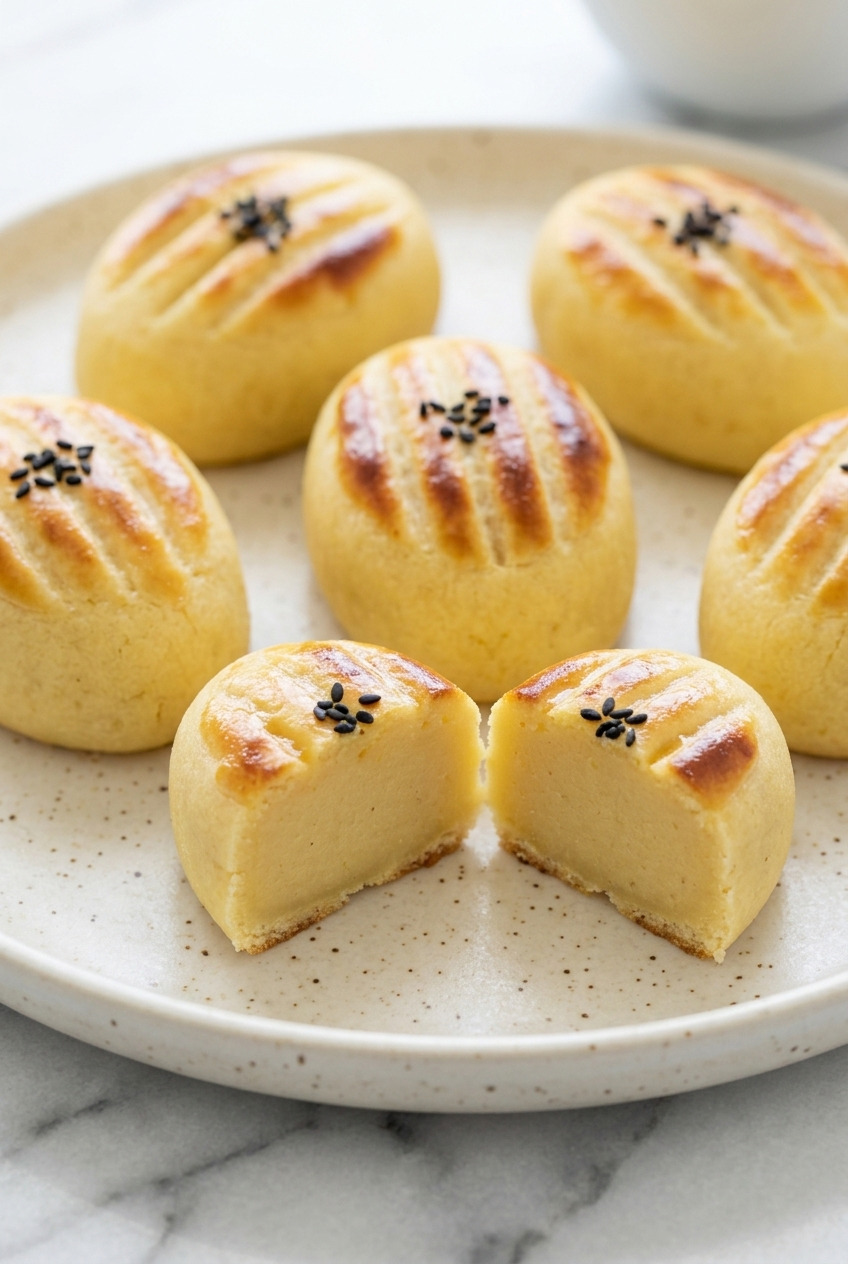
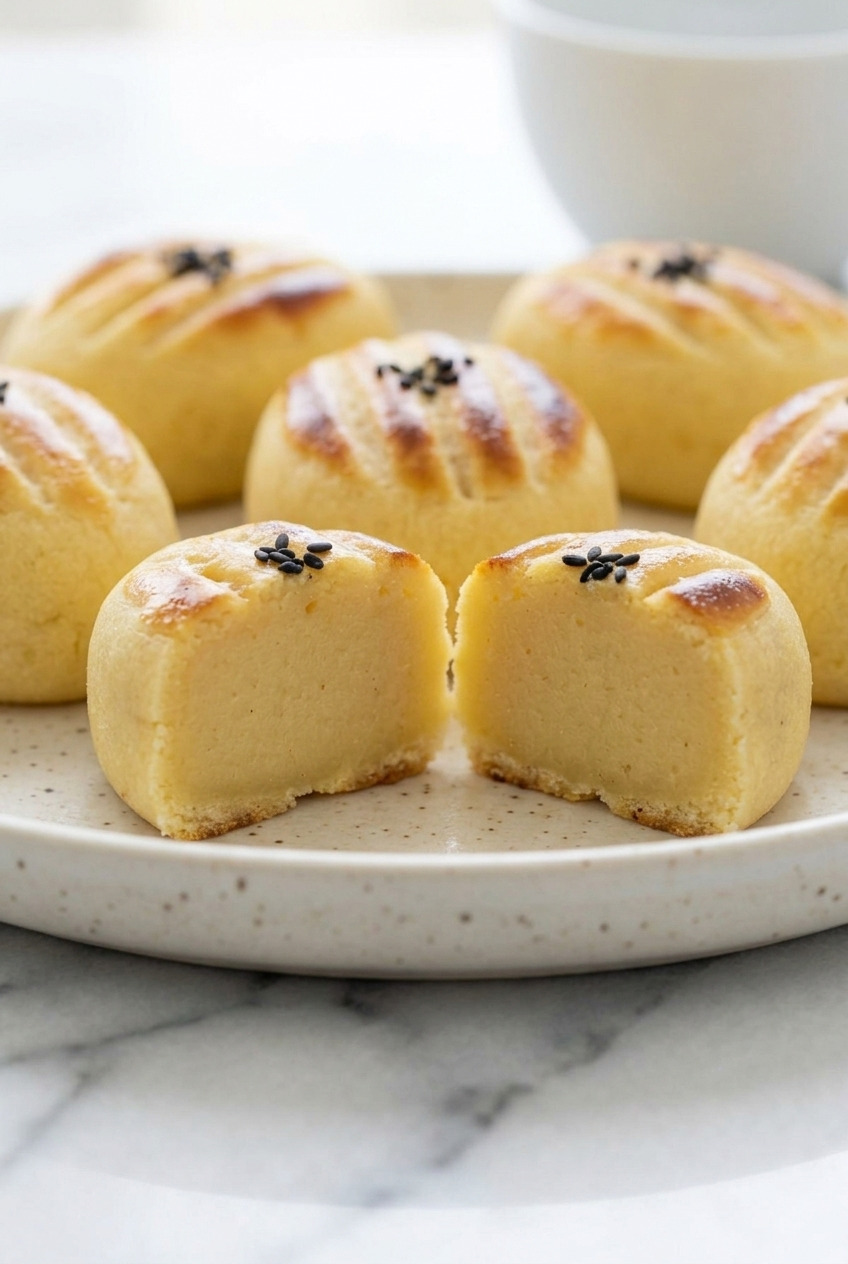
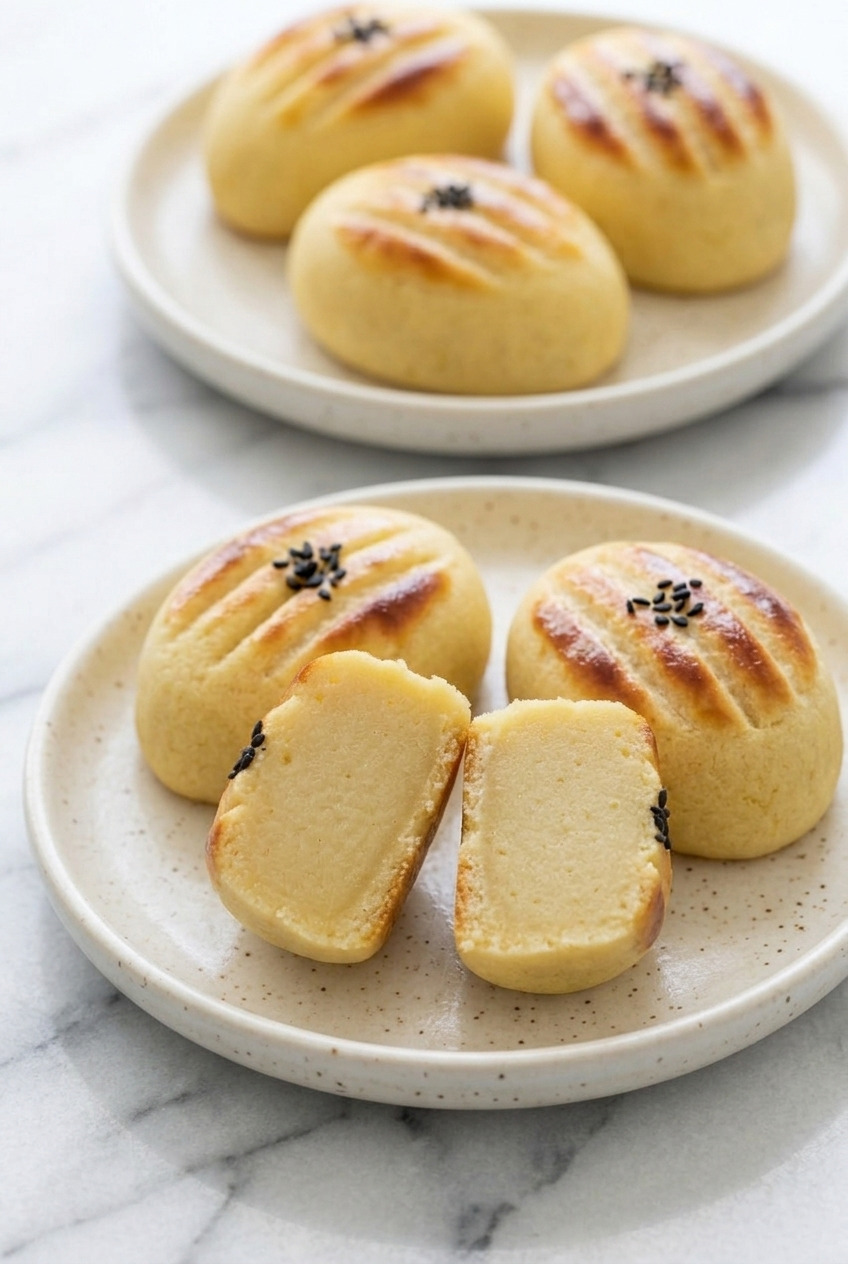
The classic shape is a small boat or oval about three bites across, with a ridged top from a fork and a glossy browned surface from the egg wash.
Texture wise, think dense, creamy, and just slightly grainy in the good way that only sweet potato gives you.
Japanese Sweet Potatoes and Where to Find Them
The right potato is satsumaimo, and it is genuinely different. Purple red skin, pale yellow flesh, dry and dense, with a flavor much closer to chestnut than to an American sweet potato.
That dryness is the point. It is what lets the mash hold a shape without flour.
- Satsumaimo. The authentic choice. Japanese and Korean groceries carry it, and Costco stocks it seasonally in a lot of the country.
- Murasaki or Japanese purple. Sold at many US supermarkets under those names, and close enough that I use them regularly.
- Korean goguma. Effectively the same eating experience, easy to find at H Mart.
- American orange sweet potato. The last resort. It is wetter and sweeter, so cut the cream to 1 tablespoon, drop the sugar to 3 tablespoons, and bake the potatoes an extra 10 minutes to drive off moisture.
Fair warning: if you use an orange sweet potato and follow the recipe as written, you will get a mixture too soft to shape.
Ingredients You'll Need
- Japanese sweet potatoes (1 ½ pounds, about 3 medium). Weighed before peeling, since you lose a fair amount to skin.
- Unsalted butter (3 tablespoons), softened. Beaten into the mash while it is still warm.
- Granulated sugar (¼ cup). Use white, not brown. Brown sugar muddies the yellow color that makes these look right.
- Egg yolks (2 large). In the mash for richness and that custardy set.
- Heavy cream (3 tablespoons), plus more as needed. The amount depends entirely on your potatoes, which is why I add it last.
- Honey (1 ½ teaspoons). Depth without extra graininess.
- Mirin (½ teaspoon). A small, genuinely Japanese touch that adds a savory sweetness. Substitute an extra half teaspoon of honey.
- Vanilla extract (½ teaspoon) and a pinch of salt.
- Egg yolk glaze. 1 yolk beaten with ½ teaspoon of water or milk. This is what browns.
- Toasted black sesame seeds (1 teaspoon). The traditional finish, and the visual signature.
How to Make Suiito Poteto
Step 1: Bake the Sweet Potatoes
Whole, unpeeled, on a foil lined sheet at 375°F for 60 to 75 minutes.
Yes, that is a long time, and yes, it matters. A slow bake converts starch to sugar in a way the microwave never will.
They are done when the skin wrinkles and a skewer meets no resistance at all.
Step 2: Scoop and Sieve
Split them while hot and scoop the flesh into a bowl.
Now press it through a fine mesh sieve with the back of a spoon, or run it through a ricer.
This is the step that separates a bakery texture from a homemade one. Do not skip it.
Step 3: Beat in the Enrichments
While the puree is still warm, beat in the butter until it disappears.
Then the sugar, the two yolks, the honey, mirin, vanilla, and salt.
Add the cream one tablespoon at a time, stopping when the mixture is smooth, glossy, and stiff enough to hold a peak.
Step 4: Shape
Divide into 8 portions, about 2 tablespoons each.
Roll each into a short log, then press the ends and sides into a small oval or boat, slightly domed on top.
Drag a fork lengthwise across the top for the classic ridges. Set them on a parchment lined sheet.
Step 5: Glaze and Bake
Brush the tops and sides with the thinned yolk, being careful not to let it pool at the base.
Sprinkle a few black sesame seeds on each.
Bake at 400°F for 15 to 18 minutes, until the tops are browned in patches rather than evenly colored.
Cool on a rack for at least 20 minutes. They firm up as they cool and the flavor settles.
Getting the Texture Right
Satsumaimo varies enormously in moisture, so the recipe has to flex. This is the one thing that separates a good batch from a tray of slumped blobs.
- Judge the mash before you add cream. If the sieved puree already holds a peak, you may need only one tablespoon.
- Too loose looks like frosting. If it slumps when you set it down, it will spread flat in the oven.
- The fix for loose. Spread the mixture in a pan and dry it over low heat for 3 to 4 minutes, stirring, then chill for 20 minutes.
- Too stiff cracks. If the surface splits when you shape it, add cream half a tablespoon at a time.
- Sugar to taste. Some satsumaimo are already very sweet. Taste the mash before the yolks go in and adjust.
- Chill if you are struggling. Twenty minutes in the fridge makes any version easier to shape.
Shaping Them Like a Japanese Bakery
Small is correct. These are meant to be three bites, eaten with tea, not a dessert plate portion.
The bakery shape is a rounded oval with a flat bottom and a domed top, roughly 3 inches long.
Some shops pipe them from a star tip into a rosette instead, which is also traditional and looks fantastic.
Wet your hands lightly if the mixture sticks, but do not add water to the mixture itself.
Keep them uniform. Uneven sizes brown at different rates and the small ones dry out.
The Baked in the Shell Version
This is the twice baked presentation, and it is just as traditional. Instead of shaping ovals, you refill the skins.
Halve the baked potatoes lengthwise and scoop the flesh out, leaving a wall about 5 mm thick, roughly a quarter inch.
Make the mixture exactly the same way, then mound it back into the shells in a little peak.
Brush with yolk and broil 3 to 5 minutes, watching constantly, until the tops are patchy brown.
Which one should you make? The ovals for a plate of sweets. The shells when you want it to look like a dessert course.
Essential Tips
- Sieve the mash. The single highest impact step in the recipe.
- Granulated sugar only. Brown sugar and honey in quantity both dull the color.
- Thin the glaze. Straight yolk goes on too thick and streaks.
- Watch the oven. You want browned patches, not an even tan. Ten seconds too long under a broiler is a burnt top.
- Work while warm. Butter blends into warm puree and seizes in cold.
- Cool before judging. Warm suiito poteto tastes underwhelming. Cooled, it is dense and creamy.
Storing and Freezing
- Room temperature. 2 days in an airtight container, and honestly better on day two.
- Refrigerated. Up to 5 days. Let them sit out for 20 minutes before eating so they are not fridge cold.
- Freeze after baking. Wrap individually and freeze up to 1 month. Thaw at room temperature.
- Freeze before baking. Shape, freeze on a tray, then bag. Glaze and bake from frozen, adding 4 to 5 minutes.
- Refreshing. 325°F for 6 minutes brings the top back. The microwave makes them gluey.
Recipe
Suiito Poteto (Japanese Sweet Potato Cakes)
Ingredients
For the Cakes
- 1 ½ pounds Japanese sweet potatoes (satsumaimo) about 3 medium, weighed before peeling
- 3 tablespoons unsalted butter softened
- ¼ cup granulated sugar adjust to the sweetness of your potatoes
- 2 large egg yolks
- 3 tablespoons heavy cream plus more as needed
- 1 ½ teaspoons honey
- ½ teaspoon mirin or an extra ½ teaspoon honey
- ½ teaspoon vanilla extract
- 1 pinch fine salt
Glaze and Finish
- 1 large egg yolk beaten with ½ teaspoon water or milk
- 1 teaspoon toasted black sesame seeds
Instructions
Bake and Sieve
- Bake the whole unpeeled sweet potatoes on a foil lined sheet at 375 degrees F for 60 to 75 minutes, until the skins wrinkle and a skewer meets no resistance.
- Split them while hot, scoop the flesh into a bowl, and press it through a fine mesh sieve or a ricer until completely smooth.
Make the Mixture
- While the puree is still warm, beat in the softened butter until it disappears.
- Beat in the sugar, egg yolks, honey, mirin, vanilla, and salt.
- Add the cream one tablespoon at a time, stopping when the mixture is smooth and stiff enough to hold a peak. Chill 20 minutes if it feels soft.
Shape and Bake
- Heat the oven to 400 degrees F and line a sheet with parchment. Divide the mixture into 8 portions of about 2 tablespoons each.
- Shape each portion into a small oval about 3 inches long with a domed top, then drag a fork lengthwise across the top for ridges.
- Brush the tops and sides with the thinned egg yolk, avoiding pooling at the base, and sprinkle with black sesame seeds.
- Bake 15 to 18 minutes, until the tops are browned in patches. Cool on a rack at least 20 minutes before serving.
Notes
- Sieve the mash: Pressing the hot flesh through a fine sieve is what gives the bakery texture.
- Use satsumaimo: Japanese sweet potatoes are dry and chestnut like. With an American orange sweet potato, cut the cream to 1 tablespoon, the sugar to 3 tablespoons, and bake the potatoes 10 minutes longer.
- Granulated sugar only: Brown sugar dulls the yellow color.
- Shell version: Scoop the halves leaving a 5 mm wall, mound the mixture back in, glaze, and broil 3 to 5 minutes.
- Storage: 2 days at room temperature, 5 refrigerated, 1 month frozen. Refresh at 325 degrees F for 6 minutes.