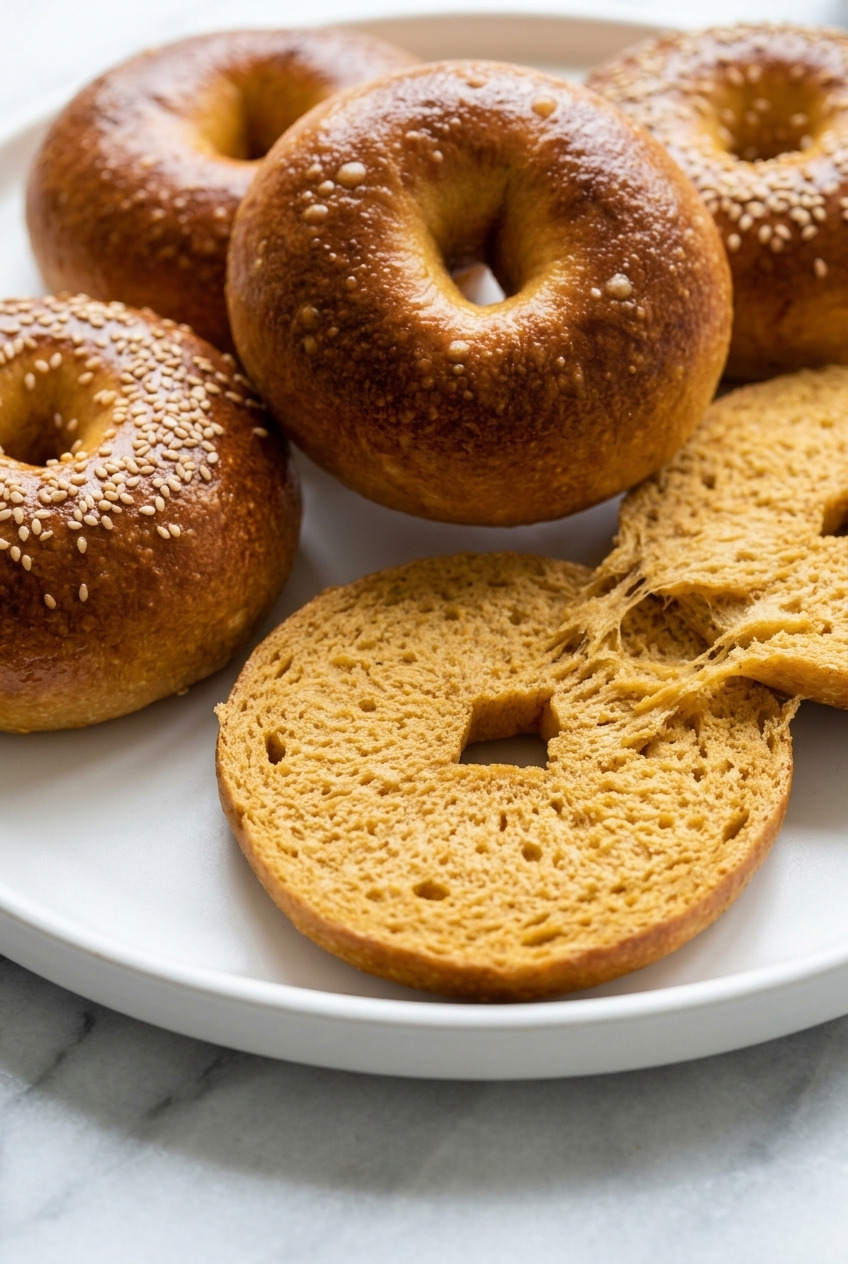
My first attempt looked like a bagel and tore like a dinner roll.
Perfect ring, nice orange color, decent shine on top.
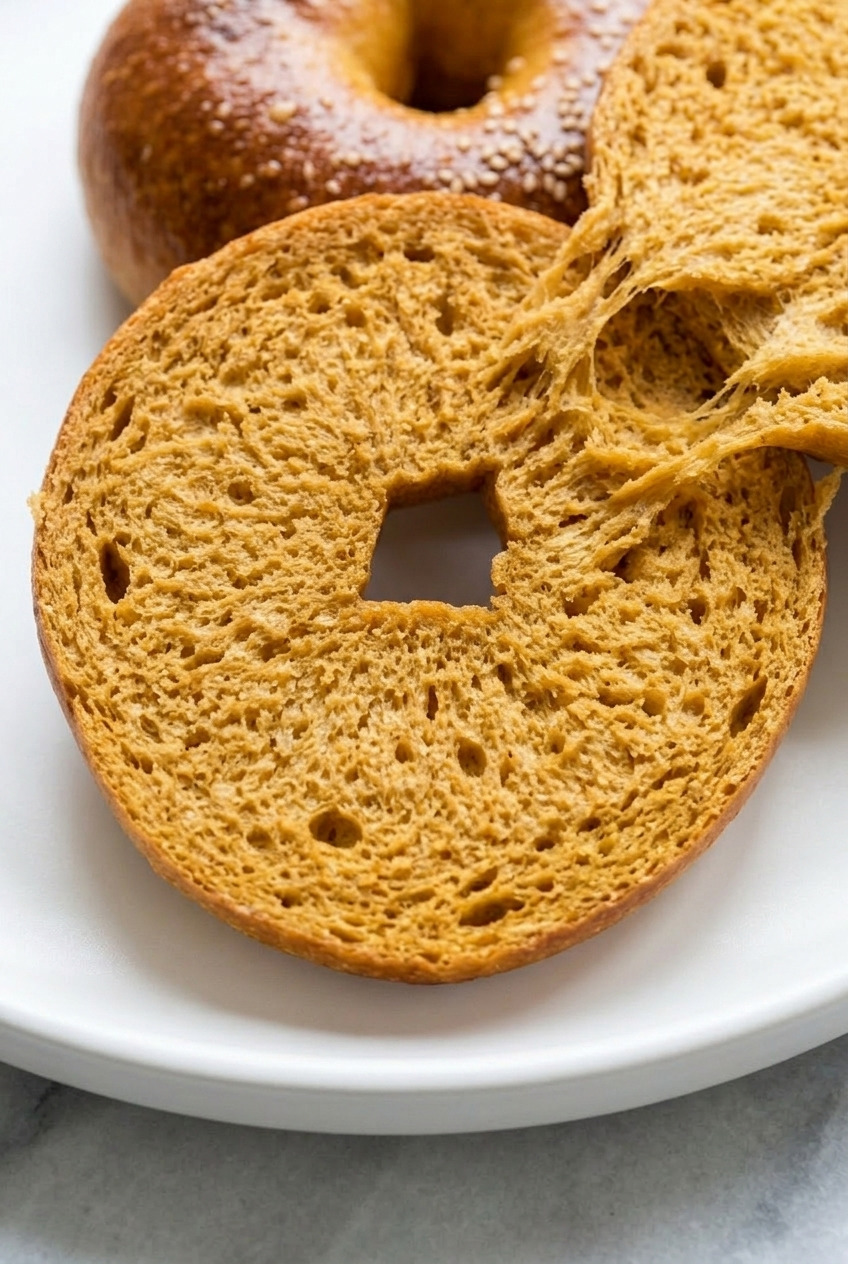
Then I pulled one apart and it fluffed.
Soft, airy, feathery, everything a bagel is supposed to refuse to be.
I knew exactly what I'd done.
I'd skipped the boil.
Ten minutes and a pot of water, and I'd talked myself out of it standing at the stove at seven in the morning.
It seemed like a fussy tradition, the kind of step recipes keep around because somebody's grandmother did it.
It isn't.
The boil is the reason a bagel is dense and chewy instead of soft and bready, and I'll explain exactly what it's doing further down.
The second batch went into boiling water for a minute a side, and they came out with a tight, tearing crumb and a glossy crust that blistered in the oven.
The sweet potato makes this more important, not less.
Puree softens dough, which is lovely in a loaf and works directly against you in a bagel.
So we use bread flour and we boil hard, and the result is chewy with a mellow orange color and a faint warmth from cinnamon underneath.
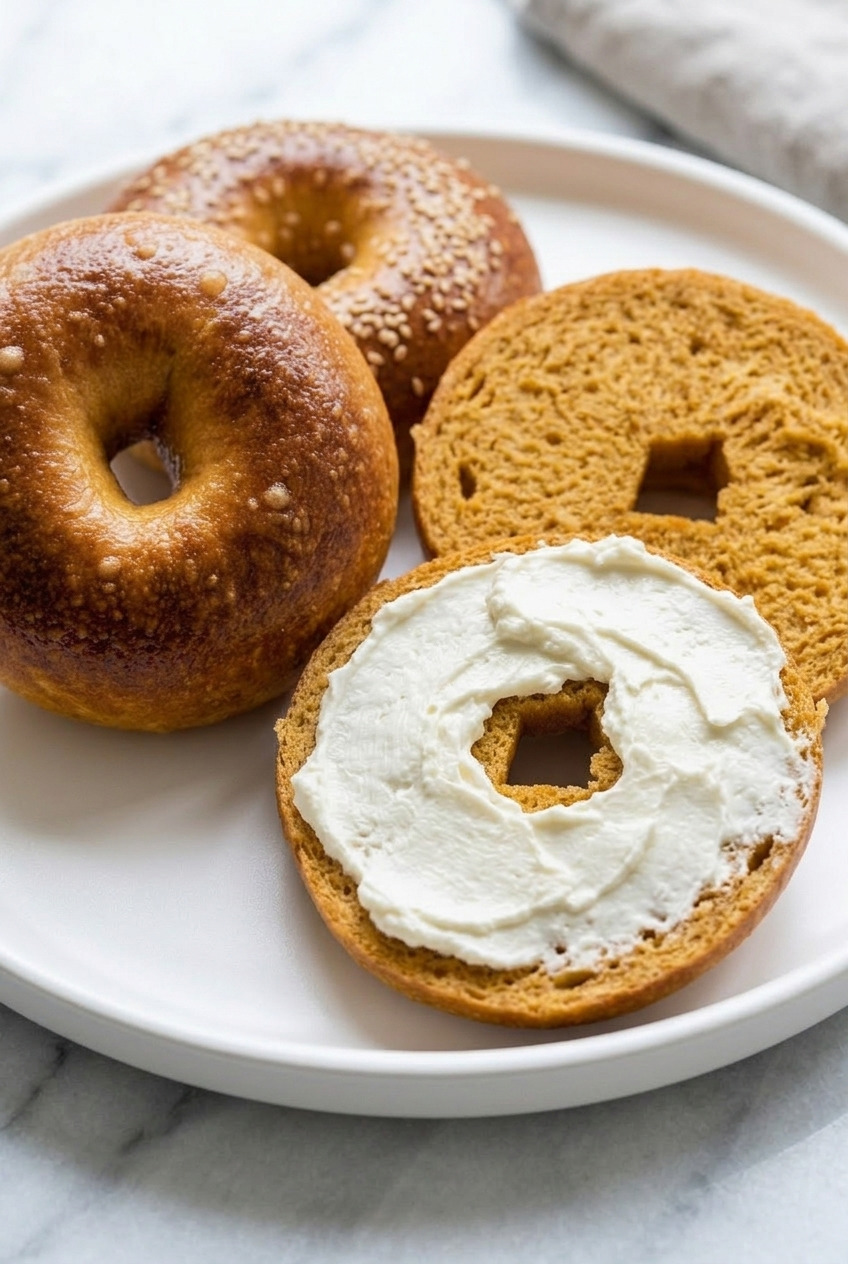
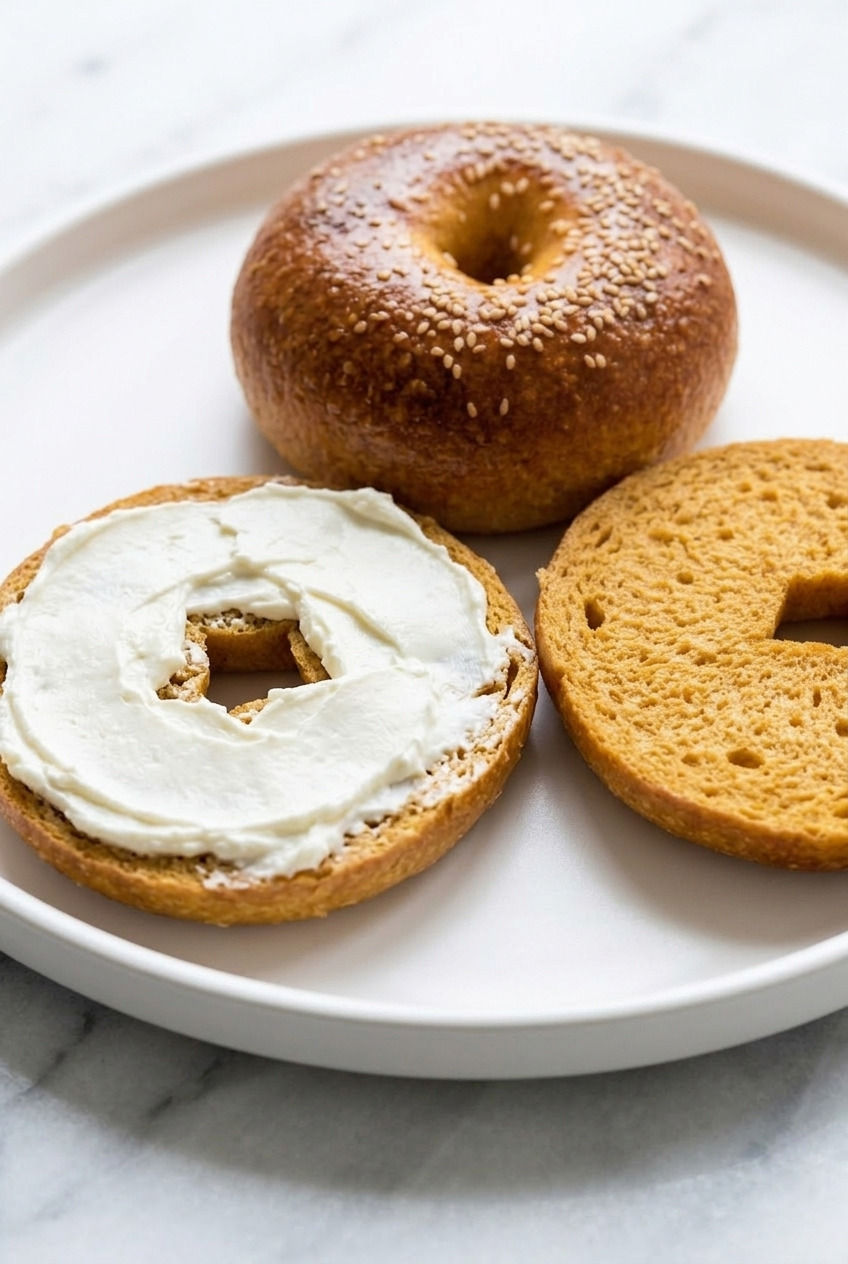
I split them, toast them dark, and put cream cheese on while they're still too hot.
Eight bagels for about two dollars of ingredients!
Why You'll Love These
Everything in this recipe is aimed at one thing, which is a dense chewy crumb. Bread flour, a real knead, a short proof, and a hard boil.
- A genuinely chewy crumb. Tight and close grained, the kind that pulls in strands when you tear it instead of crumbling.
- A glossy blistered crust. That's the 1 tablespoon of baking soda in the boiling water doing its job.
- Real sweet potato color. A warm muted orange right through the crumb, not a tint on the crust.
- One bowl and a pot. No mixer required, though a stand mixer saves your arms.
- They freeze perfectly. Slice before freezing and toast straight from the freezer for 3 months.
- Not a sweet bagel. Just enough cinnamon to notice. These still work under smoked salmon.
These Are Real Bagels, Not Sweet Potato Rounds
Worth clearing up, because search results for this are a mess. A couple of the most popular pages under this name are roasted sweet potato slices with everything seasoning shaken over them.
Those are good. I make them.
They are not bagels.
What you're getting here is the actual thing: a yeasted dough, kneaded, proofed, shaped into a ring, boiled, and then baked.
Dense chewy crumb, a real crust, a hole in the middle.
If you came looking for the sliced roasted rounds, no hard feelings. If you came for a bagel, this is a bagel.
Ingredients You'll Need
Nine ingredients, and the two choices that decide your texture are the flour and the baking soda. Everything else is standard bread pantry.
- Bread flour (3 ½ cups). Not all purpose. Bread flour runs about 12 to 13 percent protein against roughly 10 percent for all purpose, and that protein is what builds the tight chewy structure. Sweet potato puree softens dough, so this is the counterweight.
- Warm water (1 cup). 110°F to 115°F. Warm on the wrist, never hot.
- Active dry yeast (2 ¼ teaspoons). One packet.
- Light brown sugar (3 tablespoons, divided). 1 tablespoon feeds the yeast, 2 tablespoons go into the dough for color and a faint molasses note.
- Mashed roasted sweet potato (½ cup), smooth and cooled. Do NOT go over a half cup. More puree means more moisture, a slacker dough, and a softer crumb, which is the exact thing we're fighting.
- Ground cinnamon (2 teaspoons). Enough to smell it, not enough to make breakfast taste like dessert.
- Ground ginger (½ teaspoon). A little heat behind the cinnamon.
- Fine salt (1 ½ teaspoons). Structure and flavor both. Don't cut it.
- Baking soda (1 tablespoon), for the pot. Not in the dough. It goes into the boiling water, and I'll get to why.
Why Bagels Get Boiled
This is the whole article, so here it is plainly. A bagel spends 60 seconds a side in boiling water before it ever sees the oven, and that minute decides the texture.
Hot water gelatinizes the starch on the outside of the dough.
That surface goes from powdery to a smooth, sealed skin.
When the bagel then hits a hot oven, that skin has already set.
The steam trying to expand inside the dough has nowhere to push.
Instead of blowing the crumb open into big airy holes, the interior compresses against its own crust.
That's chewiness. It's a physical structure, not a flavor.
The gelatinized surface also goes glossy and browns faster, which gives you that lacquered look and the blisters.
So what does the baking soda add?
It makes the water alkaline, which accelerates browning the same way it does for a pretzel.
Deeper color, more blistering, and a faintly savory edge on the crust.
Skip the boil and you get a yeasted roll with a hole in it. Soft, pleasant, and not a bagel.
How to Make Sweet Potato Bagels
Step 1: Proof the Yeast
Stir the yeast and 1 tablespoon of the brown sugar into the 1 cup of warm water.
Let it stand 7 to 10 minutes, until it foams and domes.
Flat after ten minutes means the yeast is dead. Better to know now than after an hour of kneading.
Step 2: Mix and Knead
Whisk the bread flour, remaining 2 tablespoons of brown sugar, cinnamon, ginger, and salt in a big bowl.
Add the foamy yeast and the cooled sweet potato mash, and stir until it comes together into a shaggy mass.
Now knead 10 to 12 minutes by hand, or 8 minutes on medium low in a stand mixer with the dough hook.
This dough is stiff. It's supposed to be stiff.
Resist adding water. A bagel dough that feels slightly dry and tight is exactly right, and every splash of water you add costs you chew.
You're done when a stretched piece goes thin enough to see light through before it tears.
Step 3: Bulk Rise
Cover the bowl and let it rise somewhere warm for 60 to 75 minutes, until roughly doubled.
Sweet potato dough rises a little slower than plain. Give it the time.
Step 4: Shape the Rings
Punch the dough down and divide it into 8 equal pieces, about 115 grams each if you have a scale.
Roll each into a tight ball, then push your thumb straight through the center.
Stretch the hole to about 1 ½ inches wide by spinning the ring around two fingers.
It looks too big. It will close up in the boil.
Set the rings on a floured tray and let them rest 20 minutes.
Step 5: Boil
Bring a wide pot of water to a rolling boil and stir in the 1 tablespoon of baking soda. It will foam up, that's normal.
Heat the oven to 425°F now.
Drop in 2 or 3 bagels at a time, no crowding.
Boil 60 seconds, flip with a slotted spoon, boil another 60 seconds.
Keep the water at a real boil, not a simmer. A lazy simmer won't set the skin.
Lift them out, drain for a few seconds, and set them on a parchment lined sheet pan.
Step 6: Bake
Sprinkle with sesame seeds or everything seasoning right away, while the surface is still wet enough to hold them.
Bake 22 to 25 minutes, until deep golden brown and firm.
Cool at least 20 minutes on a rack before cutting, or the crumb compresses under the knife.
Getting the Chewy Crumb Right
- Knead to a real windowpane. Under kneaded dough gives a crumbly, cakey interior. Stretch a piece thin and look for light through it before you stop.
- Keep the dough tight. Slightly dry and stiff is the target. Every extra tablespoon of water softens the crumb.
- Half a cup of puree, maximum. This is the single most common way sweet potato bagels go bready.
- Don't over proof after shaping. Twenty minutes of bench rest, not an hour. Over proofed rings collapse in the water and bake flat.
- Boil hard. A rolling boil, two or three at a time so the temperature doesn't crash.
- Bake hot and dry. 425°F, no steam pan. You want the crust to set and brown, not stay soft.
Toppings and Variations
- Everything seasoning. Garlic, onion, poppy, sesame, and salt against sweet potato is genuinely excellent. The roasted rounds crowd got that part right.
- Toasted sesame. The classic, and it toasts a shade darker on this crust than on a plain bagel.
- Flaky salt. A pinch on each ring before baking, especially if you're going the savory route.
- Cinnamon raisin. Knead in ¾ cup of raisins at the end of the kneading time and bump the cinnamon to 1 tablespoon.
- Plain. Leave the spice out entirely for a bagel that behaves like a plain one with better color.
What to Serve With Them
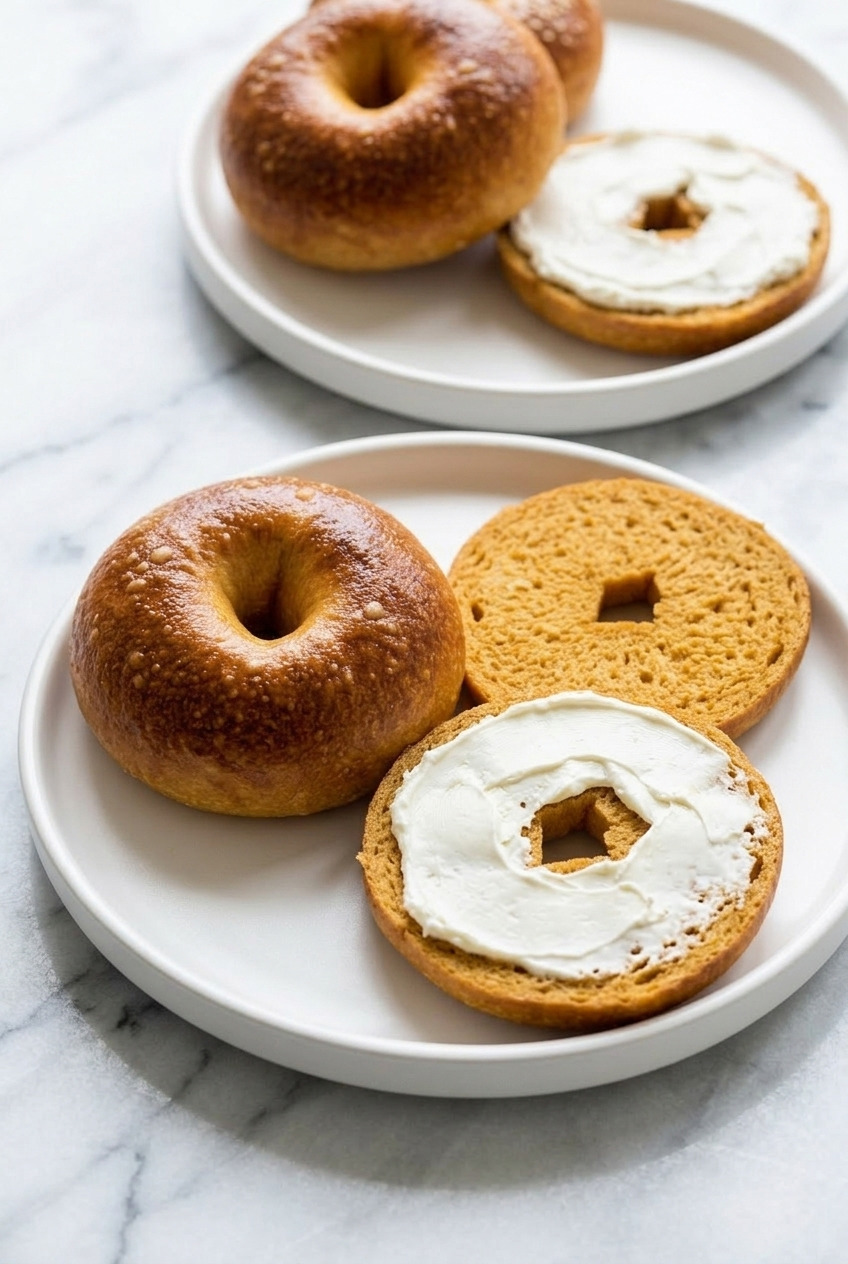
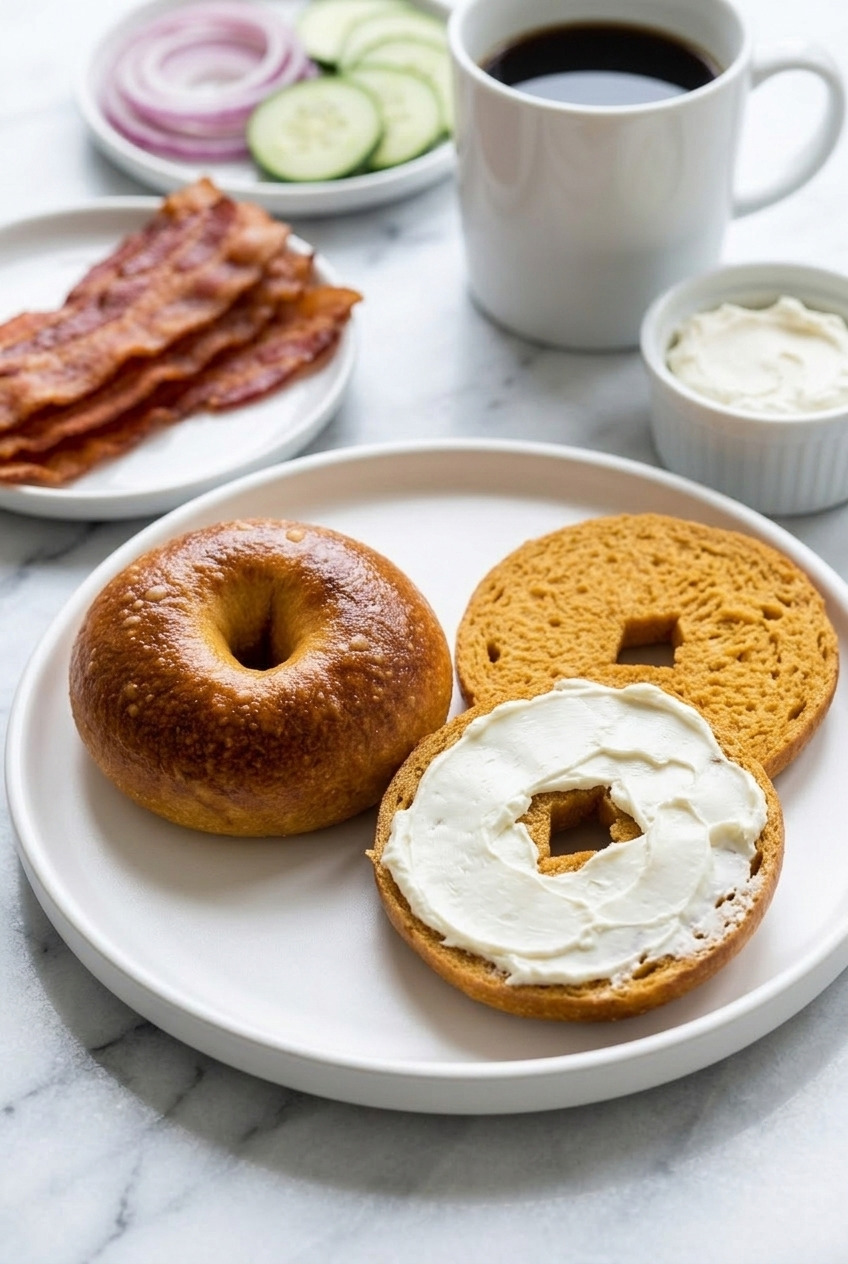
- Plain cream cheese. Toasted dark, thick layer, done. This is how I eat most of the batch.
- Whipped honey butter. 4 tablespoons of softened butter beaten with 1 tablespoon of honey and a pinch of salt.
- Egg and cheddar sandwich. A fried egg and sharp cheddar between the halves. The chewy crumb holds up to it, which a soft roll doesn't.
- Smoked salmon. Cream cheese, salmon, red onion, capers. The faint cinnamon reads as warmth here rather than sweetness.
- Turkey sandwich. Leftover roast turkey and a little cranberry. Excellent in late November.
Storage and Freezing
- Room temperature. 2 days in a paper bag. Homemade bagels have no preservatives and they stale fast, which is the honest truth about all of them.
- Slice before freezing. Cut them in half first. Frozen whole bagels are impossible to cut and they thaw unevenly.
- Freezer. Bagged and frozen for 3 months. Toast the halves straight from frozen on a medium setting, no thawing.
- Refrigerator. Don't. Cold staling is faster than counter staling, so freeze instead of chilling.
- Day 2 fix. Run a whole bagel briefly under water and heat it at 350°F for 5 minutes. It comes back close to fresh.
Boil them. That's the one thing I'd ask. Give it a try!
Recipe
Sweet Potato Bagels
Ingredients
Dough
- 1 cup warm water 110 to 115 degrees F
- 2 ¼ teaspoons active dry yeast one packet
- 3 tablespoons light brown sugar divided
- 3 ½ cups bread flour plus more for the counter
- ½ cup mashed roasted sweet potato smooth and cooled, do not exceed
- 2 teaspoons ground cinnamon
- ½ teaspoon ground ginger
- 1 ½ teaspoons fine salt
Boiling Water and Topping
- 1 tablespoon baking soda for the boiling water
- 2 tablespoons toasted sesame seeds or everything seasoning optional
Instructions
Make the Dough
- Stir the yeast and 1 tablespoon of the brown sugar into the warm water and let it stand 7 to 10 minutes, until foamy and domed.
- Whisk the bread flour, remaining 2 tablespoons brown sugar, cinnamon, ginger and salt in a large bowl. Add the yeast mixture and the cooled sweet potato mash and stir to a shaggy dough.
- Knead 10 to 12 minutes by hand or 8 minutes on medium low with a dough hook, until a stretched piece is thin enough to see light through. The dough should stay stiff and slightly dry. Do not add water.
- Cover and let rise in a warm spot 60 to 75 minutes, until roughly doubled.
Shape and Boil
- Punch the dough down and divide it into 8 equal pieces, about 115 grams each. Roll each into a tight ball, push your thumb through the center and spin the ring on two fingers until the hole is about 1 ½ inches wide.
- Set the rings on a floured tray and rest 20 minutes. Heat the oven to 425 degrees F.
- Bring a wide pot of water to a rolling boil and stir in the baking soda. Boil 2 or 3 bagels at a time for 60 seconds, flip with a slotted spoon and boil 60 seconds more, keeping the water at a full boil.
- Drain the bagels briefly and set them on a parchment lined sheet pan. Sprinkle with sesame seeds or everything seasoning while the surface is still wet.
Bake
- Bake 22 to 25 minutes, until deep golden brown and firm to the touch.
- Cool on a rack at least 20 minutes before slicing, or the crumb will compress under the knife.
Notes
- Do not skip the boil: Sixty seconds a side gelatinizes the surface starch so the crust sets before the crumb can expand. That is what makes the crumb dense and chewy instead of soft and bready.
- Bread flour only: Sweet potato puree softens dough, and the extra protein in bread flour is the counterweight.
- Half a cup of puree, maximum: More moisture gives a slack dough and a bready crumb.
- Keep the dough stiff: Slightly dry and tight is correct. Added water costs you chew.
- Freezing: Slice the bagels in half before freezing, then toast straight from frozen for up to 3 months.