My first batch came out of the oven looking exactly right and tasting like a scone.
Sweet, cakey, and completely wrong for what I wanted to do with them.
I'd followed a recipe that called for a quarter cup of sugar and a full teaspoon of cinnamon, and I got what I asked for.
What I actually wanted was the biscuit I'd eaten at a diner outside Raleigh a few years back.
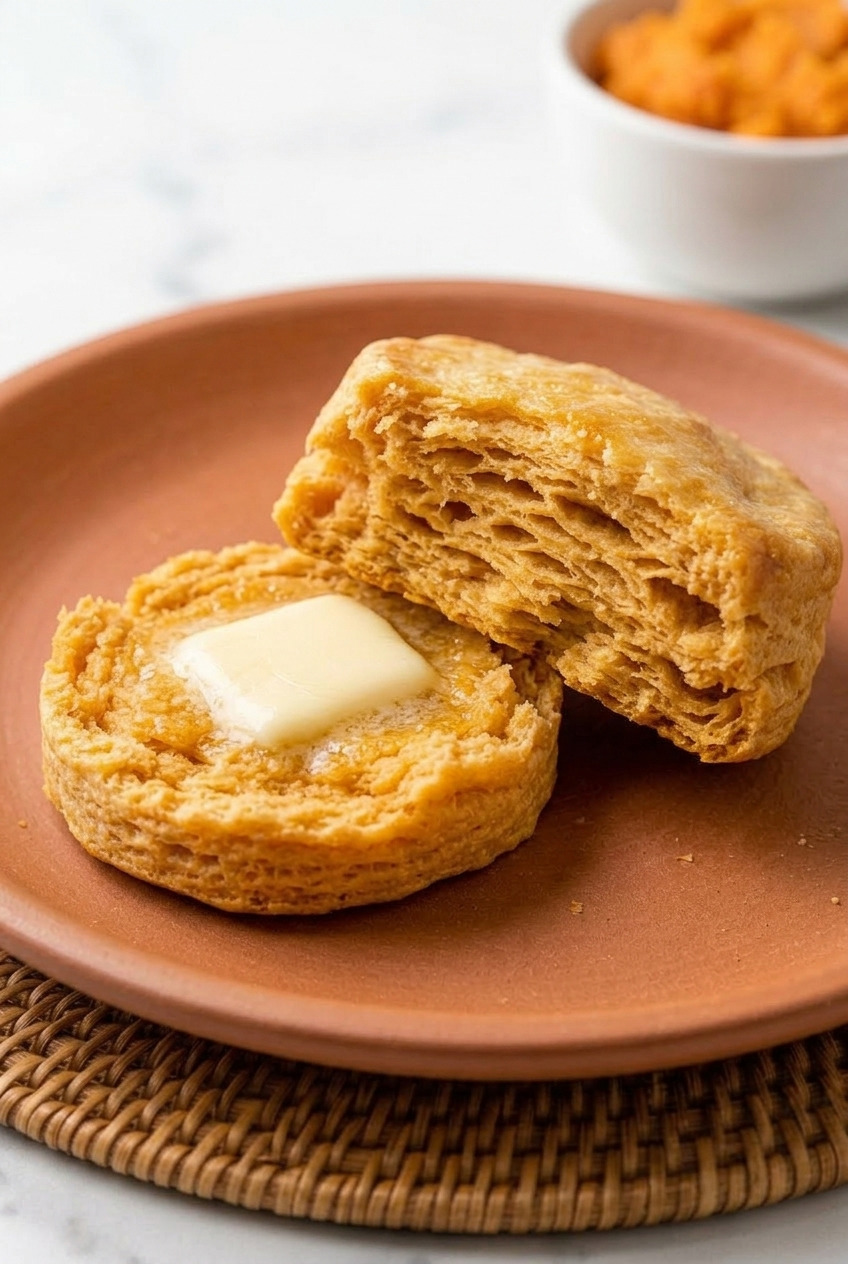
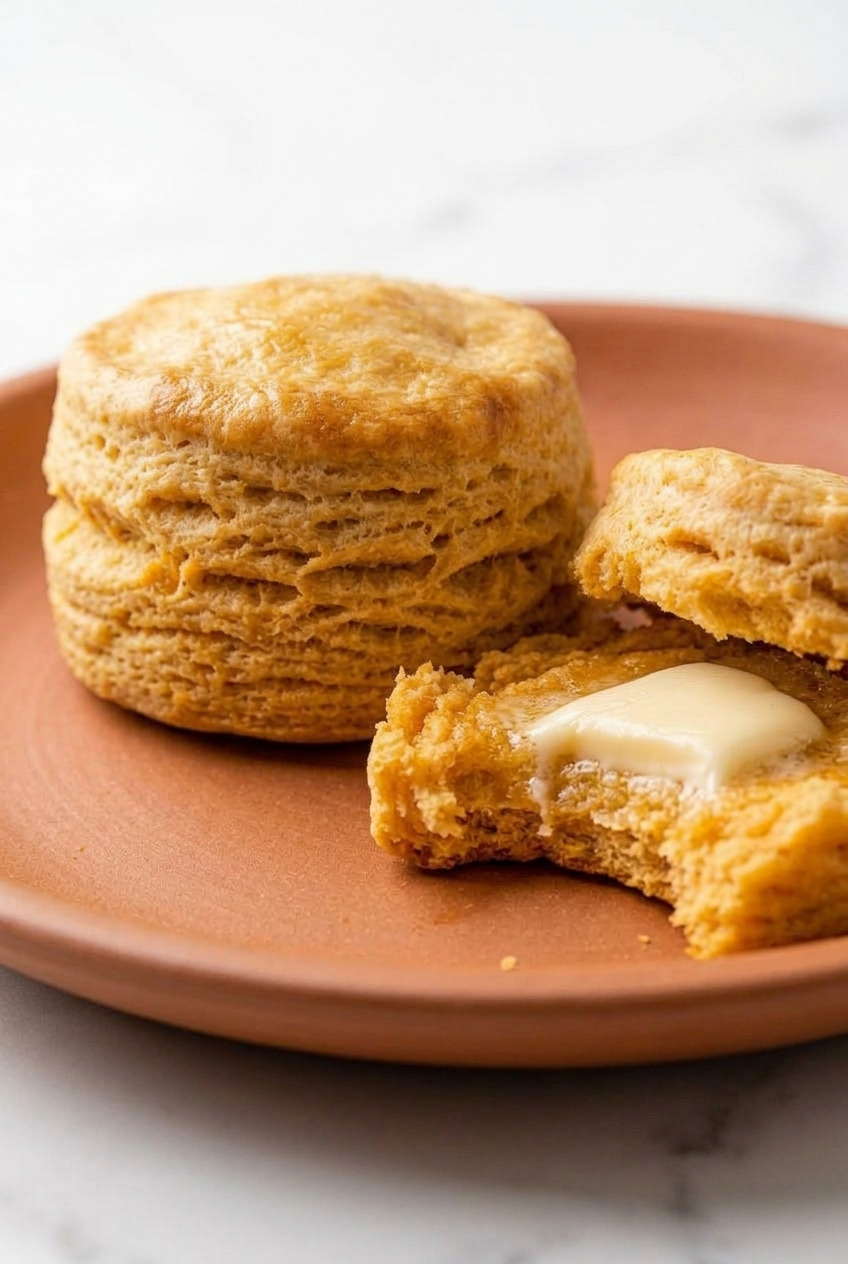
Split hot, a cold pat of butter dropped in the middle, a slice of salty country ham folded on top of that.
Orange, earthy, and savory enough to stand up to the ham instead of arguing with it.
So I cut the sugar down to one tablespoon and dropped the cinnamon entirely.
A whisper of nutmeg went in instead, just enough to keep things interesting.
And that's the version I make now, about once every two weeks.
The layers are the other half of the job.
Cold butter cut into the flour, two quick folds, and the dough comes out of the oven in sheets you can peel apart with your fingers.
No yeast, no rising time, no waiting around.
Thirty minutes from a cold sweet potato to a hot pan of biscuits.
Make them for a breakfast plate with eggs, or under a ladle of sausage gravy, and you'll see why I stopped making the sweet ones.
Why You'll Love This Recipe
These are built for butter and salt, not jam and powdered sugar. Everything about the recipe pushes in that direction on purpose.
- Real peelable layers. Two letter folds give you sheets that come apart in your fingers, not a soft round scone crumb.
- Savory by design. 1 tablespoon of sugar in the whole batch, and no cinnamon anywhere.
- Ready in 30 minutes. No yeast, no proofing, no overnight anything.
- One bowl and a counter. You don't need a mixer or a food processor for this.
- Uses up leftover sweet potato. Three quarters of a cup, which is roughly the awkward amount always left in my fridge.
- Freezes raw. Cut them, freeze them on a tray, and bake them straight from frozen on a morning you have nothing.
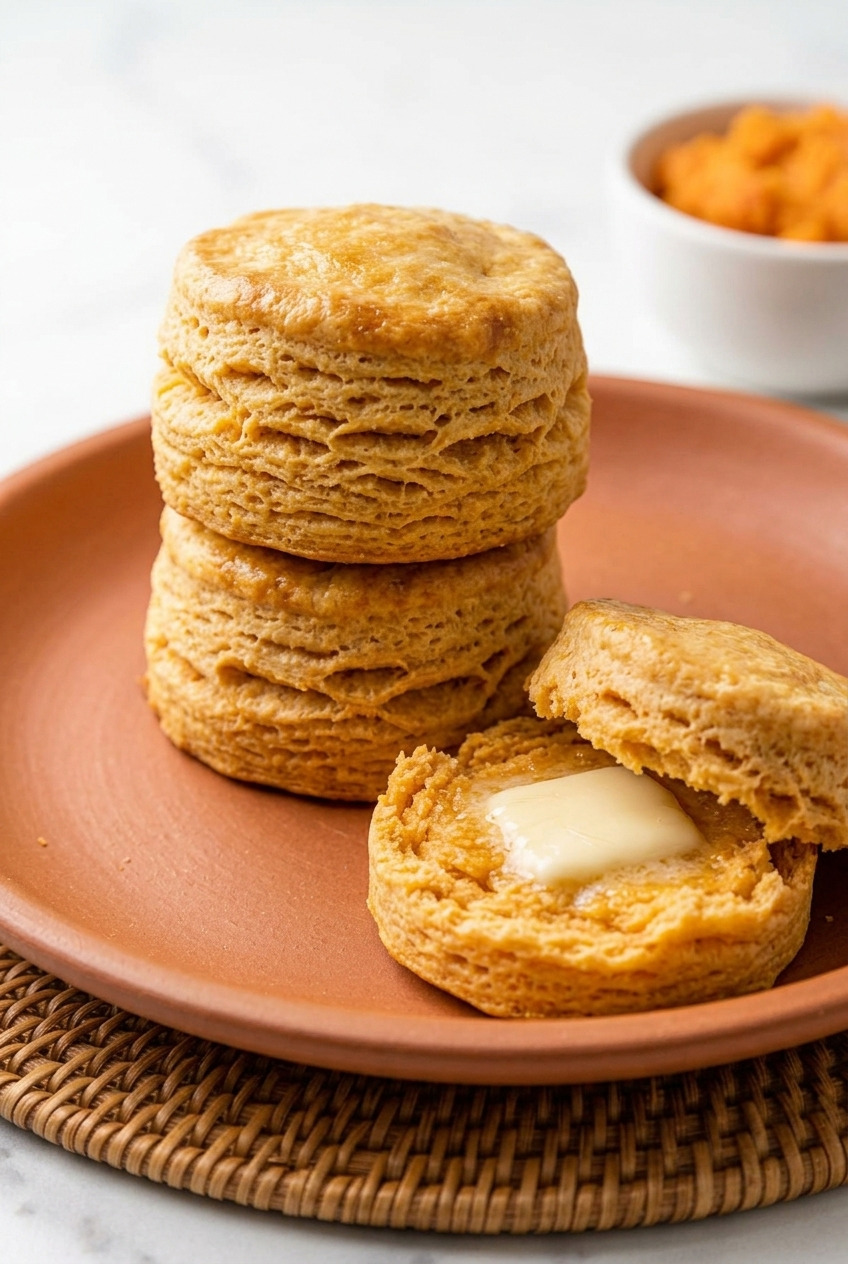
Savory, Not Sweet
Plenty of sweet potato biscuit recipes are effectively scones, and they're not hiding it. A quarter cup of sugar, a teaspoon of cinnamon, sometimes a glaze on top. That version is genuinely lovely with coffee and a spoonful of jam, and I'm not going to pretend otherwise.
Mine goes the other way.
1 tablespoon of sugar in the entire batch, purely to balance the salt and the baking powder.
An eighth of a teaspoon of nutmeg, which reads as warmth rather than dessert.
The sweet potato ends up tasting earthy, the way it does in a roasting pan next to a chicken.
That's the version that can carry country ham, sausage gravy, a fried egg, or a piece of fried chicken without the plate turning confusing.
Ingredients You'll Need
Ten ingredients and three of them are butter in different states. Temperature is the thing to pay attention to here, not the shopping list.
- All purpose flour (2 cups). Plus a little more for the counter. Standard flour is exactly right, no need for pastry flour.
- Baking powder (1 tablespoon). That's a lot on purpose. It's the entire lift in a biscuit with no yeast.
- Baking soda (½ teaspoon). Works with the acid in the buttermilk for extra rise and better browning.
- Fine salt (1 teaspoon). Savory biscuits need real salt. Don't cut this.
- Granulated sugar (1 tablespoon). Balance only.
- Ground nutmeg (⅛ teaspoon). A whisper. You should notice it and not be able to name it.
- Cold unsalted butter (½ cup). Cut into cubes. The cold pieces are what create the layers.
- Mashed roasted sweet potato (¾ cup), cold. Cold matters more than you'd think, and I explain why below.
- Cold buttermilk (½ cup). The tang keeps the sweet potato from reading sweet.
- Melted salted butter (1 tablespoon). Brushed on the second they come out.
Ingredient Notes and Substitutions
- Roasted vs. canned sweet potato. Roast it. 400°F for 45 minutes drives off water and concentrates flavor, and a drier mash makes a dough you can actually handle. Canned puree is wetter, so hold back 2 tablespoons of the buttermilk if you use it.
- Why the sweet potato must be cold. Warm potato melts the butter you just spent five minutes cutting in. Melted butter means no steam pockets, and no steam pockets means no layers. This is the single most important line in this article.
- No buttermilk? Put 1 ½ teaspoons of white vinegar or lemon juice in a measuring cup, top it to ½ cup with whole milk, and let it sit 5 minutes. Not identical, but close.
- Self rising flour. If that's what you have, use 2 cups of it and leave out the baking powder, baking soda and salt.
- Salted butter. Fine to use in the dough. Just drop the salt to ¾ teaspoon.
How to Make Sweet Potato Biscuits
Cold ingredients, fast hands, and a hot oven. Heat your oven to 425°F before you touch anything else.
Step 1: Roast and Chill the Sweet Potato
Roast 1 medium sweet potato at 400°F for 45 minutes, until it's completely soft.
Scoop the flesh out, mash it smooth, and measure ¾ cup.
Spread it on a plate and refrigerate until it's fully cold, at least 1 hour.
Pro tip: Do this two or three days ahead. It has to be cold anyway, so there's nothing to gain from doing it the same morning.
Step 2: Whisk the Dry Ingredients
In a large bowl, whisk the 2 cups flour, 1 tablespoon baking powder, ½ teaspoon baking soda, 1 teaspoon salt, 1 tablespoon sugar, and ⅛ teaspoon nutmeg.
Thirty seconds of whisking distributes the leavening properly and it's worth doing.
Step 3: Cut In the Cold Butter
Scatter the ½ cup cubed cold butter over the flour.
Cut it in with a pastry blender or your fingertips until the largest pieces are the size of peas.
Some pieces should still be visible and flat. Those are your layers.
Work fast so the heat from your hands doesn't soften them.
Step 4: Add the Sweet Potato and Buttermilk
Whisk the ¾ cup cold mashed sweet potato and ½ cup cold buttermilk together in a separate bowl until smooth.
Pour it into the flour and stir with a fork until a shaggy dough comes together.
Stop while it still looks rough and slightly dry.
If there's dry flour in the bottom of the bowl, add buttermilk 1 tablespoon at a time.
Step 5: Fold the Dough for Layers
Turn the dough onto a floured counter and pat it into a rough rectangle about ¾ inch thick.
Fold it in thirds like a letter.
Pat it out again and fold in thirds a second time.
Two folds and no more, then pat it to a final thickness of ¾ inch.
Step 6: Cut and Bake
Cut rounds with a 2 ½ inch cutter, pressing straight down and lifting straight up.
Do not twist the cutter.
Arrange them on a baking sheet with their sides touching and bake at 425°F for 14 to 16 minutes, until risen and golden on top.
Brush with the 1 tablespoon melted butter the moment the pan comes out.
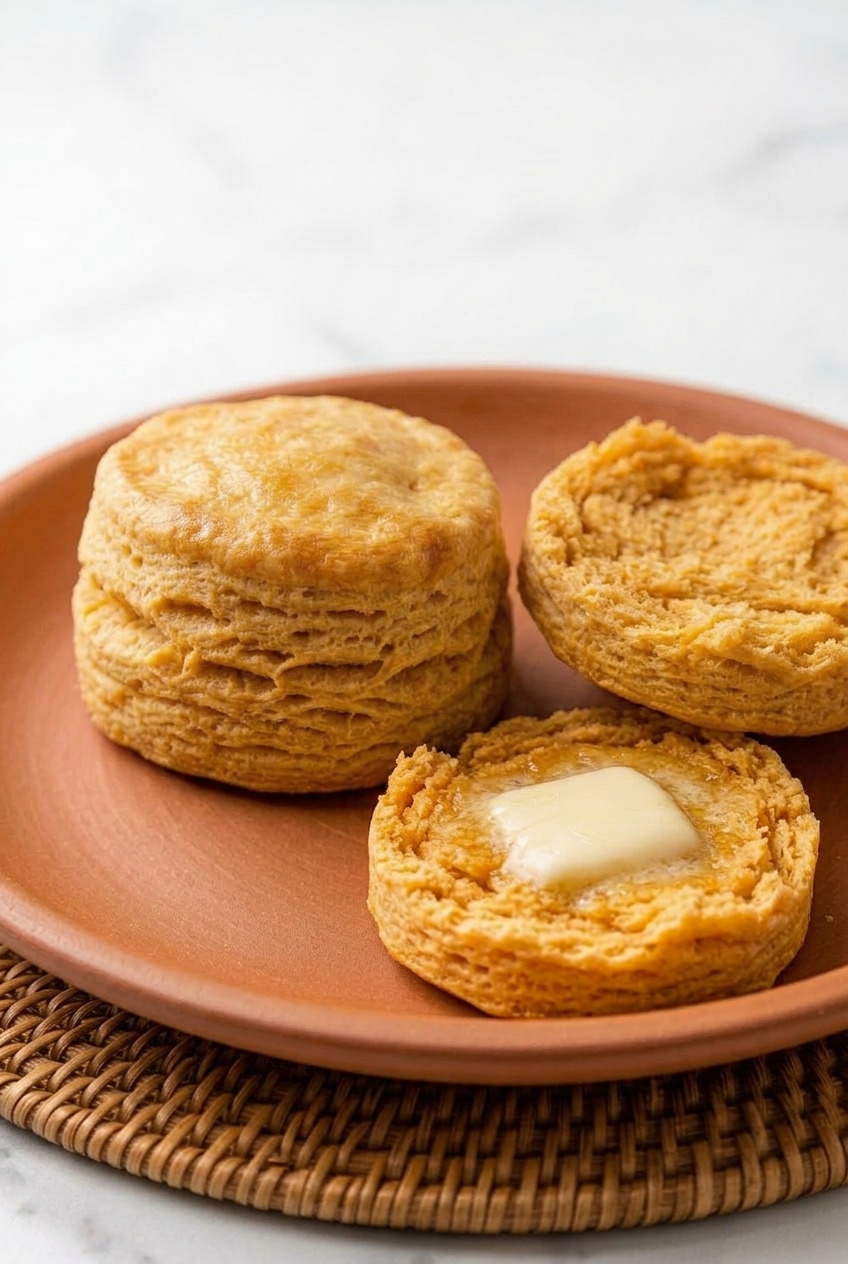
Expert Tips for Flaky Layers
Every one of these is about protecting the cold butter or the layers you built.
- Never twist the cutter. Twisting seals the cut edges together and the biscuit rises crooked and short. Straight down, straight up, every time.
- Two folds, no more. A third fold starts developing gluten and the biscuits toughen. You'll feel the dough change under your hands.
- Sides touching. Biscuits set close together climb by pushing against each other. Spread apart, they spread out.
- Keep everything cold. Butter, sweet potato, buttermilk, all cold. If the kitchen is warm, put the whole bowl in the fridge for 10 minutes before you fold.
- Butter them hot. Melted butter brushed on a cool biscuit sits on top. Brushed on a hot one it soaks in.
How to Serve Sweet Potato Biscuits
These are savory biscuits, so I serve them the way I'd serve any good Southern biscuit.
- Split with cold butter. The plainest option and still the best one. Cold butter into a hot split biscuit.
- Country ham. A thin salty slice folded inside. This is the pairing the whole recipe was built around.
- Sausage gravy. Split, laid open on the plate, ladled over. The sweet potato holds up under it beautifully.
- Fried chicken. Alongside, or as the bread on a sandwich with a pickle.
- A breakfast plate. Scrambled eggs and bacon, with the biscuit doing what toast usually does.
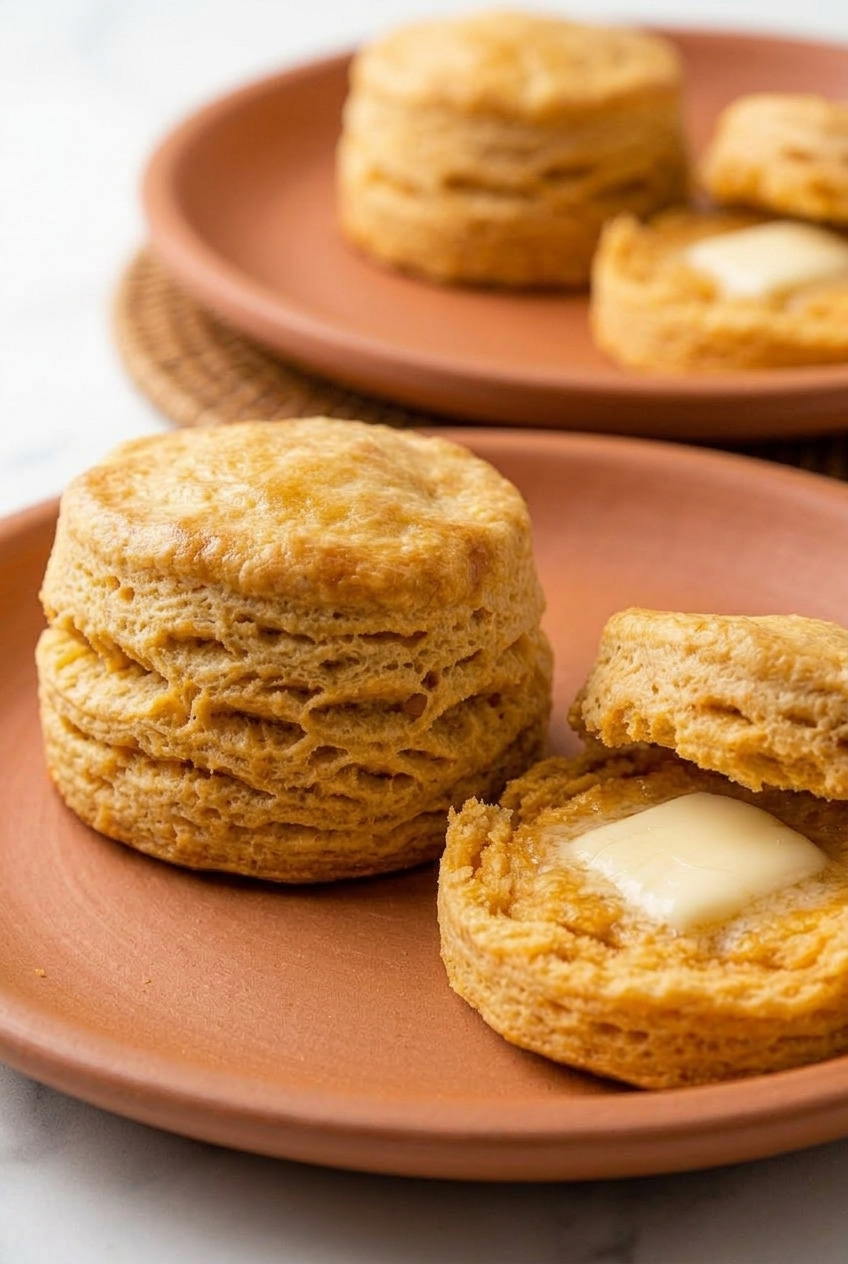
Make Ahead, Storage and Freezing
The freezer is where this recipe really earns its keep.
- Freeze them raw. Cut the biscuits, freeze them on a tray until solid, then bag them for up to 3 months. Bake straight from frozen at 425°F, adding 4 to 5 minutes.
- Baked biscuits. Airtight at room temperature for 2 days. They go stale faster than a regular biscuit because of the moisture in the potato.
- Reheating. 350°F for 6 minutes in the oven. A microwave turns them soft and slightly gummy, so I don't do it.
- The potato ahead. Roast and mash it up to 4 days early. It needs to be cold when it goes in, so this is free time saved.
- Not the dough. Mixed dough doesn't hold well overnight. The leavening starts working the moment the buttermilk hits it.
Recipe Variations
The savory base takes additions easily. Fold anything dry in at the end of step 3.
- Cheddar and black pepper. ¾ cup of grated sharp cheddar and ½ teaspoon of coarse black pepper. My favorite version by some distance.
- Fresh herbs. 1 tablespoon of chopped sage or thyme. Sage and sweet potato are a natural pair.
- Gluten free. A cup for cup gluten free blend works, using 2 ¼ cups and expecting a slightly more tender, less layered biscuit.
- Bacon. 4 slices cooked crisp and crumbled in with the dry ingredients.
Recipe FAQ
Are sweet potato biscuits sweet or savory?
They can be either, and the recipe decides. This one is savory: 1 tablespoon of sugar, no cinnamon, and a full teaspoon of salt. Recipes using a quarter cup of sugar and cinnamon are closer to a scone and are meant for jam.
Can I use canned sweet potato puree?
Yes, plain puree works. It's wetter than roasted and mashed, so hold back 2 tablespoons of the buttermilk and add it only if the dough is dry. Do not use sweet potato pie filling, which is already sweetened and spiced.
Why did my biscuits come out dense or flat?
Three usual causes. The butter or the sweet potato was too warm, the cutter got twisted, or the dough was overworked past two folds. Cold ingredients and a light hand fix all three.
Can I make the dough ahead or freeze the cut biscuits?
Freeze the cut biscuits raw, absolutely, and bake them from frozen with 4 to 5 extra minutes. Don't refrigerate mixed dough overnight, because the baking powder starts working as soon as the buttermilk goes in and you lose the rise.
What can I use instead of buttermilk?
Add 1 ½ teaspoons of white vinegar or lemon juice to a measuring cup, top up to ½ cup with whole milk, and rest it 5 minutes. Plain yogurt thinned with milk to a pourable consistency also works.
Why does the sweet potato need to be cold?
Because warm sweet potato melts the butter pieces you cut into the flour. Those solid butter pieces turn to steam in the oven and push the dough into layers. Melt them early and you get a soft, uniform biscuit instead.
What do you serve with sweet potato biscuits?
Cold butter, country ham, sausage gravy, fried chicken, or a plate of eggs and bacon. Anything salty. The savory build is what makes all of those work.
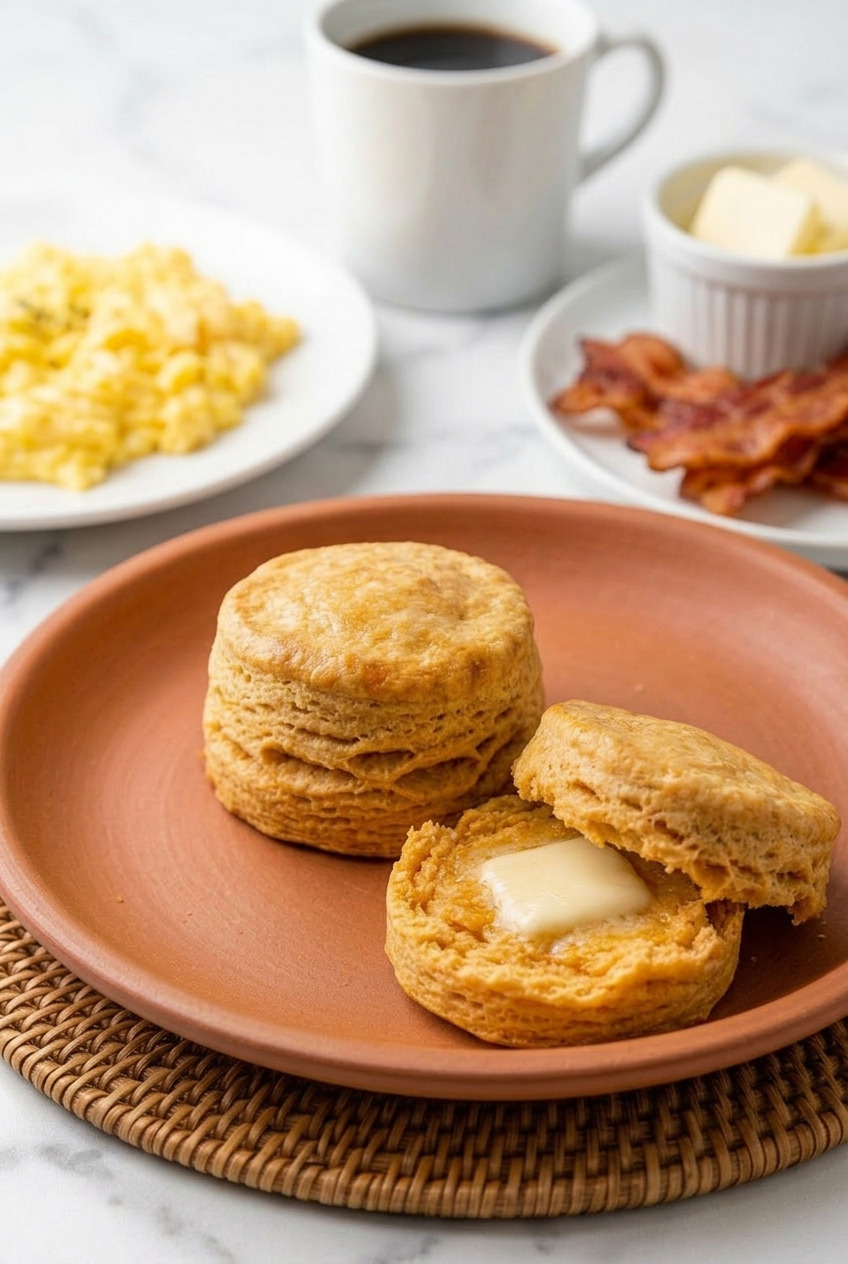
More Southern Recipes
A pan of biscuits is the fastest bread there is, and this is the one I make most. If you have a roasted sweet potato sitting in the fridge, you're already most of the way to a batch.
Make them once with ham and let me know how they went!
Recipe
Flaky Southern Sweet Potato Biscuits
Ingredients
Dry Ingredients
- 2 cups all purpose flour plus more for the counter
- 1 tablespoon baking powder
- ½ teaspoon baking soda
- 1 teaspoon fine salt
- 1 tablespoon granulated sugar
- ⅛ teaspoon ground nutmeg
Wet Ingredients
- ½ cup unsalted butter cold, cut into cubes
- ¾ cup mashed roasted sweet potato cold
- ½ cup buttermilk cold, plus more as needed
- 1 tablespoon salted butter melted, for brushing
Instructions
Prepare the Sweet Potato
- Roast 1 medium sweet potato at 400 degrees F for 45 minutes, until completely soft. Scoop out the flesh, mash it smooth and measure ¾ cup.
- Spread the mash on a plate and refrigerate at least 1 hour, until fully cold. This step can be done up to 4 days ahead.
Make the Dough
- Heat the oven to 425 degrees F. Whisk the flour, baking powder, baking soda, salt, sugar and nutmeg in a large bowl for 30 seconds.
- Scatter the cold cubed butter over the flour and cut it in with a pastry blender or your fingertips until the largest pieces are the size of peas. Some flat pieces should still be visible.
- Whisk the cold mashed sweet potato and cold buttermilk together until smooth, pour into the flour, and stir with a fork just until a shaggy dough forms. Add buttermilk 1 tablespoon at a time if dry flour remains.
Fold, Cut and Bake
- Turn the dough onto a floured counter and pat it into a rough rectangle ¾ inch thick. Fold it in thirds like a letter, pat it out again, and fold in thirds a second time. Do not fold more than twice.
- Pat the dough to a final ¾ inch thickness and cut rounds with a 2 ½ inch cutter, pressing straight down and lifting straight up without twisting.
- Arrange the biscuits on a baking sheet with their sides touching and bake 14 to 16 minutes, until risen and golden.
- Brush the tops with the melted salted butter as soon as they come out of the oven.
Notes
- Cold sweet potato: Warm mash melts the butter you cut in, and melted butter means no layers. Chill it fully.
- Never twist the cutter: Twisting seals the cut edge and the biscuit rises short and crooked.
- Two folds only: A third fold develops gluten and toughens the crumb.
- Freeze raw: Cut biscuits freeze for 3 months and bake from frozen with 4 to 5 extra minutes.
- Savory build: Only 1 tablespoon of sugar and no cinnamon, so these carry ham, gravy and eggs.