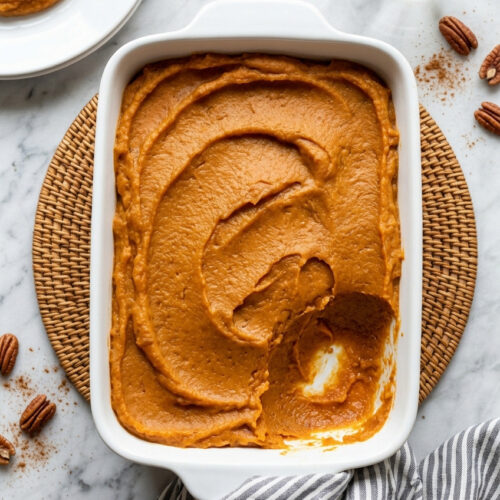
Somebody in my family brought the marshmallow casserole to every holiday dinner of my childhood.
You know the one.
Orange mush under a blanket of broiled marshmallows, sitting on the table next to the turkey like it belonged there.
I ate it because I was eight and it was basically dessert.
Then I turned about twenty and realized I had never actually wanted sweet potatoes to taste like a s'more.
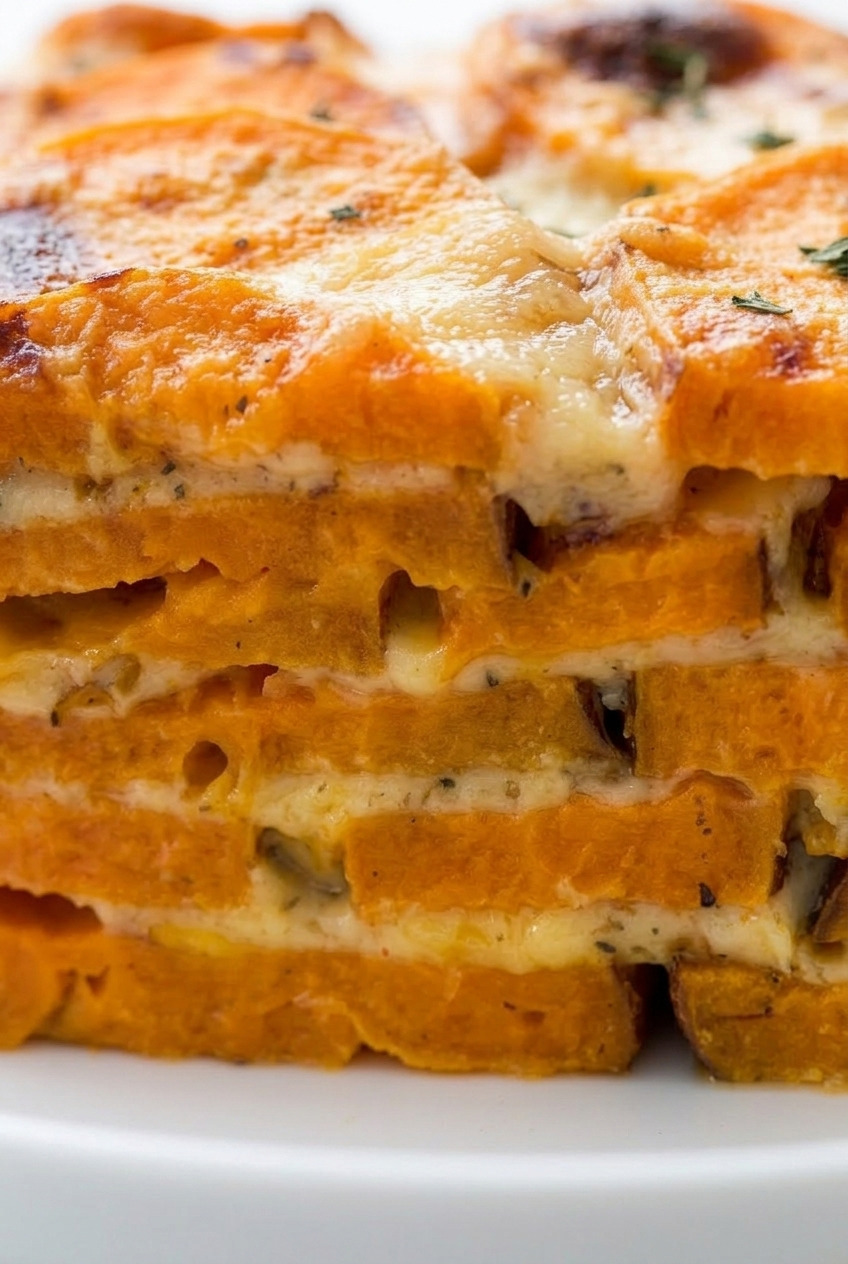
What I wanted was the thing happening two dishes over: the scalloped potatoes, all cream and cheese and browned edges.
So I made that, with sweet potatoes.
My wife has requested it every year since, which is the only review that matters in this house.
Here is where I part ways with almost every recipe you'll find for this dish.
They all reach for Gruyere.
Gruyere melts like a dream and I love it in a French onion soup, but in this pan it goes quiet, and sweet potatoes are not a quiet vegetable.
Sharp cheddar has the salt and the tang to push back.
You get savory instead of candied, and the sweetness reads as a background note rather than the whole point.
Thin slices, garlicky cream, a lot of cheddar, and an hour in the oven.
Make it once and the marshmallows never come back.
Why Sharp Cheddar and Not Gruyere
Sweet potatoes need a cheese with an argument in it. That is the whole reason this recipe exists.
Gruyere is the default across nearly every sweet potato gratin out there, and it earns that reputation honestly. It melts smooth, it never breaks, and it tastes nutty and polite.
Polite is the problem.
Sweet potato flesh is roughly twice as sweet as a russet, and a mild nutty cheese just sits alongside that sweetness instead of cutting it.
Sharp cheddar brings acid and salt. Aged at least nine months, it has a tang that lands on your tongue right after the sweetness does, and the two of them balance out.
Want both? Use 6 ounces of sharp cheddar and 2 ounces of Gruyere. You keep most of the flavor and pick up a little extra melt.
Grate it from a block. Bagged shredded cheese is dusted with potato starch or cellulose to stop it clumping, and that coating turns grainy in a cream sauce. It takes two minutes on a box grater and it is the difference between silky and sandy.
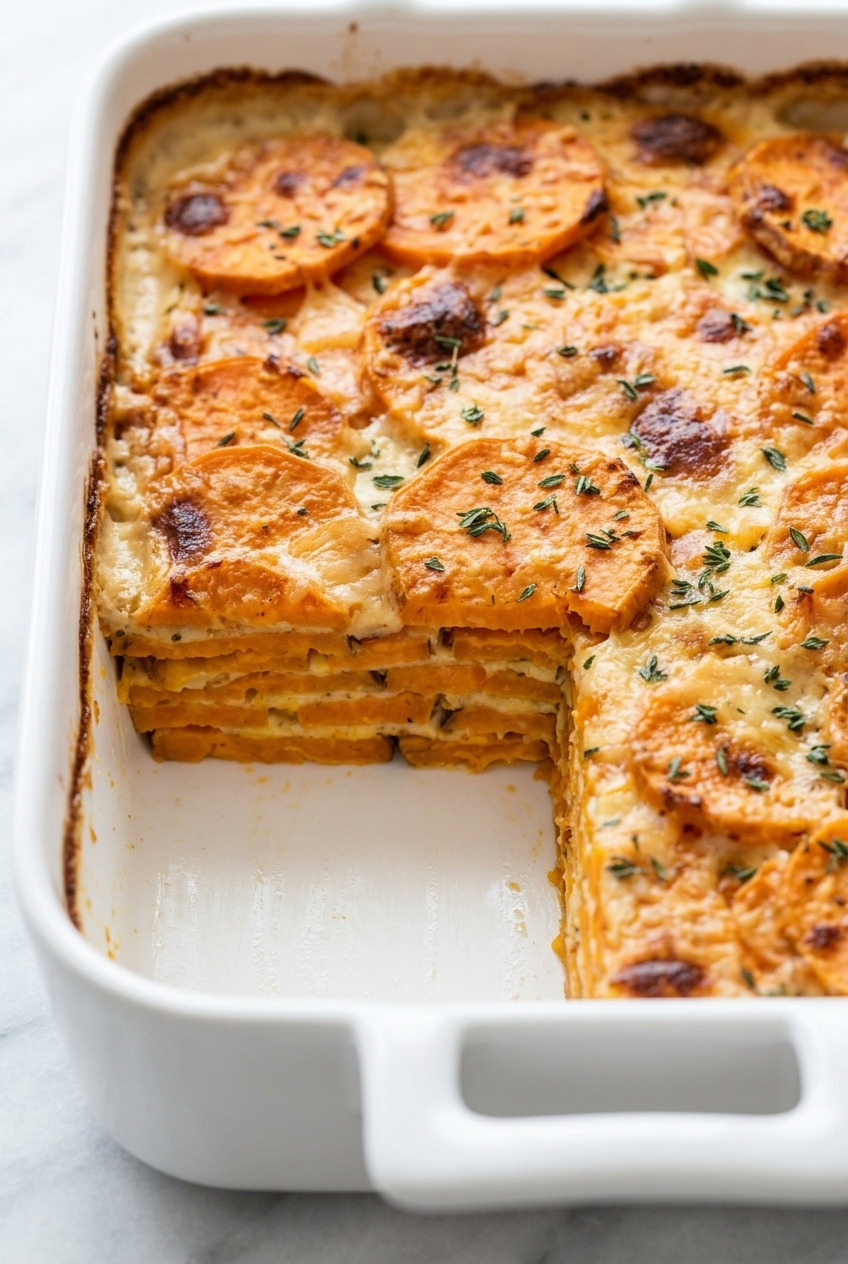
Ingredients
For the Gratin
- Sweet potatoes (2 ½ lbs, about 3 large). Look for the orange-fleshed ones labeled garnet or jewel. Peel them. The skin goes leathery in a cream bake and nobody enjoys finding it.
- Heavy cream (1 ½ cups). Not half and half, not milk. Fat is what keeps the dairy from splitting against the acid in the cheddar. This is the one ingredient I will not let you swap.
- Garlic (3 cloves, minced). It goes into the cream and warms through, so the flavor spreads evenly instead of showing up in hot pockets.
- Fresh thyme (1 tablespoon, chopped). The herb that shows up in almost every version of this dish, and for good reason. It is woodsy and it keeps the pan from tasting like a dessert.
- Freshly grated nutmeg (⅛ teaspoon). A small amount. You should not be able to name it in the finished dish, only notice that something is holding it together.
- Kosher salt (1 ½ teaspoons) and black pepper (¾ teaspoon). Seasoned between the layers, not just dumped on top. More on that below.
- Sharp cheddar (8 oz, grated, about 2 cups). Nine months aged or older. White or orange, your call, though orange cheddar and orange sweet potato make for a very monochrome pan.
- Parmesan (½ cup, finely grated). This is the top crust. Parmesan browns harder and drier than cheddar does, so it gives you those crisp, blistered patches on the surface.
- Unsalted butter (1 tablespoon). For the dish. Butter, not spray.
Substitutions
- Half and half. It works, but the sauce is thinner and more likely to look curdled at the edges. If you go this route, toss the slices with 1 tablespoon of flour first.
- Gruyere blend. Covered above. Keep cheddar in the majority or you have lost the point.
- Dried thyme. Use 1 teaspoon and add it to the cream so it rehydrates.
- No Parmesan. Hold back ½ cup of the cheddar for the top instead. It will brown softer and darker, which is fine.
How to Slice Sweet Potatoes for a Gratin
Even beats thin every single time. This is the step that decides whether your gratin is good or a disappointment, and it happens before any heat is involved.
You want ⅛ inch slices.
A mandoline gets you there in about four minutes and every slice comes off identical. If you own one and it has been in a cupboard since you bought it, this is the dish that justifies it.
No mandoline? Cut a thin slab off one long side of each potato so it sits flat and stops rolling, then work slowly with your sharpest knife.
Slices that vary by a lot will finish at wildly different times. Some go to mush while others stay firm, and you get a pan with no single texture.
Do NOT soak the slices in water. This is standard advice for regular potato dishes and it is wrong here. That surface starch is doing real work, thickening the cream as the gratin bakes. Rinse it away and you get a soupy pan.
Slice them right before you assemble and you will not have time to worry about browning.
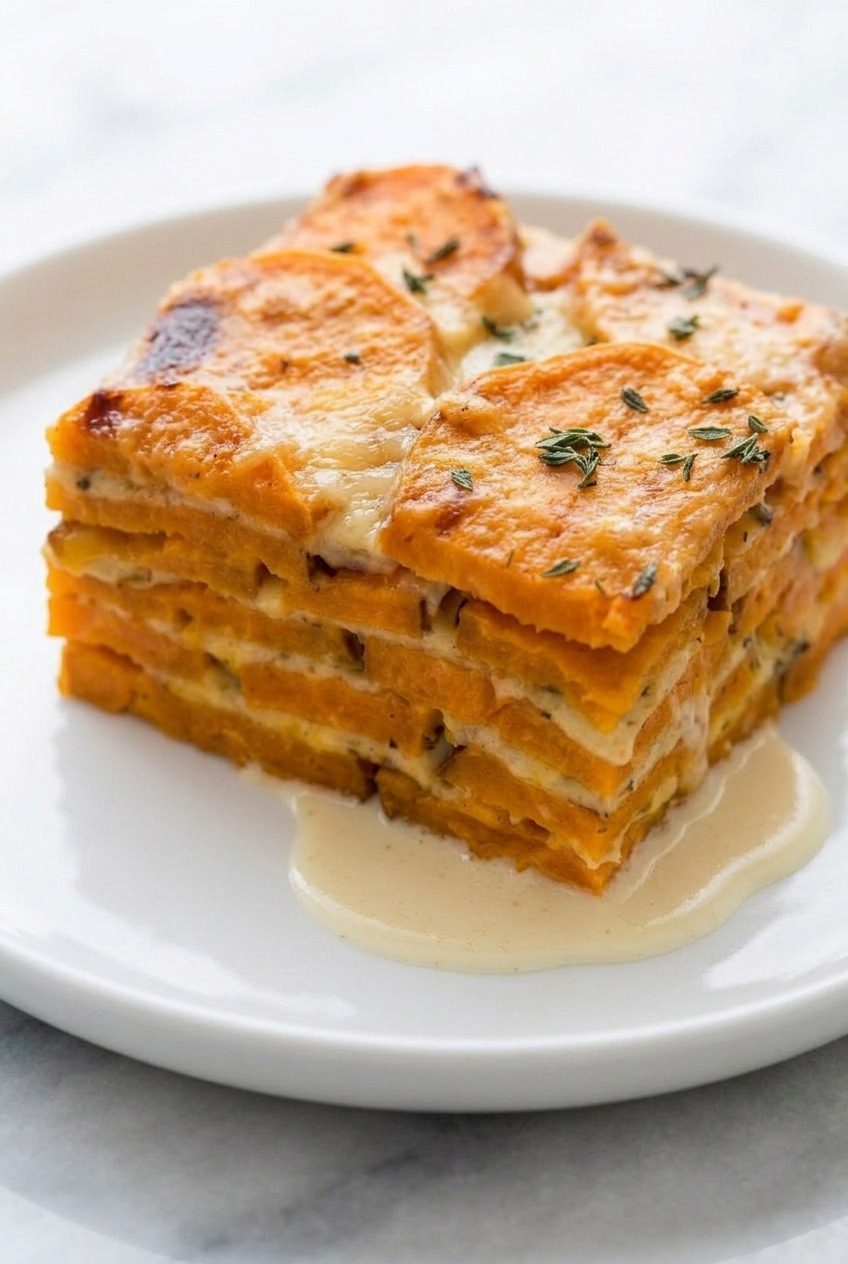
How to Make Sweet Potato Au Gratin
Step 1: Infuse the Cream
Put the cream, garlic, thyme, nutmeg, salt, and pepper in a small saucepan over medium-low heat.
Bring it just to the edge of a simmer, about 4 minutes, then pull it off.
You are not cooking anything. You are giving the garlic time to soften and let go of its flavor so it spreads through the whole pan.
Step 2: Layer and Season
Butter a 9x13 inch baking dish.
Shingle a third of the slices across the bottom, overlapping them like fallen dominoes.
Scatter a third of the cheddar over them, then a small pinch of salt and pepper.
Repeat twice more, finishing with cheddar.
Season every layer. Salt on top only seasons the top, and the middle of the dish tastes flat no matter how good the cream is.
Step 3: Pour and Press
Pour the warm cream slowly and evenly over the whole surface.
Then press the stack down firmly with your palms.
The slices settle, the air pockets collapse, and the cream works down to the bottom layer instead of sitting on top like a puddle.
Step 4: Bake Covered, Then Uncover
Cover tightly with foil and bake at 375°F for 40 minutes.
Pull the foil, scatter the Parmesan over the top, and bake another 20 to 25 minutes until the surface is browned in patches and the cream is bubbling at the edges.
The covered stage steams the sweet potatoes tender. Skip it and the top burns while the middle is still crunchy.
Step 5: Rest Before Serving
Let it sit on the counter for 15 minutes.
Cutting into it straight from the oven is the most common mistake with this dish, and it is an easy one to fix by doing nothing at all.
The cream is still liquid at that point. Fifteen minutes and it sets into something you can lift out in a clean square instead of a slumping spoonful.
Four Mistakes That Ruin a Gratin
- Uneven slices. Covered above, and it is the biggest one. A pan of mixed thicknesses cannot cook evenly no matter what you do to the oven.
- Low fat dairy. Milk, half and half, and evaporated milk all carry less fat, and less fat means the proteins tighten and separate under a long bake. You get a curdled, grainy pan. Heavy cream will not do that.
- Baking uncovered the whole way. Sweet potatoes need moist heat to go tender. An uncovered pan dries the surface and browns it long before the bottom layer softens.
- Cutting in immediately. Fifteen minutes of patience is the difference between a clean serving and a puddle.
Au Gratin vs Scalloped Sweet Potatoes
Cheese is the entire difference. Au gratin means cheese in the layers and a browned crust on top, from the French gratiner, to brown under heat.
Scalloped means the same sliced potatoes baked in cream with no cheese at all.
Almost every American recipe blurs the two, and honestly nobody at your table will correct you. This one has two cheeses in it, so it is a gratin by any definition.
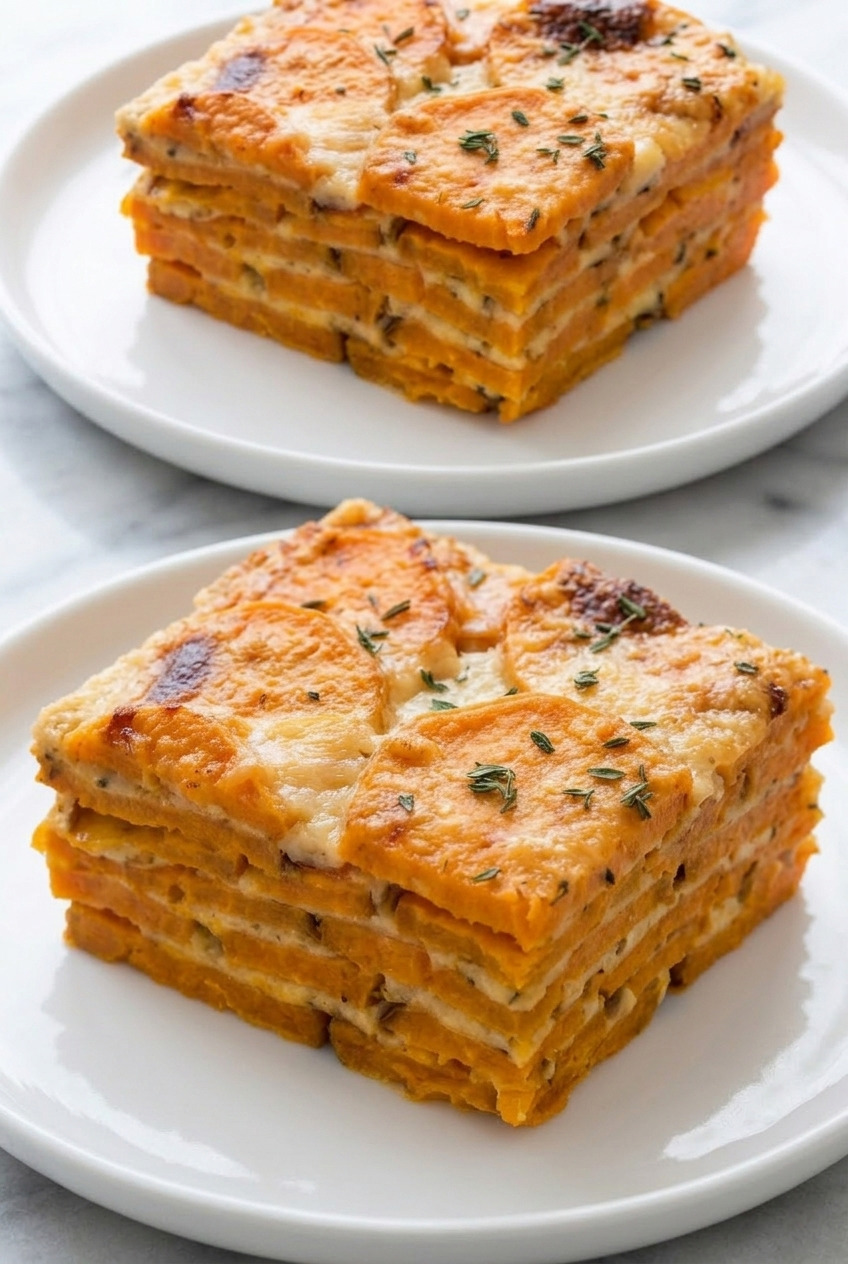
Make It Ahead
You can assemble the whole thing up to 24 hours before it bakes. This is a holiday side dish, and holiday ovens have a queue.
Build it through Step 3, cover tightly, and refrigerate.
Add 10 to 15 minutes to the covered bake, because it goes in cold.
Fair warning: the sliced sweet potato will darken a little overnight where it meets air. The cream covers most of it and the cheese covers the rest, so by the time it comes out of the oven you will never know.
Storage and Reheating
- Refrigerator. Covered, up to 4 days. It slices more cleanly cold than warm, which is useful for portioning.
- Reheating. Covered with foil at 325°F for 20 to 25 minutes. Low and covered, so the cream warms without breaking. The microwave works for a single serving but the top goes soft.
- The leftover move. Cut cold squares, crisp them in a skillet with a little butter until both faces are browned, and put a fried egg on top. That is the best breakfast this dish produces and I make more than I need just to get there.
- Freezing. I will be straight with you: it is the weakest option. Sweet potatoes hold more water than russets and they go grainy and weepy after a freeze. Eat it within the four days instead.
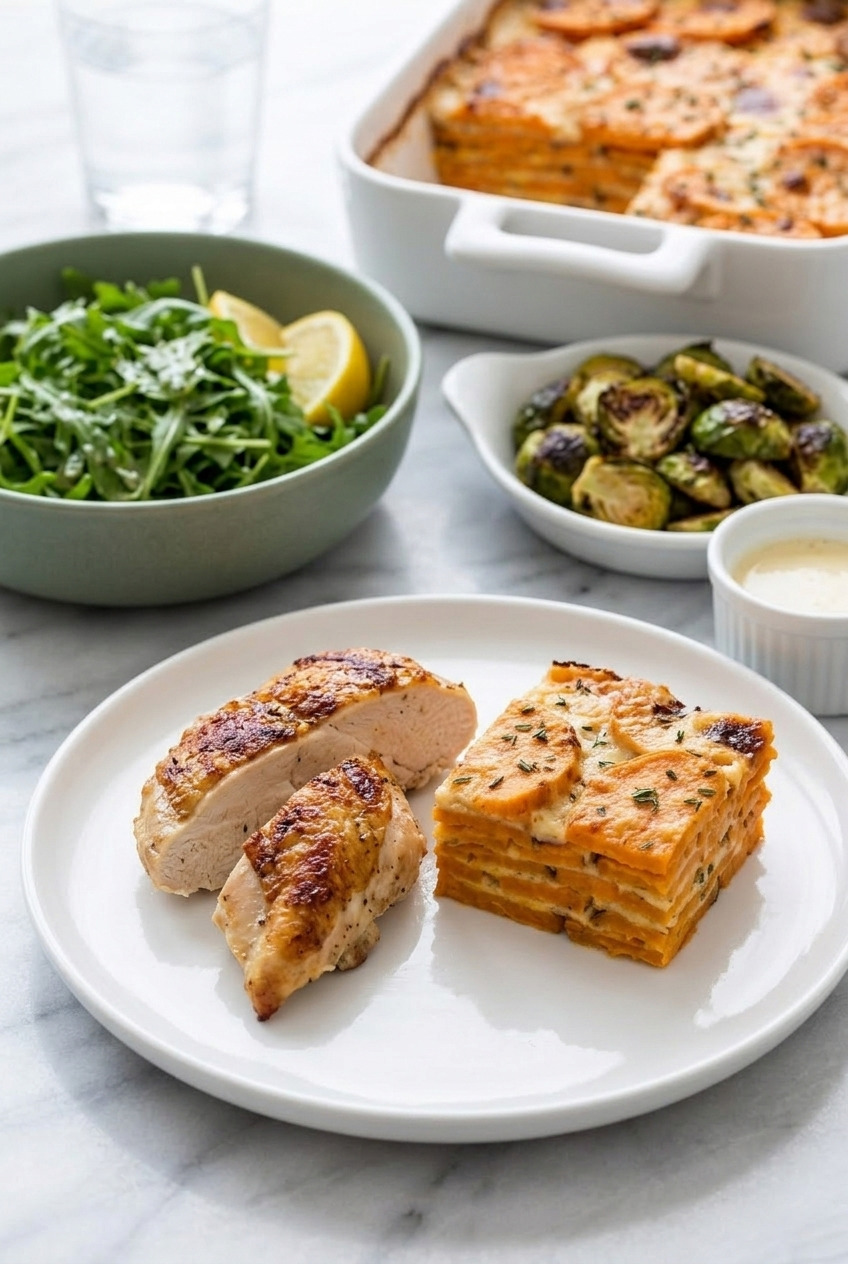
What to Serve With It
- Roast chicken. The everyday pairing. A simple bird, this pan, and something green is a full dinner.
- Pork loin or pork chops. Pork and sweet potato is a classic pairing and the cheddar keeps it from getting too sweet.
- Baked ham. The holiday version. Salty ham against the cream is hard to beat.
- Something sharp and green. An arugula salad with lemon, or roasted Brussels sprouts with vinegar. This is a rich pan and it wants acid nearby.
Who doesn't love a side dish that people fight over?
This one goes on my holiday table every year now, and the marshmallow casserole has not been invited back once.
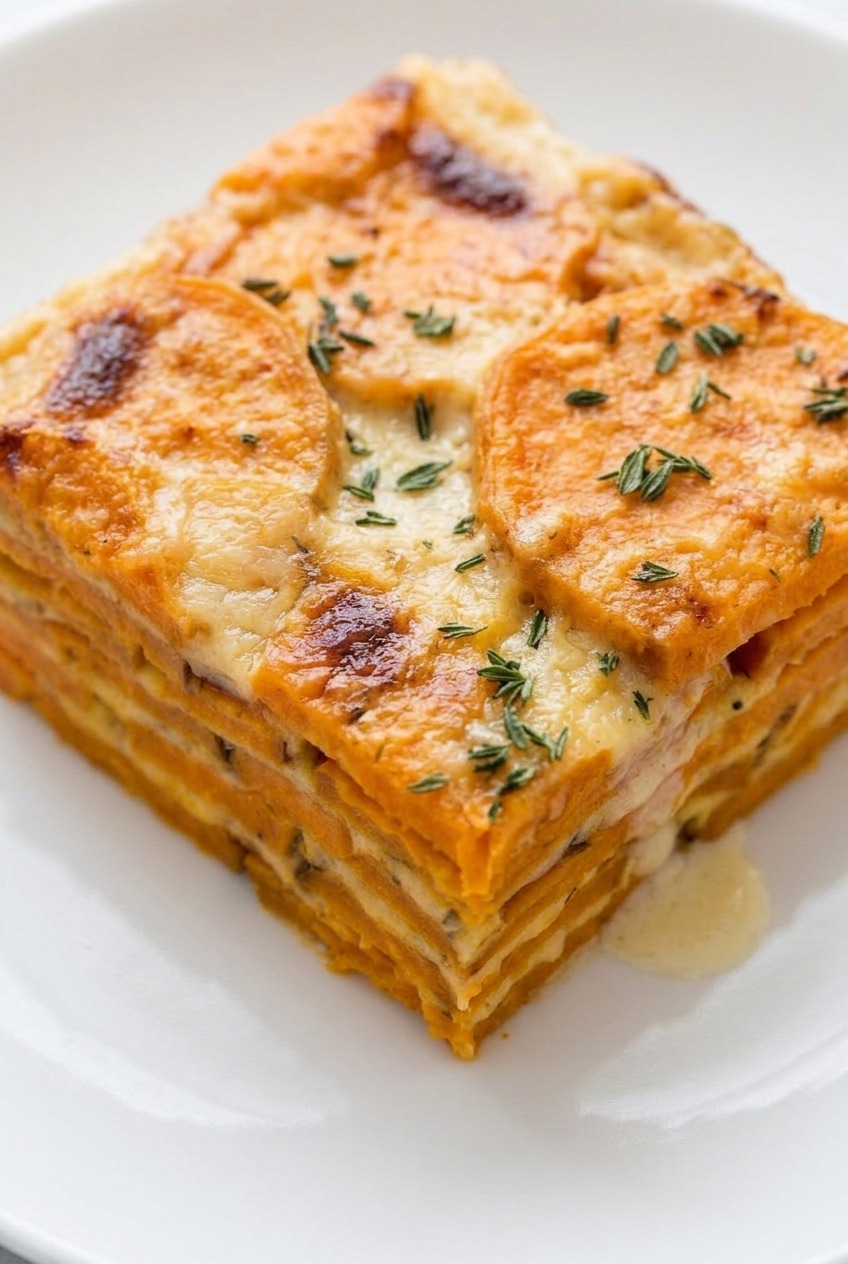
Recipe
Sweet Potatoes Au Gratin With Sharp Cheddar
Ingredients
For the Gratin
- 2 ½ lbs sweet potatoes peeled and sliced ⅛ inch thick
- 1 ½ cups heavy cream
- 3 cloves garlic minced
- 1 tablespoon fresh thyme leaves chopped
- ⅛ teaspoon freshly grated nutmeg
- 1 ½ teaspoons kosher salt
- ¾ teaspoon black pepper
- 8 oz sharp cheddar grated from a block, about 2 cups
- ½ cup Parmesan finely grated
- 1 tablespoon unsalted butter for the dish
Instructions
Prep
- Heat the oven to 375F and butter a 9x13 inch baking dish.
- Peel the sweet potatoes and slice them ⅛ inch thick, ideally on a mandoline. Do not soak the slices in water.
- Grate the cheddar from a block and finely grate the Parmesan. Keep them in separate bowls.
Infuse the Cream
- Combine the cream, garlic, thyme, nutmeg, salt, and pepper in a small saucepan over medium-low heat.
- Bring it just to the edge of a simmer, about 4 minutes, then take it off the heat.
Layer and Bake
- Shingle a third of the sweet potato slices across the bottom of the dish, overlapping them. Scatter a third of the cheddar over the top with a small pinch of salt and pepper.
- Repeat twice more, finishing with a layer of cheddar.
- Pour the warm cream evenly over the surface, then press the whole stack down firmly with your palms so the cream reaches the bottom layer.
- Cover tightly with foil and bake for 40 minutes.
- Remove the foil, scatter the Parmesan over the top, and bake uncovered for another 20 to 25 minutes, until browned in patches and bubbling at the edges.
- Rest on the counter for 15 minutes before serving so the cream sets.
Notes
- Grate your own cheese: bagged shredded cheddar is coated in starch and turns grainy in cream. Use a block.
- Heavy cream only: milk and half and half carry less fat and are much more likely to curdle over a long bake.
- Even slices matter more than thin slices: mixed thicknesses cook at different rates and you lose the texture.
- Make ahead: assemble up to 24 hours in advance, refrigerate covered, and add 10 to 15 minutes to the covered bake.
- Leftovers: crisp cold squares in a buttered skillet and top with a fried egg.