My grandmother owned exactly one serving trick and she deployed it every November.
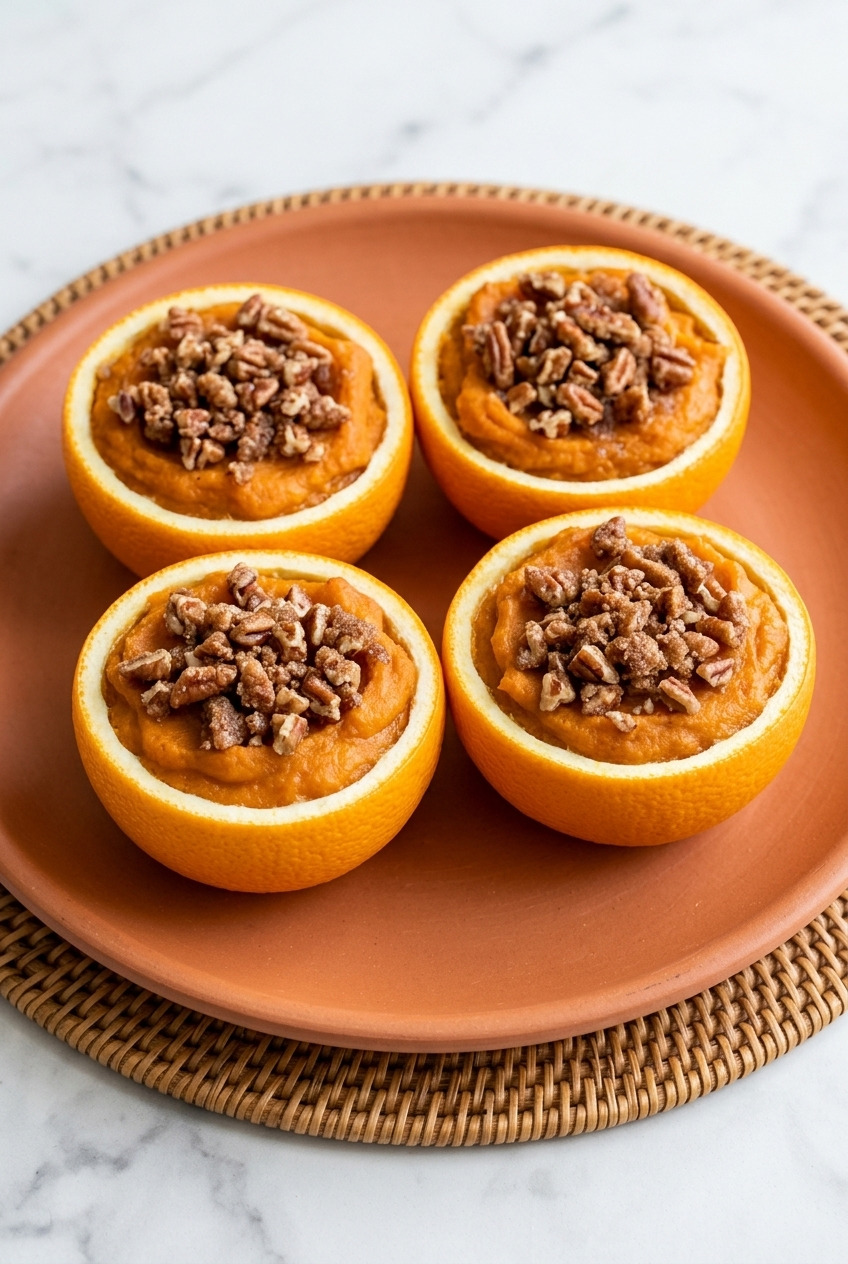
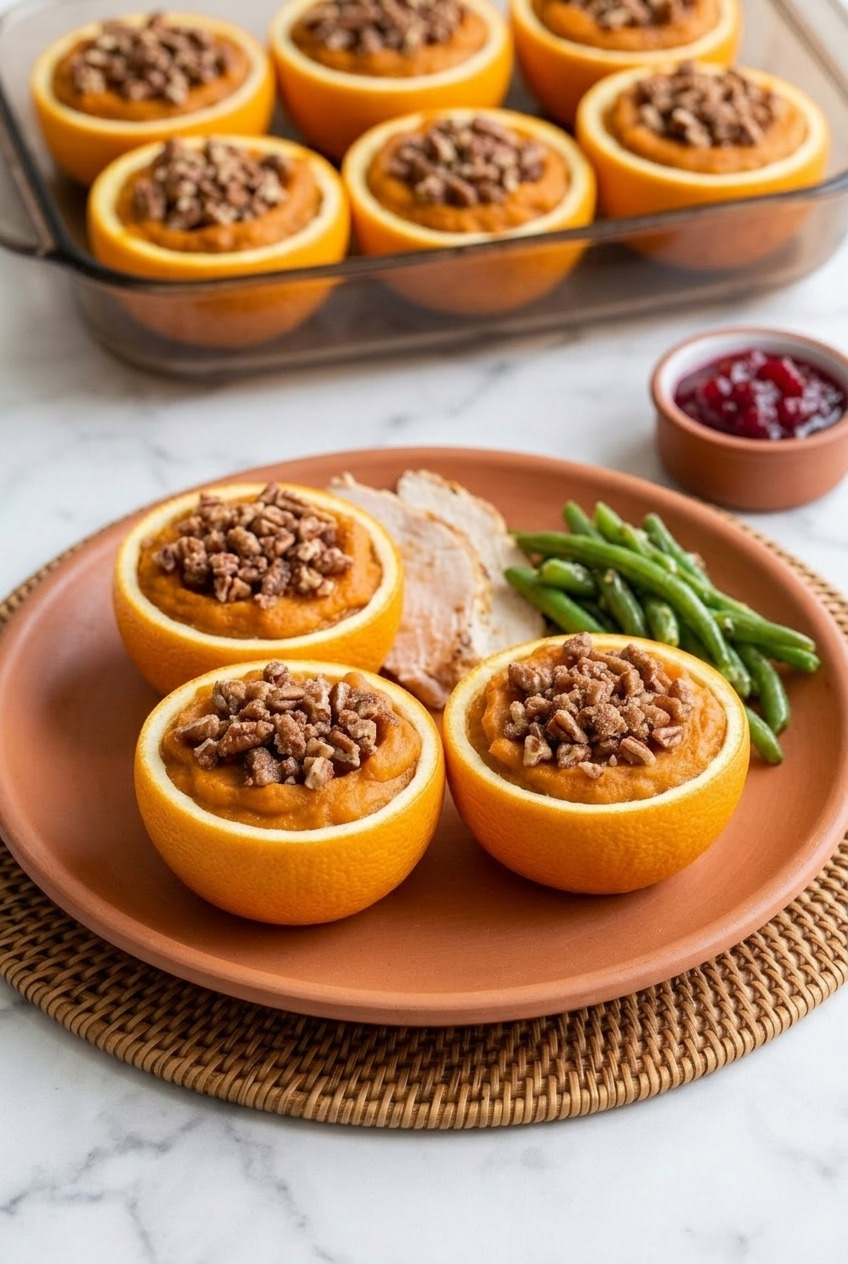
Orange halves, scraped clean, filled with sweet potato, lined up on a battered sheet pan.
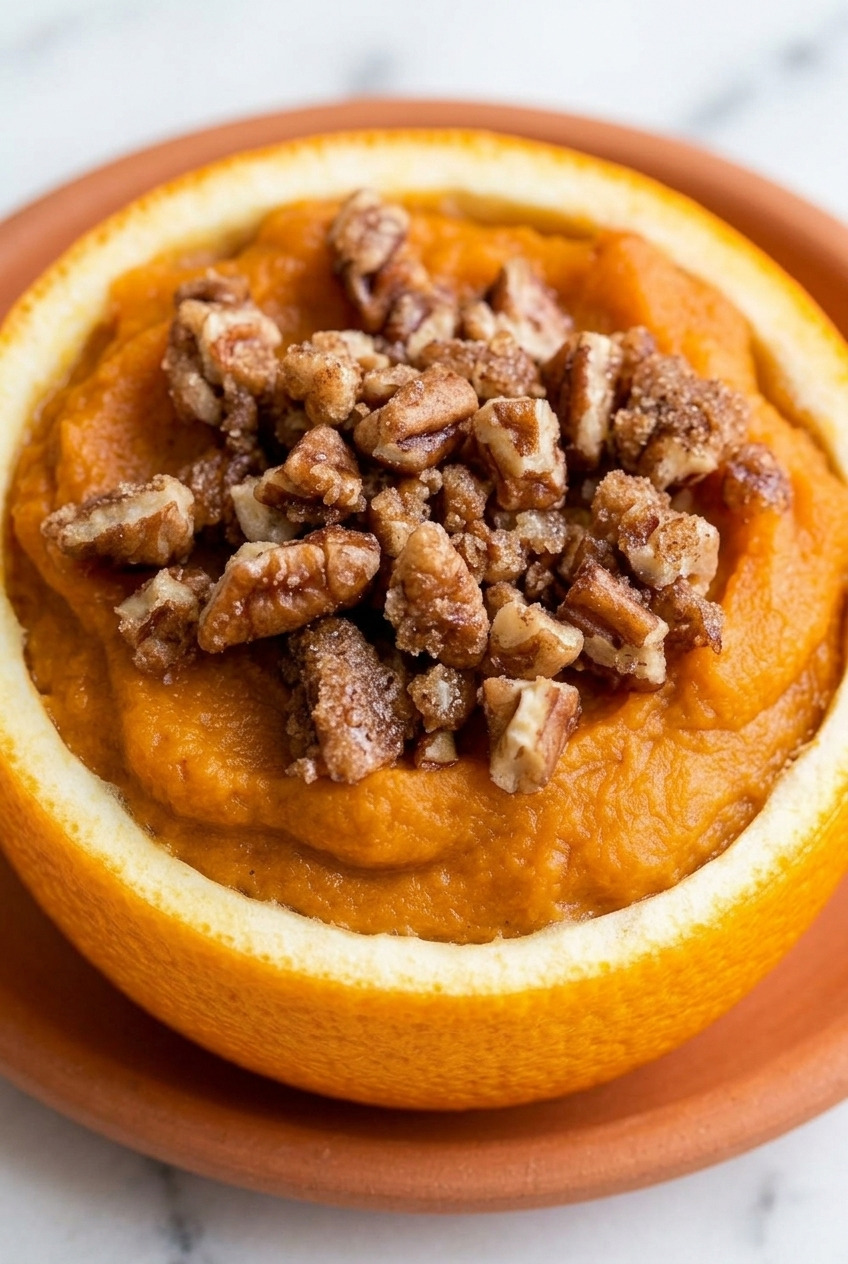
She called them cups and nobody in the family ever called them anything else.
I thought they were the height of sophistication when I was eight.
They are not sophisticated. They are a party trick from about 1958 and I am going to be honest with you about that.
What I will also tell you is that the trick works, and not only because it looks good on a crowded table.
The shell does something.
Fresh juice from the scooped fruit goes into the filling, and then the peel sits around it for forty minutes in a hot oven while the oils in it warm and perfume everything they touch.
You cannot get that flavor by squeezing juice into a baking dish.
I make eight of these every holiday and they are gone before the turkey comes around a second time.
My wife's job is hollowing the oranges, which she claims is the worst assignment at the entire meal.
She is right, so I am giving you the method that makes it fast.
Cut across the middle, score the inside edge, work a spoon under the membrane in one piece.
Do that and the shells come out clean every time!
Why Bake It In an Orange
The shell is not a gimmick, it is an ingredient. Or at least it is both, and I am comfortable admitting the first part.
- Flavor from the peel. Citrus oils in the pith and skin warm as the cups bake and carry into the filling from the outside in.
- Fresh juice, right there. You scoop out the fruit anyway, so 3 tablespoons of real orange juice costs you nothing.
- Built-in portion control. One cup per person. Nobody is negotiating with a serving spoon over a shared dish.
- It travels. Individual portions sit still in a baking dish, which is more than I can say for a wobbly casserole in a car.
- Yes, it looks good. A tray of these gets a reaction and I have never once pretended otherwise.
Ingredients You'll Need
Three short lists. The shells, the filling, the pecan topping.
For the shells
- Navel oranges (4 large). Navels, specifically. They have thick sturdy peel that holds its shape in the oven, and no seeds to fight. Thin-skinned juicing oranges collapse.
For the filling
- Sweet potatoes (3 medium, about 2 pounds). Baked whole, never boiled. Boiling waterlogs them and a wet filling slumps inside the shell.
- Unsalted butter (4 tablespoons), softened. Richness, and it helps the filling set as it cools.
- Light brown sugar (⅓ cup), packed. Enough to sweeten without turning this into candy. The potato is already sweet.
- Fresh orange juice (3 tablespoons). From the fruit you just scooped out. Bottled juice tastes flat next to the peel it is sitting in.
- Heavy cream or half and half (2 tablespoons). The texture lever. Add it slowly and stop when the filling is soft and spoonable.
- Egg (1 large). This is what gives the filling a light set instead of leaving it a loose mash.
- Vanilla extract (½ teaspoon).
- Kosher salt (½ teaspoon). Undersalted sweet potato tastes like nothing. Do not skip this.
- Ground cinnamon (¼ teaspoon). A whisper. The orange is the flavor here, not the spice rack.
For the cinnamon pecan topping
- Chopped pecans (¾ cup). Chopped, not halves. Halves slide off the mound when someone picks up the cup.
- Light brown sugar (¼ cup), packed.
- Unsalted butter (2 tablespoons), melted. Melted butter clumps the topping together so it stays where you put it.
- Ground cinnamon (½ teaspoon).
- Salt (a pinch). It sharpens the sugar.
How to Hollow the Oranges
This is the step that decides whether the recipe works. A torn shell leaks, and a leaking shell scorches on the pan.
Step 1: Cut across the equator
Slice each orange in half through its middle, not through the stem end.
Cutting across the equator gives you two wide, shallow bowls. Cutting through the poles gives you two deep, narrow ones that are miserable to fill and worse to eat from.
Step 2: Score the inside edge
Run a small paring knife around the inside of the peel, right where the fruit meets the white pith, going about a quarter inch deep.
Then cut across the segments twice, like a plus sign.
You have just cut every attachment point the fruit has.
Step 3: Spoon it out in one piece
Slide a sturdy spoon between the fruit and the pith and work it all the way around.
The whole thing should lift out in a single dome.
Squeeze the scooped fruit over a strainer for your 3 tablespoons of juice and eat whatever is left.
Step 4: Flatten the base
Take the thinnest possible slice off the bottom of each shell so it sits level.
Careful here: shave the peel, do not cut through it. A hole in the base means filling on your baking sheet.
If a shell does tear, keep it. It becomes the one you eat in the kitchen.
How to Make the Filling
Bake the potatoes, do not boil them. This is the single biggest difference between a filling that holds a mound and one that puddles.
Prick the sweet potatoes all over with a fork and bake them at 400°F for 50 to 60 minutes, until a knife meets no resistance at all.
The skins should look slightly collapsed and a little syrup should be weeping onto the pan. That is concentrated sugar and it means they are ready.
Split them open, let the steam escape for 5 minutes, and scoop the flesh into a bowl.
Mash by hand with a potato masher or a fork while the flesh is still warm.
Skip the food processor. It works the starch and you end up with something gluey and stretchy instead of fluffy.
Beat in the softened butter first, then the brown sugar, orange juice, egg, vanilla, salt, and cinnamon.
Add the cream 1 tablespoon at a time, stopping when the filling drops slowly off a spoon and still holds a soft shape.
Too loose? A wet filling will never mound properly, so hold back the second spoonful of cream if the potatoes were especially moist.
How to Make the Cinnamon Pecan Topping
Four ingredients and a fork. That is the entire topping.
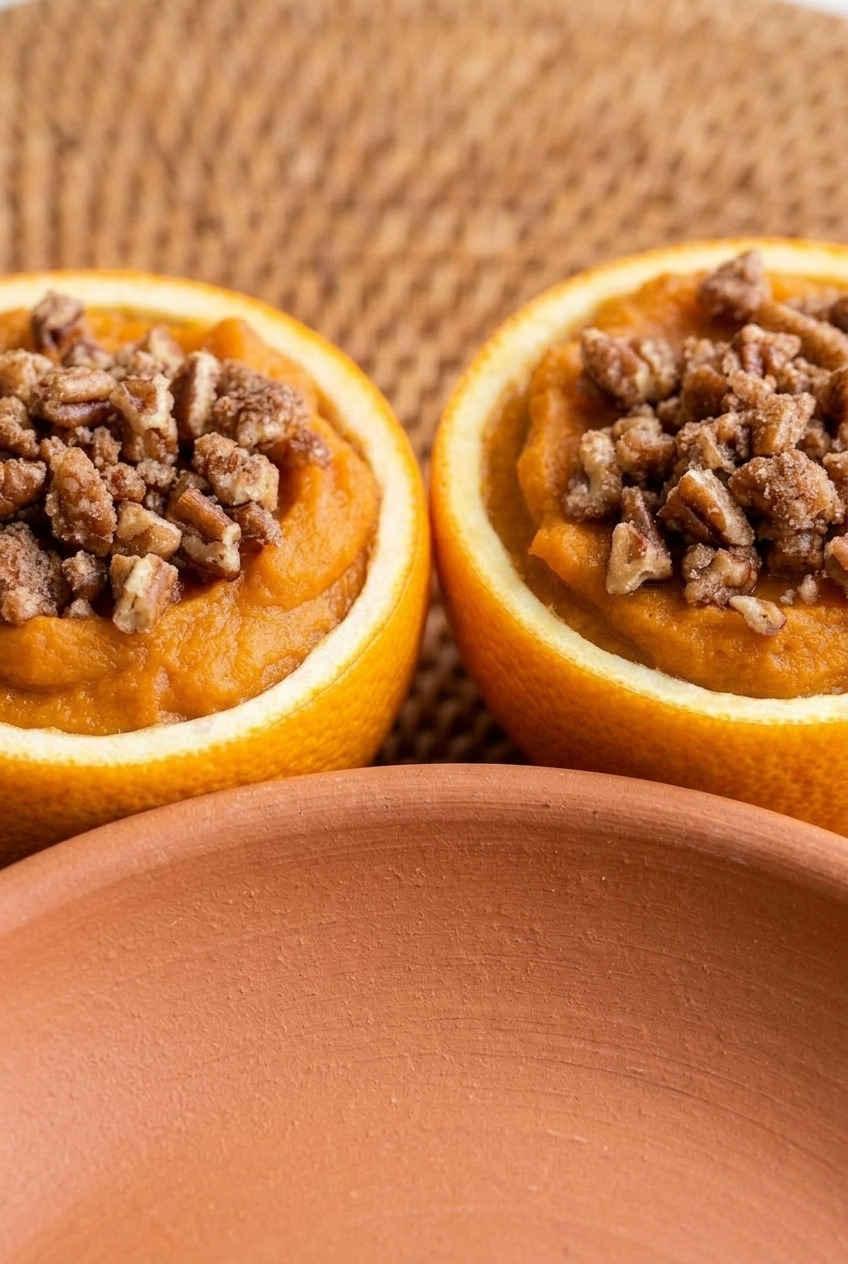
Stir the chopped pecans, brown sugar, cinnamon, and salt together in a small bowl.
Pour the melted butter over and toss until every piece is coated and the mixture starts clumping.
Those clumps are what you want. Loose sandy topping slides off a rounded surface and ends up on the pan.
Fill, Steady, and Bake
The cups have to be held upright or they will lean and spill. This is the part nobody warns you about.
Step 1: Steady the shells
Pack the hollowed halves snugly into a baking dish so they brace against each other, or sit each one in the well of a standard muffin tin.
The muffin tin is my preference and it is foolproof.
Step 2: Fill to the rim
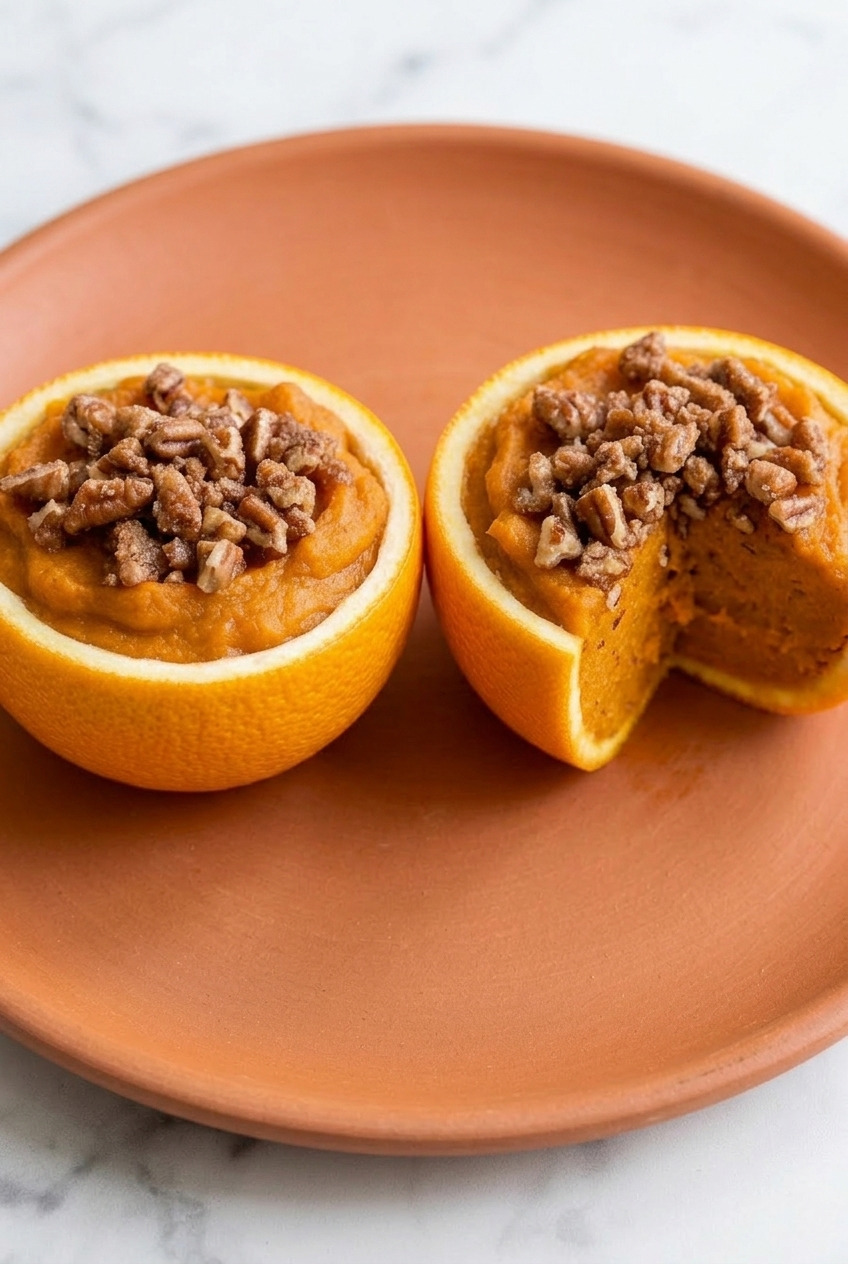
Spoon the filling into each shell and mound it softly, keeping the mound low and inside the rim of the peel.
Overfilled cups spill over the edge as the filling puffs, and burnt sugar on the outside of a peel smells exactly as bad as it sounds.
Step 3: Top and bake
Scatter the pecan mixture over the tops in an even layer, pressing it lightly into the filling so it stays put.
Bake at 350°F for 35 to 40 minutes, until the topping is toasted and fragrant and the filling is set enough to hold a spoon mark.
Let them sit for 10 minutes before serving. They are extremely hot inside and the filling firms up as it rests.
The Marshmallow Question
There is another version of this dish and plenty of people prefer it. I would rather tell you about it than pretend it does not exist.
The other camp tops each cup with marshmallows and runs them under a broiler until the tops brown.
People pick that version for good reasons. It is softer, sweeter, faster to finish, and for a lot of families it is the taste of the holiday itself.
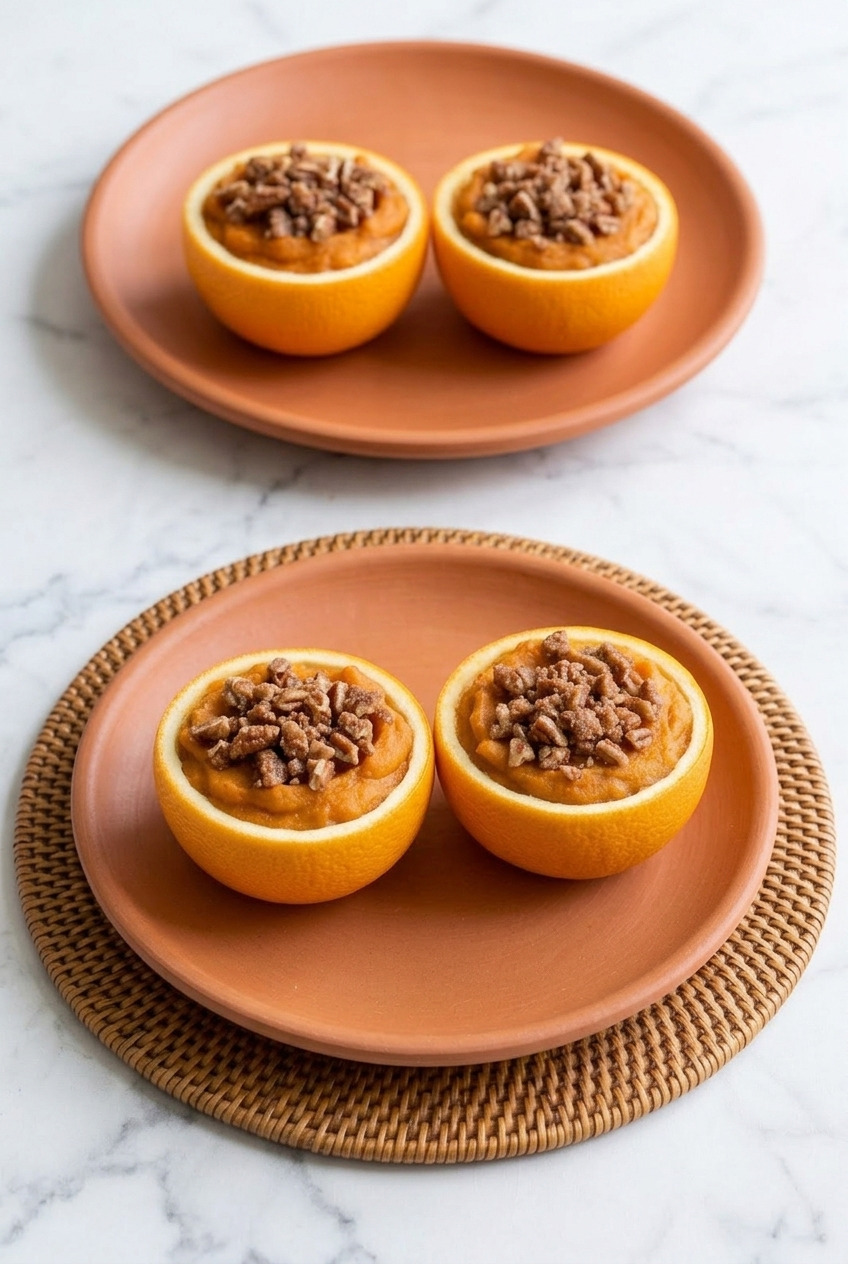
I go with pecans because the filling in an orange cup is already soft and sweet, and I want something with crunch and salt sitting on top of it for contrast.
If marshmallow is your family's version, make it. You are not wrong, you just want a different thing than I do.
Make Ahead and Storage
These are built for making ahead, which is most of why I keep making them. A holiday oven has no spare room on the day.
- Filled cups. Hollow, fill, cover, and refrigerate up to 24 hours ahead. Add the topping just before baking.
- The topping. Mix it up to 3 days ahead and keep it in a covered container at room temperature.
- Baking from cold. Add 10 minutes to the bake time and check that the centers are hot.
- Leftovers. Cover and refrigerate up to 3 days. Reheat at 325°F for 15 minutes.
- Freezer. The filling freezes for up to 2 months on its own. The shells do not freeze well, so hollow fresh oranges when you are ready.
Common Mistakes to Avoid
Every one of these has happened in my kitchen. Learn from me instead.
- Boiling the sweet potatoes. The number one cause of a watery filling that will not hold a mound. Bake them.
- Cutting the orange the wrong way. Through the poles gives you deep narrow cups. Across the equator gives you proper bowls.
- Overfilling. Keep the filling inside the rim. It puffs as it bakes.
- Loose cups on a flat pan. They tip. Brace them in a dish or use a muffin tin.
- Underseasoning. ½ teaspoon of salt in the filling is doing real work.
- Cutting through the base. Shave the thinnest slice, and stop the moment you see orange flesh.
Frequently Asked Questions
Is it better to boil or bake sweet potatoes for this?
Bake them, and it is not close. Boiled sweet potatoes absorb water, which gives you a loose filling that slumps in the shell and weeps as it bakes. Baking whole at 400°F for 50 to 60 minutes drives moisture off and concentrates the sugars, so the filling mounds properly and tastes more like sweet potato. If you are short on time, microwave them whole instead of boiling.
What are the common mistakes to avoid?
Watery filling from boiled potatoes, torn shells from skipping the scoring step, cups tipping over on a flat sheet pan, and overfilling past the rim so the filling spills and scorches. Underseasoning is the quiet one. Sweet potato needs real salt or the whole cup tastes flat and sugary.
How do I keep the orange cups from tipping over?
Two fixes and I use both. Shave the thinnest possible slice off the bottom of each shell so it has a flat base, being careful not to cut through into the cavity. Then pack the cups snugly into a baking dish so they brace one another, or sit each one in the well of a standard muffin tin. The muffin tin holds them dead level and I have never had one tip that way.
Can I make these ahead of time?
Yes, and I always do. Hollow the shells and fill them up to 24 hours ahead, then cover and refrigerate. Keep the pecan topping separate and dry at room temperature, and scatter it on right before the cups go into the oven. Baking straight from the fridge takes about 10 minutes longer.
Do you eat the orange shell?
No. The shell is the vessel and the flavor source, not a course. You eat the filling out of it with a spoon and leave the peel on the plate, the same way you would with a baked potato skin you did not want. The peel does its job in the oven.
Can I use marshmallows instead of the pecan topping?
You can, and a lot of people do. Skip the pecan mixture, bake the filled cups until they are hot through, then add marshmallows and broil for 1 to 2 minutes until browned. Watch them the entire time. The result is sweeter and softer than the pecan version, which is exactly why some families prefer it.
What do I do with all the scooped-out orange?
Squeeze 3 tablespoons of juice out of it for the filling, then eat the rest or save it. Chopped segments go into a green salad, into a bowl of yogurt, or into a pitcher of sangria for the same meal. There is a lot of fruit in four navel oranges and throwing it away always feels wrong to me.
Recipe
Sweet Potato Casserole Stuffed Into Orange Cups
Ingredients
For the Orange Cups
- 4 large navel oranges thick skinned
For the Filling
- 3 medium sweet potatoes about 2 pounds
- 4 tablespoon unsalted butter softened
- ⅓ cup light brown sugar packed
- 3 tablespoon fresh orange juice from the scooped oranges
- 2 tablespoon heavy cream or half and half
- 1 large egg beaten
- ½ teaspoon vanilla extract
- ½ teaspoon kosher salt
- ¼ teaspoon ground cinnamon
For the Cinnamon Pecan Topping
- ¾ cup pecans chopped
- ¼ cup light brown sugar packed
- 2 tablespoon unsalted butter melted
- ½ teaspoon ground cinnamon
- 1 pinch salt
Instructions
Bake the Sweet Potatoes
- Heat the oven to 400F. Prick the sweet potatoes all over with a fork and bake directly on the rack for 50 to 60 minutes, until a knife slides in with no resistance.
- Split them open, let the steam escape for 5 minutes, then scoop the flesh into a bowl and discard the skins.
Hollow the Oranges
- Cut each orange in half across its equator, not through the stem end, so you have eight wide shallow bowls.
- Run a paring knife around the inside of each half where the fruit meets the pith, then cut across the segments twice. Slide a spoon under the fruit and lift it out in one piece.
- Squeeze the scooped fruit through a strainer to collect 3 tablespoons of juice. Shave the thinnest slice off the bottom of each shell so it sits level, without cutting through the peel.
Make the Filling and Topping
- Mash the warm sweet potato flesh by hand until smooth, avoiding a food processor. Beat in the softened butter, then the brown sugar, orange juice, egg, vanilla, salt, and cinnamon.
- Add the cream 1 tablespoon at a time, stopping when the filling drops slowly off a spoon and still holds a soft shape.
- Stir the chopped pecans, brown sugar, cinnamon, and salt together, then pour the melted butter over and toss until the mixture clumps.
Fill and Bake
- Heat the oven to 350F. Pack the orange shells snugly into a baking dish or sit each one in the well of a standard muffin tin so they cannot tip.
- Spoon the filling into the shells, mounding it softly and keeping it inside the rim of the peel. Scatter the pecan topping evenly over the tops and press it lightly into the filling.
- Bake 35 to 40 minutes, until the topping is toasted and the filling holds a spoon mark. Rest 10 minutes before serving.
Notes
- Bake, never boil: boiled sweet potatoes absorb water and the filling will not hold a mound.
- Cut across the equator: it gives wide shallow cups that are easy to fill and easy to eat from.
- Steady the cups: a muffin tin holds them perfectly level and stops any tipping.
- Do not overfill: keep the filling inside the rim, since it puffs as it bakes.
- Make ahead: fill the cups up to 24 hours ahead, keep the topping dry and separate, and add 10 minutes to the bake.
- The shell is not eaten: it is the vessel and the flavor source.