Crispy Sweet Potato Rosti
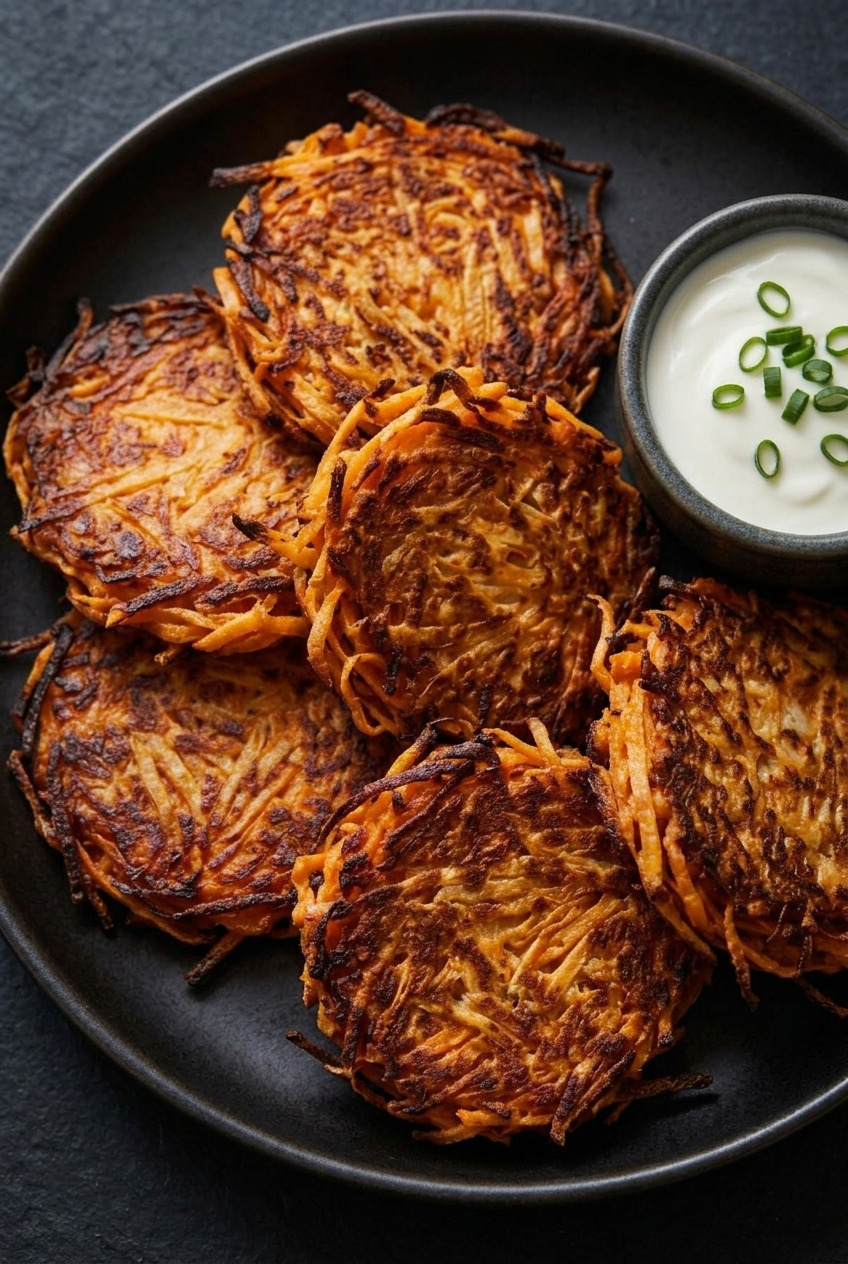
Six small individual sweet potato rosti with lacy browned edges and soft orange middles, fried in butter the Swiss way and bound with a single egg.
Servings 3 servings
Ingredients
For the Rosti
- 1 lb sweet potato about 2 medium, peeled
- 1 teaspoon kosher salt plus more for finishing
- 1 large egg lightly beaten
- 1 tablespoon cornflour or plain flour
- ½ teaspoon garlic powder
- ½ teaspoon black pepper freshly cracked
- 3 tablespoons unsalted butter
- 1 tablespoon neutral oil
To Serve
- 3 large eggs for frying, optional
- ½ cup creme fraiche
- 2 tablespoons chives thinly sliced
Instructions
Grate and Dry
- Peel the sweet potatoes and grate them on the large holes of a box grater into a large bowl. Coarse shreds only, not fine.
- Toss the shreds with the kosher salt and leave them 10 minutes.
- Pile the shreds into a clean kitchen towel, gather the corners, and twist hard over the sink until the liquid stops running. Return them to a dry bowl and fluff them apart.
Bind and Shape
- Add the beaten egg, cornflour, garlic powder, and black pepper and fold until every strand is lightly coated.
- Divide the mixture into six and press each portion into a flat round about 3 ½ inches across and ⅓ inch thick, letting a few strands stick out at the edges.
Fry in Butter
- Heat half the butter with half the oil in a heavy skillet over medium heat until the butter foams and the foam begins to subside.
- Lay in three rosti, press each once with a spatula, and leave them undisturbed for 4 to 5 minutes until the underside is deeply browned and lacy at the edges.
- Flip once and cook 4 more minutes. Wipe the pan, then repeat with the remaining butter and oil and the last three rosti.
Drain and Serve
- Move the rosti to a wire rack, not paper towels, and salt them immediately.
- Serve hot, topped with a fried egg for breakfast, or with creme fraiche and sliced chives alongside.
Notes
- Six small rosti, not one cake: Sweet potato is softer and wetter than a waxy potato. A pan-sized cake sags in the middle and tears on the flip.
- Why the egg: A traditional Swiss rosti needs no binder because waxy potato sheds gelling starch. Sweet potato does not, so one egg and a tablespoon of cornflour is the minimum that holds.
- Butter plus oil: The oil raises the smoke point so the butter can brown to nut brown instead of burning.
- No onion: Grated onion is what makes a latke. A rosti leaves it out.
- Do not move them: Four to five minutes untouched on the first side, or the crust never forms.
- Wipe the pan between batches: Browned milk solids left behind turn bitter on the second batch.