Halfway up a mountain outside Grindelwald there's a restaurant with about nine things on the menu.
I ordered the rosti because everyone around me had one.
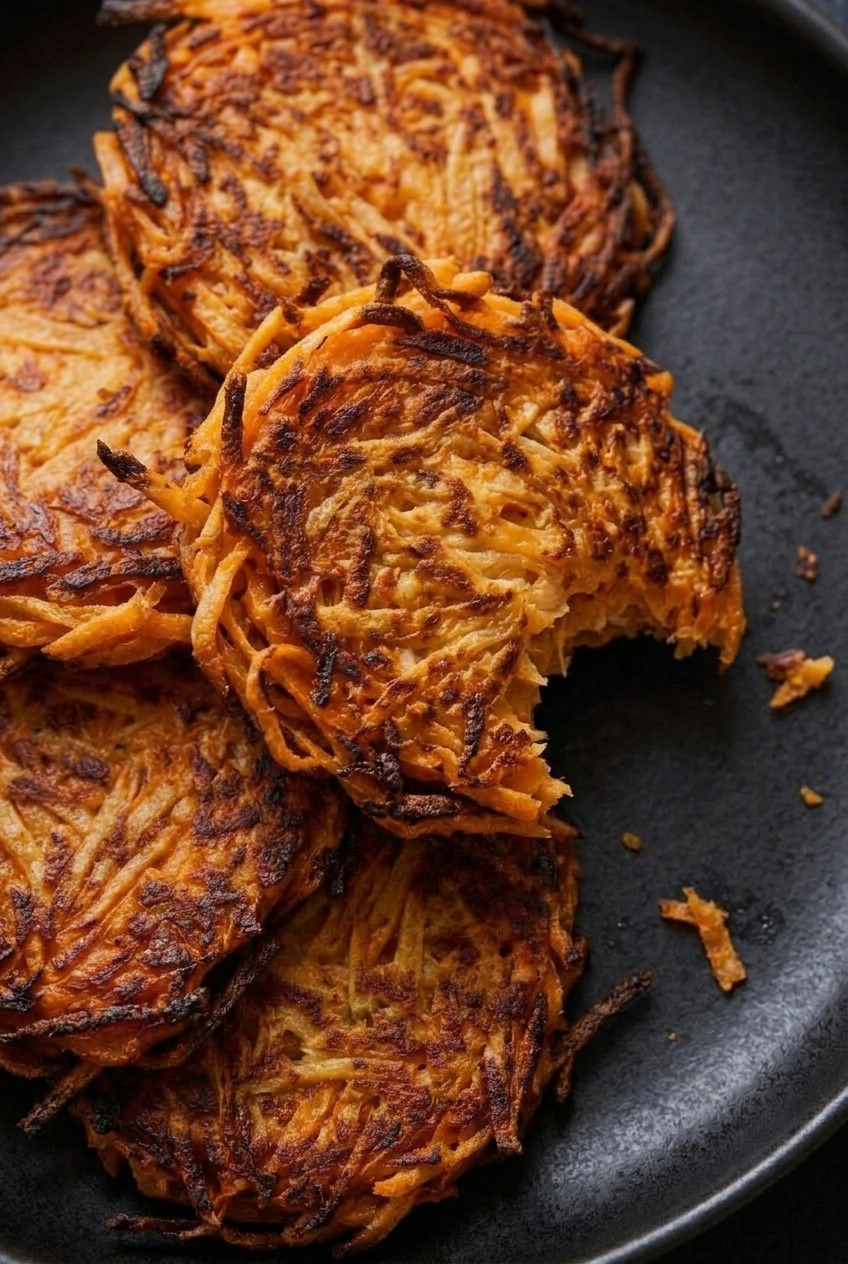
What arrived was a browned disc the size of the pan it came out of, with a fried egg sitting on top and nothing else.
It smelled like nut-brown butter and it was the best thing I ate that whole week.
So I came home and tried it with sweet potato, because that's what was in the house.
It fell apart in the pan.
The middle stayed wet, the edges went dark, and the flip folded the whole thing over on itself.
My wife ate the wreckage straight out of the pan and told me it tasted great, which was not the point.
The fix turned out to be size.
Sweet potato is softer and much wetter than the waxy potatoes the Swiss use, so a pan-sized cake sags in the middle and tears the second you touch it.
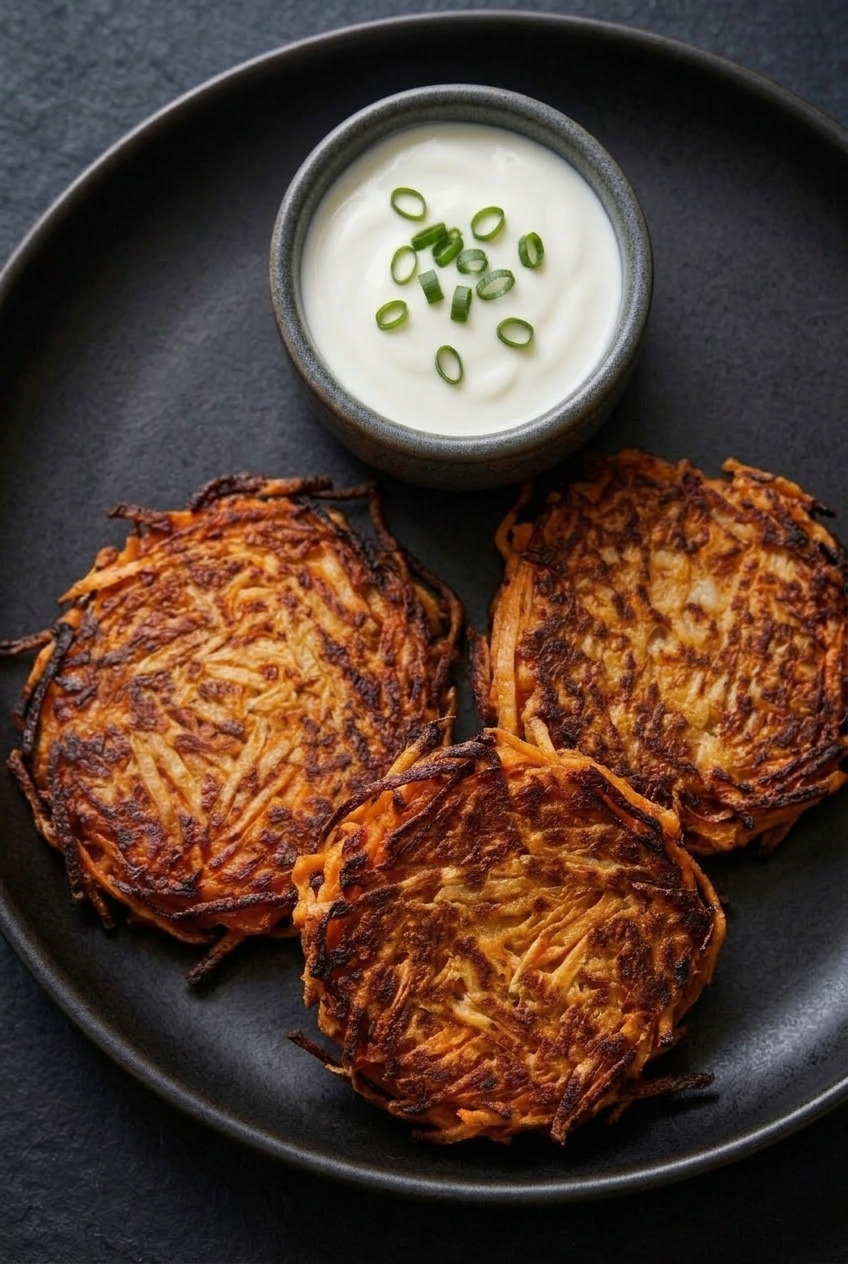
Six small ones, about 3 ½ inches across, crisp all the way through and flip without any drama at all.
They still go in butter, because butter is the whole reason a rosti tastes like a rosti.
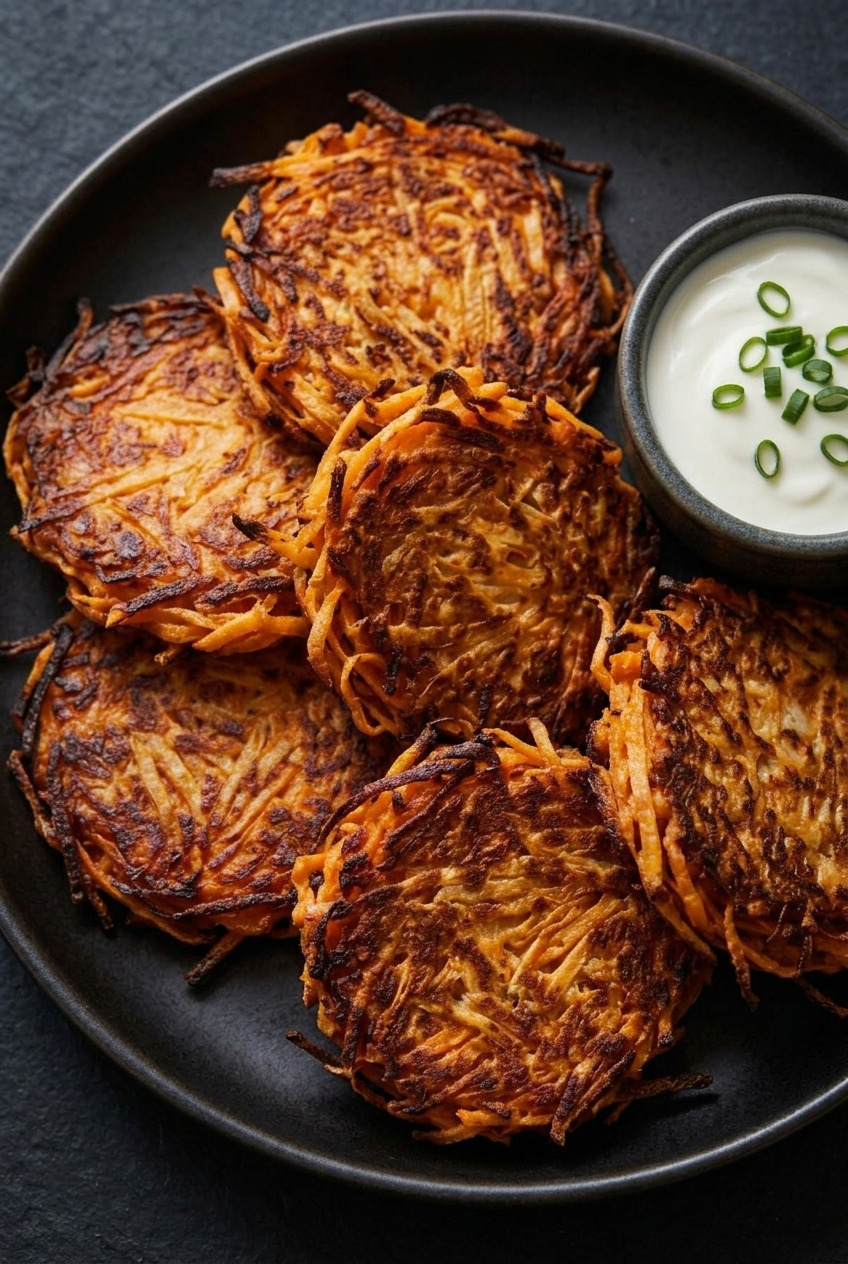
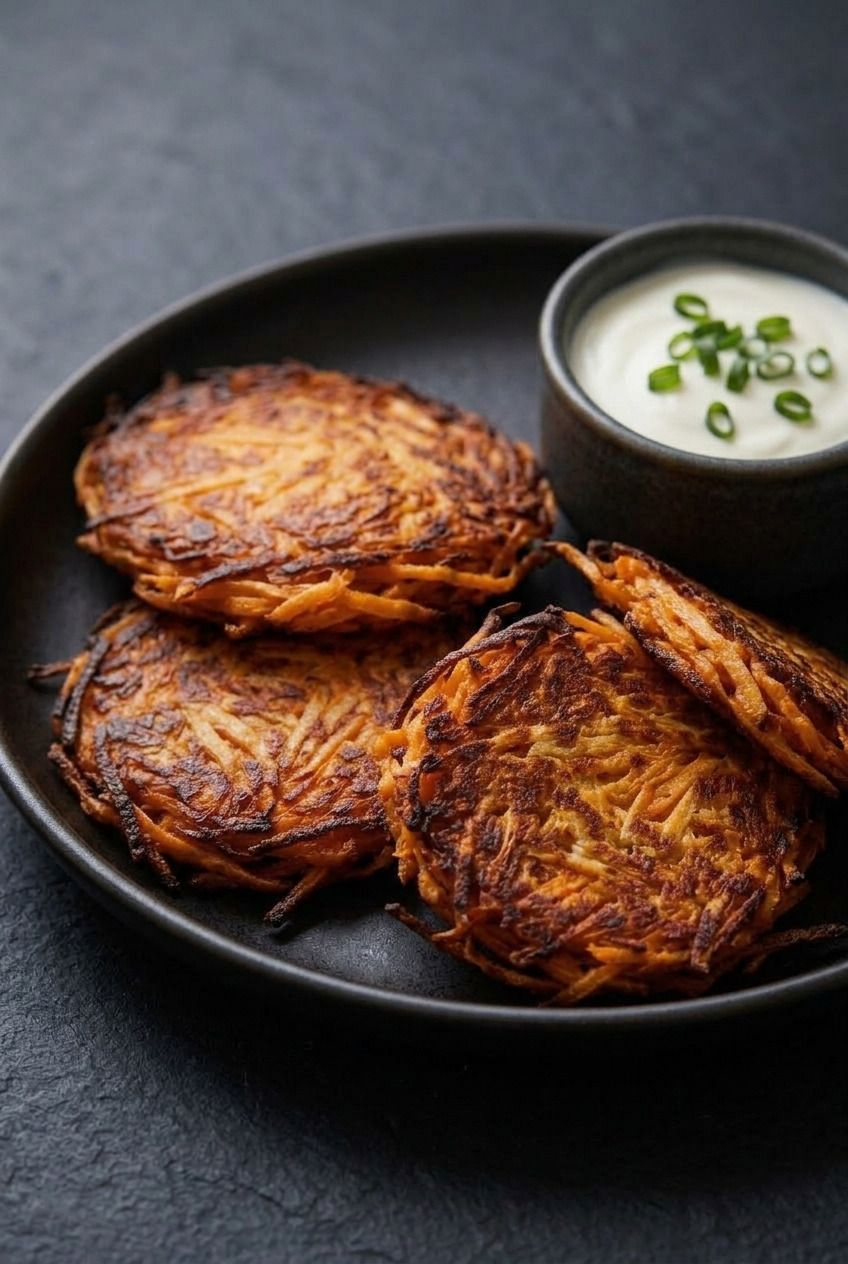
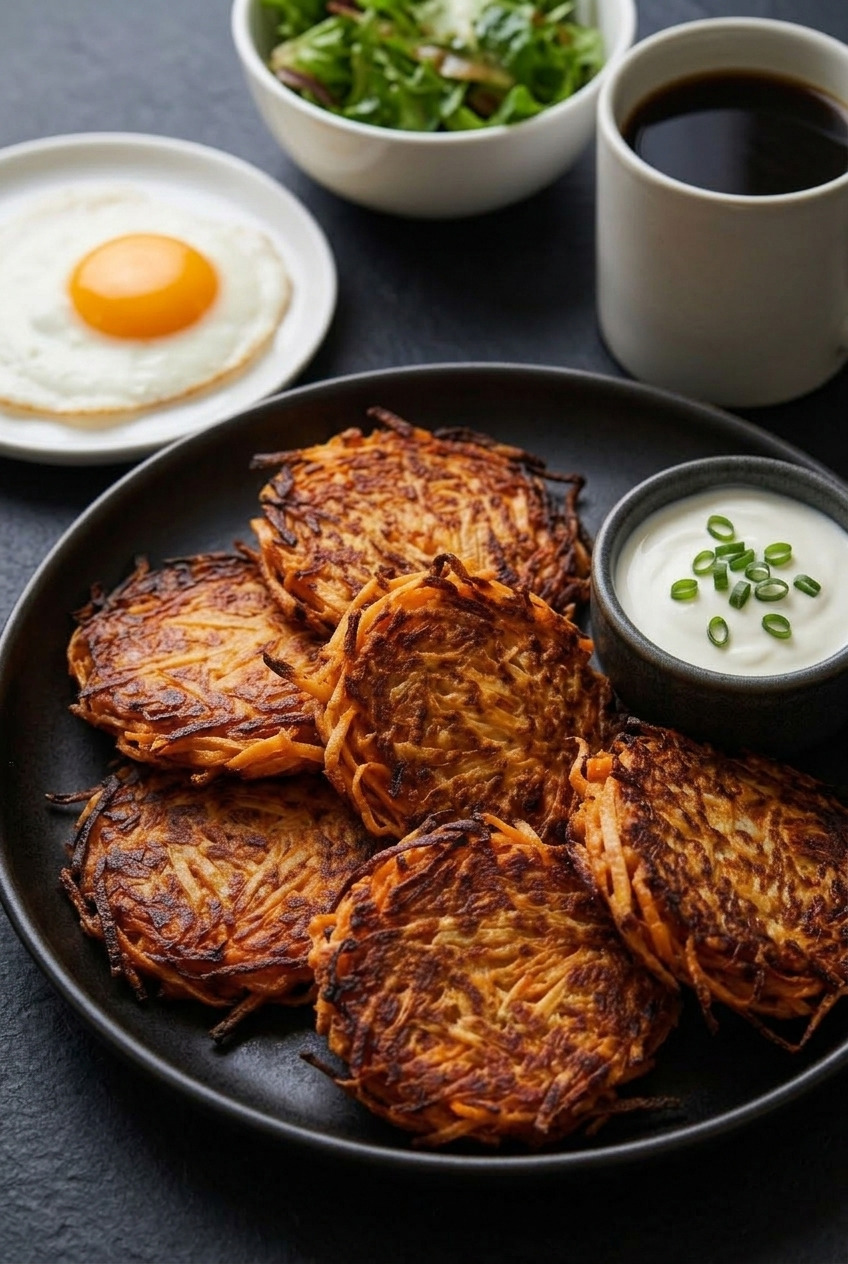
Lacy dark edges, a soft orange middle, and a fried egg on top if it's morning.
Twenty minutes, one pan, and no folding disasters. I promise.
Rosti, Latke, or Hash Brown?
Three shredded potato cakes, three different dishes, and people mix them up constantly. Worth two minutes, because the differences tell you exactly what to expect from this recipe.
- Rosti. Swiss, originally a farmers' breakfast. Coarsely grated potato with minimal or no binder, no onion, cooked in butter and browned on both faces. Nutty, plain, and it leans on the potato itself.
- Latke. Jewish, tied to Hanukkah. Bound with egg AND matzah meal, grated onion mixed right in, shallow fried in a real depth of neutral oil, served with applesauce and sour cream. Savory and oniony.
- Hash brown. American diner. No egg, no onion, often parcooked potato pressed into a shape and griddled flat.
This is a rosti. Butter, no onion, the least binder I can get away with.
Don't feel like grating? Smashed sweet potatoes get you a lot of the same crunch with a potato masher and zero shredding.
Why Sweet Potato Rosti Needs an Egg When a Real Rosti Doesn't
A traditional Swiss rosti has no binder at all, and that is not a shortcut, it's chemistry. A waxy potato sheds surface starch as you grate it, and that starch turns sticky with heat and glues the shreds into a single cake all by itself.
Sweet potato doesn't do that.
It's low in the kind of starch that gels, and high in sugar and water instead.
Grate it, put it in a pan with nothing added, and it browns as loose individual strands that never become a cake.
So one egg goes in, plus 1 tablespoon of cornflour. That's the minimum that holds six small rosti together, and it's little enough that they still taste like sweet potato rather than pancake.
Without the egg? Add another tablespoon of cornflour and press them much harder in the pan. They'll hold, just barely, and you have to be gentle turning them. It works, it isn't as good.
Without any flour? Doable with the egg alone if you squeeze the shreds bone dry first. The edges come out a bit more ragged, which honestly some people prefer.
Make Them Small, Not One Big Cake
This is the single decision that fixes the recipe. I know one pan-sized rosti looks better on a plate. It also doesn't work with sweet potato.
A big cake has to sit long enough for the middle to set, and by then the outside is past golden and heading for burnt.
Then you have to turn it, and a wet twelve-inch disc of sweet potato has no structural integrity whatsoever.
At 3 ½ inches across the heat reaches the center in about the same time it browns the face.
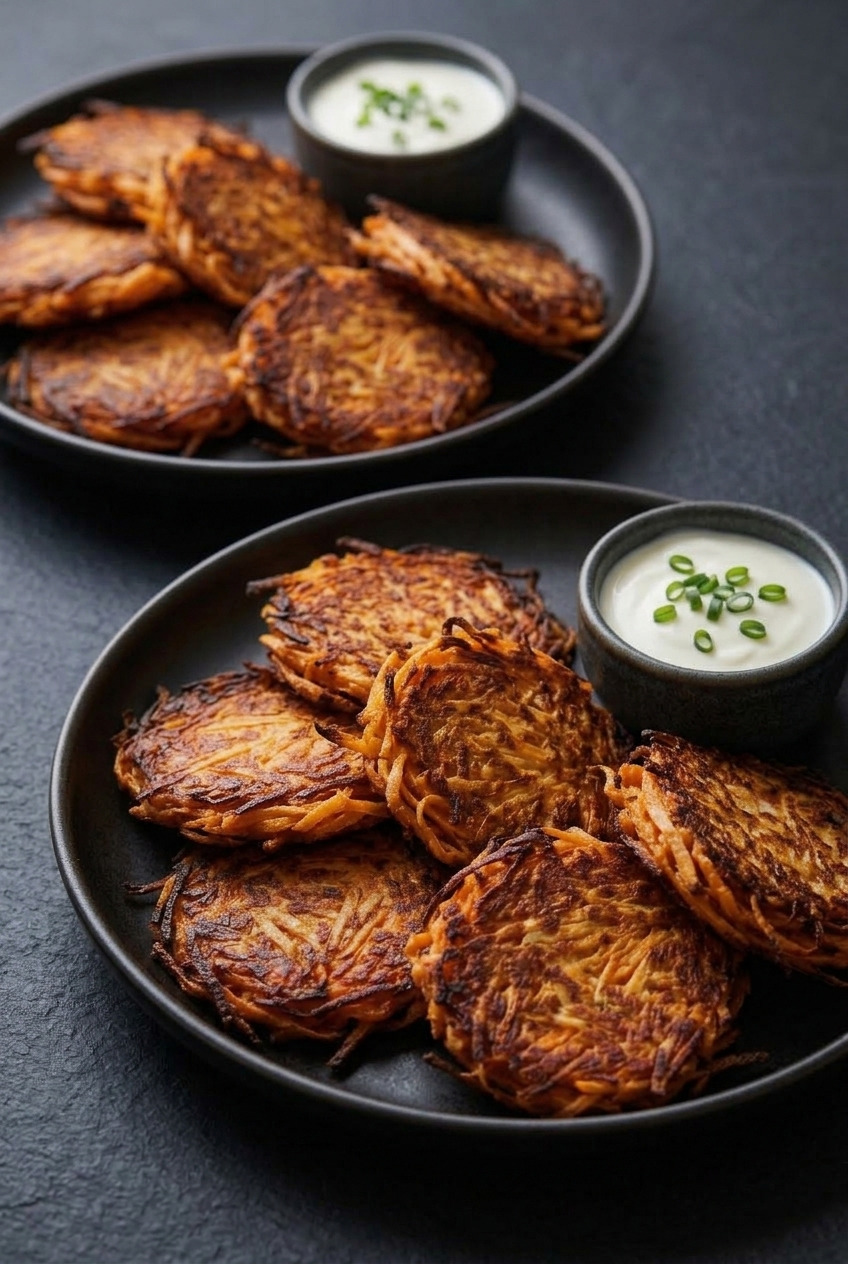
Six of them, two batches in a ten-inch skillet, and a regular spatula turns each one cleanly.
Every one of the top-ranking recipes for this dish makes them small. None of them say why.
Ingredients You'll Need
Eight things, and three of them are salt, pepper, and oil. This is a genuinely short list.
For the rosti:
- Sweet potato (1 lb, about 2 medium). Peeled and grated on the large holes. Coarse shreds tangle and grip. Fine shreds turn to paste and fry into a flat dense disc.
- Kosher salt (1 teaspoon). On the shreds first, to draw the water out, plus more at the end.
- Egg (1 large). The binder. One is enough for six.
- Cornflour (1 tablespoon). Backs up the egg and helps the surface crisp. Plain flour works, cornflour is crisper.
- Garlic powder (½ teaspoon). Quiet savory depth, borrowed from the second-ranked recipe.
- Black pepper (½ teaspoon). Freshly cracked.
- Unsalted butter (3 tablespoons). The point of the whole exercise. Not one competing recipe uses it and every one of them is missing the flavor because of it.
- Neutral oil (1 tablespoon). Goes in WITH the butter. It raises the smoke point so the butter can brown properly instead of burning at the edges.
To serve:
- Eggs (3 large). Fried, one per plate, for the breakfast version. Runny yolk over a crisp rosti is hard to beat.
- Creme fraiche (½ cup). Cold and slightly sour against hot and sweet.
- Chives (2 tablespoons, thinly sliced). Over the creme fraiche.
Ingredient Notes and Swaps
- Plain or almond flour. Both work in place of cornflour, one for one. Almond flour browns faster, so drop the heat slightly.
- Half and half potato. Swap 8 oz of the sweet potato for a waxy white potato. You get more binding starch and a sturdier rosti, and it's a genuinely good version.
- Cheese in the mix. ½ cup grated cheddar or chopped halloumi, folded in. Two of the ranking recipes do this and it's good, though it stops being a plain rosti.
- Chilli or cumin. ½ teaspoon of either. Warm and savory against the sweetness.
- No onion. On purpose. Grated onion is what turns this into a latke.
How to Make Crispy Sweet Potato Rosti
Step 1: Grate the Sweet Potato Coarsely
Peel the sweet potatoes and grate them on the large holes of a box grater into a big bowl.
Not the fine holes, and not a food processor S-blade. You want long strands you can see.
Step 2: Salt, Rest, and Wring It Dry
Toss the shreds with the 1 teaspoon of kosher salt and leave them 10 minutes.
Pile them into a clean kitchen towel, gather the corners, and twist hard over the sink.
Keep going until the drips stop. You'll pull out a surprising amount of orange liquid, and every drop of it would otherwise have steamed your rosti from the inside.
Step 3: Bind with One Egg and a Spoon of Cornflour
Fluff the squeezed shreds apart in a dry bowl.
Add the beaten egg, cornflour, garlic powder, and pepper, and fold until every strand looks lightly coated.
Step 4: Shape Six Small Rosti
Divide the mixture into six and press each portion into a flat round about 3 ½ inches across and ⅓ inch thick.
Let a few strands stick out at the edges. Those are the bits that go lacy and dark.
Step 5: Fry in Butter and Oil, Pressed and Undisturbed
Heat half the butter with half the oil in a heavy skillet over medium heat until the butter foams and the foam starts to subside.
Lay in three rosti, press each once with a spatula, and then LEAVE THEM ALONE for 4 to 5 minutes.
Moving them early is how the crust fails to form. Flip once, cook 4 more minutes, and repeat with the rest of the butter and oil.
Pro tip: if the butter darkens past nut brown before the first side is done, your heat is too high. Medium, patiently.
Step 6: Drain on a Rack and Salt
Move them to a wire rack, not a paper towel. Paper traps steam under the rosti and softens the base you just built.
Salt immediately, while the surface is hot enough to hold it.
Oven and Air Fryer Versions
Both work, and both cost you the butter. That's the honest trade, so decide whether you're after convenience or flavor.
- Oven. Preheat a sheet pan at 425°F, brush it well with oil, press the rosti on, brush the tops, and bake 12 minutes per side.
- Air fryer. 380°F, brushed both sides with oil, 12 to 14 minutes, flipping halfway. Crisper than the oven.
- What you lose. Browned butter. There's no way to get that flavor without a pan, and it's most of what makes a rosti a rosti.
Skin On or Skin Off?
I peel, and it's a texture decision rather than a fussiness one. Sweet potato skin doesn't crisp when it's shredded into a cake.
It goes chewy and stringy, and you get little dark threads running through an otherwise tender middle.
On a roasted wedge, skin on, absolutely. Here, off.
Tips for Getting Them Crisp
- Coarse grate, always. Large holes. Fine shreds release too much starch and fry dense.
- Don't move them. Four to five minutes untouched on the first side. A crust needs uninterrupted contact.
- One layer, three at a time. Crowding drops the pan temperature and they stew in their own moisture.
- Fresh butter each batch. The first batch leaves browned milk solids behind, and those go bitter on the second round. Wipe the pan.
- Rack, not paper. Every time.
- Fry within 15 minutes of mixing. The mixture starts weeping again as it sits.
What to Serve With Them
- A fried egg. One per rosti, yolk runny. This is the Swiss way and it's still the best way.
- Creme fraiche and chives. Cold and sharp against hot and sweet. My default when it isn't breakfast.
- Smoked salmon. With the creme fraiche. Brunch, sorted.
- A sharp green salad. Something with vinegar, to cut the butter.
For a weekend brunch, I slide a couple onto a plate next to soft cottage cheese scrambled eggs. My son calls that combination the breakfast of champions.
Storage and Reheating
- The raw mixture. Doesn't hold. It weeps and darkens within 30 minutes. Grate and fry in the same session.
- Fridge. Cooked rosti keep 3 days in a covered container with paper towel between the layers.
- Freezer. Freeze flat on a tray, then bag them for 2 months.
- Reheating. On a wire rack at 400°F for 8 minutes, straight from frozen. They come back genuinely crisp.
- Never the microwave. Warm, wet, and disappointing.
Make them small, fry them in butter, and leave them alone in the pan. Give it a try!
Recipe
Crispy Sweet Potato Rosti
Ingredients
For the Rosti
- 1 lb sweet potato about 2 medium, peeled
- 1 teaspoon kosher salt plus more for finishing
- 1 large egg lightly beaten
- 1 tablespoon cornflour or plain flour
- ½ teaspoon garlic powder
- ½ teaspoon black pepper freshly cracked
- 3 tablespoons unsalted butter
- 1 tablespoon neutral oil
To Serve
- 3 large eggs for frying, optional
- ½ cup creme fraiche
- 2 tablespoons chives thinly sliced
Instructions
Grate and Dry
- Peel the sweet potatoes and grate them on the large holes of a box grater into a large bowl. Coarse shreds only, not fine.
- Toss the shreds with the kosher salt and leave them 10 minutes.
- Pile the shreds into a clean kitchen towel, gather the corners, and twist hard over the sink until the liquid stops running. Return them to a dry bowl and fluff them apart.
Bind and Shape
- Add the beaten egg, cornflour, garlic powder, and black pepper and fold until every strand is lightly coated.
- Divide the mixture into six and press each portion into a flat round about 3 ½ inches across and ⅓ inch thick, letting a few strands stick out at the edges.
Fry in Butter
- Heat half the butter with half the oil in a heavy skillet over medium heat until the butter foams and the foam begins to subside.
- Lay in three rosti, press each once with a spatula, and leave them undisturbed for 4 to 5 minutes until the underside is deeply browned and lacy at the edges.
- Flip once and cook 4 more minutes. Wipe the pan, then repeat with the remaining butter and oil and the last three rosti.
Drain and Serve
- Move the rosti to a wire rack, not paper towels, and salt them immediately.
- Serve hot, topped with a fried egg for breakfast, or with creme fraiche and sliced chives alongside.
Notes
- Six small rosti, not one cake: Sweet potato is softer and wetter than a waxy potato. A pan-sized cake sags in the middle and tears on the flip.
- Why the egg: A traditional Swiss rosti needs no binder because waxy potato sheds gelling starch. Sweet potato does not, so one egg and a tablespoon of cornflour is the minimum that holds.
- Butter plus oil: The oil raises the smoke point so the butter can brown to nut brown instead of burning.
- No onion: Grated onion is what makes a latke. A rosti leaves it out.
- Do not move them: Four to five minutes untouched on the first side, or the crust never forms.
- Wipe the pan between batches: Browned milk solids left behind turn bitter on the second batch.