Two leftover roasted sweet potatoes sat in my fridge for three days last November.
I'd made too many for a Sunday dinner, and by Wednesday they'd gone cold and slightly shriveled in their foil.
Reheating them felt like a sad ending.
So I mashed them with a couple of eggs, half a cup of cream, some cinnamon and nutmeg, poured the whole thing into ramekins, and baked them in a pan of hot water while I cleaned up dinner.
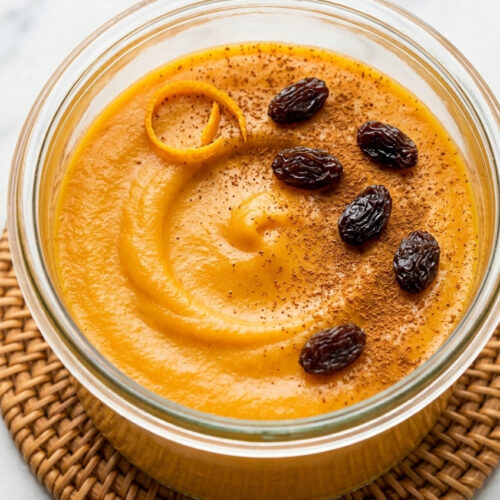
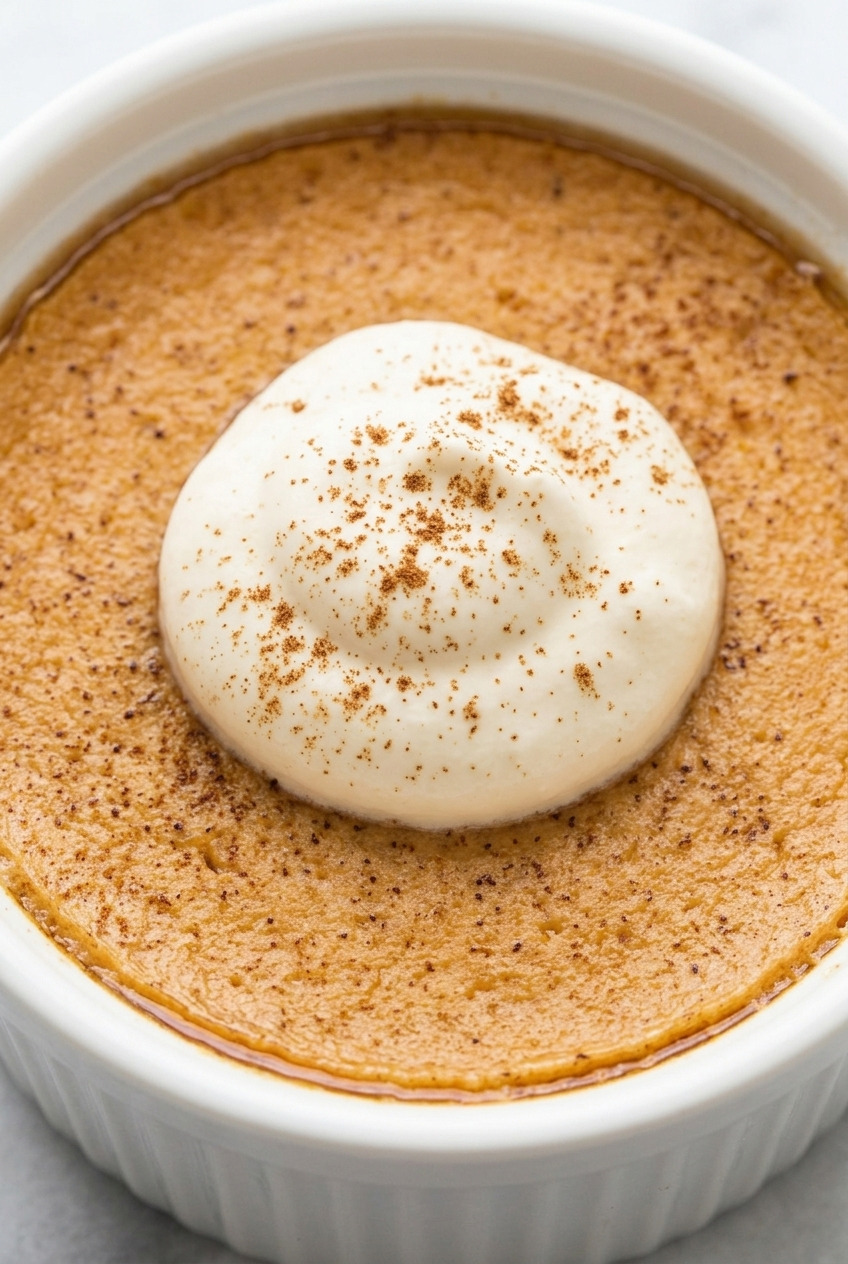
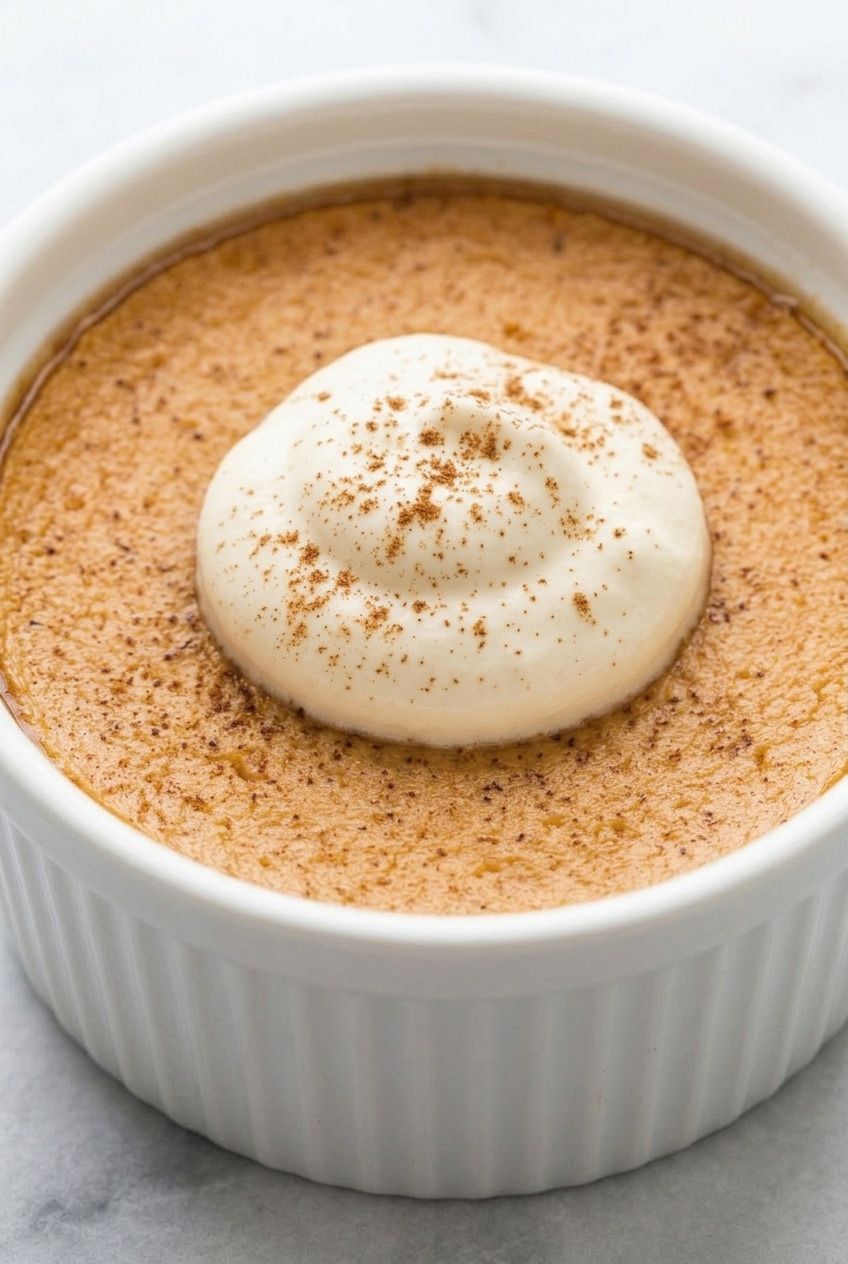
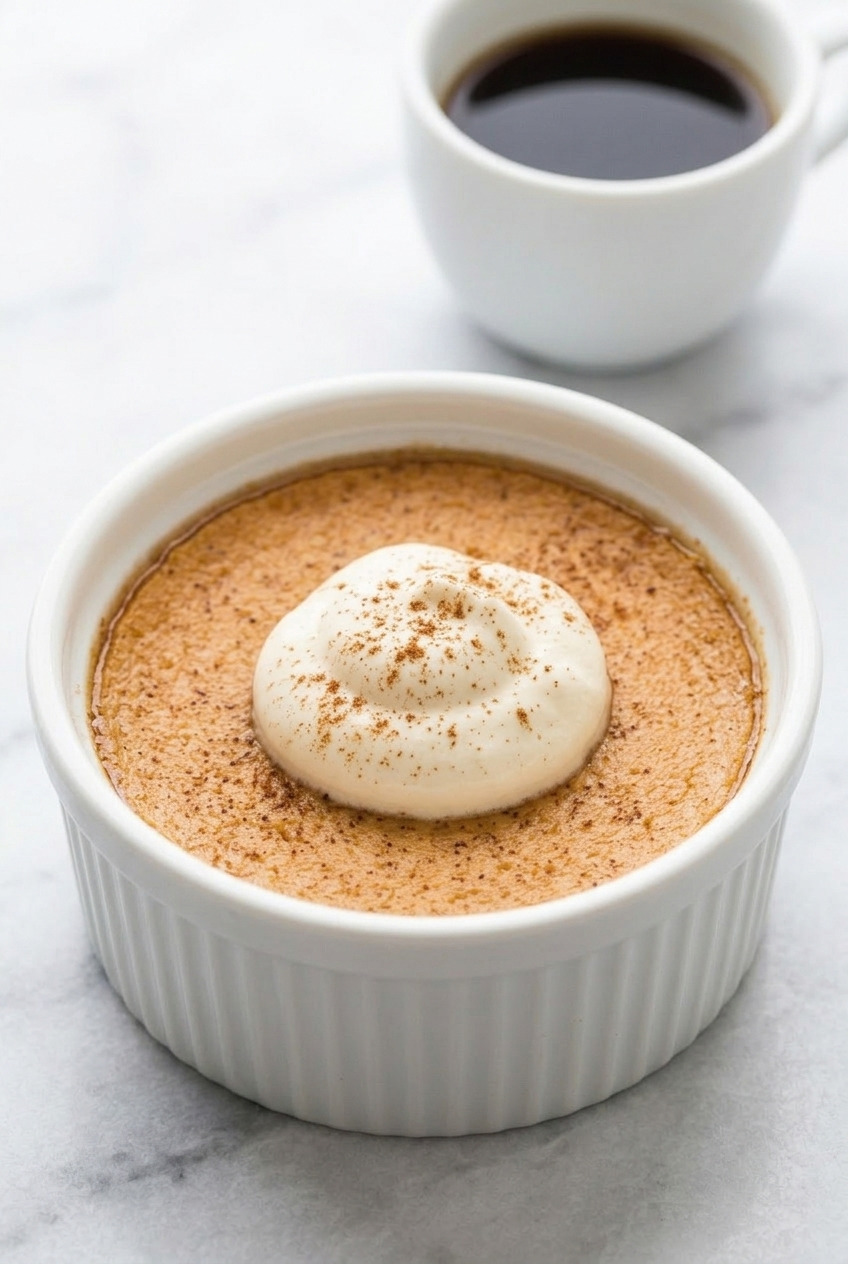
Forty-five minutes later I had four little custards that tasted like the best part of a sweet potato pie.
The filling, without the crust getting in the way.
My wife had hers with a spoonful of whipped cream and asked why I don't make these more often.
Fair question. I make them constantly now.
What surprised me is how different a real baked custard is from the blender puddings that show up under this name.
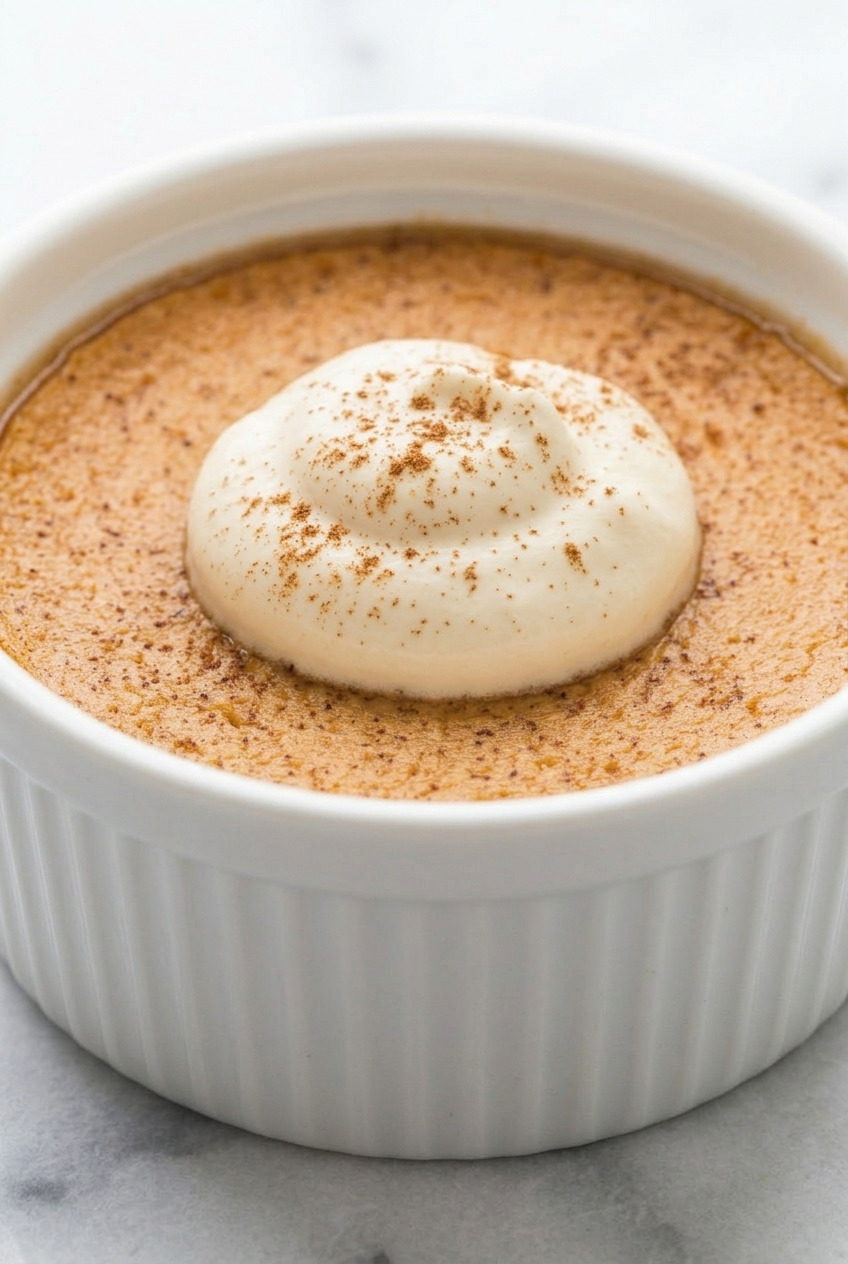
Eggs set in the oven give you a texture that's soft, sliceable at the edge, and just barely wobbly in the middle.
Cold cornstarch pudding can't do that.
It's an any-night dessert, not a holiday project, and it uses up sweet potatoes you already cooked.
Ten minutes of work and the oven handles the rest.
What Makes This a Custard (Not a Pie or Pudding)
All three start in a similar place, then split on how they set. The difference is worth knowing before you bake, because it tells you what to look for.
A custard is set by eggs alone, baked with gentle heat until the proteins knit together.
That's what's happening here. No flour, no cornstarch, no thickener at all.
A pudding is set by starch on the stovetop, which is why it stays soft and creamy cold and never firms up the same way.
A pie is essentially this same custard poured into a pastry shell.
Sweet potato pie filling and sweet potato custard are close cousins, and the recipe below is the filling standing on its own.
Which means no blind baking, no soggy bottom, no rolling pin.
Honestly, the crust was never the part I looked forward to.
Ingredients You'll Need
Everything here is pantry standard. The eggs and the dairy are doing the structural work, so don't cut either one.
- Sweet potatoes (2 medium, about 1 ½ cups mashed). Roasted, not boiled. Roasting drives off water, and excess water is the main reason a custard weeps.
- Half and half or heavy cream (1 cup). Half and half gives a lighter set. Heavy cream makes it richer and more like a pie filling. Both work.
- Eggs (2 large). Room temperature blends in more evenly. These are the only thing setting the custard, so measure honestly.
- Brown sugar (¼ cup, packed). Light or dark. Dark brings a molasses note that suits the spice.
- Butter (1 tablespoon, melted). Small amount, adds richness and a rounder mouthfeel.
- Cinnamon (1 teaspoon) and nutmeg (½ teaspoon). Freshly grated nutmeg is worth the thirty seconds it takes.
- Salt (¼ teaspoon). Sharpens everything else.
- Whipped cream and a dusting of cinnamon. For serving, and it makes the dish.
Pro tip: if you're using canned sweet potato puree, blot it with a paper towel first and use 1 ½ cups by volume. It carries more moisture than roasted flesh.
How to Make Baked Sweet Potato Custard
The water bath is the one step people skip and then regret. It's what keeps the edges from setting into rubber while the center is still liquid.
Step 1: Roast and Mash
Roast whole sweet potatoes at 400°F for 45 to 60 minutes, until soft all the way through.
Cool, peel, and mash the flesh well. You want 1 ½ cups.
Let it cool to warm or room temperature before the eggs go in, or you'll scramble them.
Step 2: Whisk the Custard Base
Drop the oven to 325°F.
Whisk the mashed sweet potato with the brown sugar, melted butter, cinnamon, nutmeg, and salt.
Add the eggs and whisk until fully combined, then stream in the half and half.
Whisk steadily but don't beat air into it. Air bubbles bake into a pocked, foamy top.
If your sweet potatoes were stringy, run the base through a fine-mesh sieve here.
Step 3: Set Up the Water Bath
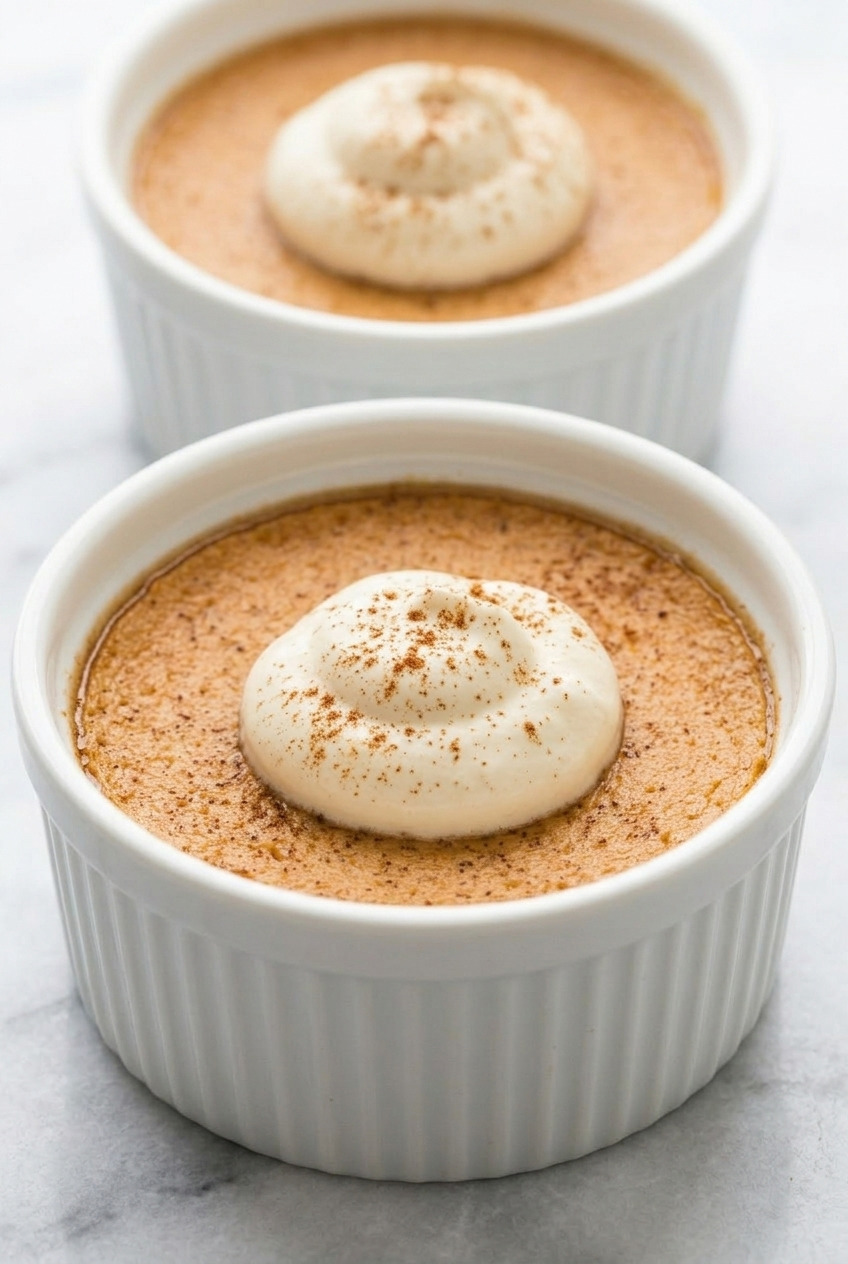
Divide the base between four 6-ounce ramekins and set them in a deep baking dish.
Pour hot tap water into the dish until it reaches halfway up the sides of the ramekins.
Slide it into the oven carefully.
Step 4: Bake and Cool
Bake for 40 to 50 minutes.
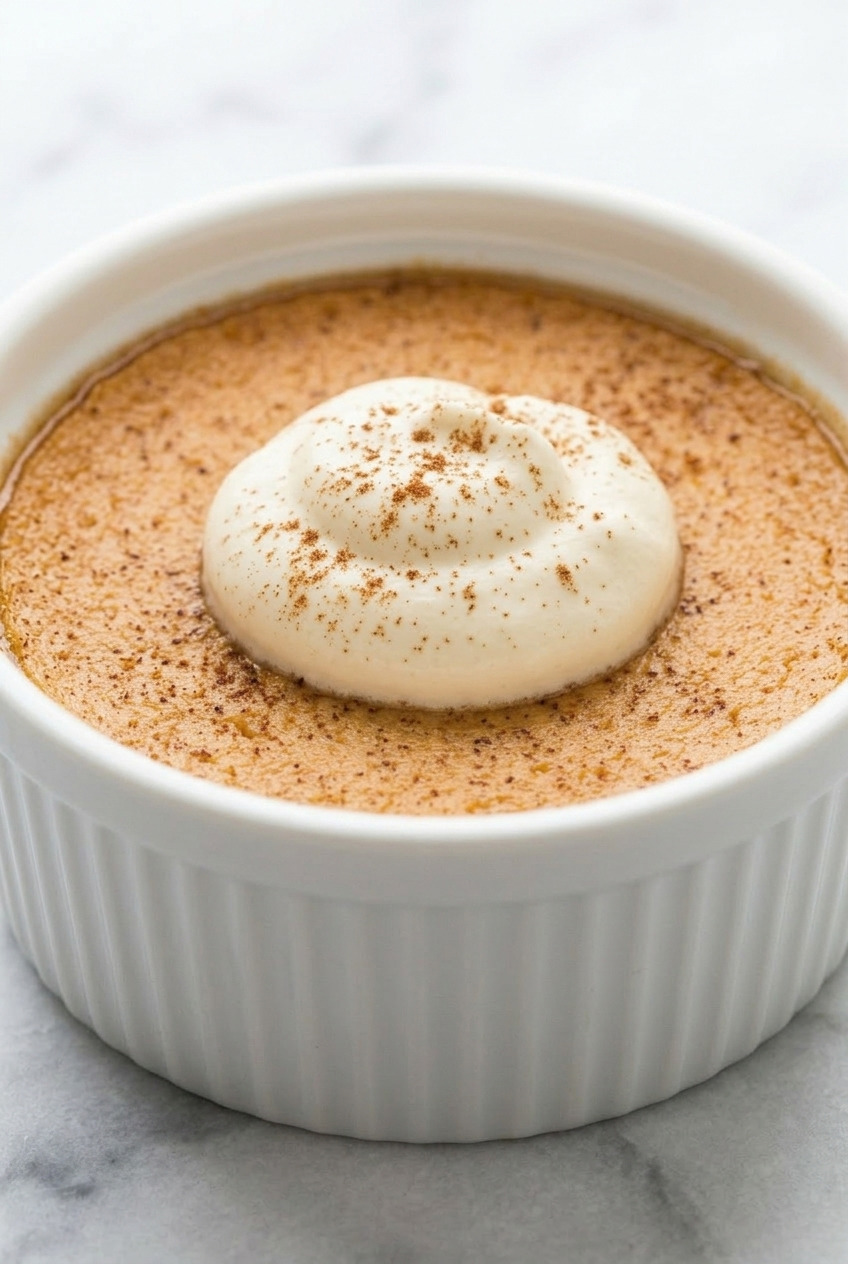
They're done when the edges look set and a quarter-sized circle in the middle still jiggles when you nudge the dish.
The center firms up as it cools. Pull them a touch early rather than late.
Lift the ramekins out of the water and cool on a rack for 30 minutes, then chill or serve just warm.
Tips for a Silky, Set Custard
Custard fails in exactly two ways: it curdles, or it never sets. These prevent both.
- Never let the water boil. If you see bubbles around the ramekins, your oven is running hot. Boiling water curdles the eggs and gives you a grainy, watery custard.
- Use the jiggle test, not a knife. A knife tears the surface. Nudge the pan instead and watch the middle. Wobbly like set gelatin means done. Sloshing like liquid means keep going.
- Or use a thermometer. The center should read 170°F to 175°F. Past 180°F the proteins tighten and squeeze out water.
- Room-temperature eggs. Cold eggs hitting warm puree can seize into little cooked bits before the custard ever reaches the oven.
- Cover with foil if the tops darken. Tent loosely at the 30-minute mark if the surfaces are browning ahead of the set.
- Give it the full cool. A custard pulled straight from the oven onto a plate will look underset. Thirty minutes on a rack changes everything.
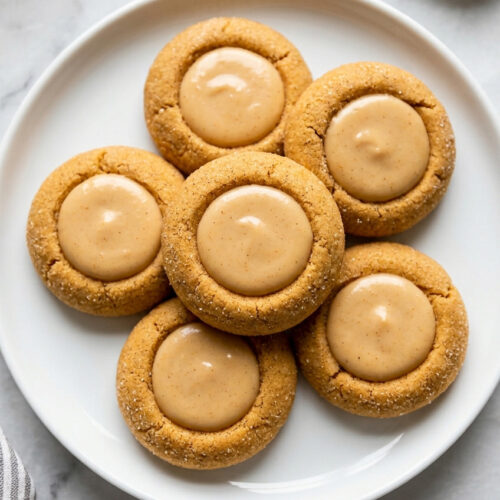
Leftover roasted sweet potatoes also make excellent baked sweet potato hand pies.
Frequently Asked Questions
Can I make sweet potato custard without eggs?
Not as a true custard. Eggs are the only thing setting this one, so removing them leaves you with a loose puree. If you need an egg-free version, you're really making a pudding, which means cooking the base on the stovetop with cornstarch instead. It's a different dish with a different texture.
How long does sweet potato custard last in the fridge?
Up to 4 days, covered. Press plastic wrap right onto the surface or the top will form a skin. The texture stays good the whole time, and I think day two is when the spice flavor peaks.
Can you freeze sweet potato custard?
I don't recommend it. Baked egg custards separate when frozen and thawed, and you end up with a watery layer under a grainy top. The custard base is best made and baked fresh. Freeze the roasted, mashed sweet potato instead and build the custard from there.
What's the difference between sweet potato custard and sweet potato pie?
Almost nothing except the crust. Sweet potato pie is this custard baked inside a pastry shell. Skipping the crust means a gentler bake, a silkier set, and roughly forty minutes less work.
How do I know when sweet potato custard is done baking?
Nudge the baking dish. The outer inch should be firm and the center circle, about the size of a quarter, should wobble as one piece. If the middle ripples like liquid, give it another 5 minutes and check again. A thermometer in the center reading 170°F is the surest call.
Can I use canned sweet potatoes for custard?
Yes. Drain canned sweet potatoes thoroughly, blot them, and mash to 1 ½ cups. Skip any packed in syrup, or cut the brown sugar down to 2 tablespoons. The flavor is milder than roasted, so I add an extra pinch of cinnamon.
What spices go best with sweet potato custard?
Cinnamon and nutmeg are the backbone and appear in nearly every version worth making. From there, a pinch of ginger adds warmth, allspice adds depth, and a few grinds of cardamom take it somewhere more interesting. Go easy: sweet potato has a delicate flavor and heavy spicing buries it.
Storage
These keep well and travel fine. A few notes on holding them.
- Refrigerator. Covered, up to 4 days. Plastic wrap pressed to the surface prevents a skin.
- Serving temperature. Good warm, better cold. Cold is when the set is firmest and the spice reads clearest.
- Reheating. A ramekin warms through in 20 seconds in the microwave. Any longer and the eggs tighten.
- Whipped cream. Add it at the table. It weeps if it sits on a cold custard in the fridge.
Not bad for something that started as leftovers.
Want it on the stove instead? My boniatillo is the Cuban stovetop custard.
Recipe Card
Recipe
Baked Sweet Potato Custard
Ingredients
For the Custard
- 1 ½ cups sweet potato roasted and mashed, about 2 medium
- 1 cup half and half or heavy cream
- 2 large eggs room temperature
- ¼ cup brown sugar packed
- 1 tablespoon unsalted butter melted
- 1 teaspoon ground cinnamon
- ½ teaspoon nutmeg freshly grated
- ¼ teaspoon salt
For Serving
- ½ cup whipped cream
- 1 pinch ground cinnamon for dusting
Instructions
Roast and Mash
- Roast whole sweet potatoes at 400°F for 45 to 60 minutes, until soft all the way through. Cool, peel, and mash well to get 1 ½ cups. Let the mash cool to warm or room temperature.
Make the Custard
- Reduce the oven to 325°F. Whisk the mashed sweet potato with the brown sugar, melted butter, cinnamon, nutmeg, and salt.
- Whisk in the eggs until fully combined, then slowly stream in the half and half. Whisk steadily without beating air into the base. Pass it through a fine-mesh sieve if the sweet potatoes were stringy.
- Divide between four 6-ounce ramekins and set them in a deep baking dish. Pour hot water into the dish until it reaches halfway up the sides of the ramekins.
- Bake for 40 to 50 minutes, until the edges are set and a quarter-sized circle in the center still jiggles when the dish is nudged. The center should read 170°F to 175°F.
- Lift the ramekins out of the water bath and cool on a rack for 30 minutes. Serve just warm or chilled, topped with whipped cream and a dusting of cinnamon.
Notes
- Roast, don't boil: Boiled sweet potato carries extra water and makes the custard weep.
- Water must not boil: Bubbles around the ramekins mean the oven is too hot and the eggs will curdle.
- Jiggle test: Nudge the dish instead of cutting into the custard with a knife.
- Storage: Up to 4 days covered in the refrigerator. Freezing is not recommended, as baked egg custard separates.