Our mail carrier handed back last year's holiday tin with a sticky note on the lid.
It didn't mention the sugar cookies, the shortbread, or the crinkles I'd spent two weekends baking.
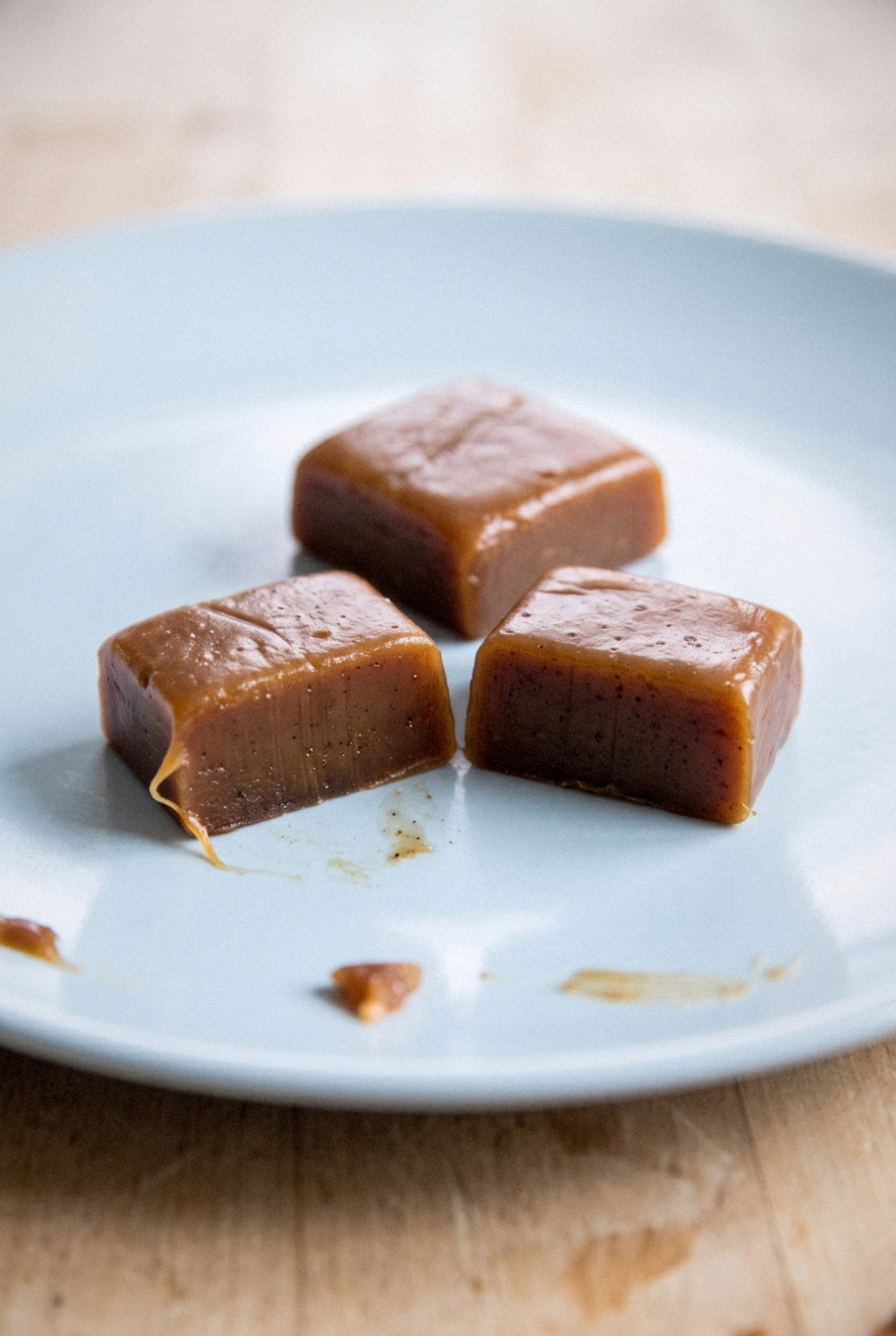
It said, in neat block letters, "What were the little wrapped ones?"
Those little wrapped ones were these gingerbread caramels, and I almost didn't make them.
A pot of sugar at 300 degrees is not something I take lightly, and my first batch had me hovering over the stove like it was a science exam.
I'd always packed my Christmas tins with cookies only.
Adding one candy felt risky, mostly because a ruined batch means a whole quart of cream and a pile of sugar in the trash.
Well, it worked. And now the caramels are the first thing my wife asks about when the tins come out in December.
They're soft and chewy, deep amber, and taste like a molasses gingerbread cookie that somebody melted into candy.
The secret isn't skill.
It's one number on a thermometer, one square pan, and a spice paste that stirs in smooth instead of clumping.
Make them once and you'll see why they disappear before the cookies do.
Why These Gingerbread Caramels Work
This recipe borrows the best moves from classic caramel making and adds a real gingerbread backbone. Nothing about it is fussy, but each step has a job.
- The sugar caramelizes first. I cook the sugar, corn syrup, and water to a light amber before any cream goes in. That gives the candy a deeper, toastier flavor than a dump-and-boil method.
- Light molasses brings the gingerbread. It adds that dark, cozy cookie flavor without the bitter edge blackstrap brings.
- The spices go in last, as a paste. Stirring them into vanilla first keeps them from clumping when they hit hot caramel.
- 246°F is the sweet spot. At that temperature you get a soft, chewy caramel that still cuts into clean squares and holds its shape in a tin.
- One 8x8 pan, 64 pieces. That's enough for four or five gift tins without the gallon-sized batch some recipes call for.
Who doesn't love a homemade candy that looks this impressive and costs so little?
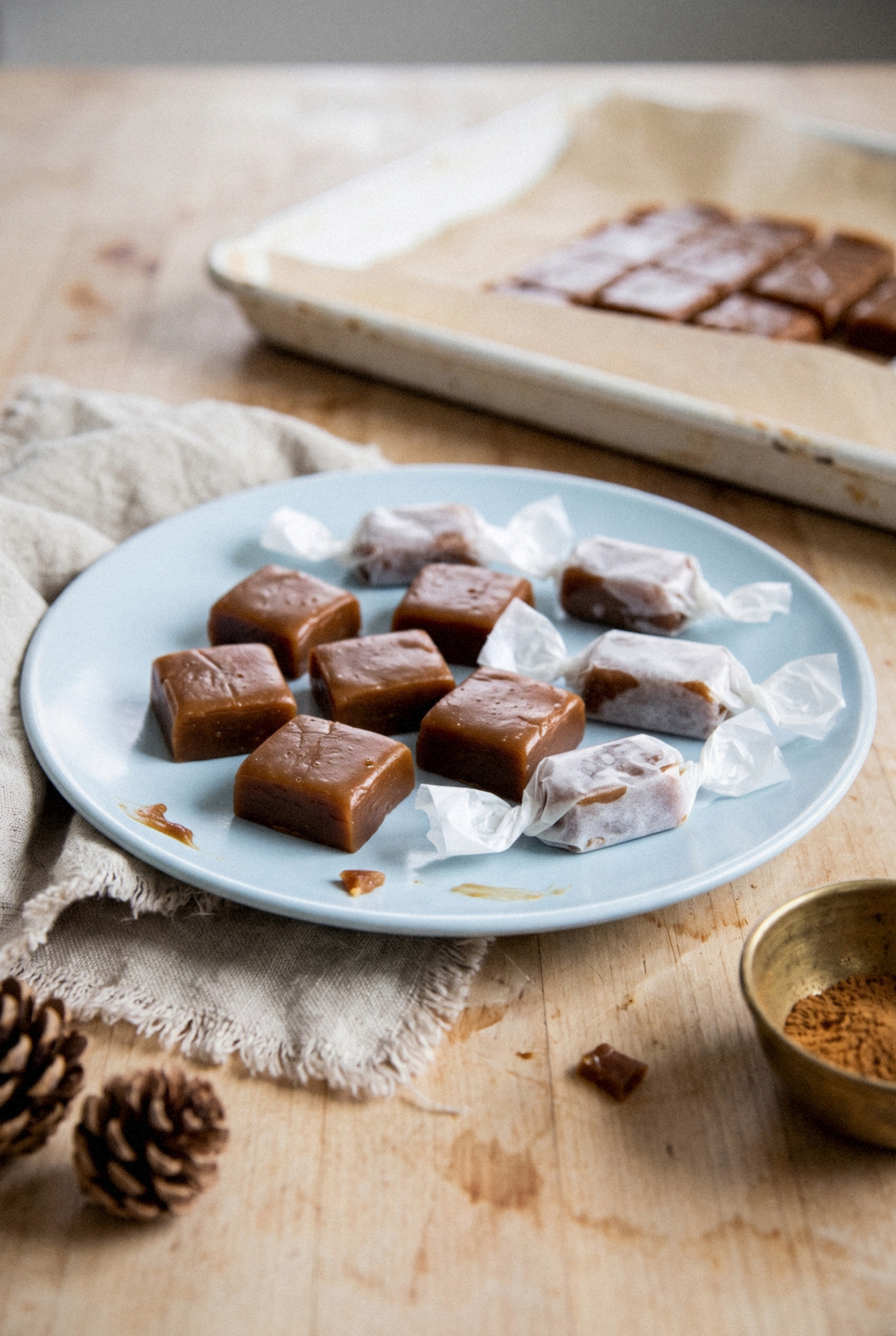
Gingerbread Caramel Ingredients
You probably have most of this in the pantry already. The only thing worth checking is the label on your molasses.
- Heavy cream (1 ½ cups). This is the body of the caramel. Use full-fat heavy cream or heavy whipping cream, nothing lighter, or the candy won't set right.
- Salted butter (6 tablespoons). Butter makes the caramel rich and silky. I like salted because it seasons the candy from the inside, but unsalted works if you add a pinch more salt.
- Granulated sugar (2 cups). Plain white sugar caramelizes evenly and predictably.
- Light corn syrup (½ cup). It keeps the sugar from crystallizing and turning grainy. It's my insurance policy, and it also gives the chew a smoother finish.
- Water (¼ cup). Just enough to dissolve the sugar so it heats evenly at the start.
- Light molasses (⅓ cup). The gingerbread flavor lives here. More on choosing the right one below.
- Vanilla extract (1 ½ teaspoons). This becomes the base for the spice paste.
- Gingerbread spices. Ground ginger, cinnamon, allspice, cloves, and a tiny pinch of black pepper.
- Kosher salt (½ teaspoon). Salt keeps the candy from tasting flat. A few flakes of sea salt on top are optional but very good.
The Gingerbread Spice Blend
Gingerbread is really a spice story. The cookie traces back centuries to European Christmas markets, where ginger, cinnamon, and cloves were the luxury flavors of winter.
I use 1 ½ teaspoons ground ginger, 1 teaspoon cinnamon, ¼ teaspoon allspice, and ⅛ teaspoon cloves.
The pinch of finely ground black pepper sounds odd, but it gives the finish a gentle warm tingle, just like a good gingerbread cookie.
Want it bolder? Bump the ginger to 2 teaspoons. Caramel is sweet enough that it can carry a lot of spice without tasting harsh.
What Type of Molasses to Use
Reach for light or unsulfured molasses, labeled "original" on most grocery store bottles. It's mellow, sweet, and tastes like the gingerbread you remember.
Blackstrap molasses is boiled much longer, so it's darker, less sweet, and noticeably bitter.
In a cookie that bitterness gets lost in the flour. In caramel it takes over. Keep blackstrap for baked beans.
How to Make Gingerbread Caramels
Read through every step before you light the stove. Once the sugar starts browning, things move fast and you won't want to go hunting for the vanilla.
Step 1: Line the Pan
Line an 8x8-inch square pan with parchment, leaving a couple of inches hanging over two sides as handles. Lightly butter the parchment. Those handles let you lift the whole slab out later for clean cutting.
Step 2: Warm the Cream and Make the Spice Paste
Pour the heavy cream into a small saucepan or a microwave-safe measuring cup and warm it until it's hot but not boiling, then keep it warm. Cold cream hitting hot sugar seizes and splatters, so this step matters.
In a small bowl, stir the vanilla, ginger, cinnamon, allspice, cloves, and black pepper into a thick paste. Set it right next to the stove with the butter, molasses, and salt.
Step 3: Cook the Sugar to Amber
Add the sugar, corn syrup, and water to a heavy 4- to 5-quart pot and stir gently just until the sugar is wet. Set it over medium-high heat and clip on your candy thermometer.
From here, DON'T stir. Let it boil until it turns a light honey amber and reaches about 320°F, roughly 12-15 minutes. If sugar crystals form on the sides, brush them down with a wet pastry brush.
Fair warning: the color changes quickly once it starts. Stay with the pot.
Step 4: Add the Cream, Butter, and Molasses
Turn the heat to low and slowly pour in the warm cream. It will bubble up hard, so stand back and pour in a thin stream while stirring with a long heatproof spatula.
Stir in the butter, molasses, and kosher salt until smooth. Turn the heat back to medium.
Step 5: Cook to 246°F
Cook, stirring slowly and steadily and scraping the bottom of the pot, until the thermometer reads 246°F, about 15-20 minutes. Molasses scorches easily, so keep that spatula moving along the bottom, especially as you get close.
The caramel will darken to a deep gingerbread brown and the bubbles will get slower and thicker near the end.
Step 6: Stir in the Spice Paste and Pour
Pull the pot off the heat the moment it hits temperature. Stir in the spice paste until no streaks remain, then pour the caramel into the prepared pan. Don't scrape the pot too hard, since the overcooked bits on the bottom can make the candy grainy.
If you want salted gingerbread caramels, sprinkle a little flaky sea salt over the top after about 15 minutes, once the surface is tacky.
Step 7: Let It Set
Leave the pan at room temperature, uncovered, for at least 3 hours. Overnight is even better and gives you the cleanest cuts.
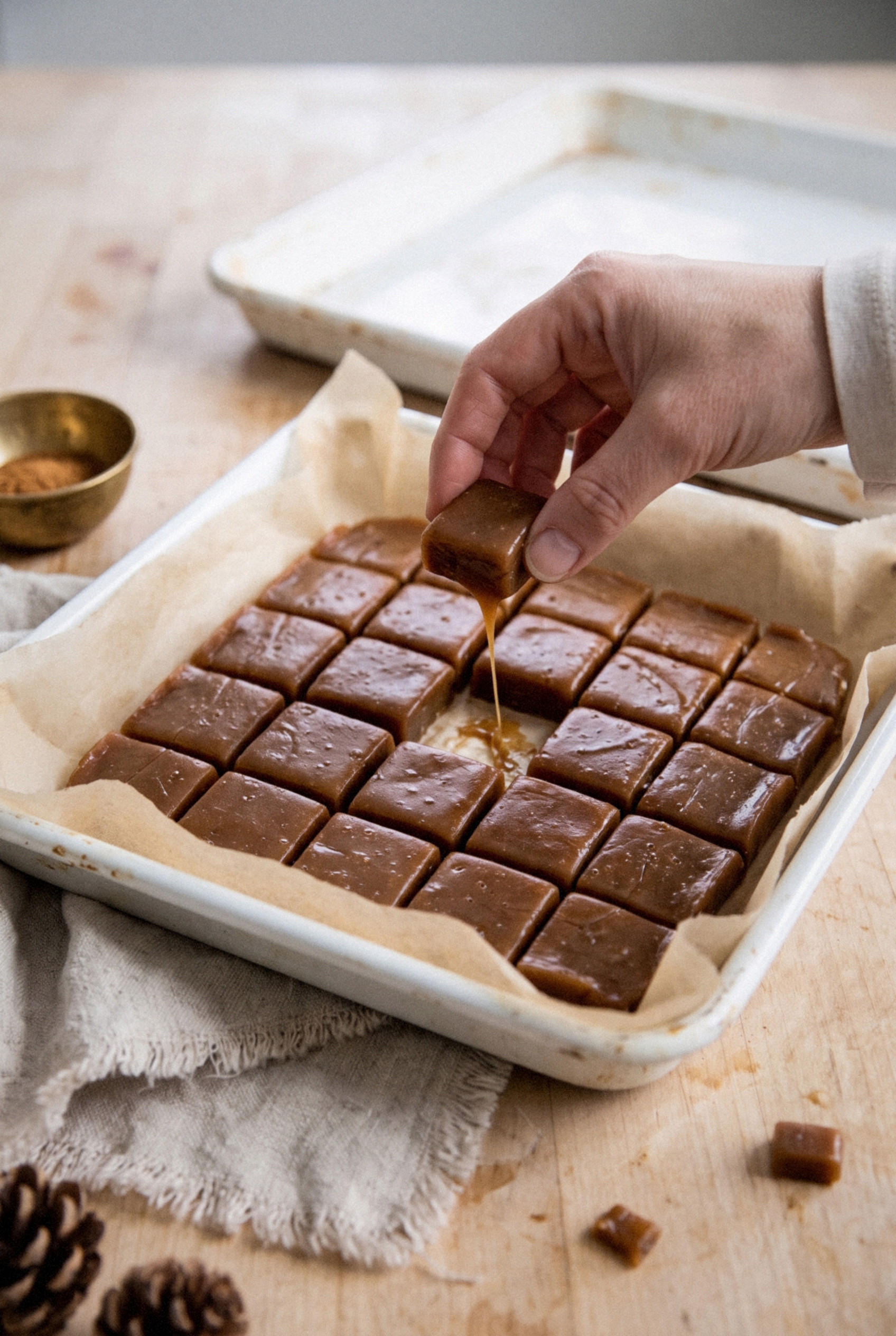
The Right Temperature for Soft Caramels
Temperature is the whole game with caramels. Time estimates vary with your stove, your pot, and the weather, but the thermometer never lies.
Do you need a candy thermometer? Honestly, yes. I'd never make caramels without one.
Before you start, test it in a pot of boiling water. At sea level it should read 212°F. If it reads 210°F, you know to cook the caramel 2 degrees lower than the recipe says.
A few degrees make a real difference in the final texture.
- 244°F. Very soft and slightly saggy. Delicious, but the squares may slump in a warm room.
- 246°F. My pick. Soft, chewy, holds a clean square, and doesn't stick to your teeth.
- 248°F. Firmer and chewier, closer to a store-bought caramel. Great if you plan to ship them.
- 250°F and up. Getting hard. Above 255°F you're heading toward a firm candy.
No thermometer handy? Use the cold-water test. Drop a little caramel into a glass of ice water, then pinch it. It should form a soft, pliable ball that flattens when you press it.
Making Caramels at High Altitude
Water boils at a lower temperature the higher you live, and sugar follows the same rule. Subtract about 2°F for every 1,000 feet above sea level.
At 5,000 feet, for example, you'd cook to about 236°F instead of 246°F. The boiling-water test above tells you exactly where your kitchen lands.
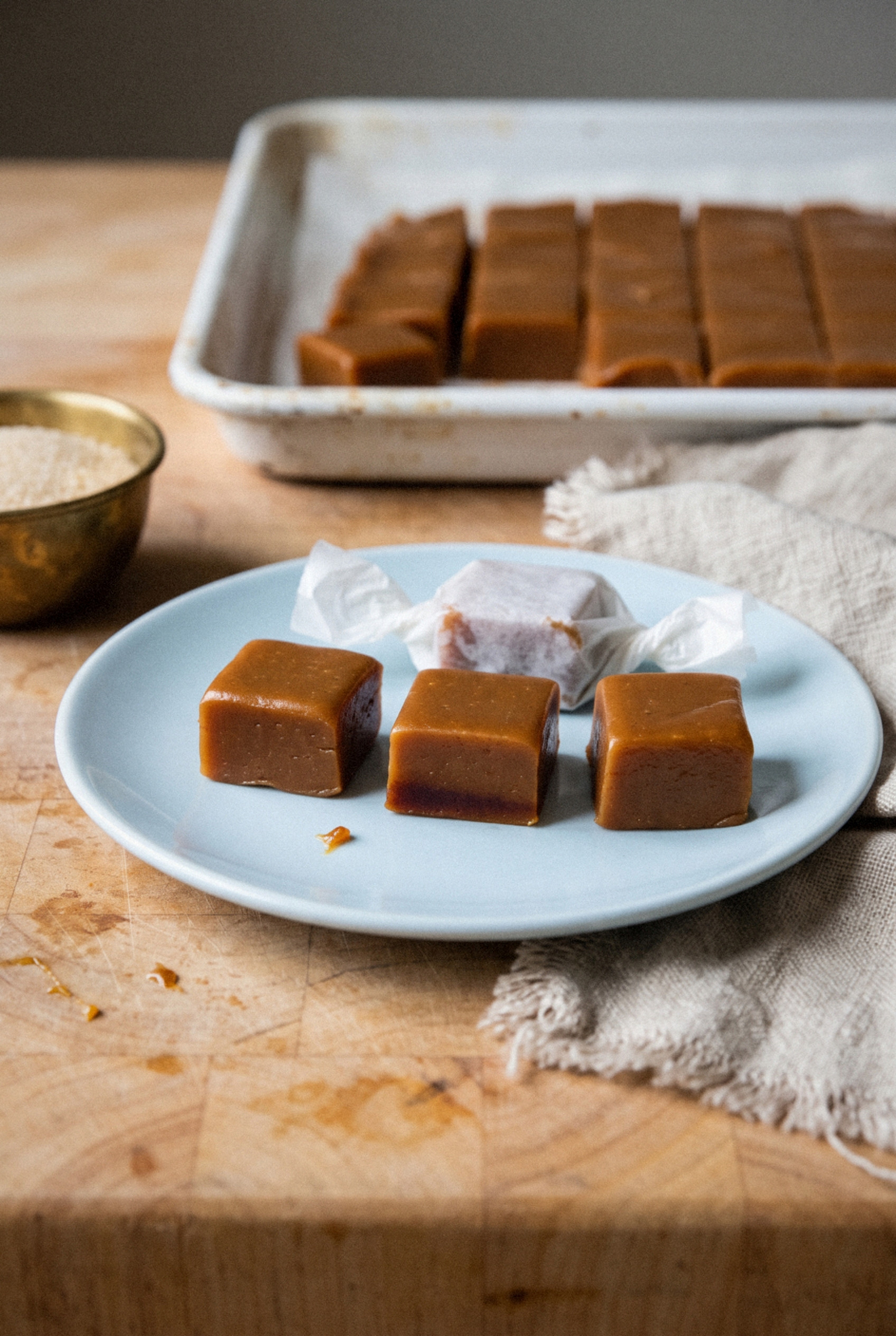
How to Cut and Wrap Caramels for Christmas Gifts
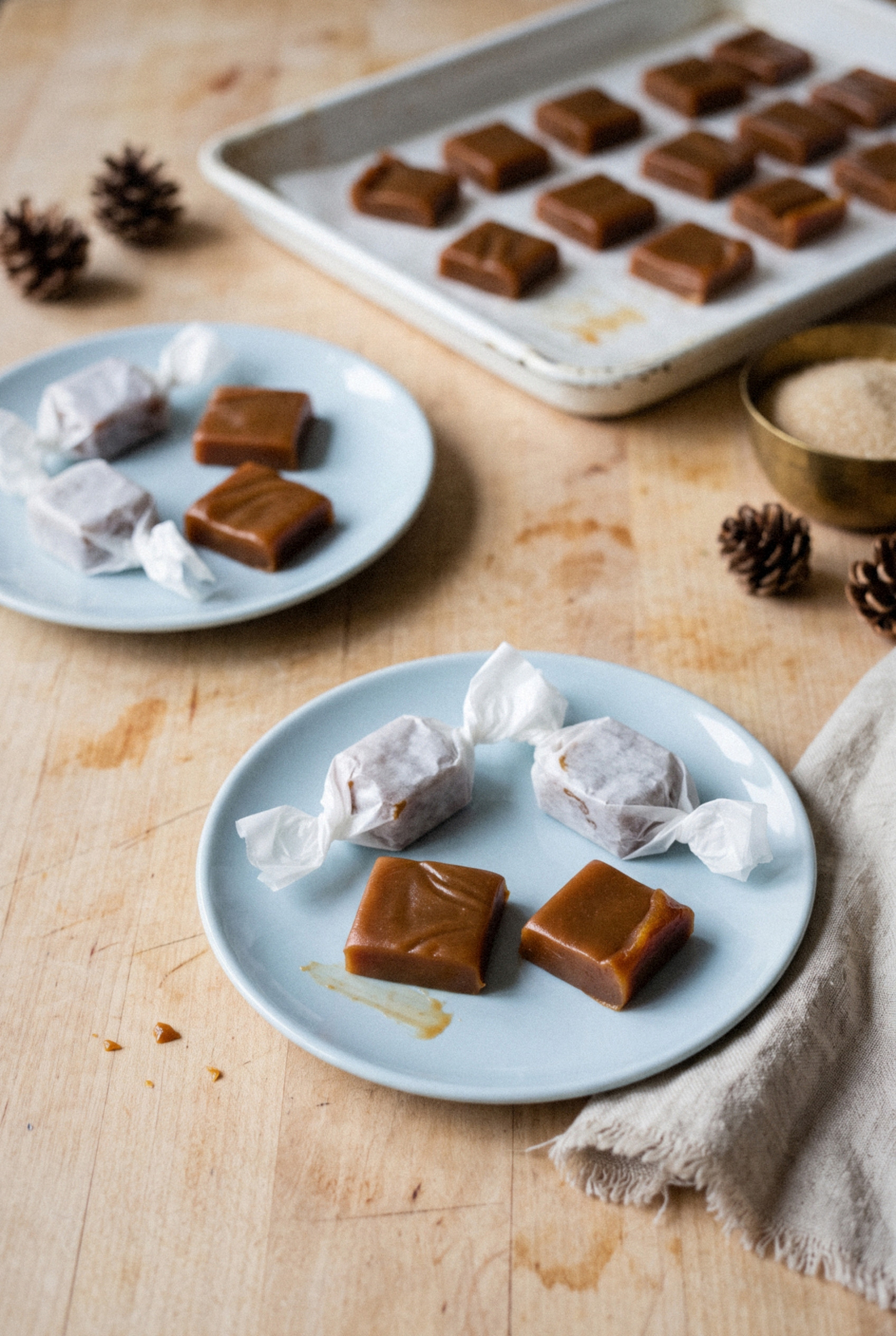
Cutting and wrapping is where these turn from candy into a gift. It takes about half an hour, and it's a nice job to do with a holiday movie on.
- Lift it out whole. Use the parchment handles to pull the slab onto a cutting board.
- Butter the knife. A large chef's knife or a bench scraper rubbed with a little butter slides right through. Wipe and re-butter it every few cuts.
- Cut 1-inch squares. Slice the slab into 8 strips, then cut each strip into 8 pieces for 64 caramels.
- Wrap right away. Cut pieces slowly spread and stick together if they sit. Twist each one in a 4-inch square of wax paper or parchment.
- Pack the tins. About 12 to 16 caramels per small tin is a nice gift alongside a few cookies.
Pro tip: Precut candy wrappers are worth the few dollars. They twist cleaner than paper you cut yourself and save a lot of time in December.
Tips for Making This Caramel Recipe
A few small habits make every batch come out right. These are the ones I learned the hard way.
- Use a heavy, deep pot. A thin pot scorches the molasses, and a small one overflows when the cream goes in. Four quarts is the minimum.
- Measure everything first. Have the cream, butter, molasses, salt, and spice paste ready before the sugar goes on.
- Leave the sugar alone. Stirring during the amber stage invites crystals. Swirl the pot gently if one side browns faster.
- Trust the thermometer, not the clock. My times are a guide. Some stoves take twice as long.
- Too soft after setting? Scrape it back into the pot with a splash of water, melt it down, and cook it 2 degrees higher.
- Too hard? Return it to the pot with 2-3 tablespoons of cream, melt it gently, and bring it back to 246°F.
- Grainy texture? That's crystallization. Next time brush down the pot sides well and don't scrape the bottom when pouring.
Variations
Once you've got the base down, these are easy to dress up. Each one makes a nice change for a second gift tin.
- Chocolate-dipped. Dip chilled squares halfway in melted dark or milk chocolate and let them set on parchment.
- Candied ginger. Scatter ⅓ cup finely chopped candied ginger over the bottom of the pan before pouring for little spicy bites throughout.
- Salted gingerbread. Finish with flaky sea salt as described in Step 6. The salt and molasses are out of this world together.
- Brown sugar depth. Swap ½ cup of the white sugar for packed brown sugar for an even darker flavor.
- No corn syrup. Replace the corn syrup with ¼ teaspoon cream of tartar added with the sugar. It works, but brush the pot sides carefully since the batch is less forgiving.
- Toasted pecans. Stir in ½ cup chopped toasted pecans with the spice paste for a praline-style caramel.
Make-Ahead and Timing for the Holidays
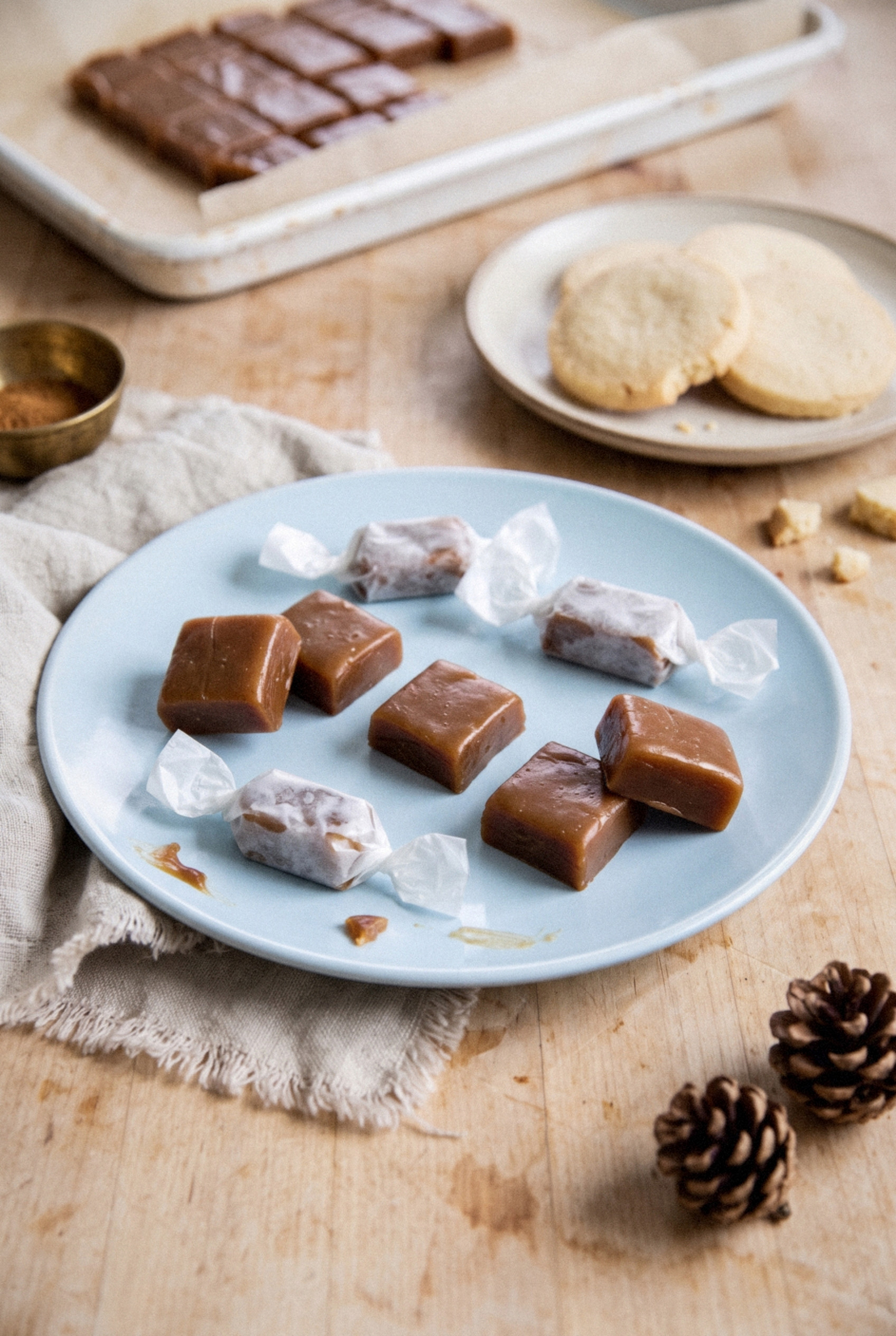
Caramels are one of the best make-ahead Christmas candies you can make. They actually taste better after a day as the spices settle in.
- Two weeks ahead. Make, cut, and wrap. Store them airtight at cool room temperature.
- One month ahead. Wrapped caramels keep well in the fridge.
- Further out. Freeze them, then thaw in the container so they don't sweat.
- The day before gifting. Pack the tins, add a tag, and you're done.
Mailing them? Cook to 248°F so they hold their shape through a warm delivery truck.
How to Store Gingerbread Caramels
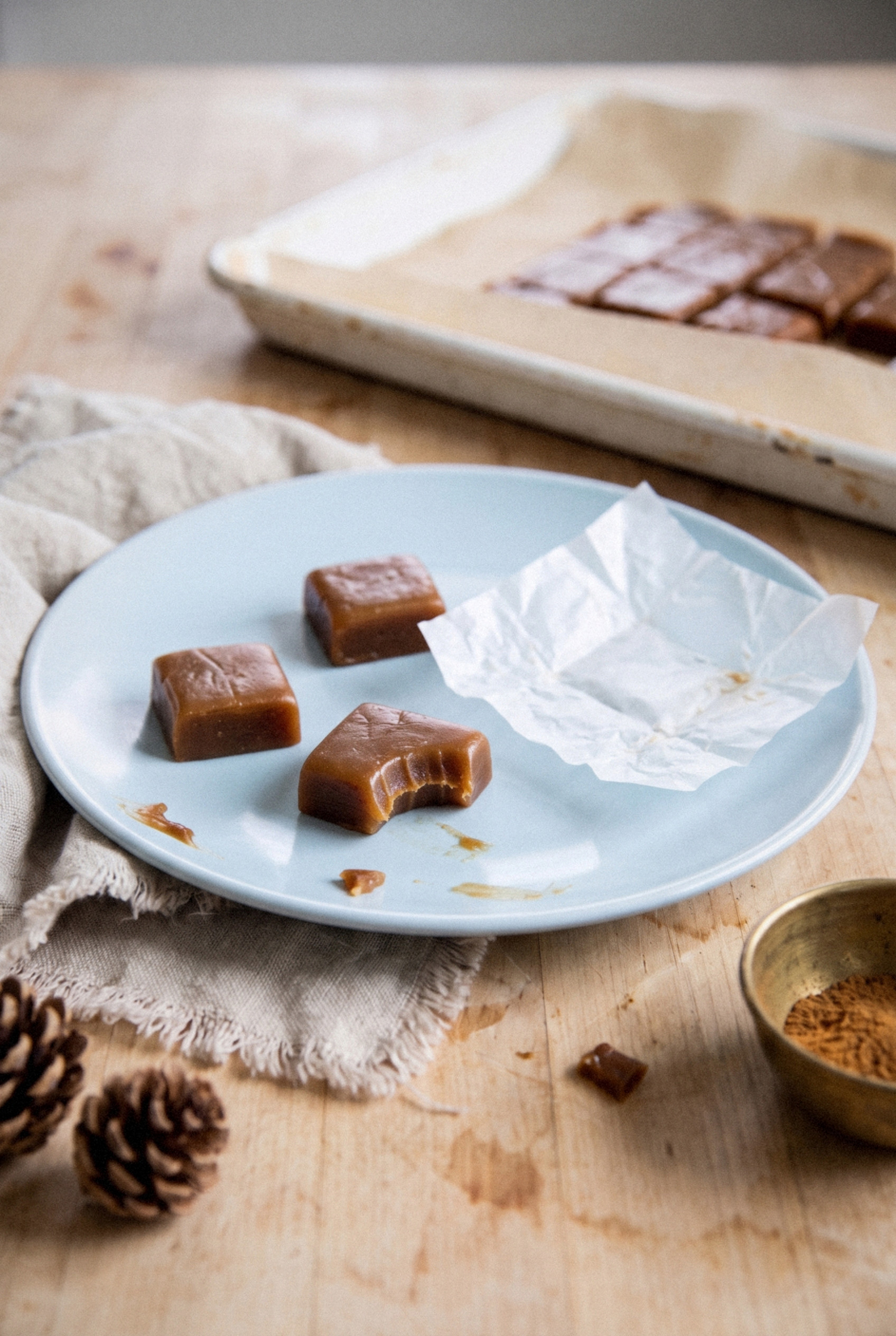
Wrapping each caramel is the biggest storage step. Unwrapped pieces slowly melt into one another.
- Room temperature. Keep wrapped caramels in an airtight container somewhere cool, around 70°F, for up to 2 weeks.
- Refrigerator. Store airtight for up to 1 month. Let them sit out for 15 minutes before eating so they soften back up.
- Freezer. Freeze wrapped caramels in a zip-top bag inside an airtight container for up to 3 months. Thaw in the fridge overnight, then on the counter, without opening the container.
They're delicious straight from the tin, but one tucked next to a cup of coffee on a cold morning hits the spot. Give them a try this Christmas!
Recipe
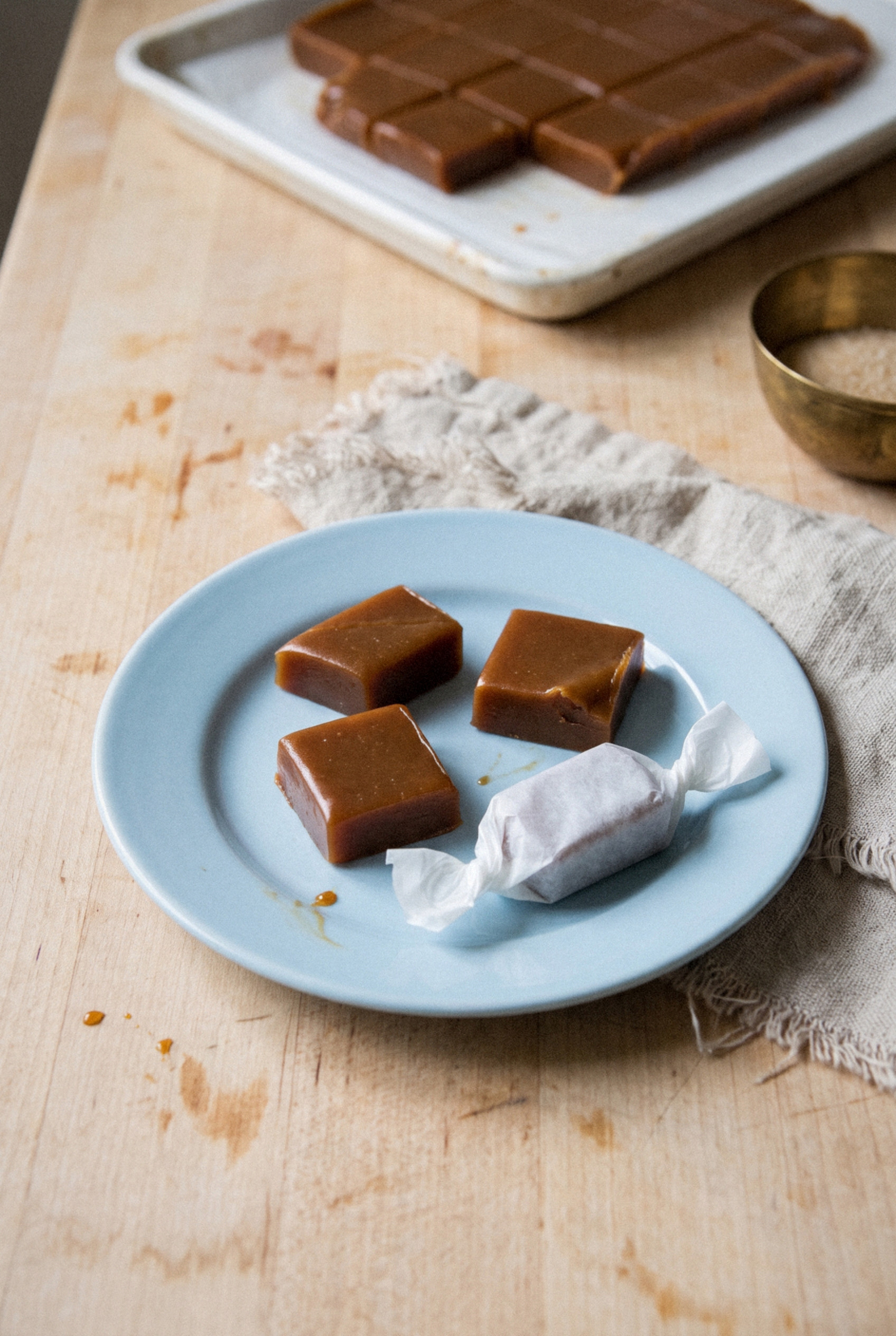
Gingerbread Caramels
Ingredients
For the Spice Paste
- 1 ½ teaspoons vanilla extract
- 1 ½ teaspoons ground ginger
- 1 teaspoon ground cinnamon
- ¼ teaspoon ground allspice
- ⅛ teaspoon ground cloves
- 1 pinch black pepper finely ground
For the Caramel
- 1 ½ cups heavy cream
- 2 cups granulated sugar
- ½ cup light corn syrup
- ¼ cup water
- 6 tablespoons salted butter cut into pieces, plus more for the pan
- ⅓ cup light molasses unsulfured, not blackstrap
- ½ teaspoon kosher salt
- flaky sea salt optional, for topping
Instructions
Prepare
- Line an 8x8-inch square pan with parchment, leaving an overhang on two sides, and lightly butter the parchment.
- Warm the heavy cream until hot but not boiling and keep it warm.
- In a small bowl, stir the vanilla, ginger, cinnamon, allspice, cloves and black pepper into a paste. Set it by the stove with the butter, molasses and kosher salt.
Cook the Caramel
- Combine the sugar, corn syrup and water in a heavy 4- to 5-quart pot and stir just until the sugar is moistened. Clip on a candy thermometer.
- Boil over medium-high heat without stirring until light amber and about 320°F, 12 to 15 minutes. Brush down any crystals on the sides with a wet pastry brush.
- Reduce the heat to low and slowly stream in the warm cream while stirring; it will bubble up. Stir in the butter, molasses and kosher salt.
- Return the heat to medium and cook, stirring slowly and scraping the bottom, until the caramel reaches 246°F, 15 to 20 minutes.
- Remove from the heat and stir in the spice paste until smooth. Pour into the prepared pan without scraping the bottom of the pot.
Set, Cut and Wrap
- If desired, sprinkle with flaky sea salt after about 15 minutes. Let the caramel set uncovered at room temperature for at least 3 hours or overnight.
- Lift the slab out using the parchment, cut into 1-inch squares with a buttered knife, and wrap each piece in wax paper or parchment.
Notes
- Molasses: Use light or unsulfured molasses. Blackstrap makes the caramels bitter.
- Thermometer: Test your thermometer in boiling water first. If it reads below 212°F, cook the caramel that many degrees lower.
- High altitude: Subtract about 2°F from the target temperature for every 1,000 feet above sea level.
- Texture: Cook to 244°F for very soft caramels or 248°F for firmer caramels that ship well.
- Storage: Keep wrapped caramels airtight at cool room temperature up to 2 weeks, refrigerated up to 1 month, or frozen up to 3 months.