Gingerbread and I didn't get along for most of my childhood.
Long before I ever tasted chewy gingerbread cookies, my mom set out a tray of stiff little gingerbread men every December for us to decorate at the kitchen table.
We'd pipe on buttons and smiles, and then we'd bite off one leg and quietly abandon the rest.
They snapped like crackers and tasted mostly of flour.
I figured that was just what gingerbread was.
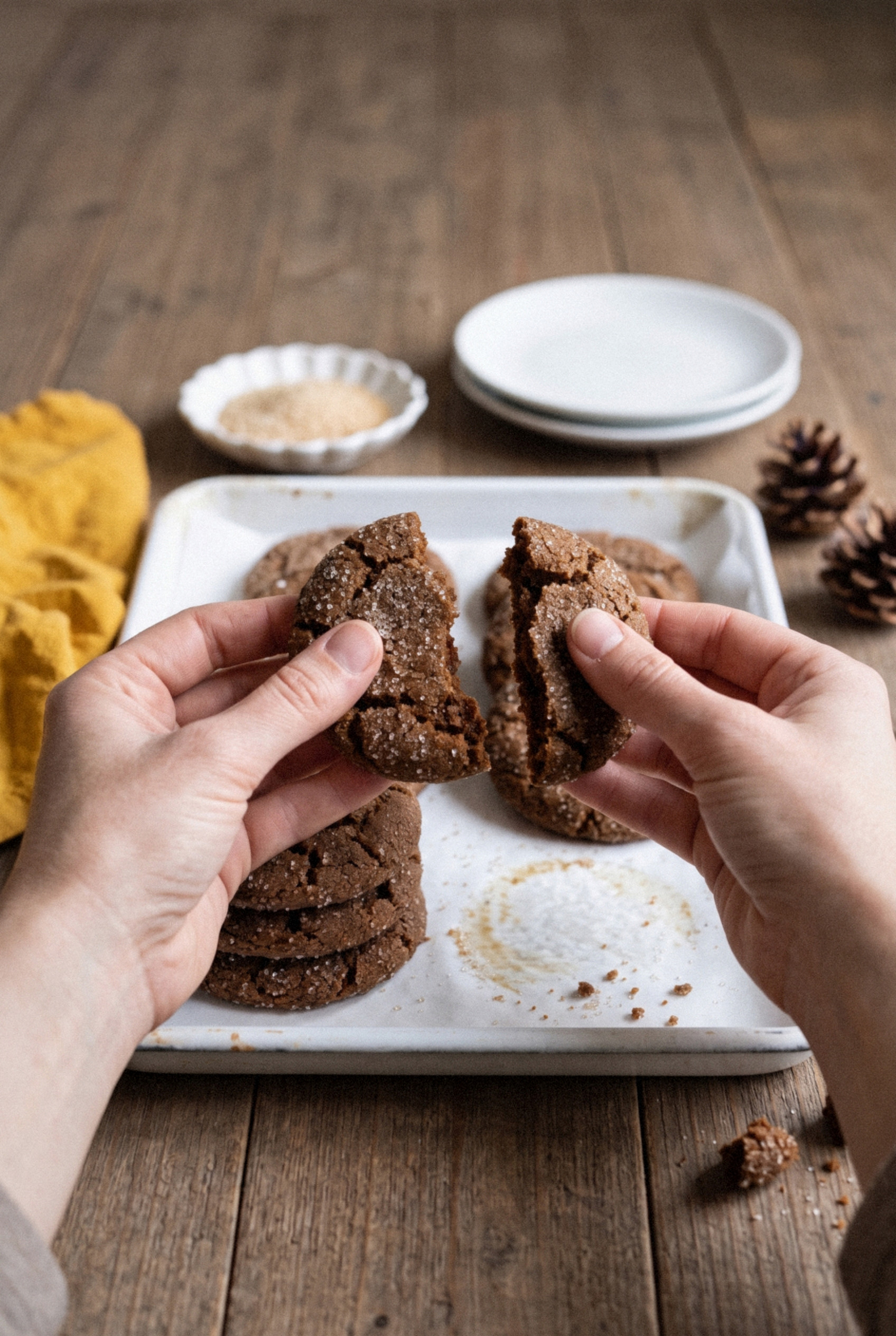
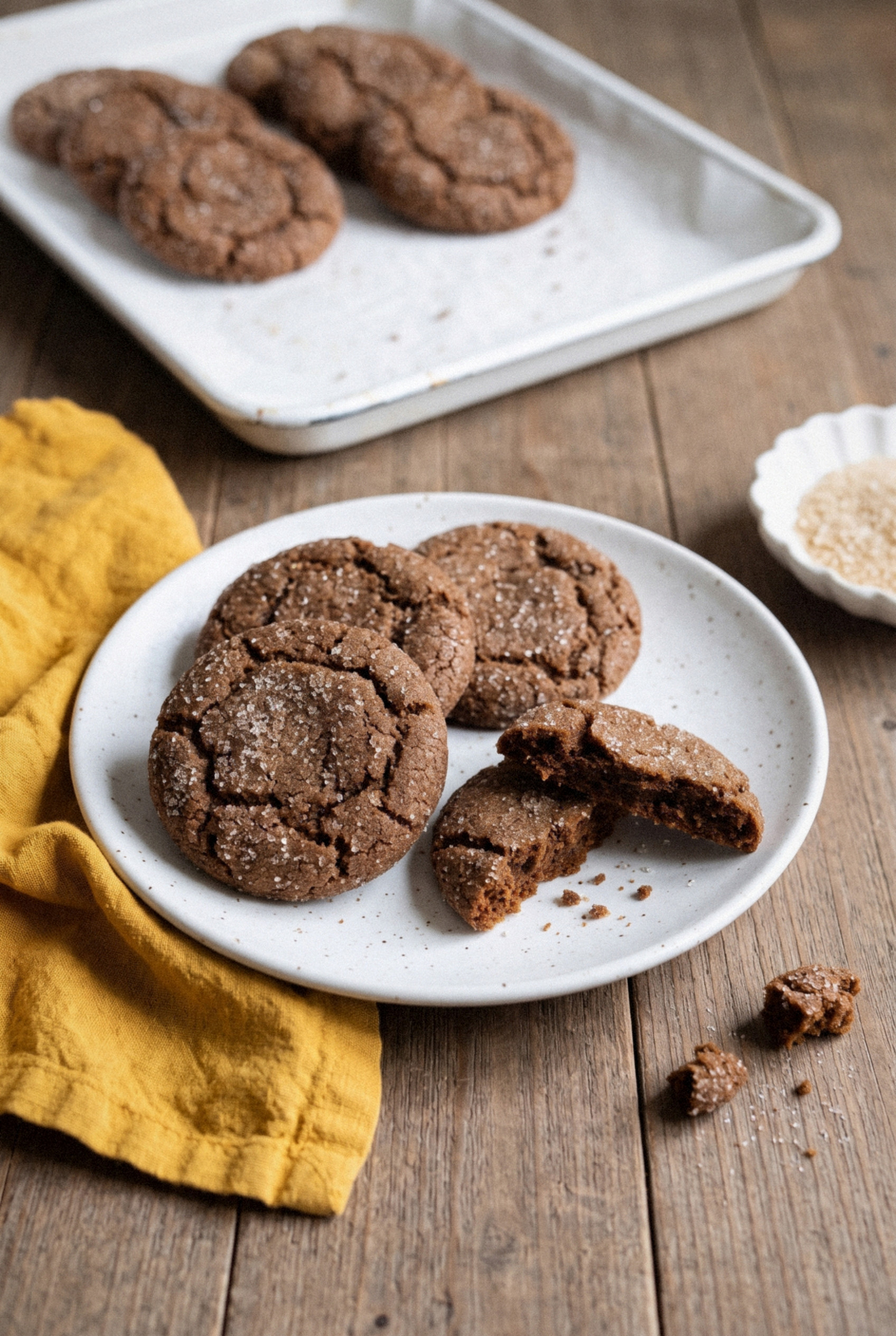
Then a coworker brought in a tin of thick, crackle-topped cookies that bent in half instead of breaking, and I ate four before lunch.
That tin sent me down a rabbit hole, and this recipe is where I came out.
They have all the spice of the cookies I remember, just none of the cardboard.
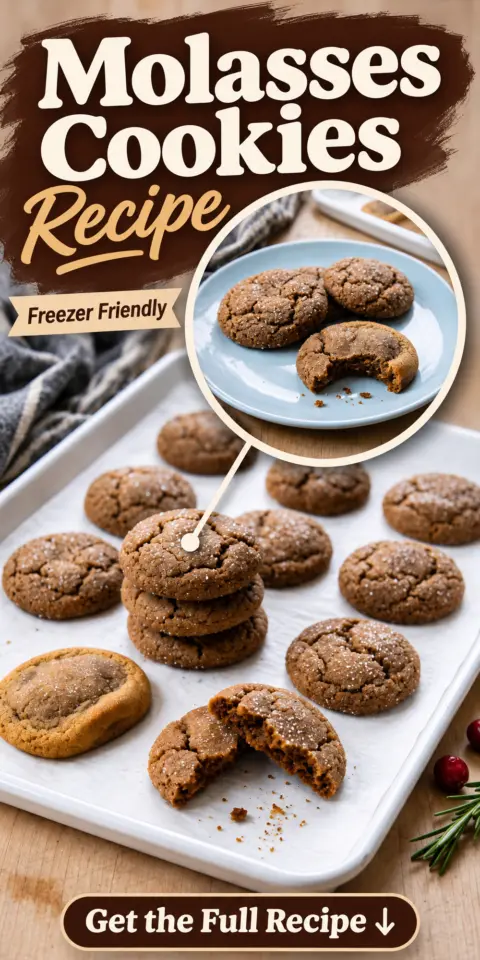
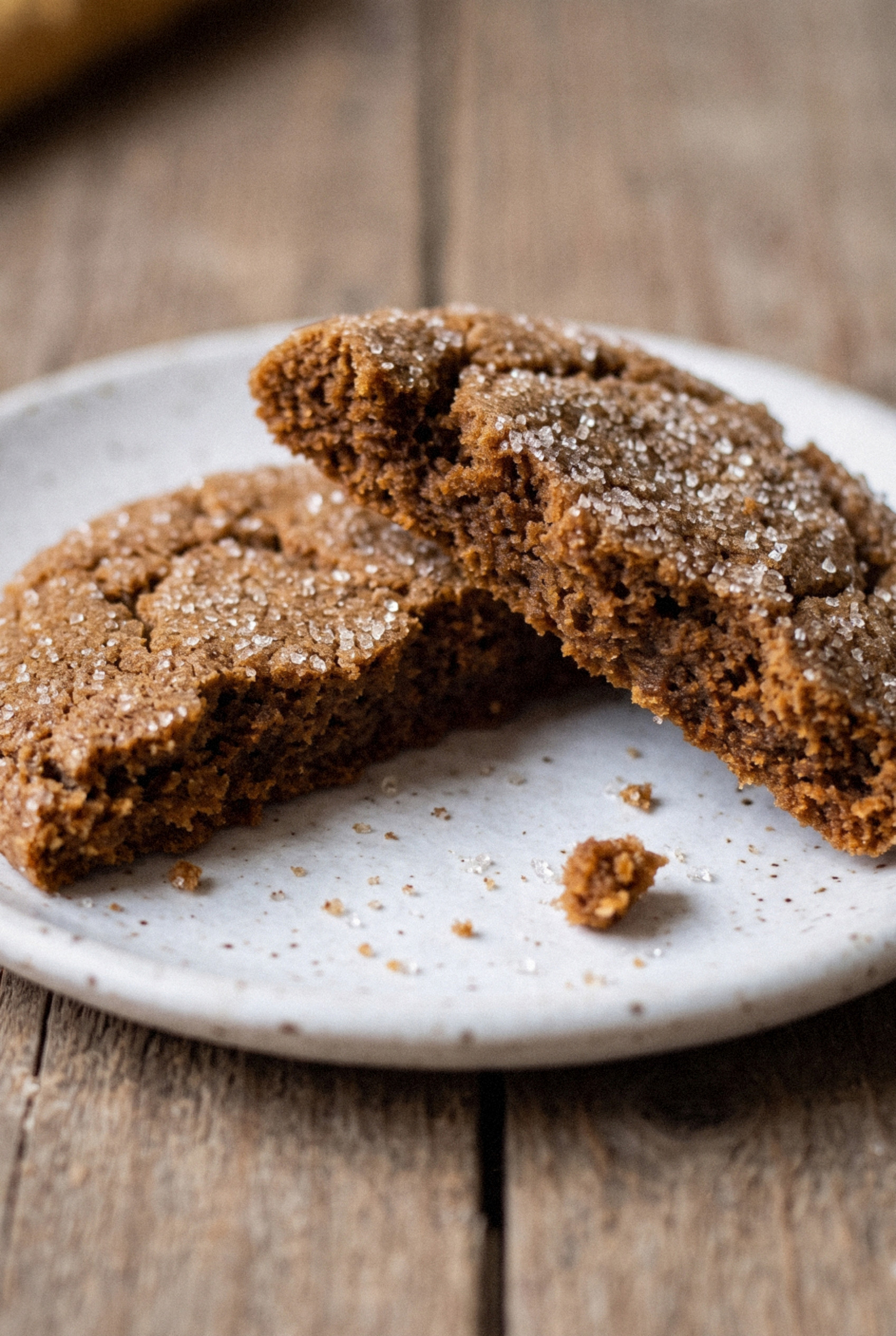
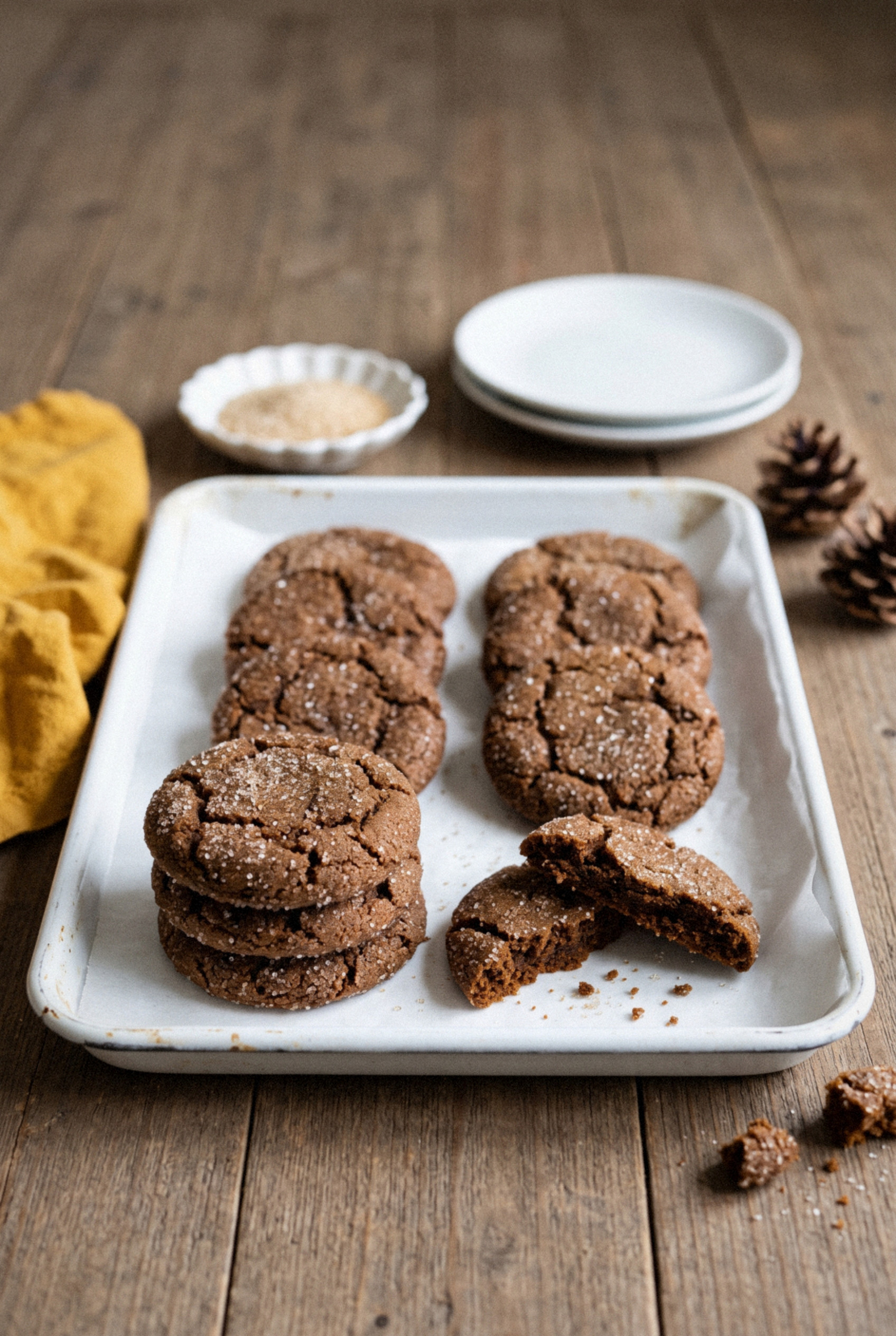
The edges set up crisp, the middles stay soft and bendy, and a full tablespoon of ground ginger gives them real warmth on the back of your tongue.
My wife calls them the cookie that converted me, and she's not wrong.
No rolling pin, no cookie cutters, no icing required. Just scoop, roll in sugar, and bake.
Put them on your Christmas cookie tray and watch which plate empties first.
What Makes Gingerbread Cookies Chewy
Chewy gingerbread is really about moisture and timing. Crisp gingerbread is built to hold a shape, so it uses more flour and bakes longer. This dough goes the other way on purpose.
- Dark brown sugar. It carries extra molasses and holds onto moisture, so the cookies stay soft and fudgy in the middle.
- Molasses. Another moisture magnet, plus that deep, slightly bitter sweetness gingerbread needs.
- An extra egg yolk. The yolk adds fat and richness without the extra water from a whole egg. That's the secret to a chewy cookie in a lot of recipes, and it works beautifully here.
- Less flour than cutout dough. At 2 ¼ cups, the dough is soft and drops instead of rolling. Less flour means less structure and more chew.
- A short bake. I pull them at 9 to 10 minutes, when the centers still look puffy. They firm up on the pan as they cool.
So how do you make gingerbread cookies more chewy? Add moisture, cut the flour, and stop baking sooner than feels right.
Ingredients for Chewy Gingerbread Cookies
Nothing fancy here, just a well-stocked spice drawer. A quick rundown:
- All-purpose flour (2 ¼ cups). Spoon it into the measuring cup and level it. Packed flour is the number one reason cookies turn out dry.
- Baking soda (1 teaspoon). Reacts with the molasses for lift and those crackled tops.
- Ground ginger (1 tablespoon). Yes, a full tablespoon. This is a cookie for true gingerbread lovers. Use a fresh jar for the best bite.
- Ground cinnamon (2 teaspoons). Softens the ginger and adds warmth.
- Ground cloves (½ teaspoon) and nutmeg (¼ teaspoon). The classic holiday notes. Cloves are strong, so measure level.
- Black pepper (⅛ teaspoon). A tiny pinch you won't taste directly. It just makes the ginger feel hotter and deeper.
- Salt (½ teaspoon). Wakes everything up.
- Unsalted butter (¾ cup). Softened to room temperature so it creams smoothly.
- Dark brown sugar (¾ cup, packed). The main sweetener and the key to chew.
- Granulated sugar (¼ cup). Helps the edges crisp slightly so you get contrast.
- Unsulphured molasses (⅓ cup). I use Grandma's Original. Mild or full-flavor both work.
- Egg plus 1 egg yolk. Room temperature, for richness and chew.
- Vanilla extract (1 teaspoon). Rounds out the spices.
- Coarse sparkling sugar (⅓ cup). For rolling. It gives a crunchy, glittery shell that looks so festive. Granulated sugar works too.
Heads up on molasses: skip blackstrap. It's more bitter and less sweet, and it makes the cookies drier and darker than you want.
Can you make gingerbread cookies without molasses? You can swap in dark corn syrup or maple syrup, but they'll taste more like spice cookies than gingerbread.
How to Make Chewy Gingerbread Cookies
This is a one-bowl-plus-a-whisk kind of recipe. The whole thing comes together in about 15 minutes of hands-on time.
Step 1: Mix the Dough
Whisk the flour, baking soda, ginger, cinnamon, cloves, nutmeg, black pepper, and salt in a medium bowl. In a large bowl, beat the softened butter, brown sugar, and granulated sugar on medium speed for about 2 minutes, until creamy and a little lighter in color.
Beat in the molasses, then the egg, egg yolk, and vanilla, scraping down the sides. Add the dry ingredients on low speed and mix only until the last streak of flour disappears. Overmixing develops gluten, and gluten makes cookies tough instead of chewy.
Step 2: Chill Briefly
Cover the bowl and chill the dough for 30 minutes. That's enough to firm up the butter so the cookies hold a thick shape. You don't need hours like you would for cutouts.
Pro tip: If your kitchen is warm from a day of holiday baking, give it the full 30 minutes. A warm dough spreads thin and loses the chew.
Step 3: Roll, Sugar and Press
Heat the oven to 350°F and line two baking sheets with parchment. Scoop the dough into 2 tablespoon balls and roll each one in the sparkling sugar until it's completely coated. Set them 2 ½ inches apart, about 10 to a sheet.
Press each ball gently with the bottom of a glass until it's about ¾ inch thick. This keeps the cookies even and helps the tops crack as they bake.
Step 4: Bake Until Just Set
Bake one sheet at a time on the middle rack for 9 to 10 minutes. The edges should look set and the tops cracked, but the centers should still look soft and slightly underdone. Let them cool on the baking sheet for 5 minutes, then move them to a wire rack.
Worried they look raw? They aren't. The heat of the pan finishes the job.
Common Mistakes to Avoid
Most gingerbread cookie problems come from a handful of small slips. Watch for these.
- Overbaking. The biggest one by far. If the centers look done in the oven, they'll be hard once cool. Pull them early.
- Too much flour. Scooping straight from the bag can add a quarter cup or more. Spoon and level, or weigh it at 281 grams.
- Using blackstrap molasses. It makes bitter, dry cookies. Stick with unsulphured.
- Skipping the chill. Warm dough spreads into thin, crispy disks.
- Pressing too thin. Flatten to about ¾ inch. Thinner cookies bake through and lose their soft middles.
- Cold butter or eggs. They won't blend smoothly, and the dough bakes up uneven. Let them sit out about 30 minutes first.
Soft vs Crisp Gingerbread
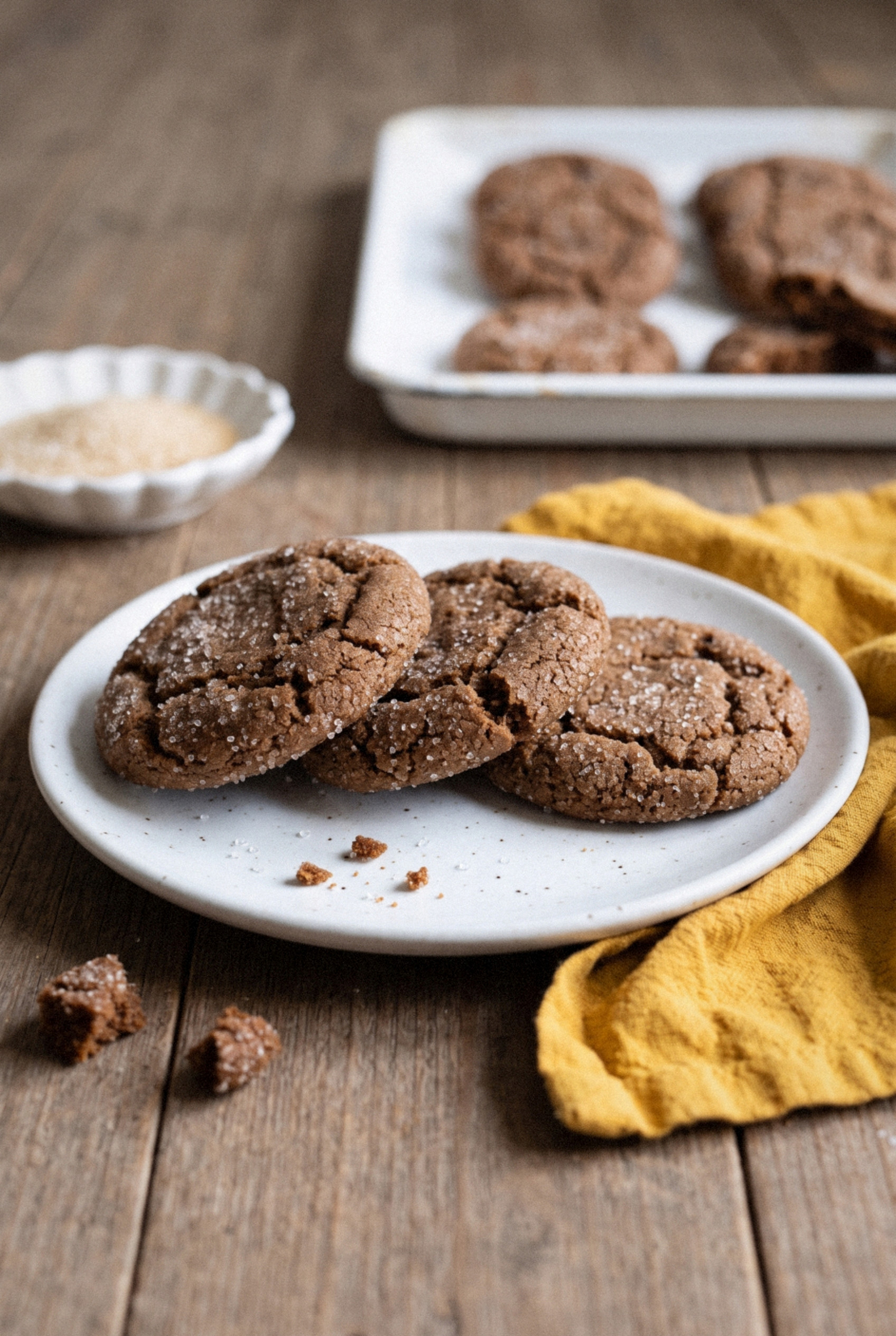
Should gingerbread cookies be hard or soft? Honestly, it depends on the job. Both have a place in December.
- Crisp gingerbread. Best for gingerbread houses, tree ornaments, and detailed cutouts. The dough is stiffer, rolled thin, and baked longer so it holds a shape and lasts for weeks.
- Chewy gingerbread. Best for eating. This drop-style dough skips the rolling pin and bakes up thick, soft, and bendy. It's the one I make for cookie trays, cookie swaps, and gift tins.
Gingersnaps sit at the far crisp end. They're baked longer and thinner, and they're meant to snap.
These are the exact opposite, and that's the whole point.
Ways to Dress Them Up for Christmas
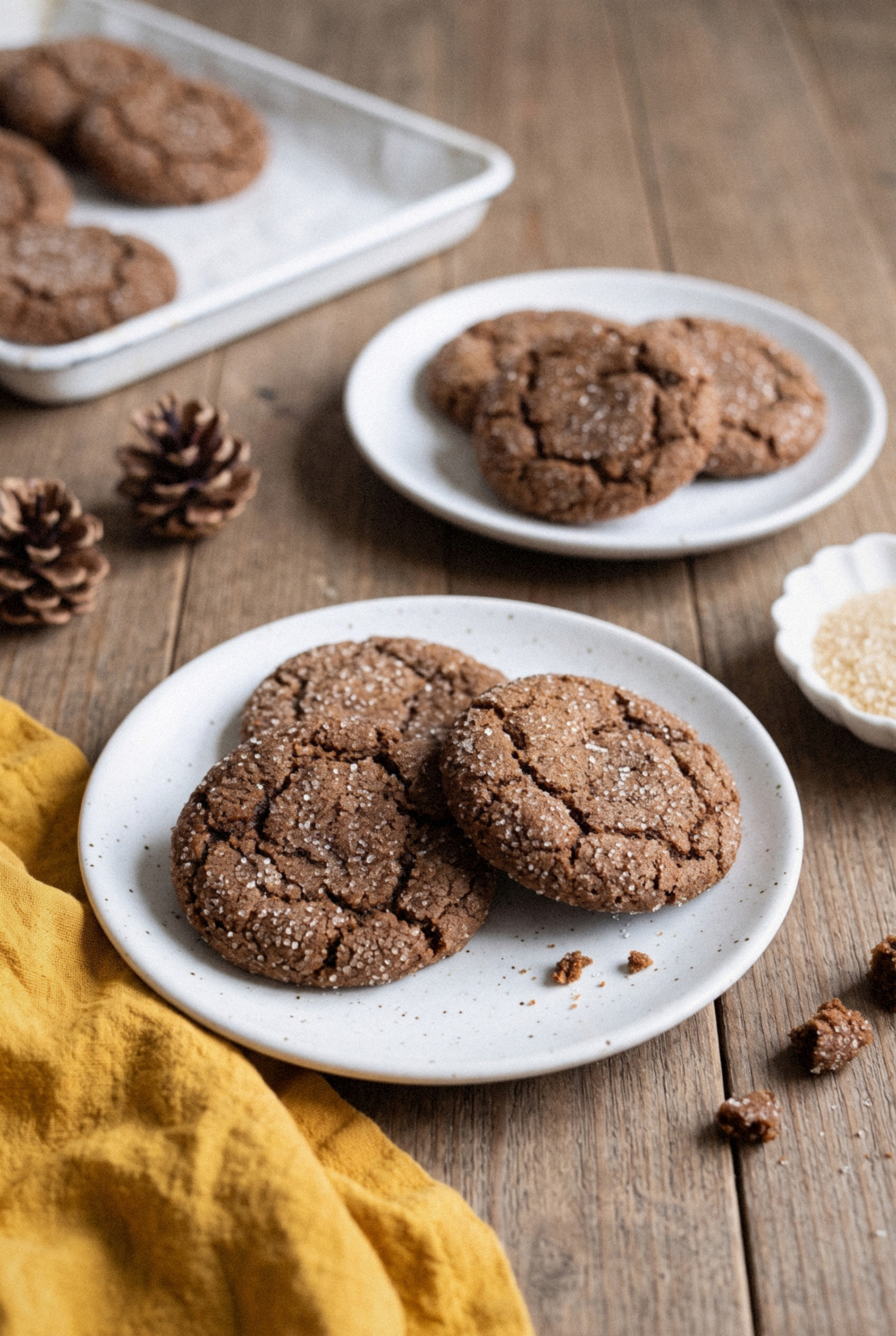
The plain sugar-rolled cookie is already a crowd-pleaser. But if you want something extra for the holiday tray, try one of these.
- Vanilla glaze drizzle. Whisk 1 cup of powdered sugar with 1 to 2 tablespoons of milk and a splash of vanilla. Drizzle over cooled cookies and let it set for about 30 minutes.
- Cream cheese sandwich cookies. Spread cream cheese frosting between two cookies. Store these in the fridge.
- White chocolate dip. Dip half of each cookie in melted white chocolate and set on parchment to harden.
- Crystallized ginger. Fold ⅓ cup of finely chopped crystallized ginger into the dough for chewy little bursts of heat.
- Orange zest. Add the zest of one orange to the butter and sugar for a bright, citrusy version.
Substitutions
A few easy swaps if your pantry is missing something.
- Light brown sugar. Works one for one. The cookies will be slightly lighter and a touch less chewy.
- Whole egg instead of egg plus yolk. Use just one large egg. The cookies will be a bit more cakey.
- Salted butter. Reduce the salt to ¼ teaspoon.
- Gluten-free. A cup-for-cup gluten-free flour blend works well. Chill the dough the full 30 minutes since it's a little softer.
- Milder spice. Cut the ginger to 2 teaspoons and skip the black pepper if you're baking for kids.
What to Serve With Chewy Gingerbread Cookies
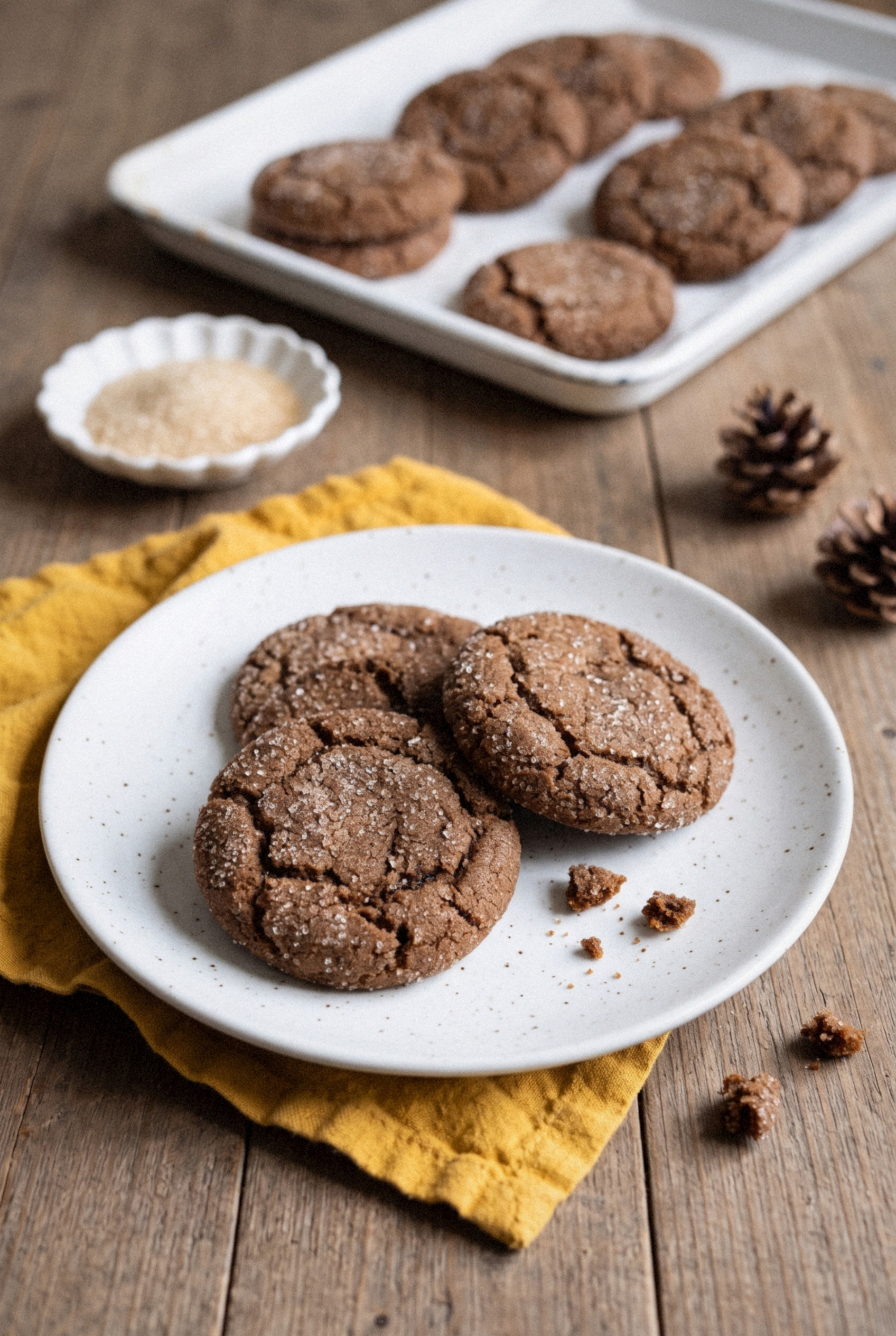
These cookies love a warm drink. Here's what I reach for.
- Hot cocoa. Chocolate and ginger pair perfectly.
- Coffee or a chai latte. The spices echo each other.
- Eggnog. About as Christmas as it gets.
- Vanilla or cinnamon ice cream. Make little ice cream sandwiches for an easy holiday dessert.
Storing and Freezing
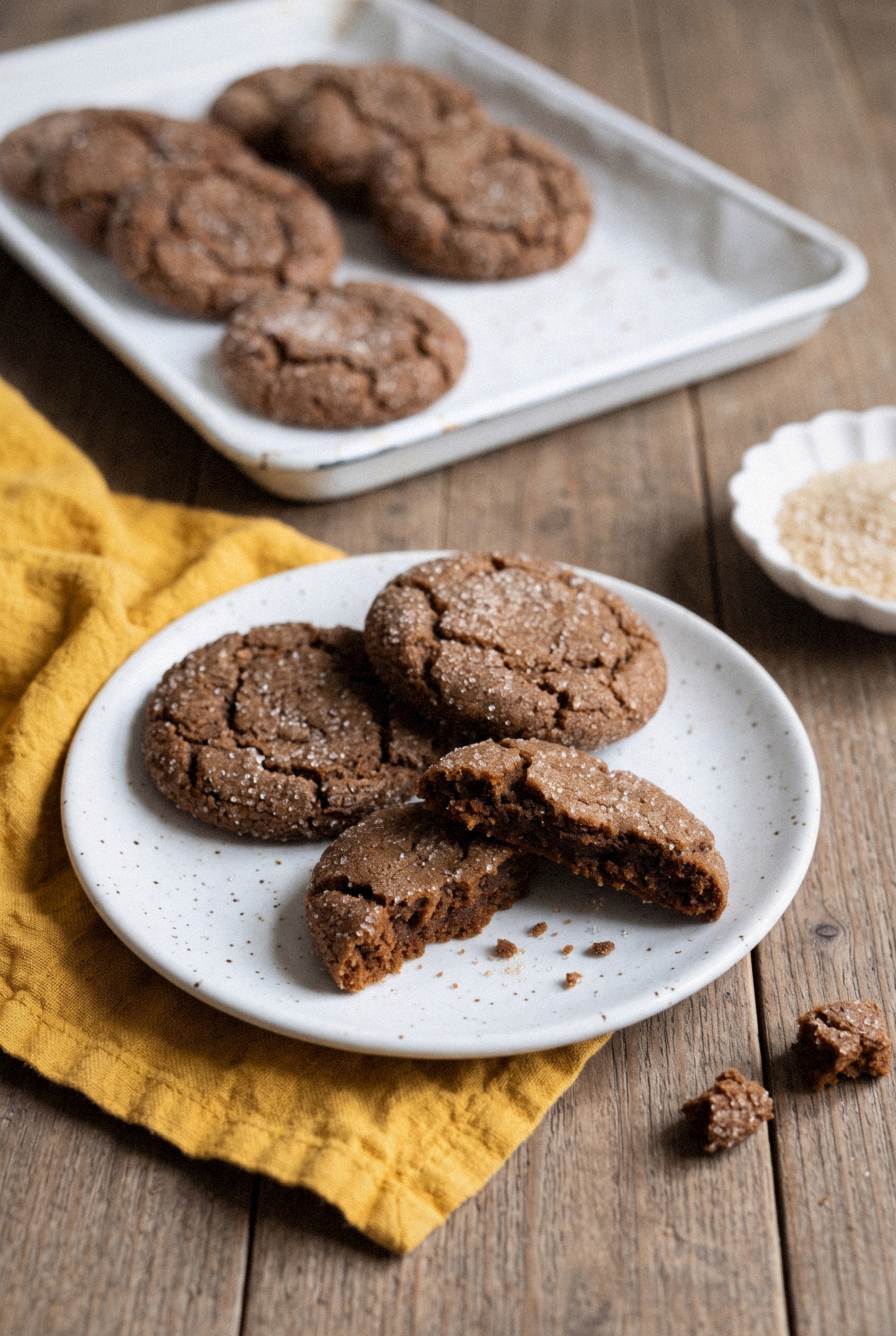
These stay soft longer than most cookies, which makes them perfect for gifting.
- Room temperature. Airtight container for up to 5 days. A slice of bread in the container keeps them extra soft.
- Make-ahead dough. Refrigerate the dough, tightly covered, for up to 3 days. Let it sit out for 15 minutes before scooping.
- Frozen dough balls. Freeze unrolled balls on a tray, then bag them for up to 3 months. Roll in sugar and bake from frozen, adding 1 to 2 minutes.
- Frozen baked cookies. Freeze in a single layer, then stack with parchment between layers for up to 3 months.
- Gift tins and mailing. Pack fully cooled cookies in stacks with wax paper between them. Keep them in their own tin so crisp cookies nearby don't go soft. They hold up well for 2 to 3 days in the mail.
I bake a double batch the first weekend of December and freeze half for later.
By the time the cookie swap rolls around, I'm already ahead. Give it a try!
Recipe
Chewy Gingerbread Cookies
Ingredients
For the Cookies
- 2 ¼ cups all-purpose flour spooned and leveled (281 g)
- 1 teaspoon baking soda
- 1 tablespoon ground ginger
- 2 teaspoons ground cinnamon
- ½ teaspoon ground cloves
- ¼ teaspoon ground nutmeg
- ⅛ teaspoon finely ground black pepper
- ½ teaspoon salt
- ¾ cup unsalted butter softened to room temperature (170 g)
- ¾ cup dark brown sugar packed (150 g)
- ¼ cup granulated sugar 50 g
- ⅓ cup unsulphured molasses not blackstrap (113 g)
- 1 large egg room temperature
- 1 large egg yolk room temperature
- 1 teaspoon vanilla extract
For Rolling
- ⅓ cup coarse sparkling sugar or granulated sugar
Instructions
Make the Dough
- Whisk the flour, baking soda, ginger, cinnamon, cloves, nutmeg, black pepper, and salt together in a medium bowl.
- In a large bowl, beat the butter, brown sugar, and granulated sugar on medium speed for about 2 minutes until creamy.
- Beat in the molasses, then the egg, egg yolk, and vanilla, scraping down the bowl.
- Add the dry ingredients on low speed and mix just until no flour streaks remain.
- Cover and refrigerate the dough for 30 minutes.
Shape and Bake
- Heat the oven to 350°F and line two baking sheets with parchment paper.
- Scoop the dough into 2 tablespoon balls and roll each in the sparkling sugar. Place 2 ½ inches apart, about 10 per sheet.
- Gently press each ball with the bottom of a glass to about ¾ inch thick.
- Bake one sheet at a time on the middle rack for 9 to 10 minutes, until the edges are set and the tops are cracked but the centers still look soft.
- Cool on the baking sheet for 5 minutes, then transfer to a wire rack to cool completely.
Notes
- Molasses: Use unsulphured mild or full-flavor molasses, not blackstrap.
- Doneness: Pull the cookies while the centers still look slightly underdone. They set as they cool on the pan.
- Milder spice: Reduce the ginger to 2 teaspoons and omit the black pepper.
- Storage: Airtight at room temperature for up to 5 days.
- Freezing: Freeze dough balls up to 3 months and bake from frozen, rolled in sugar, adding 1 to 2 minutes. Baked cookies freeze for up to 3 months.