One Hanukkah in somebody else's kitchen, I never made it out of the corner by the stove.
My friend Dan's mother had two pans going and a system, and my job was handing her paper towels.
The plate she filled emptied faster than she could fill it.
Nobody sat down. People just walked past the counter and took one.
I went home smelling like oil and thinking about it for a week.
When I finally started making my own, I got restless with the beige version pretty quickly.
So I swapped most of the russet for sweet potato and grated a whole raw beet into the bowl.
The mixture came out an alarming magenta.
My cutting board is still faintly pink and my wife still brings it up.
Worth it, though, because the beet does something the color alone doesn't explain.
Sweet potato on its own drifts toward dessert territory.
Raw beet drags it back with an earthy, almost mineral edge that keeps the whole thing savory.
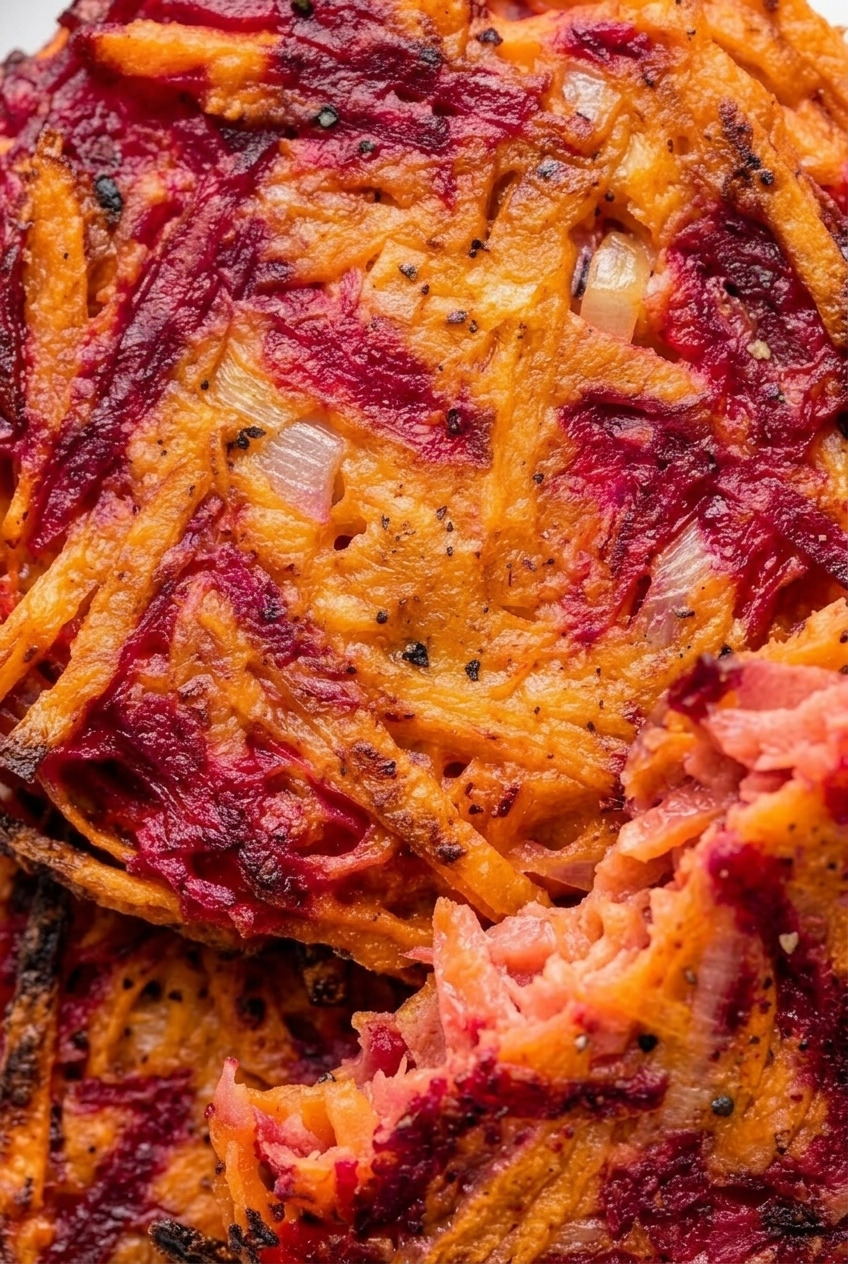
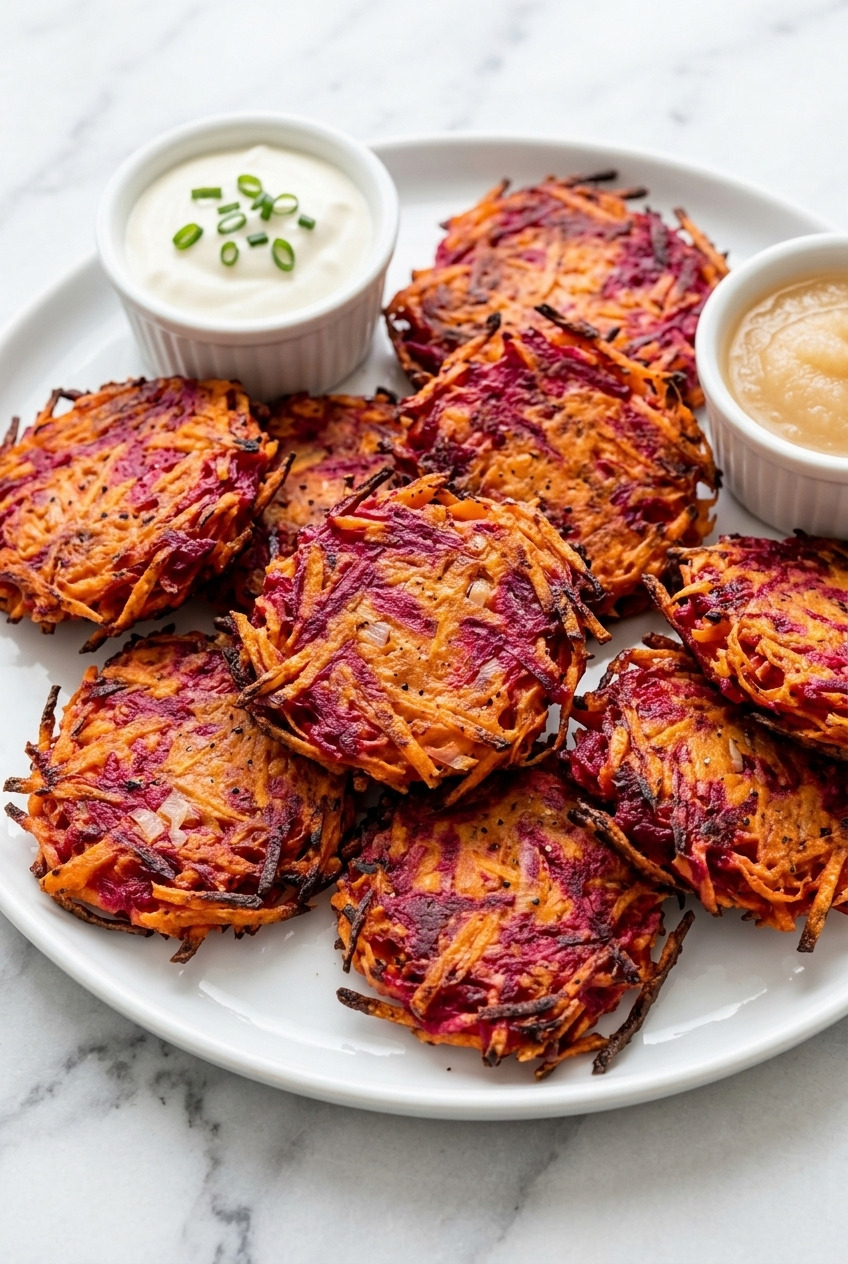
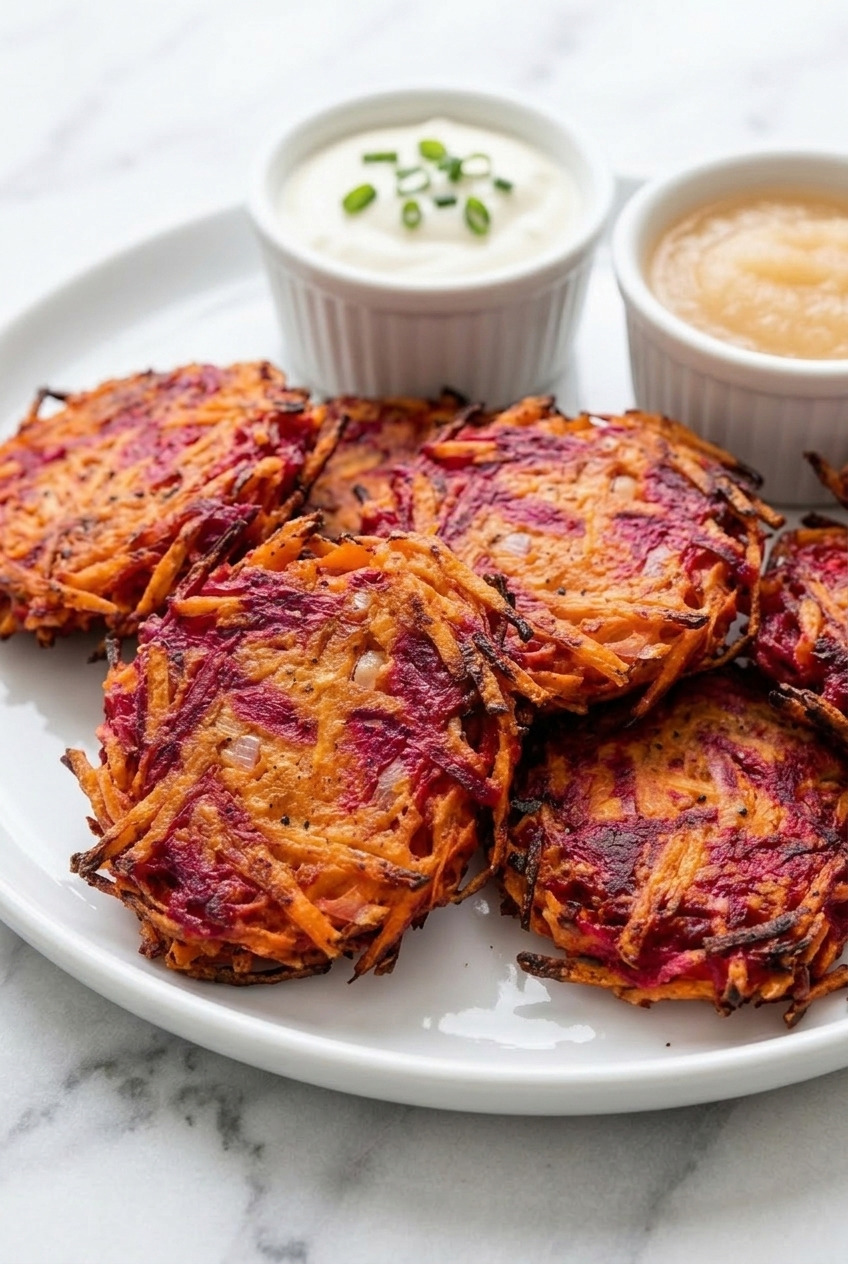
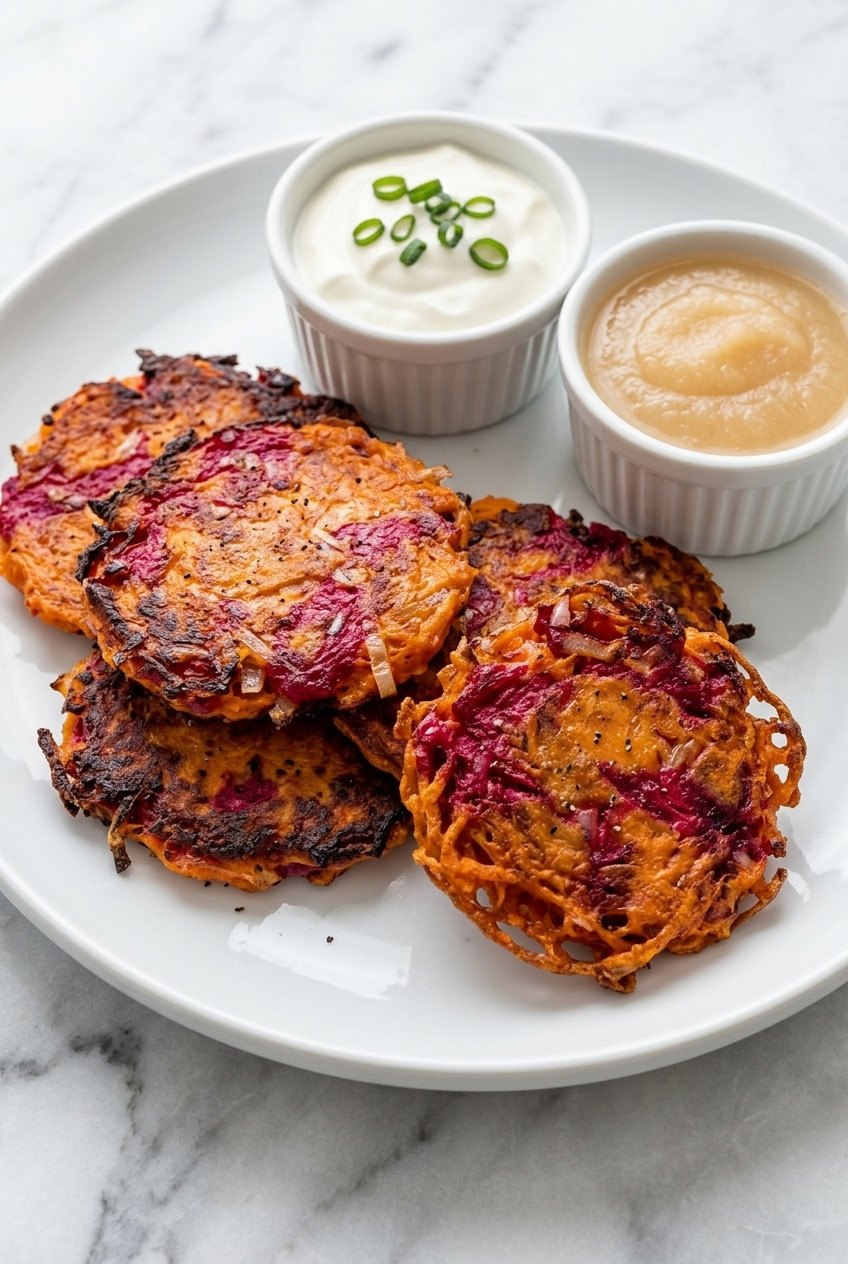
And every single one comes out streaked and marbled instead of uniformly orange.
They fry up with lacy dark edges and a soft middle, and they take applesauce and sour cream exactly the way a latke should.
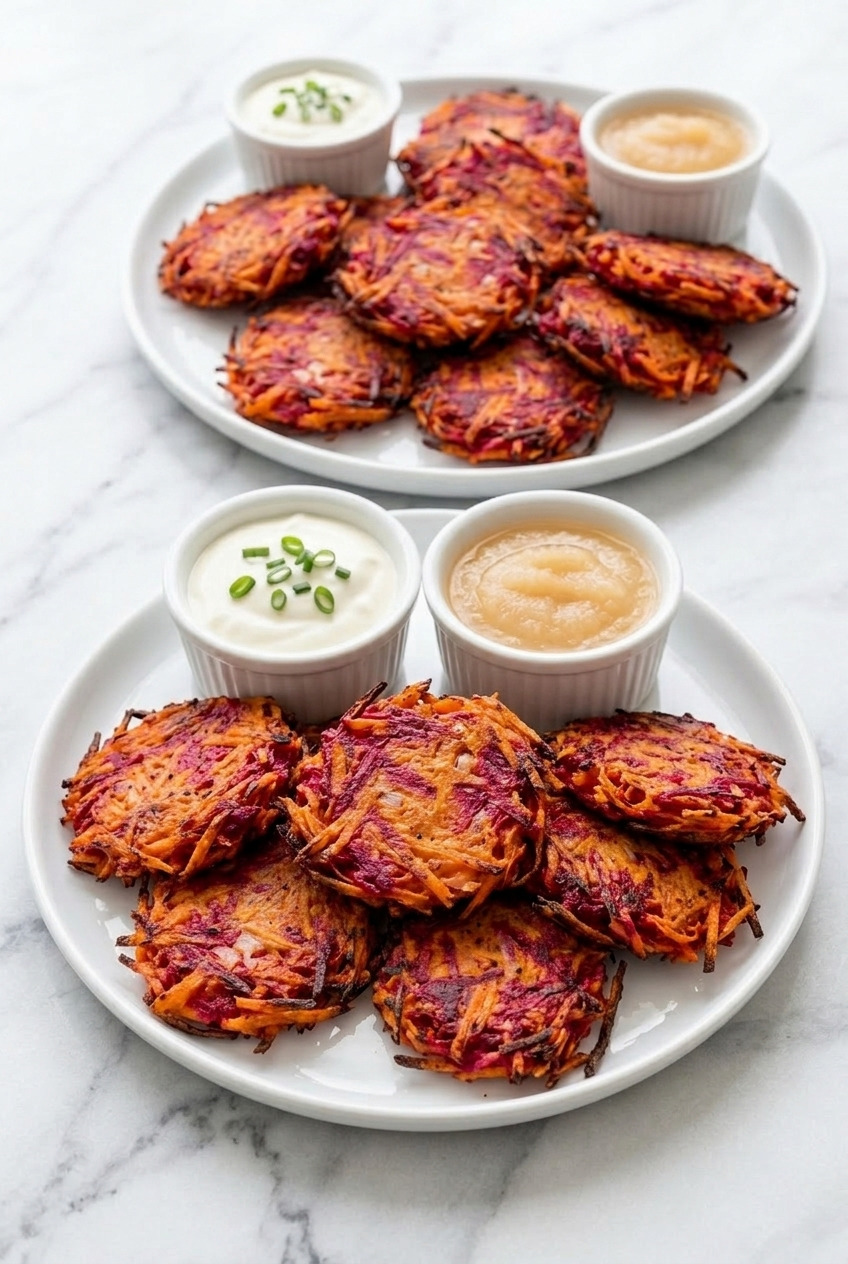
I make a double batch now, because a single one never survives the kitchen.
What Makes a Latke a Latke
A latke is a specific thing, and it isn't interchangeable with every other shredded potato cake. Worth spelling out, because readers land on these three recipes constantly and wonder why the results differ.
- Latke. Jewish, tied to Hanukkah. Grated potato and onion, bound with egg and matzah meal, shallow fried in a real depth of oil. The oil is not incidental, it's the whole point of the holiday, which commemorates one day of oil burning for eight.
- Rosti. Swiss. No egg, no binder of any kind, no onion. Shredded potato pressed into a pan and crisped in butter.
- Hash brown patty. American diner. No egg, no onion, usually parcooked potato pressed into a shape and griddled.
Ours is a latke. Egg, matzah meal, onion, oil.
Serve them at Hanukkah or serve them in April. I do both.
Why the Beet Belongs Here
People ask whether beets and sweet potatoes actually go together, and the answer is yes, but not for the reason you'd guess. It isn't a flavor-matching thing. It's a correction.
Sweet potato is sweet. Grate a pound of it, fry it in oil, and without something pushing back you've basically made a pancake.
Raw beet pushes back. It's earthy and faintly mineral, and it lands right where the sweetness starts to get away from you.
Then there's the color, which is the part people notice first.
Use a RAW beet, not a roasted one. Raw beet bleeds magenta into the orange shreds while everything sits together in the bowl, and every latke comes out marbled with pink and red streaks running through it.
A roasted beet is already soft and cooked. It smears instead of shredding and the finished latke goes a uniform muddy brown.
Same ingredient, completely different plate.
The Squeeze Is the Whole Recipe
If you take one thing from this article, take this one. Not one of the recipes ranking for this dish mentions it, and it's the entire difference between crisp and limp.
Grated sweet potato and beet hold an absurd amount of water.
That water doesn't just sit there when the latke hits the oil. It boils, and it steams the inside of your latke while the outside is trying to fry.
You end up with a pale, floppy pancake with a soggy middle.
So: toss the shreds with the salt, let them sit 10 minutes, then pile them into a clean kitchen towel and wring it out like you're angry at it.
Fair warning: what comes out is bright fuchsia liquid and there will be a lot of it. Half a cup is normal. Do it over the sink, and use a towel you don't love.
Sound like an extra step? It's the step.
Ingredients You'll Need
Short list, and the only unusual item is the matzah meal. Every grocery store carries it, usually near the crackers.
For the latkes:
- Sweet potato (1 lb, about 2 medium). Peeled and grated on the large holes of a box grater. Long shreds tangle and grip each other. A food processor's S-blade makes mush.
- Red beet (1 medium, about 6 oz). Peeled, RAW, grated on the same large holes. Wear gloves unless you want pink fingertips for two days.
- Yellow onion (½ medium). Grated, not diced. Grated onion melts into the batter and seasons every shred instead of showing up as chunks.
- Kosher salt (1 ½ teaspoons). Goes on the shreds first, before anything else, to pull the water out.
- Eggs (2 large). The binder. This is a real latke, not a vegan fritter, and the egg is what holds the edges together in hot oil.
- Matzah meal (⅓ cup). The traditional binder and better than flour here. It absorbs without going gummy and keeps the texture open.
- Potato starch (2 tablespoons). My addition. A beet is wetter than a russet and the starch buys back the crispness you lose.
- Garlic powder (½ teaspoon). Quiet savory depth.
- Black pepper (½ teaspoon). Freshly cracked.
- Neutral oil (1 cup). Canola, grapeseed, or avocado. Not olive oil, it smokes too low for this.
To serve:
- Applesauce (1 cup). Cold, from the fridge, against a hot latke. Chunky or smooth, your call.
- Sour cream (1 cup). Full fat. The traditional argument is applesauce versus sour cream and the correct answer is both, on the same plate, on different latkes.
- Chives (2 tablespoons, thinly sliced). Over the sour cream.
Ingredient Notes and Swaps
- No matzah meal? Use ⅓ cup all-purpose flour, or a gluten-free all-purpose blend. Slightly denser, still good.
- Cornstarch for potato starch. One for one. Marginally less crisp, nobody will notice.
- Add a russet. Swap one small peeled russet for half the sweet potato if you want something closer to the classic. It adds starch and structure.
- Golden beet. Same earthy flavor, none of the drama. Also none of the magenta, which is most of the fun.
- Skip the onion? Then you've made a fritter, not a latke. Keep it.
How to Make Beet and Sweet Potato Latkes
Step 1: Grate the Sweet Potato, Beet, and Onion
Peel everything. Grate the sweet potato and beet on the large holes of a box grater into one big bowl.
Grate the onion on the same holes right on top. It'll go watery and that's correct.
Step 2: Salt, Rest, and Wring Them Dry
Toss the shreds with the 1 ½ teaspoons of kosher salt and let the bowl sit 10 minutes.
Tip the whole lot into a clean kitchen towel, gather the corners, and twist hard over the sink.
Keep twisting until the drips slow to nothing. Then put the shreds back in the dry bowl and fluff them apart with your fingers.
Step 3: Mix the Eggs, Matzah Meal, and Starch In
Beat the eggs lightly and pour them over the shreds.
Add the matzah meal, potato starch, garlic powder, and pepper, then fold everything together until no dry pockets remain.
Use it within 15 minutes. The mixture starts weeping again as it sits.
Step 4: Heat the Oil to 350F
Pour oil into a heavy skillet to a depth of about ¼ inch and bring it to 350°F.
No thermometer? Drop in a single shred. It should sizzle immediately and float, not sink and sit quiet.
Step 5: Fry in Batches, Pressed Flat
Drop scant ¼ cup mounds into the oil, three or four at a time, and press each one flat with the back of a spoon to about 3 inches across.
Flat is what gives you those lacy dark edges. A tall mound stays raw in the middle.
Fry 3 to 4 minutes per side, until the edges are deep and the surface is set.
Let the oil come back to temperature between batches. Crowding drops it and crowding is how you get greasy latkes.
Step 6: Drain on a Rack, Salt Immediately
Move them to a wire rack, NOT paper towels. Paper traps steam under the latke and softens the bottom you just worked for.
Salt them the second they come out, while the surface is still hot enough to grab it.
Oven and Air Fryer Versions
Both work, and I'll be honest with you about what you're giving up. Neither one gives you the lacy fried edge. That edge is an oil thing and there's no way around it.
- Oven. Preheat a sheet pan at 425°F, brush it generously with oil, press the latkes on, brush the tops, and bake 12 minutes per side. Good, flatter, more like a roasted cake.
- Air fryer. 380°F, brush both sides with oil, 10 to 12 minutes, flipping halfway. Crisper than the oven, drier than the pan.
- What I actually do. Fry them. It's eight nights of the year, and the oil is the reason the holiday exists.
Troubleshooting
- They fell apart in the pan. Either you skipped the squeeze or you skipped the rest. Wet shreds won't bind, and the mixture needs 2 minutes to hydrate after the matzah meal goes in.
- Greasy and heavy. Oil was too cool. Latkes absorb oil below 325°F instead of searing shut. Check between batches.
- Raw in the middle. Too thick. Press them flatter, all the way to 3 inches.
- Pale and blond. Not enough oil in the pan. A quarter inch minimum, and yes it's a lot.
- Pink hands. Gloves before you touch the beet. Lemon juice and salt takes most of it off after the fact.
- The mixture went grey and watery. It sat too long. Fry within 15 minutes of mixing.
What to Serve With Them
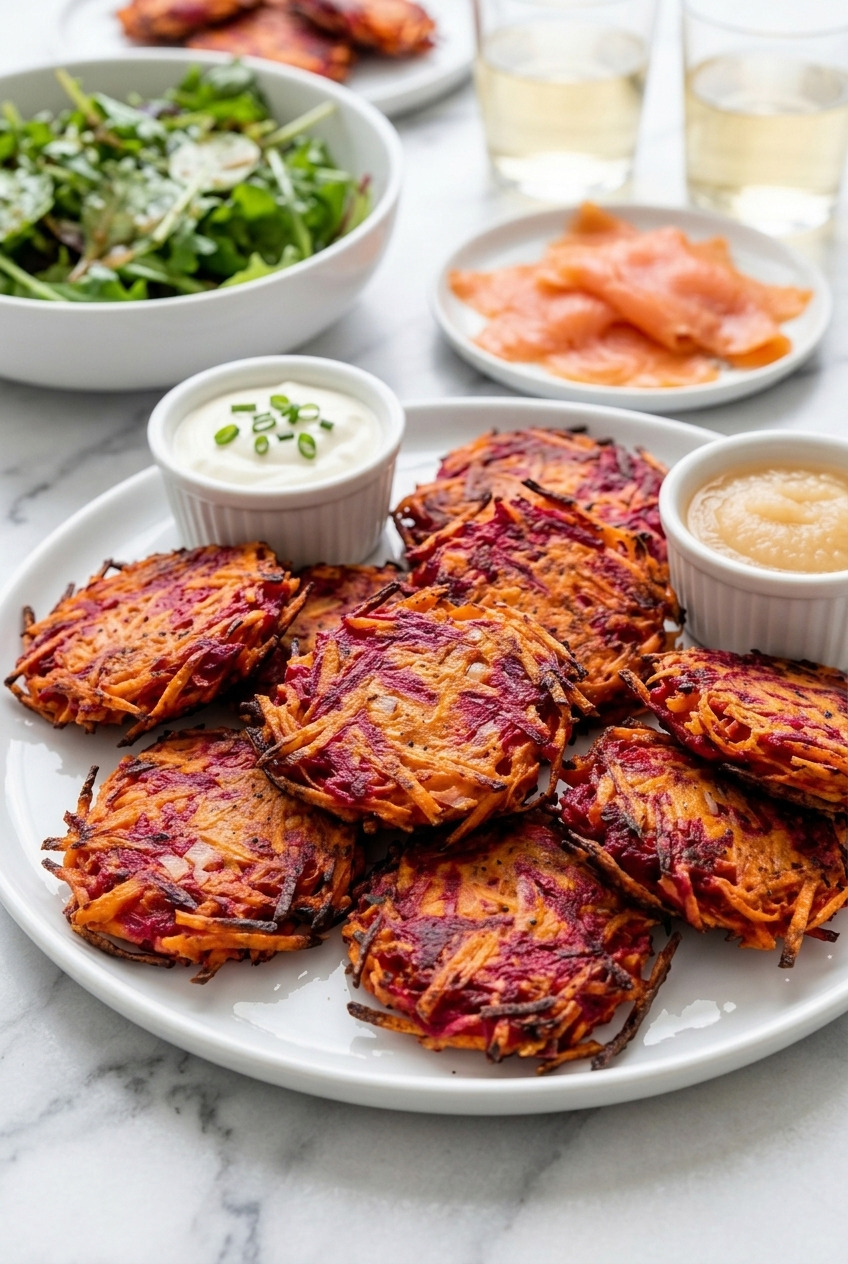
- Applesauce. Cold, in its own bowl. The temperature contrast against a hot latke is half the pleasure.
- Sour cream with chives. The other camp. Put both out and let people fight about it.
- Smoked salmon. If you're making these for brunch, a slice on top with the sour cream is fantastic.
- A sharp green salad. Anything with vinegar in it, to cut through a plate of fried food.
For the rest of the table, here's a good list of side dishes to serve with latkes.
Make Ahead, Storage, and Reheating
- The raw mixture. Does not hold. It weeps, it oxidizes, and it goes grey within 30 minutes. Grate and fry the same hour.
- Fried latkes, same day. Hold them on a rack in a 200°F oven for up to 1 hour while you finish the batches.
- Fridge. 3 days in a covered container, layered with paper towel between them.
- Freezer. They freeze beautifully. Freeze flat on a tray, then bag them for 2 months.
- Reheating. On a wire rack at 400°F for 8 minutes, straight from frozen. They come back genuinely crisp.
- Never the microwave. You'll get a warm, wet disc and you'll be sad about it.
Make these once and the beige version stops being interesting. Give it a try!
Same grated-and-squeezed logic, bigger format: my crispy sweet potato rosti.
Recipe
Beet and Sweet Potato Latkes
Ingredients
For the Latkes
- 1 lb sweet potato about 2 medium, peeled
- 1 medium red beet about 6 oz, peeled, raw
- ½ medium yellow onion
- 1 ½ teaspoons kosher salt plus more for finishing
- 2 large eggs lightly beaten
- ⅓ cup matzah meal
- 2 tablespoons potato starch
- ½ teaspoon garlic powder
- ½ teaspoon black pepper freshly cracked
- 1 cup neutral oil canola, grapeseed, or avocado, for shallow frying
To Serve
- 1 cup applesauce chilled
- 1 cup sour cream full fat
- 2 tablespoons chives thinly sliced
Instructions
Grate and Dry the Shreds
- Peel the sweet potato, beet, and onion. Grate all three on the large holes of a box grater into one large bowl. Wear gloves for the beet if you would rather not stain your hands.
- Toss the shreds with the kosher salt and let them sit 10 minutes.
- Tip the shreds into a clean kitchen towel, gather the corners, and twist hard over the sink until the liquid stops running. Return the shreds to the dry bowl and fluff them apart.
Mix the Batter
- Pour the beaten eggs over the shreds, then add the matzah meal, potato starch, garlic powder, and black pepper.
- Fold everything together until no dry pockets remain and let it rest 2 minutes. Fry within 15 minutes of mixing.
Fry the Latkes
- Pour the oil into a heavy skillet to a depth of about ¼ inch and heat it to 350F. A single shred dropped in should sizzle at once.
- Drop scant ¼ cup mounds into the oil, three or four at a time, and press each one flat with the back of a spoon to about 3 inches across.
- Fry 3 to 4 minutes per side, until the edges are deep and lacy and the surface is set. Let the oil return to temperature between batches.
Drain and Serve
- Move the latkes to a wire rack, not paper towels, and salt them immediately while they are still hot.
- Serve hot with chilled applesauce and sour cream, with the chives scattered over the sour cream.
Notes
- The squeeze is everything: Salt the shreds, rest 10 minutes, then wring them out hard in a towel. Skipping this gives you a limp, steamed latke.
- Use a raw beet: Raw beet bleeds magenta through the shreds and gives the marbled color. A roasted beet smears and goes muddy brown.
- Grate, do not process: Large holes on a box grater. A food processor blade makes mush that will not bind.
- Press them flat: About 3 inches across. Tall mounds stay raw in the middle.
- Oil temperature: Below 325F the latkes absorb oil instead of searing. Let it recover between batches.
- Freezing: Freeze flat on a tray, bag for 2 months, and reheat from frozen on a rack at 400F for 8 minutes.