
It was the year 2000. I was 15 years old and working for the summer in a Chinese food mall in Southern Ontario. Every day of the week, there was a different special at the restaurant. It was my first Thursday working, and so it was also the first time I was seeing the Thursday special. When I arrived at work, the steam table was already set up, and as my eyes scanned the all-familiar pre-lunch mounds of fried rice, lo mein, sweet and sour pork, and beef and broccoli, something caught my eye. There, in the tray where the daily special always went, was a pile of bright red pieces of pork. I'd never seen anything like it. I asked what it was, and the manager told me, "Chinese BBQ Pork".
Jump to:
It wouldn't be until years later that I'd realize what I was serving that day and subsequently had for lunch every Thursday that summer was Char Siu, aka Chinese BBQ Pork. A sweet, and incredibly flavourful pork dish that to this day is one of my strongest memories from that period of my life.
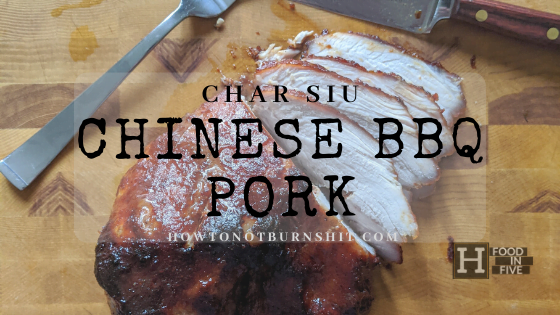
The recipe I'm going to share with you today isn't the recipe from all those years ago in the Chinese food place at the mall, and I'd be hard-pressed to call it authentic. But it is delicious. And if you are looking for something different to do with a big chunk of pork, something that will keep you up at night with cravings, then this is it.
A Note About the Red Colour
The red colour of char siu generally comes from either red bean curd or red food colouring. My colour comes from Korean chili powder. It is likely that char siu was originally cooked slowly over an open fire, which led to a red smoke ring around the meat. It's also possible that the red bean curd was added to mimic that natural red line. As nice as the red colour is, if you can't find red bean curd or Korean chili powder, I recommend just leaving it. It's always best not to dye your food with red food colouring if you can avoid it.
Char Siu Flavours
The main flavours of Char Siu are typically Chinese 5 spice, honey, soy sauce, rice wine, hoisin sauce, and red bean curd. To make this gluten-free and to use ingredients I already had on hand I changed the basic recipe a little bit, but we will get into that later.
The recipe I created is based on one I found online, and it seemed pretty good. You can check out the original here.
Okay, let's take a look at what I did.
The Marinade

The secret to the incredible flavour of Char Siu is in the marinade, which doubles as a basting liquid and even plays a third role as a sauce later (once it has been boiled). Making the marinade is as easy as putting ingredients in a bowl and stirring them.
One of the main ingredients in Char Siu is typically hoisin sauce. I have yet to find a good-quality gluten-free version of this, so I left it out of the recipe. If you are unfamiliar with hoisin sauce, it is a sweet fermented soybean sauce with a base of flavours similar to Chinese 5 spice. To make up for the lack of hoisin, I added:
- Miso paste (also made of fermented soybeans, replacing the red bean curd I didn't have)
- Extra soy sauce (also made of fermented soybeans)
- Extra honey
- Extra Chinese 5 spice
The combination of all of these ingredients worked well to replace the hoisin sauce to the point where I didn't even notice it was missing. The approach here is similar to what I talk about in my homemade condiments post: when you understand the flavour profile of an ingredient, you can often build a substitute from what you already have on hand.
I also didn't have rice wine, so I used brandy instead. White wine or sherry will also work.
Cooking the Char Siu
Once the pork has marinated for a full 24 hours, remove it from the bag and reserve the excess marinade. Place the pork on a rack set above a roasting pan. This setup allows the heat to circulate around the meat evenly while the drippings collect below.
Roast the pork at 300 degrees F for about 2 hours and 30 minutes, or until the pork is very tender and has a little char around the edges. While the pork is in the oven, bring the reserved marinade to a boil along with 2 tablespoon of honey and cook for 5 minutes. This step is important for food safety since the marinade has been in contact with raw pork. Once boiled, use it to baste the pork every 20-30 minutes. This builds up those gorgeous layers of sticky, caramelized glaze that make char siu so irresistible.
Once the pork is cooked, let it rest loosely covered for at least 20 minutes. Then brush it generously with the remaining marinade, thinly slice, and serve. If you enjoy slow-cooked pork dishes, you might also love my barbecue sauce recipe, which works beautifully with pork shoulder as well.
Recipe

Ingredients
- 3 tablespoon Honey
- 3 tablespoon Miso Paste Gluten-Free
- 3 tablespoon Tamari (or soy sauce)
- 1 tablespoon Chinese 5 Spice Powder
- 2 cloves Garlic, grated or puréed
- 1 tablespoon Grated Ginger
- 2 tablespoon Brandy, Rice Wine, White Wine, or Sherry
- ½ teaspoon Salt
- 1 tablespoon Korean Chili Powder
- 1 kg Pork Shoulder or Sirloin Roast
Instructions
- Combine all the ingredients except the pork in a mixing bowl and stir well.
- Put the pork in a large ziplock bag and pour the marinade over.
- Seal the bag, gently massage the marinade into the pork and place in the fridge for 24 hours.
- Remove the pork from the marinade, reserving the excess and place on a rack set above a roasting pan.
- Roast the pork on 300°F for 2 hours and 30 minutes or until the pork is very tender and has a little char around the edges.
- While the pork is roasting, bring the reserved marinade to a boil along with 2 tablespoon honey and cook for 5 minutes.
- Baste the pork every 20 -30 minutes with the boiled marinade.
- Once the pork is cooked let it rest loosely covered for at least 20 minutes.
- Brush the pork generously with the remaining marinade, thinly slice and serve.
Serving the Char Siu

Char Siu can be served in a number of delicious ways:
- Sliced thin with rice and bok choy (as I did)
- With noodles, either stir-fried or in a soup
- Chopped up in fried rice
- Tucked into steamed buns
- Picked up with your hands caveman style (okay, I did this too)
Final Thoughts
This char siu recipe holds a special place for me because it connects me right back to those Thursday specials from the summer of 2000. I've made it dozens of times since, and the sweet, sticky, deeply savoury flavour never gets old. Give it a try and I'm confident your taste buds will thank you.


Leave a Reply