A cookie press looks like a caulk gun that wandered into the kitchen by mistake.
Mine sat in a drawer for two Decembers because I was sure it would fight me.
When I finally loaded it, the first cookie stuck to the press and came off with it.
The second one did the same, and I almost put the thing back in the drawer.
Then I swapped the parchment for a bare, cool metal sheet, and every click after that left a perfect little tree behind.
That one change is why Classic Buttery Christmas Spritz Cookies are now a fixture on my holiday cookie tray.
The dough is seven pantry ingredients, and it tastes like vanilla and almond folded into the best butter cookie you've ever had.
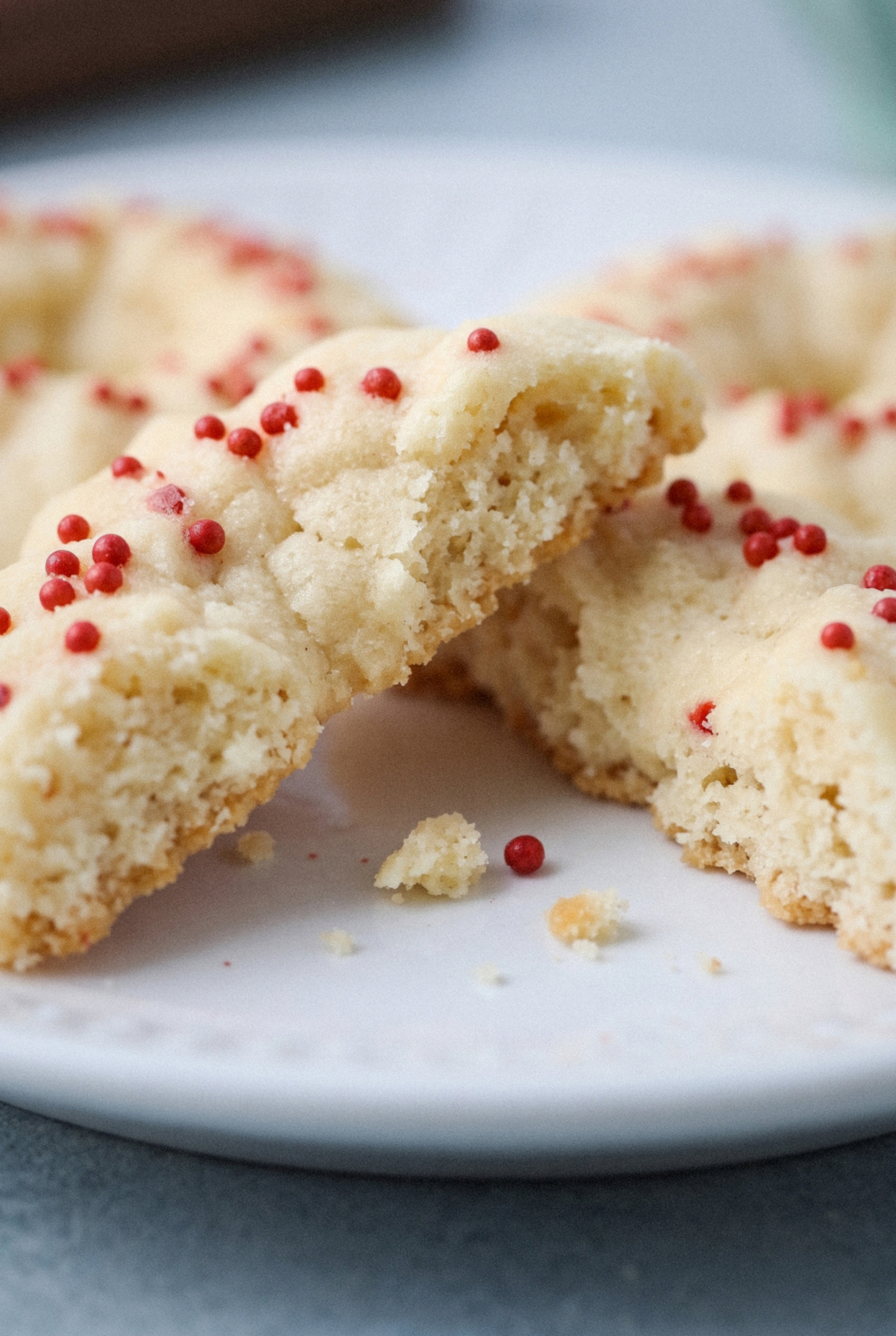
Each one is crisp at the edge, tender in the middle, and it melts on your tongue in about two seconds.
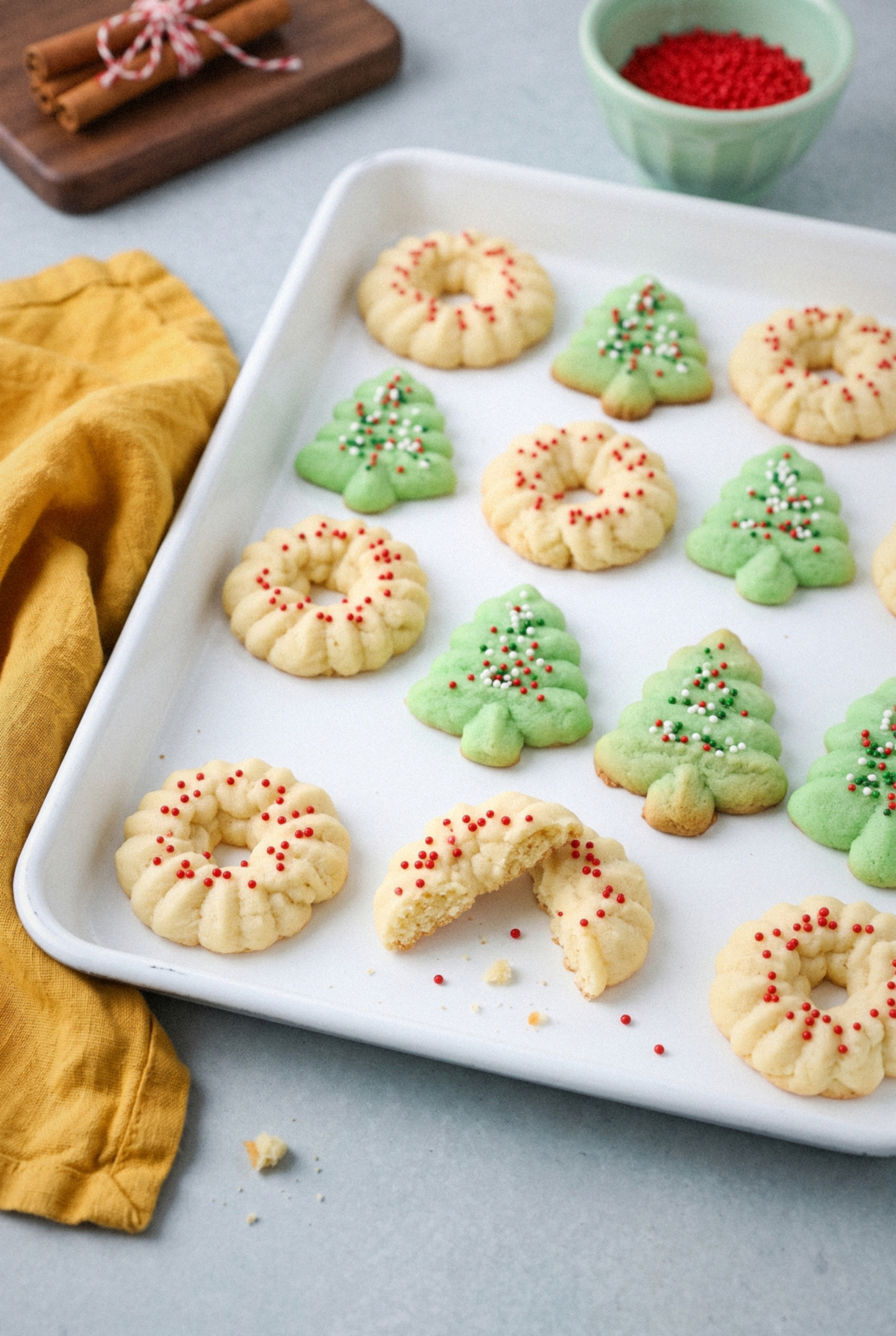
I press trees, wreaths and little flowers at the counter while my wife waits for the broken ones.
She claims they taste better. I've stopped arguing.
One bowl, no chilling, and about 60 cookies in under an hour.
Once you know the bare-sheet rule, the press stops being scary and starts being fun.
Make one batch and you'll see why I keep a second press in the drawer now.
What Is a Spritz Cookie?
A spritz cookie is a rich butter cookie pushed through a press into a shape. The name comes from the German word spritzen, which means "to squirt."
That is exactly what happens. You load a soft dough into a tube, click the trigger, and a shaped cookie lands on the sheet.
Spritz are a big deal in German and Scandinavian Christmas baking, and they show up on holiday cookie plates all over the Midwest.
Butter Cookie vs. Spritz Cookie
People ask this one all the time. They're in the same family, but a few details set spritz apart.
- The egg. Spritz dough has one egg. It helps the dough hold a sharp shape, while many shortbread-style butter cookies skip it.
- The method. Spritz are pressed. Butter cookies are usually rolled and cut, scooped, or sliced from a log.
- No leavening. There's no baking powder or baking soda, so the ridges and points stay crisp instead of puffing up.
- The texture. Spritz bake up sandy and delicate, somewhere between a sugar cookie and shortbread.
Why You'll Love These Spritz Cookies
This is the big-batch Christmas cookie that never makes me stress. Here's why it earns a spot every year.
- One bowl, no chilling. You mix the dough and press it right away. No waiting on the fridge.
- About 60 cookies per batch. That's enough for a cookie exchange, a neighbor plate and a tin for home.
- They hold their shape. No leavening means every tree keeps its points and every wreath keeps its ridges.
- Easy to make festive. A drop of gel color and a pinch of sprinkles turns plain dough into a Christmas tray.
- They freeze and travel well. Sturdy enough to ship, tender enough to melt in your mouth.
Who doesn't love a cookie that looks this fancy and takes this little effort?
Ingredients You'll Need
Classic spritz use simple pantry staples, so quality matters. Real butter is the whole flavor here, so don't swap it out.
- Unsalted butter (1 cup, 226 g). Softened to room temperature. It should dent easily but not look greasy or shiny. Salted butter works too; just cut the added salt to ¼ teaspoon.
- Granulated sugar (¾ cup, 150 g). Gives a clean sweetness and a slightly crisp edge. Powdered sugar makes a softer, more delicate cookie if you prefer that.
- Large egg (1). Room temperature, so it blends into the butter without curdling. This is what keeps the shapes sharp.
- Vanilla extract (1 teaspoon). The warm base flavor.
- Almond extract (½ teaspoon). This is the signature taste of an old-fashioned spritz. Go up to a full teaspoon if you love almond.
- All-purpose flour (2 ¼ cups, 281 g). Spoon it into the cup and level it off. Packed flour makes a dough too stiff to press.
- Salt (½ teaspoon). Keeps the butter and sugar from tasting flat.
- Gel food coloring (optional). Red and green for Christmas. Use gel, not liquid, so the dough doesn't get sticky.
- Sprinkles. Tiny round sugar sprinkles or colored sanding sugar, added before baking.
Why no baking powder? Leavening makes the dough puff and spread, which blurs the pressed design. Skip it and your cookies come out exactly the shape that left the press.
How to Make Spritz Cookies
The whole method takes about 20 minutes of hands-on time. Preheat your oven to 375°F and pull out two ungreased, unlined metal baking sheets before you start.
Step 1: Make the Dough
Beat the softened butter and sugar on medium speed for 2 to 3 minutes, until the mixture looks pale and fluffy. Scrape down the bowl once so no butter streaks hide at the bottom.
Add the egg, vanilla and almond extract, and beat for about 1 minute until smooth. Switch the mixer to low, add the flour and salt, and mix just until the flour disappears. Stop there, because overmixing makes a tough cookie.
Pro tip: Press a fingertip into the dough. It should hold the print without cracking or feeling greasy, like soft play dough.
Step 2: Color the Dough (Optional)
Divide the dough into two or three portions in separate bowls. Add a small dot of gel color to each one and mix with a spatula until the color is even, with no streaks.
Start with less color than you think you need. You can always add more, and a little goes a long way on a Christmas tray.
Step 3: Press and Bake
Pack the dough into the press barrel, pressing it down firmly so there are no air pockets, and fit your chosen disc. Hold the press straight up and down against the bare sheet, click once firmly, then lift straight up.
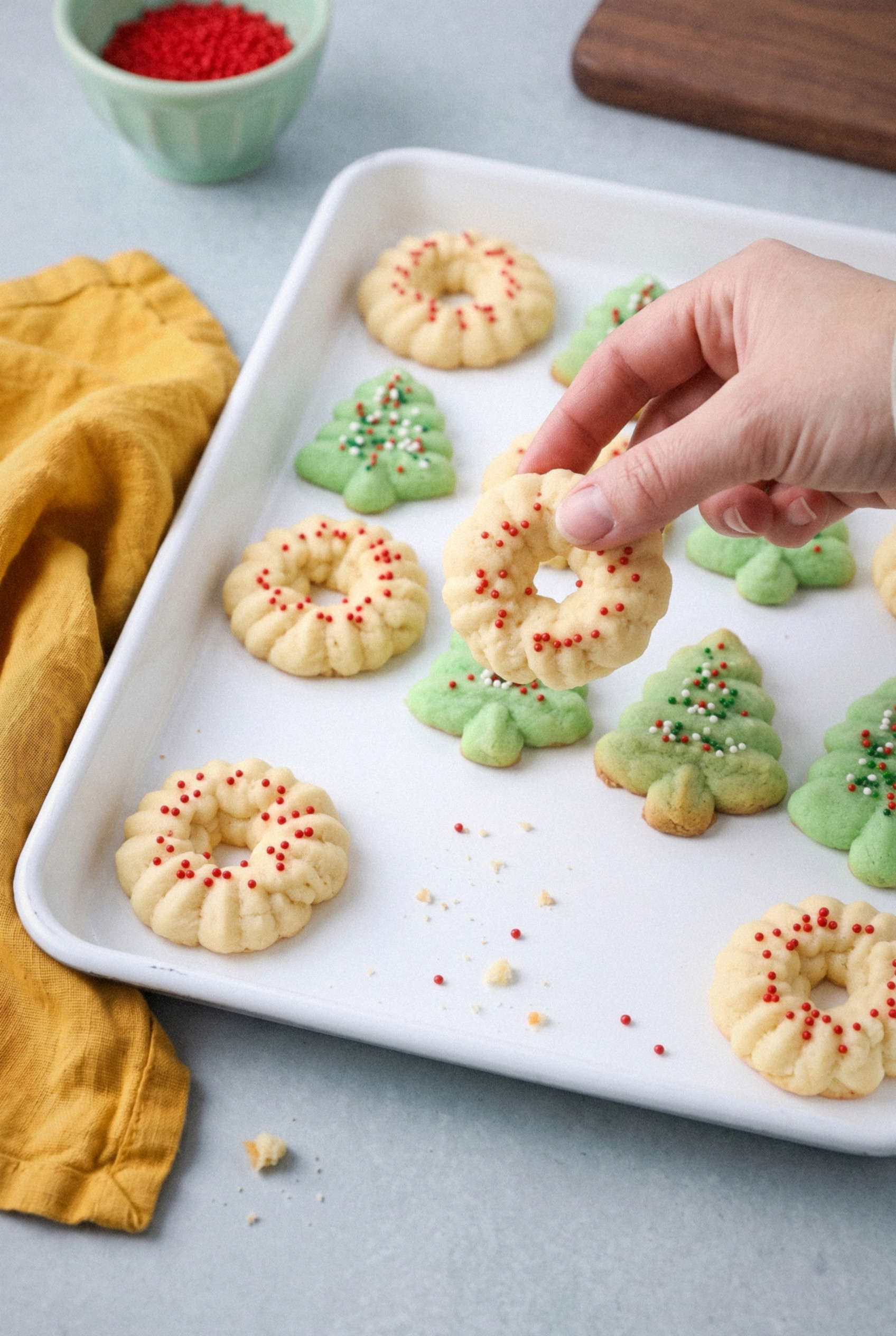
Space the cookies about 1 inch apart. They barely spread, so you can fit a lot on one sheet. Scatter sprinkles over the raw cookies right away, while the surface is still tacky.
Bake one sheet at a time for 6 to 8 minutes, until the edges are just barely golden and the tops look set and matte. Let them cool on the sheet for 2 minutes, then move them to a wire rack.
Pale is perfect. A deep golden spritz is an overbaked spritz!
How to Use a Cookie Press
A cookie press is easier than it looks once you learn its rhythm. Most presses work the same way, whether they use a trigger or a twist handle.
- Prime it first. The first one or two cookies are often misshapen. Scrape them back into the bowl and keep going.
- Hold it flat against the sheet. The base should touch the metal. Tilting it gives lopsided cookies.
- One firm click. Click once, pause a beat, then lift straight up. The dough grabs the sheet and releases from the press.
- Refill before it runs empty. The last bit of dough in the barrel gives weak, half-formed cookies.
- Trees and wreaths first. Simpler discs are more forgiving while you get the feel for it.
No Cookie Press? No Problem
You can still make spritz without one. Add 1 to 2 tablespoons of milk to soften the dough, spoon it into a piping bag fitted with a large open star tip, and pipe rosettes or little rings.
Or roll the dough into 1-inch balls, flatten them with the bottom of a glass dipped in sugar, and bake the same way. They won't look pressed, but they'll taste exactly right.
Why Are My Spritz Cookies Not Sticking?
This is the number one spritz problem, and it almost always comes down to the sheet. The dough needs to grab the pan harder than it grabs the press.
- The sheet is lined or greased. Parchment, nonstick spray and butter all make the dough slide. Use a bare metal sheet, every time.
- The sheet is warm. A sheet fresh from the oven melts the dough before it can grip. Let it cool completely, or run it under cold water and dry it well.
- The sheet has a slick nonstick coating. Some dark nonstick pans are too slippery. A plain, light aluminum sheet works best.
- The dough is too warm. If your kitchen is hot and the dough looks shiny, chill it for 10 minutes. This is the only time chilling helps.
- The dough is too stiff. Too much flour makes dry dough that won't leave the press. Work in 1 teaspoon of milk at a time.
Sound like a lot to remember? It isn't. Bare, cool sheet, soft dough, and you're set.
Tips for Perfect Spritz Cookies
The secret to great spritz is a cold, bare sheet and a dough you don't overwork. These are the habits that make every batch come out right.
- Rotate two sheets. While one bakes, press the next. When it comes out, rinse it under cold water, dry it and it's ready again.
- Measure flour correctly. Spoon and level, or weigh it at 281 g. Scooping straight from the bag can add a quarter cup without you noticing.
- Don't chill the dough. Cold dough is too firm to press. Keep it at room temperature unless it turns greasy.
- Bake one sheet at a time. Spritz bake fast, and two sheets in the oven usually means one gets too brown.
- Pull them while pale. They firm up as they cool. Remove them when the edges just start to color.
- Add sprinkles right away. If they won't stick, brush the raw cookies very lightly with water first.
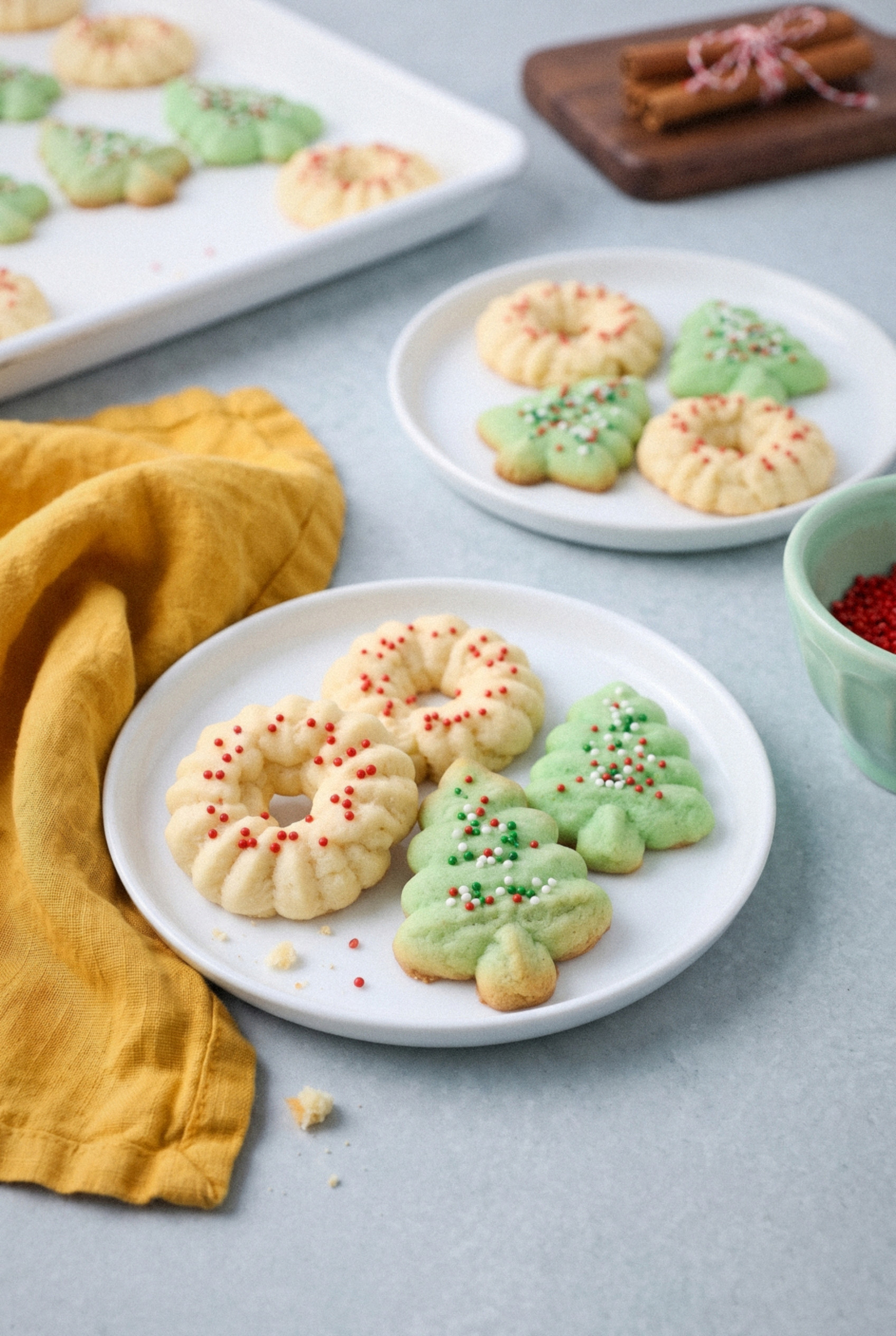
How to Decorate Spritz Cookies
Decorating is half the fun of Christmas spritz. Keep it simple or go all out, both look great on a tray.
- Sprinkles before baking. Tiny round sprinkles, sanding sugar or a single red cinnamon candy in the center of a wreath.
- Simple glaze. Whisk 1 cup powdered sugar, 1 to 2 tablespoons milk and ¼ teaspoon vanilla until smooth. Dip the tops of cooled cookies, add sprinkles and let them set on a rack for about 30 minutes.
- Chocolate dip. Melt ½ cup chocolate chips with 1 teaspoon coconut oil, dip half of each cookie and set it on parchment to firm up.
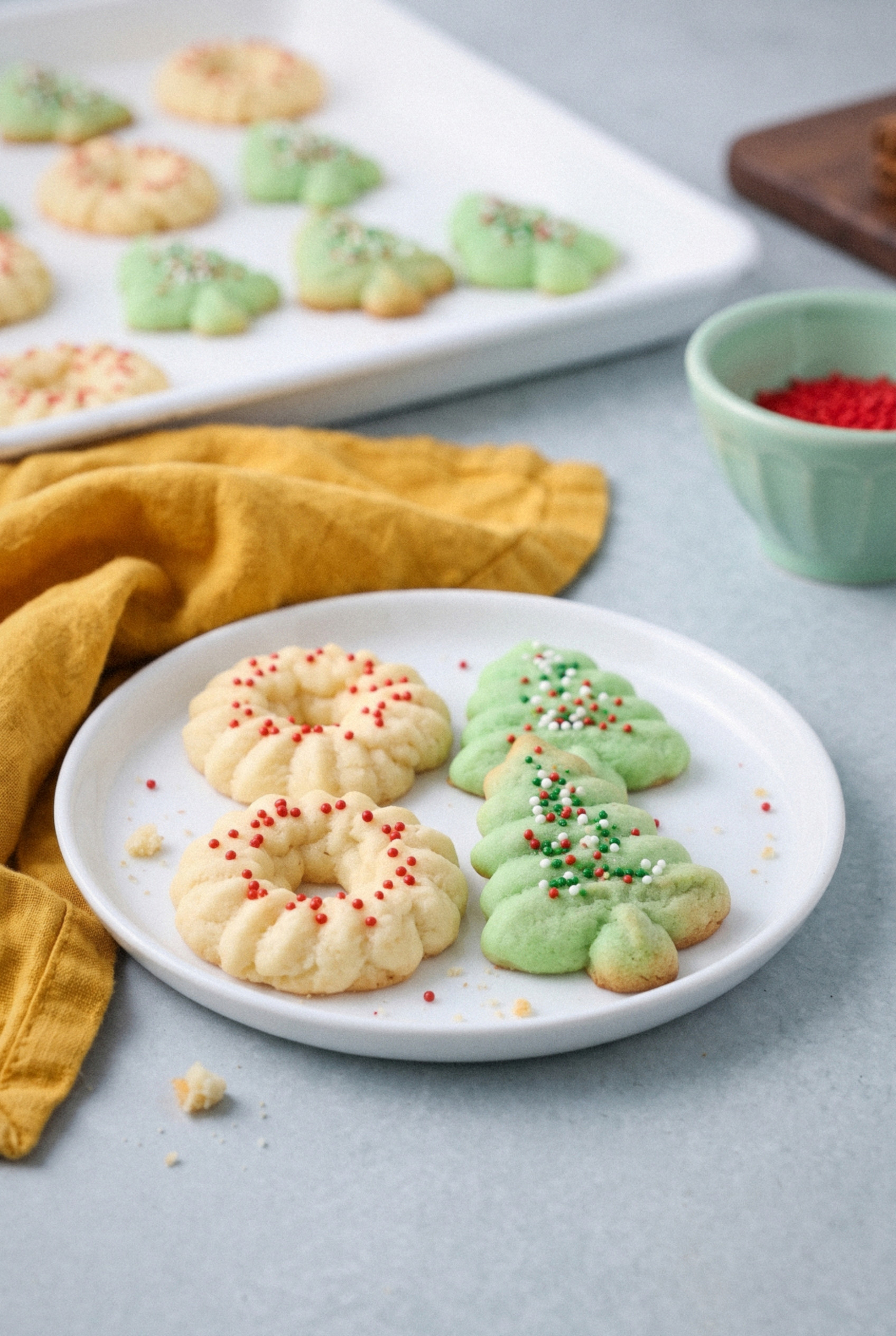
- Tinted dough. Green trees and plain or red wreaths need no decoration at all.
Christmas tray idea: Split one batch three ways. Plain wreaths with red sprinkles, green trees with white sprinkles, and pale flowers dipped in chocolate. Three cookies from one bowl, and it's a crowd-pleaser every time.
Variations to Try
Once you've made the classic, the dough is easy to play with. Swap the flavorings and keep everything else the same.
- All vanilla. Skip the almond and use 2 teaspoons vanilla for a pure butter cookie.
- Peppermint. Replace the almond with ½ teaspoon peppermint extract and tint the dough pale pink.
- Citrus. Add 1 tablespoon orange or lemon zest with the butter and sugar.
- Chocolate. Swap ¼ cup of the flour for unsweetened cocoa powder.
- Cinnamon sugar. Add ½ teaspoon cinnamon to the dough and dust the tops with cinnamon sugar before baking.
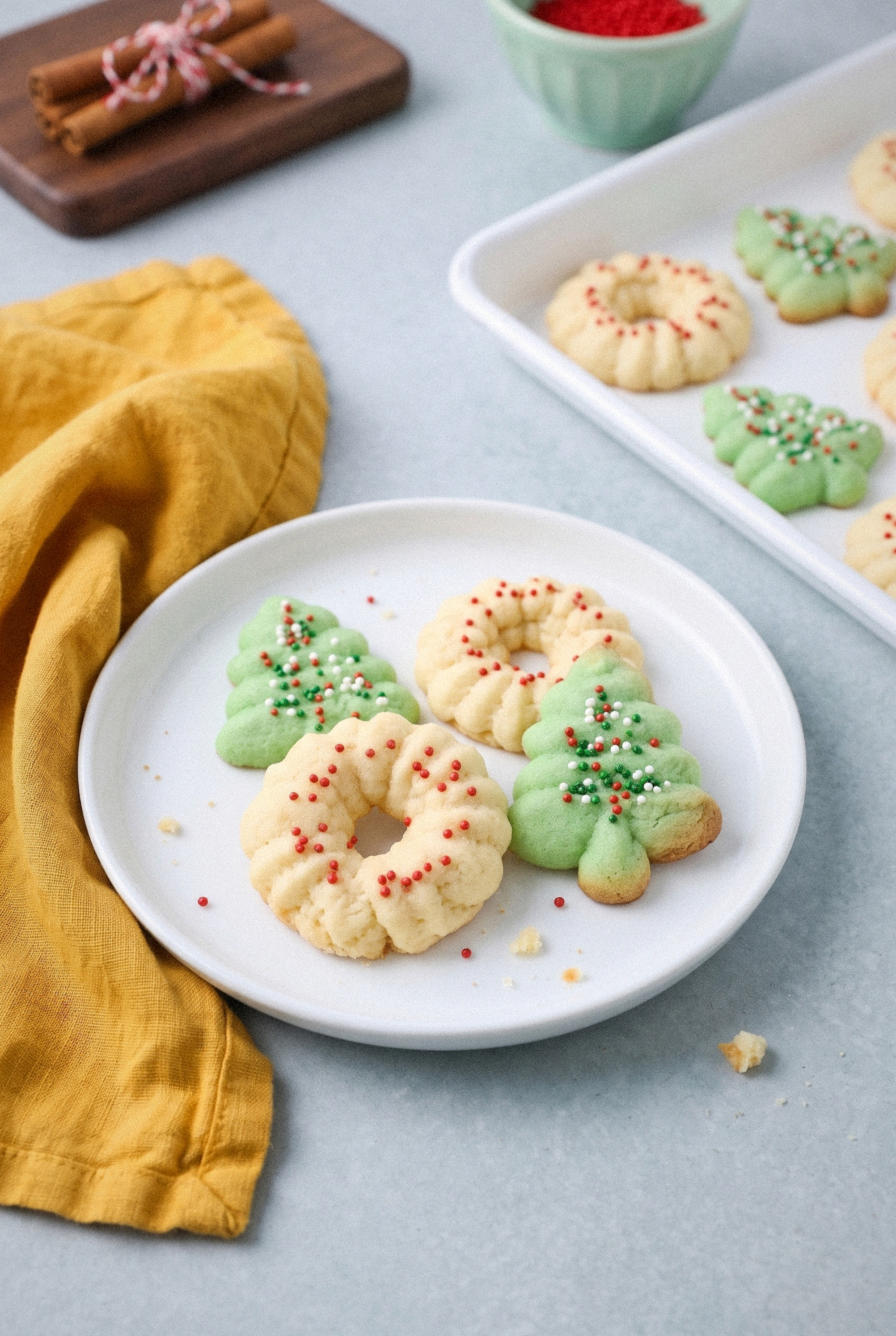
Make-Ahead and Gifting
Spritz are one of the best cookies to bake ahead of the Christmas rush. Every stage keeps well.
- Dough. Wrap it tightly and refrigerate for up to 4 days. Let it come back to room temperature for about 1 hour before pressing.
- Baked cookies. Bake them up to a week ahead and keep them in an airtight tin.
- Gift tins. Layer cookies between sheets of parchment so the sprinkles don't rub off and the points don't snap.
- Shipping. Pack them snugly in a sturdy tin with crumpled parchment filling any gaps. Unglazed spritz travel best.
What to Serve With Spritz Cookies
Spritz are small, so they pair perfectly with something warm to sip. These are my favorite partners.
- Hot cocoa. The buttery cookie and rich chocolate are a classic Christmas pairing.
- Coffee or tea. A plain cup lets the almond and vanilla shine.
- A full cookie tray. They balance chewy cookies, fudge and gingerbread with something light and crisp.
- Eggnog. Creamy, spiced and very festive next to a plate of trees and wreaths.
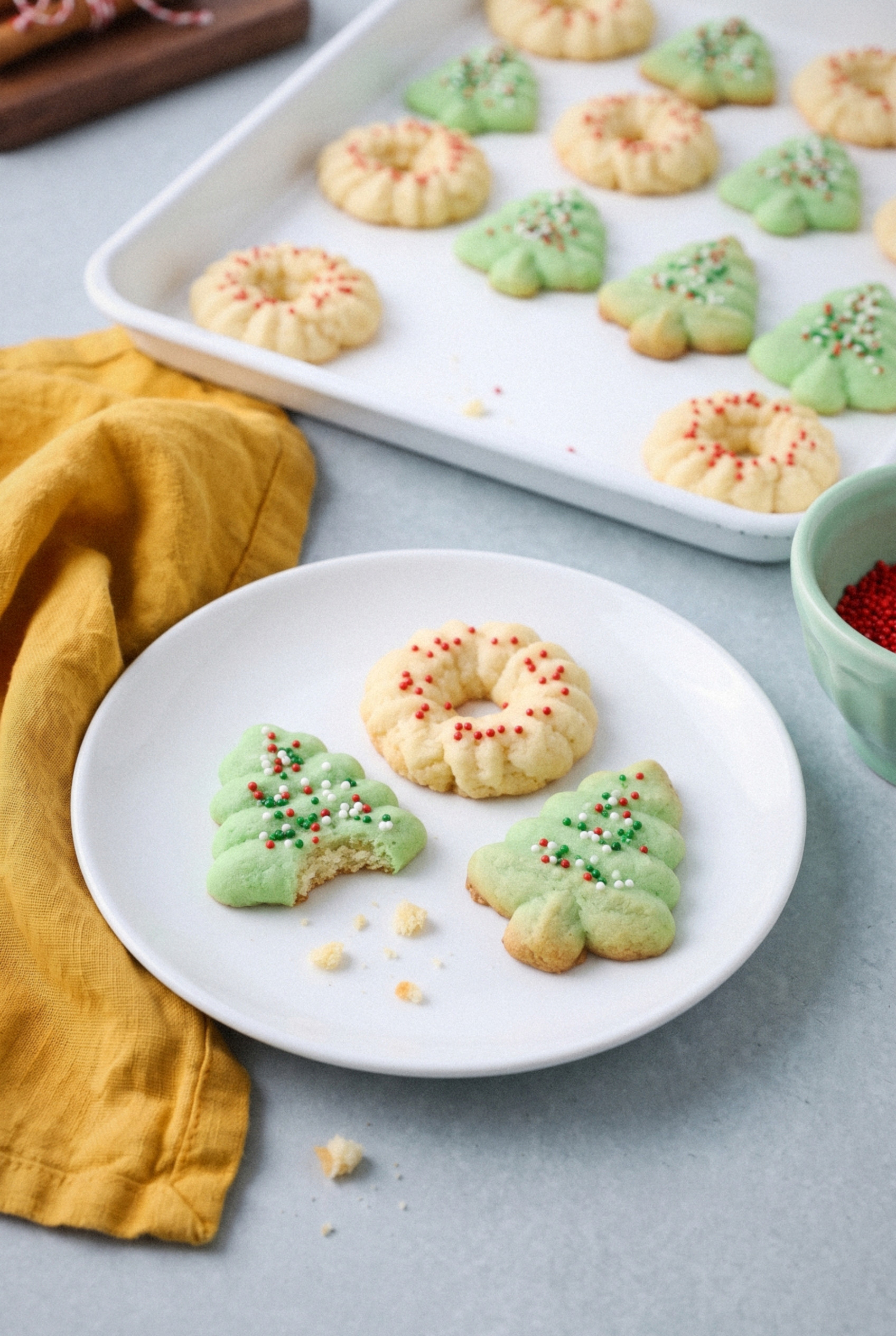
Storage and Freezing
Spritz keep beautifully, which makes them perfect for the holiday season. Here's how long each stage lasts.
- Room temperature. Store baked cookies in an airtight container for up to 1 week. They stay tender if you didn't overbake them.
- Freezing baked cookies. Freeze unglazed cookies in a sealed container for up to 3 months. Thaw at room temperature for about 30 minutes.
- Freezing dough. Shape the dough into a log, wrap it well and freeze for up to 3 months. Thaw it overnight in the fridge, then let it soften on the counter before pressing.
- Glazed cookies. These are best at room temperature. Freezing can make the glaze sticky as it thaws.
Ready to press your first tray? Give it a try. I promise the press is way friendlier than it looks!
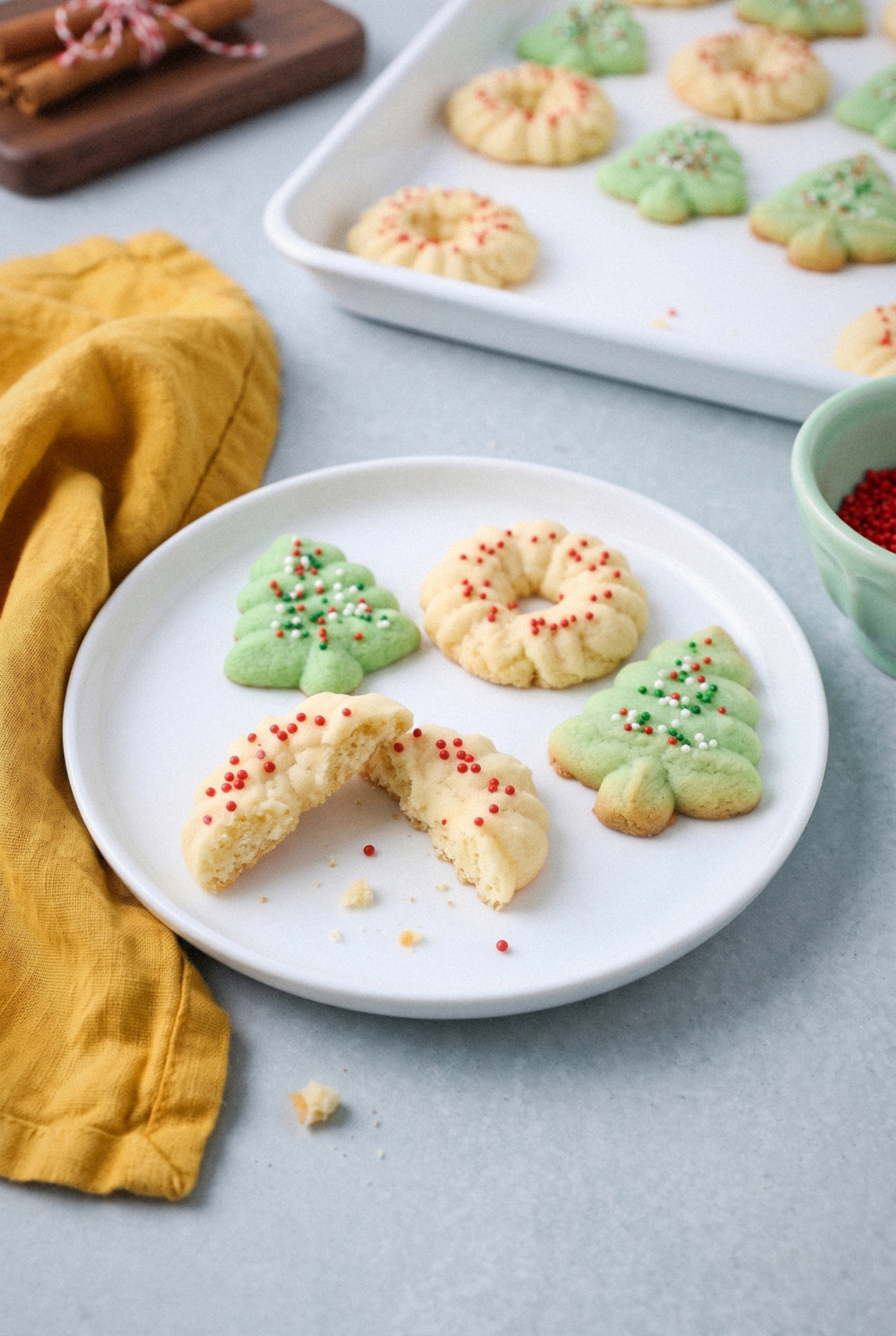
Recipe
Classic Buttery Christmas Spritz Cookies
Ingredients
For the Cookies
- 1 cup unsalted butter softened to room temperature (226 g)
- ¾ cup granulated sugar 150 g
- 1 large egg room temperature
- 1 teaspoon vanilla extract
- ½ teaspoon almond extract
- 2 ¼ cups all-purpose flour spooned and leveled (281 g)
- ½ teaspoon salt
- red and green gel food coloring optional
- 2 tablespoons sprinkles tiny round sugar sprinkles or sanding sugar
For the Optional Glaze
- 1 cup powdered sugar
- 1-2 tablespoons milk
- ¼ teaspoon vanilla extract
Instructions
Make the Dough
- Preheat the oven to 375°F. Set out two ungreased, unlined metal baking sheets.
- Beat the softened butter and sugar on medium speed for 2 to 3 minutes until pale and fluffy, scraping the bowl once.
- Add the egg, vanilla and almond extract and beat for about 1 minute until smooth.
- On low speed, add the flour and salt and mix just until the flour disappears. Do not overmix.
- Optional: divide the dough into portions and tint each with a small amount of gel food coloring.
Press and Bake
- Pack the dough into a cookie press fitted with your chosen disc.
- Hold the press flat against the bare, cool baking sheet, click once and lift straight up. Space cookies about 1 inch apart.
- Scatter sprinkles over the raw cookies right away.
- Bake one sheet at a time for 6 to 8 minutes, until the edges are just barely golden.
- Cool on the sheet for 2 minutes, then move to a wire rack. Let the sheet cool completely, or rinse it under cold water and dry it, before pressing the next batch.
Optional Glaze
- Whisk the powdered sugar, milk and vanilla until smooth. Dip the tops of the cooled cookies, add sprinkles and let set on a rack for about 30 minutes.
Notes
- Bare sheets only: Do not use parchment, silicone mats or nonstick spray. The dough needs to grip a bare, cool metal sheet to release from the press.
- Dough too soft: If the dough looks greasy, chill it for 10 minutes. Otherwise do not chill it.
- Dough too stiff: Work in 1 teaspoon of milk at a time.
- No press: Add 1 to 2 tablespoons milk and pipe with a large open star tip.
- Storage: Airtight at room temperature up to 1 week. Freeze unglazed baked cookies or the dough up to 3 months.