Seven people in the house at Christmas, and not one of them gets up at the same hour.
My brother-in-law is awake at six.
The kids surface somewhere around eight.
For two Decembers I stood at the stove scrambling eggs in shifts, and by the fourth round I was eating cold toast standing up.
Then a neighbor gave me her breakfast casserole and I stopped doing that forever.
The whole pan gets built the night before, covered, and slid into the fridge.
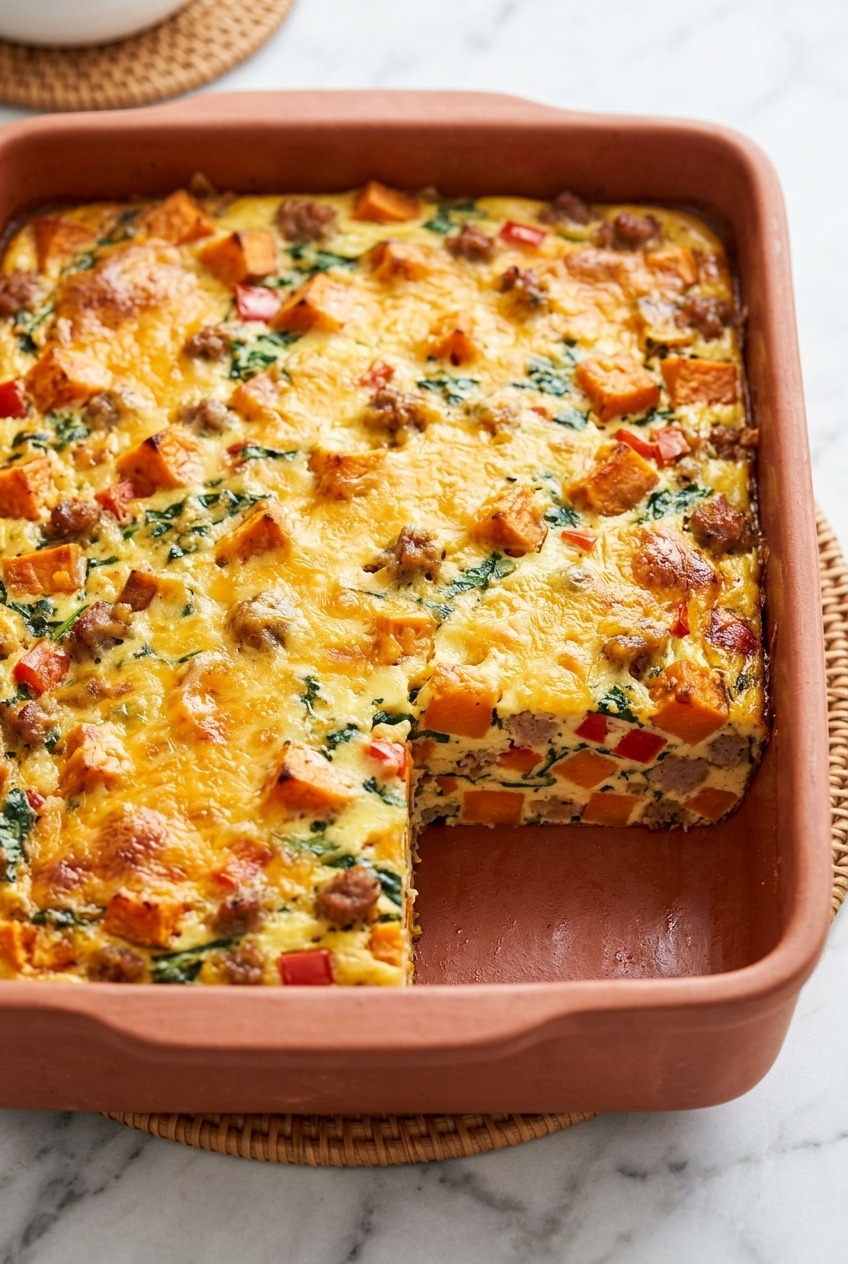
In the morning it goes in cold and comes out set and browned, and people cut their own squares as they wander in.
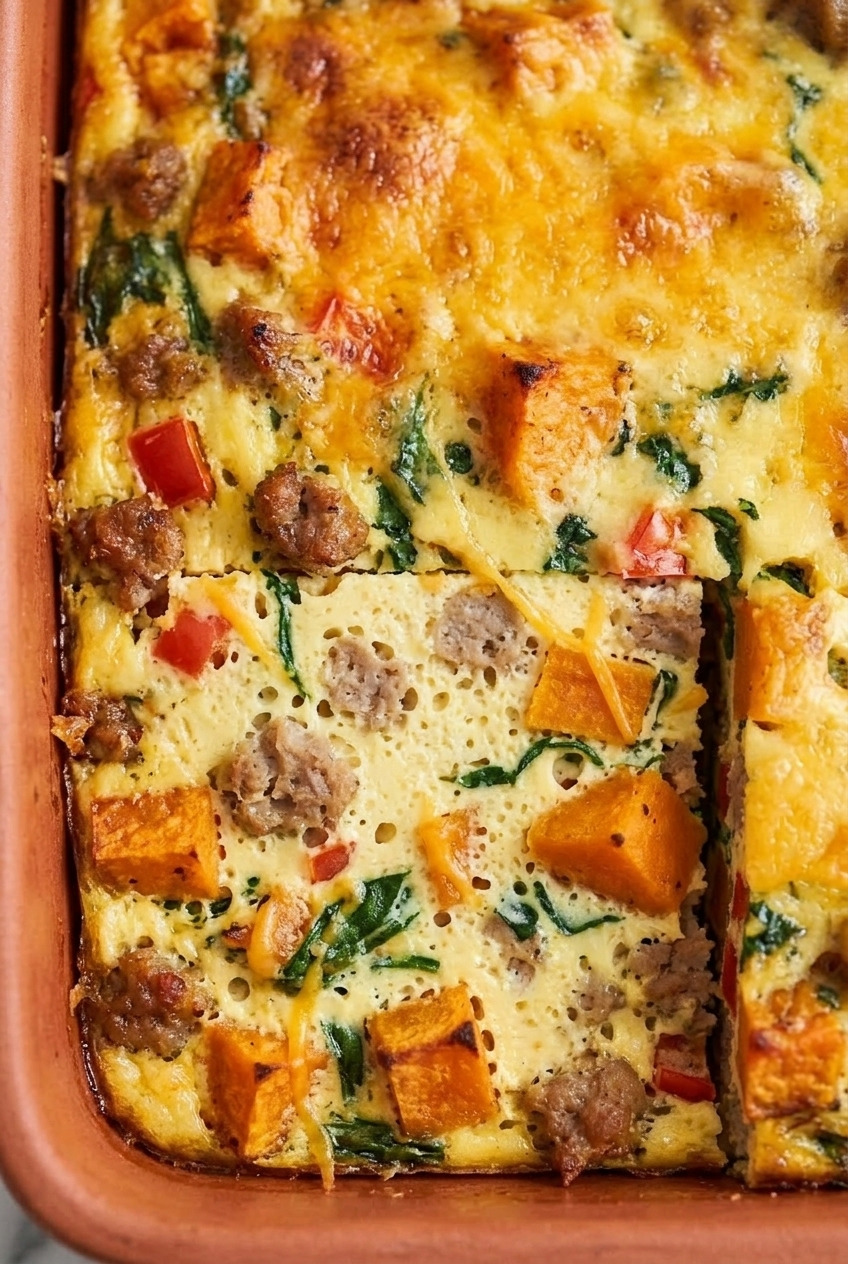
Sweet potato is what makes my version worth the effort.
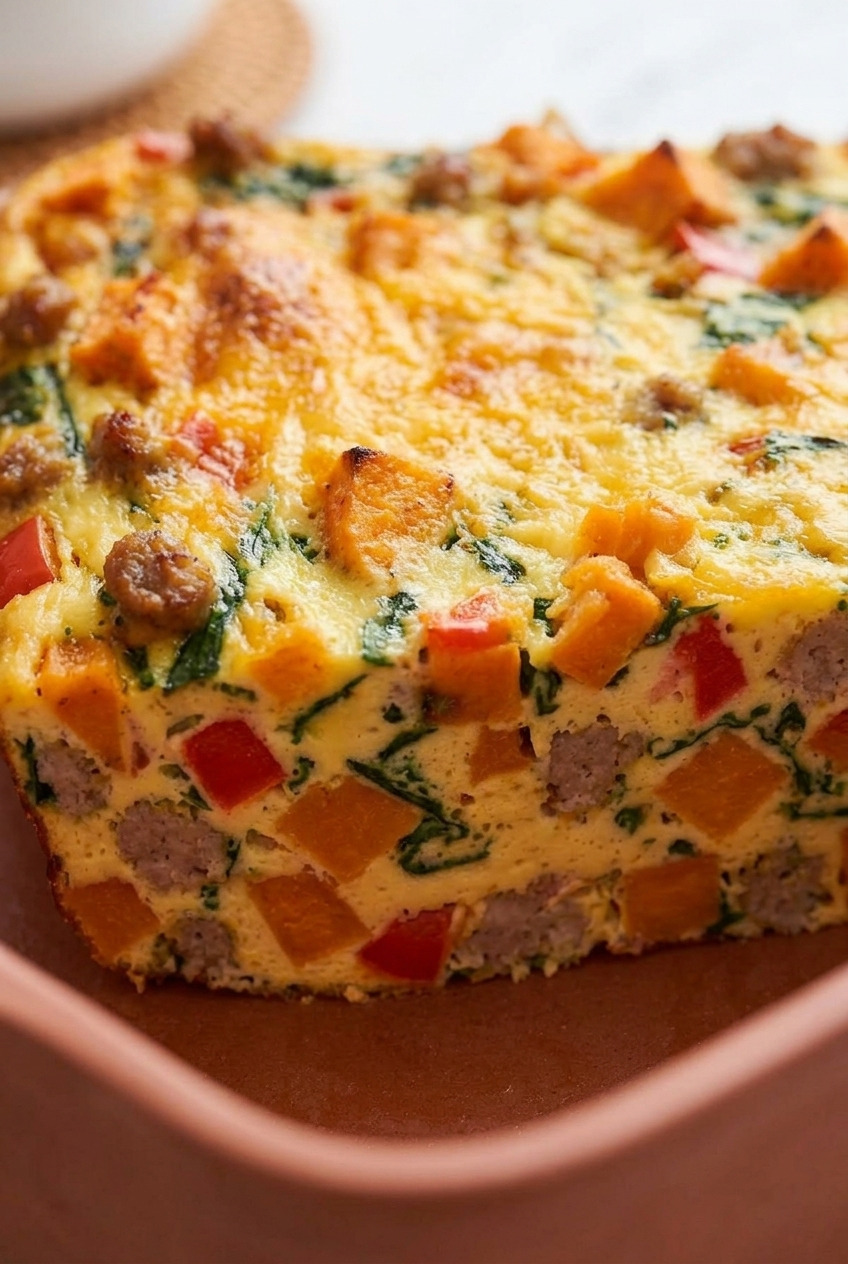
The roasted cubes hold their shape through the bake, and that sweetness sits against the sausage instead of disappearing into it.
One thing to settle right away, though.
This is the savory camp: sausage, eggs, sharp cheddar, and just a whisper of cinnamon in the custard.
No marshmallows, no brown sugar streusel, nothing that belongs on a Thanksgiving table next to a turkey.
If that sweet version is what you came looking for, this one won't scratch the itch.
But if you want a single pan that feeds a full house while you sit down with your coffee, you're in exactly the right place!
Why This Works for a Crowd
One dish solves a timing problem that no amount of skillet work can. That's the entire pitch, and it's a good one.
- Twelve squares, one pan. No plating, no shifts, no short-order cooking.
- It's good at three temperatures. Hot from the oven, warm an hour later, and still fine at ten when the last person gets up.
- It actually fills people. A plain egg bake is fine. Add a pound of sweet potato and a pound of sausage and it holds a hungry adult until lunch.
- All the work happens the night before. The morning job is turning on an oven.
- It reheats well. Which matters, because there will be leftovers and they're excellent.
Savory, Not the Marshmallow Kind
Two completely different casseroles share this name and readers land here from both directions. Let's separate them properly, because it's a real fork and people have strong feelings.
- The Thanksgiving side. Mashed sweet potato, brown sugar, butter, and either a marshmallow blanket or a pecan streusel on top. It's a dessert pretending to be a vegetable and it's served with turkey. The Cracker Barrel style everyone asks about sits squarely here, all brown sugar and warm spice.
- The breakfast bake. This one. Cubed sweet potato, sausage, an egg custard, cheddar. Savory, sliceable, eaten at eight in the morning with hot sauce.
Which camp is better? Wrong question. They're not competing, they're two dishes with an unfortunate naming problem.
The one crossover I keep is ¼ teaspoon of cinnamon in the custard. At that amount it reads as warmth against the sausage, not as sweetness. Any more and you're halfway to the other recipe.
Cubed or Shredded Sweet Potato
Both work, and they give you two genuinely different casseroles. Nobody writing about this dish seems to mention it, which is strange, because it's the first decision you make.
- Cubed and roasted first. ½ inch pieces, roasted 20 minutes before they go in the dish. You get distinct sweet pockets in a savory custard. This is my version.
- Shredded raw. Grate it on the big holes and press it into the bottom of the dish as a base. It cooks through in the bake with no pre-cooking, and it gives you a hash brown style layer. Softer, more uniform, less interesting.
- NEVER raw cubes. The custard sets in 35 to 40 minutes and a raw half inch cube needs closer to 50. You'll pull out a perfectly set casserole studded with hard orange nuggets.
That last one is the single most common way this dish gets ruined. Cook the potato first or shred it. There's no third option.
The Custard Ratio That Actually Sets
A breakfast casserole is a savory custard, and custards have rules. Once you think about it that way, most of the usual failures explain themselves.
- 12 eggs to ½ cup of whole milk. That's the ratio. The top ranked recipes both land there and they're right.
- More milk is not richer. It's wetter. Go to a full cup and the casserole weeps liquid the moment you cut it.
- Whisk to uniform yellow. No ropes of white left anywhere, or you'll get pale rubbery streaks running through the finished squares.
- Salt the custard. Not just the sausage. ½ teaspoon in the eggs, and it changes the whole pan.
- Cream instead of milk? You can, and it's richer and heavier. I'd rather the eggs taste like eggs.
Building the Pan
Assembly order is doing more work than you think. Solids first, custard poured over the top, cheese last. Change that order and you'll find out why.
Step 1: Prep the Components
Roast the sweet potato cubes at 425°F for 20 minutes with oil and salt until browned at the edges.
Brown the sausage over medium heat for 8 minutes and drain it properly. Undrained sausage leaves a grease slick sitting on top of the baked casserole.
Cook the onion, pepper and garlic in a spoonful of the sausage fat, then wilt the spinach in at the end.
Step 2: Squeeze the Greens
This is where watery casseroles come from. Cooked spinach holds an astonishing amount of liquid.
Tip it into a sieve and press it hard with the back of a spoon, or wring it in a clean towel.
You want it looking almost dry before it goes anywhere near the dish.
Step 3: Layer and Pour
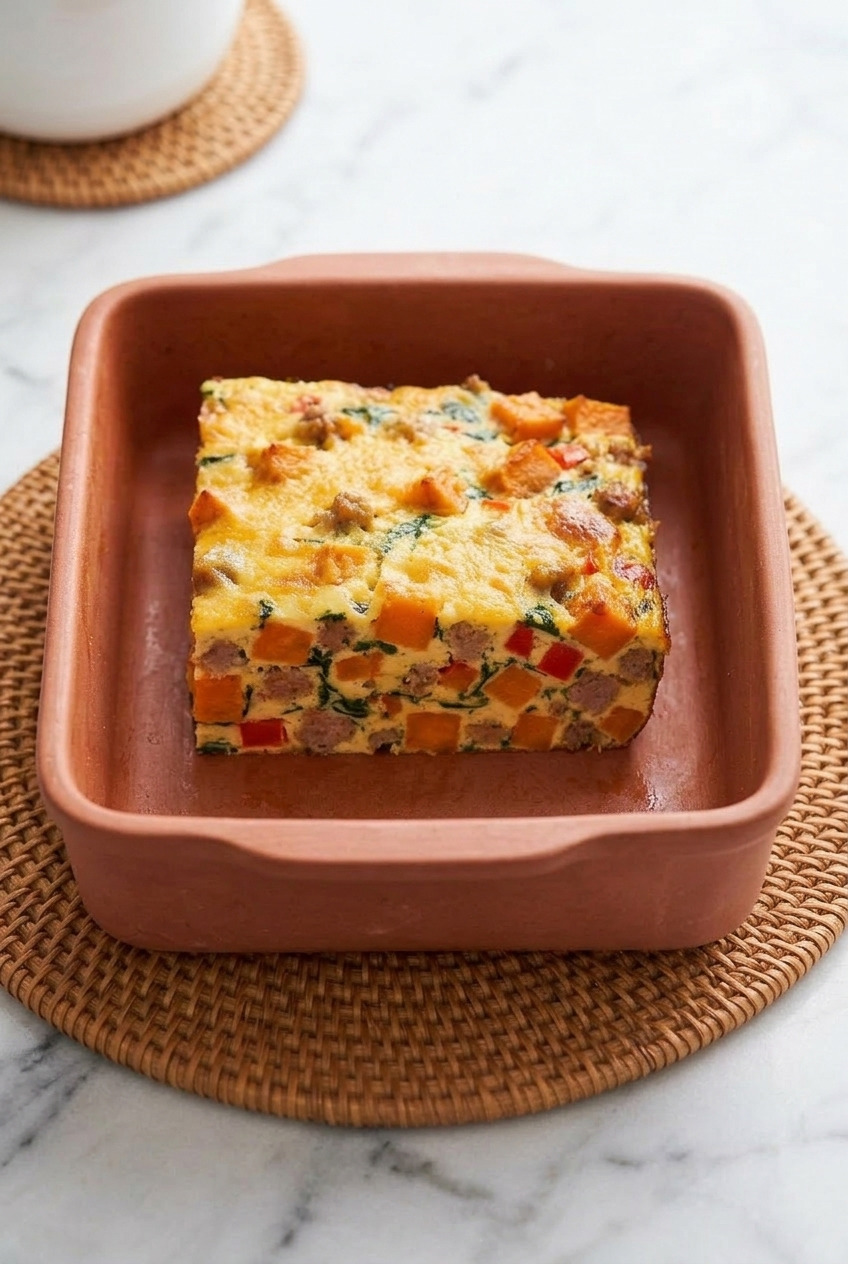
Butter a 9 by 13 inch baking dish and spread the potato, sausage and vegetables across the bottom in an even layer.
Pour the custard slowly over everything so it runs down and settles into the gaps.
Scatter the cheddar over the top, on the custard rather than mixed in, so it browns instead of sinking to the bottom.
Overnight, or Straight Into the Oven
Both routes work and the overnight one is why this recipe exists. The bake time is the only thing that changes.
- Overnight. Assemble completely, cover tightly, refrigerate up to 24 hours. Take the dish out 30 minutes before it bakes and add 5 to 10 minutes to the time.
- Same day. 350°F for 35 to 40 minutes, uncovered, on the middle rack.
- Never cold glass into a hot oven. A chilled glass dish can crack from the shock. Let it sit on the counter while the oven heats.
- Fridge too full? Cook the potato and sausage up to 3 days ahead and store them in a container. Whisk the custard the night before. Assembly then takes four minutes in the morning.
How to Tell When It Is Done
Custard overcooks into a sponge faster than most people expect. Watch it from the 32 minute mark.
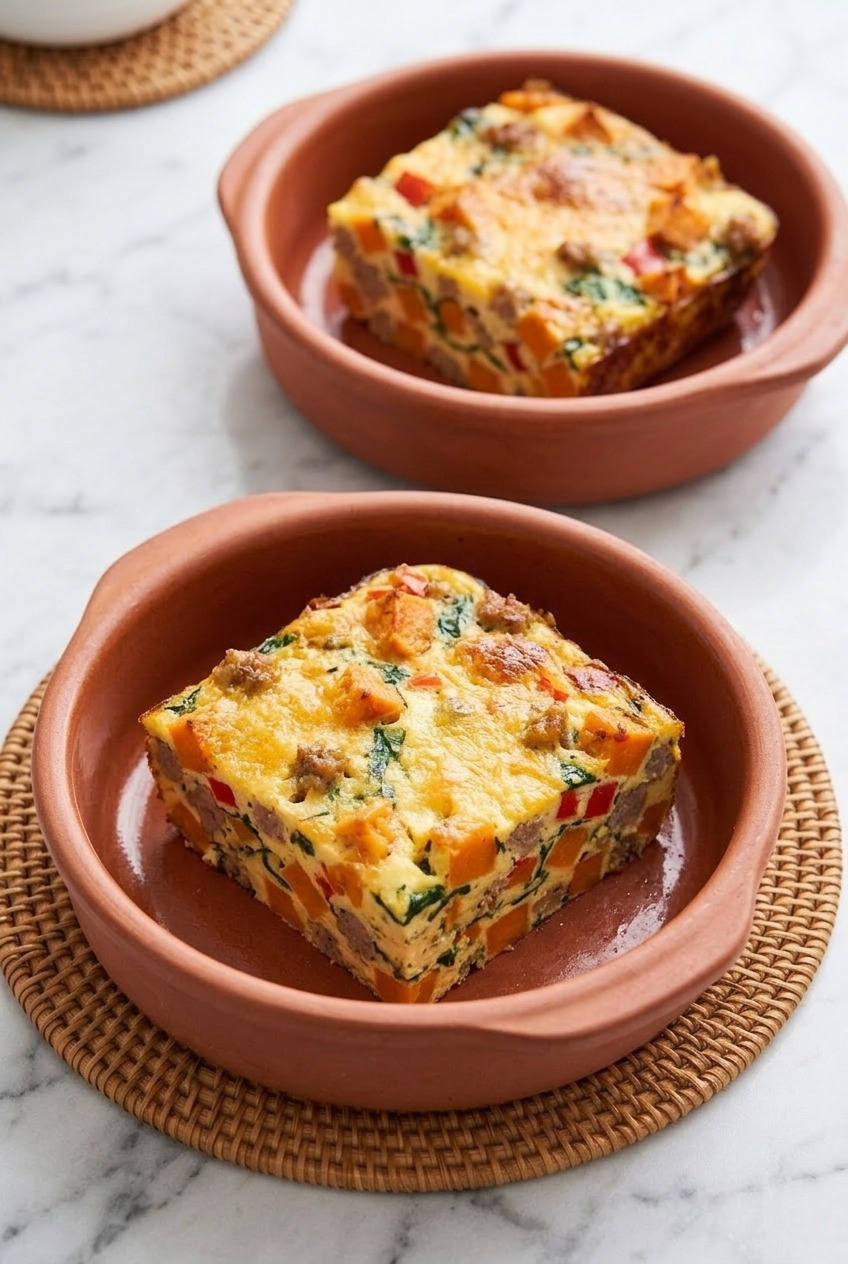
- The jiggle. Nudge the dish. The center should wobble as one set piece, not slosh like liquid underneath.
- The temperature. 160°F in the middle on an instant read thermometer. This is the only real answer.
- The edges. They puff slightly and pull away from the sides of the dish.
- Carryover is real. Pull it a shade early and rest it 10 minutes. It keeps cooking in the dish and it firms up as it sits.
Cutting into it immediately? Your squares will slump. Ten minutes is not optional here.
Common Mistakes
- Raw sweet potato. Hard nuggets in a set casserole. The number one failure.
- Wet spinach. A puddle in the bottom of the dish and squares that won't hold together.
- Undrained sausage. Orange grease pooled across the top when it comes out.
- Too much milk. A casserole that weeps every time you lift a square.
- Baking hot and fast. At 375°F or above the outside curdles before the middle sets. Stay at 350°F.
- Cutting it straight from the oven. Give it the rest. You'll get clean edges instead of a scoop.
Variations
- Chorizo and pepper jack. Swap both, one for one. Drain the chorizo hard, it gives up more fat than breakfast sausage.
- Bacon. 12 ounces, cooked crisp and crumbled in. Different texture, and you'll want a little extra salt.
- Meatless. Drop the sausage, add a drained can of black beans and a second bell pepper.
- Hash brown style. Shred the sweet potato raw and press it into the bottom as a base layer. Skip the roasting step entirely.
- More heat. Two diced jalapenos with the onion, or ½ teaspoon of red pepper flakes in the custard.
Serving and Storage
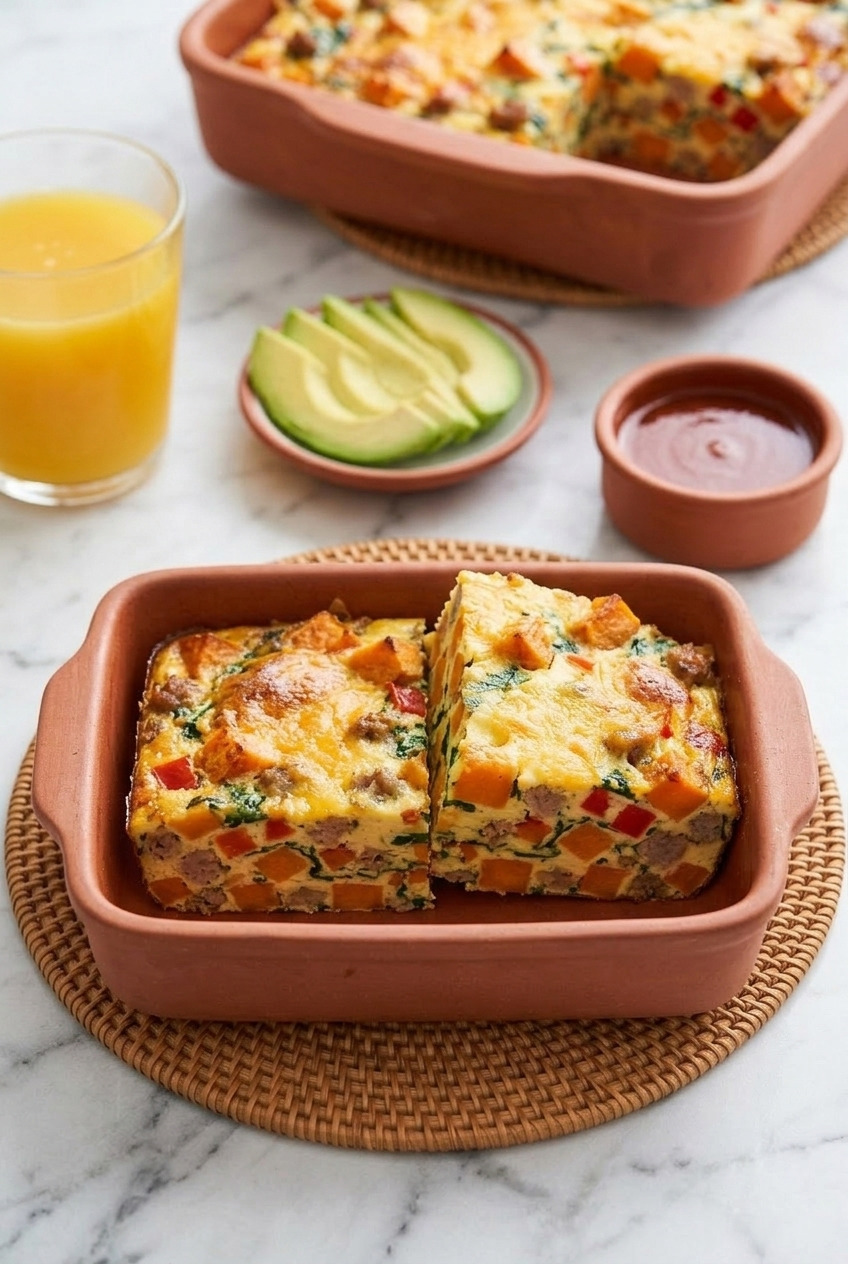
- Serving. Cut squares straight from the dish and put hot sauce, sliced avocado and a bowl of fruit on the table next to it.
- Fridge. 4 days, covered in the dish.
- Reheating. 300°F for 15 minutes keeps the texture best. A square takes 60 to 90 seconds in the microwave if you're in a hurry.
- Freezing. Cool completely, cut into squares, wrap individually and freeze 2 months. Thaw overnight in the fridge before reheating.
Build it Christmas Eve, bake it Christmas morning, and let everybody eat whenever they surface. Give it a try!
Recipe
Overnight Sweet Potato Breakfast Casserole With Sausage and Eggs
Ingredients
For the Sweet Potatoes
- 1 ½ pounds sweet potatoes peeled and cut into ½ inch cubes
- 2 tablespoons olive oil
- ½ teaspoon kosher salt
For the Sausage and Vegetables
- 1 pound bulk breakfast sausage
- 1 medium yellow onion diced
- 1 red bell pepper diced
- 3 cloves garlic minced
- 3 cups packed baby spinach chopped
For the Custard and Top
- 12 large eggs
- ½ cup whole milk
- ½ teaspoon kosher salt
- ½ teaspoon black pepper
- ¼ teaspoon ground cinnamon
- 1 ½ cups shredded sharp cheddar cheese
- 1 tablespoon butter for the dish
Instructions
Cook the Components
- Heat the oven to 425F. Toss the sweet potato cubes with the olive oil and ½ teaspoon kosher salt, spread them on a sheet pan, and roast 20 minutes until browned at the edges and tender. Do NOT skip this, raw cubes will not cook through in the custard.
- Cook the sausage in a large skillet over medium heat, breaking it up, about 8 minutes. Drain it well and set it aside, reserving a spoonful of fat in the pan.
- Cook the onion and bell pepper in the reserved fat for 6 minutes, add the garlic for 1 minute, then add the spinach and cook just until wilted.
- Tip the vegetables into a sieve and press hard with the back of a spoon to squeeze out the liquid. Wet greens are the main cause of a watery casserole.
Assemble and Bake
- Butter a 9 by 13 inch baking dish. Spread the roasted sweet potato, sausage and drained vegetables across the bottom in an even layer.
- Whisk the eggs with the milk, salt, black pepper and cinnamon until the mixture is a uniform yellow with no ropes of white left, then pour it slowly over the filling so it settles into the gaps.
- Scatter the cheddar evenly over the top, on the custard rather than stirred in, so it browns during the bake.
- To bake now: 350F for 35 to 40 minutes, uncovered. To make it ahead: cover tightly and refrigerate up to 24 hours, then let the dish sit on the counter for 30 minutes and bake 40 to 50 minutes.
- It is done when the center wobbles as one set piece rather than sloshing, the edges pull from the sides, and an instant read thermometer reads 160F in the middle.
- Rest 10 minutes before cutting, or the squares will slump. Cut into 12 squares and serve straight from the dish with hot sauce and sliced avocado.
Notes
- Cook the potato first: the custard sets in 35 to 40 minutes and raw ½ inch cubes need closer to 50, so raw cubes stay hard.
- Squeeze the greens: cooked spinach holds a lot of water and it all ends up in the bottom of the dish.
- Custard ratio: 12 eggs to ½ cup whole milk. More milk gives a casserole that weeps when you cut it.
- Doneness: 160F in the center, then a 10 minute rest for carryover.
- Overnight: assemble fully, refrigerate up to 24 hours, rest on the counter 30 minutes before baking and add 5 to 10 minutes.
- Shredded version: grate the sweet potato raw and press it into the bottom of the dish as a base if you want a hash brown style casserole with no pre-roasting.
- This is the savory casserole, not the marshmallow topped Thanksgiving side. The ¼ teaspoon of cinnamon reads as warmth against the sausage, not as sweetness.