Walk into any Argentine pantry and there's a squat tin on the shelf with a picture of a sweet potato on it.
It just lives there, the way a jar of peanut butter lives in an American cabinet.
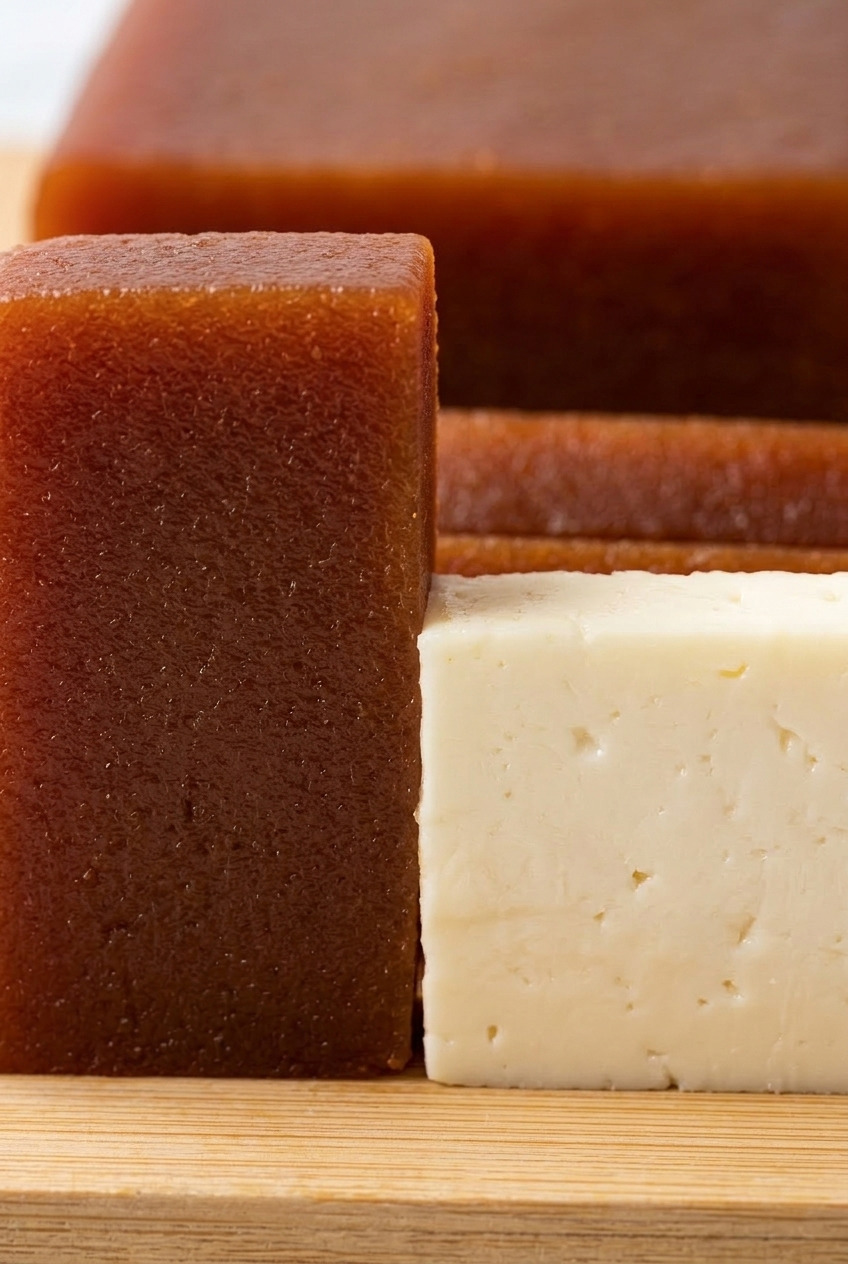
You open it, turn the block out, and it lands on the board with a soft thud, dark amber and glossy at the cut.
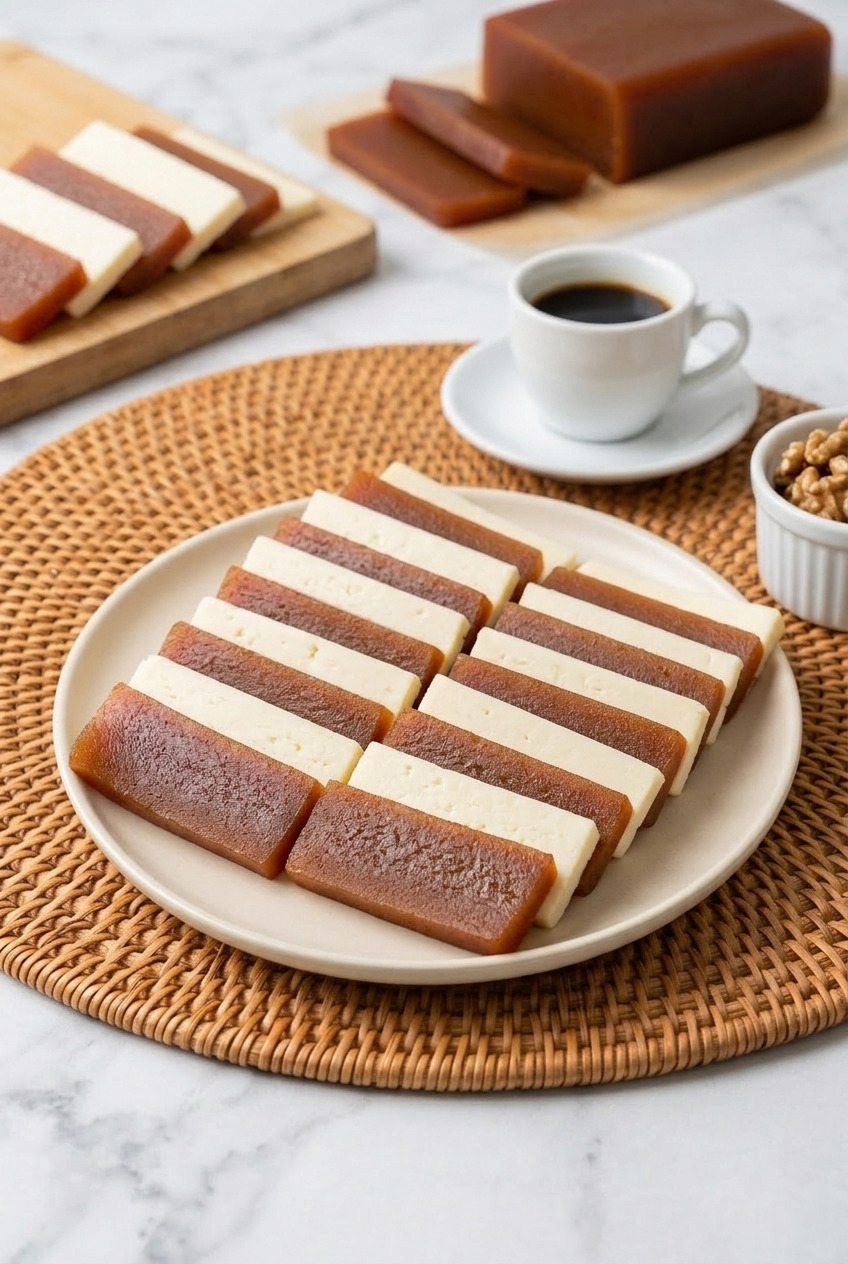
Then somebody cuts an equally thick slab of fresh white cheese and sets the two side by side.
That is a vigilante, and it is the entire reason this stuff exists.
I got introduced to it at a friend's parents' apartment in Buenos Aires, at the end of a very long asado, when I genuinely could not eat another thing.
His father put a plate in front of me anyway.
Sweet, mild, faintly caramel, against salty milky cheese.
What surprised me most is how firm the paste is.
You slice it with a knife like a block of quince paste, and it keeps on the counter for weeks because the sugar is doing the preserving.
One thing to sort out before you start: a lot of English pages using this name are describing the Dominican dessert, which is a soft milk pudding you eat with a spoon.
This one is the Argentine block, and it's easier than the long ingredient lists make it look!
What Is Dulce de Batata?
Dulce de batata is a firm confectioner's paste made from sweet potato and sugar, set with agar agar. It is a staple sweet across Argentina, Uruguay and Paraguay, sold in tins and squat rectangular blocks in every corner shop.
Think of it as the sweet potato relative of dulce de membrillo, the quince paste you meet on a Spanish cheese board.
Same idea, softer flavor, deeper color.
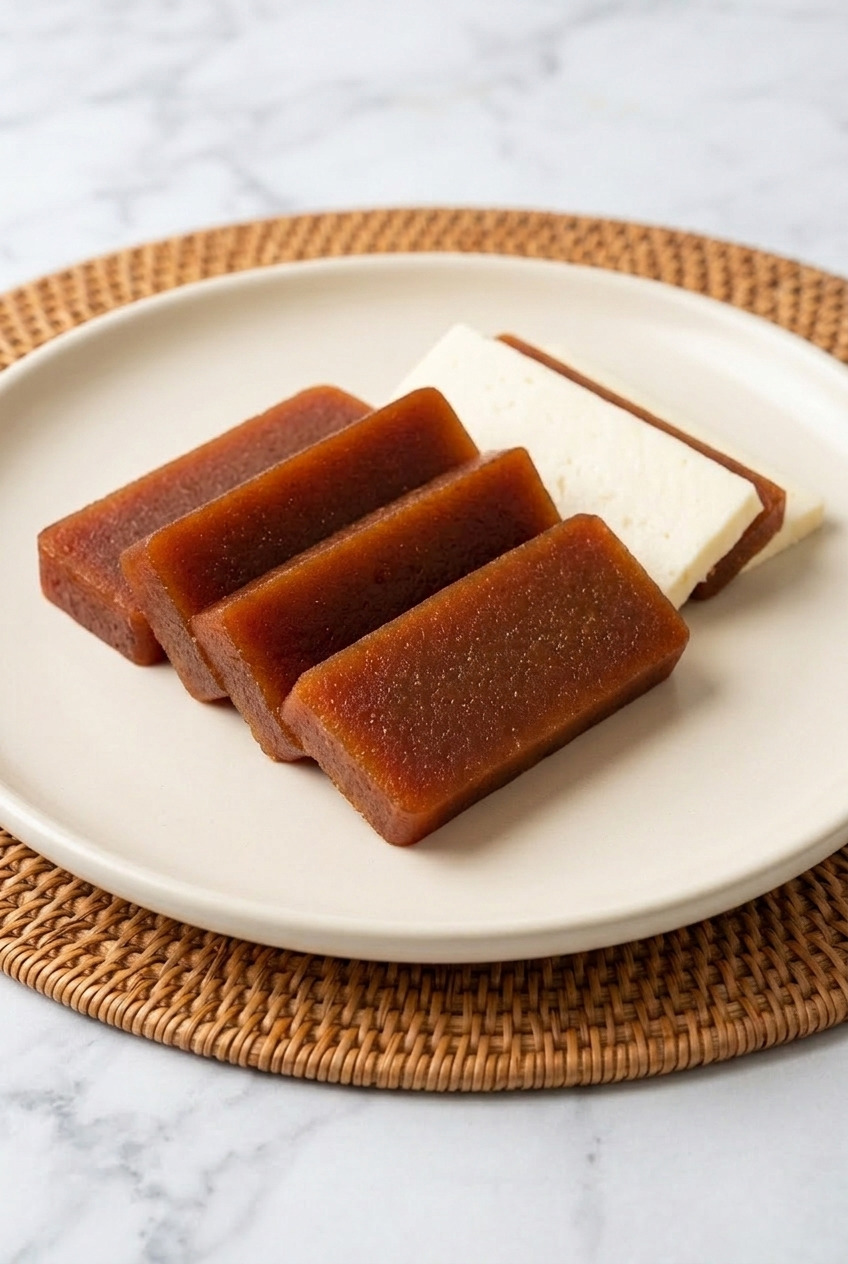
The texture is dense and sliceable with a slight give, somewhere between a firm jelly and fudge.
Color runs from bright pumpkin to a dark garnet amber depending on your sugar and how far you cook it.
It gets eaten in thick slabs with cheese, cubed with coffee, or baked into pastries.
Pro tip: Make it on a Sunday afternoon and you'll be eating it into next month.
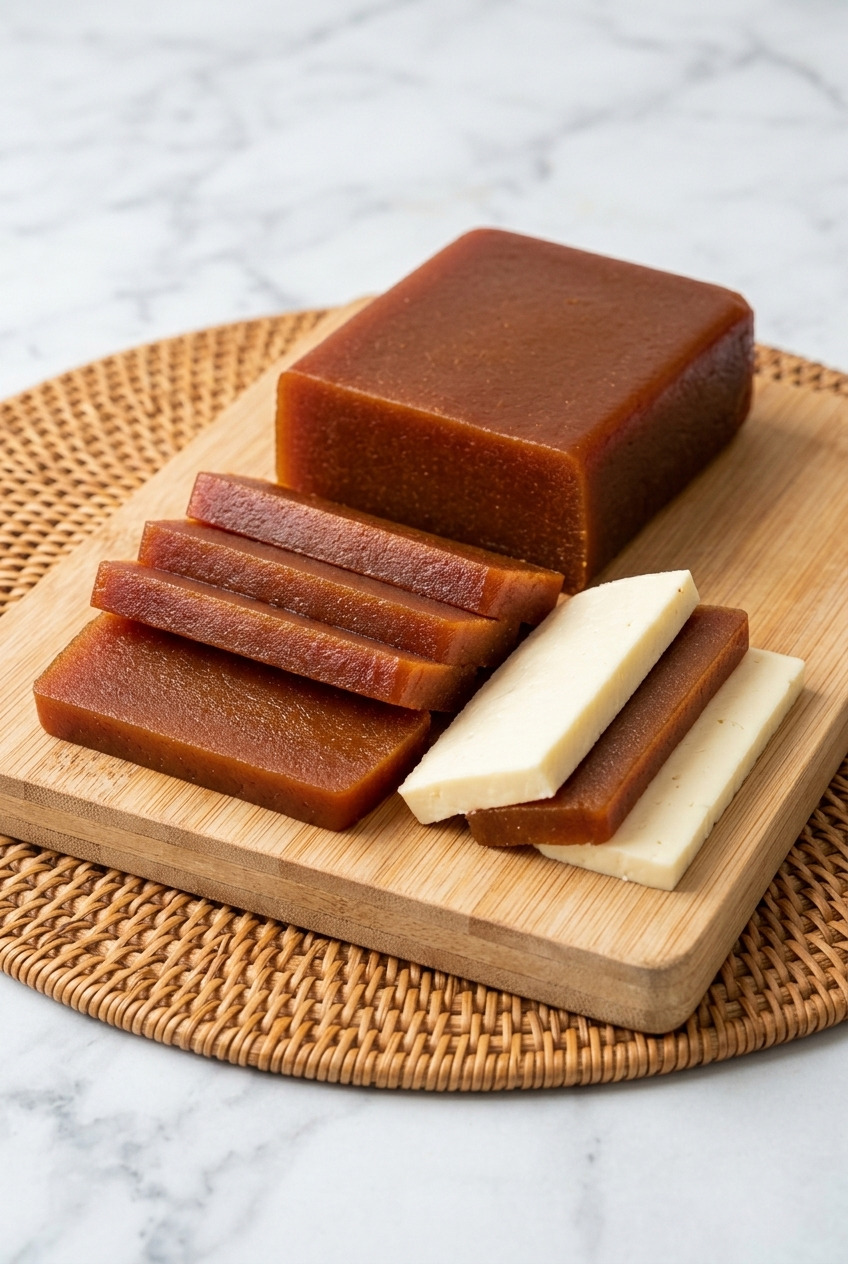
The Vigilante, Sweet Potato Paste and Cheese
The vigilante is a slab of dulce de batata and a slab of fresh cheese, cut about the same thickness, eaten together.
The full name is postre del vigilante, dessert of the night watchman, and the story goes that it was the cheap, filling, no cooking dessert the police officer on the beat could get at any corner cafe.
Argentines will argue about whether the proper version uses sweet potato paste or quince paste.
The sweet potato version is the softer, gentler one.
The cheese matters more than people expect.
- Queso cremoso. The authentic choice, a mild, soft, slightly springy Argentine cow's milk cheese. Latin markets carry it.
- Queso fresco. The easiest real substitute in a US grocery store. Milky and lightly salty, which is exactly what you want against all that sugar.
- Farmer cheese or a mild fresh mozzarella. Works well. Pat mozzarella dry first.
- Young Muenster. My favorite supermarket cheat. Mild, buttery, cuts into clean slabs.
What you want to avoid is anything sharp or aged.
A cheddar fights the paste instead of balancing it.
Dulce de Batata Versus the Dominican Version
Two very different desserts share this name, and the internet does not sort them out clearly.
The Argentine and Paraguayan dulce de batata is what we're making: sweet potato cooked down with a lot of sugar, set with agar agar, poured into a pan, chilled, and cut with a knife.
The Dominican dulce de batata, also called jalea de batata, is a stovetop pudding of sweet potato simmered with milk, evaporated milk, cinnamon sticks and raisins, and it stays soft and spoonable.
No agar, no setting, no slicing.
If a recipe hands you five cups of milk, you have found the Dominican one.
If it hands you agar agar, you're in the right place.
Ingredients You Will Need
The ingredient list is short and every item is doing structural work. There is nowhere to hide in a two ingredient confection, so buy decently.
- Sweet potatoes (3 pounds, peeled and chunked). White fleshed batata, sold as boniato or Cuban sweet potato in Latin markets, is the Argentine default and gives a paler, drier, more traditional paste. Orange fleshed American sweet potatoes work beautifully and give a brighter color with a slightly wetter puree, which just means a few extra minutes of cooking down.
- Granulated sugar (3 cups). This looks like a lot and it is supposed to be. Sugar is the setting structure and the preservative here, not just the sweetness. Cutting it significantly gives you a soft mass that will not slice and will not keep.
- Agar agar powder (1 tablespoon plus 1 teaspoon). This is what turns puree into a block you can cut. It is a seaweed gel, so the whole thing stays vegetarian. It MUST reach a full rolling boil for a minute or it simply will not set, and that single detail is where most failed batches come from.
- Water (1 ½ cups). For the sugar syrup.
- Glucose syrup or light corn syrup (1 tablespoon). Optional but I'd keep it. It stops the sugar from recrystallizing, which is the difference between a glassy, smooth paste and a slightly gritty one.
- Vanilla extract (1 tablespoon) or 1 vanilla bean. A whole scraped bean is the nicer version if you have one.
- Fresh lemon juice (1 tablespoon). My own addition, not traditional in every version. It keeps three cups of sugar from tasting one dimensional.
- Salt (¼ teaspoon). Small amount, big job.
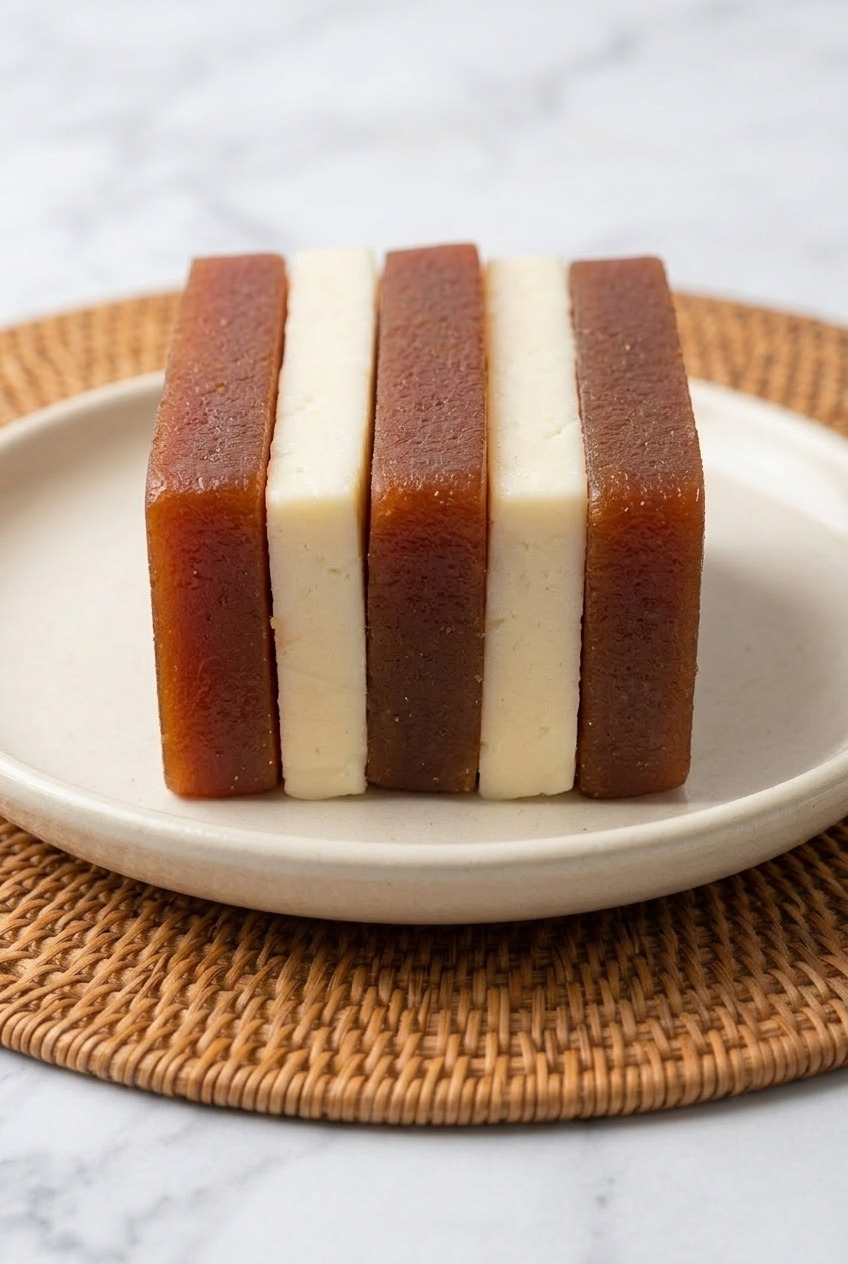
How to Make Dulce de Batata
Step 1: Cook the Sweet Potatoes
Peel the sweet potatoes and cut them into 2 inch chunks.
Boil in plenty of unsalted water until a knife slides through with zero resistance, about 20 to 25 minutes.
Undercooked flesh will not puree smooth, so err long.
Drain thoroughly and let them steam dry in the colander for 5 minutes.
Step 2: Puree Until Completely Smooth
Blend the hot flesh until it's silky, or run it through a food mill.
Then push the puree through a fine mesh sieve.
Yes, this step is tedious. Do it anyway.
Any fiber you leave behind shows up as a stringy streak in a set block, and once it's set you cannot fix it.
Step 3: Bloom the Agar Agar
Whisk the agar powder into ½ cup of the water and let it sit 10 minutes.
It will look like cloudy sludge, which is correct.
Step 4: Cook the Puree and Sugar Down
In a wide heavy pot, combine the remaining 1 cup of water, the sugar and the glucose syrup and stir over medium heat until the sugar dissolves.
Add the sieved puree, the salt and the vanilla.
Now cook it down over medium to medium-low heat, stirring constantly with a heatproof spatula and scraping the whole bottom of the pot.
This takes 30 to 40 minutes and it spits like lava, so keep the heat moderate and wear long sleeves.
The mass will darken, thicken and start pulling away from the sides.
Step 5: Boil In the Agar
Stir the bloomed agar into the hot mass and bring the whole thing to a real boil.
Keep it boiling and stirring for a full minute.
Agar activates at boiling temperature, and a lazy simmer is not enough. This is the most common failure point in the entire recipe.
Step 6: Pour and Set
Line an 8x4-inch loaf pan with plastic wrap, leaving an overhang on all sides.
Pour the hot mass in and rap the pan on the counter to level it and knock out air pockets.
Cool to room temperature, then refrigerate overnight.
It will look set within an hour, but the texture keeps firming for hours after that.
Step 7: Unmold and Slice
Lift the block out by the plastic overhang and peel the wrap away.
Slice with a thin knife dipped in hot water and wiped between cuts.
You want clean slabs about ½ inch thick.
How to Tell When the Paste Is Ready
Undercooking is the reason a batch never sets, and the clock is the least reliable guide you have. Use these three tests instead.
- The spoon track. Drag your spatula across the bottom of the pot. The track should stay open for two or three seconds before the mass closes back over it. If it fills instantly, keep going.
- The cold plate. Drop a spoonful on a plate from the freezer. After a minute it should hold a domed mound with a defined edge, not spread into a puddle.
- The thermometer. The mass should read 221 to 225°F before the agar goes in. That's your objective backstop when your eyes are tired.
If you wake up to a soft slab, you can rescue it.
Scrape it back into the pot, cook it another 10 to 15 minutes, boil in another teaspoon of bloomed agar, and reset it.
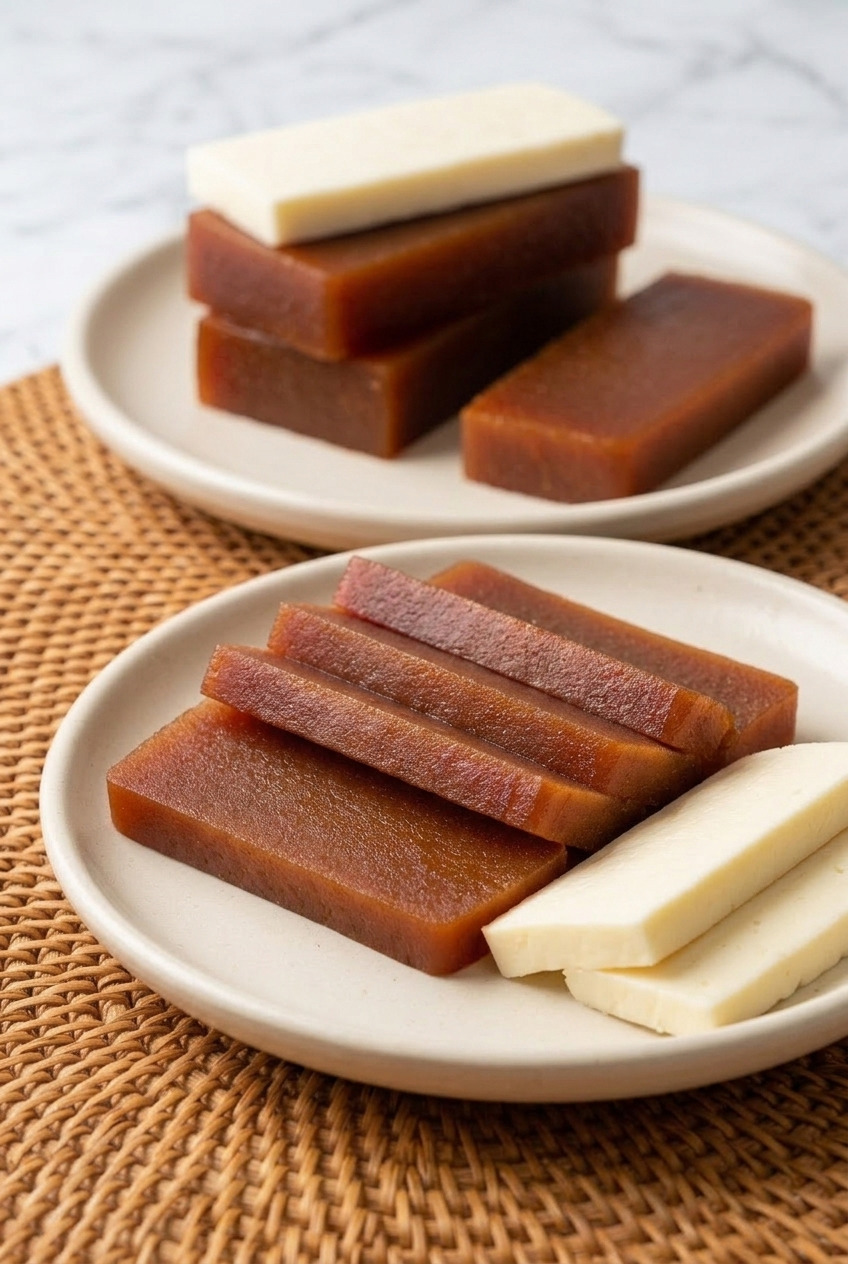
Tips for a Smooth, Firm Paste
- Sieve the puree. The single biggest quality difference between homemade and the tin, and it costs you four minutes.
- Use a wide pot. More surface area means faster evaporation and less time stirring.
- Scrape the corners. Sugar catches where the wall meets the base and scorched sugar tastes bitter through the whole batch.
- Keep the heat moderate. High heat gives you a burnt bottom and a raw middle.
- Don't skip the glucose. One tablespoon is the whole insurance policy against grainy paste.
- Cool completely before chilling. Putting a hot pan in the fridge gives you condensation on the surface and a wet, tacky top.
Variations
- Chocolate dulce de batata. Stir ⅓ cup of cocoa powder in with the sugar. Sold as a standard flavor in Argentina and it is fantastic with coffee.
- Vanilla bean. Scrape one whole bean in and drop the pod into the syrup, then fish it out before pouring.
- Double block. Pour a layer of dulce de batata, chill it, then pour a layer of quince paste on top for a striped slab.
- Squash blend. Some modern versions swap in butternut squash for a quarter of the sweet potato. It's a real twist people make, just not the classic.
- Spiced. A 3 inch cinnamon stick and two cloves steeped in the syrup, both removed before the puree goes in.
How to Serve It
- As a vigilante. Equal slabs of paste and fresh cheese, on a plate, that's it.
- On a cheese board. Cubed alongside mild cheeses, crackers and walnuts.
- With coffee. Small cubes with a strong espresso is the standard afternoon move.
- In pastafrola. The Argentine lattice tart is traditionally filled with quince or sweet potato paste, loosened with a splash of hot water first.
- On toast. Thin slices on buttered toast for breakfast. Not classic, completely delicious.
Storage
- Room temperature. Wrapped tightly in plastic or parchment, it keeps 3 weeks in a cool cupboard. Three cups of sugar is a preservative, which is exactly why this confection exists in the form it does.
- Refrigerator. Wrapped, up to 2 months. It firms up cold, so let slices sit out for 15 minutes before serving.
- Do not freeze. Freezing wrecks the gel. It thaws weepy and grainy, and there's no fixing it.
- If it weeps a little liquid. Blot it and keep going. That's normal syneresis from the agar, not spoilage.
Recipe
Dulce de Batata (Argentine Sweet Potato Paste)
Ingredients
For the Paste
- 3 pounds sweet potatoes peeled and cut into 2 inch chunks
- 3 cups granulated sugar
- 1 ½ cups water divided
- 1 tablespoon glucose syrup or light corn syrup
- 1 tablespoon plus 1 teaspoon agar agar powder
- 1 tablespoon vanilla extract or 1 vanilla bean, scraped
- 1 tablespoon fresh lemon juice
- ¼ teaspoon salt
To Serve as a Vigilante
- 8 ounces queso cremoso, queso fresco or mild farmer cheese cut into slabs
Instructions
Cook and Puree
- Boil the sweet potato chunks in unsalted water until a knife slides through with no resistance, 20 to 25 minutes. Drain and let them steam dry in the colander for 5 minutes.
- Blend the hot flesh until silky, then push the puree through a fine mesh sieve. Do not skip the sieve, any fiber left behind becomes a stringy streak in the set block.
- Whisk the agar agar powder into ½ cup of the water and let it bloom for 10 minutes.
Cook Down and Set
- In a wide heavy pot, stir the remaining 1 cup water, the sugar and the glucose syrup over medium heat until the sugar dissolves. Add the sieved puree, salt, lemon juice and vanilla.
- Cook over medium to medium-low heat, stirring constantly and scraping the whole bottom of the pot, for 30 to 40 minutes. The mass is ready when a spatula track stays open for two to three seconds, a spoonful holds a domed mound on a frozen plate, and a thermometer reads 221 to 225 degrees F.
- Stir in the bloomed agar and bring the mass to a full rolling boil. Keep it boiling and stirring for a full minute. A simmer will not activate the agar and the paste will not set.
- Pour into an 8x4-inch loaf pan lined with plastic wrap, rap the pan on the counter to level it, cool to room temperature, then refrigerate overnight.
- Lift the block out by the plastic overhang and slice into ½ inch slabs with a thin knife dipped in hot water and wiped between cuts. Serve with equal slabs of fresh cheese.
Notes
- Agar must boil: A full rolling boil for one minute after the agar goes in. A simmer will not set the paste.
- Sieve the puree: This is the difference between a smooth confection and a stringy one.
- Rescue a soft batch: Scrape it back into the pot, cook 10 to 15 minutes more, boil in another teaspoon of bloomed agar, and reset it.
- Not the Dominican dish: Dominican dulce de batata, or jalea de batata, is a soft milk pudding. This is the firm Argentine block.
- Do not freeze: Freezing breaks the gel and it thaws weepy and grainy.