The first bowl I ever had came at the end of a long meal in a Cantonese restaurant in Flushing, when I had already decided I was too full for anything else.
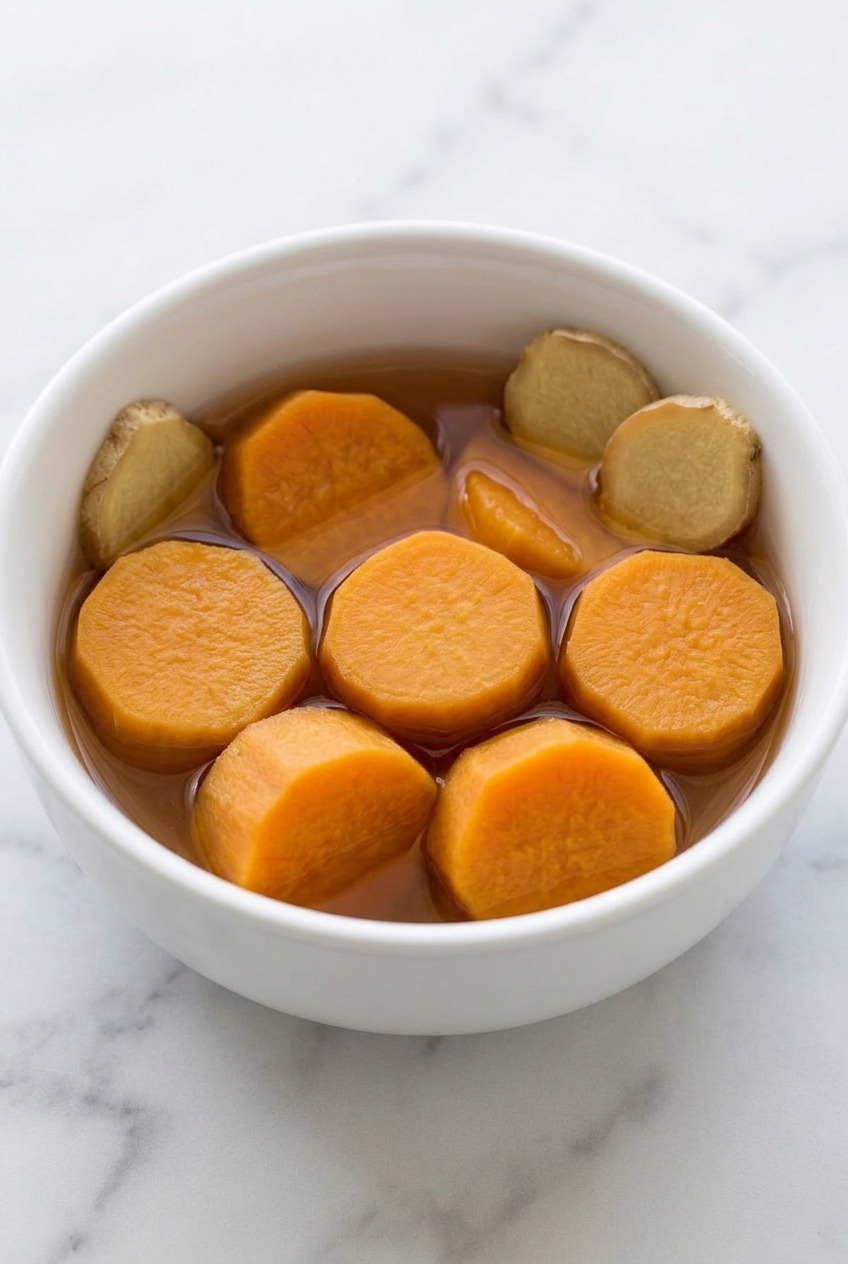
It showed up in a small white bowl, thin and clear, about the color of weak tea.
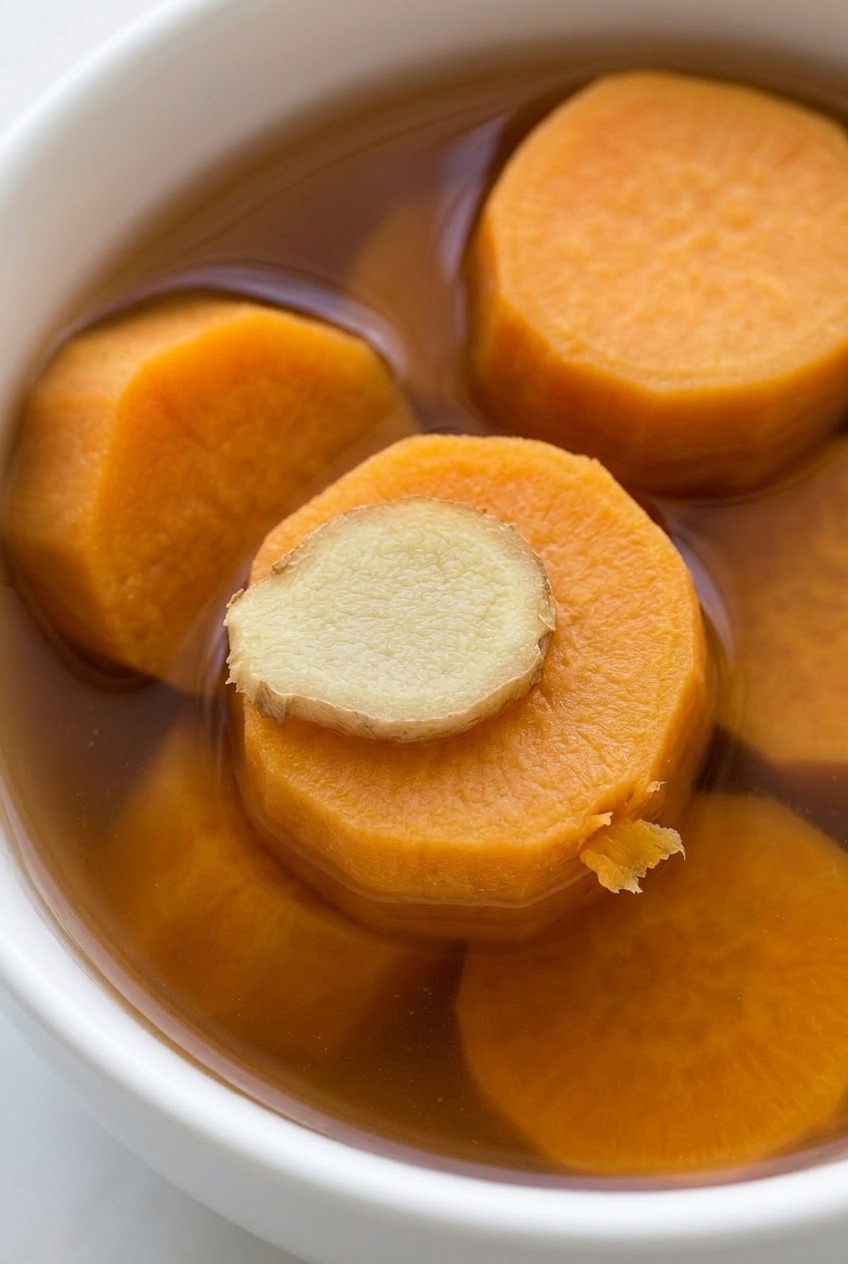
I could see the sweet potato sitting in it.
No cream, no puree, nothing thickened.
Just amber liquid, orange chunks, and a smell of ginger that got to the table before the bowl did.
I took one spoonful to be polite.
Then I finished it and looked around to see whether anyone at the table wanted theirs.
That soup is fanshu tangshui, which translates to something close to sweet potato sugar water.
It belongs to tong sui, the Cantonese family of sweet soups that close out a meal or turn up late at night when it's cold outside.
Four ingredients, one pot, and that's genuinely the whole recipe.
Sweet potato, fresh ginger, a slab of Chinese brown sugar, water.
What took me a few rounds to get right was the broth staying clear instead of going cloudy and thick on me.
It comes down to how you cut the sweet potato and how gently you let it simmer, and I'll walk you through both.
Thirty minutes, start to finish.
I make it all winter long.
What Fanshu Tangshui Actually Is
This is a dessert soup, not a soup course. In Cantonese kitchens it lands at the end of the meal, in a small bowl, warm and sweet and thin enough to drink from the spoon.
The category is tong sui, literally sugar water. It covers dozens of sweet soups: red bean, black sesame, papaya with snow fungus, and this one.
Fanshu is the sweet potato. Tangshui is the sweet soup. Put together, the name is about as literal as a dish name gets.
You'll see it written a few ways depending on the dialect. Fan shu tong sui in Cantonese romanization, fanshu tangshui in Mandarin pinyin. Same bowl.
Fair warning about the regional split: the Cantonese version I'm writing here is built on ginger. The Hokkien and Southeast Asian versions often go a different direction, with pandan leaf simmered into the syrup and sometimes coconut milk stirred in at the end.
Both are real. Both are called sweet potato tong sui.
I went with the ginger version because the heat against the sweetness is the whole point for me, and because it's what gets made when the weather turns.
It's a winter bowl in Guangdong and Hong Kong, served hot. Chilled, it becomes a genuinely good summer dessert, and plenty of families do exactly that.
Why This Version Works
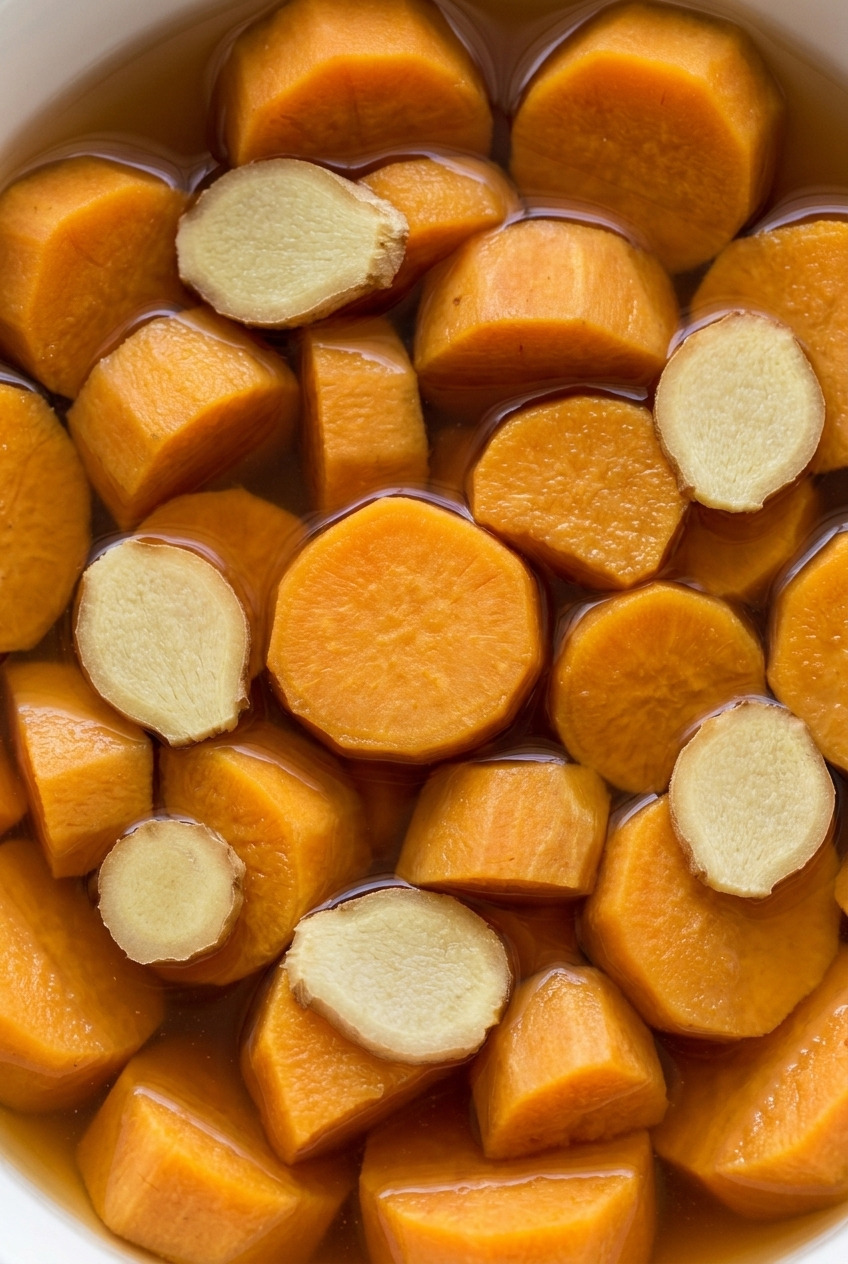
Every change I made here was aimed at one thing: keeping the broth clear. Here's what actually moves the needle.
- The ginger syrup gets built first. Ginger, sugar and water simmer together for 10 minutes before any sweet potato goes in. Sweet potato dropped into plain boiling water goes soft on the outside before it picks up a single note of flavor.
- Roll cut chunks, not cubes. A roll cut gives every piece a flat face and a wedge face. They cook evenly and they hold together, which is the difference between chunks you can see and a pot of orange sludge.
- Slab sugar, not granulated. Chinese brown sugar slab (peen tong) brings a caramel and molasses depth that white sugar simply doesn't have. Rock sugar is the clean, clear alternative.
- A gentle simmer, and a short one. 12 to 15 minutes at a bare bubble. Hard boiling knocks the chunks apart and their starch is what clouds the pot.
- Ten minutes of rest off the heat. The sweet potato keeps softening in the hot syrup and takes on more ginger while it does.
Which Sweet Potato to Use
The variety changes the color, the texture and how long you can simmer it. All three options work, but they don't behave the same way.
- Chinese fanshu (yellow fleshed). The classic. Reddish or tan skin, pale yellow flesh, dense and drier than the American kind. It holds its shape beautifully and leaves the broth the clearest of the three. Asian markets carry it, often labeled simply as Chinese sweet potato.
- Japanese satsumaimo (purple skinned). The closest substitute and easy to find. Purple skin, cream colored flesh, chestnut sweet. Slightly starchier, so keep the simmer at the shorter end.
- American orange sweet potato (garnet, jewel, beauregard). What most of us have in the pantry, and it makes a good bowl. It's wetter and softer, so it breaks down faster and tints the broth a deeper orange. Cut the pieces a touch larger and pull the pot off the heat at 12 minutes.
Whichever you use, buy them firm with no soft spots. A tired sweet potato falls apart no matter how carefully you cook it.
Ingredients
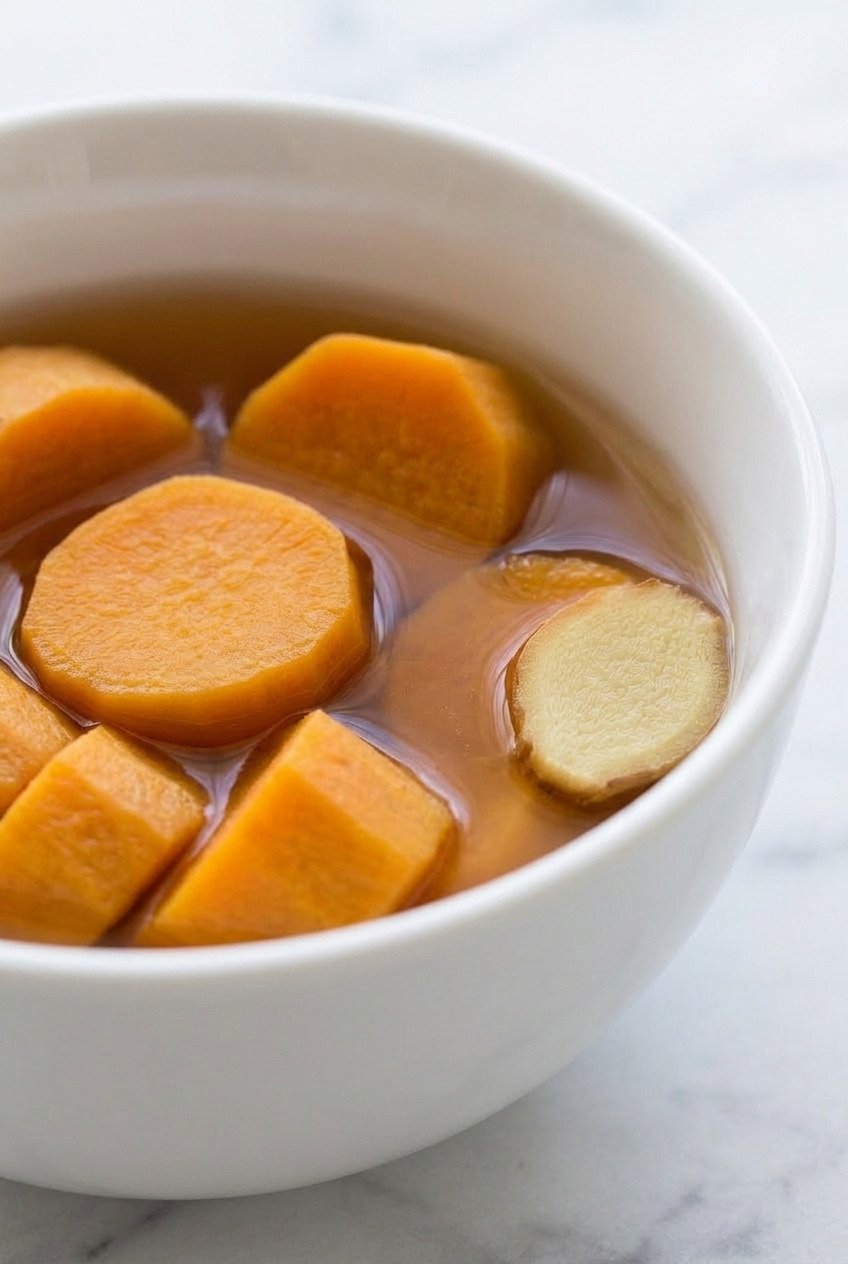
Four things, and every one of them is doing real work. There's nowhere to hide in a recipe this short.
About the Key Ingredients
- Sweet potatoes (2 pounds). Chinese yellow fleshed fanshu first, Japanese satsumaimo second, American orange third. Peel them, then roll cut into 1 to 1.5 inch chunks.
- Fresh ginger (2 ounces, about a 3 inch piece). Don't peel it. Smash the piece with the flat of a knife to bruise it open, then slice it into coins. Bruising pulls far more of the oil out than slicing alone.
- Chinese brown sugar slab, peen tong (3.5 ounces). Sold in flat amber bars at Chinese markets, sometimes labeled as slab sugar or as pian tang. If you can't get it, rock sugar is the next best thing and gives an even clearer broth. Light brown sugar works in a pinch, though it muddies the color.
- Water (6 cups). Yes, it's an ingredient here. The ratio to sweet potato is what makes this a soup you drink rather than a syrup you spoon.
- Salt (a pinch). Not traditional in every household, but a small pinch sharpens the ginger and keeps the sweetness from going flat.
Optional Add Ins
- Dried red dates (jujube), 8. Slit each one open and drop them in with the ginger. They add a raisin like sweetness and a faint medicinal note that a lot of families consider essential.
- Ginkgo nuts, a small handful. Vacuum packed ones are already cooked. Add them in the last 5 minutes.
- Glutinous rice balls (tang yuan). Boil them separately and spoon them in at the table, plain or sesame filled. This turns the bowl into a proper occasion dessert.
- A pandan leaf. Not Cantonese, but it's how the Southeast Asian version goes. Knot one leaf and simmer it in the syrup, then fish it out.
How to Make Fanshu Tangshui
Step 1: Prep the Sweet Potato
Peel the sweet potatoes, then roll cut them: cut on a diagonal, roll the potato a quarter turn, cut again.
You want chunks around 1 to 1.5 inches, each with a flat face and an angled face.
Drop them into a bowl of cold water while you build the syrup. This rinses off loose surface starch, which is free insurance against a cloudy broth.
Step 2: Build the Ginger Syrup
Smash the unpeeled ginger with the flat of your knife until it splits, then slice it into thin coins.
Put the ginger, the sugar slab and 6 cups of water in a medium pot.
Bring it to a boil, then drop to a gentle simmer for 10 minutes until the slab has fully dissolved.
Taste it. This is your one chance to adjust, because once the sweet potato is in, the syrup is set.
Step 3: Simmer the Sweet Potato
Drain the sweet potato and slide it into the syrup.
Bring it back to a bare simmer, the kind where you see a bubble break every second or two, and hold it there for 12 to 15 minutes.
Do NOT let it boil hard and do not stir it more than once or twice. Both break the chunks down and cloud the pot.
It's done when a chopstick or a paring knife slides into a chunk with only slight resistance.
Step 4: Rest, Then Serve
Take the pot off the heat, cover it, and leave it alone for 10 minutes.
The chunks finish cooking in the residual heat and soak up ginger while they sit.
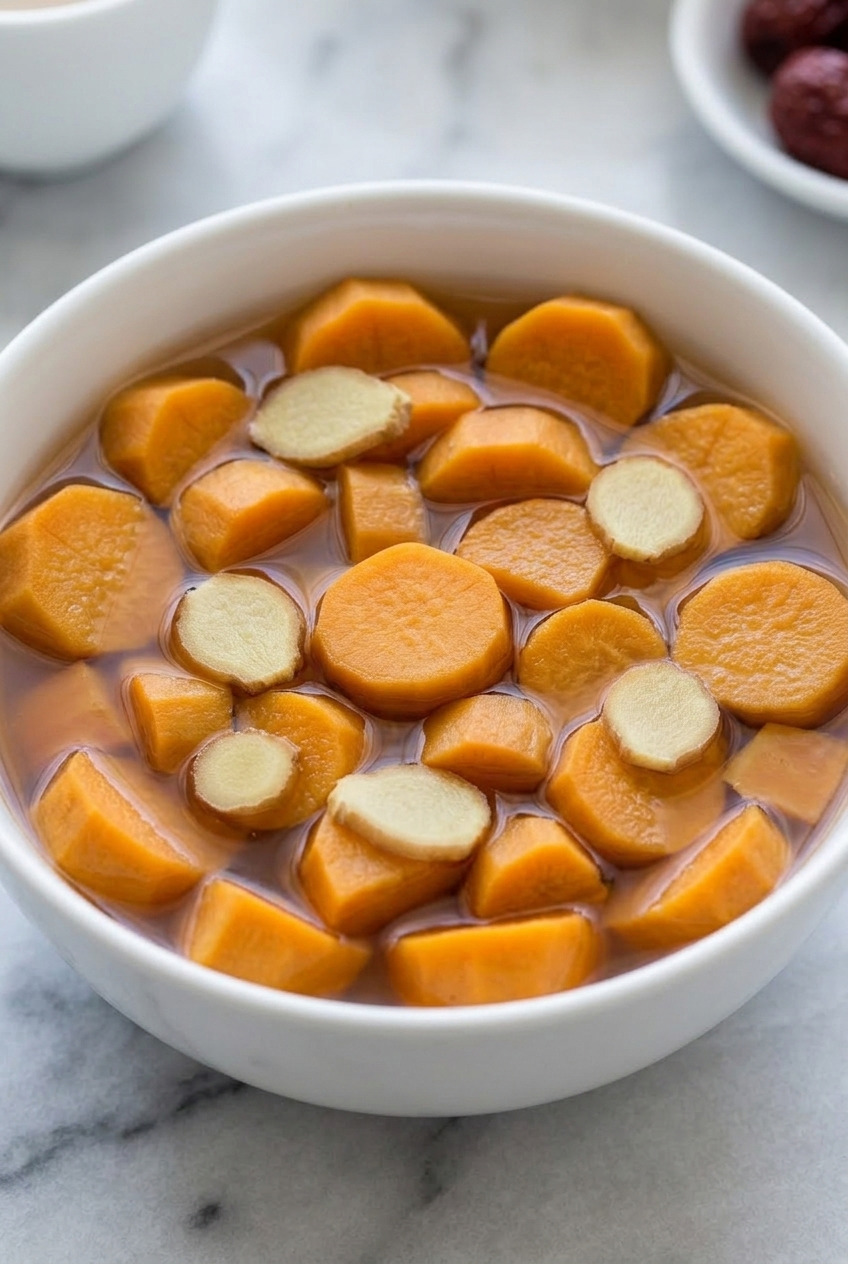
Ladle into small bowls, ginger coins and all, and serve hot.
Tips for a Clear, Sweet Broth
- Rinse the cut chunks. Thirty seconds in cold water takes off the surface starch that would otherwise go straight into your broth.
- Bare simmer, always. If the surface is rolling, the heat is too high. Turn it down and be patient.
- Cut evenly. One small chunk in a pot of large ones will disintegrate and take the clarity with it.
- Taste the syrup before the sweet potato goes in. Sweet potatoes vary a lot in sweetness, so aim for a syrup that tastes slightly under sweet on its own.
- Leave the ginger in the bowl. The coins keep giving off heat as the soup sits, and picking one out to chew is half the fun.
- Don't skip the rest. Ten minutes off the heat does more for the flavor than five extra minutes of simmering ever will.
Serving It Hot or Cold
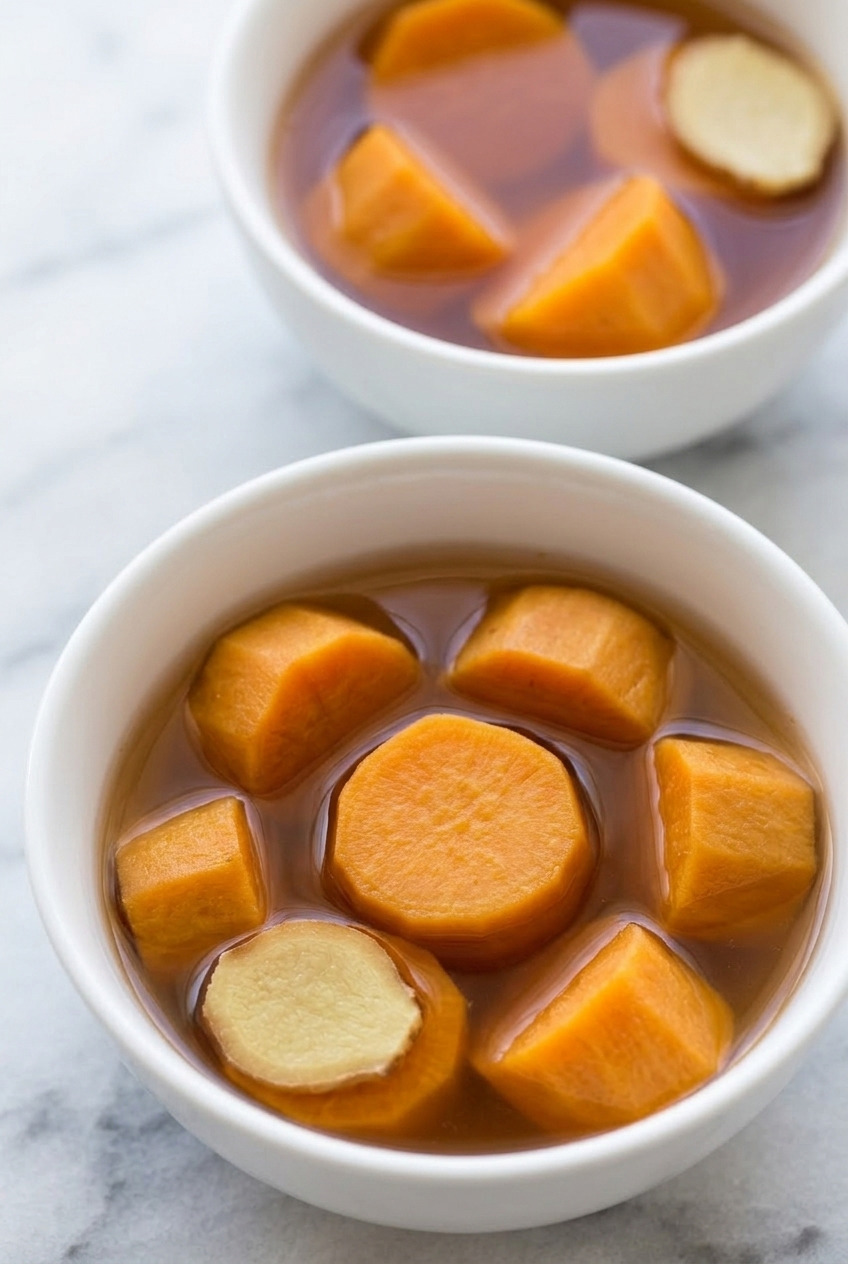
Hot is the traditional way and it's how I make it nine times out of ten. Small bowls, at the end of dinner, ginger going to work on the back of your throat.
It's a classic winter solstice bowl, and it's what gets made in a lot of homes when someone has a cold coming on.
Chilled, it turns into something else entirely, closer to a light fruit soup. Cool it fully, refrigerate for at least 4 hours, and serve it cold with a couple of ice cubes.
Cold dulls sweetness, so if you know you're chilling it, nudge the sugar up a little.
Sound like too small a dessert? It's meant to be. A cup after a big meal is exactly the point.
If you want to build it out, serve it alongside sesame balls, egg tarts, or a plate of orange segments.
Storage and Reheating
- Refrigerator. Up to 4 days in a covered container. The flavor actually improves overnight as the ginger keeps steeping.
- It will thicken. Starch leaches out of the sweet potato as it sits, so day two is noticeably heavier. Stir in a splash of hot water when you reheat and it comes right back.
- Reheating. Gentle heat on the stovetop, stirring as little as possible. The microwave works but it tends to blow the chunks apart.
- Freezing. I'd skip it. Sweet potato goes grainy and watery after a freeze and there's no fixing it.
Recipe FAQs
What does fanshu tangshui mean, and is it the same as tong sui?
Fanshu means sweet potato and tangshui means sugar water. Tong sui is the broader Cantonese category of sweet soups, so this dish is one specific member of that family, not another name for it.
Can I use rock sugar or regular brown sugar instead of a slab?
Yes. Rock sugar is the traditional alternative and gives the clearest broth, though it's less complex. Light brown sugar works too, it just makes the soup a shade muddier and slightly less caramel tasting.
How do I keep the broth clear instead of cloudy?
Three things: rinse the cut chunks, hold a bare simmer instead of a boil, and stir almost never. Cloudiness is sweet potato starch, so anything that keeps the chunks intact keeps the broth clear.
Do I peel the ginger, and how much should I use?
No peeling needed, just scrub it. For 6 cups of water, use about 1 ounce for a mild bowl, 2 ounces for the standard version, and 3 ounces if you want it properly warming.
Can I make it in advance?
Absolutely, and I often do. Make it a day ahead, refrigerate it, then loosen it with hot water as you reheat. The ginger flavor deepens overnight.
What else can I add to it?
Dried red dates, ginkgo nuts, or glutinous rice balls are all traditional. A knotted pandan leaf takes it toward the Southeast Asian style.
Recipe
Fanshu Tangshui (Chinese Sweet Potato Ginger Dessert Soup)
Ingredients
For the Soup
- 2 pounds sweet potatoes Chinese yellow fleshed fanshu preferred, or Japanese satsumaimo, peeled and roll cut into 1 to 1.5 inch chunks
- 2 ounces fresh ginger about a 3 inch piece, unpeeled, smashed and sliced into coins
- 3.5 ounces Chinese brown sugar slab (peen tong) or an equal weight of rock sugar
- 6 cups water
- 1 pinch fine salt
Optional Add Ins
- 8 dried red dates (jujube) slit open, added with the ginger
- ¼ cup cooked ginkgo nuts added in the last 5 minutes
- 1 cup glutinous rice balls (tang yuan) boiled separately and added at the table
Instructions
Prep the Sweet Potato
- Peel the sweet potatoes. Roll cut them into 1 to 1.5 inch chunks by cutting on a diagonal, rolling the potato a quarter turn, and cutting again, so each piece has a flat face and an angled face.
- Drop the chunks into a bowl of cold water and leave them there while you build the syrup. This rinses off loose surface starch and helps keep the finished broth clear.
Build the Ginger Syrup
- Scrub the ginger but do not peel it. Smash the piece with the flat of a knife until it splits open, then slice it into thin coins.
- Combine the ginger, the brown sugar slab and 6 cups of water in a medium pot. Bring to a boil, then reduce to a gentle simmer and cook for 10 minutes, until the sugar slab has fully dissolved.
- Taste the syrup and adjust the sugar now. Aim for slightly under sweet, since the sweet potato will add sweetness of its own.
Simmer and Serve
- Drain the sweet potato and add it to the syrup along with a pinch of salt. Return to a bare simmer, with a bubble breaking only every second or two.
- Simmer gently for 12 to 15 minutes, stirring no more than once or twice, until a paring knife slides into a chunk with only slight resistance. Do not let the pot boil hard or the chunks will break apart and cloud the broth.
- Remove from the heat, cover, and rest for 10 minutes so the chunks finish cooking and soak up the ginger.
- Ladle into small bowls, ginger coins included, and serve hot. To serve it chilled, cool completely and refrigerate at least 4 hours.
Notes
- Keep it clear: rinse the cut chunks, hold a bare simmer instead of a boil, and stir as little as possible. Cloudiness is sweet potato starch escaping into the broth.
- Sweet potato choice: Chinese yellow fleshed fanshu holds its shape best. American orange sweet potato works but is wetter, so cut the pieces slightly larger and pull the pot at 12 minutes.
- Ginger scale: 1 ounce for mild, 2 ounces for standard, 3 ounces for a properly warming bowl.
- Make ahead: keeps 4 days refrigerated and the ginger flavor deepens overnight. It thickens as it sits, so loosen with a splash of hot water when reheating.
- Do not freeze: sweet potato turns grainy and watery after freezing.