The last bottle of "Greek" dressing in my fridge had eleven ingredients on the label, and I could only pronounce four of them.
That was the moment I gave up on the store stuff for good.
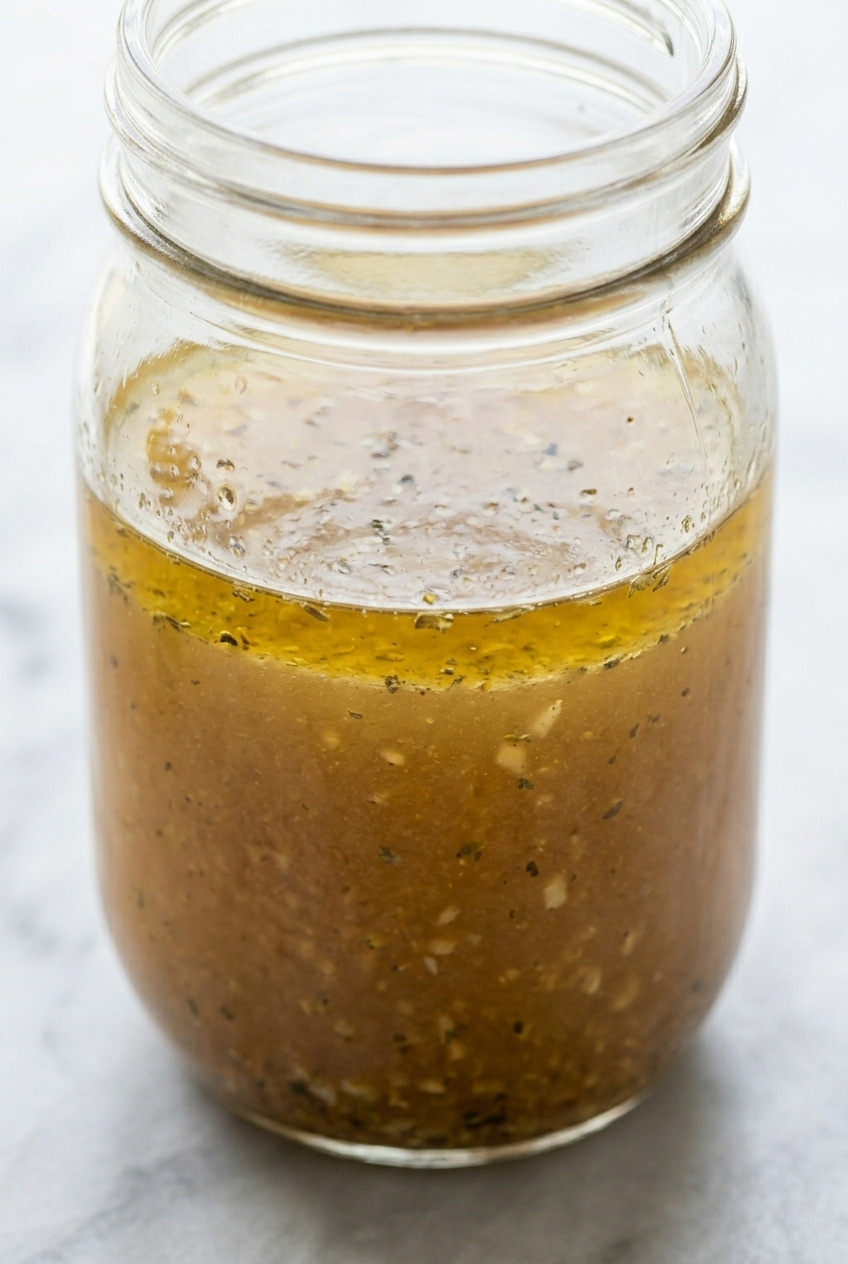
Because the real version takes about as long as walking to the pantry and back.
Good olive oil, a splash of red wine vinegar, a squeeze of lemon, a clove of garlic, and a pinch of oregano rubbed between your palms.
That's it.
I keep a jar of this on the door of my fridge from May straight through September.
It started as something I made just for a classic horiatiki salad, but now I drizzle it on everything.
Roasted potatoes, grain bowls, grilled zucchini, leftover chickpeas straight from the can.
My wife caught me dipping bread in the jar last week and gave me a look. No regrets.
What I love most is how forgiving it is.
You shake it in one jar, taste it, and tweak it until it's right.
No bowls, no whisk, no mystery stabilizers, no cleanup.
Make it once and that sad bottle in the door is gone for good. I promise.
Why You'll Love This Greek Salad Dressing
This is the dressing that earns a permanent spot on your fridge door. Here's why it beats anything bottled.
- Ready in 5 minutes. Everything goes in one jar, you shake, and you're done.
- Pantry staples only. You probably have all 9 ingredients right now.
- No preservatives. Just real food you can pronounce, nothing else.
- Wildly versatile. It dresses salads, but it also loves roasted veggies, grain bowls, and grilled anything.
- One base, three styles. Keep it classic, make it creamy, or turn it sweet with a drizzle of honey.
Ingredients You'll Need
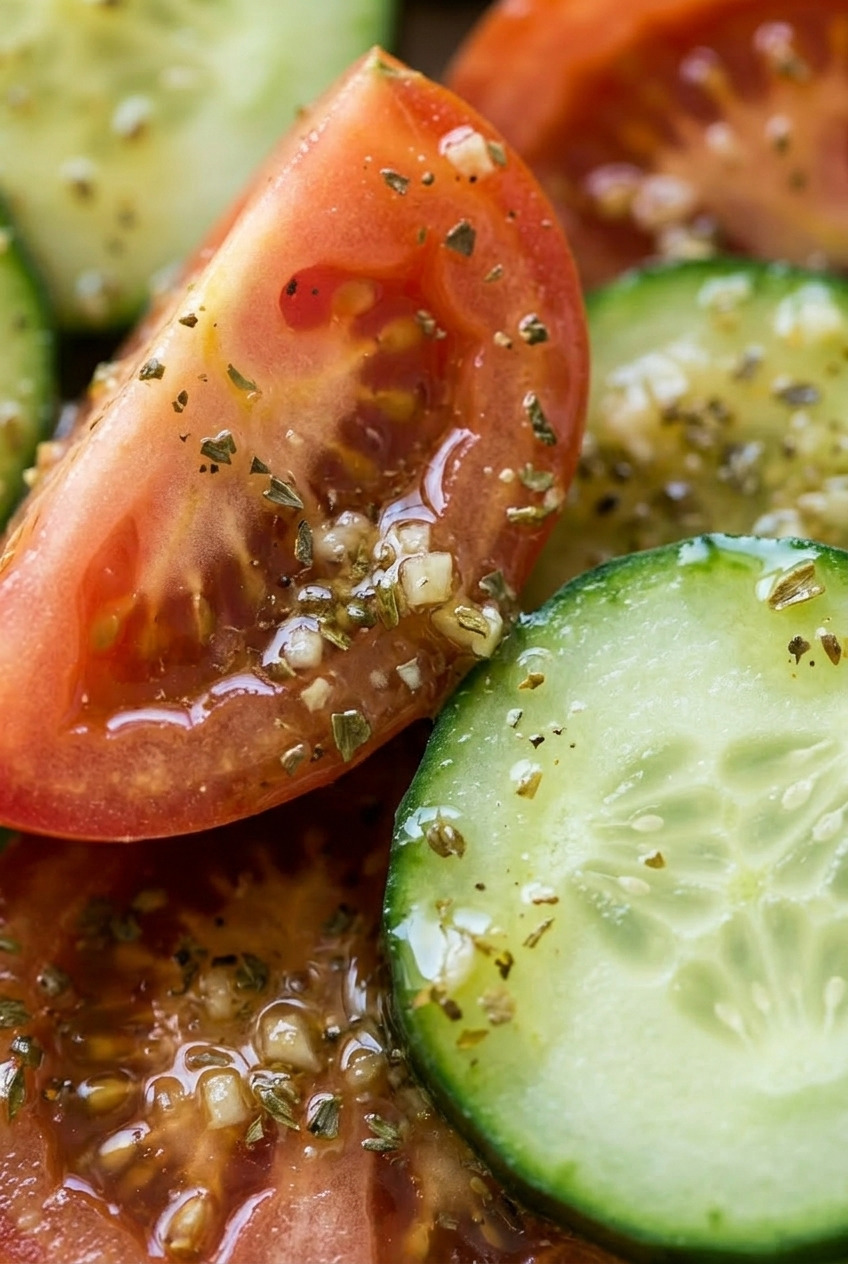
Nine simple things make this dressing sing. Quality matters here, since there's nowhere for a cheap ingredient to hide.
- Extra virgin olive oil (½ cup). The backbone of the whole thing. Use a good Greek EVOO if you can find one, since it's the main flavor, not just a carrier.
- Red wine vinegar (3 tablespoons). The classic Greek acid. It should taste bright and clean, not harsh.
- Fresh lemon juice (1 tablespoon). Adds a second layer of brightness. Always fresh, never the bottled stuff.
- Dijon mustard (1 teaspoon). My little secret weapon. It helps the dressing emulsify so it stays together longer in the jar.
- Garlic (1 clove, minced). For that sharp, savory depth. About ½ teaspoon minced.
- Dried oregano (1 teaspoon). Greek oregano is more aromatic if you can find it. Rub it between your palms before adding to wake up the oils.
- Honey (½ teaspoon, optional). Only if you like a touch of sweetness to round out the tang.
- Salt (½ teaspoon). Sea salt dissolves cleaner here.
- Black pepper (¼ teaspoon). Freshly ground, to taste.
How to Make Greek Salad Dressing
This comes together in one jar with a lid. No bowls, no whisk, no cleanup.
Step 1: Add Everything to a Jar
Drop the olive oil, red wine vinegar, lemon juice, Dijon, minced garlic, oregano, honey (if using), salt, and pepper into a jar with a tight-fitting lid.
Rub the oregano between your palms on the way in. That tiny step releases the oils and makes a real difference.
Step 2: Shake It Up
Seal the lid tight and shake hard for 20 to 30 seconds, until the dressing looks cloudy and combined.
The Dijon does the work here, pulling the oil and vinegar together into something smooth.
Step 3: Taste and Adjust
Open it up and taste with a clean spoon.
Want more tang? Add a splash more vinegar. Too sharp? A little more oil mellows it right out.
Use it right away, or stash it in the fridge. Shake again before every pour.
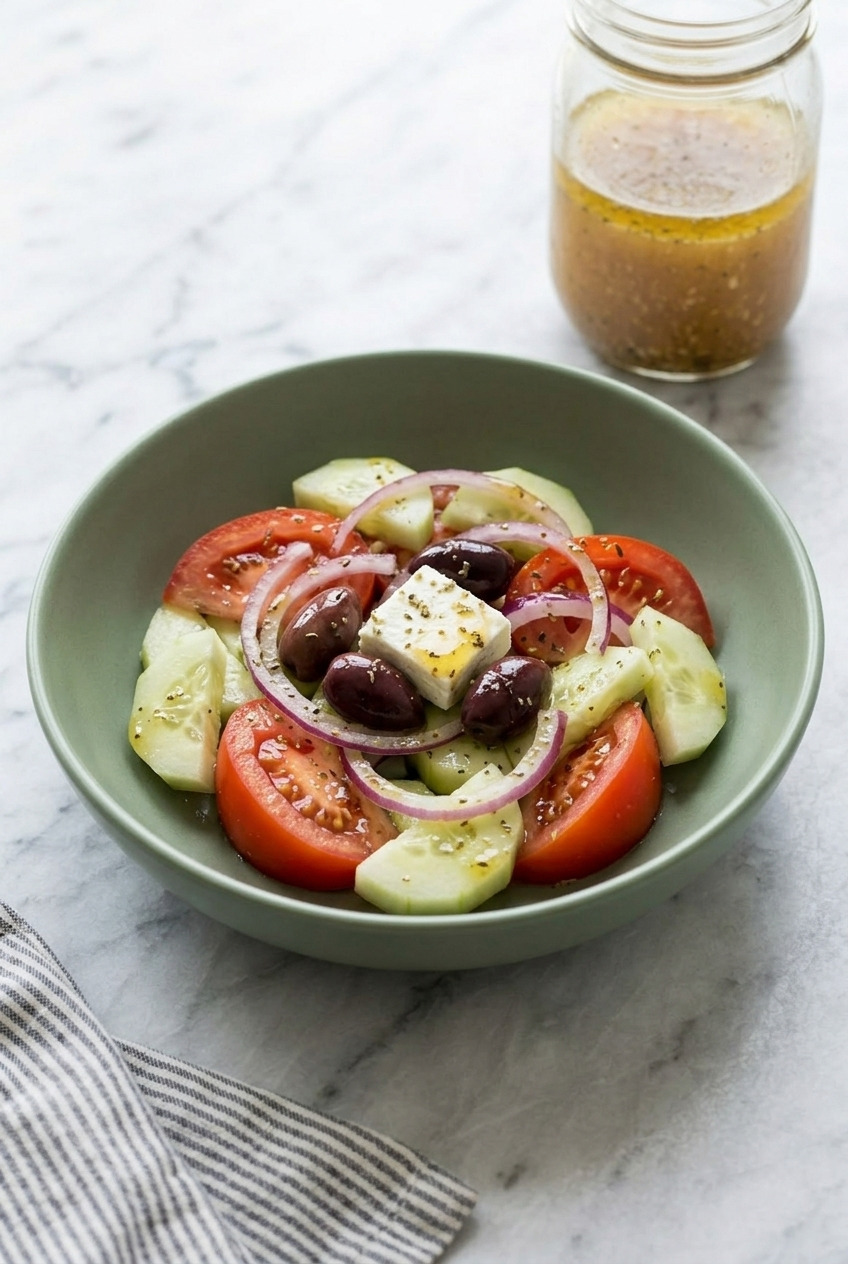
Tips for the Best Greek Dressing
A few small habits take this from good to fantastic. None of them add time.
- Use good olive oil. In a dressing this simple, you taste everything. A grassy, peppery Greek EVOO is worth the splurge.
- Rub the oregano. Crushing the dried leaves between your palms releases far more flavor. This is the Greek way and it works.
- Stick to the 2:1 ratio. Roughly 2 parts oil to 1 part acid is the sweet spot. Memorize it and you'll never need a recipe again.
- Season after shaking. The balance shifts once everything comes together, so always taste and adjust salt at the end.
- Let it rest. Ten minutes on the counter lets the garlic and oregano bloom into the oil.
Variations
One base recipe, three different moods. Start with the classic and branch out from there.
- Creamy Greek dressing. Whisk in 2 tablespoons of plain Greek yogurt for a thicker, tangier pour that clings to crisp lettuce.
- Sweet honey version. Bump the honey up to 1 to 2 teaspoons for a softer, mellower dressing that kids love.
- Bright lemon ladoxido. Skip the Dijon, drop the vinegar to 1 tablespoon, and lean on lemon for a lighter, fresher finish.
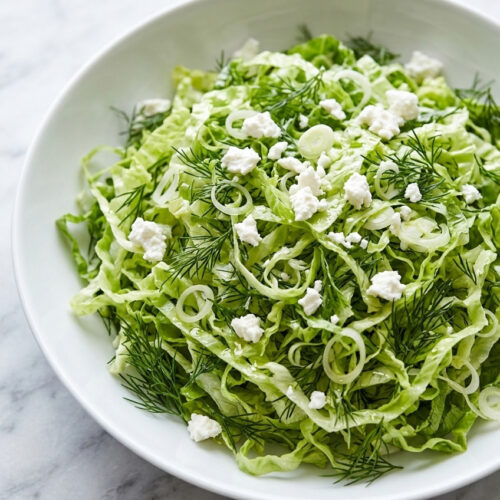
If you want a creamy dressing instead, try this cottage cheese green goddess dressing.
How to Use Greek Dressing
This dressing does so much more than top a salad. Here's how it earns its keep at my house.
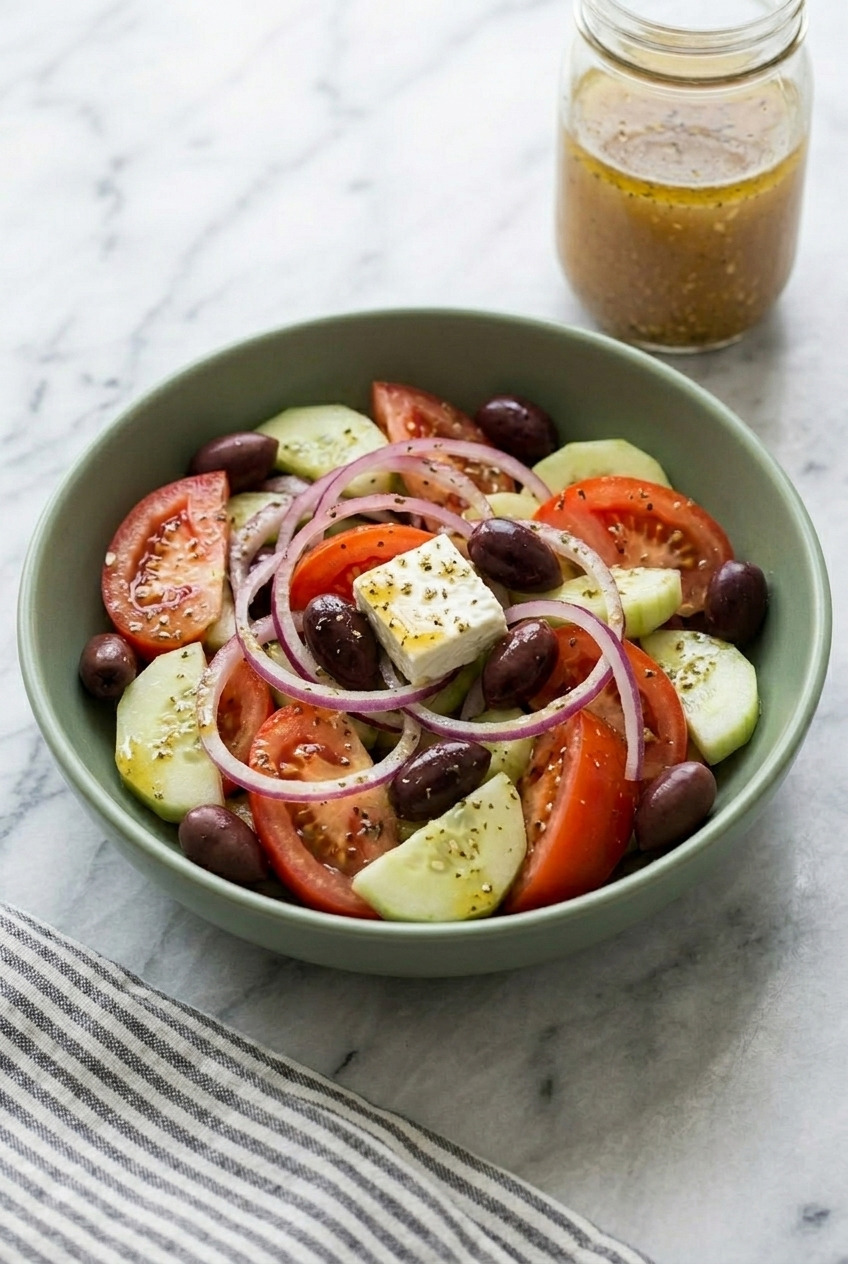
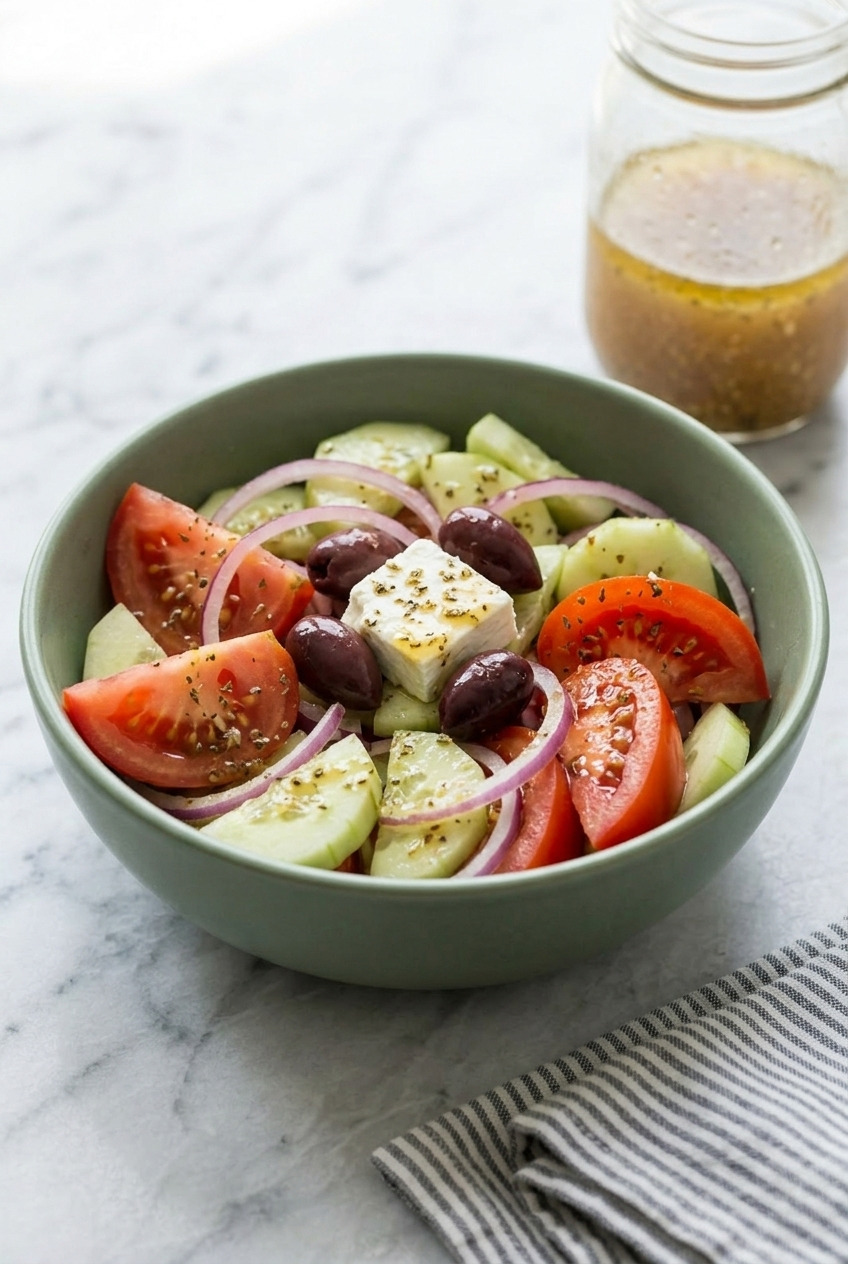
- Classic Greek salad. Toss it with tomatoes, cucumber, red onion, feta, and kalamata olives.
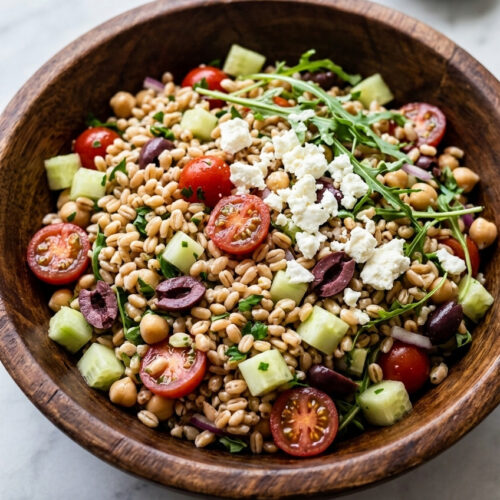
- Grain bowls. Spoon it over warm quinoa, farro, or lentils for an easy lunch.
- Roasted or grilled veggies. Drizzle it on zucchini, broccoli, or potatoes right out of the oven.
- A quick marinade. Let it sit on chickpeas or veggies for 30 minutes before cooking.
The first place it goes is my traditional Greek salad.
How to Store
This keeps beautifully, so make a double batch. A little planning means dressed salads all week.
- Fridge. Store in a sealed glass jar for up to 5 days.
- The cold-oil thing. Olive oil firms up in the fridge. That's totally normal, just let the jar sit out for 10 minutes before using.
- Always re-shake. The dressing settles as it sits, so give it a good shake before every pour.
Greek Salad Dressing FAQs
How long does homemade Greek salad dressing last?
About 5 days in a sealed jar in the fridge. The flavor actually deepens after a day, so it's great to make ahead.
Why does my dressing separate, and how do I fix it?
Oil and vinegar naturally split apart as they sit. Just shake the jar again right before serving. The Dijon mustard helps it hold together longer.
Can I make Greek dressing without Dijon mustard?
Absolutely. Leave it out for a more classic ladoxido style. You'll just need to shake a bit more often, since the mustard is what keeps it emulsified.
Can I use garlic powder instead of fresh garlic?
Yes. Swap in ¼ teaspoon of garlic powder for the fresh clove. Fresh gives a sharper bite, but powder works in a pinch.
What can I use Greek dressing on besides salad?
Loads of things. I use it on grain bowls, roasted vegetables, grilled zucchini, and as a quick marinade for chickpeas.
Can I make a sweet or honey Greek dressing?
Yes, and it's lovely. Add 1 to 2 teaspoons of honey to soften the tang into a milder, crowd-pleasing dressing.