Oregano gets all the credit in a Greek salad, but mint is the ingredient that makes people ask what I did differently.
It sounds like a tiny swap.
It isn't.
A handful of torn mint cuts through the salty feta and briny olives in a way dried herbs simply can't, and it wakes up every tomato in the bowl.
I started adding it the summer my little kitchen herb pot went completely feral, and I had more spearmint than I knew what to do with.
One afternoon I tossed a fistful into my usual chunky salad on a whim.
That salad got scraped clean before anything else on the table.
Now I make it this way every single week from June through September, and my wife has officially banned the mint-free version.
What I love most is how little it asks of you.
No lettuce to wilt, no cooking, no fuss.
You chop a few vegetables into big honest chunks, whisk a five-ingredient dressing with mint stirred right in, and you're at the table in about 15 minutes.
Make it once and you'll understand why mine never lasts the afternoon.
Why Fresh Mint Makes This Greek Salad
Mint is the whole point here. Most classic Greek salads lean on dried oregano alone, and that version is lovely, but it can taste a little flat next to all that salt and brine.
Mint fixes that instantly.
It adds a cool, green lift that plays off the feta and olives like they were always meant to share a bowl.
Reach for spearmint, not peppermint, when you can.
Spearmint is the softer, sweeter one you want in savory food, while peppermint leans sharp and almost toothpaste-cool in a salad.
Here's my one trick: I put mint in two places.
A spoonful gets minced into the dressing, and the rest gets torn over the top right before serving.
That way mint shows up in every single bite instead of hanging around as a sad little garnish.
Sound fussy? It takes ten extra seconds.
Ingredients You'll Need
This is a short, honest list of summer vegetables plus a good block of feta. Nothing here is hard to find, and the quality of each piece really shows.
- English cucumber (1 large). I use English because the skin is thin and the seeds are minimal, so the salad stays crisp instead of watery.
- Ripe tomatoes (4 medium, or 1 lb cherry tomatoes). Use the best you can get your hands on. In peak summer this single ingredient carries the whole dish.
- Red onion (½ small). Thinly sliced for a sharp, sweet bite. Soak the slices in cold water for a few minutes if raw onion is too much for you.
- Green bell pepper (1). The traditional Greek choice. It brings a grassy crunch that rounds everything out.
- Kalamata olives (⅔ cup, pitted). That deep, briny, almost winey flavor is non-negotiable for me. Leave them whole.
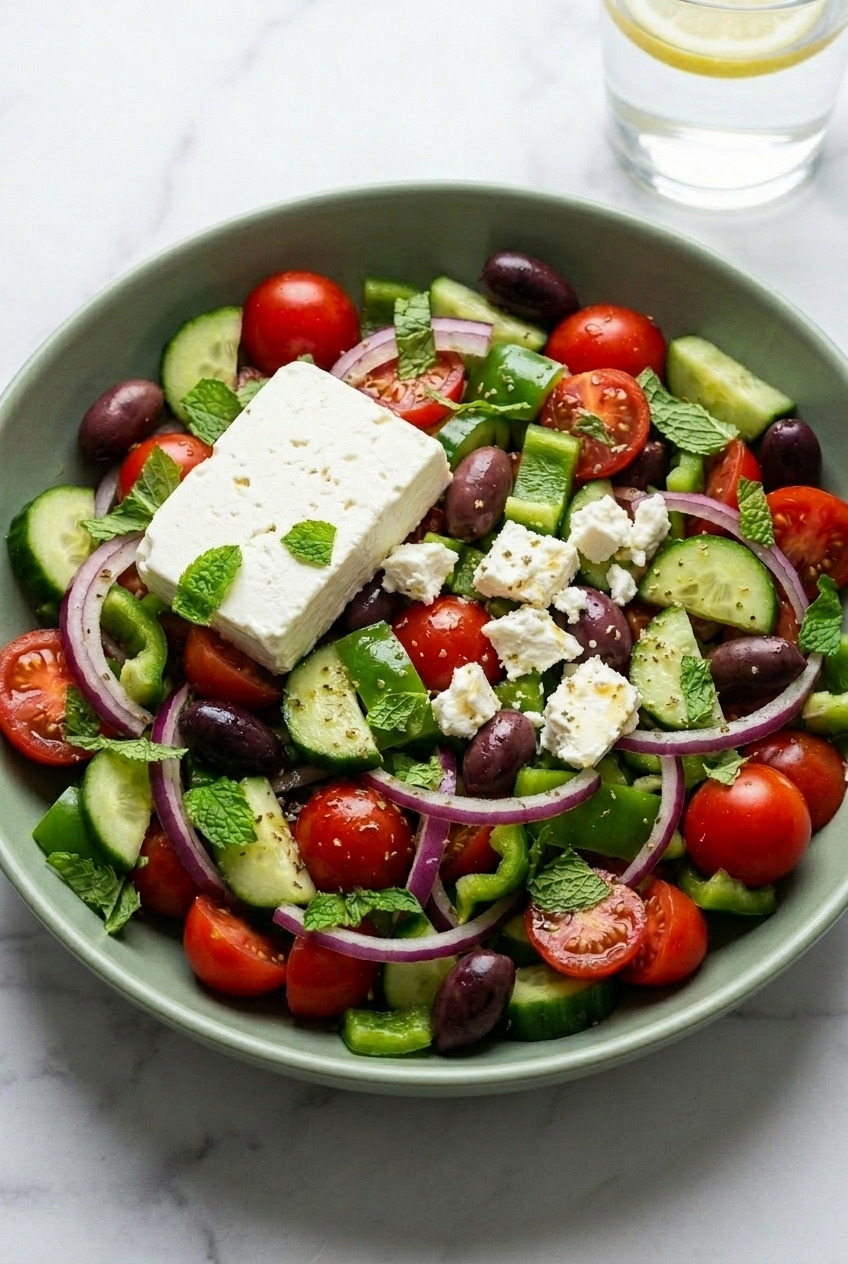
- Block feta (6 oz). Buy a block packed in brine, NEVER the pre-crumbled tub. Block feta is creamier and far less chalky.
- Fresh mint (⅓ cup leaves, plus more to serve). The signature. Torn for the bowl, minced for the dressing.
For the dressing you'll also want extra virgin olive oil, red wine vinegar, fresh lemon juice, dried oregano, a clove of garlic, and salt and pepper.
And no, there's no lettuce.
A real Greek salad, the kind they call horiatiki, never has it.
The Lemon-Mint Dressing
This comes together in one small bowl while the salt does its work on the tomatoes. It's bright, tangy, and herby all at once.
Whisk together ¼ cup olive oil, 2 tablespoons red wine vinegar, and 1 tablespoon fresh lemon juice.
Add 1 teaspoon dried oregano, 1 minced garlic clove, and a good pinch of salt and pepper.
Then stir in 1 tablespoon of finely minced fresh mint.
That mint in the dressing is what carries the flavor into every nook of the salad.
Worth the extra herb? Every time.
How to Make Greek Salad with Fresh Mint
Step 1: Salt the Tomatoes
Cut the tomatoes into big chunks and give them a light sprinkle of salt.
Let them sit for 5 minutes while you prep everything else.
This pulls out a little juice that mingles with the dressing later, and it's the step nobody talks about.
Step 2: Chop the Vegetables
Cut the cucumber and bell pepper into bite-size chunks, roughly the same size as the tomatoes.
Thinly slice the red onion.
Big honest pieces, please. This is not a salad you mince to confetti.
Step 3: Make the Dressing
Whisk all the dressing ingredients together in a small bowl, including the minced mint.
Taste it and adjust the salt and vinegar to your liking.
Step 4: Toss It Together
Add the cucumber, pepper, onion, tomatoes, and olives to a large bowl.
Pour the dressing over and toss gently.
Step 5: Add Feta and Mint
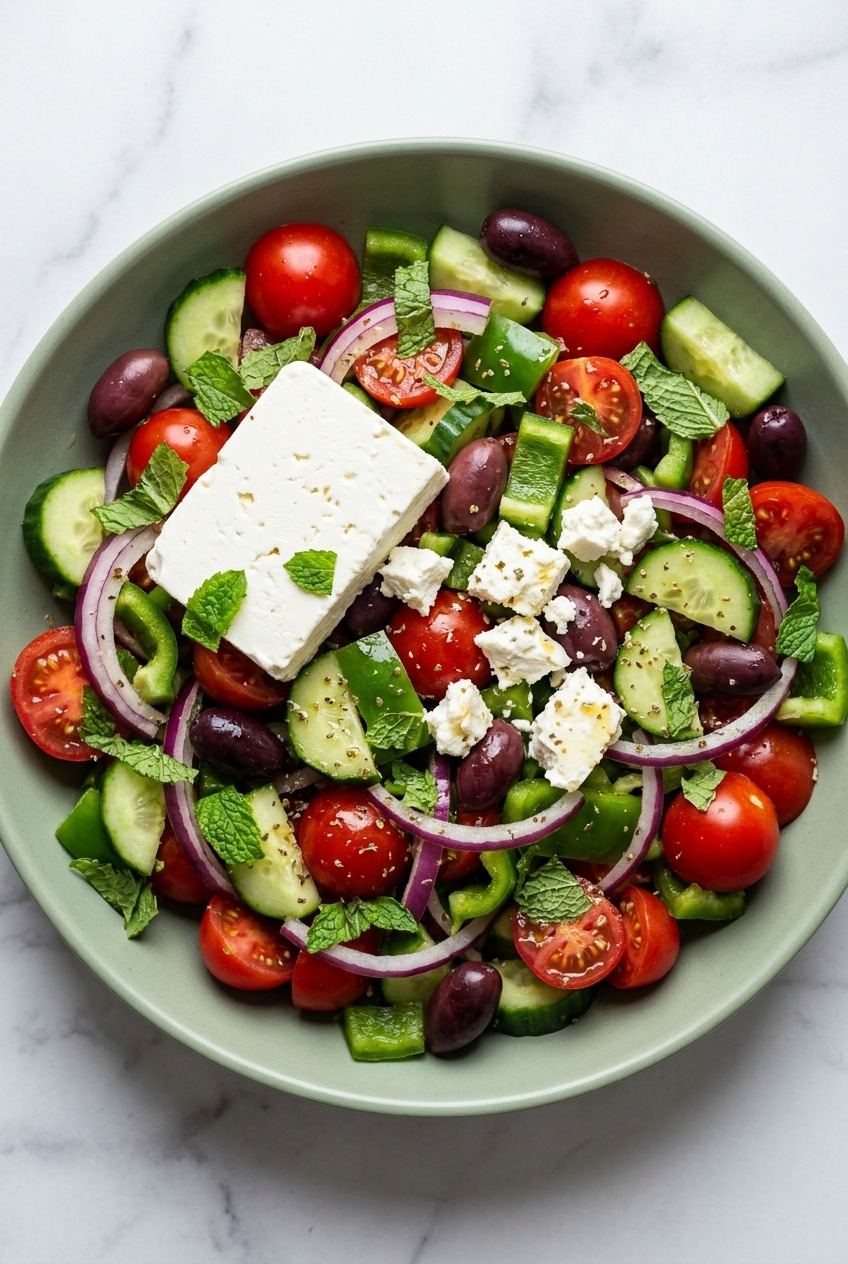
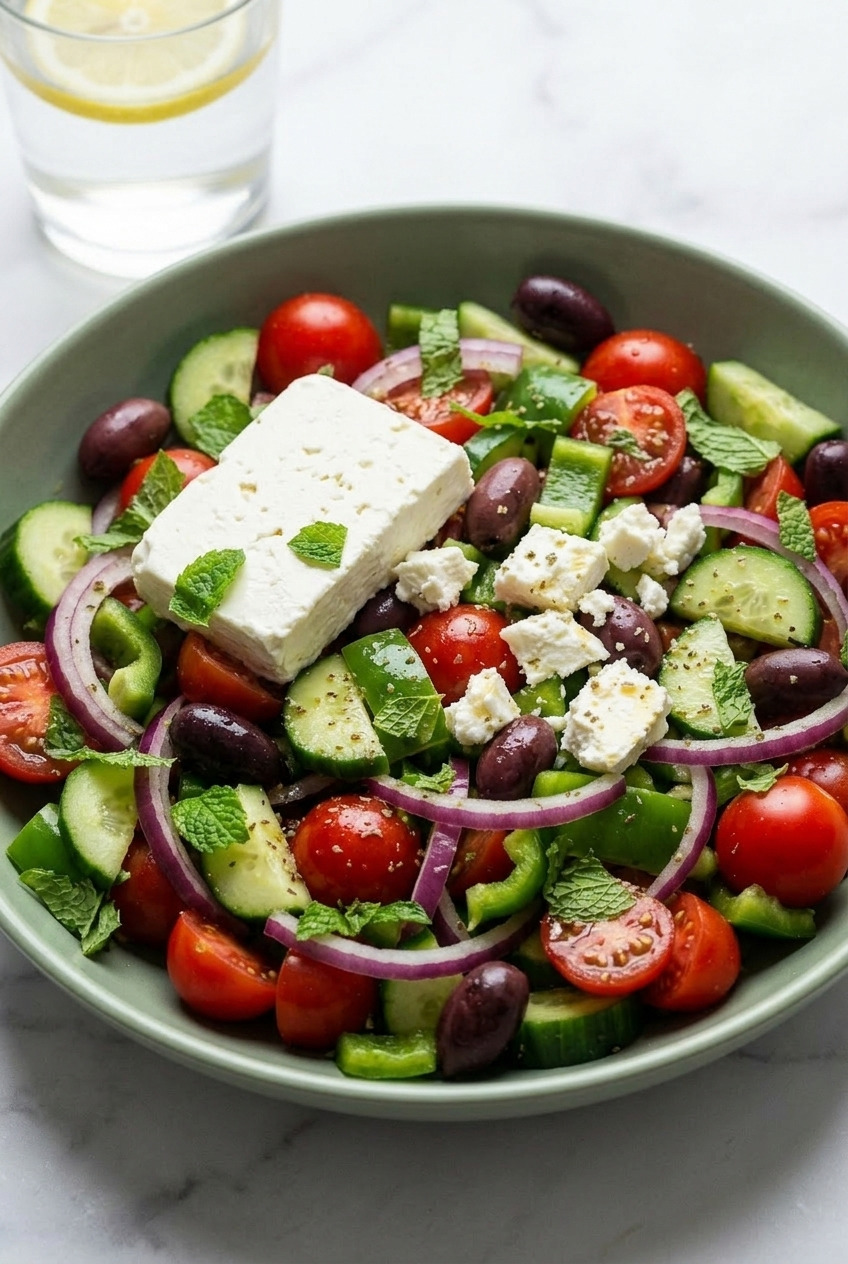
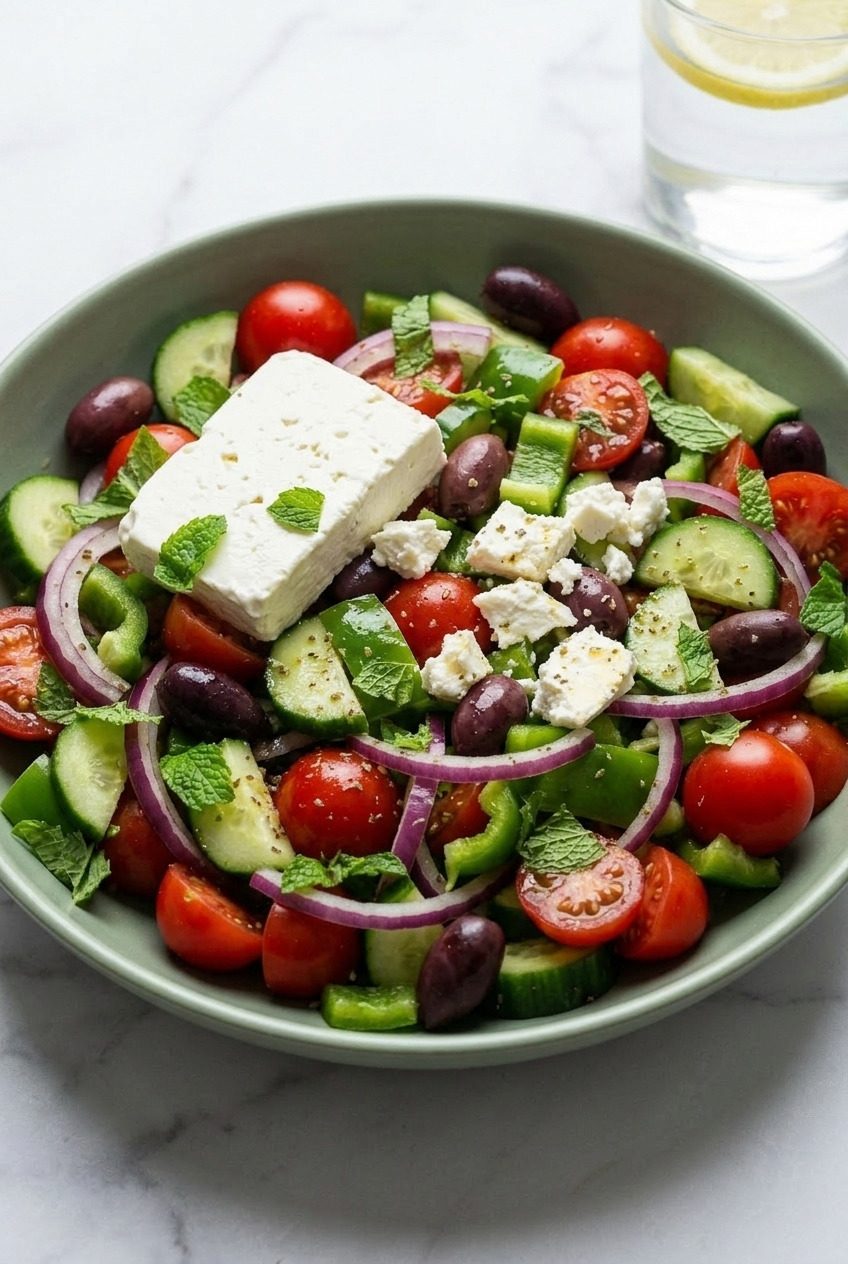
Break the feta into rough chunks and lay them on top, or set a whole slab in the center the way they do in Greece.
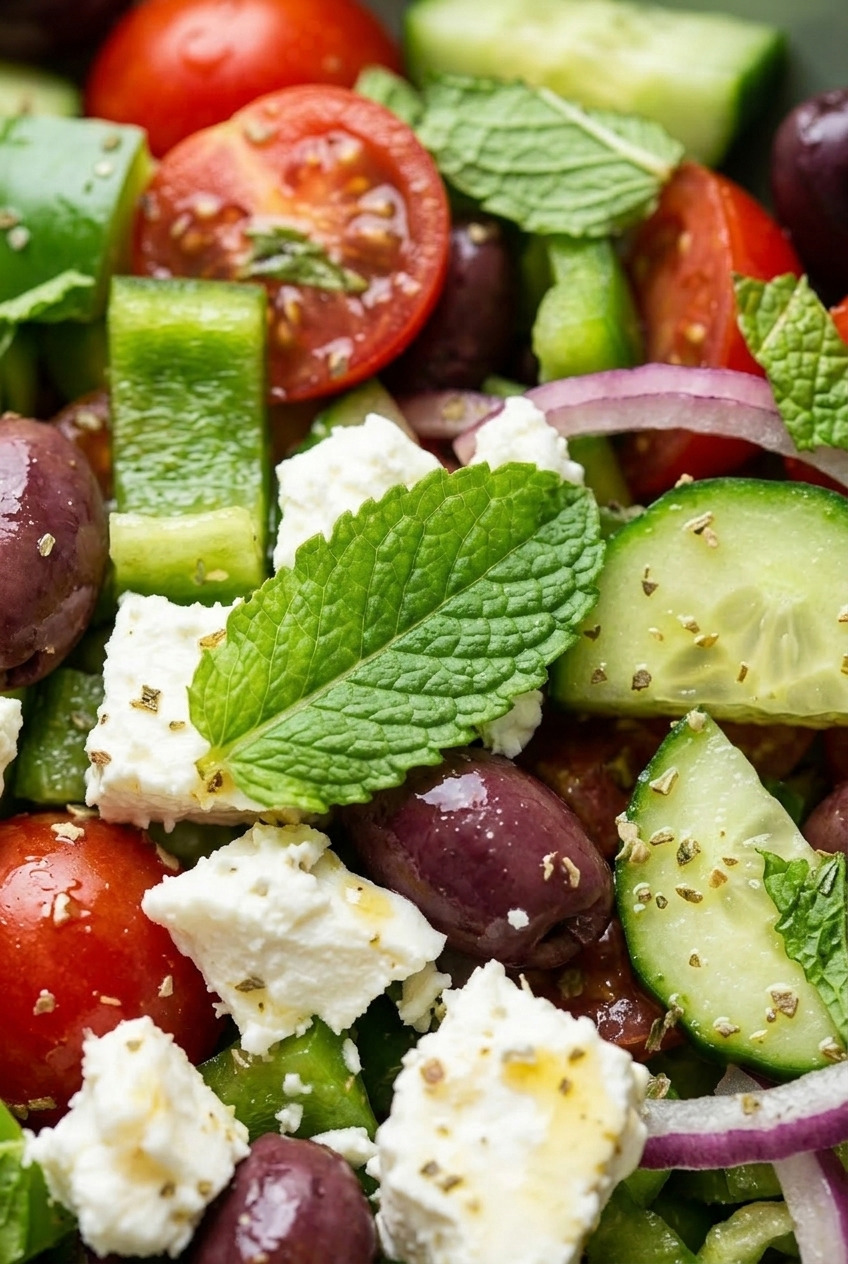
Tear the remaining mint leaves over everything.
Serve right away, or let it rest 10 minutes for the flavors to settle.
Tips for the Best Greek Salad
- Salt the tomatoes first. Five minutes draws out juice that becomes part of the dressing instead of a watery puddle at the bottom.
- Bring the feta to room temperature. Cold feta tastes muted. Warm feta is creamy and full of flavor.
- Tear the mint, don't chop it. Chopping bruises the leaves and turns the edges dark. Torn mint stays bright and fragrant.
- Dress just before serving. The cucumber and tomatoes soften the longer they sit in dressing, so wait until you're ready to eat.
- Buy block feta in brine. Pre-crumbled is coated to prevent clumping and it tastes chalky. Trust me, the block is worth it.
Variations and Add-Ins
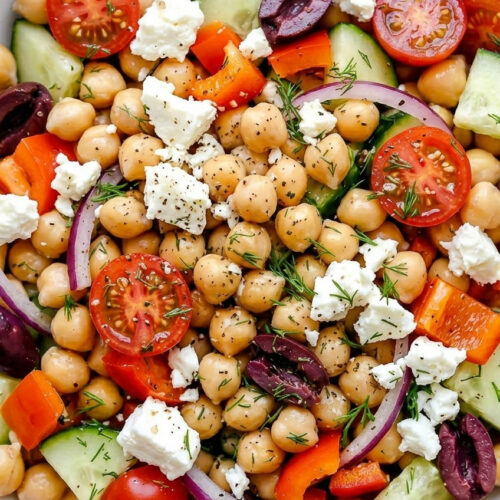
- Make it a meal. Stir in a cup of cooked chickpeas for protein, or pile it over chopped romaine to stretch it into a dinner salad.
- Double the herbs. Add fresh dill or flat-leaf parsley alongside the mint for an even greener bowl.
- Add some heat. A few sliced pepperoncini bring a tangy, mild kick.
- Mix your peppers. Swap the green pepper for a mix of red, yellow, and green for color and a touch more sweetness.
Mint and watermelon are old friends. My watermelon feta salad is the summer version of this bowl.
Serving Suggestions
This salad plays well with almost anything off the grill. It's a cooling counter to smoky, charred mains.
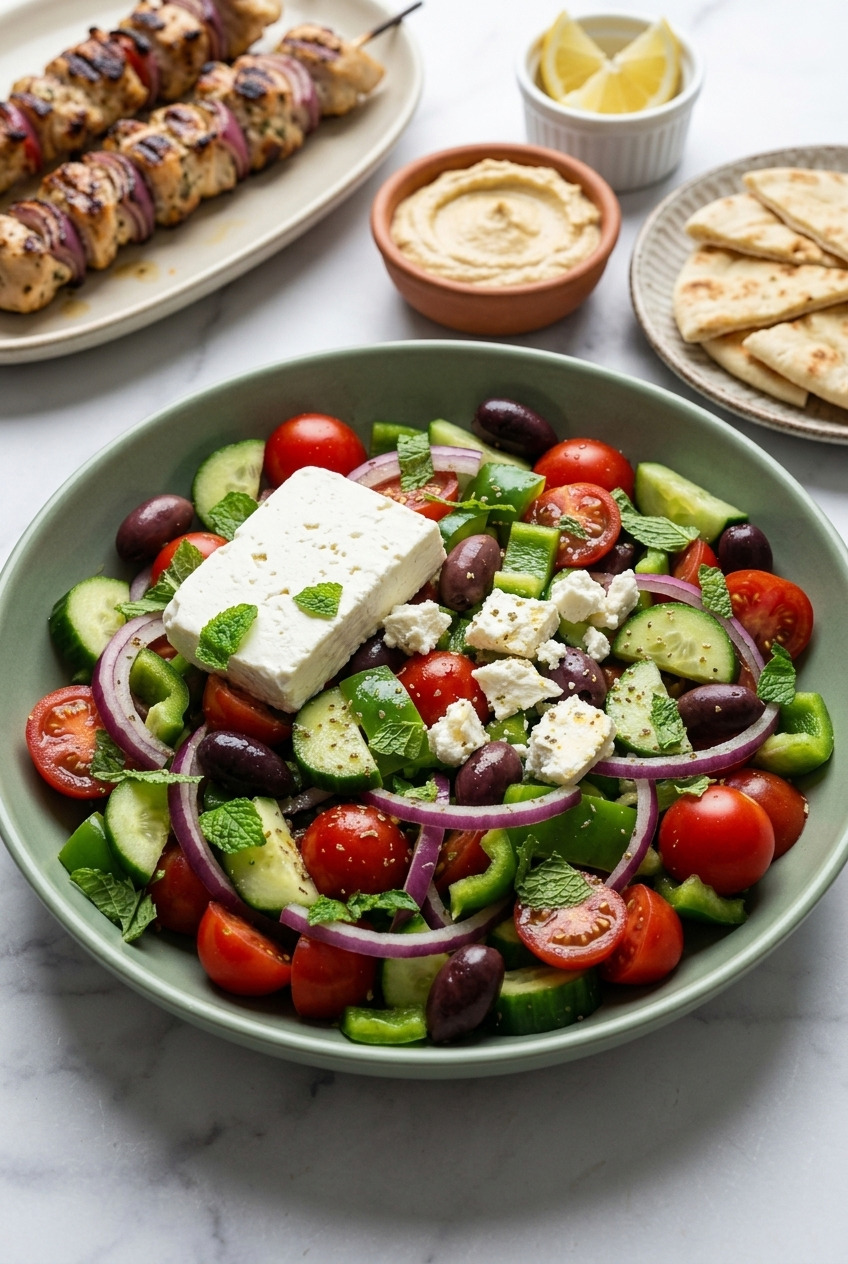
Serve it with warm pita and a bowl of hummus for an easy mezze spread.
It's a fantastic side for grilled chicken, lamb, or a veggie skewer.
Honestly, with a hunk of crusty bread to mop up the dressing, I'll happily eat a big bowl as lunch all on its own.
It is a good cold side for this harissa citrus roast chicken.
Storage and Make-Ahead
- Undressed components. Store the chopped vegetables and dressing separately in the fridge for up to 3 days, then combine when you're ready.
- Dressed salad. Best eaten within a day. After that the cucumber and tomatoes get soft and a little watery.
- Making it for a crowd. This is a great one to prep ahead since there's no lettuce to wilt. Toss it together up to an hour before, hold a few mint leaves back, and scatter them on right before serving so they stay fresh and bright.
- Freezing. Skip it. Fresh vegetables turn to mush after thawing.