Search this salad online and you'll trip over a strange myth: that it's creamy, dressed in something thick and mayo-heavy.
It isn't. Not even close.
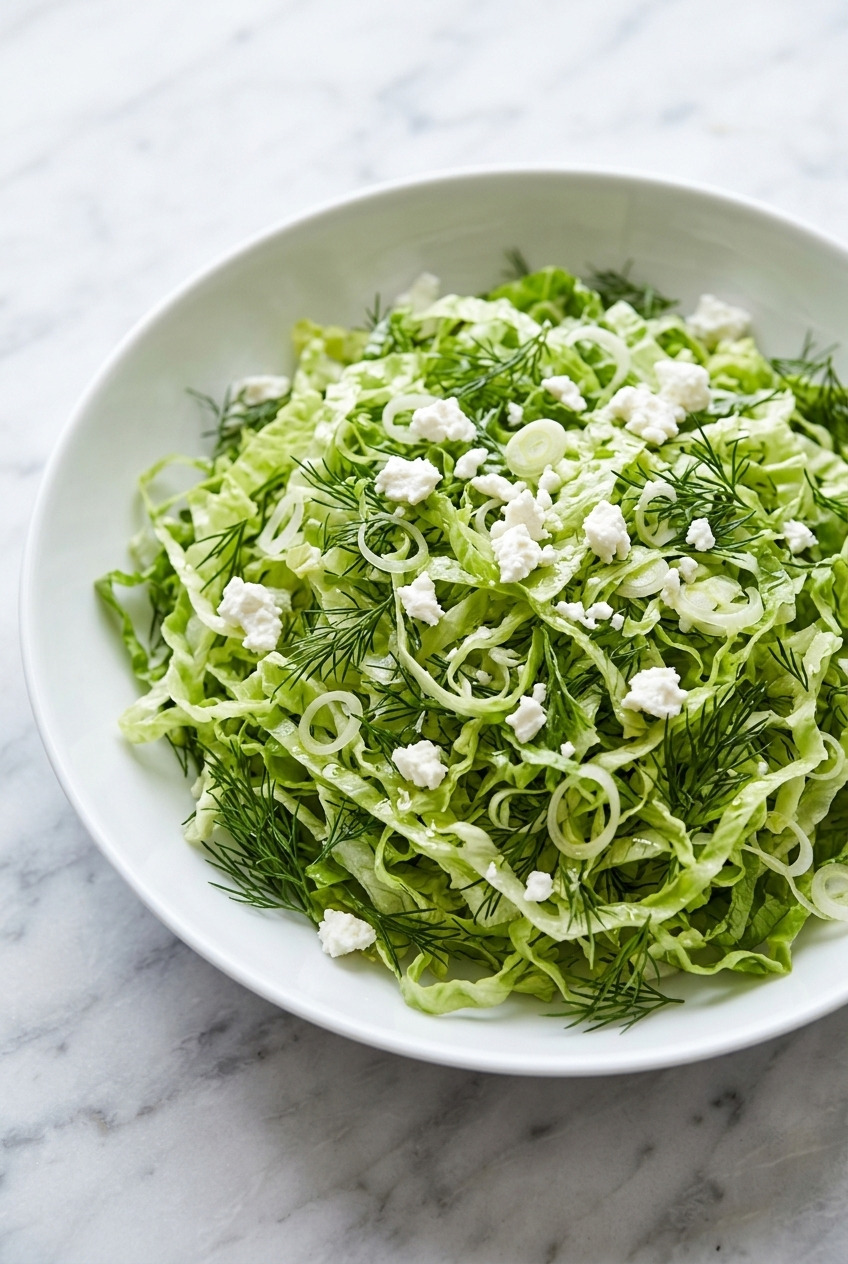
The real thing showed up on my plate years ago at a long Greek Easter table, set down right next to the roast lamb.
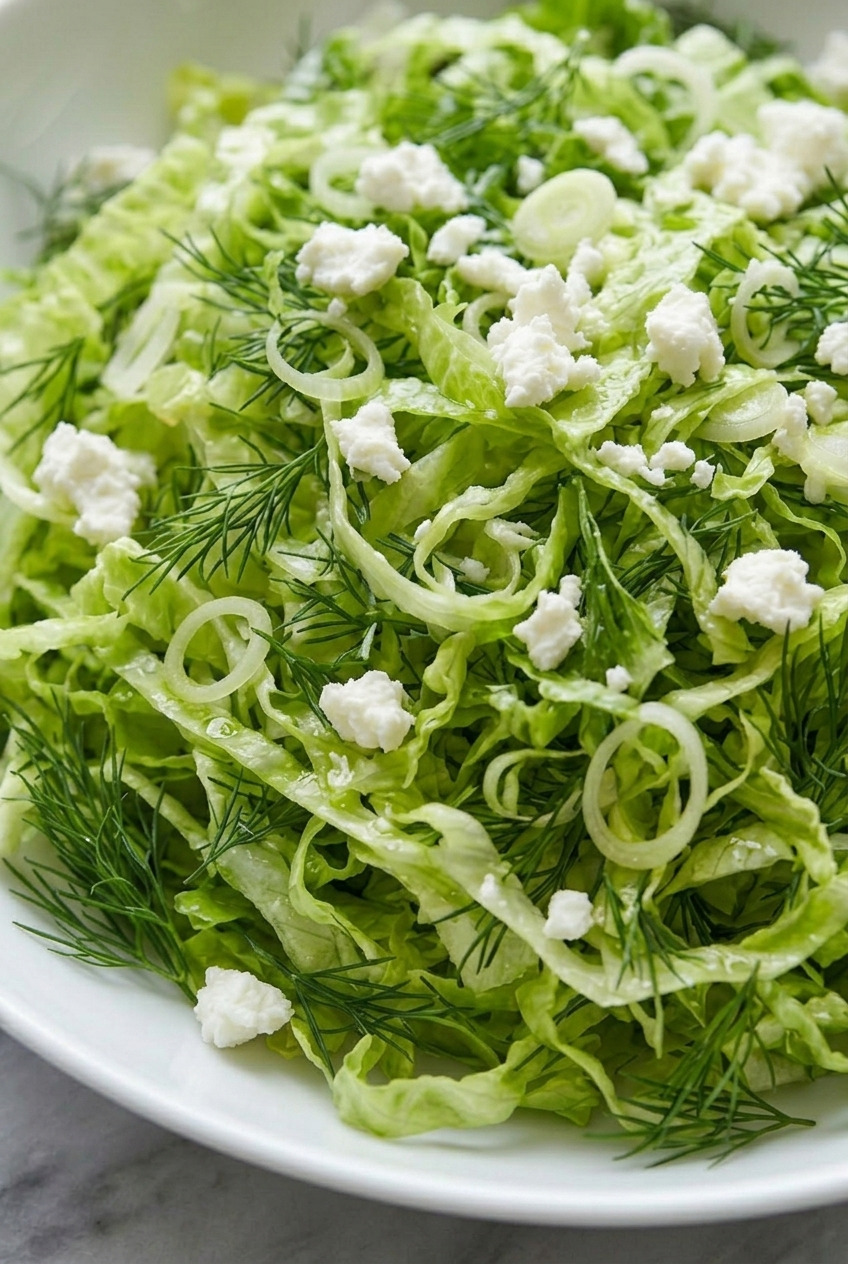
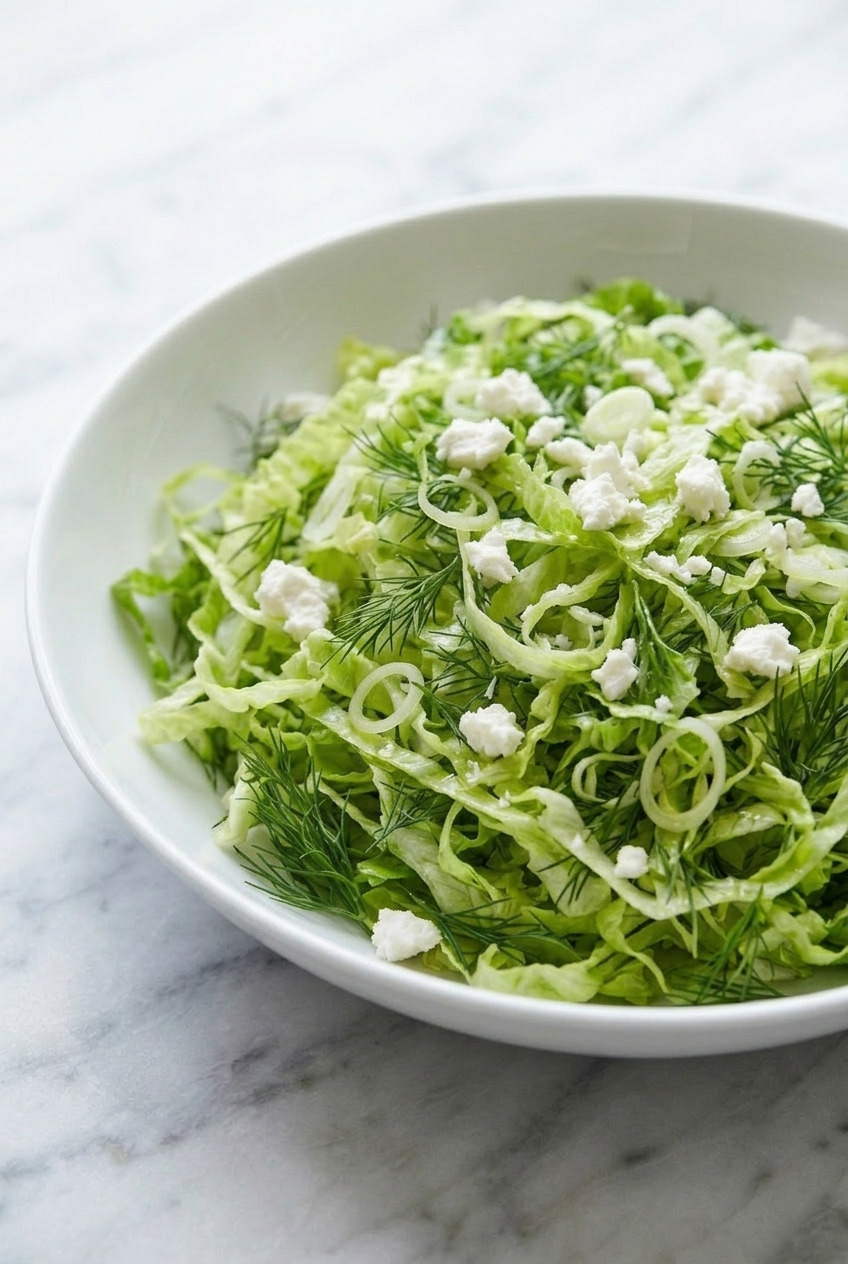
Finely shredded romaine, a tangle of fresh dill, a few thin rings of scallion.
That was it. No tomato. No cucumber. No creamy anything.
The dressing was just lemon and good olive oil with a pinch of salt, and it tasted like spring on a fork.
I asked the woman who made it what the secret was, and she laughed and pointed at her knife.
The whole magic is in how thin you cut the lettuce.
I've made this on repeat every spring since, usually alongside something off the grill.
It takes about 15 minutes and uses six ingredients you can pronounce.
If you've only ever met the gloopy imposter version, this is the one your Greek friends actually eat. I promise it'll change how you think about a lettuce salad.
What Is Maroulosalata?
The name tells you everything. Marouli means lettuce and salata means salad, so maroulosalata is, plainly, lettuce salad.
You'll also hear it called psilokomeni, which means "finely cut."
That name is a clue, not a coincidence.
This is a springtime dish in Greece, when romaine is at its crisp, sweet peak.
It lands on the Easter table beside the lamb, and it shows up at everyday dinners all season long.
The flavor is bright, green, and herby, with the dill and lemon doing most of the talking.
It's the opposite of a heavy salad. Light, fresh, and clean.
Ingredients You'll Need
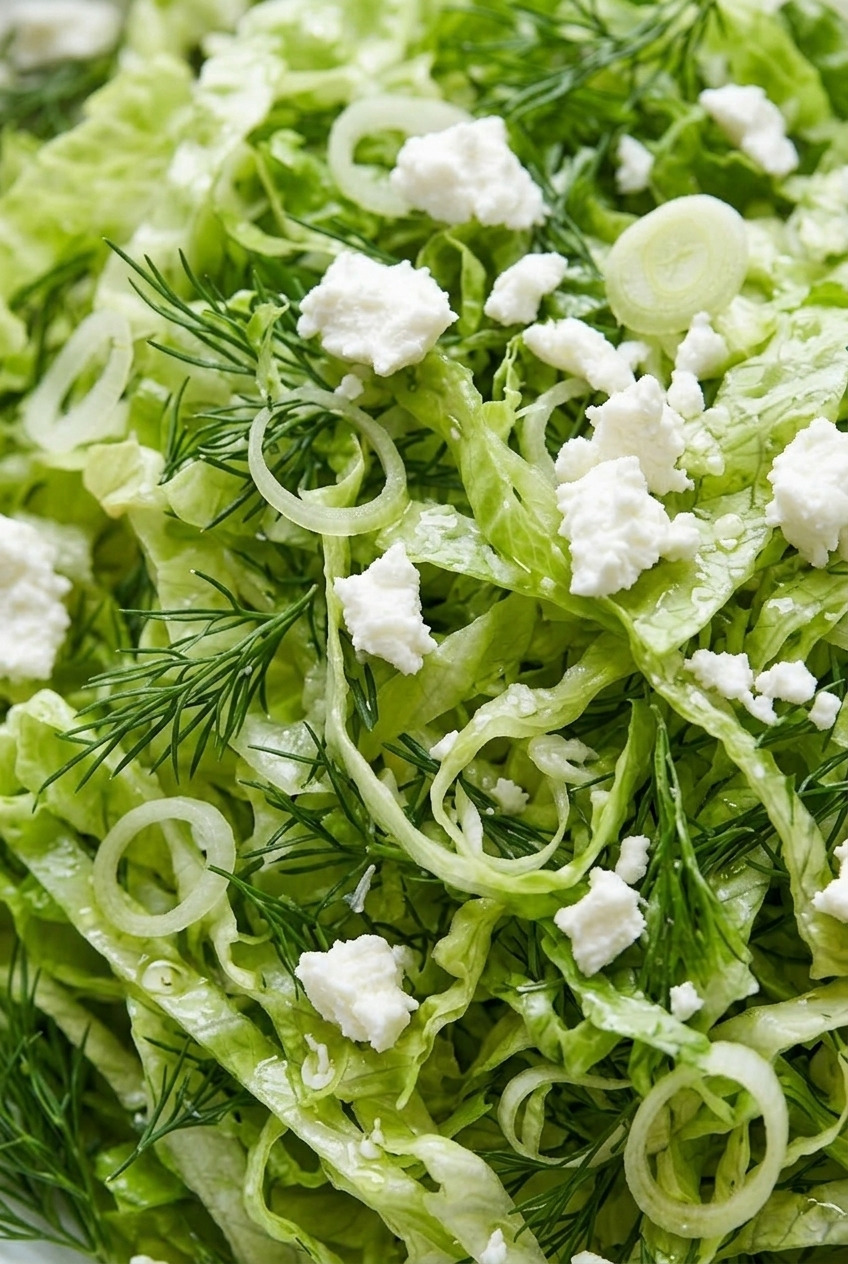
Six simple things, and freshness matters more than anything fancy. Keep it minimal and let the lettuce shine.
- Romaine lettuce (2 hearts). The backbone of the salad. Look for crisp, tight heads and shred them into fine ribbons.
- Scallions (4). Sliced thin, they bring a mild, fresh onion bite without overpowering the dill.
- Fresh dill (½ cup, chopped). Non-negotiable for me. This is the herb that makes it taste authentically Greek.
- Greek feta (4 oz, crumbled). Optional, but traditional. It adds a salty, creamy contrast to all that green.
- Extra virgin olive oil (¼ cup). Use a good fruity one. It's half the dressing, so quality shows.
- Lemon (juice of 1 large). About 3 tablespoons. The acid that wakes the whole bowl up.
- Salt and pepper. To taste. Salt pulls the flavors together.
What to skip: tomato and cucumber. They belong in a Greek village salad, not here. Maroulosalata is a lettuce-and-herb salad, and adding watery vegetables drowns the point.
How to Make Maroulosalata
This comes together in one bowl with one knife. No cooking, no waiting.
Step 1: Shred the lettuce
Rinse the romaine and dry it well in a salad spinner.
Stack a few leaves, roll them, and slice crosswise into thin ribbons.
The thinner the better. This is the step that defines the salad.
Step 2: Prep the aromatics
Thinly slice the scallions, white and green parts both.
Chop the dill, stems and all, as long as the stems are tender.
Step 3: Make the dressing
Whisk together the ¼ cup olive oil, the lemon juice, and a pinch of salt until it looks smooth and slightly thickened.
Taste it. It should be tangy and rich at the same time.
Step 4: Toss and serve
Add the lettuce, scallions, and dill to a large bowl.
Pour the dressing over and toss well, gently scrunching the greens with clean hands so the dressing gets into every ribbon.
Crumble the feta over the top and serve right away.
The Secret Is in the Cut
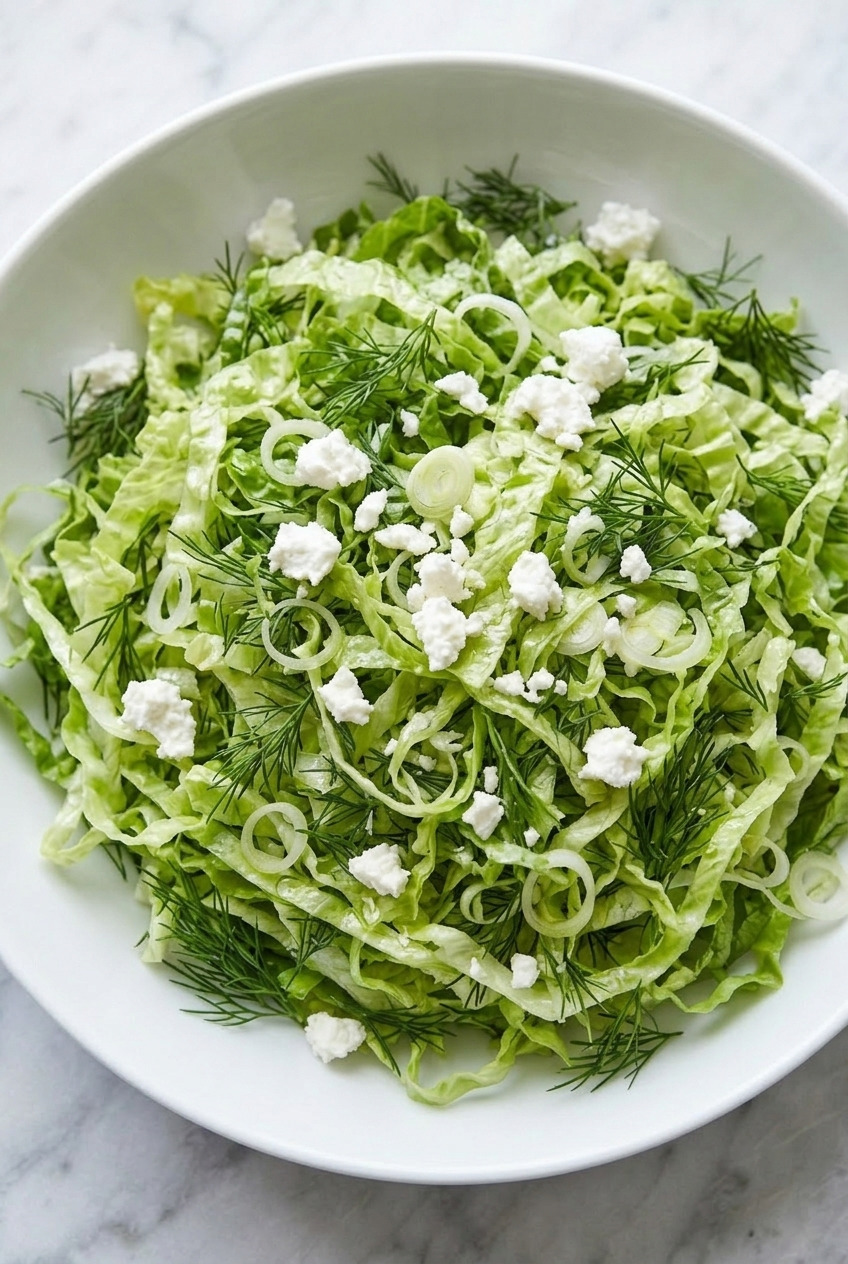
If you remember one thing, remember this. The fine shred is the whole game.
- Cut, don't tear. Thin, even ribbons let the dressing coat every piece and make the salad easy to eat with a fork.
- Stack and roll. Pile a few leaves, roll them like a cigar, then slice across for fast, uniform ribbons.
- Dry the greens well. Wet lettuce dilutes the dressing and turns the salad soggy. A salad spinner is your friend here.
- Scrunch it. A gentle massage softens the lettuce just enough and works the lemon and oil in everywhere.
Variations and Add-Ins
The base is sacred, but a few tweaks are fair game. Here's how I change it up.
- Skip the feta. It's optional. Without it the salad is lighter and lets the herbs lead.
- Add a pinch of oregano. A little dried Greek oregano deepens the flavor if you want more punch.
- Make it a meal. Pile it next to grilled chicken, a piece of salmon, or a scoop of chickpeas and you've got lunch.
- Swap the herb ratio. Love dill? Use more. A little chopped mint alongside it is lovely in true spring.
If you want something sturdier with the same dill-and-lemon feel, my Greek spinach salad holds up longer on the table.
Storage and Make-Ahead
This salad is best the moment it's dressed. But you can do the prep ahead.
- Lettuce and herbs. Shred and chop up to a day ahead, then store dry in the fridge in a container lined with paper towel.
- Dressing. Whisk it up to 2 days ahead and keep it in a sealed jar in the fridge. Shake before using.
- Dressed leftovers. They'll keep for about a day but will wilt, so eat them sooner than later.
The golden rule: dress it right before serving so the ribbons stay crisp.
What to Serve With Maroulosalata
This salad plays nicely with almost any Greek main. It's built to cut through richness.
- Roast lamb. The classic Easter pairing. The lemon and dill slice right through the fatty meat.
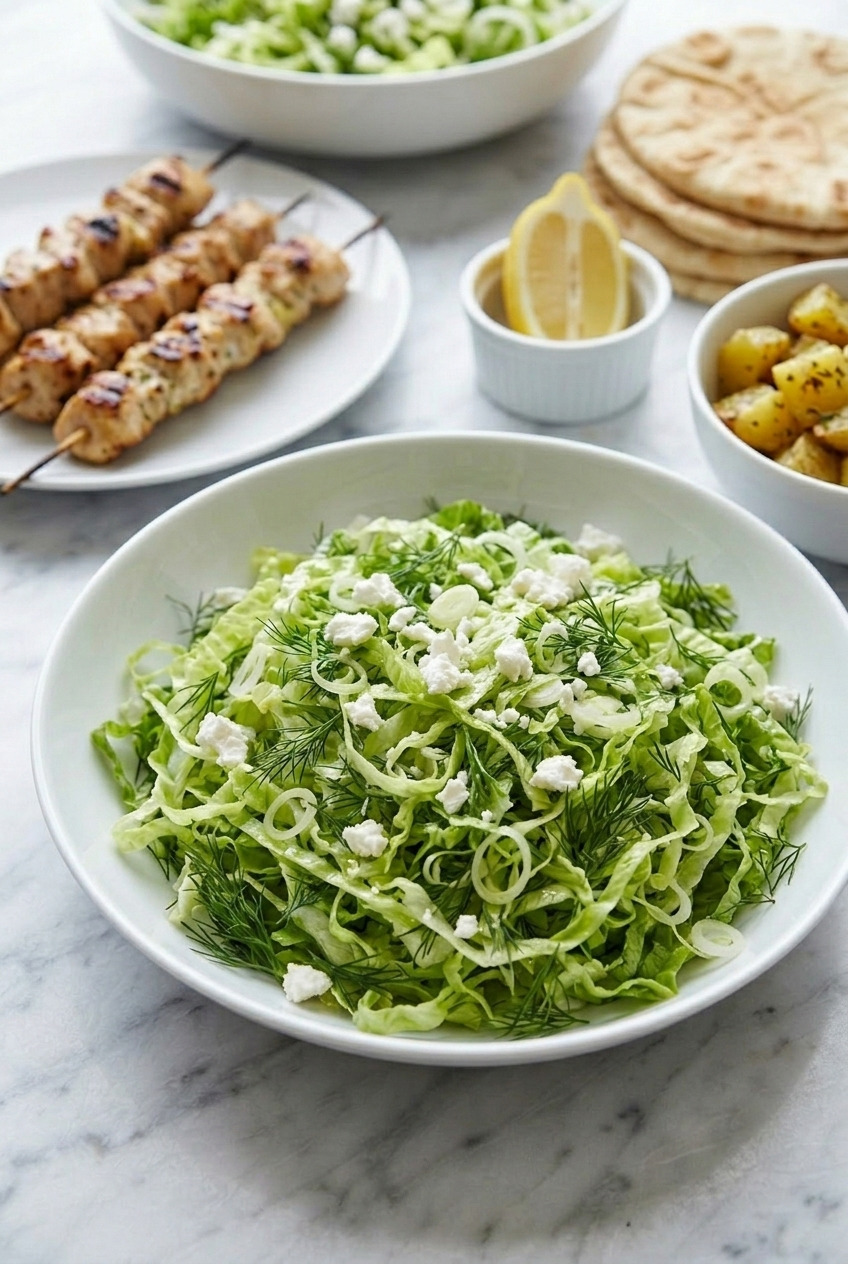
- Chicken souvlaki. Skewers off the grill plus this salad is a perfect summer plate.
- Grilled fish. A simple piece of salmon or sea bass loves this bright, herby side.
- A bigger Greek spread. Set it out with rice, lemon potatoes, and warm pita for a full table.
A plate of spanakopita triangles next to it makes a proper Greek lunch.
Frequently Asked Questions
How do you pronounce maroulosalata?
It's roughly "mah-roo-loh-sah-LAH-tah," with the stress on the second-to-last syllable. It simply means lettuce salad in Greek.
What lettuce is best for maroulosalata?
Crisp romaine is the standard and what I reach for. Curly leaf lettuce works too, but romaine holds up best to the dressing and the fine shred.
Can I make maroulosalata ahead of time?
Yes, with a catch. Prep the lettuce, herbs, and dressing separately ahead of time, then toss everything together right before serving so it stays crisp.
Do I have to add feta?
No. Feta is traditional but optional. The salad is still authentic and delicious without it, just a little lighter.
Why cut the lettuce into thin ribbons instead of tearing it?
Thin ribbons are easier to eat with a fork and let the lemon and oil coat every bite. That fine cut is exactly why the salad is also called psilokomeni, meaning finely cut.
What do you serve with Greek lettuce salad?
It's a natural side for roast lamb, chicken souvlaki, or grilled fish. It also fits right into a larger Greek spread with lemon potatoes and pita.