Three ingredients, one pot, no technique to speak of.
Sweet potato, brown sugar, water.
That's the entire recipe, and every time I write a sentence like that I brace for someone to tell me I left something out.
Nobody has yet.
I learned it from a friend's mother in Daly City who was making halo-halo for about fifteen people and had four different components going at once.
This was the one she wasn't watching.
It sat on a back burner turning a deeper and deeper amber while she dealt with everything else, and it was the thing I kept going back to.
Minatamis simply means sweetened, and kamote is sweet potato.
The name is the recipe.
What surprised me is how much of the pleasure is in the syrup rather than the sweet potato.
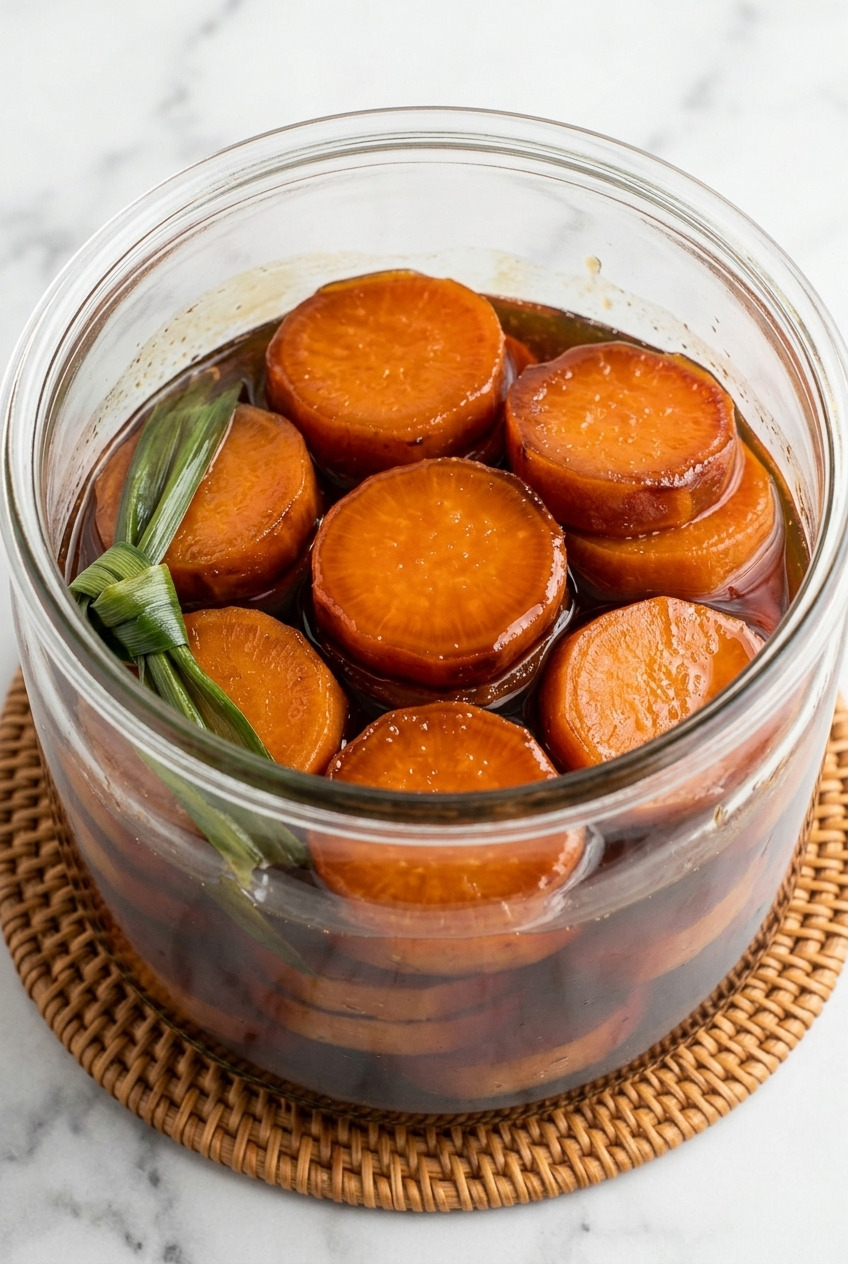
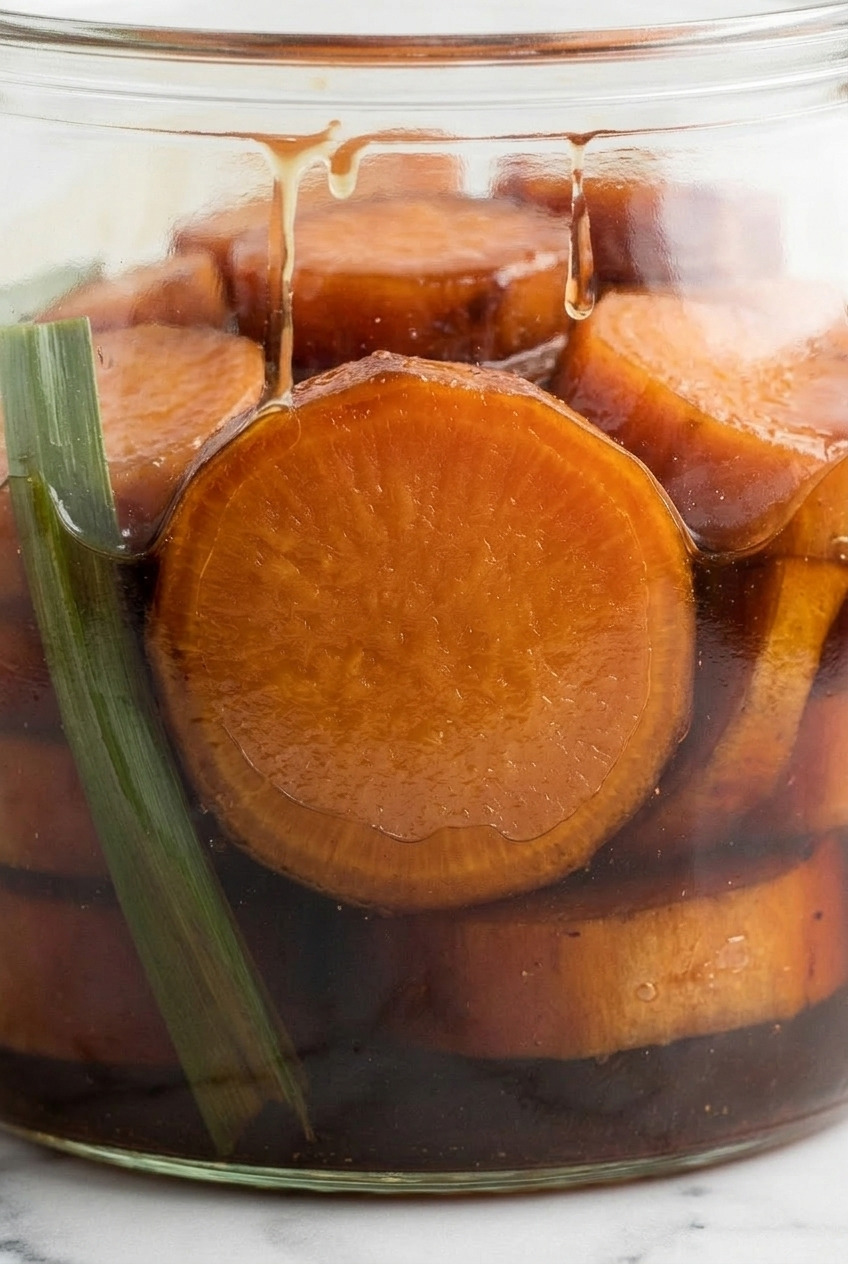
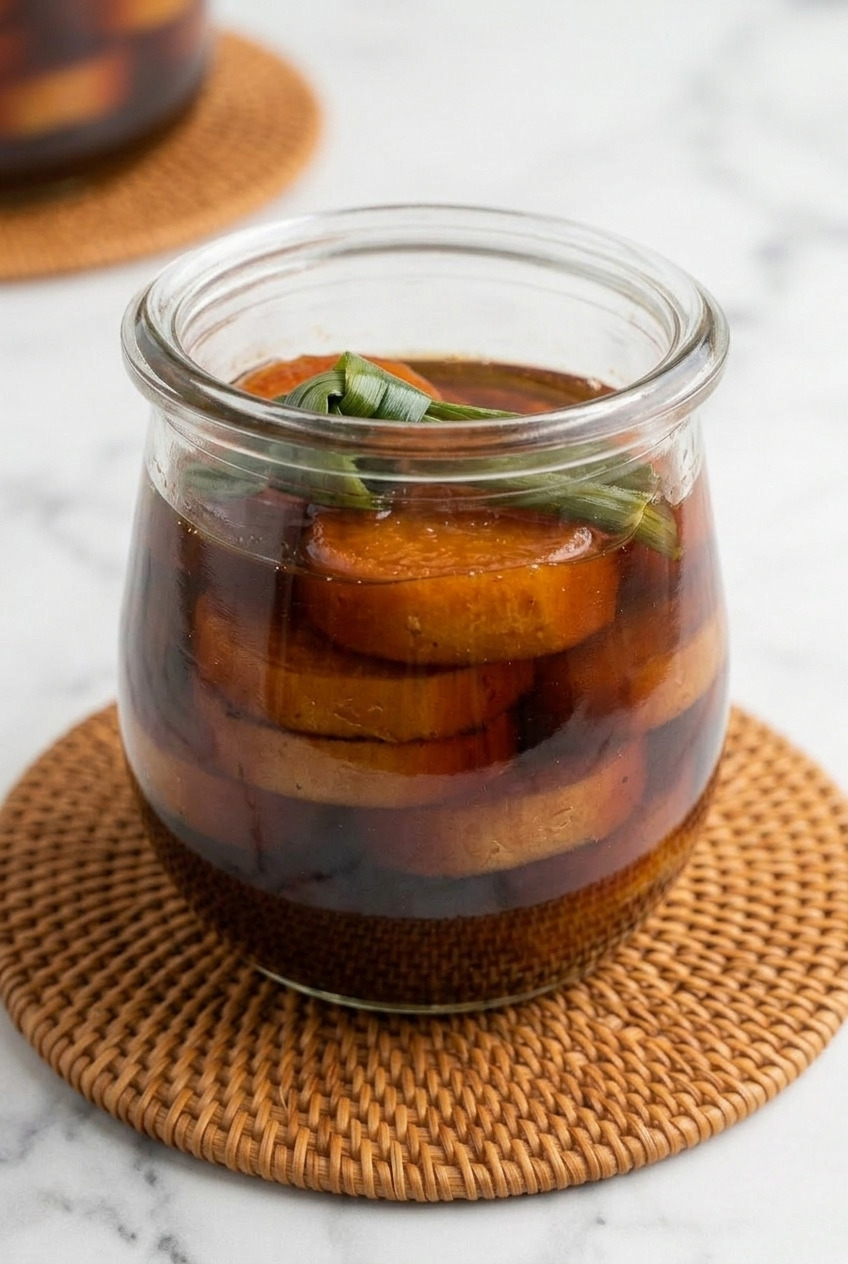
It thickens into something dark and glossy that tastes of molasses and clings to every piece.
You can eat this warm in a bowl with the syrup spooned over.
You can chill it and pour it over shaved ice.
You can layer it into halo-halo, or thin the syrup with cold water and drink it.
It takes 35 minutes and most of that is the pot minding its own business.
Resist the urge to fancy it up. The restraint is the whole point!
What Minatamis na Kamote Is
Minatamis na kamote is Filipino sweet potato simmered gently in a brown sugar syrup until tender and glazed. It's merienda food, the Filipino afternoon snack that sits between lunch and dinner, and it's equally at home as a simple dessert after a heavy meal.
It's also a workhorse component.
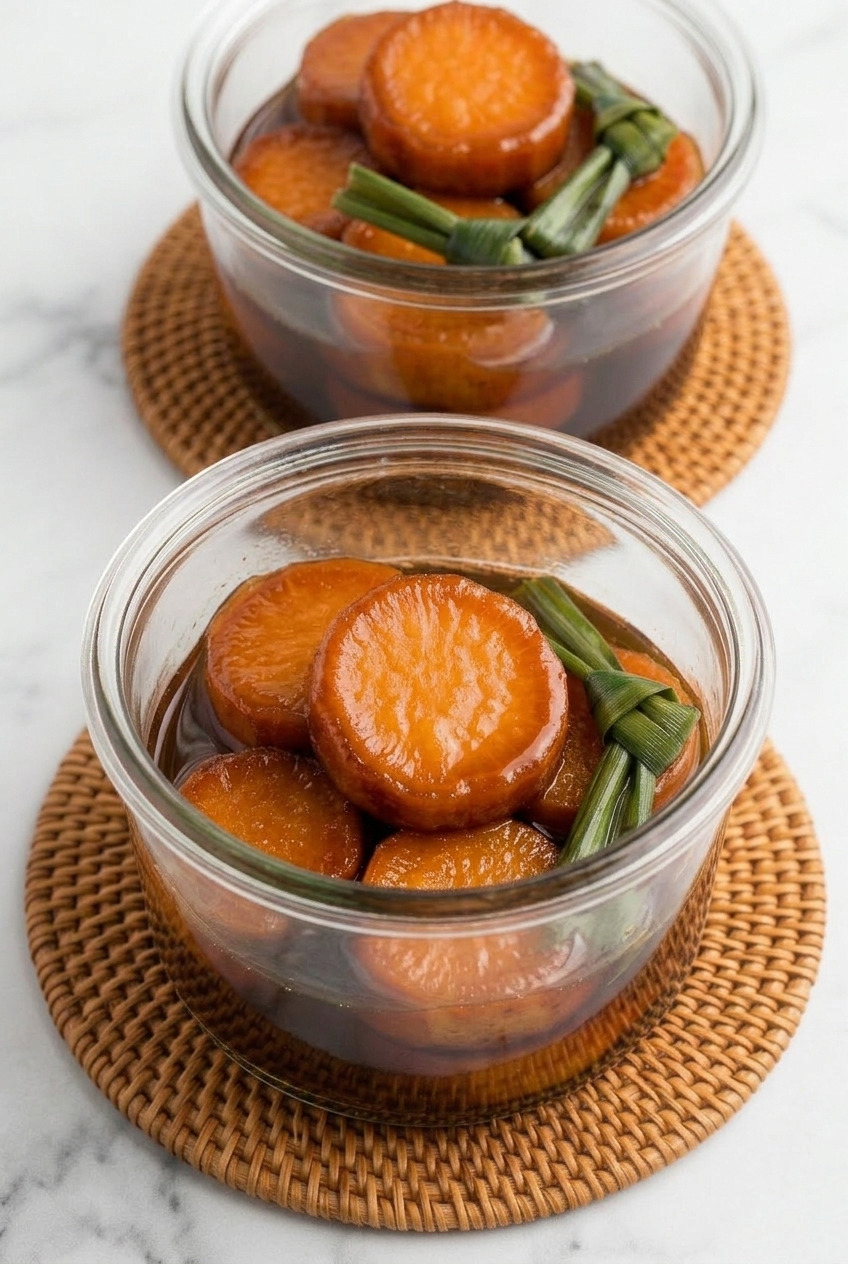
A jar of it in the fridge becomes a halo-halo layer, a topping for ginataan, or something to spoon over ice on a hot afternoon.
Is it the same as candied yams? No, and this trips people up. American candied yams are baked, loaded with butter, often finished with marshmallow, and served as a savory-meal side dish at Thanksgiving. Minatamis na kamote is simmered on the stove, has no butter in the classic version, and is unambiguously a sweet course. The syrup is loose and pourable, not a thick glaze clinging to a casserole dish.
And the purple one? That's usually ube halaya, purple yam cooked down with milk and sugar into a thick jam. Different tuber, different texture, different dish entirely. You can make minatamis with purple sweet potato and it's gorgeous, but ube halaya it is not.
Ingredients You'll Need
A short list means each item carries weight. The sugar in particular is worth thinking about for ten seconds.
- Kamote, sweet potato (2 pounds). Peeled and cut into 1 inch thick rounds, or 1 ½ inch chunks if the tubers are fat. Orange fleshed sweet potato gives you soft, sweet, deeply colored pieces. Japanese sweet potato, with purple skin and pale yellow flesh, is drier and denser and holds its shape better in the syrup. Both are traditional enough and both are excellent. I lean Japanese when I can find it.
- Panutsa or muscovado sugar (1 cup, packed). This is the authentic sweetener. Panutsa is Filipino unrefined cane sugar sold in hard discs, and muscovado is the widely available equivalent. Either one gives you a dark, molasses-heavy syrup that's the actual flavor of this dish. The substitute: dark brown sugar, which is genuinely close. Light brown sugar works but tastes noticeably flatter.
- Water (3 cups). Enough to nearly cover the kamote at the start. It reduces by roughly half.
- Pandan leaf (1, knotted). Traditional and worth the trip to a Filipino or Southeast Asian market, where it's sold frozen for a couple of dollars. It smells like vanilla crossed with fresh rice and it's the aroma most Filipino cooks expect here. Skip it if you must, the dish survives.
- Salt (⅛ teaspoon). Tiny amount, big job. Without it the syrup is just sweet.
- Coconut milk (½ cup, optional). For the gata version. See the variations below.
How to Make Minatamis na Kamote
Step 1: Cut the Kamote
Peel the sweet potatoes and cut them into 1 inch rounds.
Even thickness matters more than shape.
Uneven pieces mean some are collapsing while others are still firm, and there's no fixing that once the pot is going.
Drop them into cold water as you cut if you're working slowly, then drain before they go in.
Step 2: Build the Syrup
Put the water, sugar, salt and knotted pandan leaf in a wide pot and set it over medium heat.
Stir until the sugar dissolves completely.
Wide matters. A wide pot lets the kamote sit in a single layer, which means it cooks evenly and you never have to stir it.
Step 3: Simmer Gently
Slide the kamote in and bring the pot to a bare simmer, not a boil.
A rolling boil batters the pieces apart and you'll end up with sweet potato soup.
Cook uncovered for 20 to 25 minutes.
Do NOT stir once the pieces start to soften. If you need to move things around, tilt and swirl the whole pot instead.
It's ready when a knife tip meets slight resistance at the center, and the syrup has reduced to about half and coats the back of a spoon.
Step 4: Cool in the Syrup
Take the pot off the heat and leave the kamote sitting in the syrup.
This is not a resting step you can skip.
The pieces keep absorbing syrup as everything cools, which is what gives them that glossy, saturated edge instead of a plain boiled center.
Give it 20 minutes at least, or refrigerate the whole pot overnight if you're serving it cold.
Getting the Syrup Right
The syrup is where this dish is won or lost, and nobody talks about it. Here's what you're aiming for.
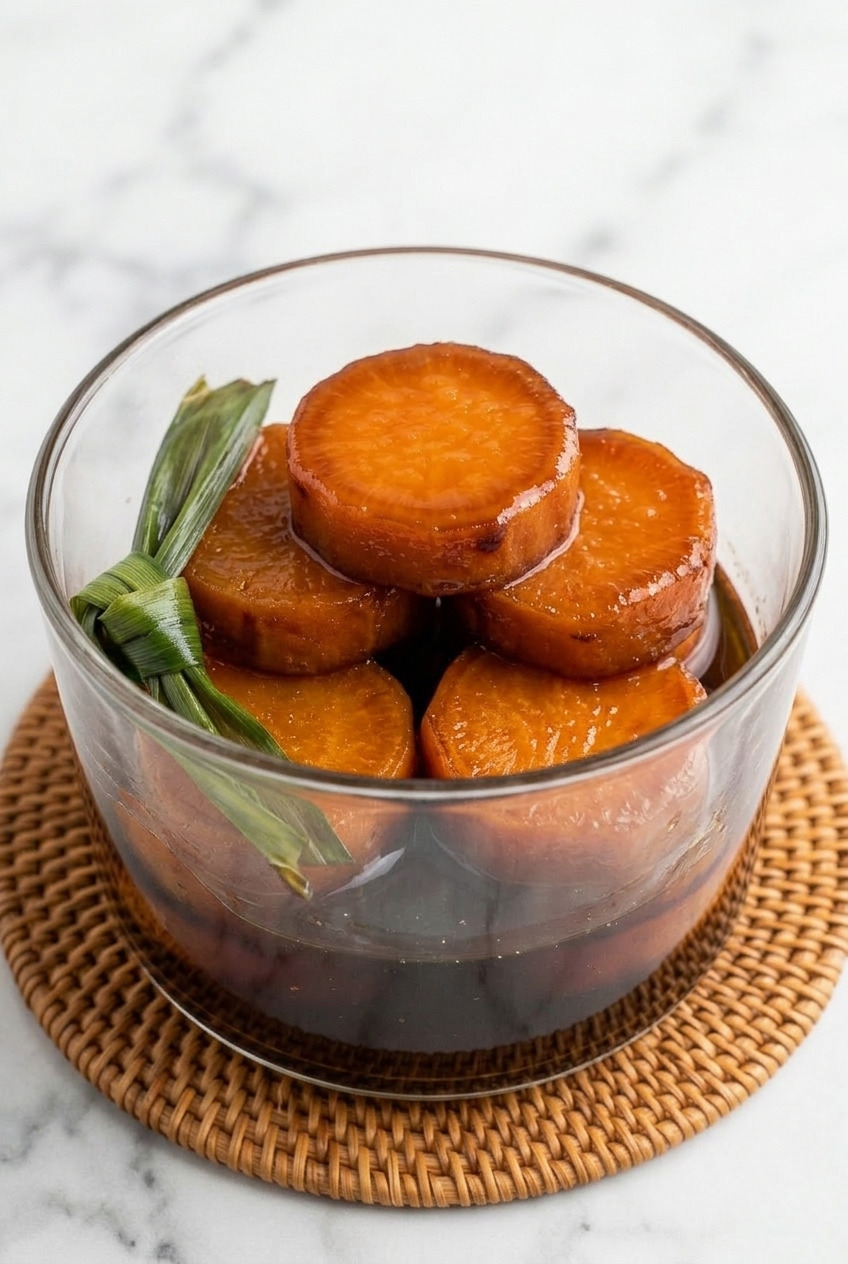
Warm from the pot, it should coat the back of a spoon and run off in a slow stream, roughly the consistency of maple syrup.
It will thicken noticeably as it cools, so pull the pot a touch earlier than looks right.
Too thin? Lift the kamote out with a slotted spoon, boil the syrup hard for 3 to 5 minutes, then pour it back over.
Too thick, or hardened in the fridge? Add hot water 1 tablespoon at a time over low heat until it loosens. This is completely recoverable.
Fair warning: if you reduce it far enough to hit the hard crack stage, it sets like candy around the sweet potato when it cools and you get a solid mass. That's an easy mistake with a small batch on high heat. Keep it at a bare simmer and it can't happen.
The Texture You're Aiming For
Filipino cooks describe the ideal as makunat, which is the best word for it in any language. It means something that bends without breaking, resilient rather than brittle, with a slight chew to it.
The outside of each piece should be dense and slightly chewy from the syrup.
The inside stays soft and tender.
What you don't want is a piece that falls apart when the spoon touches it, or one that's still chalky and firm in the middle.
That contrast, chewy at the edge and yielding in the center, is the difference between minatamis na kamote and boiled sweet potato in sugar water.
Tips
A simple recipe has fewer places to hide, so these small things count.
- Cut to even thickness. 1 inch rounds, every one of them. This is the single most important thing on the list.
- Bare simmer, never a boil. Look for slow lazy bubbles at the edge of the pot, not a churn.
- Hands off after the first ten minutes. Stirring is how pieces break. Swirl the pot instead.
- Use a wide pot. A single layer of kamote cooks evenly. Stacked pieces cook at completely different rates.
- Cool it in the syrup. The absorption happens off the heat. Draining it hot wastes half the recipe.
- Choose your kamote deliberately. Orange for soft and sweet, Japanese for dense and chewy. Both are correct, but they give you different desserts.
- Taste the syrup before the kamote goes in. It's much easier to adjust sweetness at that point than at the end.
Variations
The plain version is the point, but a few of these are traditional in their own right.
- Minatamis na kamote with gata. Stir ½ cup of coconut milk into the syrup during the last 5 minutes. It turns the syrup pale, rich and slightly savory. Extremely popular and a completely legitimate way to make it.
- With sago. Fold in ⅓ cup of cooked small tapioca pearls after the pot comes off the heat. Adds a soft, bouncy texture and stretches the batch.
- The oven finish. Boil the kamote until just tender, drain, toss with butter, cinnamon and brown sugar, and finish at 350°F for 15 to 20 minutes. Drier, more caramelized, less syrup. A genuinely popular home style version.
- Purple kamote. Same method, purple fleshed sweet potato. The color against the dark syrup is striking, and the flavor is a little more mineral.
- Cinnamon stick. One stick in the syrup from the start. Not traditional, but it works.
- Ginger. A few thick coins of fresh ginger in the syrup. This shades it toward the Filipino ginger and sweet potato dessert soups and it's lovely on a cold day.
Serving and Storage
This is one of the rare desserts that is arguably better on day two.
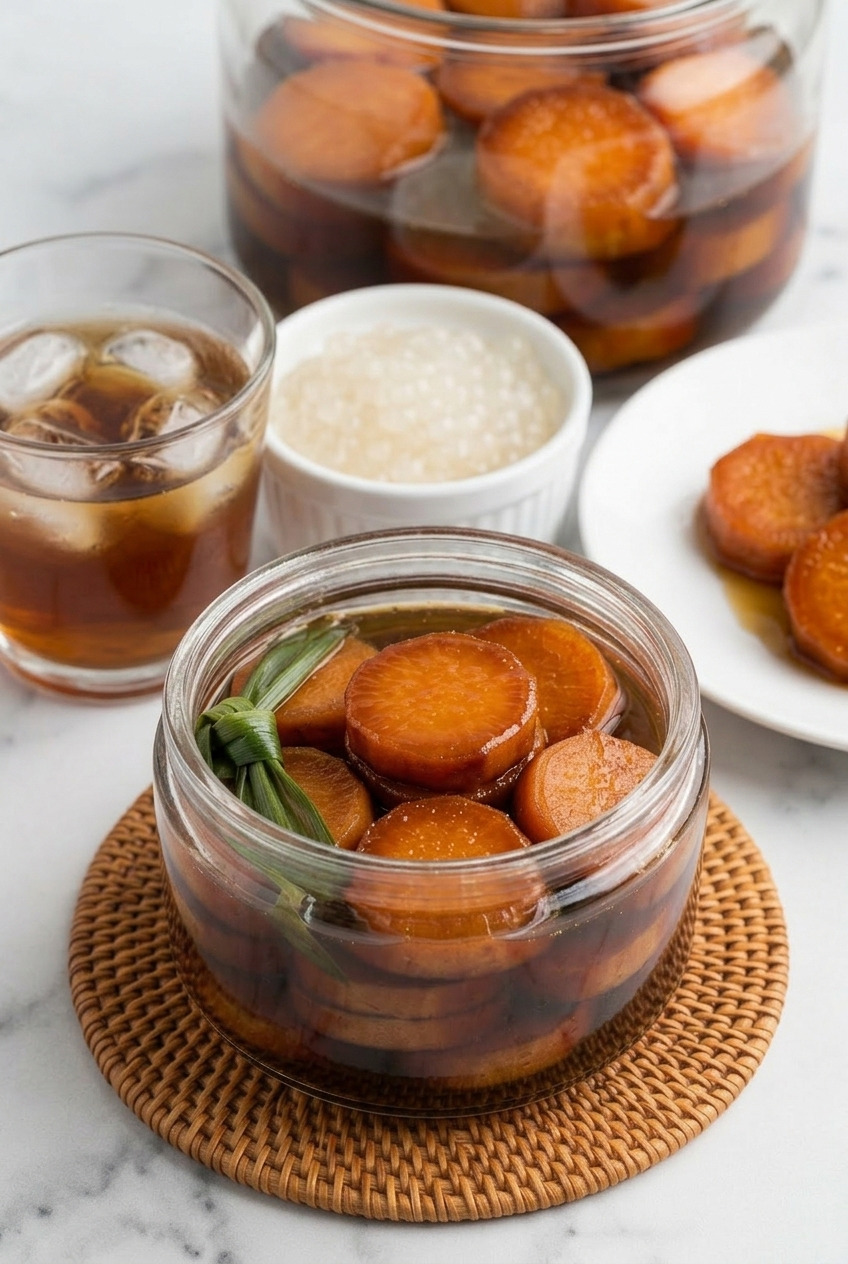
- Warm, in a bowl. Straight from the pot with plenty of syrup spooned over. The default.
- Cold, over shaved ice. Chilled kamote, cold syrup, a mound of ice. This is a summer afternoon in a glass.
- In halo-halo. A spoonful of kamote plus a little of its syrup is a standard layer. Make it a day ahead so it's properly cold.
- The syrup as a drink. Thin 2 tablespoons of syrup with cold water and ice. It's a small revelation and it costs you nothing.
- Refrigerator. Airtight, submerged in its syrup, up to 1 week. The flavor deepens for the first two or three days.
- Freezer. Up to 2 months, though the kamote softens on thawing. Fine for halo-halo, less good for eating on its own.
Three ingredients and a quiet pot. Give it a try!
Recipe
Minatamis na Kamote (Filipino Sweet Potato in Syrup)
Ingredients
Syrup
- 3 cups water
- 1 cup panutsa or muscovado sugar packed, or dark brown sugar
- 1 pandan leaf knotted, optional but traditional
- ⅛ teaspoon salt
Kamote
- 2 pounds kamote (sweet potato) peeled, cut into 1 inch thick rounds
- ½ cup coconut milk optional, for the gata version
- ⅓ cup cooked small sago pearls optional
Instructions
Make the Syrup
- Peel the sweet potatoes and cut them into even 1 inch thick rounds. Even thickness matters more than shape.
- Combine the water, sugar, salt and knotted pandan leaf in a wide pot over medium heat. Stir until the sugar dissolves completely.
Simmer and Cool
- Slide in the kamote in a single layer and bring to a bare simmer, never a rolling boil.
- Cook uncovered 20 to 25 minutes, until a knife tip meets slight resistance at the center and the syrup has reduced by about half. Do not stir once the pieces soften. Swirl the pot instead.
- If adding coconut milk for the gata version, stir it in during the last 5 minutes.
- Take the pot off the heat and let the kamote cool in the syrup at least 20 minutes, or refrigerate overnight to serve cold. The pieces keep absorbing syrup as they cool.
Notes
- Sugar: panutsa or muscovado gives the authentic dark molasses syrup. Dark brown sugar is a close substitute.
- Syrup consistency: it should coat a spoon while warm and will thicken further as it cools. Pull it slightly early.
- Too thin: lift out the kamote and boil the syrup 3 to 5 minutes. Too thick: add hot water 1 tablespoon at a time.
- Texture target: makunat, slightly chewy at the edge and tender in the middle.
- Never boil hard: a rolling boil breaks the pieces apart.
- Kamote choice: orange sweet potato is soft and sweet, Japanese sweet potato is denser and holds its shape.
- Not candied yams: this is a simmered Filipino merienda dessert, not a baked Thanksgiving side.
- Storage: fridge in its syrup up to 1 week. Thin 2 tablespoons of syrup with cold water for a drink.