Chocolate crinkles get all the attention at our family's Christmas cookie swap.
They're always the first tin to empty, and they deserve it.
But a tray of nothing but brown cookies under white sugar starts to look a little sleepy by the third plate.
I wanted a crinkle that tasted like a bright December morning instead of a cup of cocoa.
So I swapped the chocolate for orange zest and tossed in a handful of fresh cranberries from the bag left over after Thanksgiving.
My first tray was a mess. The cookies spread flat, and the powdered sugar soaked into gray, wet patches around every berry.
It took three more batches to get these orange cranberry crinkle cookies right, and now they sit next to the chocolate ones every single year.
My wife calls them the sunshine cookies, and she hides a few in the freezer before the swap.
The fixes are small. I rub the zest into the sugar, chill the dough for just 30 minutes, and roll every ball in sugar twice so the white coat stays bright.
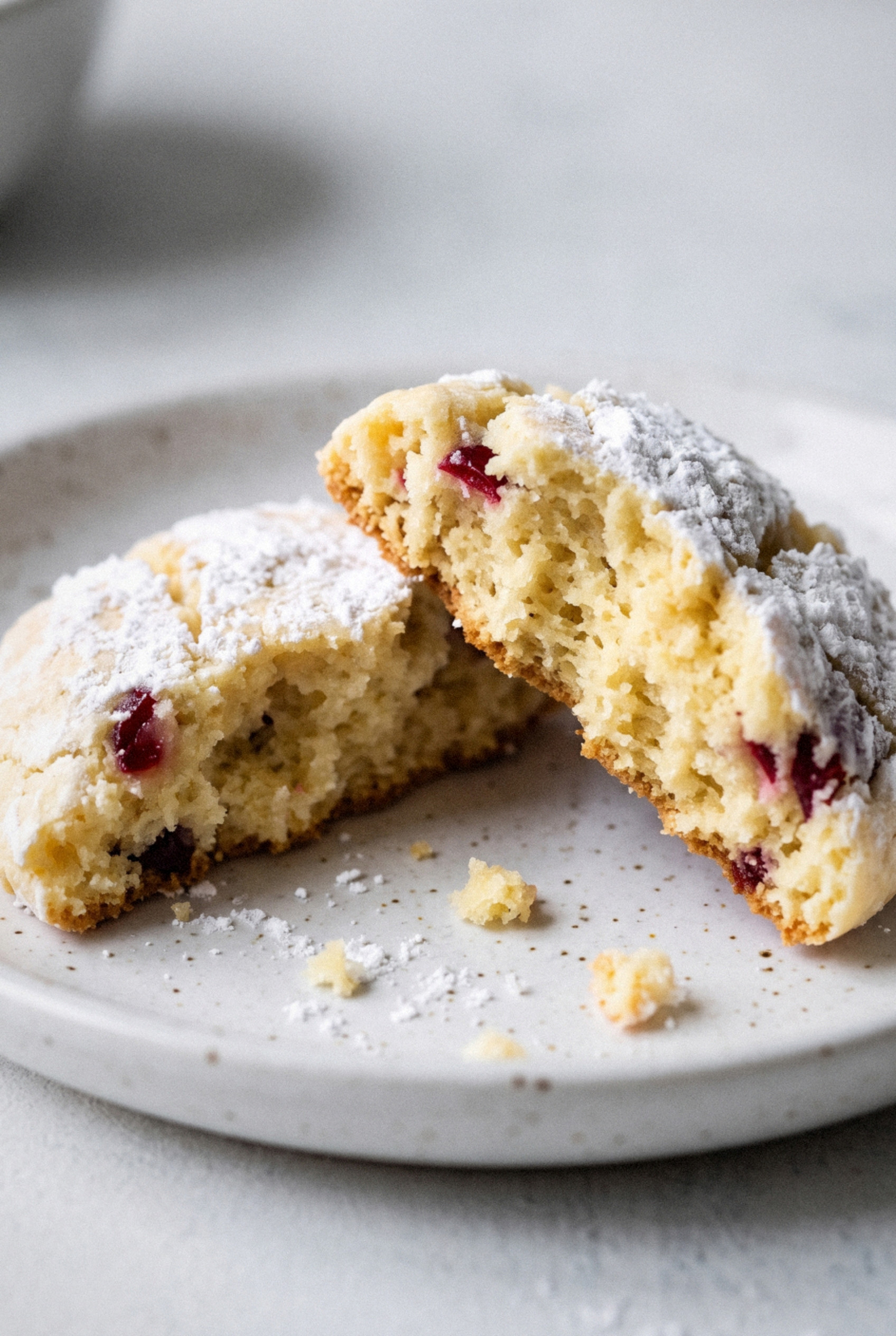
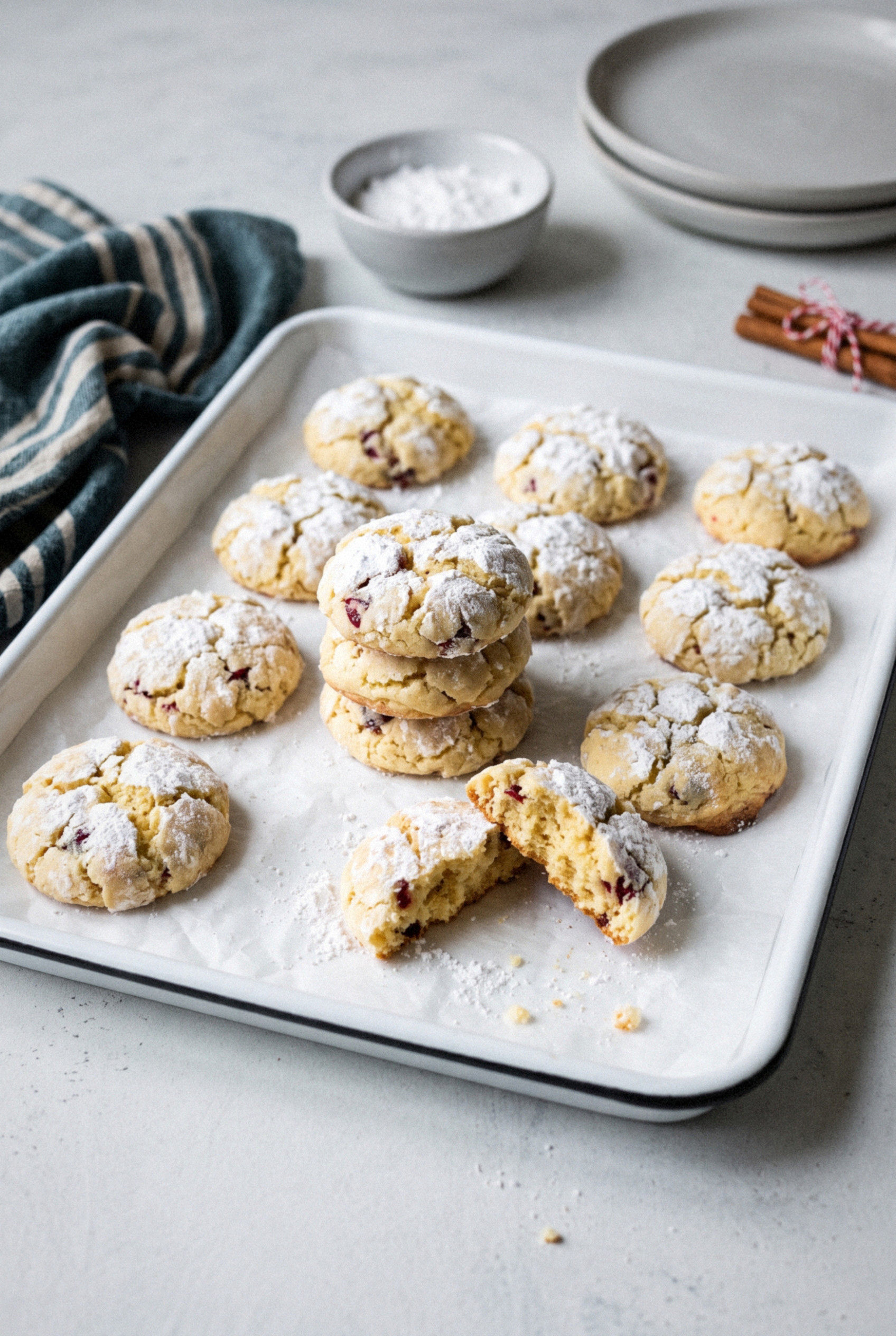
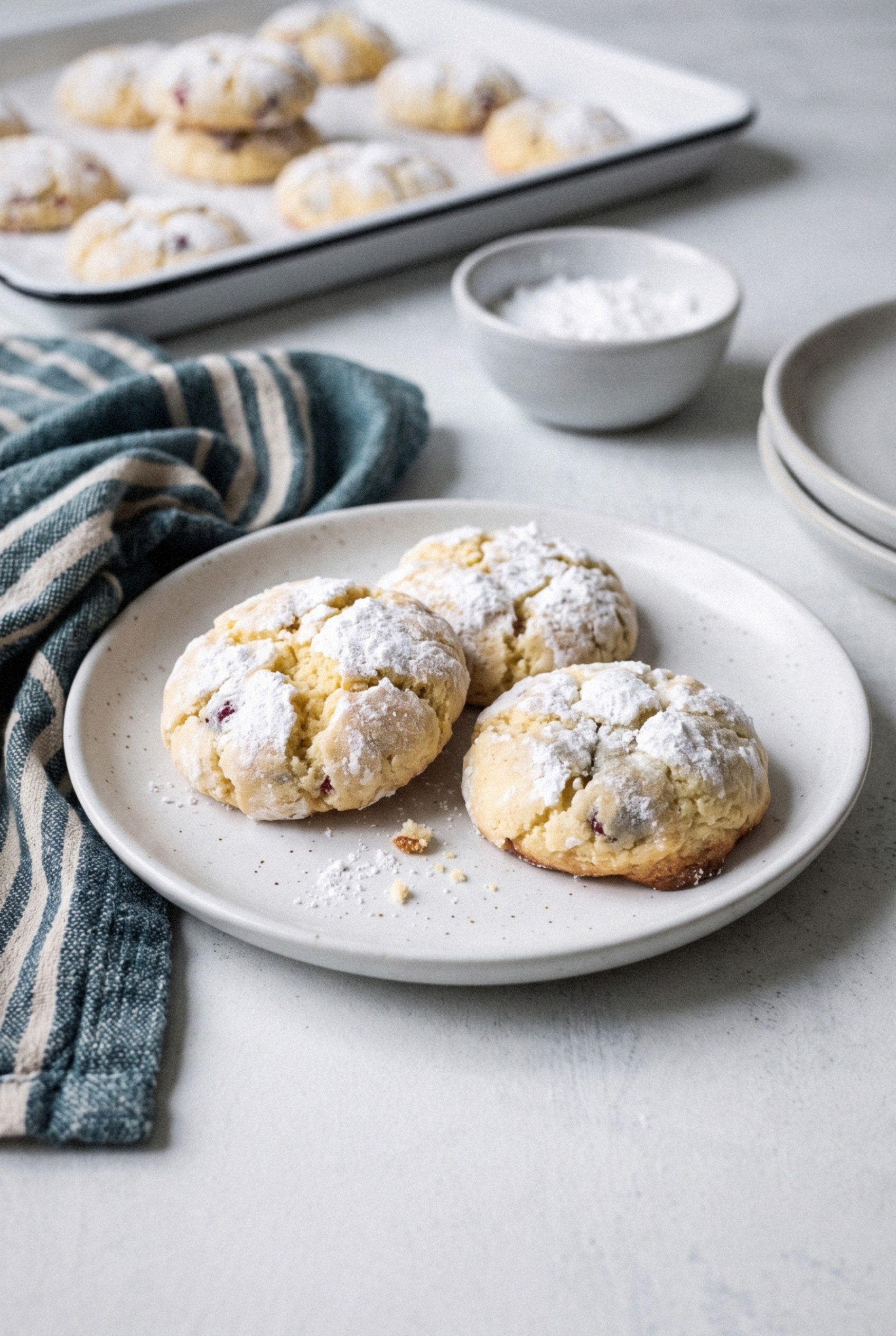
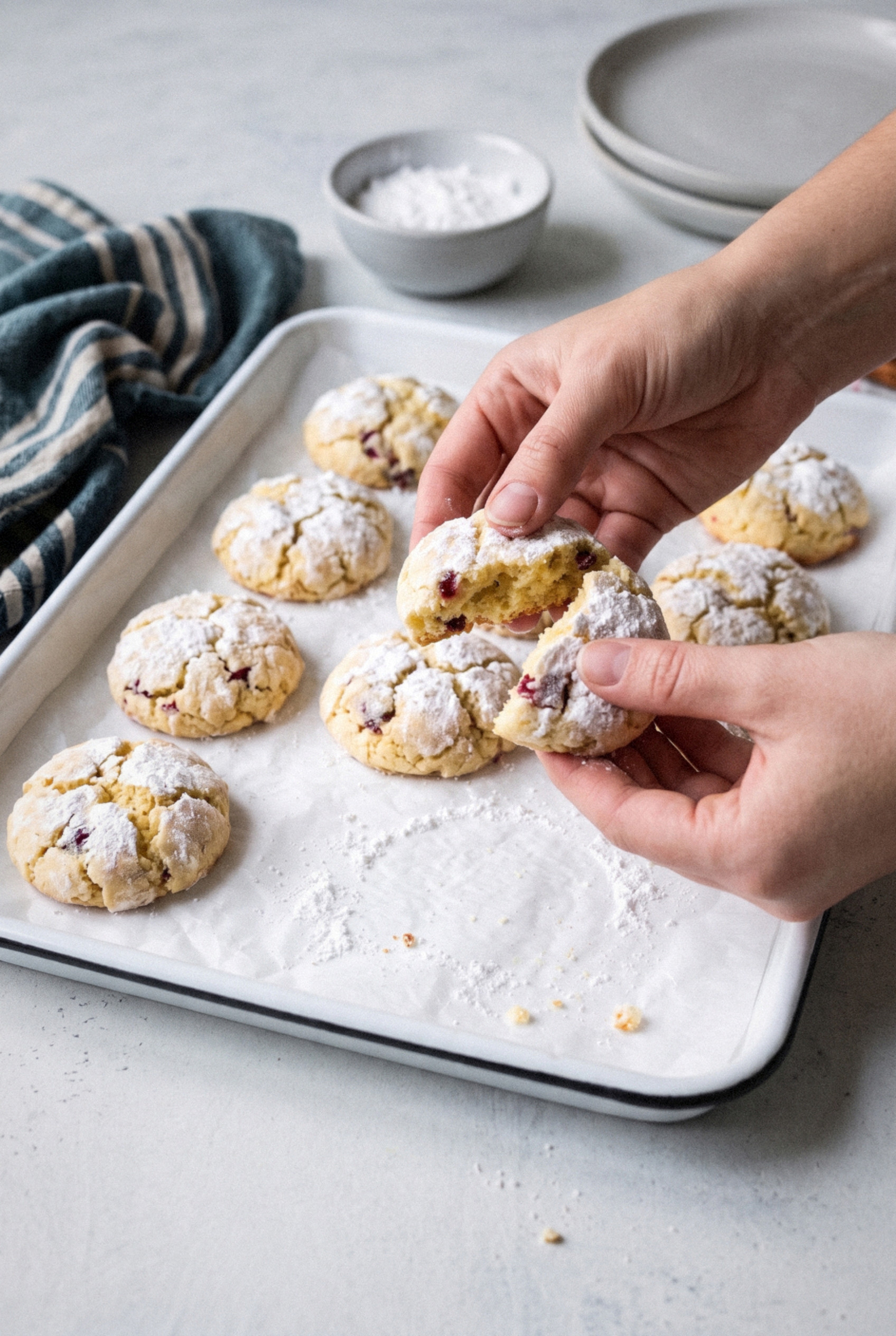
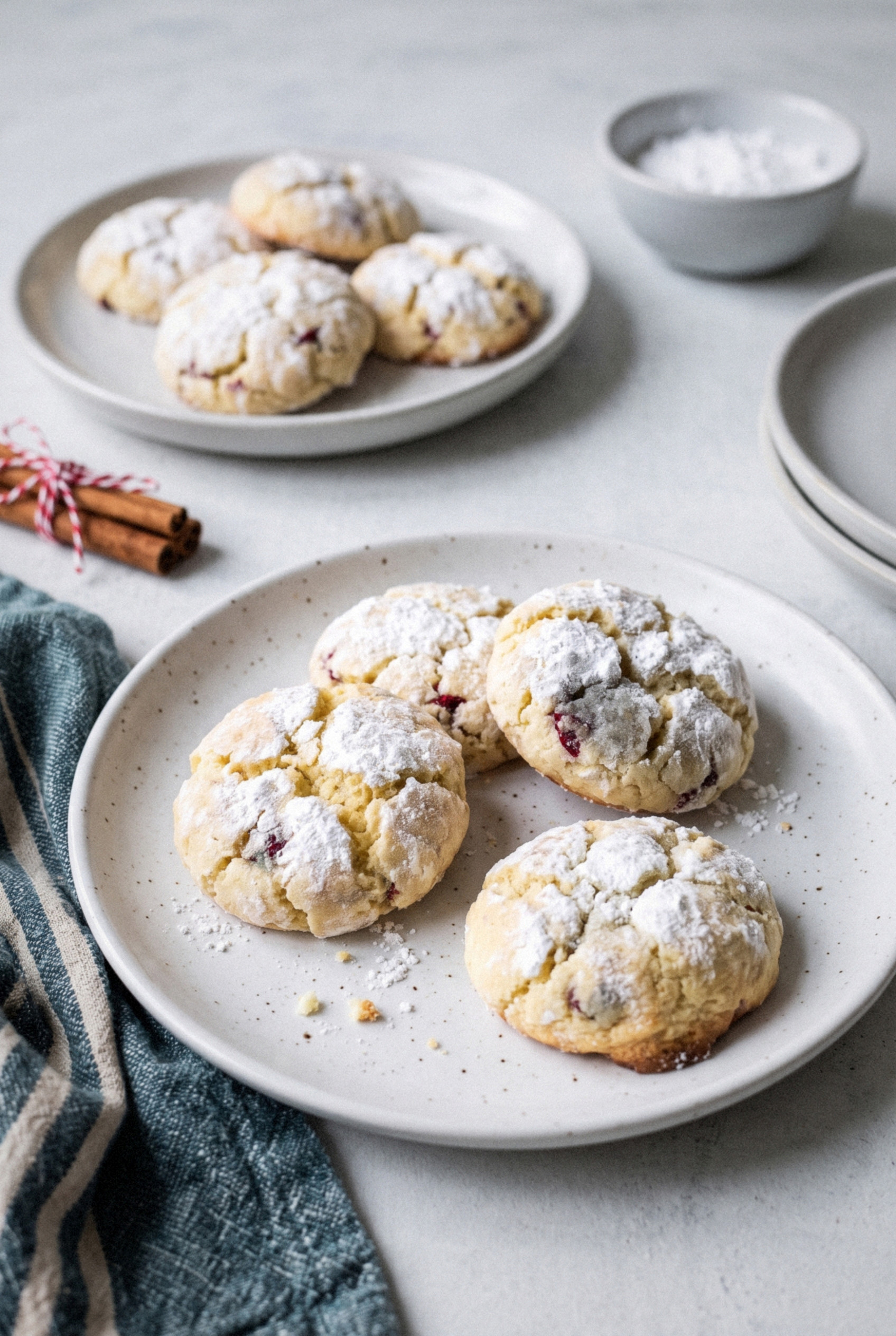
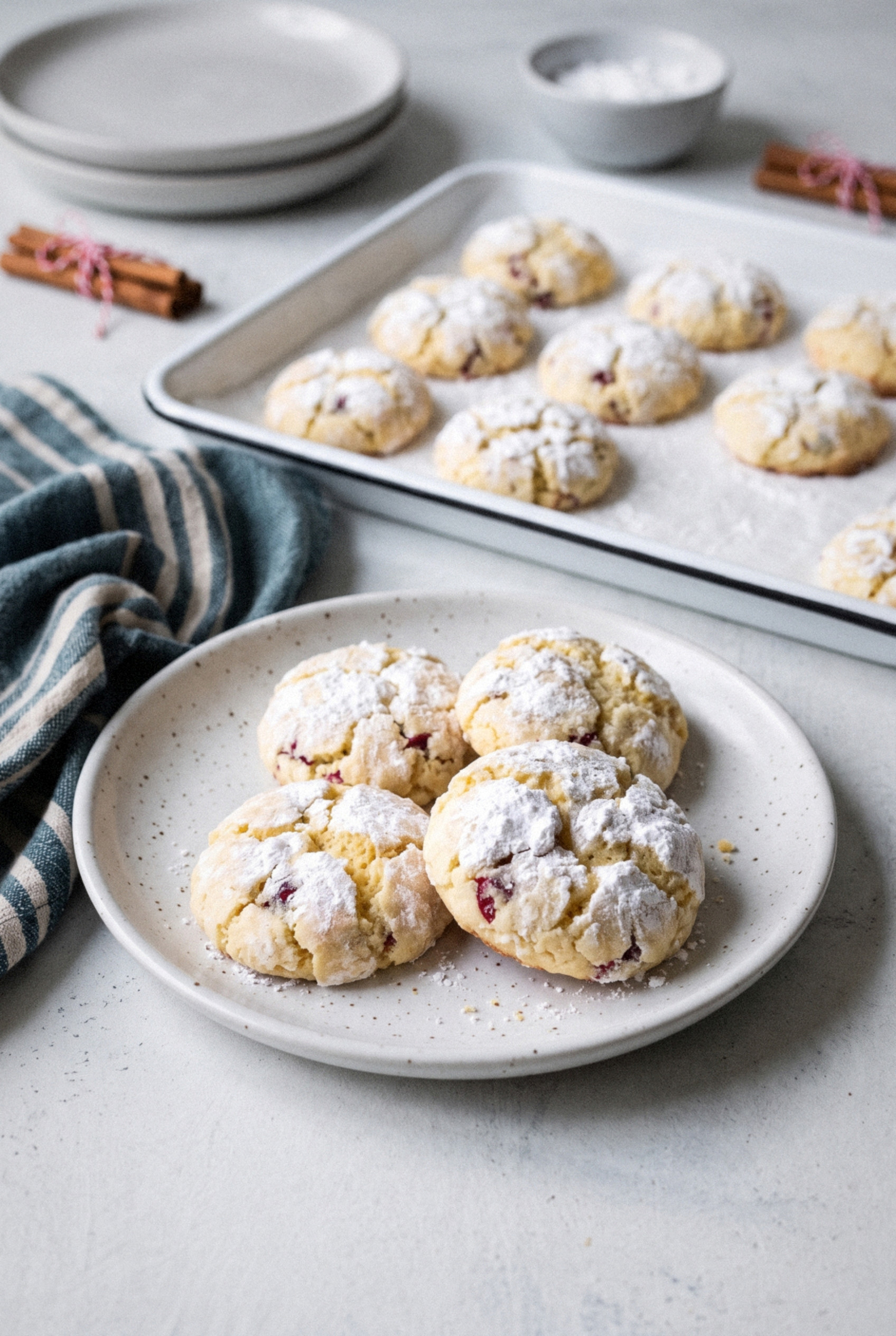
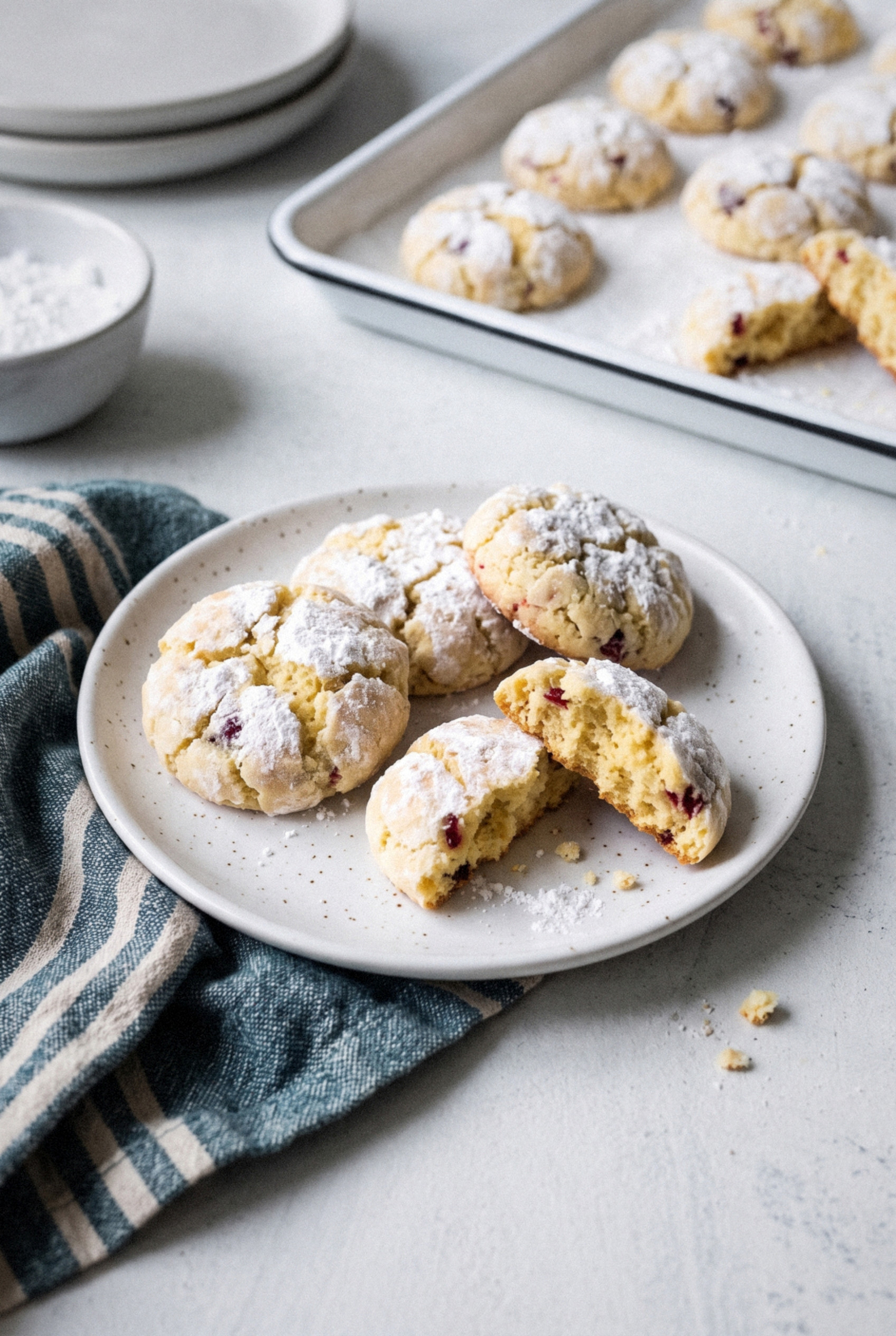
You get soft, chewy middles, tart little pops of cranberry, and deep white cracks that look great on any Christmas cookie tray.
Make them once and I promise they'll earn a permanent spot in your holiday tin.
Why These Belong on Your Christmas Cookie Tray
Every cookie tray needs a bright one. Most holiday baking leans hard on chocolate, molasses, and warm spice, so a citrus cookie wakes the whole plate up.
- Red and white on purpose. The chopped cranberries peek through the white cracks like little ornaments. No food coloring needed.
- Tart, sweet, and fresh. The sharp cranberry and floral orange cut right through a rich tray of fudge and shortbread.
- One bowl, no mixer drama. A hand mixer and one big bowl handle the whole dough.
- Gift tin tough. These hold their shape and their coating for days, so they travel well to neighbors and coworkers.
- Ready in about an hour. That includes the short chill. Most of it is hands-off time.
Crinkle cookies have been a Christmas staple in American kitchens since the mid 1900s, when the chocolate version started showing up in community cookbooks and church bake sales.
The idea is simple. Roll a soft dough in powdered sugar, and as the cookie puffs and spreads in the oven, the sugar coat cracks into that snowy pattern.
Who doesn't love a cookie that looks like fresh snow on a sidewalk?
What You Need
Nothing here is hard to find in December. Every grocery store has fresh cranberries and navel oranges stacked by the front door this time of year.
For the Dough
- Unsalted butter (½ cup). Softened, so a finger leaves a dent but doesn't sink through. Melted butter makes a greasy, flat crinkle.
- Granulated sugar (¾ cup). This is where the orange zest goes first. More on that in a minute.
- Orange zest (1 tablespoon). About one large navel orange. Zest it before you juice it, because a squeezed orange is nearly impossible to grate.
- Large egg (1). Room temperature, so it blends smoothly into the butter.
- Fresh orange juice (1 tablespoon). Just a splash for flavor. Adding more thins the dough and kills the cracks.
- Vanilla extract (½ teaspoon). A small amount rounds out the orange without hiding it.
- All-purpose flour (1 ¾ cups). Spoon it into the cup and level it. Scooping straight from the bag packs in too much.
- Cornstarch (2 teaspoons). My little insurance policy for a tender, soft middle that stays chewy for days.
- Baking powder (1 teaspoon) and baking soda (¼ teaspoon). Together they give the lift that splits the sugar coat open.
- Salt (½ teaspoon). Cuts the sweetness and makes the orange taste brighter.
- Fresh cranberries (¾ cup). Chopped to about the size of a pea and patted dry with a paper towel.
For the Crinkle Coating
- Granulated sugar (¼ cup). The first roll. It forms a thin, dry shell between the dough and the powdered sugar.
- Powdered sugar (½ cup). The second roll, and the one that gives you those snowy white cracks.
Why two sugars? The granulated layer acts like a raincoat. Without it, the moisture from the cranberries and juice melts the powdered sugar into a see-through glaze before the oven even heats up.
Fresh vs Dried Cranberries
I reach for fresh almost every time. Fresh berries give you tart, juicy pops and those bright red flecks you can see through the coating.
- Fresh cranberries. Rinse, pick out any soft ones, dry them completely, and chop. Frozen berries work too if you chop them while still frozen and pat them dry.
- Dried cranberries. Use the same ¾ cup, roughly chopped. The cookie turns sweeter and chewier, with less tang. If they feel hard, soak them in hot water for 10 minutes and dry them well.
Both are delicious. Fresh just tastes more like Christmas to me.
How to Make Orange Cranberry Crinkle Cookies
The whole process takes about 20 minutes of real work. The rest is chilling and baking.
Step 1: Rub the Zest into the Sugar
Add the ¾ cup of granulated sugar and the orange zest to a large bowl. Rub them together between your fingertips for about 1 minute, until the sugar looks damp and smells like an orange grove.
This pulls the oils out of the zest and spreads them through every grain of sugar. It's the easiest flavor boost I know.
Step 2: Cream the Butter and Sugar
Add the softened butter to the orange sugar. Beat with a hand mixer on medium speed for 2 to 3 minutes, until the mixture is pale and fluffy.
Beat in the egg, orange juice, and vanilla until smooth. Scrape down the sides of the bowl once so nothing hides at the bottom.
Step 3: Add the Dry Ingredients
In a separate bowl, whisk together the flour, cornstarch, baking powder, baking soda, and salt. Add it to the butter mixture in two additions, mixing on low speed just until no dry streaks remain.
The dough will be soft and a little sticky. That's normal.
Step 4: Fold in the Cranberries
Use a spatula to fold the chopped, patted-dry cranberries into the dough. Stop as soon as they're evenly spread, because overmixing smears red juice through the dough and turns it pink.
Pro tip: Toss the chopped berries with 1 teaspoon of the measured flour before folding. They stay put and bleed less.
Step 5: Chill the Dough
Cover the bowl and refrigerate for 30 minutes. While it chills, heat the oven to 350°F and line two baking sheets with parchment.
Thirty minutes is enough to firm the butter so the cookies puff up instead of spreading flat. Do you need longer? No, and longer actually makes the dough too stiff to crack well.
Step 6: Shape and Double-Roll
Set out two small bowls, one with the ¼ cup of granulated sugar and one with the ½ cup of powdered sugar. Scoop the dough with a 1 ½ tablespoon cookie scoop and roll each piece into a ball.
Roll each ball in the granulated sugar first, then roll it in the powdered sugar until it's thickly coated, like a snowball. Set the balls about 2 inches apart on the sheets.
Step 7: Bake and Cool
Bake one sheet at a time for 10 to 12 minutes, until the cookies have puffed, cracked, and look matte instead of shiny in the cracks. The edges should be set but not golden.
Let them cool on the sheet for 5 minutes, then move them to a wire rack. They firm up as they cool, so don't wait for the middles to look done in the oven.
Tips for Deep Cracks
Good cracks come down to dough temperature and a thick coat. Here's what I learned from those first flat batches.
- Don't skip the chill. Warm dough spreads before the outside sets, and you get a smooth, flat cookie with faint lines.
- Be generous with the powdered sugar. A thin dusting disappears. You want the ball completely white with no dough showing.
- Always do the granulated roll first. It keeps the powdered sugar dry and bright, especially with juicy fresh berries.
- Dry the cranberries well. Wet berries make pink streaks and soggy spots in the coating.
- Don't flatten the balls. A round ball rises and splits. A pressed disc just spreads.
- Pull them at matte. Overbaked crinkles turn dry and crumbly. A slightly soft center is exactly right.
- Bake on a cool sheet. Let the pan cool between batches. A hot sheet starts melting the butter before the cookies even hit the oven.
Cookies came out smooth anyway? Your dough was probably too warm. Pop the next batch back in the fridge for 10 minutes before baking.
Variations
The base dough is super easy to play with. These are the swaps I've tried and liked.
- White chocolate chips. Fold in ½ cup with the cranberries for a sweeter, creamier cookie.
- Orange glaze drizzle. Whisk ½ cup powdered sugar with 1 tablespoon orange juice and drizzle thin lines over the cooled cookies. Skip the powdered sugar roll if you glaze.
- Chopped pistachios. Add ⅓ cup for green flecks next to the red. Very festive.
- Toasted pecans. A ⅓ cup of chopped toasted pecans adds a buttery crunch.
- Sparkling sugar coat. Swap the powdered sugar for coarse sparkling sugar for a jeweled, crunchy top. You'll get fewer cracks but more sparkle.
- Lemon instead of orange. Use the same amount of lemon zest and juice for a sharper, tangier cookie.
Make Ahead and Freezing
This dough is a great way to get ahead of December. I make a double batch the week after Thanksgiving and bake straight from the freezer all month.
- Refrigerate the dough. Wrap the bowl tightly and chill up to 2 days. Let it sit at room temperature for 15 minutes so it's scoopable.
- Freeze dough balls. Scoop and roll the balls, but don't coat them in sugar. Freeze on a tray until firm, then move them to a freezer bag for up to 2 months.
- Bake from frozen. Let the balls sit out for 15 to 20 minutes, roll them in both sugars, and bake. Add 1 to 2 minutes to the bake time.
Frozen dough cracks a touch less dramatically than fresh dough, but the flavor is exactly the same.
Storing These Cookies
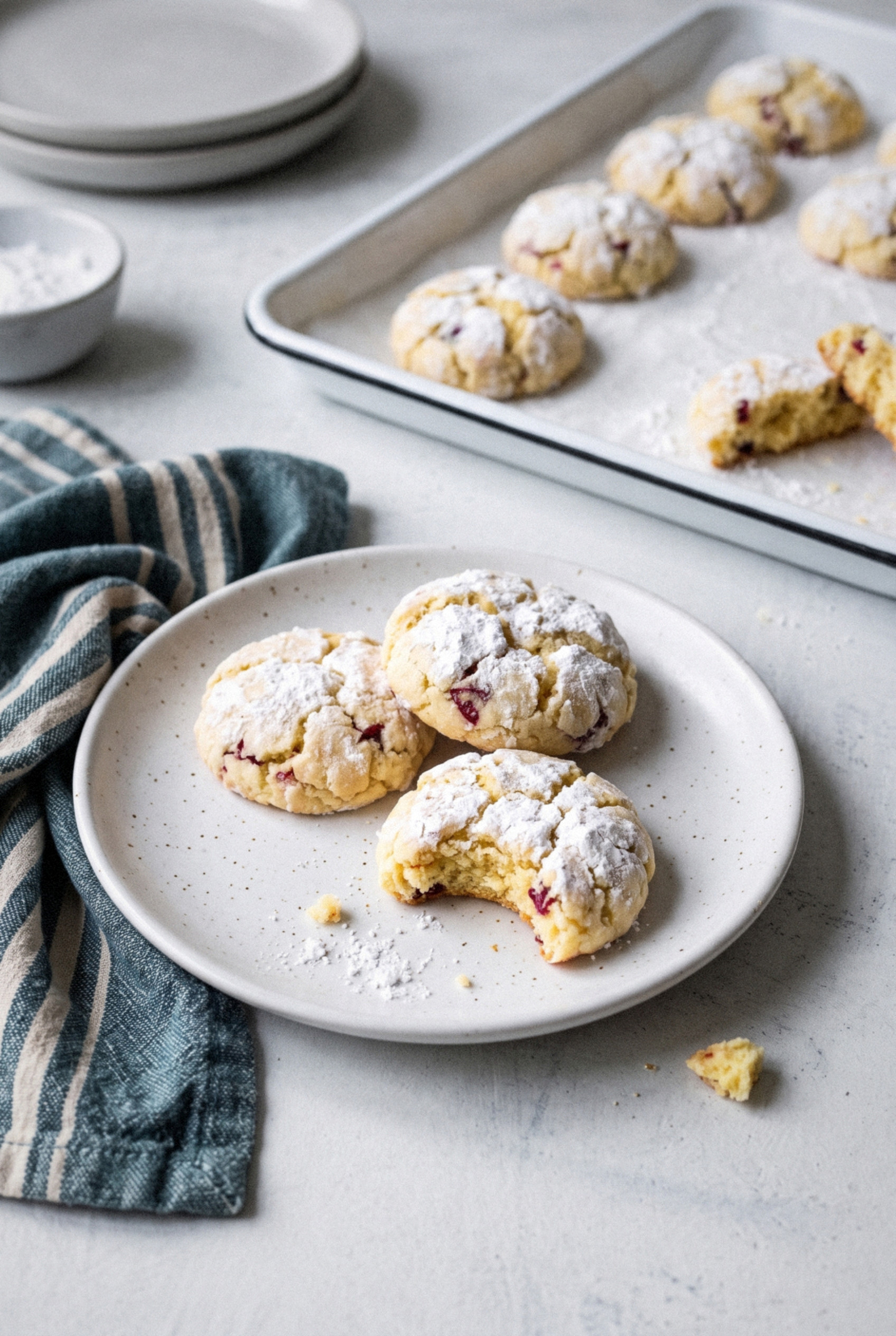
These cookies keep their soft middles for days. The coating stays white as long as they're fully cool before you seal them up.
At Room Temperature
- Airtight container. Store for up to 4 days on the counter, in single layers with parchment between them.
- Keep them soft. Tuck a slice of plain sandwich bread into the container. The cookies pull moisture from it and stay chewy.
In the Freezer
- Baked cookies. Freeze in a freezer-safe container for up to 3 months, with parchment between layers.
- Refresh the coating. Thaw on the counter, then give them a quick dust of powdered sugar if the white looks a little damp.
Packing a Gift Tin
- Layer with parchment. Two or three layers per tin is plenty. Any more and the bottom row gets crushed.
- Keep them with dry cookies. Pack them next to shortbread or sugar cookies, not soft frosted cookies that will make the coating sticky.
- Bake within two days of gifting. They're at their best in the first few days, and that's when the cracks look sharpest.
Pack a tin of these next to the chocolate crinkles and watch which one empties first. Give it a try!
Recipe
Orange Cranberry Crinkle Cookies
Ingredients
For the Cookies
- ¾ cup granulated sugar 150 g
- 1 tablespoon orange zest finely grated, about 1 large navel orange
- ½ cup unsalted butter softened (113 g)
- 1 large egg room temperature
- 1 tablespoon fresh orange juice
- ½ teaspoon vanilla extract
- 1 ¾ cups all-purpose flour spooned and leveled (220 g)
- 2 teaspoons cornstarch
- 1 teaspoon baking powder
- ¼ teaspoon baking soda
- ½ teaspoon salt
- ¾ cup fresh cranberries chopped and patted dry (75 g)
For Rolling
- ¼ cup granulated sugar 50 g
- ½ cup powdered sugar 60 g
Instructions
Make the Dough
- In a large bowl, rub the ¾ cup granulated sugar and orange zest together with your fingertips for about 1 minute, until fragrant and slightly damp.
- Add the softened butter and beat with a hand mixer on medium speed for 2 to 3 minutes, until pale and fluffy.
- Beat in the egg, orange juice, and vanilla until smooth, scraping down the bowl once.
- In a separate bowl, whisk the flour, cornstarch, baking powder, baking soda, and salt. Add to the butter mixture in two additions, mixing on low just until no dry streaks remain.
- Toss the chopped cranberries with 1 teaspoon of flour and fold them into the dough with a spatula until evenly spread.
- Cover and refrigerate the dough for 30 minutes.
Shape and Bake
- Heat the oven to 350°F and line two baking sheets with parchment paper.
- Place the ¼ cup granulated sugar and the powdered sugar in two separate small bowls.
- Scoop the dough into 1 ½ tablespoon portions and roll into balls. Roll each ball in granulated sugar, then in powdered sugar until thickly coated.
- Place the balls 2 inches apart on the prepared sheets.
- Bake one sheet at a time for 10 to 12 minutes, until puffed and cracked and the cracks look matte. The edges should be set but not golden.
- Cool on the baking sheet for 5 minutes, then transfer to a wire rack to cool completely.
Notes
- Dried Cranberries: Use ¾ cup roughly chopped dried cranberries. Soak hard ones in hot water for 10 minutes and dry well.
- Deep Cracks: Chill the dough, coat each ball thickly in powdered sugar, and never flatten the balls.
- Make Ahead: Freeze uncoated dough balls up to 2 months. Let sit 15 to 20 minutes, roll in both sugars, and add 1 to 2 minutes to the bake time.
- Storage: Keep in an airtight container up to 4 days at room temperature, or freeze baked cookies up to 3 months.