My first batch nearly ended in the trash before it ever saw oil.
I had a bowl of orange dough so wet and sticky it climbed up my hands like something alive, and every instinct I have as a bread baker told me to fix it with flour.
I added half a cup.
Then another.
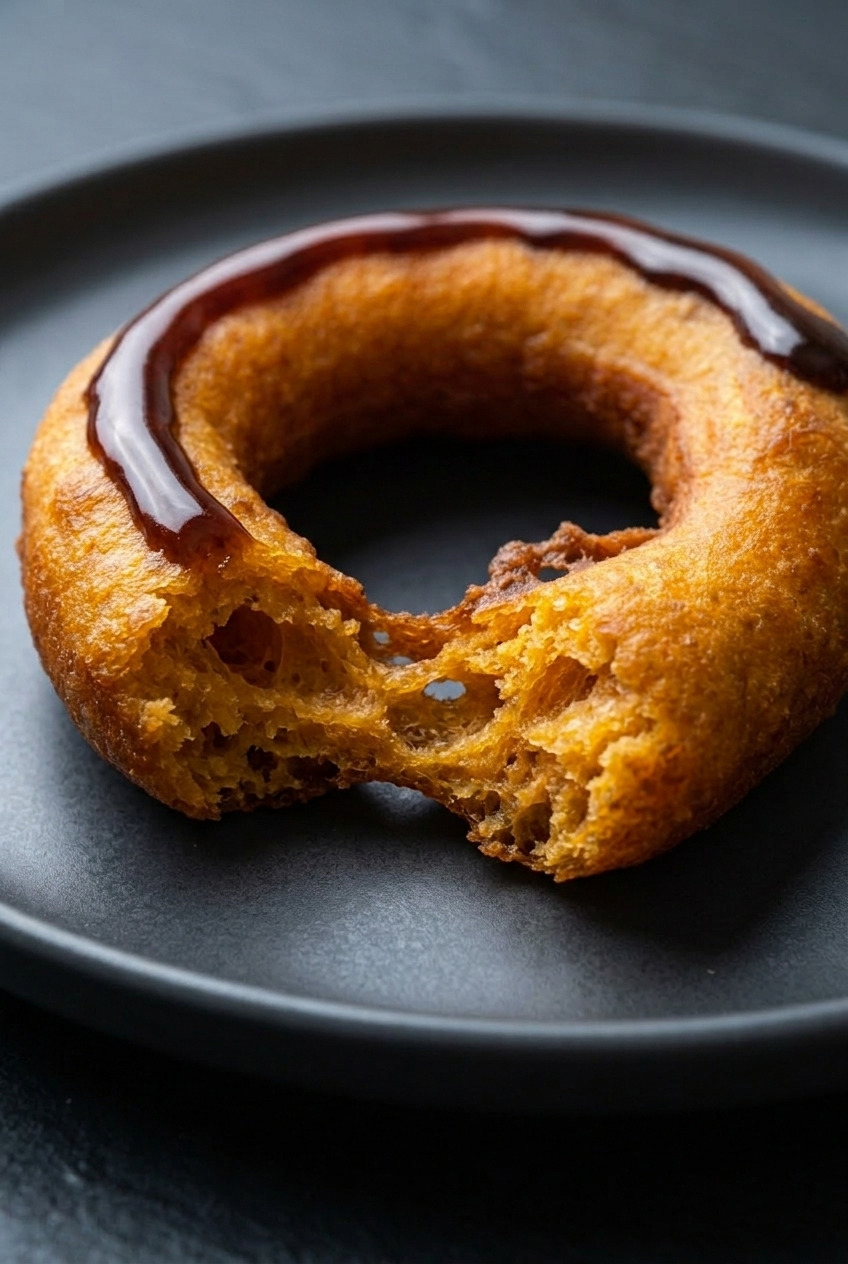
What came out of the fryer were dense little rings that tasted fine and felt like erasers.
Turns out the dough is supposed to behave that way.
Picarones look like doughnuts and act like nothing else in the doughnut world, because the dough is a yeasted puree of sweet potato and squash rather than a kneadable bread dough.
Peruvian cooks shape them with a wet hand, poking a hole through with one finger as the dough goes into the oil.
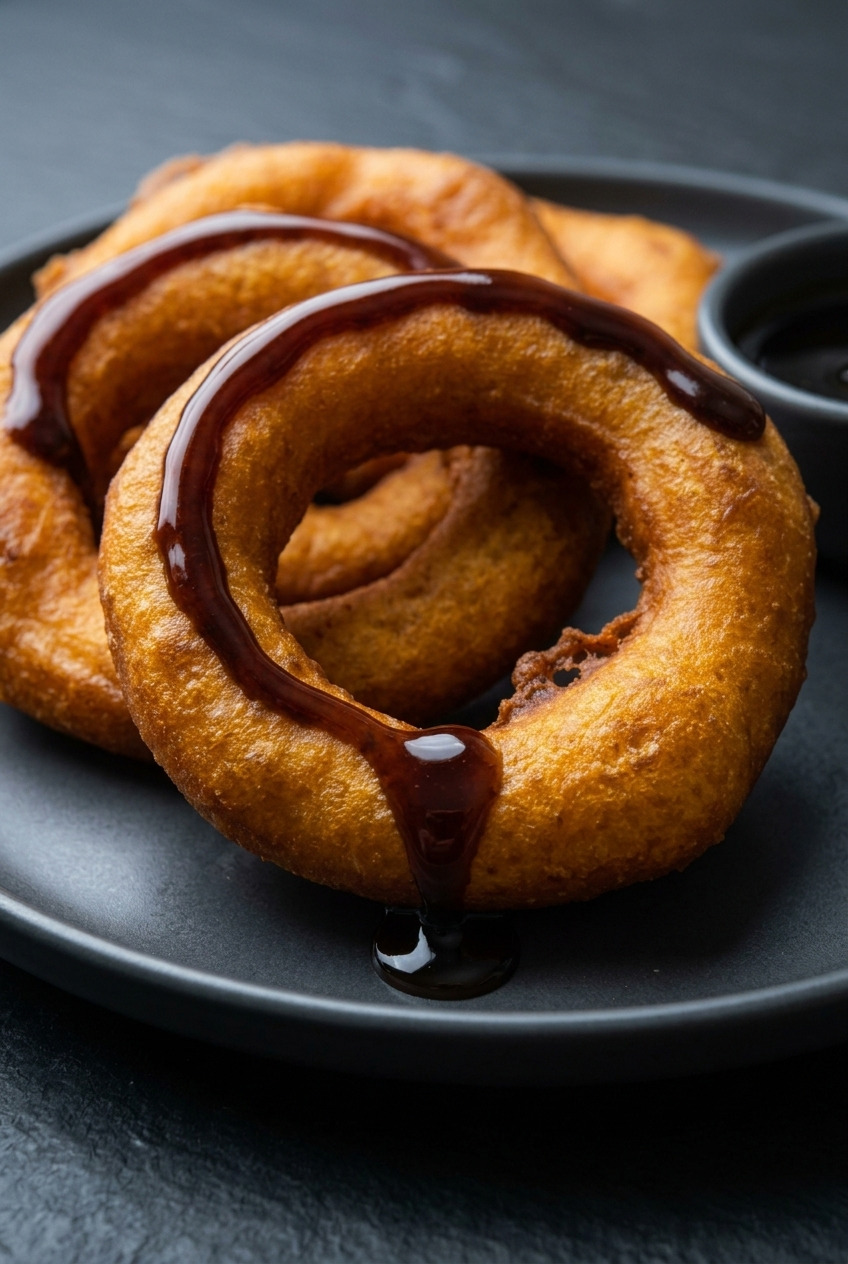
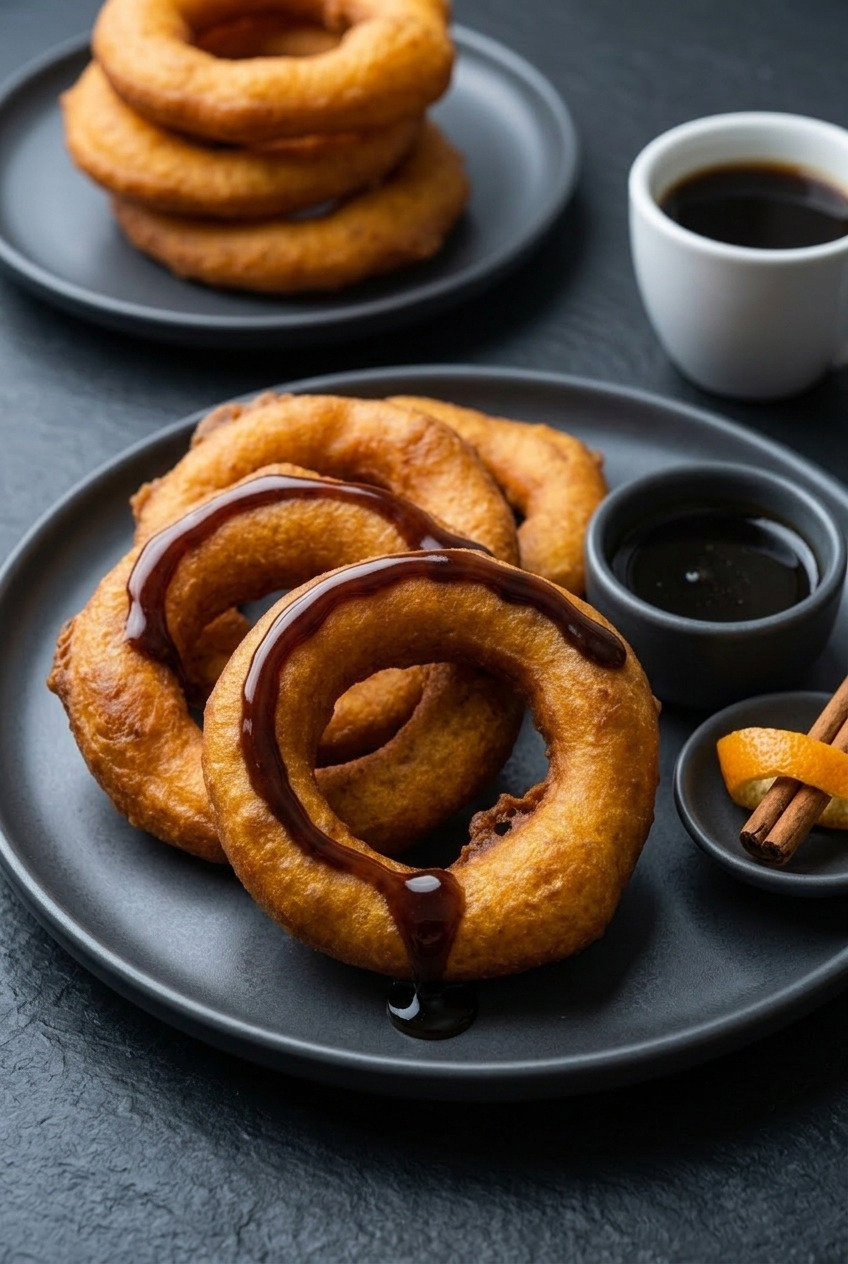
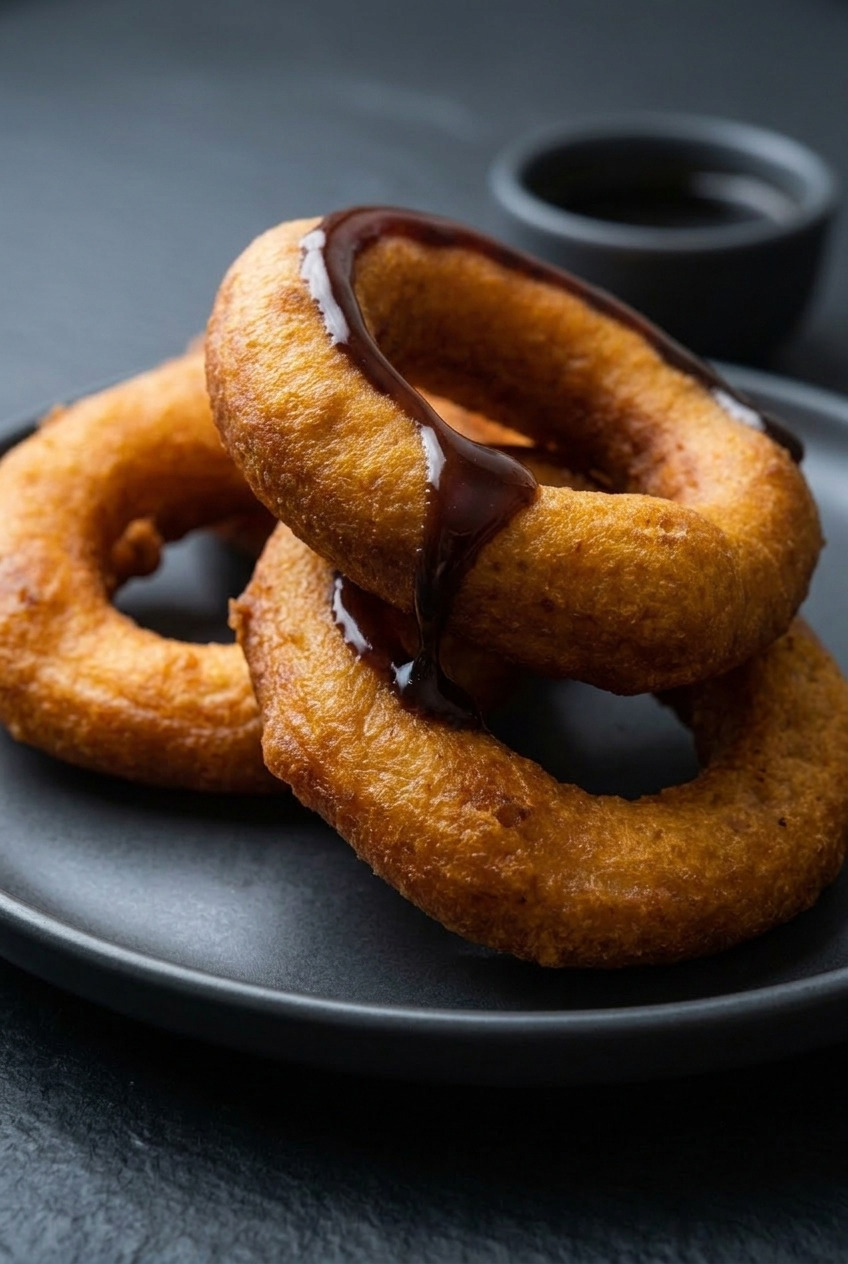
The rings come out irregular, lacy at the edges, crisp outside and light and slightly chewy inside.
Then they get drowned in chancaca syrup, dark and spiced with orange peel, cinnamon, clove and anise.
They're street food in Lima, sold from carts, eaten standing up while the syrup runs down your wrist.
The second batch I made was one of the best things I've fried in my kitchen.
My wife ate four before I'd finished frying the rest.
Don't add the flour and you'll get there on your first try.
What Picarones Actually Are
These are not beignets and they are not American doughnuts. The differences are the whole point.
- The dough is a vegetable puree. Sweet potato AND squash, boiled, mashed, and mixed with yeast and flour into a loose, sticky, risen dough. That puree is why picarones taste faintly earthy and stay moist inside.
- The squash is authentic. In Peru it's zapallo macre, a big orange-fleshed squash. Calabaza and butternut are the everyday US substitutes. Skipping the squash and using only sweet potato gives you something sweeter and flatter that isn't quite the dish.
- They're colonial in origin. Picarones came from Spanish buñuelos, remade in Peru with local ingredients during the viceroyalty. Sweet potato and zapallo were what was there.
- Anise runs through everything. Ground anise in the dough, anise seed in the syrup. It's the aroma that says picarones before anything else does.
- The syrup is not optional. Chancaca, unrefined cane sugar in a hard block, melted with citrus peel and warm spices into a dark pourable syrup. A picarón without syrup is an unfinished dish.
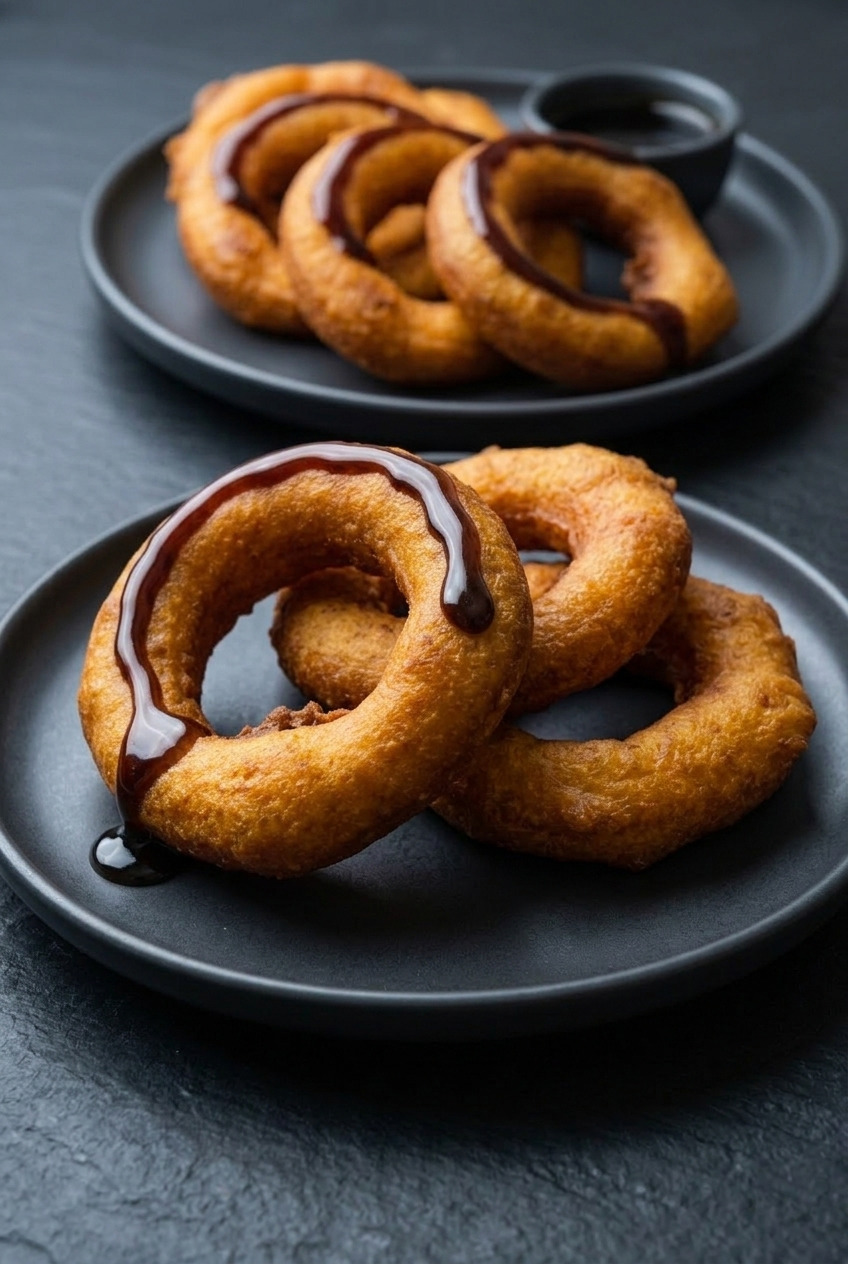
- They're street food. Sold from carts in Lima, fried to order, served three or four to a plate with syrup poured over on the spot.
Ingredient Notes
Two short lists, one for the dough and one for the syrup. The squash and the chancaca are the two that matter most.
For the dough:
- Sweet potato (½ pound). Peeled and cubed. Orange-fleshed is fine and standard.
- Squash (½ pound). Zapallo macre is the Peruvian squash. Calabaza, sold at most Latin markets, is the closest substitute. Butternut is the supermarket fallback and works well.
- The cooking water (1 ½ cups). Save the water you boil them in. It's starchy and lightly sweet, and it makes a better dough than plain water.
- Instant yeast (2 ¼ teaspoons). This is a genuinely leavened dough. Baking powder versions exist and they are not picarones.
- All-purpose flour (4 cups). Add it gradually, and stop at the point where the dough is still sticky. More on this below, repeatedly, because it's the failure everyone hits.
- Ground anise (1 teaspoon) and salt (1 teaspoon). Anise is non-negotiable for the real flavour.
- Neutral oil (6 cups). Canola or vegetable. Deep frying is the only way to get the shape.
For the chancaca syrup:
- Chancaca (1 pound). Hard blocks of unrefined cane sugar, sold at Latin markets and online. Piloncillo and panela are the same thing under other names. If none are available, dark muscovado is the closest, then dark brown sugar with 2 tablespoons of molasses stirred in. Ranked honestly, chancaca first.
- Water (3 cups). The syrup reduces by roughly half.
- Orange and lemon peel. Wide strips, no white pith. This is what keeps a very sweet syrup from being cloying.
- Cinnamon sticks (2) and whole cloves (4). Whole spices only, so you can pull them out.
- Anise seeds (1 teaspoon). Echoes the dough.
How to Make Picarones
Purees first, dough second, syrup while it rises, frying last. The rise takes about 90 minutes, so start early.
Step 1: Cook and Puree the Sweet Potato and Squash
Boil the cubed sweet potato and squash in water with 1 teaspoon of anise seed until completely soft, about 20 minutes.
Save 1 ½ cups of the cooking water. You'll need it.
Mash both together until silky, with no lumps at all.
Let the puree cool to warm, around 110°F. Hot puree kills yeast.
Step 2: Start the Yeast
Stir the yeast and 1 tablespoon sugar into ½ cup of the reserved warm cooking water.
Leave it 10 minutes, until it's foamy on top.
No foam means dead yeast, and it's better to find out now.
Step 3: Mix the Dough and Let It Rise
Combine the warm puree, the yeast mixture, the ground anise and the salt.
Add the flour about a cup at a time, mixing as you go, until you have a thick, wet, elastic dough that pulls into strands and sticks to everything.
Stop there. It should NEVER come together into a smooth ball you can knead on a counter.
Cover the bowl and leave it somewhere warm for 90 minutes, until it has doubled and looks bubbly and slack.
Step 4: Make the Chancaca Syrup
Chop the chancaca and put it in a saucepan with the 3 cups water, the citrus peels, cinnamon, cloves and anise seeds.
Simmer 30 to 40 minutes, until it reduces by half and coats the back of a spoon.
Strain out the peels and whole spices.
Pro tip: Pull it off the heat while it still looks slightly thin. It thickens a lot as it cools, and an overcooked syrup sets like candy.
Step 5: Shape and Fry the Rings
Heat 3 inches of oil to 350°F.
Keep a bowl of water beside the pot and wet your hand before every single ring.
Scoop a small handful of dough, poke your thumb or finger through the middle, and lower it into the oil, stretching the hole open as you let go.
Fry 2 to 3 minutes, turning once, until deep golden and crisp.
Drain on a wire rack and pour warm syrup over them right before serving.
Shaping the Rings
This is the part that intimidates people, and it takes about four rings to learn. Nobody's first one is round.
- Wet hands, every time. A dry hand and this dough are enemies. Dip your fingers in the water bowl before each ring and the dough releases cleanly.
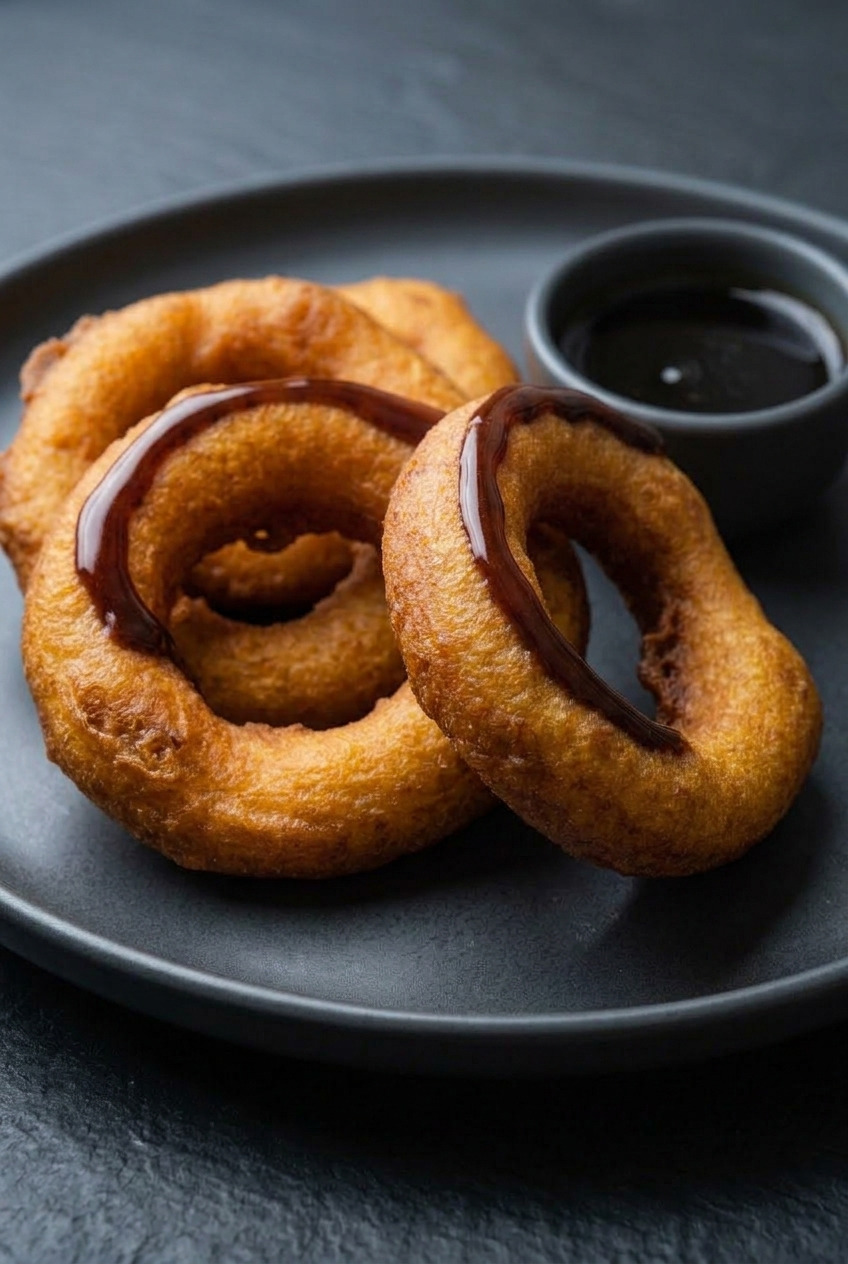
- Poke, then stretch. Push a finger through the centre and widen the hole more than looks necessary, because it closes up as the dough puffs in the oil.
- Irregular is correct. Real picarones are lopsided, lacy at the edges, some thicker on one side. A perfect circle is the sign of a machine, not a Peruvian cart.
- Work over the pot. Shape directly above the oil and lower the ring in gently. Carrying it across the counter is how it collapses.
- The piping bag route. If the hand method defeats you, pipe a ring straight into the oil from a bag with a wide plain tip and snip the end. Slightly more even, slightly less soulful.
- Practice on two. Fry two rings first, eat them, then adjust. That's what a Peruvian cart cook does at the start of the night anyway.
Tips for Getting Them Right
Almost every picarones failure traces back to flour or oil temperature. Both are easy to control once you know.
- Do NOT add extra flour. I'll say it as many times as it takes. A sticky, slack dough fries into a light interior. A stiff dough fries into a dense one.
- Keep the oil at 350°F. Cooler and the rings drink oil, hotter and the outside colours before the inside cooks through.
- Three or four rings at a time. Crowding drops the temperature and the rings stick to each other.
- Stretch the hole wide. A small hole seals shut in the oil and you end up with a fritter instead of a ring.
- Watch the syrup consistency. It should pour like warm maple syrup off the spoon. If it sets too firm on cooling, add 2 tablespoons of water and warm it again.
- Serve immediately. Picarones are at their best within minutes of frying. This is a fry-and-eat dish, not a make-ahead dessert.
- Air fryer honesty. I've tried it. The dough is too wet to hold a ring shape without oil to set it, and the result is a soft baked puff. Good, not picarones.
Variations
A few changes are worth making, and one is worth knowing about before you make it.
- Sweet potato only. Doable if you cannot find squash. Use 1 pound of sweet potato, expect a sweeter, denser ring, and know you're making a variant rather than the traditional dish.
- Butternut instead of calabaza. Easiest US swap and honestly very close. Roast it instead of boiling for a deeper flavour.
- Molasses syrup. No chancaca anywhere? 2 cups dark brown sugar plus 3 tablespoons molasses, cooked with the same peels and spices.
- Cocktail size. Half-size rings for a party tray, fried 90 seconds, with syrup in a bowl for dipping.
- Extra spice. A star anise pod and a strip of ginger in the syrup. Not traditional, very good.
- Fig leaf syrup. Some Peruvian cooks add a fig leaf to the chancaca pot for a grassy note. Worth trying if you have a fig tree.
Storage and Reheating
The syrup keeps beautifully and the rings do not. Plan accordingly.
- Fried rings. Best within 30 minutes. They soften as they sit, which is the nature of the dough.
- Reheating. Undressed rings come back well in a 375°F oven for 5 minutes. Add syrup after, never before.
- Syrup. Airtight in the fridge up to 1 month. Warm it gently with a splash of water to pour again.
- Dough. After its rise, the dough holds in the fridge up to 24 hours. Let it come back to room temperature for 45 minutes before frying.
- Freezer. Freeze fried, unsyruped rings on a tray, then bag up to 1 month. Reheat from frozen at 375°F for 8 minutes.
Recipe
Picarones (Peruvian Sweet Potato Doughnut Rings)
Ingredients
For the Dough
- ½ pound sweet potato peeled and cubed
- ½ pound calabaza or butternut squash peeled, seeded and cubed
- 1 teaspoon anise seeds for the boiling water
- 1 ½ cups reserved cooking water warm
- 2 ¼ teaspoons instant yeast
- 1 tablespoon sugar
- 4 cups all-purpose flour added gradually, dough stays sticky
- 1 teaspoon ground anise seed
- 1 teaspoon salt
- 6 cups neutral oil for deep frying
For the Chancaca Syrup
- 1 pound chancaca or piloncillo or panela, chopped
- 3 cups water
- 1 orange peel only, in wide strips
- 1 lemon peel only, in wide strips
- 2 cinnamon sticks
- 4 whole cloves
- 1 teaspoon anise seeds
Instructions
Make the Dough
- Boil the cubed sweet potato and squash with 1 teaspoon of anise seeds until completely soft, about 20 minutes. Reserve 1 ½ cups of the cooking water.
- Mash the sweet potato and squash together until silky with no lumps, then let the puree cool to about 110 degrees F.
- Stir the yeast and sugar into ½ cup of the warm reserved cooking water and leave 10 minutes, until foamy.
- Combine the warm puree, yeast mixture, ground anise and salt, then add the flour a cup at a time until you have a thick, wet, elastic dough that sticks to everything. Do not add extra flour to make it smooth.
- Cover and leave in a warm place for 90 minutes, until doubled, bubbly and slack.
Make the Chancaca Syrup
- Combine the chopped chancaca, water, orange and lemon peel, cinnamon sticks, cloves and anise seeds in a saucepan.
- Simmer 30 to 40 minutes, until reduced by half and coating the back of a spoon. Pull it off the heat while it still looks slightly thin, since it thickens as it cools.
- Strain out the peels and whole spices and keep the syrup warm.
Shape and Fry
- Heat 3 inches of oil to 350 degrees F and set a bowl of water beside the pot.
- Wet your hand, scoop a small handful of dough, poke a finger through the centre, and lower it into the oil while stretching the hole wide. The rings are meant to be irregular.
- Fry three or four at a time for 2 to 3 minutes, turning once, until deep golden and crisp.
- Drain on a wire rack and pour the warm chancaca syrup over them just before serving.
Notes
- Sticky is correct: The dough should stay wet and slack. Adding flour to make it kneadable produces dense, rubbery rings.
- Squash is authentic: Zapallo macre in Peru, calabaza or butternut in the US. Sweet potato alone makes a variant, not the traditional dish.
- Chancaca substitutes: Piloncillo or panela are the same product. Dark muscovado is next best, then dark brown sugar with 2 tablespoons molasses.
- Syrup thickness: Stop cooking while it still looks thin. It sets firm as it cools. Loosen with 2 tablespoons of water if needed.
- Oil temperature: Hold 350 degrees F and fry only three or four rings at a time.
- Stretch the hole: A small hole seals shut in the oil and you get a fritter instead of a ring.
- Storage: Rings are best within 30 minutes. Syrup keeps a month in the fridge. Reheat undressed rings at 375 degrees F for 5 minutes and add syrup after.